
We use cookies to ensure our website works properly and to personalise your experience. Cookies policy
1Faculty of Medical Science & Research, Sai Nath University, Ranchi, Jharkhand-835219, India.
2Manrakhan Mahto Pharmacy College, Ranchi, Jharkhand-835217, India
The self- administration of medicines without the advice of a trained health care professional is known as self-medication (SM) which has become a major public health problem in India. Self-medication is highly entrenched in the healthcare-seeking process, especially among different population segments, because of its accessibility in terms of availability, affordability, and ease of use, yet the emphasis is on limited access to healthcare services, increasing treatment costs, and the over-reliance on digital health information. This review aims to draw conclusions based on systematic reviews, meta-analyses, and community-based studies published from 2000 to 2025, regarding the prevalence, determinants, medication use, and health impacts of self-medication in India. The results suggest that almost two-thirds of the population self-medicate, and there are significant geographical and socioeconomic differences. Commonly used types of drugs include analgesics, antibiotics, antacids, and antipyretics. Factors such as education level, income, urban residence, previous treatment experience, perceived convenience are important. Self-care can have some positive aspects, however, inappropriate self-medication, especially in an unsupervised manner, can lead to adverse reactions to medicines, delayed diagnosis, treatment failures and increasing risk of antimicrobial resistance. From the evidence gathered it can be observed that self-medication has not been identified as a unique occurrence in India, but rather as a systemic problem that needs to be catered to on a blanket level by policy attention. A few strategies that are needed to enhance safe medication practices and public health are: strengthening public health literacy; enforcing rational drug-use regulations; promoting pharmacist-led counseling; and improving equitable access to healthcare services.
Self-medication (SM) means that people use medicine when they think they have a recognised symptom or condition that they are treating without consulting a qualified health professional. A responsible practice of self-care is recognized by the World Health Organisation (WHO) but uncontrolled and uninformed self-care, specifically of prescription only medicines, antibiotics and high potency analgesics is a major public health risk [1]. India is a special case study. Self-medication is deeply entrenched in the health seeking preferences of people, especially in view of a lack of sufficient funding for the public health system, the high cost of health care and cultural norms surrounding home remedies and pharmacy counter visits in a country of over 1.4 billion people with a poorly funded public health system, high out of pocket health expenditure, and cultural traditions that normalize home remedies and pharmacy counter consultations. In 2024, the Indian over the counter (OTC) drugs market was valued at USD 6.73 billion and is expected to grow at a compound annual growth rate (CAGR) of 5.39% to reach USD 8.76 billion by 2029, mainly due to the increasing trend of self-medication in the country [2]. Self-medication, without regulation, has far reaching consequences. Delays in diagnosis, side effects and dependence on prescription drugs are only a few examples of the effects that lead to India's antimicrobial resistance (AMR) crisis, which is a slow moving but looming public health emergency. India is now termed as the “capital of antibiotic resistance” and AMR-attributable deaths were estimated at one million in 2019, alone [3,4]. While the issue is being increasingly acknowledged, there has been a scarcity of extensive data synthesis across the geographic, socioeconomic and demographic diversity of India. This paper is a general evidence synthesis of all available published studies published in the last more than 20 years from Indian society, which would give an up to date data-based view of the phenomenon and what it means for Indian society [5].
SCOPE & METHODOLOGY
2.1 Review Type & Rationale
This paper is a narrative evidence synthesis a structured and transparent review of the literature that summarizes and interprets the findings of a diverse set of literature in the absence of formal inclusion/exclusion criteria and pooling of statistics. This approach was adopted because the current literature on self-medication in India also shows that the methodology of studies varies significantly from one to another, and the quantitative pooling of the primary studies is not appropriate or reproducible for the scope of this paper. Instead, this synthesis utilizes and uses the results from published systematic reviews and meta-analyses as well as some of the primary studies to describe the breadth, variation, and context. Prevalence differences are narratively reported and are not statistically resolved where multiple primary studies reported prevalence estimates for similar populations.
2.2 Search Strategy & Databases
A series of literature searches was carried out in the following bibliographic databases:
The searches were carried out in May-June, 2026. The following structured search strings were used, modified for the query syntax of each database.
Primary search string (PubMed / MEDLINE):
("self-medication" OR "self-medication" OR "self-medicate"
OR "OTC drug use" OR "non-prescription drug use" OR "unprescribed medication")
AND ("India" OR "Indian population" OR "South Asia")
AND ("prevalence" OR "pattern" OR "practice" OR "determinant"
OR "factor" OR "antibiotic resistance" OR "antimicrobial resistance" OR "adverse effect")
Supplementary search strings were used for specific sub-topics, with additional terms added to the primary string:
|
Sub-topic |
Additional Search Terms Added |
|
Antibiotic self-medication |
"antibiotic self-medication" OR "self-medication antibiotics" AND "India" |
|
Pediatric population |
"self-medication" AND ("children" OR "pediatric") AND "India" |
|
AMR / Consequences |
"antimicrobial resistance" AND "self-medication" AND "India" |
|
Socioeconomic factors |
("socioeconomic" OR "income" OR "education") AND "self-medication" AND "India" |
|
OTC drug market |
"over-the-counter drugs" AND "India" AND ("market" OR "utilization") |
All searches were limited to a date range: January 2000 - May 2026. This range reflects all current evidence in the modern era but may also include research conducted prior to 2010 that was carried out in a context significantly different from that of today.
2.3 Screening Process
Records retrieved via search of the databases were screened in a two-step process.
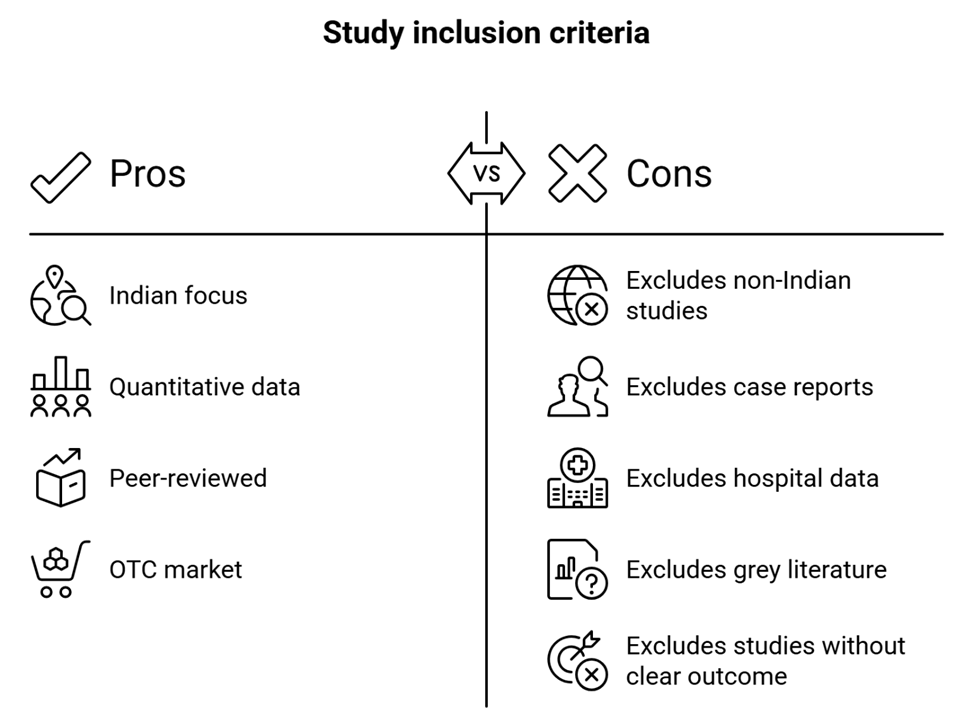
Stage 1 - Title and Abstract Screening: Records were screened for relevance by three criteria: (i) the study was conducted in India in whole or in part; (ii) study reported on prevalence, pattern, determinant or consequence of self-medication; and (iii) the study was published in a peer-reviewed journal or as an indexed systematic review or meta-analysis.
Stage 2 - Full Text Review: Full texts of stage-1 eligible records were reviewed to confirm that: there was quantitative prevalence data available or adjusted odds ratios; methodology was adequately reported (study setting, sample size, and design; and data was not duplicated in an included meta-analysis.
An extensive search of the literature, across several scientific databases, yielded some 410 records. After removing duplicate records and a preliminary screening, a representative sample of the relevant studies was analysed in the full text to verify eligibility. In the end, approximately 90 studies and review articles were part of the final synthesis. The review also included evidence from previously published meta-analyses that had reviewed several hundred more records, thus further increasing the overall body of evidence and improving the strength of the conclusions. This review only included studies that met the predetermined inclusion criteria and were relevant to the Indian context.
2.4 Inclusion & Exclusion Criteria
|
Inclusion Criteria |
Exclusion Criteria |
|
Cross-sectional, cohort, or community-based studies reporting SM prevalence in any Indian population |
Studies conducted entirely outside India |
|
Systematic reviews and meta-analyses of Indian SM data |
Case reports, editorials, and opinion pieces without original data |
|
Studies reporting drug categories, conditions, information sources, or sociodemographic predictors |
Studies reporting only hospital inpatient medication use (not SM) |
|
Pharmacovigilance, AMR surveillance, and public health reports with India-specific quantitative data |
Grey literature without peer review (except government policy documents, included as contextual sources) |
|
Market research reports from indexed databases for OTC market sizing |
Studies where self medication was not a primary or clearly defined secondary outcome |
2.5 Quality Assessment
This narrative synthesis did not apply a formal risk of bias assessment based on a standardized tool to individual primary studies, except in the case of cross-sectional studies where the AXIS tool was used and in the case of cohort studies where the Newcastle-Ottawa Scale was used. This is a well-known and well-known constraint, which will be discussed in Section 10.5. However, quality was considered at two levels before a source was incorporated into the synthesis:
|
Criterion |
Assessment Approach |
|
Operational definition of self-medication stated |
Confirmed present before inclusion |
|
Sample size reported with justification |
Confirmed present; studies without reported n excluded |
|
Confidence intervals or p-values reported |
Preferential inclusion; noted where absent |
|
Ethical approval documented |
Confirmed present before inclusion |
|
PRISMA compliance |
Both core meta-analyses confirmed PRISMA-compliant |
|
Heterogeneity quantified (I²) |
Both report I² and use random-effects models |
|
Subgroup analyses performed |
Both report subgroups by region, population, and year |
|
Formal risk-of-bias tool (e.g., AXIS, Newcastle-Ottawa) |
NOT applied - acknowledged limitation of this narrative synthesis |
We selected the 2024 ScienceDirect meta-analysis (n = 29,873; 66 studies) as the main prevalence anchor for this paper due to the following reasons: it is more recent, it reflects the largest sample size, it used a random effects model with reporting of heterogeneity, it was compliant with the PRISMA criteria, and it covered a broad spectrum of databases. Where it differs from previous meta analyses or single studies, it makes clear its own differences and puts them in perspective.
2.6 Data Extraction & Synthesis
The following data elements were extracted from each included source when reported: prevalence estimates and 95% confidence intervals, sample sizes, geographic settings or demographic groups, drug categories and specific drugs mentioned, conditions or symptoms that are potentially the triggers for self-medication, sociodemographic predictors with adjusted odds ratios (AOR) or prevalence ratios (PR), adverse drug reaction rates, OAM mortality rates and data on the valuation of the OTC market. Thematic synthesis of data was conducted by domain rather than pooling the data and analysing it statistically. Throughout the paper, comparisons of data across studies are presented in tabular format. If studies reported similar results but on different scales or denominators, results are reported as presented (not converted to a common scale) with the source of the results designated.
3. Prevalence of Self-Medication in India
3.1 National-Level Pooled Estimates
A recent and thorough meta-analysis (December 2024) published in ScienceDirect involving 66 studies with 29,873 individuals and a pooled country prevalence was 64.4% self-medication. This is a substantial increase from the previous Bentham Science meta-analysis (2020) of 17 studies (n = 10,248) that found the average prevalence to be 53.57%. The difference between the two indicates a change in the secular trend of self-medication practices in India over the years [6].
3.2 Regional Variation
There is considerable inter-regional variation. No statistically significant difference was found between the other regions in the 2024 meta-analysis the highest pooled regional rate being recorded in the northern region (81.9%). State-level studies show that there are significant differences within each region:
States with high rates of poverty and low rates of literacy, like Bihar and Odisha, often have higher levels of inappropriate antibiotic use and self-medication, while it would seem that the use of antibiotics is reduced in rural areas, likely because of under-reporting or avoidance of healthcare [7,8,9].
3.3 Prevalence Data Summary Table
|
Study / Region |
Sample Size |
Prevalence (%) |
Primary Drugs |
Key Finding |
|
Meta-analysis, All India (ScienceDirect, 2024) |
29,873 (66 studies) |
64.4% |
Analgesics, Antibiotics |
Northern India highest at 81.9% |
|
Meta-analysis, All India (Bentham Science, 2020) |
10,248 (17 studies) |
53.57% |
NSAIDs, Anti-allergens |
Middle-lower class most affected |
|
Maharashtra, Urban+Rural (IJBCP, 2024) |
400 |
76% |
Painkillers (49.4%), Antacids (23.7%), Antibiotics (15.3%) |
OTC drugs predominant |
|
Delhi, Urban Colony (Med J DY Patil, 2015) |
236 |
92.8% |
Paracetamol, Cough syrups |
Younger & educated more likely |
|
Northern India, Uttar Pradesh (Sahaswan, 2014) |
Community pharmacy |
~31%–37% |
Antibiotics, Antipyretics |
Illiterate males, low-income |
|
Central India, Urban (NCBI PMC, 2023) |
400 |
60% |
Analgesics (66.25%), Antipyretics (59.16%) |
Minor ailments primary reason |
|
Punjab, North India (JCCP, 2025) |
400 |
High (rural & urban) |
Analgesics, Antibiotics |
Social media as information source |
|
Puducherry, Urban (Perspectives Clin Res, 2014) |
352 (124 households) |
Reported high |
Allopathic drugs |
Attitude study; majority positive to SM |
* Prevalence data refer to the population sample studied and should not be directly compared to other prevalence data, as there may be methodological differences. The most up to date national estimate is from the 2024 ScienceDirect meta-analysis [10,11].
4. Sociodemographic Predictors of Self-Medication
4.1 Urban-Rural Differences
In contrast to what many people think, the formal (allopathic) self-medication rate is much higher among the residents of urban areas than among those of the rural areas. A community-based study conducted in Northern India in 2024 revealed a significant association between urban area and self-medication, with odds being around 9.85 times greater for subjects from urban areas compared to their rural peers (AOR: 9.85; 95% CI: 5.32–18.23). This reflects urbanization near to pharmacies, higher disposable income, social media and time constraints [12,13]. But, use of self-medication is more hazardous in rural areas, due to dependence on unconfirmed sources, inadequate antibiotic courses and higher incidence of unrecognized severe illnesses treated with self-medication initially. The west India cross sectional study showed urban SM being 37% and 17% in rural areas for allopathic drugs respectively, but the difference is decreasing because of the increase of OTC pharmacies in semi urban areas [14].
4.2 Gender
Gender notions of self-medication are complex. The 2024 Northern India study revealed that females are significantly more likely to self-medicate compared to males (AOR: 2.32; 95% CI: 1.18–4.57). Mordor Intelligence market analysis also shows greater self-medication among females for pain associated with menstruation, specifically analgesics. On the other hand, the Sahaswan rural study reported higher prevalence among males who are illiterate, indicating that the effects of gender might be influenced by education level and location [15].
4.3 Education and Occupation
Education shows a paradoxical correlation to self-medication. Graduates and post graduates in urban settings also have high self-medication rates (AOR: 2.06; 95% CI: 1.14–3.37), due to their higher access of information about drugs and self diagnosis. The Delhi study in 2015 revealed that the graduates/Post graduates were found to self-medicate more than others (P = 0.002). There was a positive association between the skilled workers and self-medication that was approximately 5.62 times higher among skilled workers compared to the unemployed (AOR: 5.62; 95% CI: 1.80–17.5), which may be attributed to income availability and time constraints [16,17].
4.4 Income & Socioeconomic Class
According to the Bentham meta-analysis (2020), people from the middle-lower socioeconomic status have the highest level of self-medication (PR: 26.31; 95% CI: 2.02–50.60; P<0.0001). This is due to lack of means to access formal health care consultation, and self-medication as a cost saving strategy. In contrast, being in the middle class of the urban population with income of more than ₹30,000/month is also observed as being associated with higher SM (AOR: 3.21), but not necessarily due to financial need [18].
|
Factor |
Association with SM |
Adjusted Odds Ratio (AOR) |
Study |
|
Urban residence |
Significantly higher SM |
AOR: 9.85 (95% CI: 5.32–18.23) |
Juneja et al., SAGE 2024 |
|
Female gender |
Higher SM vs. males |
AOR: 2.32 (95% CI: 1.18–4.57) |
Juneja et al., SAGE 2024 |
|
Skilled worker (occupation) |
Higher SM vs. unemployed |
AOR: 5.62 (95% CI: 1.80–17.5) |
Juneja et al., SAGE 2024 |
|
Primary school education |
Higher SM vs. illiterate |
AOR: 2.48 (95% CI: 1.16–5.25) |
Juneja et al., SAGE 2024 |
|
Income ₹30,000/month |
Higher SM vs. <₹4,000 |
AOR: 3.21 (95% CI: 1.00–10.21) |
Juneja et al., SAGE 2024 |
|
Middle-lower socioeconomic class |
Most prevalent SM group |
PR: 26.31 (95% CI: 2.02–50.60) |
Bentham Meta-analysis, 2020 |
|
Young adults (18–35 yrs) |
Higher than older adults |
Statistically significant (P=0.000) |
Delhi study, DY Patil University [19] |
|
Graduate / postgraduate education |
More SM than less educated |
Statistically significant (P=0.002) |
Delhi study, DY Patil University |
5. Conditions & Drug Categories
5.1 Most Common Conditions
According to Bentham Science 2020 meta-analysis, minor ailments were most common reasons for self-medication (PR: 42.46; 95% CI: 21.87–63.06). Headache was the single most commonly self-medicated symptom (PR: 41.53; 95% CI: 18.05–65.02). Other studies have similarly found:
Minor wounds, fungal infections were prevalent in the rural populace [20,21].
5.2 Drug Categories
Most of the self-medication drug utilization includes analgesics and anti pyretics followed by antibiotics and antacids. According to the cross sectional study conducted in Maharashtra (2024), 49.4% of the respondents used painkillers, 23.7% used antacids and 15.3% of them used antibiotics. The study by Central India PMC (2023) reported the use of analgesics and antipyretics in self-medicating respondents as 66.25% and 59.16% respectively [22,23].
|
Drug Category |
Representative Drugs |
Common Conditions |
% Usage (Indicative) |
|
Analgesics / Antipyretics |
Paracetamol, Ibuprofen |
Fever, headache, body pain |
49.4%–66.25% |
|
Antacids / GI Agents |
Antacids, ORS, Digestives |
Acidity, diarrhea, indigestion |
23.7%–40% |
|
Antibiotics |
Amoxicillin, Azithromycin, Ciprofloxacin |
Respiratory, urinary, skin infections |
15.3%–37% |
|
Cough & Cold Preparations |
Cough syrups, Antihistamines, Decongestants |
Common cold, cough, runny nose |
~30%–50% |
|
NSAIDs |
Diclofenac, Nimesulide, Naproxen |
Musculoskeletal pain, menstrual cramps |
Frequently cited |
|
Vitamins / Supplements |
B-complex, Vitamin C, Iron |
General wellness, fatigue |
Growing post-COVID |
|
Anti-allergens / Antihistamines |
Cetirizine, Loratadine |
Allergic rhinitis, urticaria, itching |
Common across studies |
|
Topical Preparations |
Antiseptic creams, Antifungal ointments |
Minor wounds, skin infections |
Common in households |
|
Traditional / Ayurvedic |
Ashwagandha, Giloy, Tulsi-based products |
Immunity, general ailments |
Significant in rural India |
5.3 The Antibiotic Self-Medication Problem
Antibiotic self-medication (ASM) deserves attention because of the consequences that it causes for the individual, but also for the society level. Although the Drugs and Cosmetics Act 1945 and Schedule H regulations mandate a prescription for antibiotics in India, enforcement is lax and pharmacists are regularly giving out antibiotics without one [24]. There are several studies reporting antibiotic SM ranging from 15.3% in the Maharashtra urban/rural study to 37% in the rural Sahaswan, UP. In low- and middle-income countries overall, the level of antibiotic SM is 78% among adults. A substantial percentage of antibiotic use in the world is for self-medication, which is affecting antibiotic resistance, and this has been explicitly warned by WHO [25].
6. Motivating Factors for Self-Medication
6.1 Evidence-Based Determinants
A variety of factors at the level of the individual, structure and culture influence the decision to self-medicate. The table below provides a summary of the motivators that have been found in the main studies of India:
|
Reason |
Prevalence Rate (PR / %) |
Source |
|
Minor ailment / mild symptom |
PR: 42.46 (95% CI: 21.87–63.06) |
Bentham Meta-analysis, 2020 |
|
Familiarity with medication |
PR: 30.45 (95% CI: 17.08–43.82) |
Bentham Meta-analysis, 2020 |
|
Convenience / lack of time |
Commonly cited across studies |
Juneja et al., SAGE, 2024 |
|
Cost-saving / financial constraints |
Major driver in lower-income groups |
Multiple studies; Socioeconomic review 2025 |
|
Previous positive experience |
Frequently cited |
Punjab study, JCCP 2025 |
|
Peer / family recommendation |
Highly prevalent |
Multiple community studies |
|
Pharmacist recommendation |
Most prevalent drug procurement method |
Juneja et al., SAGE, 2024 |
|
Inaccessibility of healthcare |
Significant in rural areas |
Central India study, PMC 2023 |
|
Media / pharmaceutical advertising |
Growing contributor |
Multiple studies 2015–2025 |
|
Social media / internet information |
Increasing, especially younger population |
Punjab study, JCCP 2025 |
6.2 Healthcare Access Barriers
Structural reasons for SMR in India are the systemic deficiencies in public health care. The ratio of doctors to patients in India is still lower as compared to the recommended ratio by the WHO and is heavily skewed towards the urban regions. The combination of long waiting time in the primary health centers, distance to the primary health centers, high costs of out of pocket consultation, and irregular opening hours at primary health centers makes visiting a pharmacy and obtaining drugs without having to go through the formal health care system often more sensible for the patient’s immediate needs [26]. A day off for India's estimated 450 million daily wagers and those in the informal sector can be devastating to their finances. A day's work is lost, or a pharmacist's prescription is obtained, as reported in qualitative research by Aeon (2026), if a worker experiences diarrhoea or a cold or flu, a daily worker must choose to either seek out the pharmacist for a prescription or risk missing a day's pay. This is not about irrationality, it is about rational reactions to structural inequity [27].
6.3 Cultural & Social Factors
In India, there are medical systems that co-exist with allopathic medicine such as Ayurveda, Unani, Siddha and folk medicine. This medical pluralism normalizes the idea that self-treatment and home remedies are a first response to medical problems. There is also an increasing overlap between regulated medicine use and unregulated self-care use as traditional medicine is increasingly being marketed in the formal OTC market, for example during the COVID-19 pandemic as immunity boosting products containing Giloy and Ashwagandha [28]. Social networks are important, peer and family recommendations are always among the most frequently mentioned sources of information for decisions on self-medication. Over the last few decades, pharmaceutical companies have been increasingly promoting their products in television, print and lately, social media, all of which has made consumers more aware of the drugs and more confident in their ability to self-diagnose [29].
6.4 COVID-19 as an Accelerator
The COVID-19 pandemic (2020-2022) was the big turning point in the patterns of self-medication in India. Self-medication was normalized, and at an unprecedented level, due to fear of hospital infection, limitations of mobility, and public health messaging around the monitoring of symptoms at home. Dolo 650 (Paracetamol 650mg, Micro Labs) has released more than 350 crore (3.5 billion) pills since the beginning of March 2020, representing self-medication in the pandemic era. Just like the physical supply chains disrupted, online pharmacies grew in numbers too. The upward trend in the OTC drugs market after the Covid-19 pandemic has been very steep in the last year, expanding its market value from USD 3.7 billion in 2020 to USD 3.9 billion in 2021 at a CAGR of 6.6% [30,31].
7. Clinical & Public Health Consequences
7.1 Antimicrobial Resistance (AMR)
Self-medication is the worst and most prevalent public health problem in India, due to its role in antimicrobial resistance. India is called by several authoritative sources the ‘capital of antibiotic resistance’ in the world, and the problem is caused by the combination of self-medication, overuse of prescribed antibiotic medicines, use of antibiotics in agriculture, lack of sanitation and wastewater management around antibiotic manufacturing areas [32].
|
Consequence |
Quantitative Impact (India) |
Source / Context |
|
Direct deaths from AMR (2019) |
~300,000 deaths attributed directly to AMR |
ORF Report, 2024 |
|
AMR-attributable total deaths (2019) |
~1,000,000 deaths (direct + contributory) |
ORF Report, 2024 |
|
Neonatal deaths from resistant infections |
60,000 annually |
Bharati Vidyapeeth Med J, 2025 |
|
AMR vs. other disease mortality |
Higher than TB, neoplasms, respiratory infections individually |
ORF Report, 2024 |
|
Adverse effects of resistant-strain infections |
Up to 2x more adverse outcomes vs. susceptible strains |
ORF Report, 2024 |
|
Antibiotic self-medication in pediatrics (global LMICs) |
Prevalence reaching 78% |
BMC Pediatrics, 2025 |
|
Antibiotic SM in rural northern India |
~37% |
Sahaswan study, PMC 2014 |
|
India’s AMR designation |
Often called “capital of antibiotic resistance” globally |
Multiple public health sources |
AMR is now responsible for more deaths than tuberculosis, neoplasms, respiratory infections, diabetes, kidney disease and disorders of mothers and newborns in India alone. The facts are alarming: AMR directly caused some 300,000 deaths in 2019 and indirectly, a further one million deaths. This puts India in the list of the worst affected countries in the world and self-medication with antibiotics is one of the major drivers to this [33].
7.2 Adverse Drug Reactions (ADRs) & Drug Interactions
By definition, self-medication is not a process of self-diagnosis or self-prescription because no one evaluates the patient's risk factors, such as co-morbidities, current medication usage, allergies, age and renal/hepatic function. This provides the opportunity to develop:
According to the Bentham 2020 meta-analysis, the drug resistance, adverse effects, drug-interactions including death are explicit for the use of SM practices [34].
7.3 Delayed Diagnosis Progression
Diagnostic delay is often overlooked but a serious adverse effect of self-medication. Tuberculosis, diabetes, cancer and chronic kidney disease are common illnesses that often present with symptoms at an early stage that can be treated symptomatically by the individual. Frequent use of self-medications for these symptoms can make it months to years before definitive diagnosis is established, significantly compounding prognosis. It is well established from multiple studies that self-medication often leads to a delay in health care seeking in life-threatening emergencies. There is specific concern for early diagnosis in disease areas such as cancer, HIV and multidrug-resistant tuberculosis [35].
7.4 Pediatric Vulnerability
Young children are a very vulnerable group. To highlight the extent of antibiotic self-medication among children, a systematic review and meta-analysis published in BMC Pediatrics in June 2025 analysed 17 studies that included 7,847 children, with results showing that the pediatric population in India is exposed to antibiotic self-medication. Parents initiate self-medication of children for various reasons including low level of health care services, financial problems, time constraints, and culture. The hazards involve negative effects, resistance to the antibiotic, and lasting effects on the immune system. This is aggravated by the lack of antibiotics being effective against 60,000 neonatal deaths per year, implying transmission of resistant organisms from one generation to the next [36,37].
8. Regulatory & Policy Framework
8.1 Existing Legal Architecture
The regulation of pharmaceuticals in India is mainly governed by the Drugs and Cosmetics Act, 1945 and its Rules, regulated by the Central Drugs Standard Control Organisation (CDSCO) and State drug controllers. Schedule H and H1 drugs, such as all antibiotics, anxiolytics and many NSAID's must be dispensed with a valid prescription from a registered medical practitioner [38]. But this regulatory framework is more of an aspirational goal, something that has not yet been fully established. Enforcement is not always consistent, and in some smaller towns and rural areas, pharmacies might be responsible for providing care for large populations and have only one inspector. The Pharmacy Act, 1948, provides for registration of the pharmacists and professional conduct standards and it requires that pharmacists must be present in the licensing premises; however, licensed pharmacist presence is not universal, particularly in unlicensed drug shops in rural areas of India [39].
8.2 State-Level Initiatives
However, a number of states have made specific regulatory efforts on AMR:
8.3 National Policy
In 2017, India's National Action Plan on Antimicrobial Resistance (NAP-AMR) was rolled out with aims of surveillance, stewardship, infection prevention and regulation. The plan would include enhancing pharmacovigilance, reducing the sale of OTC antibiotics and enhancing prescribing practices. Implementation has, however, been uneven and the regulation of drug shops, in particular antibiotics, is a great challenge [43].
8.4 Regulatory Gaps
A number of key regulatory and systemic gaps remain that support the persistence of self-medication, which include:
9. The Role of Pharmacists
9.1 Pharmacists as De Facto Primary Care Providers
In most parts of the rural and semi-urban India, the community pharmacist is the first and sometimes the last link in the formal health care chain. In contrast to the hospital system, pharmacies are open, affordable, located in different geographic areas and are trusted by the cultural community. Patients come routinely with symptoms to pharmacists and are given a drug recommendation, essentially primary care without the formal consultation process. This is a worrisome situation from an accident statistics point of view, but also a tremendous opportunity. A pharmacist trained to provide careful counselling to the patient, make medical referrals for more serious patients, advise against unnecessary antibiotic use and dispense antibiotics responsibly can be a powerful public health resource [45].
9.2 Pharmacists Education & Intervention
Several Indian researches suggest that pharmacist education and training should be emphasized as an initial measure in the context of responsible self-medication. Specific recommendations include:
In a 2023 paper published in Springer Nature/Discover Health Systems, it explicitly states that the role of the pharmacist should not just include checking the use of potentially inappropriate OTC medicines, but also to recommend non-pharmacological treatment methods and to encourage cost effectiveness through recommendations for generics [46].
10. Discussion
10.1 The Paradox of Education & Self-Medication
A non-linear relationship between education and self-medication was one of the more striking findings that were synthesized in this review. Self-medication is not necessarily linearly decreased with higher educational attainment, and in urban areas, the more educated people self-medicate more than the less educated. This is the internet and social media age, and educated people have more access to medical information, while they may think they understand it enough to be able to interpret and apply it correctly. There is no systematic health literacy programming in India and health literacy is different from education. Health Literacy (the ability to evaluate health information, understand the risks of medicines, and make informed decisions) is different from education [47].
10.2 The Gendered Dynamics
The results of this study indicate that women and men have different causal pathways, with women having higher SM in urban studies and men having higher SM in rural studies. Urban women's self-medication is an indicator of empowerment, convenience and the constraints on healthcare time. Economic pressure, lack of information and avoidance of healthcare services all contribute to rural male self-medication. Interventions should reflect these unique profiles and not consider self-medication as a single behaviour [48].
10.3 Traditional Medication & the Dual System
The parallel working of traditional medicine systems complicates the scene of self-medication in India. Old remedies like Giloy, Ashwagandha and Kadha were suddenly being used to boost immunity in large numbers and frequently being used along with allopathic self-medication during the COVID-19 pandemic. There are areas of risk that are not studied in detail, such as herb-drug interaction, which involves the simultaneous use of traditional remedies and drugs. The regulation of traditional medicine medicines (AYUSH products) for self-medication is different from allopathic OTC medicines and needs to be treated separately [49].
10.4 Digital Health & Future Trajectory
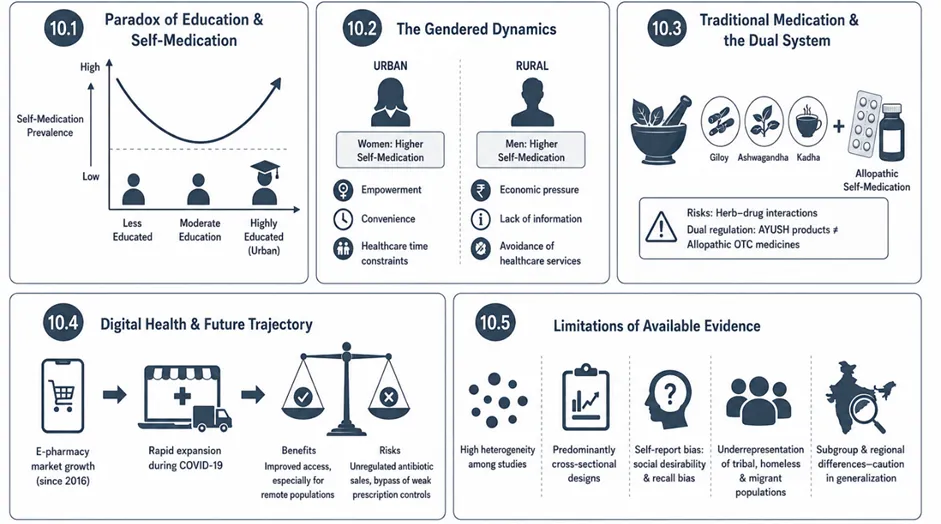
Thanks to the growing e-pharmacy market since 2016 and the speed of growth in this market during COVID-19, new avenues have opened for self-medication at scale. Access to medicines via online pharmacies can also have good and bad consequences: allowing access to drugs which would not otherwise be available to geographically remote people, and on the other hand, allowing the purchase of antibiotics without regulation. Online prescriptions are likely to be a growing way to bypass existing weak offline prescription controls, since most e-pharmacies in India lack a strong digital prescription verification system [50].
10.5 Limitations of Available Evidence
The evidence on Indian self-medication has the following important limitations: high heterogeneity among studies (confirmed by the I2 statistics in the meta-analyses), cross sectional designs which were predominant, social desirability and recall bias of the self-reported data and underrepresentation and low sample size of tribal, homeless and migrant populations. These are important differences between subgroups by study population and region, as highlighted in the 2024 meta-analysis, which should not be overlooked when generalizing [51].
11.Recommendation
11.1 Policy & Regulation
11.2 Healthcare Access Reform
11.3 Health Literacy & Public Education
11.4 Pharmacist Empowerment
11.5 Research Priorities
CONCLUSION
Self-medication is not only a peculiar behaviour of the Indian society, but it is a structural phenomenon that is driven by access inequities in health care systems, economic vulnerability, cultural norms and values, regulatory gaps, and an increasing but misdirected level of health unforcedness. It is estimated to be the most prevalent health behaviour in the country (64.4%) and in some regions, is nearly universal (above 80%). The individual impact is significant and far reaching it includes immediate adverse drug reactions and delayed diagnoses, and the impact of antimicrobial resistance, which cost an estimated one million Indians their lives in 2019 alone. The OTC drugs market is expected to grow to surpass USD 8.76 billion by 2029, further highlighting the need for regulatory action and investment in health literacy on an annual basis. But there are also signs of the way forward as seen in the evidence. Evidence based interventions can bend the curve at the community pharmacist, digital health platform, the ASHA worker, schoolroom, and policy drafting table. It is not the aim of this activity to stop people from using medicines for themselves - a right and duty of all patients to use medicines responsibly and appropriately for minor ailments is properly recognised and essential in any society, particularly one where formal health services are still out of reach for hundreds of millions. The aim is to inform it, protect it and set limits for it, whilst at the same time increasing access to the formal care, to which it must be tied. Self-medication is an issue in India that cannot be divorced from the larger issue of health equity. This will necessitate more than just a pharmacologic understanding, and a fundamental shift of the health care system to become more universal, accessible and trustworthy.
REFERENCES

Alok Kumar*, Inderjeet Kumar Mahto, Mani Bhushan Lal, Vivek Anand, Raja Kumar, Beyond Prescription: An Examination of Self-Medication Practices in the Indian Population, Int. J. Med. Pharm. Sci., 2026, 2 (7), 65-81. https://doi.org/10.5281/zenodo.21107879
 10.5281/zenodo.21107879