

We use cookies to ensure our website works properly and to personalise your experience. Cookies policy
1Ezhuthachan College of Pharmaceutical Sciences, Marayamuttom, Thiruvananthapuram.
2Assistant Professor, Department of Pharmacy Practice, Ezhuthachan College of Pharmaceutical Sciences, Marayamuttom, Thiruvananthapuram
3Principal/HOD, Department of Pharmacy Practice Ezhuthachan College of Pharmaceutical Sciences, Marayamuttom, Thiruvananthapuram
Background: Psychological First Aid (PFA) is an early psychosocial approach intended to provide humane, supportive and practical assistance to individuals experiencing distress following serious or potentially traumatic events. It emphasizes appropriate communication, listening, practical support, safety and linkage with appropriate services rather than diagnosis or psychological treatment. Healthcare professionals and students may encounter individuals experiencing psychological distress in routine clinical practice as well as during emergencies and disasters. Adequate knowledge, favourable attitudes and appropriate helping practices are therefore important for effective early psychosocial support. Evidence from mental health first aid research indicates that structured training can improve mental health knowledge, confidence and intentions to provide assistance, although evidence for sustained behavioural effects remains less consistent. Objective: To assess the knowledge, attitude and practice related to Psychological First Aid among the healthcare community and to identify gaps and the need for formal PFA training. Methods: A cross-sectional study was conducted among healthcare professionals and healthcare students. The study was planned with a sample size of 160 participants and used convenient sampling. Participants aged 18 years and above who were currently practicing or studying in a recognized healthcare institution and who could understand and respond to the survey language were eligible. Data were collected using a self-structured questionnaire covering sociodemographic characteristics, knowledge, attitude, practice, barriers and suggestions related to PFA. The protocol specified a one-month data-collection period. Descriptive statistics were used to summarize the responses. Results: Among the 160 participants, 73.8% were aged 21–30 years and 71.9% were female. Medical/health science students constituted 63.7% of the sample, while 31.2% were doctors, nurses or pharmacists. Only 46.2% had previously heard about PFA. Although 75.0% correctly identified PFA as immediate support for mental health issues and 82.5% identified mental illness as a condition for which PFA could help, misconceptions regarding the goals and providers of PFA were evident. A favourable attitude toward PFA was observed: 92.5% agreed or strongly agreed that PFA training was important, and 67.5% would recommend PFA training to others. However, only 23.1% had received formal PFA training. Previous experience of supporting someone with a mental health problem was reported by 62.5% of participants, while 65.6% expressed interest in attending a PFA training programme. More than half (53.1%) perceived inadequate awareness or promotion of PFA in their workplace or institution. Conclusion: The findings demonstrate a substantial gap between the perceived importance of PFA and formal training exposure among the healthcare community. While participants generally demonstrated favourable attitudes and considerable willingness to acquire PFA skills, prior awareness and formal training were limited. Integration of structured, evidence-informed PFA education into healthcare education and continuing professional development may strengthen preparedness for providing early psychosocial support.
Mental health is an essential component of overall health and well-being. Healthcare professionals increasingly encounter individuals experiencing psychological distress, emotional crises and mental-health-related difficulties in hospitals, community settings and emergency situations. The ability to respond appropriately at the initial point of contact is therefore an important component of comprehensive healthcare. Psychological First Aid is an approach to providing immediate, humane, supportive and practical assistance to people experiencing distress following serious crisis events. The World Health Organization describes PFA as assistance that respects the affected person's dignity, culture and abilities. Rather than attempting to diagnose or treat a mental disorder, PFA focuses on supportive communication, listening, practical assistance and linking individuals with appropriate social, psychological and health resources. The WHO PFA framework emphasizes the principles of look, listen and link. Helpers are encouraged to assess the situation, identify immediate needs and safety concerns, listen without forcing people to disclose experiences, and facilitate access to appropriate support and services. Effective communication is central to this process. The importance of first-line psychosocial support is particularly relevant to healthcare personnel because they may be among the first individuals to encounter distressed patients, family members and colleagues. Healthcare workers may also be required to respond during disasters and other emergencies in which psychological consequences accompany physical injury and disruption. Evidence from structured mental health first aid programmes suggests that training can improve knowledge, recognition of mental-health problems, beliefs about effective treatment, confidence and intentions to provide help. In a systematic review and meta-analysis of 18 controlled trials involving 5,936 participants, Morgan et al. reported small-to-moderate improvements in several outcomes following Mental Health First Aid training. Improvements in mental-health first-aid knowledge were particularly consistent, with effects persisting at follow-up. Evidence specific to PFA training also supports improvements among providers. A systematic review by Movahed et al. identified nine eligible studies from 376 records and found that knowledge improvement was the most frequently reported outcome, followed by improvements in confidence and competence. The review also identified improvements in attitude, preparedness and therapeutic engagement, while highlighting limitations in the duration, scenario-based components and post-training supervision of many programmes. Recent evidence among nurses further supports the importance of structured training. Madani et al. conducted a randomized controlled trial involving nurses and found that virtual PFA education significantly improved overall communication skills between intervention and control groups after training. The authors concluded that pre-disaster PFA education can strengthen nurses' communication capacity in disaster situations. Healthcare education is another important setting for introducing mental-health first-aid competencies. A 2024 study published in the American Journal of Pharmaceutical Education evaluated Mental Health First Aid training and simulated psychosis-care role plays among pharmacy students, focusing on stigma, confidence and helping behaviours. Such evidence supports the potential value of experiential and structured mental-health first-aid education within healthcare curricula. Longer-term evidence suggests that some benefits of first-aid education can persist, although effects on actual helping behaviour are less certain. In a randomized controlled trial with three-year follow-up, Morgan et al. found that participants who received Youth Mental Health First Aid training maintained improved knowledge of youth mental-health problems, while evidence for effects on mental-health first-aid behaviour and recipients of aid remained less conclusive. Despite increasing evidence supporting PFA and MHFA training, gaps may remain in awareness, confidence, training exposure and institutional preparedness. The present study was therefore undertaken to assess knowledge, attitude and practice regarding PFA among the healthcare community and to identify areas where formal training and institutional support may be required. The present study was designed according to a protocol approved by the Institutional Research Committee of Ezhuthachan College of Pharmaceutical Sciences. The protocol specified the aim of assessing knowledge, attitude and practice related to PFA among the healthcare community and specifically sought to identify awareness, attitudes toward mental-health crises and the need for formal PFA training.
2. METHODOLOGY
2.1 Study design: A cross-sectional study was conducted to assess knowledge, attitude and practice related to Psychological First Aid among the healthcare community. This design was consistent with the approved study protocol.
2.2 Study setting: The study was conducted among the healthcare community, including healthcare professionals and healthcare students. The protocol specified a study duration of one month, including the data-collection period.
2.3 Study population: The study population comprised healthcare professionals and healthcare students who fulfilled the predefined eligibility criteria.
2.4 Sample size: The planned sample size was 160 participants; the protocol used the single-proportion formula:
n = Z²p(1−p)/d²
where Z = 1.96 for a 95% confidence level, p = 0.50 and d = 0.078, resulting in a sample size of approximately 160 participants.
2.5 Sampling technique: A convenience sampling technique was used, as specified in the approved protocol.
2.6 Inclusion criteria:
2.7 Exclusion criteria:
2.8 Study variables: The protocol identified age, gender and professional background as study variables. For the present analysis, the questionnaire additionally captured years of experience and responses relating to knowledge, attitude, practice, barriers and suggestions.
2.9 Data collection instrument: Data were collected using a self-structured questionnaire. The questionnaire comprised sections on:
The knowledge section assessed awareness of PFA, understanding of its meaning, appropriate scope, goals and potential providers. The attitude section assessed perceived importance of PFA training, confidence, willingness to recommend training and beliefs regarding mental health. The practice section examined previous support provided to people with mental-health problems, previous formal training, helping methods, interest in training, participation in awareness programmes and knowledge of available mental-health services.
2.10 Data analysis
Data were entered into Microsoft Excel and analyzed descriptively. Categorical variables were summarized using frequencies and percentages. Because the questionnaire was self-structured and no externally validated KAP scoring system was specified in the protocol, the principal publication results are presented as item-level knowledge, attitude and practice findings rather than assigning an unsupported overall “good/moderate/poor” KAP classification.
2.11 Ethical considerations
The study was conducted following approval of the protocol by the Institutional Research Committee of Ezhuthachan College of Pharmaceutical Sciences. The protocol states that the study would be undertaken after institutional research approval.
3. RESULTS
3.1 Sociodemographic characteristics:
A total of 160 participants were included in the analysis. The majority of participants were aged 21–30 years (118; 73.8%), followed by 18–20 years (28; 17.5%), 31–40 years (10; 6.2%) and 41–50 years (2; 1.2%). Two participants (1.2%) had recorded an overlapping age category of 18–20 and 21–30 years. Females constituted the majority of the study population. After standardizing the seven entries recorded as “Femal” to “Female,” 115 participants (71.9%) were female and 45 (28.1%) were male. Regarding professional role, 102 participants (63.8%) were medical/health science students, 50 (31.3%) were doctors, nurses or pharmacists, and 8 (5.0%) were allied health professionals. In terms of experience, 93 participants (58.1%) had less than one year of experience, 60 (37.5%) had 1–5 years of experience and 6 (3.8%) had 5–10 years of experience; one response was missing.
Table 1. Sociodemographic characteristics of participants
|
Characteristic |
N |
% |
|
Age |
||
|
18–20 years |
28 |
17.5 |
|
21–30 years |
118 |
73.8 |
|
31–40 years |
10 |
6.2 |
|
41–50 years |
2 |
1.2 |
|
18–20 and 21–30 years |
2 |
1.2 |
|
Gender |
||
|
Female |
115 |
71.9 |
|
Male |
45 |
28.1 |
|
Professional role |
||
|
Medical/health science student |
102 |
63.8 |
|
Doctor/Nurse/Pharmacist |
50 |
31.3 |
|
Allied health professional |
8 |
5.0 |
|
Experience |
||
|
<1 year |
93 |
58.1 |
|
1–5 years |
60 |
37.5 |
|
5–10 years |
6 |
3.8 |
|
Missing |
1 |
0.6 |
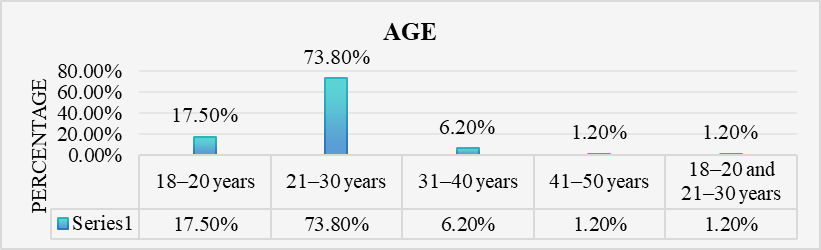
Figure 1: Age
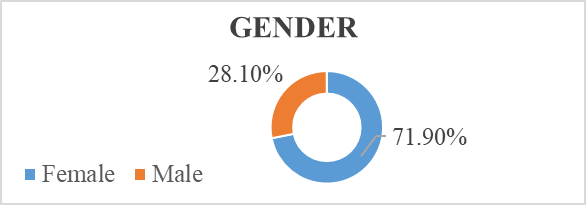
Figure 2: Gender
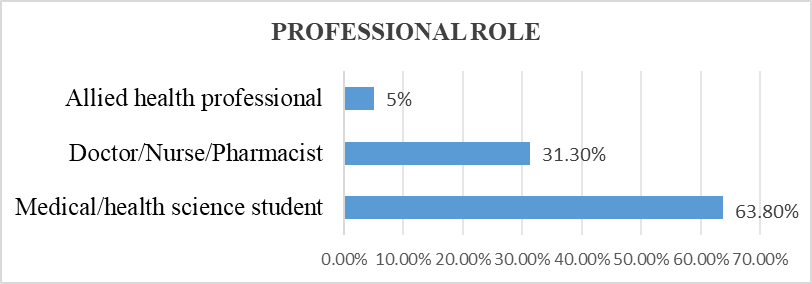
Figure 3: Professional Role

Figure 4: Experience
3.2 Knowledge Regarding PFA:
Only 74 participants (46.2%) reported having heard about PFA previously, whereas 86 (53.8%) had not. Regarding the meaning of PFA, 120 participants (75.0%) identified it as immediate support for mental-health issues. However, 13 (8.1%) considered it to be therapy sessions, 10 (6.3%) considered it medical first aid for injuries, 15 (9.4%) reported that they did not know, and 2 (1.3%) selected both medical first aid and immediate mental-health support. When asked whether only psychiatrists can identify mental illness, 105 participants (65.6%) correctly answered “No”, whereas 55 (34.4%) answered “Yes.” The majority, 132 (82.5%), identified mental illness as a condition for which PFA could help. Nineteen participants (11.9%) selected physical illness, seven (4.4%) selected none of the options, and two (1.3%) selected both mental and physical illness. Knowledge regarding the goals of PFA showed greater variability. Only 11 participants (6.9%) selected both appropriate core goals—providing initial help before professional treatment and referring to mental-health professionals—without selecting an incorrect goal. Many respondents selected diagnosing mental illness or providing long-term counselling, suggesting uncertainty regarding the boundaries of PFA. Regarding who can provide PFA, 81 participants (50.6%) selected “anyone trained in PFA”. However, 21 (13.1%) believed that only healthcare professionals could provide PFA, 21 (13.1%) selected “don't know,” and others selected multiple alternatives.
Table 2. Knowledge-related responses
|
Knowledge Indicator |
N |
% |
|
Previously heard about PFA – Yes |
74 |
46.2 |
|
Identified PFA as immediate mental-health support |
120 |
75.0 |
|
Correctly rejected “only psychiatrists can identify mental illness” |
105 |
65.6 |
|
Identified mental illness as a condition PFA can help with |
132 |
82.5 |
|
Correctly identified appropriate core PFA goals |
11 |
6.9 |
|
Identified “anyone trained in PFA” as a provider |
81 |
50.6 |
Overall, the results suggest that participants possessed some basic understanding of PFA but showed important knowledge gaps concerning its scope, goals and appropriate providers.
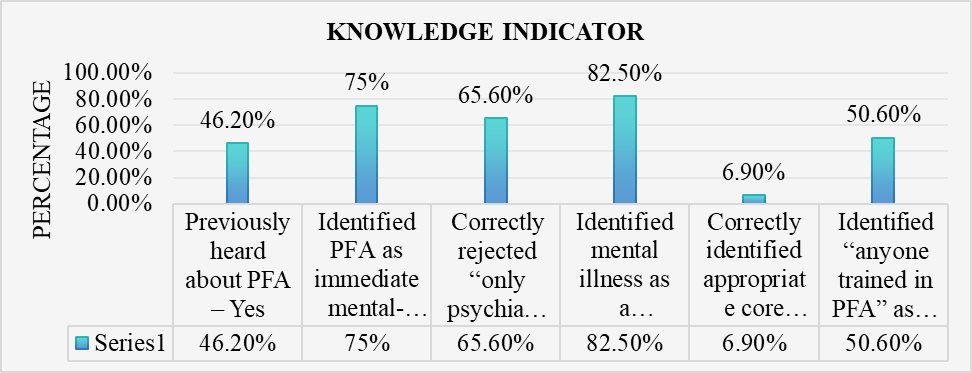
Figure 5: Knowledge Indicator
3.3 Attitude Towards PFA
The participants demonstrated generally favourable attitudes toward PFA. A total of 148 participants (92.5%) agreed or strongly agreed that PFA training is important, comprising 97 (60.6%) who agreed and 51 (31.9%) who strongly agreed. Regarding confidence in providing PFA if trained, 78 (48.8%) responded yes, 53 (33.1%) were uncertain and 29 (18.1%) responded no. A total of 108 participants (67.5%) would recommend PFA training to others, while 42 (26.3%) were uncertain and 10 (6.3%) would not recommend it. Regarding integration of PFA into general education, 123 participants (76.9%) agreed or strongly agreed that PFA should be part of general education. Furthermore, 114 participants (71.3%) agreed or strongly agreed that mental-health issues are as important as physical-health issues.
Table 3. Attitude towards PFA
|
Attitude Indicator |
N |
% |
|
PFA training important – Agree/Strongly agree |
148 |
92.5 |
|
Confident in providing PFA if trained – Yes |
78 |
48.8 |
|
Would recommend PFA training – Yes |
108 |
67.5 |
|
PFA should be part of general education – Agree/Strongly agree |
123 |
76.9 |
|
Mental health as important as physical health – Agree/Strongly agree |
114 |
71.3 |
These findings demonstrate a clear willingness to recognize the importance of PFA despite limited formal training exposure.
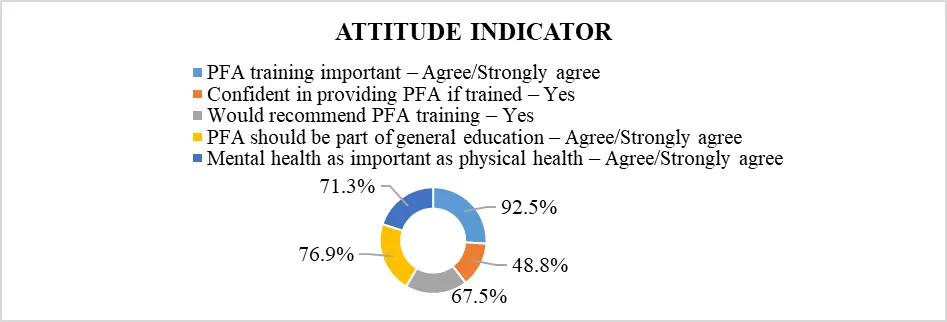
Figure 6: Attitude Indicator
3.4 Practice Related To PFA
One hundred participants (62.5%) reported that they had previously supported someone experiencing a mental-health problem. However, only 37 participants (23.1%) had received formal PFA training, while 123 (76.9%) had not. Regarding helping methods, listening and offering support was the most frequently reported response, selected by 84 participants (52.5%). A further 32 (20.0%) reported both listening/offering support and encouraging professional help, while 26 (16.3%) reported encouraging professional help alone. A total of 105 participants (65.6%) were interested in attending a PFA training programme, while 35 (21.9%) were unsure and 20 (12.5%) were not interested. Eighty-eight participants (55.0%) had previously participated in a mental-health awareness programme. Only 67 participants (41.9%) reported knowing about mental-health services available in their institution or area, while 73 (45.6%) reported that they did not know and 20 (12.5%) reported that such services were not available.
Table 4. Practice-related findings
|
Practice Indicator |
N |
% |
|
Previously supported someone with a mental-health problem – Yes |
100 |
62.5 |
|
Received formal PFA training – Yes |
37 |
23.1 |
|
Listen and offer support |
84 |
52.5 |
|
Listen + encourage professional help |
32 |
20.0 |
|
Encourage professional help |
26 |
16.3 |
|
Interested in PFA training – Yes |
105 |
65.6 |
|
Participated in mental-health awareness programme – Yes |
88 |
55.0 |
|
Knows available mental-health services – Yes |
67 |
41.9 |
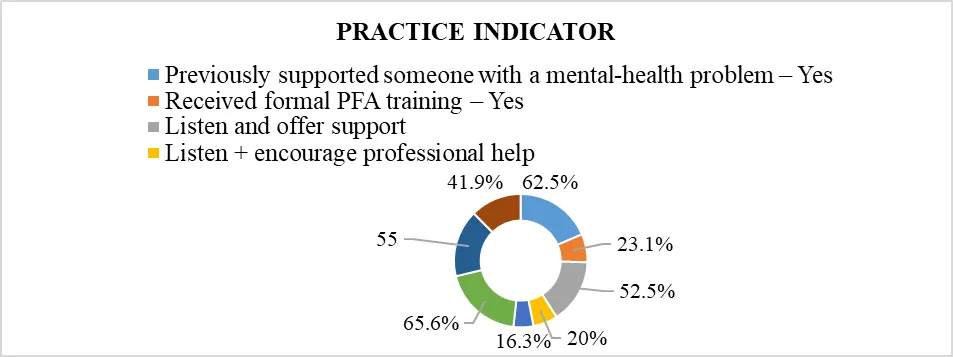
Figure 7: Practice Indicator
3.5 Workplace Awareness and Resources
A total of 85 participants (53.1%) reported that there was a lack of awareness or promotion of PFA in their workplace or institution, while 42 (26.3%) were uncertain and 33 (20.6%) did not perceive such a lack. Perceived availability of mental-health resources was variable. Nineteen participants (11.9%) rated availability as excellent, 44 (27.5%) as good, 43 (26.9%) as fair, 32 (20.0%) as poor and 22 (13.8%) as very poor. Thus, 54 participants (33.8%) rated the availability of mental-health resources as poor or very poor, whereas 63 (39.4%) rated them good or excellent.
3.6 Barriers To PFA
The most frequently selected concern regarding provision of PFA was “all of the above,” reported by 53 participants (33.1%). This indicates that participants perceived several simultaneous barriers. Lack of knowledge alone was reported by 31 participants (19.4%), fear of doing harm by 22 (13.8%), and lack of time by 18 (11.3%). Other responses included combinations involving lack of knowledge, fear of doing harm and social stigma. These findings indicate that barriers were not restricted to lack of factual knowledge but also included concerns about competence, time, stigma and the possibility of causing harm.
4. DISCUSSION
The present study assessed knowledge, attitude and practice related to PFA among 160 healthcare professionals and students. The principal finding was that although awareness and formal training exposure were limited, attitudes toward PFA were generally favourable and there was considerable interest in further training. More than half of the participants (53.8%) had not previously heard about PFA. This finding is important because healthcare professionals and students may encounter individuals experiencing psychological distress even when they have not received specific PFA education. The finding is consistent with the broader rationale for mental-health first-aid education, which arose partly from recognition that people may have limited mental-health literacy and confidence in responding to psychological problems. Morgan et al.'s systematic review found that structured MHFA training improves knowledge and confidence, supporting the importance of educational interventions where baseline knowledge is inadequate. Despite limited prior awareness, 75.0% of participants correctly identified PFA as immediate support for mental-health issues, and 82.5% identified mental illness as a condition for which PFA could help. These findings indicate that basic concepts were understood by a substantial proportion of respondents. However, knowledge concerning the scope and boundaries of PFA was less satisfactory. Only 6.9% selected the appropriate combination of PFA goals without including inappropriate activities such as diagnosis or long-term counselling. This is an important finding because PFA is not intended to replace professional mental-health assessment or treatment. WHO guidance emphasizes supportive and practical assistance, appropriate communication and linkage to further support rather than diagnosis or treatment. The finding that only half of participants identified “anyone trained in PFA” as an appropriate provider further suggests uncertainty about the scope of PFA. This is particularly relevant for healthcare education because PFA is designed as a supportive intervention that can be learned by appropriately trained individuals rather than being restricted exclusively to psychiatrists. The attitude findings were considerably more positive. Ninety-two and a half percent of participants agreed or strongly agreed that PFA training was important. In addition, 67.5% would recommend PFA training to others and 76.9% believed PFA should form part of general education. This favourable attitude is consistent with findings from systematic reviews demonstrating that mental-health first-aid education can improve confidence and intentions to provide support. Morgan et al. reported improvements in confidence and intentions to provide mental-health first aid following training, although actual helping behaviour showed smaller and less consistent effects. The gap between favourable attitudes and actual training exposure is particularly notable. Only 23.1% of participants had received formal PFA training, despite 65.6% expressing interest in attending training. This suggests an unmet educational need. The finding is consistent with the systematic review by Movahed et al., which identified knowledge, confidence and competence as common outcomes of PFA training but also noted that many programmes were short and lacked scenario-based learning and post-training supervision. The present study also demonstrated that practical exposure to mental-health situations was relatively common. Sixty-two and a half percent of participants had previously supported someone with a mental-health problem. However, this experience occurred in a context where formal PFA training was uncommon. This distinction is important: healthcare personnel may already be providing informal psychological support, but without structured training they may lack confidence regarding appropriate communication, boundaries, referral and crisis management. Listening and offering support was the most frequently reported helping method, selected by 52.5% of participants. This finding is encouraging because listening is a central element of effective PFA. The WHO guide emphasizes that people experiencing distress may benefit from having someone listen and provide support, while also emphasizing that individuals should not be pressured to disclose their experiences. At the same time, the finding that 16.3% reported encouraging professional help alone and that some respondents selected inappropriate or passive responses suggests variability in helping practices. This supports the need for practical training that goes beyond theoretical knowledge. Evidence from healthcare professionals supports this approach. Madani et al.'s randomized controlled trial found that PFA virtual education significantly improved communication skills among nurses following training. Their findings reinforce the importance of communication-based components of PFA training for healthcare workers. The current study also identified institutional barriers. More than half of participants (53.1%) perceived a lack of awareness or promotion of PFA within their workplace or institution. Furthermore, one-third rated mental-health resource availability as poor or very poor. These findings indicate that individual-level education may not be sufficient. Healthcare institutions may need to provide clear referral pathways, accessible mental-health services, staff education, awareness programmes and supportive policies. The literature also indicates that training effects should not be assumed to translate automatically into sustained practice. Morgan et al. reported that MHFA training produced improvements in knowledge and confidence, but evidence for the quality and amount of helping behaviour was less consistent. Similarly, the three-year Youth MHFA trial demonstrated sustained improvement in knowledge but did not provide definitive evidence of improved helping behaviour or recipient outcomes. Therefore, the findings of the present study support the implementation of structured, competency-oriented PFA education, ideally incorporating scenarios, role-play, communication skills, referral pathways and opportunities for reinforcement rather than relying exclusively on one-time theoretical instruction. The study's findings are also relevant to healthcare students. Since 63.8% of participants were medical/health science students, integrating PFA competencies into healthcare education could allow future healthcare professionals to develop these skills before entering clinical practice. Evidence from pharmacy education demonstrates that MHFA training combined with simulated psychosis-care role plays can be used to address stigma, confidence and helping behaviours in healthcare students. Overall, the findings demonstrate a knowledge–training–practice gap. Participants recognized the importance of PFA and showed willingness to learn, but formal training exposure was limited and knowledge about the precise scope of PFA was inconsistent. This provides a strong rationale for institutional PFA education and continuing professional development.
5. FUTURE RECOMMENDATIONS
6. RESEARCH GAP
Despite growing consensus that Psychological First Aid (PFA) should be a standard competency in healthcare, three critical gaps persist in the current body of literature:
7. Rationale of The Study
Healthcare professionals routinely work on the front lines of emotional distress, traumatic events, and systemic stress. While clinicians receive extensive technical preparation to stabilize physical trauma, psychological triage is rarely integrated into standard healthcare education. This creates a critical vulnerability for both patients in crisis and healthcare staff.
By evaluating PFA training through rigorous, validated assessment tools and prospective designs, this study provides actionable evidence to transform PFA from an optional workshop into a standardized, institutionalized healthcare standard.
8. CONCLUSION
The present study demonstrates that the healthcare community had limited prior awareness and formal training in Psychological First Aid but generally favourable attitudes toward PFA education. Although only 46.2% of participants had previously heard about PFA and only 23.1% had received formal training, 92.5% considered PFA training important and 65.6% were interested in attending a PFA training programme. A substantial proportion had already encountered situations involving individuals with mental-health problems, suggesting that healthcare professionals and students may be providing psychological support without formal PFA preparation. The study also identified important knowledge gaps, particularly concerning the appropriate goals, scope and providers of PFA. Institutional barriers, including inadequate awareness and limited availability of mental-health resources, were also identified. These findings support the incorporation of structured PFA education into healthcare curricula, professional development programmes and institutional preparedness initiatives. Training should emphasize communication, active listening, recognition of distress, appropriate referral, boundaries of PFA, practical scenarios and self-care. Evidence from controlled trials and systematic reviews suggests that structured mental-health first-aid education can improve knowledge and confidence, while practical and repeated training may be necessary to strengthen sustained helping behaviour. In conclusion, strengthening PFA preparedness among healthcare professionals and students may contribute to earlier supportive responses and improved linkage to appropriate mental-health services. Further studies using validated PFA-specific instruments, probability-based sampling and intervention-based designs are recommended.
REFERENCES


Pavithra Biju Bijumon, Drishya L.*, Shaiju S. Dharan, Assessment of Knowledge, Attitude and Practice on Psychological First Aid (PFA) Among the Healthcare Community, Int. J. Med. Pharm. Sci., 2026, 2 (9), 223-234. https://doi.org/10.5281/zenodo.22653479
 10.5281/zenodo.22653479