

We use cookies to ensure our website works properly and to personalise your experience. Cookies policy
1Undergraduate Student, Shri RLT Institute of Pharmaceutical Science and Technology, (AKTU-Lucknow), NH-02, Ekdil, Etawah, Uttar Pradesh, 206126.
2Assistant Professor, Shri RLT Institute of Pharmaceutical Science and Technology, (AKTU-Lucknow), NH-02, Ekdil, Etawah, Uttar Pradesh, 206126
Migraine is a leading cause of global neurological disability, characterized by recurrent, severe headache attacks that demand rapid and effective abortive intervention. While conventional treatments rely heavily on oral triptans, these formulations often suffer from delayed clinical onset, extensive hepatic first-pass metabolism, and reduced absorption due to migraine-associated nausea and gastroparesis. Pulmonary drug delivery offers a compelling non-invasive alternative, providing rapid systemic drug absorption across the vast alveolar surface area while avoiding gastrointestinal degradation. This review explores the paradigm shift "beyond oral triptans," focusing on the development, phytochemistry, and engineering of herbal inhalation systems for fast-acting migraine relief. The manuscript details the neurobiological mechanisms underlying migraine attacks—spanning hypothalamic initiation, cortical spreading depression (CSD), trigeminovascular system (TGVS) activation, and the release of key vasoactive neuropeptides such as CGRP and PACAP. It evaluates conventional and novel triptan delivery systems alongside a comprehensive analysis of over 30 standardized phytomedicines (including Tanacetum parthenium, Petasites hybridus, Zingiber officinale, Mentha piperita, and Lavandula angustifolia). Their bioactive phytoconstituents and distinct pharmacological mechanisms—such as 5-HT receptor agonism, CGRP suppression, TRPM8 activation, and inhibition of cyclooxygenase/lipoxygenase pathways—are systematically categorized. Furthermore, the review establishes a standardized pharmaceutical methodology for formulating herbal pressurized metered-dose inhalers (pMDIs). It outlines the utilization of eco-friendly hydrofluoroalkane propellants, jet-mill micronization to achieve respirable particle dimensions (d90 < 5.0 µm), and pressure-filling production methods. Essential in vitro characterization protocols—including Delivered Dose Uniformity (DDU), Aerodynamic Particle Size Distribution (APSD) using a Next Generation Impactor (NGI), spray pattern laser imaging, and container leakage testing—are detailed to guarantee reliable pulmonary deposition. Herbal pMDIs represent a novel, safe, and fast-acting therapeutic platform that bridges traditional phytotherapy with advanced aerosol drug delivery science.
Migraine is the most frequently encountered neurological disorder in primary healthcare. According to the Global Burden of Disease study, migraine ranks as the second leading cause of disability worldwide and is the leading cause of disability among young women [1]. It is a persistent condition affecting approximately 18% of women and 6% of men globally, with chronic migraine impacting about 2% of the population [2]. Migraine is primarily a chronic headache disorder characterized by recurrent attacks lasting between 4 to 72 hours. These attacks are typically moderate to severe in intensity, often triggered by routine physical activity, and commonly accompanied by symptoms such as nausea, vomiting, and photophobia [3]. Essential oils, which are complex mixtures of organic compounds responsible for their distinctive fragrances and biological activities, are widely used in various forms including inhalation, topical application, and ingestion [4–6]. Various extraction techniques are employed to obtain essential oils, which possess a broad spectrum of pharmacological properties, including antibacterial, antiviral, antifungal, and anti-inflammatory effects. These oils are also effective in managing psychological disorders by reducing anxiety and stress levels. Consequently, they are commonly used in aromatherapy, massage therapy, and as natural insect repellents. Essential oils are concentrated plant extracts with unique chemical compositions that provide therapeutic benefits across multiple industries, such as healthcare and beauty [7–8]. Specific oils like lavender, peppermint, tea tree, and eucalyptus exhibit diverse effects on stress reduction, anxiety relief, mental clarity, and concentration. Eucalyptus oil, in particular, is known for its effectiveness in treating respiratory conditions. Aromatherapy with essential oils is widely practiced to promote both physical and emotional well-being. For optimal results, proper usage and high-quality essential oils are essential [10–13].
Phathophysiology of migraine: steps are given blow.
1. Premonitory Phase & Hypothalamic Initiation
Before head pain develops, premonitory symptoms (such as fatigue, food cravings, mood alterations, and frequent yawning) signal early central nervous system dysfunction.
2. Cortical Spreading Depression (CSD) & Aura
Cortical Spreading Depression (CSD) is the electrophysiological substrate responsible for the migraine aura.
3. Trigeminovascular System (TGVS) Activation
The core generator of throbbing headache pain is the trigeminovascular system (TGVS), composed of primary sensory neurons originating in the trigeminal ganglion that innervate the cranial dura mater and perivascular cerebral blood vessels [15].
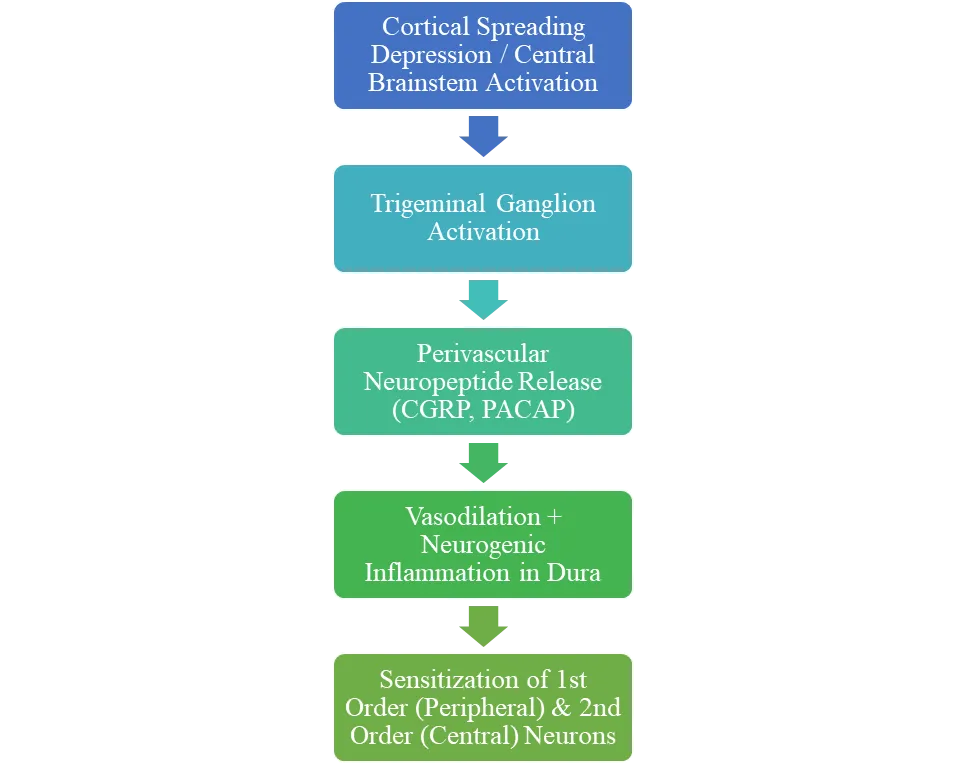
Figure 1: Steps of Phathophysiology of migraine
4. Peripheral and Central Sensitization
Types of Migraine:
Risk factors for migraines:
Over 38 million Americans get headaches, according to the American Migraine Foundation. There are a few things that could make you more likely to have them:
1] Sex: Women are three times as likely than men to experience migraines.
2] Age: Most adults between the ages of 10 and 40 experience migraine headaches. Around the age of 50, however, many women discover that their migraines either become better or go away.
3] Family History: Four out of five migraineurs have a family member with migraines. There is a 50% chance that a child may get identical headaches if one parent has previously experienced them. If both parents have them, the likelihood rises to 75% [17].
Table 1: Preparation used for the treatment of migraine
|
Sr. No. |
Dosage form |
Excipients used |
Method of preparation |
Reference |
|
|
Mucoadhesive microsphere |
Almotriptan-malate span-80, n-octanol calcium-chloride, gellan, isopropyl alcohol |
W/o crosslinking emulsification method |
22 |
|
|
Mucoadhesive insitu nasal get containing solid lipid nanoparticle |
Almotriptan malate, glyceryl behenate, glyceryl Palmitostearate, stearic acid, tween-80, agar,saline 0.9%,formaldehyde ,dicholromrthane, phospholipon H 90, polyvinylalcohol, Poloxamer 407, Carbopol 974p, Lubrizol, sodium alginate, sodium carboxyv, methyl cellulose, mucin, methanol, Hematoxylin, eosin stain, ethyl-acetate, diethyl ether, glacial Acetic acid, Benzalkonium chloride, total protein Sterile water |
w/o/w double emulsion solvent evaporation method |
23 |
|
|
Mucoadhesive buccal fiim |
Almotriptan, proloc 15, eudragit RL 100, eudragit RS 100, propylene glycol, polyvinylpyrrolidone, polyethylene glycol 400, methanol, ethyl cellulose, acetone, isopropyl alcohol, dibutyl phthalate. |
Solvent-casting method |
24 |
|
|
Mucoadhesive membrane insitu nasal gel |
Almotriptan malate, PF127, dialysis, PF68 carboxymethyl chitosan, benzalkonium chloride |
Cold technique |
25 |
|
|
Fast disintegrating tablet |
Naratriptan hydrochloride, glycine, mannitol, gelatin, amylose, soluble starch, dextrin, distilled deionized water. |
Lyophilization |
26 |
|
|
Fast-dissolving buccal film |
Rizatriptan benzoate, maltodextrin, xanthan gum, gum karaya, cinnamon oil, mannitol, saccharin, starch, and citric acid. |
Emulsion evaporation technique |
27 |
|
|
Oral transmucosal delivery
|
Naratriptan HCL, ethanol, transcutol P, oleic acid, methocel 60 HG, PEG400, dipropylene glycol, miglyol, PEG 200, propylene glycol, phosphate buffer saline tablet, acetonitrile, trifluoroacetic acid, triethanolamine, methanol, water |
The liquid dosage forms were prepared by dissolving a known amount of naratriptan base in the desired amount of solvent. |
28 |
|
|
Thermo reversible mucoadhesive in situ nasal gel |
Naratriptan hydrochloride, poloxamer 407, carbopol 934, cellophane membrane |
Cold technique |
29 |
|
|
Mouth dissolving tablet |
Rizatriptan benzoate, indion 234, indion 414, carboxymethylcellulose calcium, aspartame, mannitol, magnesium stearate, crospovidone, avicel pH-102 |
Direct compression method |
30 |
|
|
Chitosan nanoparticl |
Rizatriptan, chitosan, acetic acid, tripolyphosphate, mannitol. |
Ionic gelation method |
31 |
|
|
Orodispersible electrospun |
Rizatriptan benzoate, PVA, PVP (K60), PVP (K30), PVP (K90) |
Electrospinning and casting method |
32 |
|
|
Mucoadhesive buccal film
|
Rizatriptan benzoate, HPMC K4M, PVA, polyethylene oxide, glycerol, disodium hydrogen phosphate, sodium chloride, potassium chloride, potassium dihydrogen phosphate, magnesium chloride, sodium hydrogen carbonate, HCL, calcium chloride, phosphate buffer saline |
Solvent casting method |
33 |
|
|
Insitu nasal gel
|
Rizatriptan, carbopol 934P, HPMC (various grades), PEG400 |
Cold technique |
34 |
|
|
Intranasal spray formulation |
Rizatriptan benzoate, rizatriptan base, trifluroacetic acid, acetonitrile, propylene glycol, PEG400, NF, edetate disodium, dehydrated alcohol, benzalkonium chloride, anhydrous citric acid, butylated hydroxyl anisole, methyl paraben, propyl paraben, HCL, NaOH |
This method employs the preparation of two phases: the water phase and the ethanol phase. |
35 |
|
|
Chitosan-coated liposome containing sumatriptan |
Hydrogenated soya phosphatidyl-choline, acetonitrile, methanol, ethyl acetate, sodium phosphate, formic acid, sodium hydroxide, chitosan, and sumatriptan. |
Thin film hydration method |
36 |
|
|
Sumatriptan intrarectal mucoadhesive gel |
Potassium dihydrogen phosphate, benzalkonium chloride, Sumatriptan, Sodium hydroxide, poloxamer 407, poloxamer 188, xyloglucan |
Thin film hydration method |
37 |
|
|
Transdermal sumatriptan microneedle system
|
Sumatriptan succinate, polyvinylpyrrolidone, glycerine, polysorbate 80, nitrazine yellow |
Ionic complexation was used to formulate complex nasal inserts by electrostatic interaction |
38 |
|
|
Freeze-dried nasal inserts |
Sumatriptan succinate, chitosan, carrageenan, mannitol |
Solvent diffusion evaporation technique |
39 |
|
|
Nanostructure lipid carrier loaded with sumatriptan
|
Sumatriptan, acetone, stearic acid, Brij 35, Brij 72, triolein, cholesterol, deionized water, sodium hydroxide, ammonium acetate, glacial acetic acid, ethyl acetate, acetonitrile |
Freeze drying technology |
40 |
|
|
Orodispersible tablet
|
Sumatriptan succinate, gelatin, plasdone K90D, sorbitol, sucrose, potassium dihydrogen orthophosphate, sodium hydroxide, mannitol, disodium ethylene diamine tetra acetic acid, magnesium stearate, methanol, camphor, xanthan gum, glycine SR, sucralose, distilled water. |
AVP-825 breath-powered exhalation device |
41 |
|
|
Mucoadhesive buccal disc and sublingual film
|
Sumatriptan succinate, metoclopramide hydrochloride, HPMC (E-15), ethanol, dichloromethane, potassium dihydrogen phosphate, Sodium chloride, potassium chloride, sodium sulfate, ammonium acetate, urea, lactic acid, liquid paraffin, span 80 and propylene glycol |
Emulsion solvent diffusion and solvent casting method |
42 |
|
|
Sumatriptan succinate insitu nasal gel |
Sumatriptan succinate, polyvinyl pyrolide, poloxamer, carbomer, benzalkonium chloride |
Cold technique |
43 |
|
|
Fast-dissolving oral dosage form as a tablet and oral film
|
Sumatriptan succinate, hydroxyl propyl methyl cellulose (K100M), urad dal, polyvinyl alcohol, soluplus, propylene glycol, ethanol, mannitol, citric acid water |
The orally disintegrating tablet was prepared by wet granulation technique and the oral film was prepared by solvent casting method |
44 |
|
|
Sustained release of Mucoadhesive buccal film |
Sumatriptan succinate, HPMC, PEG, xanthan gum, potassium persulphate, acrylamide, acetone |
Solvent casting method and emulsion solvent diffusion |
45 |
|
|
Dry nasal powder of sumatriptan |
Sumatriptan, lactose |
Breath powder exhalation device |
46 |
|
|
Insitu mucoadhesive intranasal gel
|
Zolmitriptan, ketorolac tromethamine, tamarind gum, pluronic F127, polyethylene glycol, potassium dihydrogen orthophosphate, acetonitrile, trimethylamine, orthophosphoric acid, sodium chloride. |
Mix polymer with a gelling agent followed by the addition of water and additives. |
47 |
|
|
Zolmitriptan-loaded bilosome that are incorporated in insitu nasal gel.
|
Zolmitriptan, brij35, brijO10, cholesterol, hydroxypropyl methylcellulose, poloxamer 407, sodium deoxycholate, span 20, span 40, span 60, span 80, tween 65, tween 80, dialysis tubing cellulose membrane, methylene blue, normal saline, acetonitrile, formic acid, torsemide, distilled de-ionized water. |
The thin film hydration method was used for the preparation of bilosomes and the mucoadhesive gel was prepared by cold method. |
48 |
Pharmaceutical Inhalers:
Pharmaceutical inhalers are specialized drug delivery systems designed to aerosolize therapeutic agents for direct administration to the lower respiratory tract. Pulmonary administration offers distinct pharmacokinetic advantages, including a rapid onset of action due to the vast alveolar surface area (approx 100 m2) and thin epithelial barrier (0.2 - 0.7mcm), bypass of hepatic first-pass metabolism, and a reduction in systemic adverse effects compared to oral or parenteral routes [49-50].
1. Biopharmaceutical Principles & Deposition Mechanisms
The clinical efficacy of an inhaled formulation depends on the site of particle or droplet deposition within the respiratory tract, which is primarily governed by the Mass Median Aerodynamic Diameter (MMAD) and the patient's breathing pattern [50].
Deposition occurs through three main physical mechanisms:
Type of inhalers:
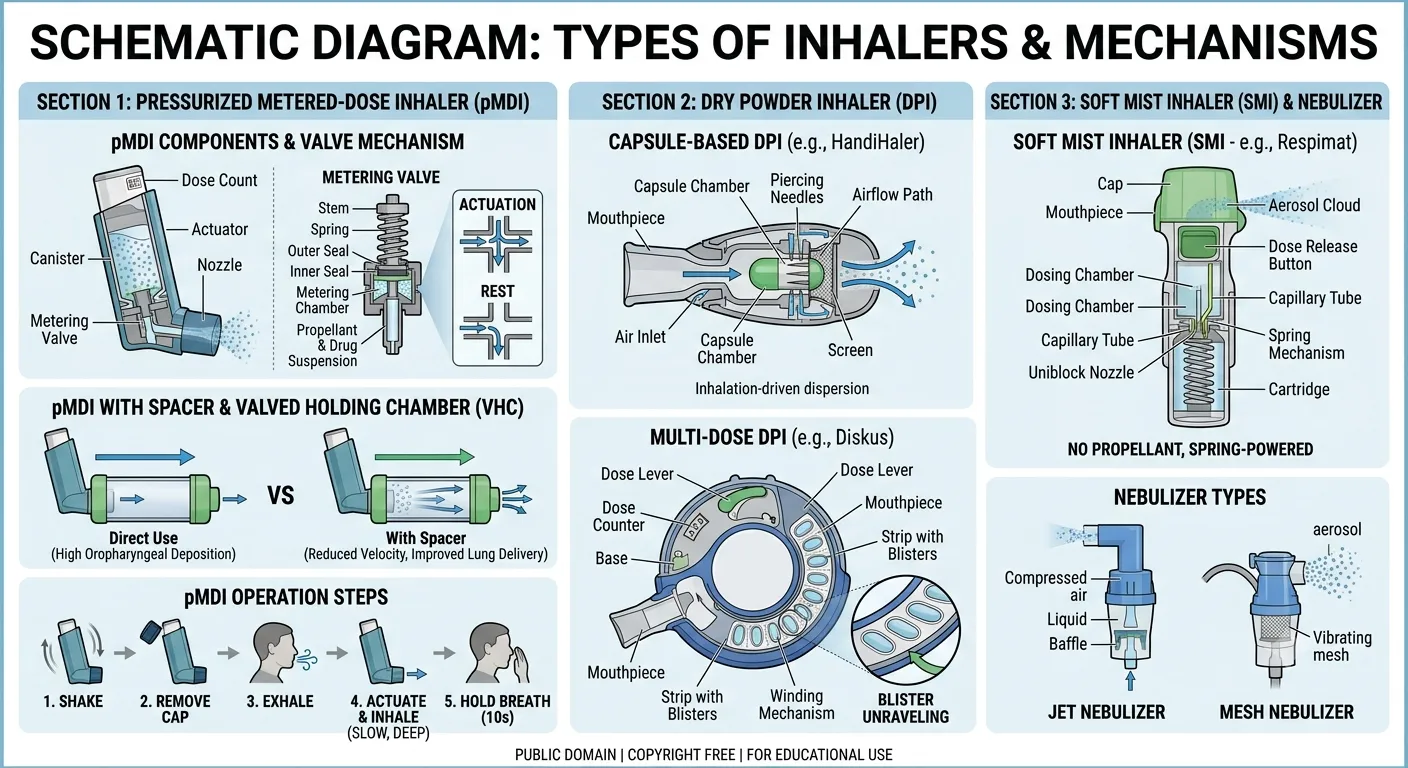
Figure 2: Pressure Metered Dose Inhaler [51].
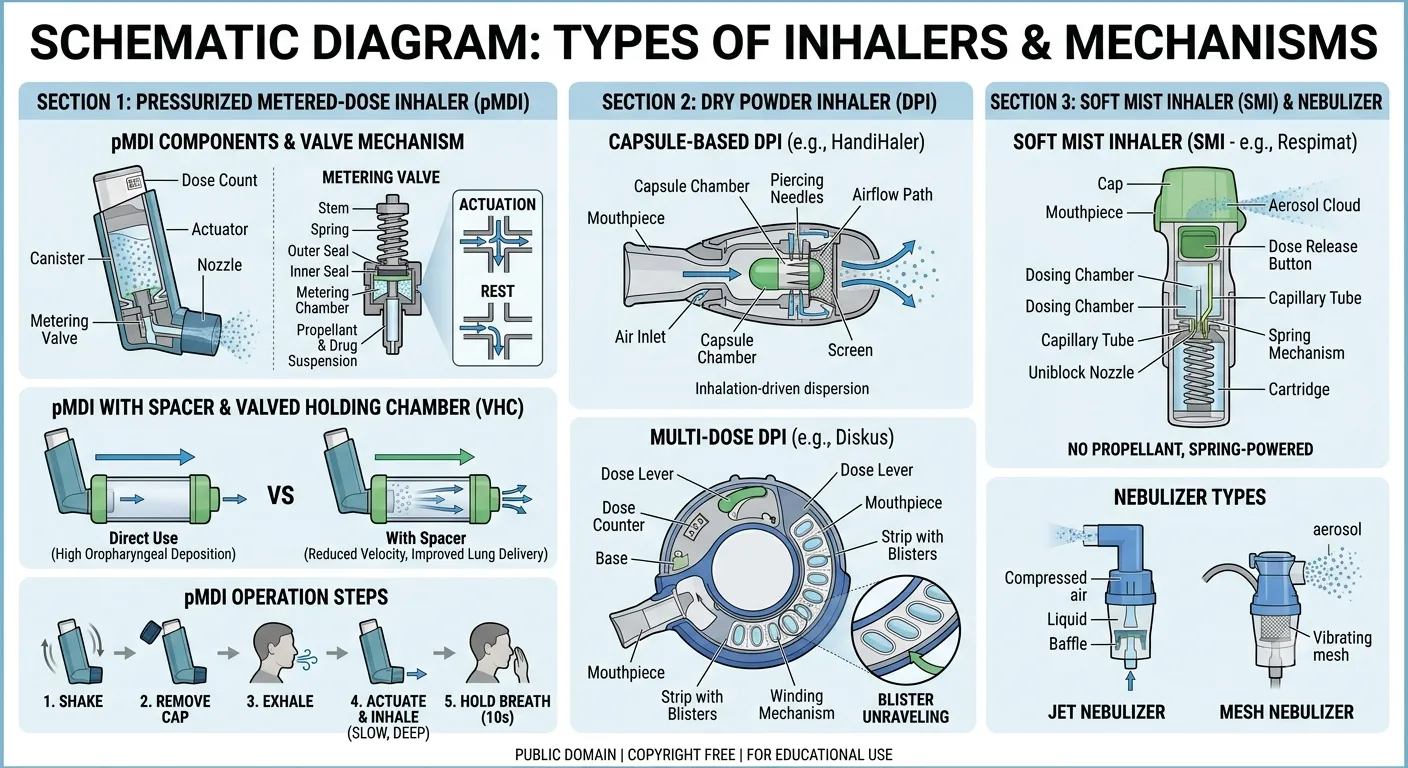
Figure 3: Dry powder Inhaler, Soft Mist Inhaler and Nebulizer [51].
Classification and comprehensive description of herbal inhalers
Herbal inhalers are non-invasive, volatile drug delivery systems designed to administer active botanical constituents directly to the respiratory epithelium via the nasal pathway. The volatile essential oils and phytochemicals present in these devices act locally on the nasal mucosa and can exert systemic or central nervous system effects via olfactory absorption. Herbal inhalers are primarily classified into categories based on Composition and Use [52].
1. Classification Based on Composition
This classification differentiates inhalers based on the number of botanical active pharmaceutical ingredients (APIs) incorporated into the formulation.
a. Single Herbal Inhaler
b. Polyherbal Inhaler
2. Classification Based on Use
This classification categorizes herbal inhalers based on their primary intended clinical application or therapeutic objective.
a. Decongestant Inhaler
b. Aromatherapy Inhaler
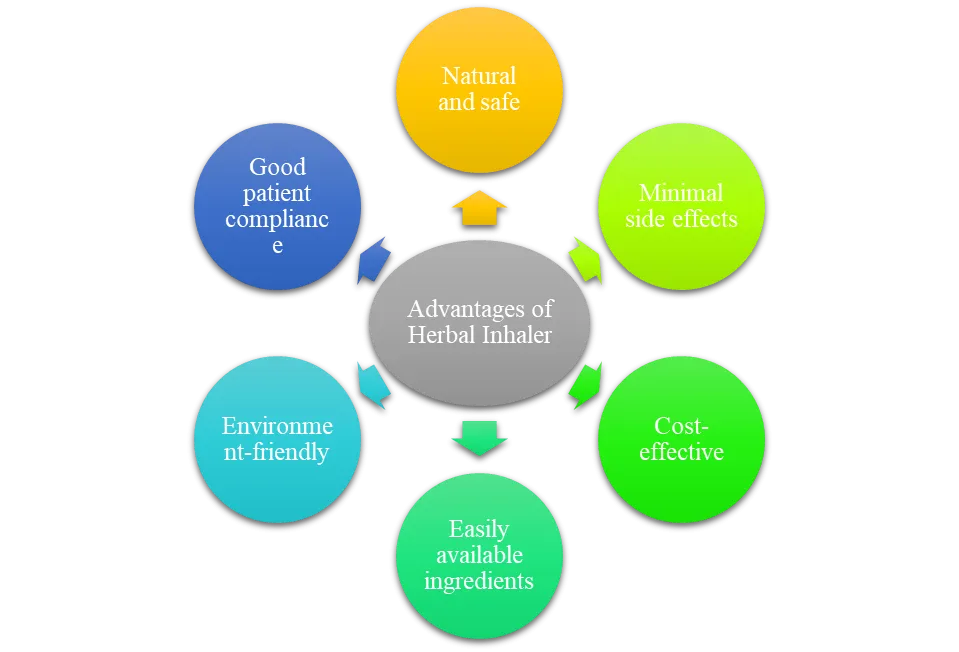
Figure 4: Advantages of Herbal Inhaler
MATERIALS AND METHODS
MATERIALS
Table 2 Phytomedicine mechanisms of action in migraine
|
Sr. No. |
Phytomedicine |
Active component |
Putative mechanism of action in migraine |
Reference |
|
1 |
Feverfew (Tanacetum parthenium) |
Chrysanthenyl acetate, Tanetin |
Inhibition of prostaglandin synthetase. Anti-inflammatory via inhibiting generation of pro-inflammatory eicosanoids. |
61 |
|
2 |
Butterbur (Petasites hybridus) |
Petasin, Isopetasin |
Inhibition of leukotriene synthesis in leukocytes. Inhibition of voltage-sensitive calcium channels in arterial smooth muscle cells. Inhibition of mast cell degranulation, activation of TRPA1 channels. Dose-dependent inhibition of COX-2 mediated prostaglandin E2 release in rat microglia. |
62 |
|
3 |
Cannabis (Cannabis spp.) |
Cannabinoids (substituted meroterpenes) |
Delta-9-THC inhibits release of serotonin from normal platelets. Cannabidiol is a lipoxygenase inhibitor that stimulates the release of prostaglandin E2 and inhibits leukotriene B4 synthesis in vitro. Endocannabinoid (AEA) inhibits neurogenic dural vasodilation mediated by CGRP and NO. |
63 |
|
4 |
Saint John’s Wort (Hypericum perforatum) |
Hypericin |
Counteracts NO donor-induced pain hypersensitivity and meningeal activation by blocking protein kinase C-mediated pathways involving NF-κB, CREB, STAT1. |
64 |
|
5 |
Damask rose (Rosa damascena) |
Flavonoids, Terpenes |
Analgesic and anti-inflammatory properties, exact mechanism of action unknown. |
65 |
|
6 |
Peppermint (Mentha piperita) |
Menthol |
TRPM8 activation with menthol reverses reduced facial pain thresholds induced by meningealinflammation. |
66 |
|
7 |
Ginger (Zingiber officinale) |
Gingerols, Shogaols, Zerumbone |
Dual inhibition of COX-1/COX-2 and lipoxygenase (LOX) pathways; 5-HT1A/1B receptor agonist activity; 5-HT3 receptor antagonism reducing migraine-associated nausea; inhibition of CGRP release. |
67 |
|
8 |
Ginkgo (Ginkgo biloba) |
Ginkgolide B, Bilobalide |
Inhibition of platelet-activating factor (PAF); attenuation of glutamate-mediated excitatory neurotransmission; suppression of cortical spreading depression (CSD); antioxidant vascular protection. |
68 |
|
9 |
Lavender (Lavandula angustifolia) |
Linalool, Linalyl acetate |
Modulation of central GABAergic neurotransmission; reduction of autonomic nervous system hyperreactivity; suppression of neurogenic inflammation and voltage-gated calcium channels. |
69 |
|
10 |
Turmeric (Curcuma longa) |
Curcumin |
Downregulation of NF-κB signaling; suppression of pro-inflammatory cytokines (TNF-α, IL-1β, IL-6); inhibition of COX-2 and neurogenic CGRP release. |
70 |
|
11 |
Willow Bark (Salix alba) |
Salicin (salicylic acid precursor) |
Non-selective inhibition of cyclooxygenase (COX-1/COX-2) enzymes; suppression of inflammatory prostaglandin synthesis and central/peripheral pain sensitization. |
71 |
|
12 |
Cayenne Pepper (Capsicum annuum) |
Capsaicin |
Desensitization of sensory nerve TRPV1 receptors; depletion of Substance P and neuropeptides from trigeminal ganglion nociceptive afferents. |
72 |
|
13 |
Chamomile (Matricaria chamomilla) |
Apigenin, Chamazulene, Bisabolol |
Positive allosteric modulation of GABA-A receptors; downregulation of inducible nitric oxide synthase (iNOS) and COX-2 expressions. |
73 |
|
14 |
Valerian (Valeriana officinalis) |
Valerenic acid, Valepotriates |
Potentiation of GABAergic tone via inhibition of GABA degradation and reuptake; central antispasmodic and sedative effects mitigating stress-induced migraine. |
74 |
|
15 |
Coriander (Coriandrum sativum) |
Linalool, Geraniol |
Central antinociceptive and antioxidant properties; inhibition of nitric oxide synthase activity and scavenging of neurotoxic ROS. |
75 |
|
16 |
Sweet Basil (Ocimum basilicum) |
Linalool, Eugenol, Estragole |
Modulation of peripheral nociceptors and blockade of inflammatory cascades; central analgesic interaction with opioid and GABA systems. |
76 |
|
17 |
Cinnamon (Cinnamomum verum) |
Cinnamaldehyde, Eugenol |
Inhibition of NF-κB activation and nitric oxide synthesis; reduction of serum high-sensitivity C-reactive protein (hs-CRP) and systemic oxidative stress. |
77 |
|
18 |
Citron (Citrus medica) |
Limonene, Hesperidin |
Antioxidant and anti-inflammatory activity; inhibition of PGE2 generation and dampening of trigeminovascular head pain signaling. |
78 |
|
19 |
Kudzu (Pueraria lobata) |
Puerarin, Daidzin |
Modulation of 5-HT2A serotonin receptors; regulation of cerebral blood flow and inhibition of neurogenic dural vasodilation. |
79 |
|
20 |
Rosemary (Rosmarinus officinalis) |
Rosmarinic acid, Carnosic acid |
Inhibition of complement pathway activation; suppression of lipid peroxidation; modulation of central cholinergic and GABAergic tone. |
80 |
|
21 |
Lemon Balm (Melissa officinalis) |
Rosmarinic acid, Citral |
Inhibition of GABA-transaminase (GABA-T) resulting in increased brain GABA concentration; cholinergic modulation relieving stress-triggered vascular headaches. |
81 |
|
22 |
Black Pepper (Piper nigrum) |
Piperine |
TRPV1 receptor desensitization; enhancement of intestinal absorption/bioavailability of co-administered polyphenols; suppression of IL-1β and TNF-α. |
82 |
|
23 |
Ashwagandha (Withania somnifera) |
Withanolides (Withaferin A) |
Modulation of the HPA axis and cortisol levels; GABA-mimetic activity in the CNS; attenuation of neuroinflammation and neurovascular oxidative stress. |
83 |
|
24 |
Chinese Skullcap (Scutellaria baicalensis) |
Baicalin, Baicalein, Wogonin |
Selective 5-LOX and COX-2 enzyme inhibition; suppression of microglial neuroinflammatory activation and blood-brain barrier disruption. |
84 |
|
25 |
Garlic (Allium sativum) |
Allicin, S-allylcysteine |
Inhibition of platelet aggregation; elevation of hydrogen sulfide ($H_2S$) and regulation of endothelial nitric oxide synthase (eNOS) tone. |
85 |
|
26 |
Passionflower (Passiflora incarnata) |
Chrysin, Vitexin |
Binding to GABA-A receptor benzodiazepine binding sites; central anxiolytic and muscle-relaxing effects preventing stress-triggered attacks. |
86 |
|
27 |
Black Seed (Nigella sativa) |
Thymoquinone |
Scavenging of superoxide free radicals; inhibition of COX and 5-LOX inflammatory eicosanoids; attenuation of trigeminal sensory afferent firing. |
87 |
|
28 |
Bushy Matgrass (Lippia alba) |
Citral, Carvone, Myrcene |
Antinociceptive effects mediated via central adenosine $A_2A$ receptors and endogenous opioid system interaction; vascular smooth muscle relaxation. |
88 |
|
29 |
Saffron (Crocus sativus) |
Crocin, Safranal, Crocetin |
Inhibition of monoamine (serotonin, dopamine, norepinephrine) reuptake; neuroprotective and antioxidant activity within trigeminal ganglion neurons. |
89 |
|
30 |
Licorice (Glycyrrhiza glabra) |
Glycyrrhizin, Liquiritigenin |
Glucocorticoid-like anti-inflammatory action; suppression of HMGB1-mediated neuroinflammation and inhibition of 11-beta-HSD enzyme. |
90 |
|
31 |
Green Tea (Camellia sinensis) |
EGCG, L-theanine |
EGCG inhibits NF-κB and STAT3 neuroinflammatory signaling; L-theanine antagonizes glutamate receptors and promotes alpha-wave relaxation, dampening cortical excitability. |
91 |
METHODS:
Pre-formulation and Processing of Active Ingredient
Extraction and Standardization
The target bioactive phytoconstituents are isolated using supercritical carbon dioxide (sCO2) extraction or solvent extraction with ethanol, followed by concentrated rotary evaporation and freeze-drying [55]. The resulting extract is quantified and standardized using High-Performance Liquid Chromatography (HPLC) against authenticated reference standards [55,56].
Particle Size Reduction (For Suspension pMDIs)
For suspension-based pMDIs, the dried standardized extract is micronized using a Fluid Energy Jet Mill operated with dry nitrogen gas at an injection pressure of 5–6 bar [92]. Particle size distribution (PSD) is verified via laser diffraction (Malvern Mastersizer) equipped with a dry powder module, maintaining d90 < 5.0 µm to ensure targeted pulmonary deposition [92-93].
Preparation and Filling of pMDI Formulations
pMDI units are prepared using the Pressure Filling Method under controlled environment conditions (20

2o C and 45–55% RH) [58,94]:
In Vitro Quality Control and Characterization
Canisters are weighed (W1), stored inverted at 25

2o C for 14 days, and re-weighed (W2) according to United States Pharmacopeia guidelines [95]. The annual leakage rate (mg/year) is calculated as:
Leakage Rate = (W1- W2) /Time X 365
Units exhibiting a leakage rate >0.5% per year of total fill weight are discarded [95].
Delivered dose uniformity across the canister life (beginning, middle, and end actuations) is determined using a Dose Uniformity Sampling Apparatus (DUSA) connected to a vacuum pump calibrated to 28.3 L/min [95,96]. Actuations are discharged into the DUSA tube fitted with a 47 mm quartz fiber filter, washed with methanol, and quantified by validated HPLC [95].
Spray pattern cross-sectional area, ellipticity, and plume angle are characterized using a non-articulating high-speed laser imaging system under controlled actuation forces [97]. Measurements are taken at 3.0 cm and 6.0 cm distances from the actuator orifice during the fully developed actuation phase (10–30 ms) [97].
For suspension formulations, particle morphology and physical state after propellant evaporation are analyzed using Scanning Electron Microscopy (SEM) operated at an accelerating voltage of 5.0–10.0 kV after gold sputter coating under vacuum [98].
CONCLUSION
The transition from conventional oral triptans to advanced pulmonary delivery systems represents a promising frontier in acute migraine therapy. While standard oral formulations suffer from delayed clinical onset, reduced bioavailability, and gastrointestinal impairment during acute attacks, pressurized metered-dose inhalers (pMDIs) capitalize on the extensive alveolar surface area and thin epithelial membrane to achieve rapid, non-invasive systemic drug delivery while bypassing hepatic first-pass metabolism. Incorporating standardized botanical bioactives—such as those from Tanacetum parthenium, Petasites hybridus, Zingiber officinale, Mentha piperita, and Cannabis spp.—into aerosolized formulations offers a multi-targeted therapeutic approach. These phytoconstituents directly modulate key pathophysiological cascades of migraine, including trigeminovascular neuroinflammation, CGRP release, 5-HT receptor signaling, and cortical spreading depression. Transforming these botanical active ingredients into viable clinical therapies requires meticulous pharmaceutical engineering and rigorous quality control. Achieving target particle sizes (d90 < 5.0 µm) through jet-mill micronization, optimizing propellant-cosolvent matrices, and verifying performance via Next Generation Impactor (NGI) and Delivered Dose Uniformity (DDU) testing are critical to ensuring reliable deep-lung deposition. Although historical usage and preclinical evidence are compelling, well-designed clinical trials and standardized phytochemical profiling remain essential to establish safety, efficacy, and regulatory compliance. Ultimately, scientifically validated herbal pMDIs offer a promising, fast-acting, and non-invasive paradigm for rapid migraine relief.
REFERENCES


Niharika Tiwari*, Surendra Ahirwar, Beyond Oral Triptans: Exploring Herbal Inhalers and Pulmonary Delivery Systems for Fast-Acting Migraine Relief, Int. J. Med. Pharm. Sci., 2026, 2 (8), 565-583. https://doi.org/10.5281/zenodo.21980436
 10.5281/zenodo.21980436