

We use cookies to ensure our website works properly and to personalise your experience. Cookies policy
1Department of Pharmacology, Shantha College of Pharmacy, Peresandra, Chikkaballapur- 562104, Karnataka, India. 2Department of Pharmacy Practice, Shantha College of Pharmacy, Peresandra, Chikkaballapur- 562104, Karnataka, India.
3Department of Pharmacognosy, Shantha College of Pharmacy, Peresandra, Chikkaballapur- 562104, Karnataka, India.
4Department of Pharmaceutics, Shantha College of Pharmacy, Peresandra, Chikkaballapur- 562104, Karnataka, India
Oxidative stress, mitochondrial dysfunction, neuroinflammation, and synuclein aggregation contributes to the progressive loss of dopaminergic neurons in the substantia nigra pars compacta that characterizes Parkinson's disease (PD), the second most common neurodegenerative disorder worldwide. The current approach to pharmacology, which emphasizes dopamine replacement, provides symptomatic relief but is hindered by long-term motor complications, leading to an increasing interest in neuroprotective natural products as adjunctive therapeutic approaches.Ginkgo bilobathe bioactive components of L, including flavonoid glycosides, ginkgolides, and bilobalide, are highly valued as antioxidants with protective properties against mitochondria and inflammation. These properties make it an excellent medicinal plant. Preclinical studies of PD models induced by MPTP- and 6-OHDA indicate that standardized model progression is feasible.Ginkgo bilobathe extract, particularly EGb 761®, reduces dopaminergic neuronal loss, minimizes striatal acidogenesis, inhibits microglial activation, regulates autophagy, and improves motor performance, with increasing evidence of inhibitory effects on -synuclein misfolding and aggregation. Several molecular mechanisms, including Nrf2/ARE pathway activation, inhibition of NF-B signalling, regulation of dopaminergic signalling and BDNF expression, modulation of cascades by PI3K/Akt and MAPK. Although there is some clinical evidence that EGb 761® may have positive effects on cognitive function, motor symptoms, and overall quality of life in individuals with PD, the safety profile is generally favourable. However, these results are limited and vary. Additionally, the study covers pharmacokinetic factors and possible interactions with levodopa and MAO-B inhibitors. Despite the positive results, certain limitations persist such as variation in extract composition, small clinical sample sizes, and the absence of large-scale, long-term randomized controlled trials.The examination harmonizes the existing preclinical and clinical evidence, delves into the molecular mechanisms that underlie these processes.Ginkgo bilobathe potential neuroprotective properties of PD are highlighted, and future directions include the use of nanotechnology-based delivery systems to enhance blood-brain barrier penetration, the isolation of specific bioactive molecules, standardized dosing protocols, or the implementation of rigorously designed clinical trials to prove this botanical therapy as an adjunctive treatment for Parkinson's disease[1,2,7,9,10,21].
An estimated 8.5 million people worldwide are affected by Parkinson's disease (PD), the second most prevalent neurodegenerative disorder after Alzheimer’s disease, with both frequency and prevalence increasing rapidly as individuals age and life expectancy increases. The progressive degeneration of dopaminergic neurons in the substantia minor in pars compacta is a pathological feature that leads to the depletion of striatal doP (dopy) and the motor triad of brady kinesiology, resting tremor, and rigidity (frequently with postural instability). The multisystem approach of PD has led to the recognition of non-motor symptoms like cognitive decline, depression, anxiety and sleep disturbances, as well as autonomic dysfunction and gastrointestinal disorders that often precede motor manifestation by several years. Multiple factors, such as genetic vulnerability and environmental pollutants, aging with mitochondrial dysfunction or overstimulation with oxidative stress inhibitors, chronic neuroinflammation, autophagy impairment, and neuronal apoptosis, play cuff-related mechanisms in the multifactorial process of PD. The disease is characterized by progressive neuronal dysfunction due to the misfolding and aggregation of -synuclein into Lewy bodies. A self-perpetuating cycle of harm is initiated by these processes, with dysfunctional mitochondria generating excess reactive oxygen species that promote -synuclein aggregation and further interfere with mitochondrial and proteasomal function, while activated microglia release pro-inflammatory cytokines that accelerate dopaminergic cell death. This multifactorial pathology contributes to the difficulty faced by single-target pharmacological approaches in changing the disease course. Current standard-of-care treatments, such as levodopa, dopamine agonists, MAO-B inhibitors and COMT inhibitor drugs, remain the primary means of managing PD. Although these therapies are effective in addressing motor symptoms, especially in the early disease phase, they only address symptoms and not the actual neurodegenerative factors. Motor fluctuations and dyskinesias often arise within several years after long-term use of levodopa, complicating treatment. These constraints have spurred continued interest in disease-modifying and neuroprotective strategies that can slow or stop neuronal loss, an area where conventional pharmacotherapy has only provided limited success. In this environment, natural products with multi-target mechanisms and favorable safety profiles have been the focus of significant research as potential adjunctive or complementary neuroprotective agents. Ginkgo biloba is a highly intriguing medicinal plant, being one of the oldest living trees and one-of-a-kind medical isolates worldwide. EGb 761® is a standardized extract that contains specific proportions of flavonoid glycoside (24%) and terpene lactones ((3%), including ginkgolides and bilobamid, which are responsible for its antioxidant properties, anti-inflammatory properties as well as its ability to stabilize mitochondria. Used in the traditional Chinese medical system and now analyzed for mental illnesses like dementia, Ginkgo biloba The broad pharmacological profile of is in line with the multifactorial pathology of PD, making it a suitable candidate for neuroprotection research. Ginkgo bilobaIt contains substances that shield dopaminergic neurons by reducing oxidative damage, controlling neuroinflammatory responses, improving cerebral blood flow through circulation, maintaining mitochondrial function, and inhibiting -synuclein aggregation. The effectiveness of EGb 761® in treating motor function, cognition, and quality of life for patients with post-traumatic stress disorder has been demonstrated by clinical studies. However, the evidence is limited and variable due to factors such as study design, treatment durations, patient populations, as phytotherapy for neurodegenerative disease becomes increasingly popular, this review seeks to critically synthesize the current evidence on its effectiveness. This is important. Ginkgo biloba Treatment for PD involves considering the pathophysiology of disease development and unmet therapeutic needs, phytochemical composition and pharmacological activity, preclinical evidence from animal models, molecular mechanisms of neuroprotection, clinical evidence in humans with respect to molecule interactions, and current and future research directions. Additionally [1,2,3,4,5,7,9].
OVERVIEW OF PARKINSON'S DISEASE:
Epidemiology:
Alzheimer's disease is the second most common neurodegenerative disease worldwide, while Parkinson' s also represents the fastest-growing neurological disorder worldwide. Roughly 1-2% of individuals over the age of 65 are affected by PD, and it is estimated that more than 10 million people worldwide have this condition. With the aging population and increasing life expectancy, this figure is expected to more than double by 2050. Although the onset of PD usually occurs at about 60 years old, early-onset disorder comprises only 5-10% of cases diagnosed before age 50. The yearly prevalence fluctuates between 8 and 18 cases per 100,000 person-years, and is consistently higher in men, with a male-to-female ratio of roughly 1.5:1 which could be due to hormonal and occupational variations. Regional variations in prevalence are determined by genetic heritage, environmental exposure and healthcare access; pesticide exposure alone may lead to higher rates in some areas. How many of these diseases are associated with industrialization? Advanced age, family background and genetic mutations are among the recognized risk factors. SNCA, LRRK2, PARK2/Parkin, PINK1, andDJ-1. There is a correlation between head trauma, pesticide and heavy metal exposures, as well as caffeine intake, tobacco use, physical activity, and NSAID use. Despite the high individual morbidity, the chronic, progressively disabling course of PD is both economic and difficult to manage[1,2,3,4,5,32,33,34,35,36].
Pathophysiology:
Progressive degeneration of dopaminergic neurons in the substantia (hypothetical) pars compactum is the hallmark disease, and it results in striatal doping with basal ganglia circuits that control voluntary movement. Significant neurodegeneration precedes clinical diagnosis as motor symptoms are typically not seen until after nigral neurons have been lost by 50-70% and striatal dopamine has decreased by almost 80%. The pathogenesis is characterized by interrelated processes that are driven by oxidative stress, mitochondrial dysfunction, and defective cells. These processes are all interdependent and contribute to different pathways. PINK1/Parkin- Mitophagy, chronic neuroinflammation, misfolding and prion-like spread of -synuclein into Lewy bodies and Lewy neurites, impaired ubiquitin-proteasome and autophagid-lysymphos clearance; excitotoxicity/ apoptosis via glutamate–driven calcium influx and caspase by Glucophage Mito chondrocytes. These conditions are described as follows: These mechanisms reinforce each other in a self-perpetuating cycle, with oxidative stress contributing to the dissipation of -synuclein, which results from increased inflammation and mitochondrial damage, further exacerbating neuronal death [1,2,4,5,18,20].
Clinical Manifestations:
PD leads to the development of both motor and non-motor symptoms that gradually decline.
Motor symptoms: Bradykinesia, the characteristic feature of slow voluntary movement, and resting tremor (a 4-6 muscle contraction) are among the symptoms that arise from striatal dopamine depletion. Frequencies, unilateral tremor caused by rolling objects, rigidity (such as wheel or lead-pipe stiffness), and postural instability with associated gait changes, freezing, and falls. Additional attributes consist of gait disturbance, arm flexion with little movement, unresponsiveness, hypochondria, microbial, dysplasia and half-eyed facial expression.
Non-motor symptoms:
Disability is frequently caused by years that pass before motor skills are mastered. This can be a significant factor. Among the conditions present are cognitive impairment that can lead to dementia in later stages, depression, anxiety, apathy, memory decline, autonomic dysfunction (orthostatic hypotension, constipation, urinary disturbances, sexual dysfunction), hyposmia, and chronic pain. Clinical diagnosis is still aided by the response to levodopa and, where feasible, Dastan imaging.
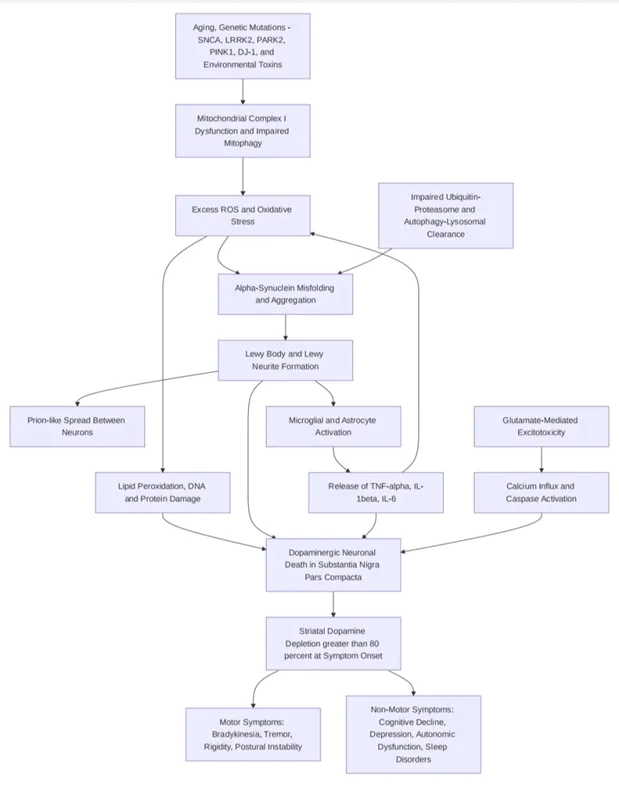
Figure (1): Pathophysiology of Parkinson's Disease
Current Treatment Strategies and Limitations: There is currently no cure or therapy that can modify PD, so the only way to address it is by managing its symptoms. Enhanced care of the advanced disease may include multidisciplinary care through feeding into physiotherapy, occupational therapy, speech therapy and nutritional and psychological support, in addition to device-assisted interventions such as deep brain stimulation, continuous levodopa-cardiotonic acid (IBD), or subcutaneous apomorphine injection.
Key weaknesses of present management include:
An outdated pharmacological paradigm that fails to address the multi-pathway pathology of primary disease disorder (PD). Due to the gap in their therapeutic capabilities, there is a growing interest in natural compounds that target multiple targets. This group of compounds includes human immunodeficiency and thyroid function. Ginkgo biloba, its antioxidant, anti-inflammatory and mitochondrial-protective properties, makes it a useful adjunctive strategy [1,2,3,4,5,20].
Table. No. 1: Current Treatment Strategies and Limitations
|
Drug Class |
Examples |
Mechanism |
Key Limitation |
|
Levodopa |
Carbidopa/ levodopa |
Dopamine precursor |
Gold standard; motor fluctuations and dyskinesia after 5- 10 years |
|
Dopamine agonists |
Pramipexole, ropinirole |
D2/D3 receptor agonism |
Less dyskinesia; nausea, hallucinations, impulse- control disorders |
|
MAO-B inhibitors |
Selegiline, rasagiline |
↓ 
|
Modest benefit; neuroprotective effect debated |
|
COMT inhibitors |
Entacapone |
Prolongs levodopa action |
GI effects; hepatotixicity (tolcapone) |
|
Anticholinergics |
Trihexyphenidyl |
↓ 
|
Cognitive side effect; limited to tremor |
|
Amantadine |
Amantadine |
NMDA antagonism |
Helps dyskinesia; limited duration of benefit |
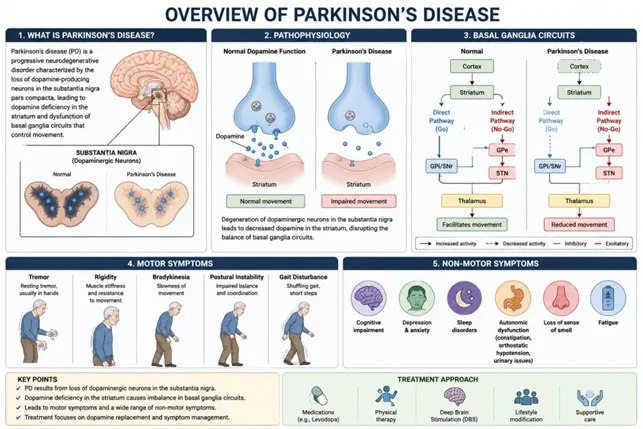
Figure (2): Overview of Parkinson’s Disease Overview of Ginkgo biloba Botanical Description.
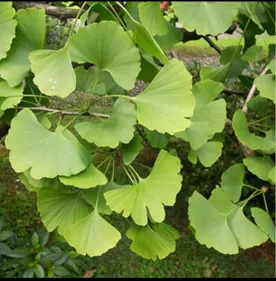
Ginkgo bilobathe maidenhair tree, L, is one of the oldest living trees and only survives in the Ginkgophyta family, which includes the members Lipophile. This "living fossil," which has eluded modern comprehension, has persisted for over 200 million years with minimal evolutionary evolution. Its native range extends from southeastern China, where it was once grown in Buddhist temples and monasteries to now inhabiting many other countries, including China itself, Japan, South Korea, India, Europe, North America and Australia. With its exceptional resistance to urban pollution, drought and pests and disease it is widely planted along the roadsides, in parks and on campus; also adapted to temperate climates with well-drained, rich soil. With a lifespan of over 1,000 years and typical growth rates of 20-30m (occasionally, exceeding 50m), this tree is large, slow to grow, and long-lived. Its characteristic features include a sturdy, straight trunk, root system that penetrates deeply, and curved pyramidal crown that spreads outward as it ages. The species' namesake is attributed to its fan-shaped, bright green leaves that are bilobed and have contrasting venation, which sets them apart from other seed plants.
Biloba:
The colour changes from golden to yellow in the fall season. This dioecious species has male trees that have pollen catkins, and females produce fleshy seeds that develop into paired ovules with an unpleasant butyric acid outer coat; male plants are generally considered ornamental. While the seeds are typically used in East Asian medicine after being processed, the dried green leaves are the primary medicinal raw material. The most extensively researched pharmaceutical preparations are standardized leaf extracts, particularly EGb 761®; these products have been manufactured with rigorous quality control and contain approximately 24% flavonoid glycosides and 6% total terpene lactones (including ginkgolides A.B.C.J. and the bilobalamin B.Q.D.), while the levels of gingili acid are kept below 5 ppm to maintain consistent efficacy and minimize toxicity [6,7,38].
Phytochemical Constituents:
The pharmacological activity of Ginkgo biloba: This originates from a complex phytochemical structure that encompasses over 100 active constituents, including flavonoids, terpene lactones (terpetoidoxines), organic acids, polyphenols and proanthocyanidins; biflavone/ polynorphine compounds; and trace elements: amino acids [6,7,8,21,38].
Flavonoids (24% of standardized extract):
Flavanol glycosides are primarily derived from quercetin, kaempferol, and isorhamnetin; they are also present in biflavones like amentoflavone, bilobetin or ginkgetin. The compounds prevent the release of reactive oxygen species, inhibit lipid peroxidation, and safeguard cell membranes from oxidative damage, while also possessing anti-inflammatory, vasodilatory, and anti–apoptotic properties. Additionally, Terpene lactones, comprising less than 6% of standardized extract: Including the diterpenes ginkgolides A, B, C, J, and M, as well as the sesquiterpenecunoscutecunoscute bilobalide. Concentrating on ginkgolides, they selectively target platelet-activating factor (PAF), which reduces inflammation, improve cerebral microcirculation, and protect against ischemic injury; while bilobalide enhances mitochondrial function, stabilizes neuronal membrane pH, stimulates ATP production, and decrease excitotoxicity and apoptosis. Other components, such as proanthocyanidins, catechins and organic acids, sterols (including fructose amino acids), polysaccharides, amino acid precursors und trace minerals), support immune regulation, antioxidant defence, cell homeostasis. Flavonoids and terpene lactones are considered the primary bioactive agents of neuroprotection, but the extract's therapeutic effects are typically due to the combined phytochemical profile rather than any single isolated compound.
Traditional and Therapeutic Uses:
Ginkgo biloba Traditional Chinese Medicine has been utilized for over 2000 years, and its seeds or leaves were traditionally used to treat respiratory disorders, circulatory and digestive ailments, as well as urinary dysfunction. Processed seeds were also employed for bladder disorders and excessive urination, but their toxicity was inherent to the preparation process at first. Therapeutic uses have been greatly expanded by modern pharmacological research. EGb 761® and other standard leaf extracts are frequently prescribed to enhance cognitive function, memory, and cerebral circulation, with demonstrated effectiveness in treating mild cognitive impairment, dementia, peripheral arterial disease, tinnitus, vertigo, anxiety disorders, as well as age-related macular degeneration. These agents have also been shown to improve cardiovascular health through their use in children and teenagers. This wide-ranging efficacy is characterized by a broad range of pharmacological targets, including enhanced microcirculation, antioxidant and free-radical scavenging activity, antiplatelet antagonism with PAF, immune modulation, and modulated mitochondrial function and neuronal cellular Apoptosis. Increasing curiosity about such things is driven by these same mechanisms. Ginkgo bilobaA neuroprotective candidate for Parkinson's disease is due to a combination of central pathogenic factors, including oxidative stress, mitochondrial dysfunction, and neuroinflammation. Experimental evidence indicates that its components safeguard dopaminergic neurons by reducing oxidative stress, inhibiting neuroinflammation, maintaining mitochondrial function, blocking-synuclein aggregation, controlling apoptosis, and improving cerebral blood flow, potentially leading to cognitive function enhancement, motor performance, quality of life, or improved cognition when combined with traditional antiparkinsonian therapy. This is supported by numerous studies [7,12,13,21,38,39].
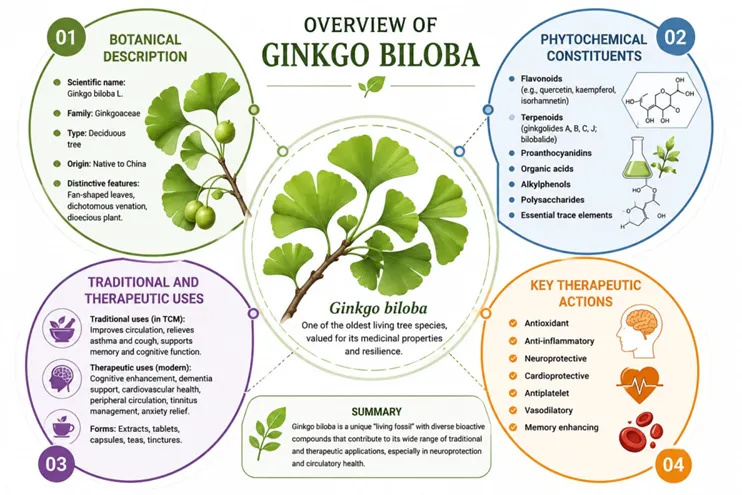
Figure (3): Overview of Ginkgo Biloba
Parkinson's Disease Is Associated with the Pharmacological Properties of Ginkgo Biloba.
Antioxidant Activity:
PD is caused by dopamine auto-oxidation, mitochondrial complex I dysfunction, and Festination in the substantia nigra, which are all known mechanisms of doping, including oxidative stress. Ginkgo biloba. The flavonoid components, including quercetin, kaempferol, isorhedin, and isobutyl phosphate, along with terpenoid components like ginkgolides and bilobalide, act as free-radical scavengers that neutralize reactive oxygen species and reduce lipid peroxidation. Besides directly scavenging, standardized extract (such as EGb 761®) upregulates endogenous antioxidant defences, including superoxide dismutase (SOD), catalase and glutathione peroxidation by enzyme HDACA, and restores depleted glutaminergic neurons. The activation of the Nrf2/ARE pathway is a crucial upstream process that facilitates the transcription of cytoprotective genes like -HO This mechanism involves complex proteins. These actions, when taken together, decrease oxidative damage to lipids, proteins and DNA in striatal and nigral tissue, thus protecting dopaminergic neurons across multiple MPTP- and 6-OHDA-induced PD models [8,14,19,21,24,25,30,31].
Anti-Inflammatory Effects:
The progression of PD is heavily influenced by neuroinflammation, which is driven by microglia and astrocytes. Ginkgo biloba. By inhibiting nuclear factor-B (NF-S) signalling, which prevents inflammatory gene transcription, the drug suppresses microglial and astrocytic activation and reduces the production of pro-inflammatory cytokines like TNF–, IL-1 or IR-6. Moreover, ginkgolides act as potent, selective inhibitors of platelet-activating factor (PAF), a lipid mediator that is involved in neuroinflammatory signalling and the blood-brain barrier disruption. By mitigating cytokine release and glial reactivity, Ginkgo biloba. Disrupts the self-amplifying process that links neuroinflammation with oxidative stress, leading to additional neuron damage [8,21,23,24,25].
Mitochondrial Protection:
Both idiopathic and toxin-induced PD models exhibit mitochondrial dysfunction, particularly the impairment of electron transport chain complex I. This is especially evident in both types. Ginkgo biloba. By stabilizing membrane potential, enhancing ATP production, and improving mitochondrial respiratory chain function, the acid bilobalide helps to maintain mitochondrial by limiting cytochrome c release and downstream apoptotic signalling. The extract is known to aid in mitophagy, which involves the selective autophagic clearance of damaged mitochondria, thereby helping to maintain the quality of mitochondria in dopaminergic neurons. When taken together, these effects promote neuronal energy metabolism, slow dopaminergic degeneration, and decrease ROS generation at its mitochondrial source [14,19,24,40].
Anti-apoptotic Activity:
Intrinsic and extinctual pathways are involved in the loss of dopaminergic neurons in PD, with apoptosis playing progressively more important role. Ginkgo biloba. Directly regulates the expression of key apoptotic proteins by raising Bcl-2, Bax, and maintaining the integrity of the mitochondrial membrane. This action is critical for controlling cell death at birth. Activation of caspase-3 and caspense-9, which are terminal executioners of the apoptotic cascade; is suppressed by extract treatment. Moreover, the modulation of the PI3K/Akt survival pathway, which involves increased Akt phosphorylation and the inhibition of pro-apoptotic GSK-3, has been implicated in neuroprotective effects in models treated with MPTP and 6-OHDA. These actions, when taken together, help to prevent neuronal cell death and promote the survival of dopaminergic neurons [8,14,21,24,25].
Neuroprotective Effects:
The overall neuroprotective profile of. Ginkgo biloba. In PD, the combination of antioxidant, anti-inflammatory (antigen), mitochondrial-protective and antiapoptotic activities with extra effects on protein homeostasis and neurotrophic signalling is evident. Emerging evidence indicates that. Ginkgo biloba. The inhibition of misfolding and oligomerization of -synuclein may be due to stabilizing native protein conformation and clearing autophagic aggregates. It has been reported that the extract can assist in neurotrophic signalling (such as BDNF) and enhance dopaminergic neuronal survival and synaptic upkeep, while enhanced cerebral microcirculation may enhance nutrients and oxygen delivery to vulnerable nigrostriatal areas. This is due to the antagonism and Vaso regulatory effects of PAF. Through experiments, both cellular and animal models have been shown to reduce neuronal degeneration through these combined actions, which also improve motor and cognitive behavioural outcomes. The clinical evidence in humans is still lacking, and more well-designed trials are required to verify the efficacy and safety of treatments [9,10,11,17,18,21,23].
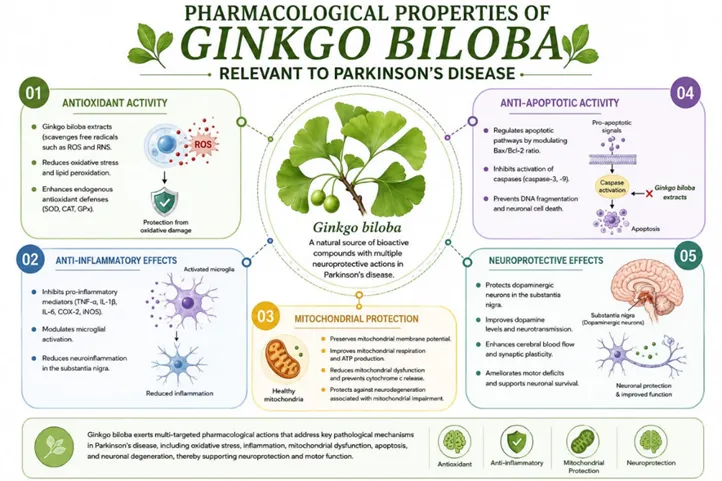
Figure (4): Pharmacological Properties of Ginkgo Biloba
The Molecular Mechanisms of Ginkgo Biloba in Parkinson's Disease:
Neuroprotective effects are produced in standard Ginkgo biloba extract (EGb 761®) through various molecular pathways linked to flavonoid glycosides (quercetin, kaempferol, isorhamnetin) and terpene lactones [8,9,21,23,25].
Oxidative Stress Modulation:
Loss of dopaminergic neurons is also a major cause of opiate distension (PD). Enhanced antioxidant defences are achieved through the selective scavenging of reactive oxygen and nitrogen species in EGb 761®, which also boosts superoxide dismutase (SOD), catalase (CAT), glutathione peroxidase (GPx), and glutamine (GSH). Antioxidant enzymes like HO and NQO1 undergo further upregulation through the Nrf2/ARE pathway to decrease lipid peroxidation and preventative damage of protein [8,21,24,25,30,31].
Regulation of Neuroinflammation:
The release of inflammatory mediators such as TNF-, IL-1 and iNOS, as well as COX-2, is inhibited by Ginkgo biloba due to its inhibition of microglial activation. These effects are primarily caused by the inhibition of neuroinflammation, suppression of platelet-activating factor (PAF), and inhibition or blockage of NF-B signalling and TLR4/MyD88 pathway [8,21,23,24,25].
Dopaminergic Neuron Protection:
By reducing oxidative stress, inhibiting mitochondrial function, and preserving mitochondriansEGb 761® helps to protect dopaminergic neurons. How does this drug work Bax, caspase-3, and cytochrome c release are reduced while Bcl-2 is increased. Furthermore, it boosts the generation of neurotrophic factors like BDNF and GDNF, which are essential for neuronal survival and dopamine upregulation [9,10,11,14,21,23].
Modulation of α-Synuclein Aggregation:
synuclein aggregation and fibril growth are prevented by flavonoids such as quercetin and kaempferol. What is the role of these substances? By activating the AMPK/mTOR pathway, EGb 761® facilitates autophagy by clearing -synuclein aggregated structures and decreasing oxidative modifications that lead to protein misfolding [17,18,21,23].
Mitochondrial Function and Energy Metabolism:
The mitochondrial complex I is safeguarded by bilobalide and ginkgolides, while also being responsible for maintaining mitochondrial a membrane potential, producing ATP, and blocking cytochrome c release. EGb 761® promotes the removal of damaged mitochondria and maintains neuronal energy metabolism through enhanced PINK1/Parkin-mediated mitophagy [14,19,24,40].
Neurotransmitter Regulation:
Ginkgo biloba inhibits acetylcholinesterase and maintains the control of dopamine levels and D2 receptor function, while also improving choline strain transmission. The modulation of glutamatergic, GABAergic and serotonergic neurotransmission is aided by it, which enhances motor function and cognitive processes. Ginkgo biloba: Efforts to target Parkinson's disease (PD) using standardized EGb 761® or isolated components (quercetin, kaempferol, Gallo cyanate inhibitor B, calcium carbonate), have been achieved in both cellular and animal models of dopaminergic neurodegeneration [8,21,23,25].
Key signalling pathways
Table (1): Preclinical Evidence: Mechanistic support for preclinical studies.
|
Pathways |
Effect of Ginkgo Biloba |
Relevance To Pd |
|
Nrf2/ ARE |
↑ 

|
Antioxidant defence |
|
NF-κB |
↓ 

|
Reduced neuroinflammation |
|
PI3K/Akt |
↑ 

|
Cell survival, anti- apoptosis |
|
MAPK |
↓ 
|
Reduced apoptosis and inflammation |
|
AMPK/mTOR |
↑ 

|
Enhanced autophagy, α- synuclein clearance |
|
CREB/BDNF |
↑ 

|
Neuroplasticity, cognitive support |
In Vitro Studies:
Modelling Parkinsonian neurodegeneration at the cellular level often involves the use of human neuroblastoma (SH-SY5Y) cells, PC12 cells and primary mesencephalic dopaminergic neuron cultures, which have been exposed to neurotoxins such as 6-OHDA, MPP+, rotenone, or paraquat [9,10,11,21,23].
Protection against toxin-induced cell death:
By targeting 6-OHDA- and MPP+-induced cytotoxicity in SH-SY5Y and PC12 cells through pretreatment with EGb 761® or quercetin, viability is improved by approximately 30–50% due to reduced ROs generation. Furthermore, it inhibits caspase-3 activation. In addition to preventing the intrinsic apoptotic pathway from activation, bilobalide also stabilizes mitochondrial membrane potential and increases the Bcl-2/Bax ratio while maintaining the preservation of ATP levels and blocking Cytochrome c release independently [9,10,11,14,21,24].
Antioxidant and anti-inflammatory effects:
Flavonoid fractions in MPP+-treated cells boost intracellular glutathione (GSH) levels, while decreasing malondialdehyde (MDA). By inhibiting activation and reducing nitric oxide, TNF-, and selective immune modulators (IL-1), the administration of ginkgolide B works by targeting both NFB and P kinase activity in LPS-stimulated microglial cell lines (e.g., BV-2 cells). Additionally, MAPK inhibition [8,21,23,24,25,30,31].
Α-Synuclein modulation:
In thioflavin assays, quercetin and/or kaempferol inhibit the formation of -synuclein fibrils; they also destabilize pre-formed fibril(s) by binding only to monomeric species, thus blocking their formation. EGb 761® promotes autophagy by activating the AMPK/mTOR pathway, which leads to increased LC3-II and decreased p62 accumulation in overexpressing cell models [17,18,21,23].
Neurotrophic support:
EGb 761® has been shown to increase the survival of dopaminergic neurons by upregulating BDNF and GDNF expression in astrocytes, as well as increasing neuroprotective properties using flavonoids and beta-carotene (B3C) receptors [16,21,23,27].
Collectively, in vitro data consistently proves.
Ginkgo biloba: Complementary antioxidants, anti-apoptotic mechanisms, and anti-inflammatory mechanisms are among the neuroprotective mechanisms found in constituents.
Animal Models of Parkinson's Disease:
In vivo Specifically, the evidence is based on toxin-induced rodent models (rats lesioned with 6-OHDA, mice treated with MPTP, and animals exposed to rotenone or paraquat/LPS) that reproduce characteristic features of motor impairment and nigrostriatal degeneration [9,10,11,21,23].
6-OHDA model (rat):
Elective nigrostriatal degeneration is the result of injection into the medial forebrain bundle or striatum, which is unilateral to 6-OHDA. During the 14–28-day period, with oral EGb 761® (50–100 mg/kg before and after lesioning), 40-60% of TH-positive neurons in the substantia nigra pars compacta were preserved, rotational behaviour and forelimb use improved, and striatal dopamine/DOPAC levels were restored through increased SOD and TNF-, as well as caspase-3 inhibition [10,11,23].
MPTP model (mouse):
This leads to acute dopaminergic loss and complex I inhibition, which is caused by the metabolization of MPTP into MPP+. The use of EGb 761® (50-200 mg/kg, 7-14 days) resulted in a decrease in MPTP-induced deficits on pole and rotarod tests, while also preserving striatal dopamine and other TH-positive neurons by roughly 35%, reducing oxidative markers, upregulating the Nrf2/HO-1 pathway, and decreasing microglial activation [10,11,23].
Rotenone model (rat):
The restoration of mitochondrial complex I activity and ATP levels was found to be enhanced by chronic infusion, which mimicked the progressive, systemic complex II inhibition and accumulation of -synuclein seen in human Parkinson's Disease (PD)[14,19,23,24].
Genetic and other models:
The EGb 761® gene, which is found in A53T (-synuclein transgenic mice), reduced the number of –seencrossovers and delayed motor impairment; this correlates with increased autophagy. Cross-species work [17,21,23].
Drosophila and C. elegans:
In the same way, models expressing human -synuclein demonstrate that Ginkgo flavonoids extend dopaminergic neuron survival and enhance locomotor behaviour, while models exposed to paraquats and LPS show reductions in oxidative markers, COX-2/iNOS expression, AND inflammatory cytokines after treatment with EGb 761®. Additionally, these models also indicate that.Several studies indicate that EGb 761® and levodopa combination may enhance therapeutic efficacy by increasing course time while mitigating oxidative damage associated with disease progression
Table (2): Summary table
|
Model |
Dose/ Duration |
Key Outcomes |
Proposed Mechanism |
|
6- OHDA Rat |
EGb761® 50 – 100 mg/ kg, 14- 28d |
↑ 


|
Antioxidant, anti- apoptotic |
|
MPTP mouse |
EGb761® 50 – 200 mg/ kg, 7- 14d |
↑ 


|
Nrf2 activation, NF-Κbinhibition |
|
Rotenone rat |
EGb761®100 mg/ kg, 28d |
↓ 

|
Mitochondrial protection |
|
Cell lines |
EGb761® 10- 200 µg/ ml |
↓ 


|
Multi- pathway (antioxidant, anti- apoptotic, autophagic) |
LIMITATIONS OF PRECLINICAL DATA.
Clinical Evidence: Ginkgo biloba.
Direct clinical evidence for Parkinson's disease (PD) is limited. Most of the research has emphasized the use of standardized extract (EGb 761®) as an alternative to traditional antiparkinsonian medication rather than as a standalone therapy, and the available data is varied in terms of design, sample size, treatment duration, or outcomes [12,13,23,39].
Clinical Trials: Direct trial data on.
Ginkgo biloba Despite the lack of evidence, idiopathic PD is often indicated by relevant studies. This was a double-blind placebo-controlled, randomised controlled experiment.
Ginkgo biloba: A condition that shares the same core motor pathology as idiopathic PD, known as drug-induced parkinsonism (DIP), is excluded. Sixty-three of the patients were randomly selected to receive 80 mg of each. Ginkgo biloba for three months, the outcomes were assessed using the Unified Parkinson's Disease Rating Scale (UPDRS) and Montreal Cognitive Assessment, with either being administered three times daily Ginkgo biloba According to the authors, it can be used as a safe and effective therapy for DIP, as it modifies the intensity of resting tremor and affects the severity of motor symptoms, rigidity, and bradykinesia, while also having an impact on working and short-term memory. Those suffering from post-traumatic stress disorder can benefit from a 2026 case series. As part of a one-month trial, seventeen patients administered EGb 761® as supplementary therapy with antiparkinsonian (PDA) or DPA inhibitors, and cognitive/molecular outcomes measured by UPDRS, MSE, MoCA, FAB, biochemical/ molecular-genetic markers. Patients were then followed for further treatment using the same drugs alone. The authors concluded that there was a statistically significant increase in UPDRS II, UDPRS III, overall UPI score, MMSE, and MoCA, as well as reversal of relative mitochondrial DNA copy number and telomere elongation. These findings were interpreted as consistent with, but not indicative of, activated mitophagy by the authors. However, they also found no evidence of activated. Oxygen stress markers (SOD, catalase, AGEs, GSH/GSSG and MDA) did not improve as predicted and in some cases moved in the opposite direction, which the authors hypothesized may be due to transient metabolic stress from active mitochondrial clearance rather than treatment failure. However, they found no significant improvement. Methodologically limited, with no control group and only a small sample, this study is one of the few to directly investigate EGb 761® as PD-specific adjunctive therapy. EGb 761® has been found to have positive effects on attention, memory, and executive function in patients with mild cognitive impairment, as well as modest improvements in daily living activities, quality of life, UPDRS scores, while some studies show reductions in oxidative stress and inflammatory biomarkers. The evidence base is not definitive since many published trials have small populations, inconsistent methodology, and short follow-up periods. This limits direct comparisons. A larger number of multicentre, randomized double-blind, placebo-controlled trials are necessary to determine the optimal dosage, treatment duration, and disease-modifying effectiveness. Additionally [12,13,23,39].
Safety and Tolerability:
Recommended doses of EGb 761® are generally safe and well-tolerated. The most frequent negative impacts, such as headache, dizziness, gastrointestinal discomfort, nausea, vomiting, and mild allergic reactions, are mild and transient. Less than 5% of users report these symptoms, which usually resolve within one to two weeks; taking the extract with food may alleviate nausea. The most significant safety risk is the possibility of bleeding. The risk of bleeding adverse events was found to be significantly higher in patients who took concurrent Ginkgo and warfarin, as per a large population study conducted in the Veterans Administration. A retrospective analysis of over 2,600 prescriptions revealed that drug interactions were prevalent at 1294% (lower rates were associated with antiplatelet agents, anticoagulants, and NSAIDs). Clopidogrel and aspirin showed the highest interaction rates, while Gingo biloba interactions had inversely linked to both bleeding risk and abnormal coagulation results. Both. The evidence is not entirely consistent, however, as one mechanistic study discovered that no significant differences were found. Ginkgo bilobain animal models, extract nor ginkgolide B had an impact on blood coagulation parameters, suggesting that any type of bleeding interaction may involve mechanisms other than direct antiplatelet action, potentially including effects on hepatic drug-metabolizing (cytochrome P450) enzymes. Blood loss is not the sole consequence of these clinically relevant interactions. Ginkgo bilobaIt is generally advised against taking warfarin, anti-seizure medications, and nifedipine, as it can decrease the activity of proton pump inhibitors such as omeprazole and other esomepracloza; further interactions have been observed with oral diabetes drugs, alpranzom, or statins[7,12,13,38,39].
Combination therapy with convectional anti- parkinsonian drugs
Ginkgo biloba Unlike standard antiparkinsonian pharmacotherapy, its clinical significance is primarily dependent on its combination with other treatments to restore dopaminergic neurotransmission. The primary therapy for Parkinson's disease (PD) is Levodopa, but its long-term usage often becomes less effective due to motor fluctuations, dyskinesias, and neurodegeneration rather than self-prevention. The gap has prompted the use of adjunctive neuroprotective agents, with evidence to support their effectiveness [20,21,23,29]. Ginkgo biloba Preclinical, retrospective, and small clinical studies combined.
Combination with Levodopa:
Preclinical evidence indicates that levodopa has a certain level of neurotoxicity, making it the most extensively studied combination. Dopaminergic neuronal apoptosis and rotational behaviour were significantly increased in animals treated with levodopa alone in rat 6-OHDA model, while those treated solely with the same drug showed no difference. Ginkgo biloba Compared to the combination group, Nissl body counts, which are an indicator of neuronal viability, were higher among extract (EGb 761). Based on the evidence, EGb 761 may have the potential to reduce levodopa-related oxidative neurotoxicity and potentially provide more neuroprotective effects than flavonoids alone. However, clinical testing is still necessary to confirm this. In a small pilot study, it was discovered that administering EGb 761 along with levodopa led to shorter "off " periods and greater dopamine availability in patients. Despite its small size, the finding requires replication in larger blinded studies before conclusive conclusions can be drawn. EGb 761's biological properties, including antioxidants, anti-inflammatory features, and mitochondrial protection, are likely to account for the mechanism of levodopa-induced motor complications, but direct clinical validation is not feasible [10,11,21,23,29].
Combination with Other Agents:
Beyond levodopaGinkgo biloba, this study has been conducted in conjunction with other drugs that are used to control cognitive and functional decline associated with PD. A regression analysis that matches the likelihood of 551 subjects. The comparison between nimodipine and a combination of both was made by testing patients using only one drug and the other two drugs alone. Both medications were found to be effective in treating post-traumatic stress disorder (PD). Ginkgo biloba, Extract over 12 weeks. The overall response rate for treatment was significantly higher in the combination group (90.36%) compared to the control group. The scores for the Mini-Mental State Examination and activities-of-daily-living were higher in this group than those achieved by nimodipine alone, with a score of 72.29%. This implies that cognitive and functional outcomes are improved when these outcomes occur. Ginkgo biloba, even if applied to existing pharmacology retrospective analysis cannot eliminate selection bias or confounding. Long-term drug development has been reported in an open trial, in a similar vein. Ginkgo biloba, Enhance the mood, attention, and reaction time of individuals with PD, suggesting that standard treatments may also play a part in managing non-motor symptoms like depression and cognitive impairment. The open-label design, like in the nimodipine data, restricts the causal inference[12,13,23,39].
Practicality and Safety in Combination Use:
Ginkgo biloba interaction profile. The mild antiplatelet activity raises the possibility of drug interactions, making it a matter of course, but for those taking concurrent anticoagulant or anti platelet therapy with cardiovascular comorbidity (which is common in older people with PD) who need closer observation to check for increased risk of bleeding. Patients taking MAO-B inhibitors (such as selegiline and rasagiline) should be cautious due to their theoretical additive monoaminergic effects. Interestingly, there are no formal studies of drug interactions between different groups. Ginkgo bilobaEvidence gap: Dopamine agonists, COMT inhibitors or amantadine used in PD patients. elastic evidence. Ginkgo bilobaIt should be viewed not as a replacement for traditional antiparkinsonian drugs but as an additional therapy that could potentially improve the efficacy of more advanced treatments through multiple neuroprotective and antioxidant mechanisms. Recent clinical and research studies indicate that the combination of agents may be beneficial. Ginkgo biloba A combination of conventional therapy and levodopa could potentially reduce oxidative neuronal injury, improve cognitive and functional outcomes, or extend therapeutic benefits. The evidence base is mainly made up of small, unmonitored, or retrospective studies. Studies that are double-blind, randomized and effectively control drugs through placebo but have been powered by adequate power. Ginkgo biloba Preferential treatment with endpoints for motor, cognitive, and biomarker to determine optimal dosage and duration of therapy is necessary before using this combination strategy in routine PD management [7,12,13,21,38.39].
Pharmacokinetics and Bioavailability of Ginkgo Biloba
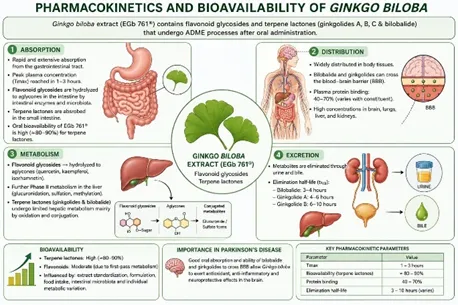
Figure (5): Pharmacokinetics and Bioavailability of Ginkgo Biloba
Dosage, Safety, Adverse Effect, And Drug Interactions
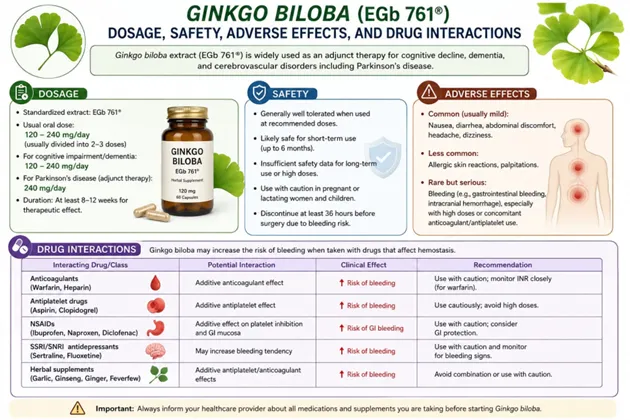
Figure (6): Dosage, Safety, Adverse effect, and Drug Interactions
Current Challenges and Limitations:
Although the field is mechanistic in nature and preliminary results are positive, Ginkgo biloba The widespread use of PD in clinical settings is hindered by several significant challenges [7,21,23,38].
Quality and Standardization of Extracts:
Ginkgo bilobathe makeup of preparations differs significantly according to the method, location, and manufacturing specifications. The standardized extract EGb 761, which is produced to a specific ratio of flavonoid glycosides, lactones and ginkgoid acids, has the most robust preclinical and clinical data. Standardization is often absent in commercially available over-the-counter products, and the amount of flavonoid and teprenone products can differ significantly between batches and brands. The inconsistency poses challenges in generalizing the outcomes of controlled trials to practical use and raises concerns that patients taking non-standardized products without medical approval may not achieve the pharmacological exposure they were expected to. This necessitates stricter quality control measures and regulatory monitoring [6,7,12,38,39].
Clinical evidence is limited and methodologically weak:
Ginkgo biloba In PD remains sparse. Even though most published studies have small sample sizes, short treatment durations, and heterogeneous designs (as opposed to multicentre studies), direct comparisons across studies are difficult due to differences in patient characteristics over time. A significant portion of the supplementary data comes from small pilot studies, open-label trials, or retrospective propensity-matched analyses, all of which carry with them inherent risks of bias, confounding, and limited generalizability. There are few, if any, of adequately powered, double-blind, placebo-controlled trials with predefined endpoints for motor, cognitive and biomarker measures. Without such trials, it is difficult to determine the most appropriate dosing, treatment duration, and which subgroups of PD will be most likely to benefit [12,13,23,39].
Blood-brain barrier penetration and limited bioavailability: Many flavonoid components are present in it.
Ginkgo biloba Display insufficient solubility in aqueous solutions, restricted intestinal absorption, and extensive first-pass metabolism, diminishing their systemic and central nervousness accessibility. While preclinical models have revealed central nervous system activity in these constituents, there are still uncertainties about the extent and consistency of blood-brain barrier penetration in humans. Various clinical effects may vary from person to person, depending on variability in both the rate of absorption and first-pass metabolism. The limitations in pharmacokinetics have led to an increase in interest in novel drug-delivery systems, such as nanoparticles, liposomes and nano-herbal formulations for improved brain delivery and better bioavailability. Ginkgo biloba Mild antiplatelet activity can be a risk factor for bleeding when administered alongside anticoagulant or anti platelet agents such as warfarin, aspirin and clopidogrel. It has the potential to alter cytochrome P450 enzyme-metabolized drugs by changing their pharmacokinetics and stressing the importance of carefully reviewing medications. However, formal pharmacokinetic or...dynamic interaction studies between drugs are not yet studied due to these concerns. Ginkgo biloba There are several core antiparkinsonian classes of drugs, including dopamine agonists, COMT inhibitors and MAO-B inhibitorS, and amantadine. Despite having the benefit of evidence-based guidance, clinicians are left with no dedicated interaction data and must resort to theoretical extrapolation and case level caution. This is problematic. Ginkgo biloba While the effects have been demonstrated in experimental models and as neuroprotective, its ability to modify disease progression in humans has not been proven. Rather than providing definitive evidence of delayed disease progression or preserved dopaminergic neurons, clinical studies have consistently shown improvements in cognitive function, oxidative stress markers, or quality of life. The absence of reliable biomarkers for assessing neuroprotective in clinical trials means that it is still challenging to differentiate between symptomatic benefits and actual disease changes. This poses challenges [14,19,24,40].
Incomplete Mechanistic Understanding:
The role of Nrf2/HO-1, PI3K/Akt, and NF-B has been identified as significant in the regulation of various signalling pathways, including MAPK, IGF/mTOR, AND ROS9/BDNF. Ginkgo biloba the neuroprotective actions and intricate interactions between its various bioactive components are still unresolved. Further mechanistic research is required to determine the main active compounds, their specific molecular targets, and potential synergistic interactions among constituents[8,21,24,25].
Uncertain Long-Term Safety:
In the short- to medium-term, Ginkgo bilobathe long-term safety data for PD populations, who are often elderly, on polypharmacy and at high risk of falls and bleeding, is limited to those who have been well-tolerated. Bleeding complications have been reported in a few rare cases. Ginkgo bilobato determine the safety of the medication, optimal dosage, and treatment duration for their use and prolonged administration in elderly patients receiving multiple medications, further studies must be conducted. Regulatory and Market Positioning Challenges. As a botanical compound in lieu of an authorized pharmaceutical ingredient in most jurisdictions, where by Ginkgo biloba Does not undergo the same regulatory scrutiny, manufacturing controls, or efficacy requirements as traditional antiparkinsonian drugs. The regulation aspect of the situation makes it more challenging to establish standardized clinical guidelines, obtain funding for large-scale trials, and incorporate the extract into mainstream treatment algorithms, even with strong preliminary evidence. This is problematic. The difficulties as a whole underscore the fact that they are not permanent. Ginkgo biloba the adjunctive therapy for PD has theoretical and preliminary empirical potential, but it needs to undergo well-designed multi centre randomized controlled trials, standardized herbal formulations, better drug delivery strategies, validated biomarkers, and comprehensive long-term safety assessment evaluations before it can be confidently recommended in routine practice [7,12,13,38,39].
FUTURE PERSPECTIVES AND EMERGING RESEARCH DIRECTIONS
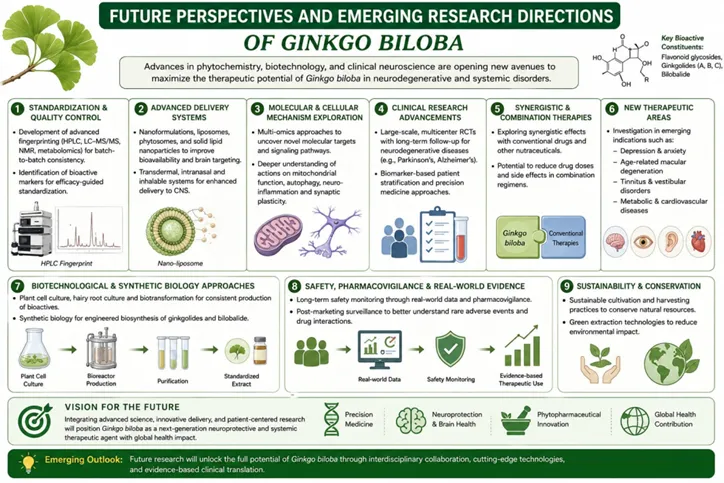
Figure (7): Future Perspectives and Emerging Research Directions
CONCLUSION:
PD is a neurodegenerative disorder that causes the loss of dopaminergic neurons, leading to debilitating motor and non-motor symptoms. Although the current pharmacological treatments relieve symptoms, none of them prevent progression of the disease; therefore, new and safer methods must be found to modify diseases safely and effectively. Ginkgo biloba, particularly its standardized form (EGb 761), has been identified as one of the potential neuroprotective agents and is known for various flavonoid-containing and terpene lactone components. Preclinical studies indicate effective antioxidant, anti-inflammatory, and mitochondrial-protective effects, as well as decreased -synuclein aggregation and stimulation of neuroprotective signalling pathways such as Nrf2/HO-1 and PI3K/Akt. Multimodal actions suggest that Ginkgo biloba could potentially target several important pathways linked to PD pathogenesis. Adjugated Ginkgo biloba therapy with clinical evidence has been shown to improve cognitive function, reduce oxidative stress, enhance quality of life, and provide modest improvements in motor symptoms. However, the current evidence is limited to small sample sizes, variability in standardization of extracts, uncertain bioavailability, and a lack of large well-designed randomised clinical trials. Overall, Ginkgo biloba should be seen as a promising alternative to conventional antiparkinsonian drugs and potentially another effective complementary treatment.'". Future research should concentrate on standardized formulations, large multicentre clinical trials, pharmacokinetic studies, and advanced drug-delivery systems to determine its long-term efficacy/safety and role in evidence-based Parkinson's disease treatment.
REFERENCES


Chandana D. S., Burlapalle Subhashini*, Bindu M. A., Brunda M. A., E. Gopinath, Kushal Gowda B. K., Roshini M., Ginkgo Biloba in the Management of Parkinson’s Disease: Current Evidence, Molecular Mechanism and Future Perspectives, Int. J. Med. Pharm. Sci., 2026, 2 (8), 102-120. https://doi.org/10.5281/zenodo.21772836
 10.5281/zenodo.21772836