
View Article

  • Marfan Syndrome: Molecular Basis, Clinical Spectrum, Diagnosis, and Management- A Comprehensive Review

  • 1Centre for Biotechnology, Siksha ‘O’ Anusandhan deemed to be University, Bhubaneswar, Odisha, India-751003
    2National Institute of Pharmaceutical Education and Research (NIPER), Ahmedabad-382355, Gujarat, India 
     

Abstract

Marfan syndrome (MFS) is a hereditary connective tissue disorder primarily caused by mutations in the FBN1 gene, leading to abnormalities in extracellular microfibril formation and dysregulation of transforming growth factor-beta (TGF-β) signaling. The disorder exhibits autosomal dominant inheritance and presents with significant clinical variability, affecting the cardiovascular, skeletal, and ocular systems. Among these, cardiovascular complications such as aortic root dilation, aneurysm, and dissection represent the most life-threatening manifestations. Advances in diagnostic approaches, particularly the revised Ghent criteria, have improved diagnostic accuracy by integrating clinical features, imaging findings, and genetic testing. Imaging modalities such as echocardiography, magnetic resonance imaging, and computed tomography play a critical role in early detection and monitoring of disease progression. Genetic testing further enhances diagnostic precision, especially in atypical cases. Management strategies focus on preventing complications and improving survival. Pharmacological treatments, including beta-blockers and angiotensin receptor blockers, reduce hemodynamic stress and modulate TGF-β signaling. Surgical interventions, particularly prophylactic aortic root replacement, are essential in high-risk patients. A multidisciplinary approach involving cardiology, genetics, ophthalmology, and orthopedics is crucial for optimal patient care. Emerging diagnostic tools such as next-generation sequencing and biomarker-based assessments, along with novel therapeutic strategies including gene therapy and targeted molecular treatments, hold promise for future disease management. Continued research into the molecular mechanisms of MFS is essential to transition from symptomatic treatment to disease-modifying therapies and to further improve patient outcomes.

Keywords

Marfan syndrome; FBN1 mutation; TGF-β signaling; Ghent criteria; Aortic aneurysm

Introduction

× Popup Image

Marfan syndrome (MS) was first described in 1896 by Antoine Marfan. Early diagnosis relied on clinical observation. The introduction of diagnostic criteria evolved from the Berlin nosology to the Ghent criteria (1996) and its revision in 2010. The revised Ghent nosology emphasizes aortic root dilation, ectopia lentis, and genetic testing, improving diagnostic specificity. Marfan syndrome is a systemic connective tissue disorder with an estimated prevalence of 1 in 5,000–10,000 individuals worldwide. It is characterized by abnormalities in the cardiovascular, ocular, and musculoskeletal systems, with aortic aneurysm and dissection representing the most serious complications. The disorder demonstrates autosomal dominant inheritance with approximately 75% familial transmission and 25% de novo mutations. The clinical presentation varies widely, ranging from mild phenotypes to severe neonatal forms, complicating diagnosis and management. With advances in genetic testing and imaging, early identification has significantly improved prognosis and life expectancy.

2. Causes and Pathogenesis

Marfan syndrome is caused primarily by mutations in the FBN1 gene, which encodes fibrillin-1, a key structural component of extracellular microfibrils. These microfibrils contribute to tissue elasticity and structural integrity. Mutations lead to defective fibrillin-1 and impaired microfibril formation, resulting in weakened connective tissue. In addition to structural defects, fibrillin-1 regulates transforming growth factor-beta (TGF-β) signaling. Dysregulation of TGF-β contributes to abnormal tissue remodeling, vascular weakening, and progressive aortic dilation. More than 1000 pathogenic variants of FBN1 have been identified, including missense, nonsense, and splice-site mutations. The genotype–phenotype relationship remains complex, with limited predictive value for clinical severity. Other genes such as TGFBR1 and TGFBR2 may produce overlapping phenotypes, complicating differential diagnosis.

3. Clinical Syndrome

Marfan syndrome is a multisystem disorder with diverse clinical manifestations:

  • Cardiovascular system: Aortic root dilation, aneurysm, dissection, and mitral valve prolapse (Ha et al., 2007)
  • Skeletal system: Tall stature, long limbs (arachnodactyly), scoliosis, chest deformities (MedlinePlus Genetics, 2021)
  • Ocular system: Ectopia lentis (lens dislocation), myopia (MedlinePlus Genetics, 2021)

Other systems such as pulmonary, skin, and nervous systems may also be involved (Salik et al., 2021). Clinical severity varies significantly even within the same family.
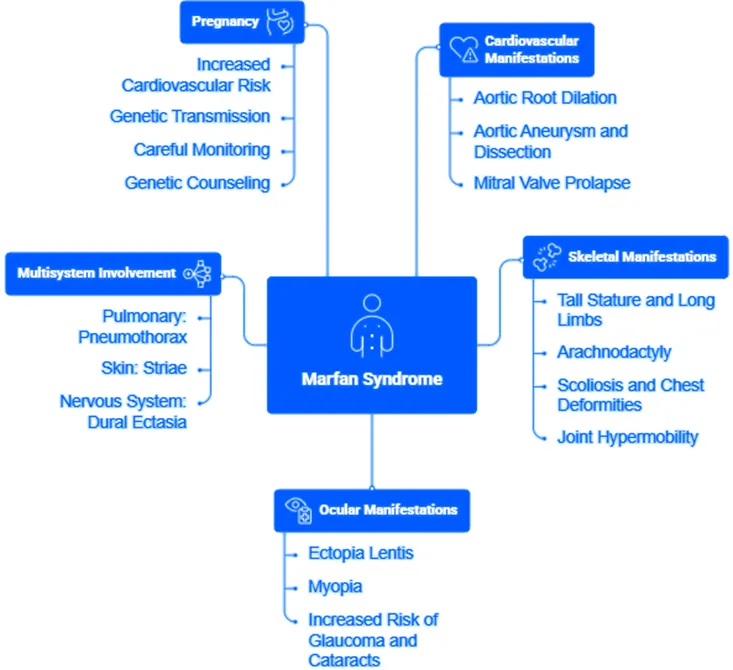
Figure 1: Overview of the multisystem clinical manifestations of Marfan syndrome.

The diagram illustrates the major organ systems affected, including cardiovascular complications (aortic root dilation, aneurysm/dissection, and mitral valve prolapse), skeletal abnormalities (tall stature, arachnodactyly, scoliosis, and joint hypermobility), ocular features (ectopia lentis, myopia, and increased risk of glaucoma and cataracts), and additional systemic involvement such as pulmonary (pneumothorax), integumentary (skin striae), and neurological manifestations (dural ectasia). It also highlights pregnancy-related considerations, including increased cardiovascular risk, need for careful monitoring, and genetic counseling due to autosomal dominant inheritance.

3. 4. Diagnosis

The diagnosis of Marfan syndrome is based on a combination of clinical evaluation, imaging findings, and genetic analysis. The revised Ghent criteria provide a standardized framework that integrates major features such as aortic root dilation, ectopia lentis, and systemic manifestations, along with family history.

Imaging techniques play a central role in diagnosis. Echocardiography is widely used to assess aortic dimensions and detect valvular abnormalities. Advanced imaging modalities such as magnetic resonance imaging (MRI) and computed tomography (CT) are valuable for evaluating aortic pathology, including aneurysms and dissections. Ophthalmologic examination using slit-lamp techniques is essential for identifying lens abnormalities.

Genetic testing may assist in confirming the diagnosis, although it can be time-consuming and costly due to the large number of possible mutations.

Differential diagnosis is important because several disorders share overlapping features. These include connective tissue disorders and conditions presenting with similar skeletal or ocular findings. Accurate differentiation relies on clinical features, imaging results, and, where necessary, biochemical or genetic testing.

Table 1: Diagnosis of Marfan syndrome

Diagnostic Method

Details / Findings

Purpose

Reference

Clinical Examination

Assessment of skeletal features (tall stature, arachnodactyly, scoliosis)

Initial suspicion and screening

Pyeritz (2000); Judge and Dietz (2005)

Family History

Autosomal dominant inheritance pattern evaluation

Identification of genetic risk

Dean et al. (2007); Pyeritz (2000)

Ghent Criteria (Revised)

Combines aortic dilation, ectopia lentis, systemic score, and genetic findings

Standard diagnostic framework

Loeys et al. (2010); von Kodolitsch et al. (2015)

Echocardiography

Detects aortic root dilation, valve abnormalities

Cardiovascular assessment

Hiratzka et al. (2010); Roman et al. (1993)

MRI / CT Imaging

Visualization of aneurysm, dissection, vascular abnormalities

Advanced imaging

Ha et al. (2007); Groth et al. (2016)

Ophthalmologic Examination

Identification of ectopia lentis, myopia

Ocular involvement assessment

Silverman et al. (1995); Judge and Dietz (2005)

Genetic Testing (FBN1)

Detection of fibrillin-1 gene mutation

Molecular confirmation

Dietz et al. (1991); Ramirez et al. (1991)

Systemic Score Evaluation

Multisystem scoring (skeletal, ocular, cardiovascular)

Diagnostic confirmation

Loeys et al. (2010); Pepe et al. (2016)

4.1 Differential Diagnoses of Marfan syndrome

Several disorders must be considered when evaluating patients with features suggestive of Marfan syndrome. These include:

  • Homocystinuria, which presents with marfanoid features and lens dislocation but is distinguished by metabolic abnormalities and intellectual disability.
  • Ehlers–Danlos syndrome, characterized by joint hypermobility, skin elasticity, and vascular fragility due to collagen defects.
  • Loeys–Dietz syndrome, which involves aggressive vascular disease and distinctive craniofacial features, often without lens dislocation.
  • Familial thoracic aortic aneurysm syndromes, which primarily affect the aorta without systemic skeletal or ocular features.
  • Stickler syndrome, associated with ocular abnormalities and facial features but lacking significant aortic involvement.
  • Congenital contractural arachnodactyly (Beals syndrome), which shares skeletal similarities but lacks major cardiovascular complications.
  • Klinefelter syndrome, which may exhibit a marfanoid habitus but is associated with endocrine abnormalities.

4.2 Pathogenesis

The molecular basis of Marfan syndrome primarily involves mutations in the FBN1 gene, which encodes fibrillin-1, a key component of the extracellular matrix. These mutations disrupt the normal assembly of microfibrils, leading to compromised structural support in connective tissues. In addition to structural defects, altered signaling pathways play a crucial role. Dysregulation of transforming growth factor-beta (TGF-β) signaling has been identified as a major contributor to disease progression. Excessive TGF-β activity leads to abnormal tissue remodeling and contributes to the diverse phenotypic features observed in patients. Furthermore, variability in gene expression and mutation types explains the wide clinical heterogeneity seen in Marfan syndrome. Not all individuals with FBN1 mutations exhibit the same severity of symptoms, indicating the influence of additional genetic and environmental factors.

4.3 Diagnostic Challenges

Diagnosis may be difficult in children due to incomplete phenotypic expression. Additionally, overlapping syndromes complicate clinical differentiation. Distinguishing these conditions requires a combination of clinical assessment, imaging, biochemical testing, and genetic analysis.

5. Treatment and Management

5.1 Pharmacological Therapy

  • Beta-blockers reduce hemodynamic stress on the aorta
  • Angiotensin receptor blockers (e.g., losartan) modulate TGF-β signaling
  • Losartan has shown effectiveness in reducing aortic dilation progression.

5.2 Surgical Intervention

  • Prophylactic aortic root replacement
  • Valve repair or replacement
  • Timely surgical intervention reduces mortality risk.

5.3 Lifestyle and Monitoring

  • Avoid strenuous activity
  • Regular imaging follow-up
  • Genetic counseling

5.4 Multidisciplinary Care

Management requires coordinated care across cardiology, genetics, ophthalmology, and orthopedics.

Table 2: Treatment / Management of Marfan syndrome

Treatment Type

Approach / Intervention

Mechanism / Benefit

Reference

Beta-blockers

Reduce heart rate and blood pressure

Decrease aortic wall stress

Shores et al. (1994); Pyeritz (2014)

Angiotensin Receptor Blockers (Losartan)

Used alone or with beta-blockers

Reduces TGF-β signaling and aortic dilation

Habashi et al. (2006); Lacro et al. (2014)

ACE Inhibitors

Control hypertension

Improve vascular remodeling

Milewicz et al. (2008); Judge and Dietz (2005)

Regular Monitoring

Routine echocardiography and imaging

Early detection of complications

Hiratzka et al. (2010); Dean et al. (2007)

Prophylactic Aortic Surgery

Aortic root replacement at critical diameter

Prevents dissection and rupture

Groenink et al. (1999); Hiratzka et al. (2010)

Valve Repair/Replacement

Surgical correction of mitral/aortic valve disease

Improves cardiac function

Yetman et al. (2003); Roman et al. (1993)

Lifestyle Modification

Avoid strenuous activity

Reduces cardiovascular stress

Dean et al. (2007); Pyeritz (2014)

Ophthalmologic Management

Lens correction or surgery

Prevents visual complications

Silverman et al. (1995); Pepe et al. (2016)

Multidisciplinary Care

Cardiologist, geneticist, ophthalmologist involvement

Comprehensive disease control

Judge and Dietz (2005); Milewicz et al. (2008)

Genetic Counseling

Family risk assessment

Prevents transmission and aids planning

Pyeritz (2000); Dean et al. (2007)

6. Complications and Prognosis

6.1 Complications

  • Aortic dissection (leading cause of death)
  • Vision impairment
  • Skeletal deformities

6.2 Prognosis

With modern management, life expectancy has significantly improved, approaching normal levels in many patients.

7. Emerging Diagnostic Approaches

Advances in molecular genetics and imaging technologies are transforming the diagnostic landscape of Marfan syndrome. Next-generation sequencing (NGS) has enabled rapid and comprehensive identification of FBN1 mutations and related genes such as TGFBR1 and TGFBR2, improving diagnostic accuracy and early detection (Li et al., 2019; Baudhuin et al., 2015). These tools are particularly valuable in atypical or borderline cases where clinical criteria alone may be insufficient. In addition, the development of genotype–phenotype correlation studies has enhanced the understanding of disease variability, allowing clinicians to predict disease severity and progression more effectively (Faivre et al., 2007; Chen et al., 2022). Advanced imaging modalities, including high-resolution MRI and 4D flow imaging, are also emerging as powerful tools for detecting subtle vascular changes before clinical symptoms appear (Groth et al., 2016). These technologies allow better risk stratification and individualized patient monitoring. Furthermore, biomarker-based diagnostics are gaining attention. Circulating markers such as transforming growth factor-beta (TGF-β), matrix metalloproteinases (MMPs), and oxidative stress indicators may provide early signals of disease progression and therapeutic response (Pepe et al., 2016).

8. Future Therapeutic Strategies

The understanding of Marfan syndrome has shifted from a purely structural disorder to one involving dysregulated signaling pathways, particularly TGF-β. This has opened new avenues for targeted therapies. Emerging research focuses on:

  • Gene therapy
  • Precision medicine
  • Biomarkers for disease progression
  • Targeting TGF-β signaling pathways

Angiotensin receptor blockers (ARBs), especially losartan, have demonstrated the ability to modulate TGF-β signaling and slow aortic dilation, representing a significant advancement over traditional beta-blocker therapy (Habashi et al., 2006; Lacro et al., 2014). Ongoing studies aim to optimize dosing strategies and combination therapies to enhance efficacy. Gene-based therapies are emerging as a promising frontier. Techniques such as CRISPR-Cas9 genome editing hold potential for correcting FBN1 mutations at the molecular level, although clinical application remains in early stages (Du et al., 2021). Additionally, RNA-based therapies and molecular chaperones are being explored to improve fibrillin-1 synthesis and stability. Targeted inhibition of downstream pathways, including TGF-β antagonists and MMP inhibitors, may further reduce tissue degeneration and vascular complications (Neptune et al., 2003; Milewicz et al., 2008). Another important direction is personalized medicine, where treatment strategies are tailored based on genetic profiles, disease severity, and individual risk factors. This approach is expected to significantly improve outcomes and reduce complications.

9. Mechanistic Rationale

Despite improvements in clinical management, Marfan syndrome remains associated with significant morbidity and mortality, primarily due to progressive aortic disease. Traditional therapies mainly address hemodynamic stress but do not correct the underlying molecular defect. The disease mechanism involves both structural weakness of connective tissue and dysregulation of signaling pathways, particularly TGF-β, which drives abnormal tissue remodeling and vascular degeneration (Neptune et al., 2003; Judge and Dietz, 2005).

Therefore, future strategies aim to:

  • Target the root genetic cause (FBN1 mutations)
  • Modulate pathogenic signaling pathways (TGF-β)
  • Enable early detection before irreversible damage occurs

These advancements are essential to move from symptomatic management toward disease-modifying and potentially curative therapies.

CONCLUSION

Marfan syndrome is a complex multisystem disorder characterized by significant clinical variability and life-threatening cardiovascular complications. Advances in molecular genetics, diagnostic criteria, and imaging techniques have substantially improved early detection and risk stratification. Current management strategies, including pharmacological therapy and prophylactic surgery, have significantly enhanced patient survival; however, they remain largely preventive rather than curative. The growing understanding of the molecular mechanisms underlying Marfan syndrome, particularly the role of fibrillin-1 and TGF-β signaling, has paved the way for innovative therapeutic approaches. Future developments in gene therapy, targeted molecular treatments, and personalized medicine hold great promise for transforming disease management. Early and precise diagnosis, combined with mechanism-based interventions, is expected to further reduce morbidity and mortality. In conclusion, a multidisciplinary approach integrating advanced diagnostics, targeted therapies, and continuous monitoring is essential for optimizing outcomes in Marfan syndrome. Continued research is crucial to bridge the gap between current management and definitive cures, ultimately improving the quality of life and long-term prognosis for affected individuals.

ACKNOWLEDGEMENT

The authors are thankful to the AI tools (Napkin AI) for designing my data into figure format and in some grammatical error correction (ChatGPT). The authors also express their gratitude to the management of the Siksha 'O' Anusandhan Deemed to be University, Bhubaneswar for providing the essential resources and scope for this publication.

Conflicts of interest

The authors declare that there are no competing interests to declare in this work.

Funding

No funding source applicable.

REFERENCES

  1. Arnaud, P., Milleron, O., Hanna, N., Ropers, J., Ould Ouali, N., Affoune, A., Langeois, M., Eliahou, L., Arnoult, F., Renard, P. and Stheneur, C. (2021) Clinical outcomes in Marfan syndrome. European Heart Journal, 42(12), pp.1186–1195.
  2. Baudhuin, L.M., Kotzer, K.E. and Lagerstedt, S.A. (2015) Increased frequency of FBN1 pathogenic variants. Genetics in Medicine, 17(3), pp.177–187.
  3. Becerra-Muñoz, V.M., Gómez-Doblas, J.J. and Porras-Martín, C. (2018) Management of Marfan syndrome. World Journal of Cardiology, 10(6), pp.71–80.
  4. Biggin, A., Holman, K., Brett, M., Bennetts, B. and Adès, L. (2004) Detection of FBN1 mutations. Human Mutation, 23(2), pp.99–109.
  5. Bombardieri, E., et al. (2020) Connective tissue disorders overview. Autoimmunity Reviews, 19(3), p.102451.
  6. Booms, P., Cisler, J., Mathews, K.R., Godfrey, M., Tiecke, F., Kaufmann, U.C. and Robinson, P.N. (2000) Novel fibrillin-1 mutations. Human Genetics, 106(6), pp.598–605.
  7. Brooke, B.S., Habashi, J.P., Judge, D.P., Patel, N., Loeys, B. and Dietz, H.C. (2008) Angiotensin II blockade. New England Journal of Medicine, 358(26), pp.2787–2795.
  8. Chen, Z.X., Li, Y., Wang, Q. and Liu, Y. (2022) Genotype–phenotype correlations in Marfan syndrome. Frontiers in Genetics, 13, p.845678.
  9. Child, A. (2010) Marfan syndrome overview. Heart, 96(14), pp.1104–1109.
  10. Collod-Béroud, G., Le Bourdelles, S., Adès, L., Ala-Kokko, L., Booms, P., Boxer, M., Child, A., Comeglio, P., De Paepe, A. and Hyland, J.C. (2003) Mutation database. Human Mutation, 22(3), pp.199–208.
  11. Dean, J.C.S. (2007) Management of Marfan syndrome. European Journal of Human Genetics, 15(7), pp.724–733.
  12. Dietz, H.C. (1993) Molecular genetics of Marfan syndrome. Journal of Biological Chemistry, 268(22), pp.15315–15318.
  13. Dietz, H.C. (2022) Marfan Syndrome. In: Adam, M.P. et al. (eds.) GeneReviews®. Seattle: University of Washington.
  14. Dietz, H.C. and Pyeritz, R.E. (2001) Mutations in the fibrillin gene and pathogenesis. The Lancet, 358(9276), pp.1960–1965.
  15. Dietz, H.C., Cutting, G.R., Pyeritz, R.E., Maslen, C.L., Sakai, L.Y., Corson, G.M., Puffenberger, E.G., Hamosh, A., Nanthakumar, E.J., Curristin, S.M. and Stetten, G. (1991) Marfan syndrome caused by a recurrent de novo missense mutation in the fibrillin gene. Nature, 352(6333), pp.337–339.
  16. Du, Q., Wang, X. and Wu, J. (2021) Molecular genetics and pathogenesis of Marfan syndrome. International Journal of Molecular Sciences, 22(8), p.4143.
  17. Faivre, L., Collod-Béroud, G., Callewaert, B., Child, A., Binquet, C., Gautier, E., Loeys, B.L., Arbustini, E., Mayer, K., Arslan-Kirchner, M. and Kiotsekoglou, A. (2007) Clinical and mutation-type analysis. American Journal of Human Genetics, 81(3), pp.454–466.
  18. Franken, R., den Hartog, A.W., Radonic, T., Micha, D., Maugeri, A., van Dijk, F.S., Meijers-Heijboer, H.E., Timmermans, J., Scholte, A.J., van den Berg, M.P. and Zwinderman, A.H. (2012) Beneficial outcome of losartan therapy in Marfan syndrome. European Heart Journal, 34(45), pp.3491–3500.
  19. Franken, R., Radonic, T., den Hartog, A.W., Groenink, M., Pals, G. and Mulder, B.J.M. (2015) Losartan therapy reduces aortic dilation. European Heart Journal, 36(32), pp.2160–2166.
  20. Groenink, M., Lohuis, T.A., Tijssen, J.G., Naeff, M.S., Hennekam, R.C., van der Wall, E.E. and Mulder, B.J. (1999) Aortic root replacement. Circulation, 100(19), pp.II-222–II-226.
  21. Groth, K.A., Hove, H., Kyhl, K., Folkestad, L., Gaustadnes, M., Vejlstrup, N. and Østergaard, J.R. (2016) Challenges in diagnosis of Marfan syndrome. Orphanet Journal of Rare Diseases, 11, p.153.
  22. Ha, H.I., Seo, J.B., Lee, S.H., Kang, J.W., Goo, H.W., Lim, T.H. and Shin, M.J. (2007) Imaging of Marfan syndrome. Radiographics, 27(4), pp.989–1004.
  23. Habashi, J.P., Judge, D.P., Holm, T.M., Cohn, R.D., Loeys, B.L., Cooper, T.K., Myers, L., Klein, E.C., Liu, G., Calvi, C. and Podowski, M. (2006) Losartan therapy in Marfan syndrome. Science, 312(5770), pp.117–121.
  24. Hirata, K., Triposkiadis, F., Sparks, E., Bowen, J., Wooley, C.F. and Boudoulas, H. (1997) Elastic fiber pathology. Circulation, 96(7), pp.2414–2419.
  25. Hiratzka, L.F., Bakris, G.L., Beckman, J.A., Bersin, R.M., Carr, V.F., Casey, D.E., Eagle, K.A., Hermann, L.K., Isselbacher, E.M. and Kazerooni, E.A. (2010) Guidelines for thoracic aortic disease. Circulation, 121(13), pp.e266–e369.
  26. Judge, D.P. (2008) Cardiovascular manifestations. Cardiology Clinics, 26(4), pp.561–575.
  27. Judge, D.P. and Dietz, H.C. (2005) Marfan syndrome review. The Lancet, 366(9501), pp.1965–1976.
  28. Lacro, R.V., Dietz, H.C., Sleeper, L.A., Yetman, A.T., Bradley, T.J., Colan, S.D., Pearson, G.D., Selamet Tierney, E.S., Levine, J.C., Atz, A.M. and Benson, D.W. (2014) Atenolol vs losartan trial. New England Journal of Medicine, 371(22), pp.2061–2071.
  29. Li, J., Zhang, W., Zhang, L. and Zhang, X. (2019) Next-generation sequencing in Marfan syndrome. BMC Medical Genetics, 20(1), p.135.
  30. Loeys, B.L., Dietz, H.C., Braverman, A.C., Callewaert, B.L., De Backer, J., Devereux, R.B., Hilhorst-Hofstee, Y., Jondeau, G., Faivre, L., Milewicz, D.M. and Pyeritz, R.E. (2010) The revised Ghent nosology for the Marfan syndrome. Journal of Medical Genetics, 47(7), pp.476–485.
  31. Loeys, B.L., Schwarze, U., Holm, T., Callewaert, B.L., Thomas, G.H., Pannu, H., De Backer, J.F., Oswald, G.L., Symoens, S. and Manouvrier, S. (2005) TGFBR mutations. Nature Genetics, 37(3), pp.275–281.
  32. MedlinePlus Genetics (2018) Marfan syndrome. Available at: https://medlineplus.gov/genetics/condition/marfan-syndrome/ (Accessed: current year).
  33. Medscape (2023) Marfan Syndrome Workup. Available at: https://emedicine.medscape.com
  34. Milewicz, D.M., Dietz, H.C. and Miller, D.C. (2008) Treatment of aortic disease. Circulation, 117(21), pp.2802–2813.
  35. Neptune, E.R., Frischmeyer, P.A., Arking, D.E., Myers, L., Bunton, T.E., Gayraud, B., Ramirez, F., Sakai, L.Y. and Dietz, H.C. (2003) Dysregulation of TGF-β activation. Nature Genetics, 33(3), pp.407–411.
  36. Pepe, G., Giusti, B., Sticchi, E. and Gensini, G.F. (2016) Marfan syndrome: current perspectives. The Application of Clinical Genetics, 9, pp.55–65.
  37. Pereira, L., D'Alessio, M., Ramirez, F., Lynch, J.R., Sykes, B., Pangilinan, T. and Bonadio, J. (1997) FBN1 mutation analysis. Nature Genetics, 17(2), pp.218–222.
  38. Pyeritz, R.E. (2000) The Marfan syndrome. Annual Review of Medicine, 51, pp.481–510.
  39. Pyeritz, R.E. (2014) Evaluation and management of Marfan syndrome. Circulation, 130(13), pp.111–118.
  40. Ramirez, F., Sakai, L.Y., Dietz, H.C. and Rifkin, D.B. (1991) Fibrillin-rich microfibrils. Nature, 352, pp.334–337.
  41. Rand-Hendriksen, S., et al. (2010) Marfan syndrome diagnostic challenges. Oslo: University of Oslo.
  42. Roman, M.J., Rosen, S.E., Kramer-Fox, R. and Devereux, R.B. (1993) Aortic dilation progression. New England Journal of Medicine, 328(15), pp.1105–1111.
  43. Sakai, L.Y., Keene, D.R. and Engvall, E. (1986) Fibrillin discovery. Journal of Cell Biology, 103(6), pp.2499–2509.
  44. Salik, I. and Rawla, P. (2023) Marfan Syndrome. StatPearls. Treasure Island: StatPearls Publishing.
  45. Sarr, S.A., Djibrilla, S., Aw, F., Bodian, M., Babaka, K., Ngaidé, A.A., Dioum, M. and Ba, S.A. (2016) Cardiovascular complications in Marfan syndrome. BMC Cardiovascular Disorders, 16, p.1.
  46. Shin, J.H., et al. (2025) Variant reassessment in Marfan syndrome. Journal of Human Genetics (in press).
  47. Shores, J., Berger, K.R., Murphy, E.A. and Pyeritz, R.E. (1994) Beta-blocker therapy. New England Journal of Medicine, 330(19), pp.1335–1341.
  48. Silverman, D.I., Burton, K.J., Gray, J., Bosner, M.S., Kouchoukos, N.T. and Roman, M.J. (1995) Natural history of Marfan syndrome. Circulation, 91(3), pp.728–733.
  49. Soto, M.E., et al. (2025) TGF-β pathway study in Marfan syndrome. Circulation Research (in press).
  50. von Kodolitsch, Y., Rybczynski, M., Vogler, M., Mir, T.S. and Pyeritz, R.E. (2015) The role of the revised Ghent criteria in the diagnosis of Marfan syndrome. European Heart Journal, 36(21), pp.1233–1239.
  51. Yetman, A.T., Bornemeier, R.A. and McCrindle, B.W. (2003) Cardiovascular outcomes. Journal of the American College of Cardiology, 41(2), pp.329–332.
  52. Yuan, S.M. and Jing, H. (2010) Marfan syndrome overview. Sao Paulo Medical Journal, 128(6), pp.360–366.

Reference

  1. Arnaud, P., Milleron, O., Hanna, N., Ropers, J., Ould Ouali, N., Affoune, A., Langeois, M., Eliahou, L., Arnoult, F., Renard, P. and Stheneur, C. (2021) Clinical outcomes in Marfan syndrome. European Heart Journal, 42(12), pp.1186–1195.
  2. Baudhuin, L.M., Kotzer, K.E. and Lagerstedt, S.A. (2015) Increased frequency of FBN1 pathogenic variants. Genetics in Medicine, 17(3), pp.177–187.
  3. Becerra-Muñoz, V.M., Gómez-Doblas, J.J. and Porras-Martín, C. (2018) Management of Marfan syndrome. World Journal of Cardiology, 10(6), pp.71–80.
  4. Biggin, A., Holman, K., Brett, M., Bennetts, B. and Adès, L. (2004) Detection of FBN1 mutations. Human Mutation, 23(2), pp.99–109.
  5. Bombardieri, E., et al. (2020) Connective tissue disorders overview. Autoimmunity Reviews, 19(3), p.102451.
  6. Booms, P., Cisler, J., Mathews, K.R., Godfrey, M., Tiecke, F., Kaufmann, U.C. and Robinson, P.N. (2000) Novel fibrillin-1 mutations. Human Genetics, 106(6), pp.598–605.
  7. Brooke, B.S., Habashi, J.P., Judge, D.P., Patel, N., Loeys, B. and Dietz, H.C. (2008) Angiotensin II blockade. New England Journal of Medicine, 358(26), pp.2787–2795.
  8. Chen, Z.X., Li, Y., Wang, Q. and Liu, Y. (2022) Genotype–phenotype correlations in Marfan syndrome. Frontiers in Genetics, 13, p.845678.
  9. Child, A. (2010) Marfan syndrome overview. Heart, 96(14), pp.1104–1109.
  10. Collod-Béroud, G., Le Bourdelles, S., Adès, L., Ala-Kokko, L., Booms, P., Boxer, M., Child, A., Comeglio, P., De Paepe, A. and Hyland, J.C. (2003) Mutation database. Human Mutation, 22(3), pp.199–208.
  11. Dean, J.C.S. (2007) Management of Marfan syndrome. European Journal of Human Genetics, 15(7), pp.724–733.
  12. Dietz, H.C. (1993) Molecular genetics of Marfan syndrome. Journal of Biological Chemistry, 268(22), pp.15315–15318.
  13. Dietz, H.C. (2022) Marfan Syndrome. In: Adam, M.P. et al. (eds.) GeneReviews®. Seattle: University of Washington.
  14. Dietz, H.C. and Pyeritz, R.E. (2001) Mutations in the fibrillin gene and pathogenesis. The Lancet, 358(9276), pp.1960–1965.
  15. Dietz, H.C., Cutting, G.R., Pyeritz, R.E., Maslen, C.L., Sakai, L.Y., Corson, G.M., Puffenberger, E.G., Hamosh, A., Nanthakumar, E.J., Curristin, S.M. and Stetten, G. (1991) Marfan syndrome caused by a recurrent de novo missense mutation in the fibrillin gene. Nature, 352(6333), pp.337–339.
  16. Du, Q., Wang, X. and Wu, J. (2021) Molecular genetics and pathogenesis of Marfan syndrome. International Journal of Molecular Sciences, 22(8), p.4143.
  17. Faivre, L., Collod-Béroud, G., Callewaert, B., Child, A., Binquet, C., Gautier, E., Loeys, B.L., Arbustini, E., Mayer, K., Arslan-Kirchner, M. and Kiotsekoglou, A. (2007) Clinical and mutation-type analysis. American Journal of Human Genetics, 81(3), pp.454–466.
  18. Franken, R., den Hartog, A.W., Radonic, T., Micha, D., Maugeri, A., van Dijk, F.S., Meijers-Heijboer, H.E., Timmermans, J., Scholte, A.J., van den Berg, M.P. and Zwinderman, A.H. (2012) Beneficial outcome of losartan therapy in Marfan syndrome. European Heart Journal, 34(45), pp.3491–3500.
  19. Franken, R., Radonic, T., den Hartog, A.W., Groenink, M., Pals, G. and Mulder, B.J.M. (2015) Losartan therapy reduces aortic dilation. European Heart Journal, 36(32), pp.2160–2166.
  20. Groenink, M., Lohuis, T.A., Tijssen, J.G., Naeff, M.S., Hennekam, R.C., van der Wall, E.E. and Mulder, B.J. (1999) Aortic root replacement. Circulation, 100(19), pp.II-222–II-226.
  21. Groth, K.A., Hove, H., Kyhl, K., Folkestad, L., Gaustadnes, M., Vejlstrup, N. and Østergaard, J.R. (2016) Challenges in diagnosis of Marfan syndrome. Orphanet Journal of Rare Diseases, 11, p.153.
  22. Ha, H.I., Seo, J.B., Lee, S.H., Kang, J.W., Goo, H.W., Lim, T.H. and Shin, M.J. (2007) Imaging of Marfan syndrome. Radiographics, 27(4), pp.989–1004.
  23. Habashi, J.P., Judge, D.P., Holm, T.M., Cohn, R.D., Loeys, B.L., Cooper, T.K., Myers, L., Klein, E.C., Liu, G., Calvi, C. and Podowski, M. (2006) Losartan therapy in Marfan syndrome. Science, 312(5770), pp.117–121.
  24. Hirata, K., Triposkiadis, F., Sparks, E., Bowen, J., Wooley, C.F. and Boudoulas, H. (1997) Elastic fiber pathology. Circulation, 96(7), pp.2414–2419.
  25. Hiratzka, L.F., Bakris, G.L., Beckman, J.A., Bersin, R.M., Carr, V.F., Casey, D.E., Eagle, K.A., Hermann, L.K., Isselbacher, E.M. and Kazerooni, E.A. (2010) Guidelines for thoracic aortic disease. Circulation, 121(13), pp.e266–e369.
  26. Judge, D.P. (2008) Cardiovascular manifestations. Cardiology Clinics, 26(4), pp.561–575.
  27. Judge, D.P. and Dietz, H.C. (2005) Marfan syndrome review. The Lancet, 366(9501), pp.1965–1976.
  28. Lacro, R.V., Dietz, H.C., Sleeper, L.A., Yetman, A.T., Bradley, T.J., Colan, S.D., Pearson, G.D., Selamet Tierney, E.S., Levine, J.C., Atz, A.M. and Benson, D.W. (2014) Atenolol vs losartan trial. New England Journal of Medicine, 371(22), pp.2061–2071.
  29. Li, J., Zhang, W., Zhang, L. and Zhang, X. (2019) Next-generation sequencing in Marfan syndrome. BMC Medical Genetics, 20(1), p.135.
  30. Loeys, B.L., Dietz, H.C., Braverman, A.C., Callewaert, B.L., De Backer, J., Devereux, R.B., Hilhorst-Hofstee, Y., Jondeau, G., Faivre, L., Milewicz, D.M. and Pyeritz, R.E. (2010) The revised Ghent nosology for the Marfan syndrome. Journal of Medical Genetics, 47(7), pp.476–485.
  31. Loeys, B.L., Schwarze, U., Holm, T., Callewaert, B.L., Thomas, G.H., Pannu, H., De Backer, J.F., Oswald, G.L., Symoens, S. and Manouvrier, S. (2005) TGFBR mutations. Nature Genetics, 37(3), pp.275–281.
  32. MedlinePlus Genetics (2018) Marfan syndrome. Available at: https://medlineplus.gov/genetics/condition/marfan-syndrome/ (Accessed: current year).
  33. Medscape (2023) Marfan Syndrome Workup. Available at: https://emedicine.medscape.com
  34. Milewicz, D.M., Dietz, H.C. and Miller, D.C. (2008) Treatment of aortic disease. Circulation, 117(21), pp.2802–2813.
  35. Neptune, E.R., Frischmeyer, P.A., Arking, D.E., Myers, L., Bunton, T.E., Gayraud, B., Ramirez, F., Sakai, L.Y. and Dietz, H.C. (2003) Dysregulation of TGF-β activation. Nature Genetics, 33(3), pp.407–411.
  36. Pepe, G., Giusti, B., Sticchi, E. and Gensini, G.F. (2016) Marfan syndrome: current perspectives. The Application of Clinical Genetics, 9, pp.55–65.
  37. Pereira, L., D'Alessio, M., Ramirez, F., Lynch, J.R., Sykes, B., Pangilinan, T. and Bonadio, J. (1997) FBN1 mutation analysis. Nature Genetics, 17(2), pp.218–222.
  38. Pyeritz, R.E. (2000) The Marfan syndrome. Annual Review of Medicine, 51, pp.481–510.
  39. Pyeritz, R.E. (2014) Evaluation and management of Marfan syndrome. Circulation, 130(13), pp.111–118.
  40. Ramirez, F., Sakai, L.Y., Dietz, H.C. and Rifkin, D.B. (1991) Fibrillin-rich microfibrils. Nature, 352, pp.334–337.
  41. Rand-Hendriksen, S., et al. (2010) Marfan syndrome diagnostic challenges. Oslo: University of Oslo.
  42. Roman, M.J., Rosen, S.E., Kramer-Fox, R. and Devereux, R.B. (1993) Aortic dilation progression. New England Journal of Medicine, 328(15), pp.1105–1111.
  43. Sakai, L.Y., Keene, D.R. and Engvall, E. (1986) Fibrillin discovery. Journal of Cell Biology, 103(6), pp.2499–2509.
  44. Salik, I. and Rawla, P. (2023) Marfan Syndrome. StatPearls. Treasure Island: StatPearls Publishing.
  45. Sarr, S.A., Djibrilla, S., Aw, F., Bodian, M., Babaka, K., Ngaidé, A.A., Dioum, M. and Ba, S.A. (2016) Cardiovascular complications in Marfan syndrome. BMC Cardiovascular Disorders, 16, p.1.
  46. Shin, J.H., et al. (2025) Variant reassessment in Marfan syndrome. Journal of Human Genetics (in press).
  47. Shores, J., Berger, K.R., Murphy, E.A. and Pyeritz, R.E. (1994) Beta-blocker therapy. New England Journal of Medicine, 330(19), pp.1335–1341.
  48. Silverman, D.I., Burton, K.J., Gray, J., Bosner, M.S., Kouchoukos, N.T. and Roman, M.J. (1995) Natural history of Marfan syndrome. Circulation, 91(3), pp.728–733.
  49. Soto, M.E., et al. (2025) TGF-β pathway study in Marfan syndrome. Circulation Research (in press).
  50. von Kodolitsch, Y., Rybczynski, M., Vogler, M., Mir, T.S. and Pyeritz, R.E. (2015) The role of the revised Ghent criteria in the diagnosis of Marfan syndrome. European Heart Journal, 36(21), pp.1233–1239.
  51. Yetman, A.T., Bornemeier, R.A. and McCrindle, B.W. (2003) Cardiovascular outcomes. Journal of the American College of Cardiology, 41(2), pp.329–332.
  52. Yuan, S.M. and Jing, H. (2010) Marfan syndrome overview. Sao Paulo Medical Journal, 128(6), pp.360–366.

Photo
Basudeba Kar
Corresponding author

Centre for Biotechnology, Siksha ‘O’ Anusandhan deemed to be University, Bhubaneswar, Odisha, India-751003

Photo
Krishna Kumar Das
Co-author

Centre for Biotechnology, Siksha ‘O’ Anusandhan deemed to be University, Bhubaneswar, Odisha, India-751003

Photo
Suprava Sahoo
Co-author

Centre for Biotechnology, Siksha ‘O’ Anusandhan deemed to be University, Bhubaneswar, Odisha, India-751003

Photo
Santosh Kumar Behera
Co-author

National Institute of Pharmaceutical Education and Research (NIPER), Ahmedabad-382355, Gujarat, India

Krishna Kumar Das, Suprava Sahoo, Santosh Kumar Behera, Basudeba Kar*, Marfan Syndrome: Molecular Basis, Clinical Spectrum, Diagnosis, and Management- A Comprehensive Review, Int. J. Med. Pharm. Sci., 2026, 2 (7), 216-224. https://doi.org/10.5281/zenodo.21186535

More related articles
Insulin Resistance in Polyendocrine Metabolic Ovar...
I. Kavipriya, S. Swarnalatha, K. Malarvizhi, J. Karthi...
A Review on Leptospirosis...
Kumar Raja Jayavarapu, P. Praneeth, N. Swapna, N. Hemanth, M. Lee...
Liver Cirrhosis: Pathophysiology, Diagnosis, Thera...
Baswaraju Aruna, U. Vaman Shiva, M. Rakesh, J. Abhishek, D. Shash...
Related Articles
A Case Report of Marfan Syndrome Presenting Initially with Kyphoscoliosis and Mu...
Padige Sri Varsha, Sadvika Lakakula, Mounika Nenavath, M. Neha Sai...
Hutchinson Gilford Syndrome - Literature Review...
O. Rubina Sajjath, R. Sivasakthi, P. Neelesh, M. Poovarasan, M. Lakshmanan...
A Rare Case Report on Plummer-Vinson Syndrome in A Post Gastrojejunostomy Geriat...
Sakthi Thava Priya C., Roshini S., Neelesh P., Logesh M., Lakshmanan M., Keerthana E., Anbuchelvan M...
Hantavirus Diseases: A Review of Virology, Clinical Features, and Therapeutic Ap...
Vaibhav Rathore, Yogesh Kumar Apurva, Vijay Singh Kachawa, Vijay Kumar Bansal, Suresh Kumar Dev, Moh...
Insulin Resistance in Polyendocrine Metabolic Ovarian Syndrome: Mechanisms, Clin...
I. Kavipriya, S. Swarnalatha, K. Malarvizhi, J. Karthi...
More related articles
Insulin Resistance in Polyendocrine Metabolic Ovarian Syndrome: Mechanisms, Clin...
I. Kavipriya, S. Swarnalatha, K. Malarvizhi, J. Karthi...
A Review on Leptospirosis...
Kumar Raja Jayavarapu, P. Praneeth, N. Swapna, N. Hemanth, M. Leela Sri Devi Lahari, K. Uma Maheswar...
Liver Cirrhosis: Pathophysiology, Diagnosis, Therapeutic Advances, and Future Pe...
Baswaraju Aruna, U. Vaman Shiva, M. Rakesh, J. Abhishek, D. Shashank...
Insulin Resistance in Polyendocrine Metabolic Ovarian Syndrome: Mechanisms, Clin...
I. Kavipriya, S. Swarnalatha, K. Malarvizhi, J. Karthi...
A Review on Leptospirosis...
Kumar Raja Jayavarapu, P. Praneeth, N. Swapna, N. Hemanth, M. Leela Sri Devi Lahari, K. Uma Maheswar...
Liver Cirrhosis: Pathophysiology, Diagnosis, Therapeutic Advances, and Future Pe...
Baswaraju Aruna, U. Vaman Shiva, M. Rakesh, J. Abhishek, D. Shashank...