
View Article

  • A Comprehensive Review on RP-HPLC Method DevelopA Comprehensive Review on RP-HPLC Method Development and Validation for Simultaneous Estimation of Linagliptin and Empagliflozin in Bulk Drug and Pharmaceutical Dosage Formsment and Validation for Simultaneous Estimation of Linagliptin and Empagliflozin in Bulk Drug and Pharmaceutical Dosage Forms

  • Datta kala Institute of Pharmaceutical Sciences and Research, India

Abstract

Because of their complimentary modes of action, linagliptin and empagliflozin are frequently given as a fixed-dose combination for the treatment of type 2 diabetes mellitus. Regular quality control, stability testing, and regulatory compliance all depend on accurate and trustworthy analytical techniques. The most used analytical method is still reverse phase high performance liquid chromatography (RP-HPLC) because of its ease of use, accuracy, sensitivity, and affordability. The documented RP-HPLC techniques for the simultaneous measurement of linagliptin and empagliflozin in pharmaceutical dosage forms and bulk medications are compiled in this study. A serious discussion is held about chromatographic settings, mobile phase composition, stationary phases, detection wavelengths, validation parameters, and stability-indicating techniques. Current developments including Quality by Design (QbD), forced degradation studies, and the use of ICH analytical validation principles are also highlighted in the study.

Keywords

Linagliptin, Empagliflozin, RP-HPLC, Method Development, Validation, ICH Q2(R1), Quality Control, Stability-Indicating Method.

Introduction

× Popup Image

Persistent hyperglycemia brought on by deficiencies in insulin production, action, or both is a hallmark of diabetes mellitus (DM), a chronic metabolic disease. [1] Type 2 diabetes mellitus (T2DM) is a serious public health problem and accounts for approximately 90–95% of all occurrences of diabetes globally. [2] Severe consequences such cardiovascular illnesses, nephropathy, neuropathy, retinopathy, and kidney failure can result from poorly managed diabetes. Therefore, to enhance treatment results and patient safety, efficient pharmacological control and ongoing monitoring of antidiabetic drugs are crucial. [3] For the treatment of type 2 diabetes, two often recommended oral antidiabetic medications are linagliptin and empagliflozin, which can be administered either alone or in a fixed-dose combination.[4] While empagliflozin is a sodium-glucose co-transporter-2 (SGLT2) inhibitor that lowers blood glucose by decreasing renal glucose reabsorption and increasing urinary glucose excretion, linagliptin is a dipeptidyl peptidase-4 (DPP-4) inhibitor that increases glucose-dependent insulin secretion by raising incretin hormone levels.[5] The combination is becoming more and more common in clinical practice because of its complimentary modes of action, which offer better glycaemic control, a lower risk of hypoglycemia, and extra cardiovascular and renal advantages.[6] For regular quality control, assay determination, dissolution testing, stability research, and pharmaceutical formulation development, the increasing usage of this fixed-dose combination has increased the need for precise, accurate, and trustworthy analytical techniques.[7] One of the most popular analytical methods is reverse phase high performance liquid chromatography (RP-HPLC) because of its excellent sensitivity, selectivity, repeatability, and affordability.[8] In order to accomplish effective separation and precise quantification, chromatographic parameters such as mobile phase composition, stationary phase, pH, flow rate, detection wavelength, and column temperature must be optimised for an RP-HPLC technique to be developed successfully. [9] To guarantee the dependability and appropriateness of the proposed technique, analytical method validation must be carried out in accordance with the International Council for Harmonization's (ICH) Q2 recommendations. The performance of the technique for routine pharmaceutical analysis is determined by validation factors including specificity, linearity, accuracy, precision, robustness, limit of detection (LOD), limit of quantitation (LOQ), and system appropriateness. [10] This study offers a thorough summary of the documented RP-HPLC techniques created for the simultaneous measurement of linagliptin and empagliflozin in pharmaceutical dosage forms and bulk medicines. To assist researchers and pharmaceutical analysers in creating reliable and legally acceptable analytical methods, it covers a variety of chromatographic settings, method validation parameters, stability-indicating techniques, current developments, and future prospects.

Drug Profile

Linagliptin [11,12]

The dipeptidyl peptidase-4 (DPP-4) inhibitor family includes the oral antidiabetic medication linagliptin. By specifically blocking the DPP-4 enzyme, it improves glycaemic control and is recommended for the treatment of Type 2 diabetic mellitus (T2DM). Endogenous incretin hormones, especially glucagon-like peptide-1 (GLP-1) and glucose-dependent insulinotropic polypeptide (GIP), are elevated as a result of this suppression, leading to increased glucagon release and decreased glucagon-dependent insulin secretion.

  • Drug Class: DPP-4 inhibitor
  • Molecular Formula: C₂₅H₂₈N₈O₂
  • Molecular Weight: 472.54 g/mol
  • Mechanism of Action: improves insulin secretion and lowers blood glucose levels by inhibiting the DPP-4 enzyme and raising endogenous GLP-1 and GIP levels.

Empagliflozin [13,14]

The oral antidiabetic medication empagliflozin is a member of the sodium-glucose co-transporter-2 (SGLT2) inhibitor family. In addition to providing extra cardiovascular and renal protection, it is used to treat Type 2 diabetes mellitus. The medication lowers blood glucose levels by specifically inhibiting SGLT2 in the proximal renal tubules, which decreases glucose reabsorption and increases urine glucose excretion.
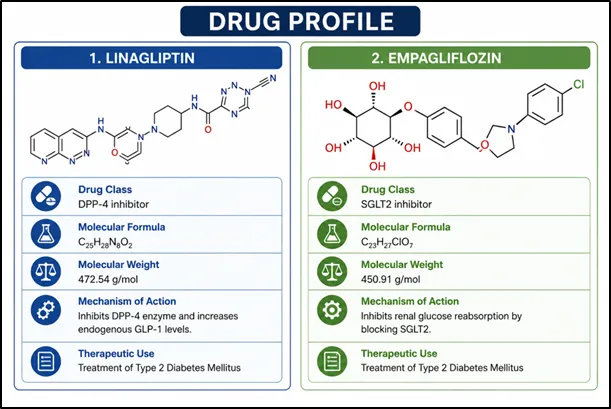
  • Drug Class: SGLT2 inhibitor
  • Molecular Formula: C₂₃H₂₇ClO₇
  • Molecular Weight: 450.91 g/mol
  • Mechanism of Action: improves glycaemic management by inhibiting SGLT2 in the kidneys, reducing renal glucose reabsorption, and increasing urine glucose excretion.

Figure 1. Comparative Drug Profile of Linagliptin and Empagliflozin Used in Type 2 Diabetes Mellitus.

Combination Therapy

For the treatment of Type 2 Diabetes Mellitus (T2DM), linagliptin and empagliflozin work well together. While empagliflozin decreases blood glucose by decreasing SGLT2 and encouraging urine glucose excretion, linagliptin enhances insulin production by blocking the DPP-4 enzyme. Better glycaemic control, a reduced risk of hypoglycemia, and extra cardiovascular and renal advantages are all provided by their complimentary processes. Because this fixed-dose combination is widely used, accurate RP-HPLC techniques are necessary for both regular quality control and simultaneous estimation in pharmaceutical formulations. [15,16]

Importance of Simultaneous Estimation

To guarantee the quality, safety, and effectiveness of their fixed-dose combination formulations, Linagliptin and Empagliflozin must be simultaneously estimated using RP-HPLC. It makes it possible to precisely quantify both medications in a single chromatographic run, cutting down on analytical time and expenses. Regular quality control (QC), regulatory compliance, stability studies, dissolution tests, and batch release analysis all make extensive use of simultaneous estimation. Additionally, it reduces solvent usage, increases laboratory efficiency, and yields accurate analytical findings for quality control and pharmaceutical manufacture. [17,18]

Principle of RP-HPLC

A popular analytical method called reverse phase high-performance liquid chromatography (RP-HPLC) divides substances according to their hydrophobic interactions with a polar mobile phase and a non-polar stationary phase. While more polar molecules elute quicker, those with lower polarity interact more strongly with the stationary phase and are held longer. Optimising a number of chromatographic parameters, including as mobile phase composition, pH, flow rate, column chemistry, and detection wavelength, is necessary for effective separation. RP-HPLC is widely used for the simultaneous determination of linagliptin and empagliflozin in pharmaceutical formulations because to its excellent sensitivity, accuracy, precision, and repeatability. [19]

Method Development Considerations

Typical parameters optimized include: [20.21]

Parameter

Common Conditions

Column

C18 (150 × 4.6 mm, 5 μm)

Mobile phase

Phosphate buffer + Acetonitrile or Methanol

pH

3.0–4.5

Flow rate

1.0 mL/min

Detection

PDA/UV

Injection volume

10–20 μL

Run time

6–12 min

Analytical Method Development

Analytical method development is an important process in pharmaceutical analysis used for the identification, separation, and quantitative estimation of active pharmaceutical ingredients (APIs) in bulk drugs and dosage forms. The main objective of analytical method development is to establish a simple, accurate, precise, robust, reproducible, and cost-effective analytical procedure for routine quality control analysis. [22] For simultaneous estimation of Sotagliflozin and Metformin in combined dosage forms, optimization of chromatographic conditions is essential to obtain proper peak separation, acceptable retention time, high sensitivity, and accurate quantification of both drugs without interference from excipients, impurities, or degradation products. [23]
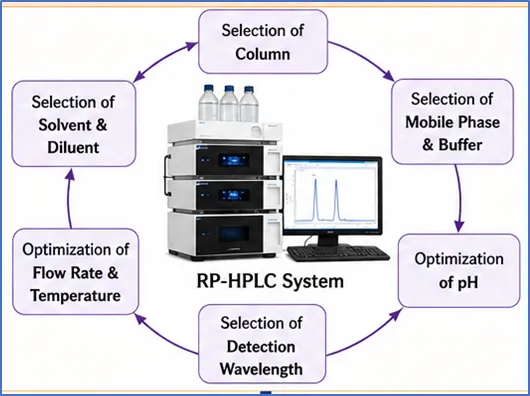
Figure 2: Key Step in Method develpoment

Method Validation (ICH)

To prove that an RP-HPLC technique is appropriate for its intended use, analytical method validation is performed in accordance with ICH Q2(R1)/Q2(R2) recommendations. The following is a description of the main validation parameters:

1. Specificity

The capacity of the analytical technique to precisely quantify the analyte in the presence of contaminants, degradation products, excipients, or other elements is known as specificity. It guarantees that linagliptin and empagliflozin are kept apart from other drugs. [24]

2. System Suitability

Prior to sample analysis, system suitability tests confirm that the HPLC system is operating as intended. To verify adequate chromatographic performance, parameters such retention time, theoretical plates, tailing factor, resolution, and %RSD of peak area are assessed. [25]

3. Linearity

The capacity of a technique to yield findings that are exactly proportionate to the analyte concentration throughout a certain range is known as linearity. The correlation coefficient (R²) should typically be higher than 0.999. It is assessed by creating calibration curves at various concentration levels. [26]

4. Accuracy

The degree to which the measured value resembles the genuine value is referred to as accuracy. Recovery experiments at various concentration levels (e.g., 80%, 100%, and 120%) are frequently used to establish it; acceptable recoveries usually fall between 98% and 102%. [27]

5. Precision [28,29]

The degree of agreement between repeated measurements made under the same circumstances is known as precision. It consists of the following and is represented as the percentage relative standard deviation (%RSD):

  • Repeatability (intra-day precision): Analysis carried out several times in a single day.
  • Intermediate Precision (also known as Inter-day Precision): Analysis carried out using several instruments, by various analysts, or on separate days. In general, %RSD need to be below 2%.

6. Robustness

The method's robustness is determined by how well it can withstand modest, intentional changes in chromatographic circumstances, such as minute changes in the composition of the mobile phase, pH, flow rate, column temperature, or detection wavelength. Results from a robust procedure are dependable and consistent. [30]

7. Ruggedness

Ruggedness assesses the method's repeatability under typical operational circumstances, such as varying analysts, equipment, labs, or days. It illustrates the method's dependability in ordinary analysis. [31]

8. Limit of Detection (LOD) [32]

The lowest analyte concentration that is detectable but may not be precisely measured is known as LOD. It is often computed using the following formula and shows the analytical method's sensitivity:

LOD = 3.3 × (σ / S)

where σ is the standard deviation of the response and S is the slope of the calibration curve.

9. Limit of Quantitation (LOQ)[33]

The lowest analyte concentration that can be quantitatively measured with reasonable precision and accuracy is known as the LOQ. The following formula is used to compute it:

LOQ = 10 × (σ / S)

LOQ is always higher than LOD and represents the practical lower limit for quantitative analysis.

10. Solution Stability

Solution stability evaluates the prepared standard and sample solutions' capacity to stay stable under predetermined storage circumstances for a predetermined amount of time. Throughout the course of the investigation, stable solutions should exhibit no appreciable changes in assay values, peak area, or chromatographic features. [34]

Comparative Literature Review [35,36,37,38,39]

Author

Year

Column

Mobile Phase

Detection

Remarks

Devanna et al.

2015

C18

Buffer: Organic solvent

UV

First simultaneous RP-HPLC method

Bornare et al.

2020

C18

Buffer: Acetonitrile

UV

Review article

Patel et al.

2022

Phenyl

0.1% Perchloric acid: ACN

226 nm

Stability-indicating method

Kumar et al.

2024

Thermo ODS C18

KH₂PO₄: Methanol

223 nm

PDA method

Kharwade et al.

2024/2025

C18

Methanol: Acetonitrile

289 nm

QbD-based optimization

Comparative Analysis of Reported Methods

The majority of reported RP-HPLC techniques for the simultaneous measurement of linagliptin and empagliflozin employ C18 columns with acetonitrile or phosphate buffer-methanol as the mobile phase. UV or PDA detectors can detect wavelengths between 223 and 289 nm. To increase robustness and efficiency, modern approaches place a strong emphasis on Quality by Design (QbD) and stability-indicating analysis. Overall, the disclosed procedures are appropriate for regular quality control of pharmaceutical formulations since they are straightforward, precise, accurate, and verified in accordance with ICH recommendations. [40,41]

Current Challenges

Even though a number of RP-HPLC techniques are available for the simultaneous measurement of linagliptin and empagliflozin, several difficulties still exist. These include obtaining total separation from contaminants and degradation products, creating quick and economical techniques, using green chromatography to use less solvent, and enhancing method resilience for regular examination. More stability-indicating and Quality by Design (QbD)-based techniques that satisfy regulatory requirements and adhere to current ICH principles are also needed.

FUTURE PERSPECTIVES

Even though a number of RP-HPLC techniques are available for the simultaneous measurement of linagliptin and empagliflozin, several difficulties still exist. These include obtaining total separation from contaminants and degradation products, creating quick and economical techniques, using green chromatography to use less solvent, and enhancing method resilience for regular examination. More stability-indicating and Quality by Design (QbD)-based techniques that satisfy regulatory requirements and adhere to current ICH principles are also needed.

CONCLUSION

One of the most dependable and popular analytical methods for the simultaneous measurement of linagliptin and empagliflozin in bulk medications and pharmaceutical dosage forms is reverse phase high-performance liquid chromatography (RP-HPLC). Excellent specificity, accuracy, precision, linearity, robustness, and sensitivity are demonstrated by the evaluated techniques, which qualify them for regular stability testing and pharmaceutical quality control. The majority of published procedures are cost-effective, yield repeatable findings, and adhere to ICH validation requirements. They also need less time for analysis. Analytical performance and method dependability have been greatly enhanced by recent advancements, such as stability-indicating methods, Quality by Design (QbD)-based optimisation, and the application of sophisticated chromatographic techniques. To provide speedier, more environmentally friendly, and sustainable analytical techniques that use fewer solvents and are more effective, additional research is necessary. All things considered, RP-HPLC is still the preferred technique for the simultaneous measurement of linagliptin and empagliflozin, and it will remain crucial for pharmaceutical analysis, quality control, and regulatory compliance.

REFERENCES

  1. P. Madhusudhan1, M. Radhakrishna Reddy2 and N. Devanna3, RPHPLC Method Development and Validation for Simultaneous Determination of Linagliptin and Empagliflozin in Tablet Dosage Form, International Advanced Research Journal in Science, Engineering and Technology, Vol. 2, Special Issue 2, December 2015, 95-99.
  2. International Diabetes Federation. IDF Diabetes Atlas. 10th ed. Brussels: International Diabetes Federation; 2021.
  3. S. Naazneen1* and A. Sridevi2, Development and validation of stability indicating RP-HPLC method for simultaneous estimation of Empagliflozin and Linagliptin in tablet formulation, Scholars Research Library Der Pharmacia Lettre, 2016, 8 (17):57-65.
  4. Sharmila Donepudia, Suneetha Achantab*, Validated HPLC-UV Method for Simultaneous Estimation of Linagliptin and Empagliflozin in Human Plasma, International Journal of Applied Pharmaceutics, Vol 10, Issue 3, 2018, 56-61.
  5. Lakshmana Rao A*, Prasanthi T and Anusha E. La., RP-HPLC Method Development and Validation for Simultaneous Estimation of Linagliptin and Empagliflozin, Indian Drugs, Year 2019 | Volume No. 56 | Issue No.05 | Page No. 68-71
  6. Pulito C, Sanli T, Punam R, Muti P, Blandino G, Strano S. Metformin: an ongoing journey across diabetes, cancer therapy and prevention. Metabolites. 2013;3(4):1051-1075.
  7. Grempler R, Thomas L, Eckhardt M, Himmelsbach F, Sauer A, Sharp DE, et al. Empagliflozin, a novel selective sodium glucose cotransporter-2 (SGLT2) inhibitor: characterization and comparison with other SGLT2 inhibitors. Diabetes Obes Metab. 2012;14(1):83-90.
  8. Veerabhadram G, Padmaja N. Development and validation of analytical method for UV simultaneous estimation of empagliflozin and linagliptin in bulk drugs and combined dosage forms using UV-visible spectroscopy. Der Pharm Lett.2015;7(12):306-312.
  9. Vishnu MP, Madhavan P, Pramod K, Kumar R. RP-HPLC method for simultaneous estimation of metformin HCl, ramipril and glimepiride in bulk and their combination tablet dosage form. IOSR J Pharm Biol Sci. 2016;11(3):16-23.
  10. Prathyusha M, Sandhya M, Rao VUM. Method development and validation for the simultaneous estimation of metformin and fenofibrate by RP-HPLC method in marketed formulation. Int J Pharm. 2014;4(1):219-225.
  11. Panigrahy UP, Reddy ASK. A novel validated RP-HPLC-DAD method for the simultaneous estimation of metformin hydrochloride and canagliflozin in bulk and pharmaceutical tablet dosage form with forced degradation studies. Orient J Chem. 2015;31(3):1489-1507.
  12. Suresh BK, Geetha SP, Lakshmana RK, Prasad KRS. Development and validation of stability-indicating reversed-phase high-performance liquid chromatography method for simultaneous estimation of metformin and empagliflozin in bulk and tablet dosage form. Asian J Pharm Clin Res. 2016;9(1):126-135.
  13. Fatema K, Rahman MD, Tasnuva H, Azad MAK, Selim MR. Development and validation of a simple method for simultaneous estimation of metformin hydrochloride and gliclazide in tablets by using RP-HPLC. Dhaka Univ J Pharm Sci. 2010;9(2):83-89.
  14. Dhirendersing S, Dwivedi SC, Kumar A. Development and validation of an RP-HPLC method for simultaneous estimation of pioglitazone and metformin in bulk and tablet dosage form. Int J Biomed Adv Res. 2012;3(3):197-201.
  15. Satya GS, Ashutosh SK, Saravanan J, Debnath M, Greeshma V, Krishna NS. A new RP-HPLC method for simultaneous estimation of metformin and alogliptin in bulk as well as pharmaceutical formulation using PDA detector. World J Pharm Pharm Sci. 2013;2(6):6720-6743.
  16.  Shyamala KN, Mounika J, Nandini B. Validated stability-indicating RP-HPLC method for determination of empagliflozin. Pharm Lett. 2016; 8:457-464.
  17. Ramesh J, Kumar NS. Stability-indicating RP-HPLC method development and validation for the simultaneous determination of vildagliptin and metformin in pharmaceutical dosage form. Int J Pharm Pharm Sci. 2017; 9:150-157.
  18. Susmita AG, R G, Yadav YR. Analytical method development and validation of a new stability-indicating reverse-phase high-performance liquid chromatography method for simultaneous estimation of metformin hydrochloride and empagliflozin in tablet dosage form. Asian J Pharm Clin Res. 2019;12(1):241-244.
  19. Godasu SK, Sreenivas SA. A new validated RP-HPLC method for the determination of metformin HCl and empagliflozin in bulk and pharmaceutical dosage forms. Int J Pharm Sci Res. 2017;8(5):2223-2232.
  20. Patil SD, Amurutkar SV, Chatapalliwar VA, Upasani CD. Development and validation of RP-HPLC method for empagliflozin and metformin HCl. J Innov Pharm Biol Sci. 2017;4(4):185-189.
  21.  Khalil GA, Salama I. Validated RP-HPLC method for simultaneous determination of canagliflozin, dapagliflozin, empagliflozin and metformin. Int J Pharm Chem Biol Sci. 2018;8(1):1-13.
  22. Kumar DV, Seshagiri Rao JVLN. A new validated stability-indicating RP-HPLC method for simultaneous estimation of metformin HCl and empagliflozin in tablet dosage forms. Int Res J Pharm Med Sci. 2018;1(5):16-22.
  23.  Patil SD, Amurutkar SV, Chatapalliwar VA, Upasani CD. Development and validation of RP-HPLC method for empagliflozin and metformin HCl. J Innov Pharm Biol Sci. 2017;4(4):185-189.
  24. Padmaja N, Veerabhadram G. Development and validation of a novel stability-indicating RP-HPLC method for the determination of empagliflozin in bulk and pharmaceutical dosage forms. Int J Pharm Sci Res. 2016;7(11):4523-4530.
  25.  Raut AN. Method development and validation for simultaneous estimation of empagliflozin and linagliptin by RP-HPLC method. J Pharm Sci Innov. 2020;9(1):14.
  26. Nováková L, Vlckova H. A review of current trends and advances in modern bio-analytical methods: chromatography and sample preparation. Anal Chim Acta. 2009;656(1–2):8–35.
  27. Guillarme D, Ruta J, Rudaz S, Veuthey JL. New trends in fast and high-resolution liquid chromatography. Anal Bioanal Chem. 2010;397(3):1069–1082.
  28. Armenta S, Garrigues S, de la Guardia M. Green analytical chemistry. Trends Anal Chem. 2008;27(6):497–511.
  29. Kim ES, Deek ED. Empagliflozin/Linagliptin: A Review in Type 2 Diabetes. Drugs 2015; 75(13): 1547-1557.
  30. Abhijeet N. Raut et al. Method development, validation by simultaneous estimation of Empagliflozin and linagliptin by RP-HPLC method. J Pharm Sci Innov. 2020;9(1):1-4. http://dx.doi.org/10.7897/2277-4572.091160
  31. Srivani J. Development and validation of stability-indicating HPTLC method for simultaneous determination of linagliptin and metformin. Int J Pharm Pharm Sci. 2016; 8:112-115.
  32. Ayoub BM. UPLC simultaneous determination of empagliflozin, linagliptin and metformin. RSC Adv.2015;5(116):95703-95709.
  33. Madhusudhan P, Reddy R, Deanna N. RP-HPLC method development and validation for simultaneous determination of linagliptin and empagliflozin in tablet dosage form. Int Adv Res J Sci Eng Technol. 2015;2(2):95-99.
  34. Snyder LR, Kirkland JJ, Glajch JL. Practical HPLC Method Development. 2nd ed. New York: Wiley-Interscience; 1997. p. 1-56.
  35. Devanna N, Prasanthi T, et al. Development and validation of a stability-indicating RP-HPLC method for simultaneous estimation of linagliptin and empagliflozin in bulk and pharmaceutical dosage forms. International Journal of Pharmacy and Pharmaceutical Sciences. 2015.
  36. Bornare PN, Wankhede SB, et al. A review on validated RP-HPLC method development and validation for the simultaneous estimation of empagliflozin and linagliptin in bulk drug and pharmaceutical dosage forms. International Journal of Pharmaceutical Research. 2020.
  37. Patel RK, Patel NB, et al. Development and validation of a stability-indicating RP-HPLC method for simultaneous estimation of linagliptin and empagliflozin in tablet dosage form. International Journal of Pharmaceutical Sciences and Research. 2022.
  38. Kumar P, Reddy KS, et al. Development and validation of a RP-HPLC-PDA method for simultaneous estimation of linagliptin and empagliflozin in pharmaceutical dosage forms. International Journal of Pharmaceutical Sciences. 2024.
  39. Kharwade RS, Patil AS, et al. Quality by Design (QbD)-based RP-HPLC method development and validation for simultaneous estimation of linagliptin and empagliflozin in combined dosage forms. Journal of Pharmaceutical Research and International. 2024/2025.
  40. Willard HH, Merritt LL, Dean JA, Settle FA. Instrumental Methods of Analysis. 7th ed. New Delhi: CBS Publishers and Distributors; 1986. p. 625-650.
  41. International Conference on Harmonisation of Technical Requirements for Registration of Pharmaceuticals for Human Use (ICH). ICH Q2(R1): Validation of Analytical Procedures: Text and Methodology. Geneva: ICH; 1994.

Reference

  1. P. Madhusudhan1, M. Radhakrishna Reddy2 and N. Devanna3, RPHPLC Method Development and Validation for Simultaneous Determination of Linagliptin and Empagliflozin in Tablet Dosage Form, International Advanced Research Journal in Science, Engineering and Technology, Vol. 2, Special Issue 2, December 2015, 95-99.
  2. International Diabetes Federation. IDF Diabetes Atlas. 10th ed. Brussels: International Diabetes Federation; 2021.
  3. S. Naazneen1* and A. Sridevi2, Development and validation of stability indicating RP-HPLC method for simultaneous estimation of Empagliflozin and Linagliptin in tablet formulation, Scholars Research Library Der Pharmacia Lettre, 2016, 8 (17):57-65.
  4. Sharmila Donepudia, Suneetha Achantab*, Validated HPLC-UV Method for Simultaneous Estimation of Linagliptin and Empagliflozin in Human Plasma, International Journal of Applied Pharmaceutics, Vol 10, Issue 3, 2018, 56-61.
  5. Lakshmana Rao A*, Prasanthi T and Anusha E. La., RP-HPLC Method Development and Validation for Simultaneous Estimation of Linagliptin and Empagliflozin, Indian Drugs, Year 2019 | Volume No. 56 | Issue No.05 | Page No. 68-71
  6. Pulito C, Sanli T, Punam R, Muti P, Blandino G, Strano S. Metformin: an ongoing journey across diabetes, cancer therapy and prevention. Metabolites. 2013;3(4):1051-1075.
  7. Grempler R, Thomas L, Eckhardt M, Himmelsbach F, Sauer A, Sharp DE, et al. Empagliflozin, a novel selective sodium glucose cotransporter-2 (SGLT2) inhibitor: characterization and comparison with other SGLT2 inhibitors. Diabetes Obes Metab. 2012;14(1):83-90.
  8. Veerabhadram G, Padmaja N. Development and validation of analytical method for UV simultaneous estimation of empagliflozin and linagliptin in bulk drugs and combined dosage forms using UV-visible spectroscopy. Der Pharm Lett.2015;7(12):306-312.
  9. Vishnu MP, Madhavan P, Pramod K, Kumar R. RP-HPLC method for simultaneous estimation of metformin HCl, ramipril and glimepiride in bulk and their combination tablet dosage form. IOSR J Pharm Biol Sci. 2016;11(3):16-23.
  10. Prathyusha M, Sandhya M, Rao VUM. Method development and validation for the simultaneous estimation of metformin and fenofibrate by RP-HPLC method in marketed formulation. Int J Pharm. 2014;4(1):219-225.
  11. Panigrahy UP, Reddy ASK. A novel validated RP-HPLC-DAD method for the simultaneous estimation of metformin hydrochloride and canagliflozin in bulk and pharmaceutical tablet dosage form with forced degradation studies. Orient J Chem. 2015;31(3):1489-1507.
  12. Suresh BK, Geetha SP, Lakshmana RK, Prasad KRS. Development and validation of stability-indicating reversed-phase high-performance liquid chromatography method for simultaneous estimation of metformin and empagliflozin in bulk and tablet dosage form. Asian J Pharm Clin Res. 2016;9(1):126-135.
  13. Fatema K, Rahman MD, Tasnuva H, Azad MAK, Selim MR. Development and validation of a simple method for simultaneous estimation of metformin hydrochloride and gliclazide in tablets by using RP-HPLC. Dhaka Univ J Pharm Sci. 2010;9(2):83-89.
  14. Dhirendersing S, Dwivedi SC, Kumar A. Development and validation of an RP-HPLC method for simultaneous estimation of pioglitazone and metformin in bulk and tablet dosage form. Int J Biomed Adv Res. 2012;3(3):197-201.
  15. Satya GS, Ashutosh SK, Saravanan J, Debnath M, Greeshma V, Krishna NS. A new RP-HPLC method for simultaneous estimation of metformin and alogliptin in bulk as well as pharmaceutical formulation using PDA detector. World J Pharm Pharm Sci. 2013;2(6):6720-6743.
  16.  Shyamala KN, Mounika J, Nandini B. Validated stability-indicating RP-HPLC method for determination of empagliflozin. Pharm Lett. 2016; 8:457-464.
  17. Ramesh J, Kumar NS. Stability-indicating RP-HPLC method development and validation for the simultaneous determination of vildagliptin and metformin in pharmaceutical dosage form. Int J Pharm Pharm Sci. 2017; 9:150-157.
  18. Susmita AG, R G, Yadav YR. Analytical method development and validation of a new stability-indicating reverse-phase high-performance liquid chromatography method for simultaneous estimation of metformin hydrochloride and empagliflozin in tablet dosage form. Asian J Pharm Clin Res. 2019;12(1):241-244.
  19. Godasu SK, Sreenivas SA. A new validated RP-HPLC method for the determination of metformin HCl and empagliflozin in bulk and pharmaceutical dosage forms. Int J Pharm Sci Res. 2017;8(5):2223-2232.
  20. Patil SD, Amurutkar SV, Chatapalliwar VA, Upasani CD. Development and validation of RP-HPLC method for empagliflozin and metformin HCl. J Innov Pharm Biol Sci. 2017;4(4):185-189.
  21.  Khalil GA, Salama I. Validated RP-HPLC method for simultaneous determination of canagliflozin, dapagliflozin, empagliflozin and metformin. Int J Pharm Chem Biol Sci. 2018;8(1):1-13.
  22. Kumar DV, Seshagiri Rao JVLN. A new validated stability-indicating RP-HPLC method for simultaneous estimation of metformin HCl and empagliflozin in tablet dosage forms. Int Res J Pharm Med Sci. 2018;1(5):16-22.
  23.  Patil SD, Amurutkar SV, Chatapalliwar VA, Upasani CD. Development and validation of RP-HPLC method for empagliflozin and metformin HCl. J Innov Pharm Biol Sci. 2017;4(4):185-189.
  24. Padmaja N, Veerabhadram G. Development and validation of a novel stability-indicating RP-HPLC method for the determination of empagliflozin in bulk and pharmaceutical dosage forms. Int J Pharm Sci Res. 2016;7(11):4523-4530.
  25.  Raut AN. Method development and validation for simultaneous estimation of empagliflozin and linagliptin by RP-HPLC method. J Pharm Sci Innov. 2020;9(1):14.
  26. Nováková L, Vlckova H. A review of current trends and advances in modern bio-analytical methods: chromatography and sample preparation. Anal Chim Acta. 2009;656(1–2):8–35.
  27. Guillarme D, Ruta J, Rudaz S, Veuthey JL. New trends in fast and high-resolution liquid chromatography. Anal Bioanal Chem. 2010;397(3):1069–1082.
  28. Armenta S, Garrigues S, de la Guardia M. Green analytical chemistry. Trends Anal Chem. 2008;27(6):497–511.
  29. Kim ES, Deek ED. Empagliflozin/Linagliptin: A Review in Type 2 Diabetes. Drugs 2015; 75(13): 1547-1557.
  30. Abhijeet N. Raut et al. Method development, validation by simultaneous estimation of Empagliflozin and linagliptin by RP-HPLC method. J Pharm Sci Innov. 2020;9(1):1-4. http://dx.doi.org/10.7897/2277-4572.091160
  31. Srivani J. Development and validation of stability-indicating HPTLC method for simultaneous determination of linagliptin and metformin. Int J Pharm Pharm Sci. 2016; 8:112-115.
  32. Ayoub BM. UPLC simultaneous determination of empagliflozin, linagliptin and metformin. RSC Adv.2015;5(116):95703-95709.
  33. Madhusudhan P, Reddy R, Deanna N. RP-HPLC method development and validation for simultaneous determination of linagliptin and empagliflozin in tablet dosage form. Int Adv Res J Sci Eng Technol. 2015;2(2):95-99.
  34. Snyder LR, Kirkland JJ, Glajch JL. Practical HPLC Method Development. 2nd ed. New York: Wiley-Interscience; 1997. p. 1-56.
  35. Devanna N, Prasanthi T, et al. Development and validation of a stability-indicating RP-HPLC method for simultaneous estimation of linagliptin and empagliflozin in bulk and pharmaceutical dosage forms. International Journal of Pharmacy and Pharmaceutical Sciences. 2015.
  36. Bornare PN, Wankhede SB, et al. A review on validated RP-HPLC method development and validation for the simultaneous estimation of empagliflozin and linagliptin in bulk drug and pharmaceutical dosage forms. International Journal of Pharmaceutical Research. 2020.
  37. Patel RK, Patel NB, et al. Development and validation of a stability-indicating RP-HPLC method for simultaneous estimation of linagliptin and empagliflozin in tablet dosage form. International Journal of Pharmaceutical Sciences and Research. 2022.
  38. Kumar P, Reddy KS, et al. Development and validation of a RP-HPLC-PDA method for simultaneous estimation of linagliptin and empagliflozin in pharmaceutical dosage forms. International Journal of Pharmaceutical Sciences. 2024.
  39. Kharwade RS, Patil AS, et al. Quality by Design (QbD)-based RP-HPLC method development and validation for simultaneous estimation of linagliptin and empagliflozin in combined dosage forms. Journal of Pharmaceutical Research and International. 2024/2025.
  40. Willard HH, Merritt LL, Dean JA, Settle FA. Instrumental Methods of Analysis. 7th ed. New Delhi: CBS Publishers and Distributors; 1986. p. 625-650.
  41. International Conference on Harmonisation of Technical Requirements for Registration of Pharmaceuticals for Human Use (ICH). ICH Q2(R1): Validation of Analytical Procedures: Text and Methodology. Geneva: ICH; 1994.

Pooja Yewale*, K. Shrikant Kumar, A Comprehensive Review on RP-HPLC Method Development and Validation for Simultaneous Estimation of Linagliptin and Empagliflozin in Bulk Drug and Pharmaceutical Dosage Forms, Int. J. Med. Pharm. Sci., 2026, 2 (7), 1063-1070. https://doi.org/10.5281/zenodo.21668327

More related articles
Development and Validation of a Stability-Indicati...
Kyatham Mamatha, K. Jamuna, Gade Arunakumari, G. Hemalatha, Ankam...
Advances in Simultaneous RP-HPLC Methods for Multi...
Amol Landge, Sagar Dalvi, Dr. Manoj Magar, Deepak Dhake...
Analytical Method Development and Validation of Mi...
Neha Porwar, S. P. Joshi, K. R. Patil, Anagha Gajare...
Green HPLC Method Development: Recent Advances, Challenges, and Future Perspecti...
Prashant Chavan, Swapnil Kamble, Sagar Pethkar, Omkar Rankhamb , Ghanshyam Nirgude...
Reversed Phase HPLC Methods for the Analysis of Non-Steroidal Anti-inflammatory ...
Nitin Tayade, Kirti Deshmukh, Dr. Manoj Magar, Dipak Dhote, Deepak Dhake...
Simultaneous Quantitative Estimation of Antifungal Combinations in Bulk and Dosa...
Pratiksha Ahire, Sushil Patil, Shubham Urade, Shubham Shinde, Sameer Davkhar...
Related Articles
A Comprehensive Review on RP-HPLC Method DevelopA Comprehensive Review on RP-HPL...

A PHP Error was encountered

Severity: 8192

Message: substr(): Passing null to parameter #1 ($string) of type string is deprecated

Filename: frontend/article.php

Line Number: 889

...
A Comprehensive Review on RP-HPLC Method DevelopA Comprehensive Review on RP-HPL...

A PHP Error was encountered

Severity: 8192

Message: substr(): Passing null to parameter #1 ($string) of type string is deprecated

Filename: frontend/article.php

Line Number: 889

...
A Comprehensive Review on RP-HPLC Method DevelopA Comprehensive Review on RP-HPL...

A PHP Error was encountered

Severity: 8192

Message: substr(): Passing null to parameter #1 ($string) of type string is deprecated

Filename: frontend/article.php

Line Number: 889

...
A Comprehensive Review on RP-HPLC Method DevelopA Comprehensive Review on RP-HPL...

A PHP Error was encountered

Severity: 8192

Message: substr(): Passing null to parameter #1 ($string) of type string is deprecated

Filename: frontend/article.php

Line Number: 889

...
Development and Validation of a Stability-Indicating RP-HPLC Method for the Quan...
Kyatham Mamatha, K. Jamuna, Gade Arunakumari, G. Hemalatha, Ankam Sindhuri...
More related articles
Development and Validation of a Stability-Indicating RP-HPLC Method for the Quan...
Kyatham Mamatha, K. Jamuna, Gade Arunakumari, G. Hemalatha, Ankam Sindhuri...
Advances in Simultaneous RP-HPLC Methods for Multi-Component Analysis of Antidia...
Amol Landge, Sagar Dalvi, Dr. Manoj Magar, Deepak Dhake...
Development and Validation of a Stability-Indicating RP-HPLC Method for the Quan...
Kyatham Mamatha, K. Jamuna, Gade Arunakumari, G. Hemalatha, Ankam Sindhuri...
Advances in Simultaneous RP-HPLC Methods for Multi-Component Analysis of Antidia...
Amol Landge, Sagar Dalvi, Dr. Manoj Magar, Deepak Dhake...