

We use cookies to ensure our website works properly and to personalise your experience. Cookies policy
1Eight Semester Bachelor of Pharmacy, Sree Krishna College of Pharmacy and Centre, Parassala, Thiruvananthapuram, Kerala, India.
2Professor & HOD, Department of Pharmacy Practice, Sree Krishna College of Pharmacy and Research Centre, Parassala, Thiruvananthapuram, Kerala, India.
3Principal, Sree Krishna College of Pharmacy and Research Centre, Parassala, Thiruvananthapuram, Kerala, India
Background: Asthma is a chronic inflammatory respiratory disorder requiring long-term pharmacological management to control symptoms and prevent exacerbations. Commonly used medications include inhaled corticosteroids, β2-adrenergic agonists, leukotriene receptor antagonists, and other bronchodilators. Although these drugs are generally effective, their use may be associated with adverse drug reactions (ADRs), which can affect treatment adherence, quality of life, and therapeutic outcomes.
Asthma is a common chronic respiratory disorder characterized by variable respiratory symptoms and changes in airway function. It can affect individuals of all age groups and may have a considerable impact on daily activities, sleep, academic or occupational performance, and overall quality of life. The condition is influenced by multiple factors, including genetic predisposition, environmental exposures, respiratory infections, allergens, tobacco smoke, air pollution, and other irritants. The clinical manifestations of asthma commonly include recurrent episodes of wheezing, shortness of breath, chest tightness, and cough. The intensity and frequency of these symptoms can vary between individuals and may change over time. Asthma is generally managed using pharmacological and non-pharmacological approaches. Pharmacological treatment commonly includes inhaled corticosteroids, β2-adrenergic agonists, leukotriene receptor antagonists, and other medicines selected according to disease severity and individual patient requirements. Although anti asthmatic medications provide significant benefits in controlling symptoms and reducing exacerbations, they may also produce adverse drug reactions (ADRs). These reactions can range from mild and transient effects to clinically significant events that may interfere with treatment adherence and patient safety. Therefore, systematic monitoring of medication-related adverse events is an important component of asthma management. Pharmacovigilance involves the detection, assessment, understanding, and prevention of adverse effects or other drug-related problems. In asthma care, pharmacovigilance can help identify previously unrecognized or poorly documented adverse reactions, evaluate the safety profile of commonly used medications, and promote safer prescribing and appropriate patient counseling. Regular ADR reporting and monitoring can consequently contribute to improved treatment outcomes and enhance the overall quality of pharmaceutical care for patients with asthma.
Importance of Patient Counseling in Asthma
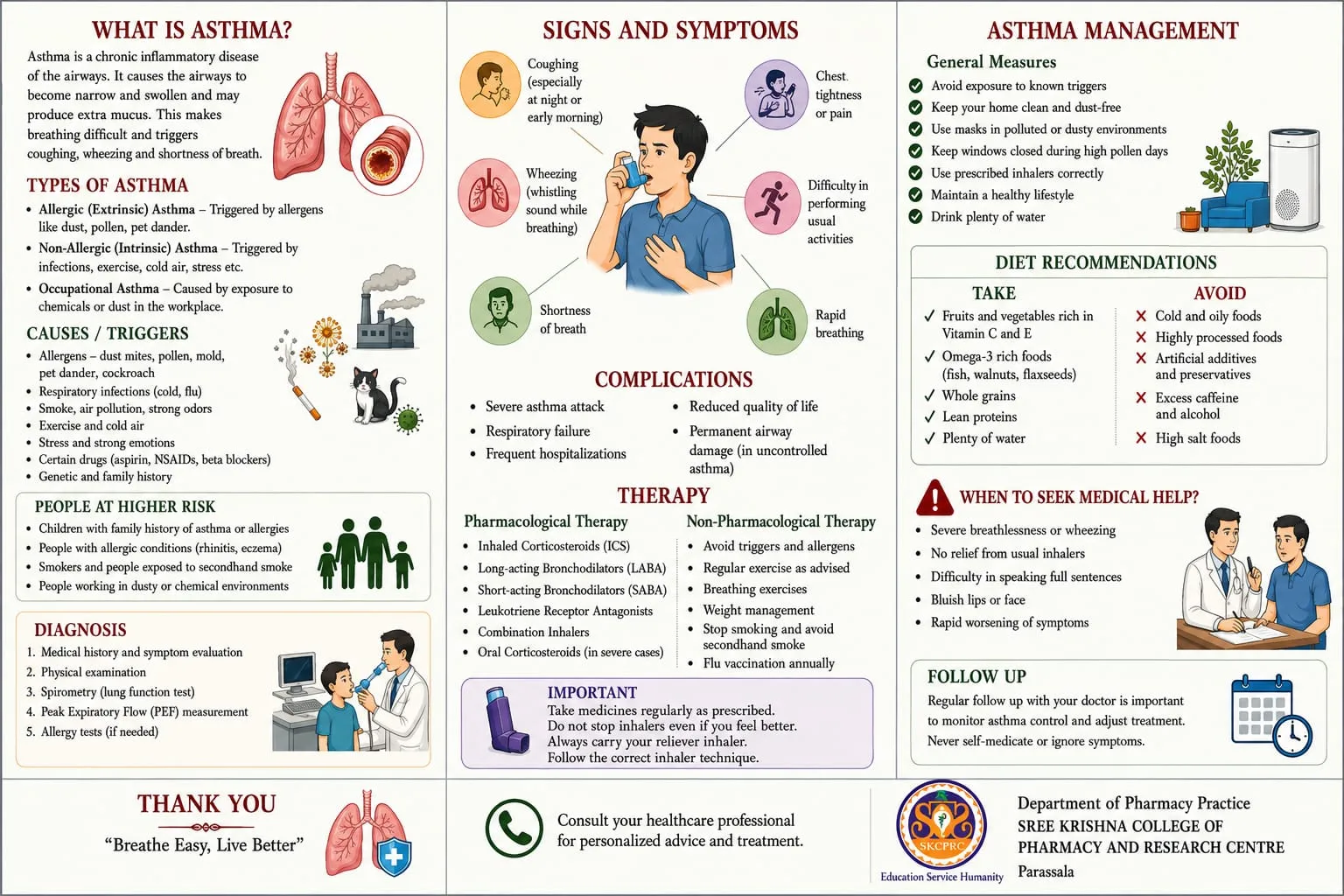
Counseling helps patients understand the nature of asthma, the purpose of their prescribed medicines, dosage schedules, and the importance of regular treatment. Proper instruction on inhaler technique is particularly important, as incorrect use can reduce drug delivery and affect treatment effectiveness. In addition, patients should be informed about possible adverse drug reactions (ADRs) and encouraged to report suspected reactions. Effective counseling empowers patient to participate actively in their treatment and empowers long term disease control and supports better quality of life.
REVIEW OF LITERATURE
Gowda et al. (2025) conducted a community-based cross-sectional study to assess the prevalence of bronchial asthma and associated risk factors among 1,140 urban school children aged 10–15 years in Bengaluru. Using an ISAAC-based semi-structured questionnaire, the study reported an overall asthma prevalence of 5.79%, with a slightly higher prevalence among males (6.51%) than females (4.99%). The study identified family history of allergic disorders and preterm birth as significant risk factors for bronchial asthma, while passive smoking, inadequate ventilation, allergic rhinitis and atopic dermatitis were also observed in affected children. Seasonal symptoms, sleep disturbances, school absenteeism and previous hospitalization due to exacerbations were commonly reported. The findings were consistent with several previous Indian studies showing variation in childhood asthma prevalence across different regions. The authors emphasized that bronchial asthma remains an important cause of morbidity among school children and recommended larger studies and increased awareness, education and preventive activities for better asthma control.
Alsajri et al. (2025) conducted a cross-sectional study to assess the prevalence of asthma and its associated symptoms and risk factors among adults in Iraq. The study included 1,131 participants from different Iraqi communities and used the validated European Community Respiratory Health Survey (ECRHS) questionnaire. The prevalence of physician-diagnosed asthma was 10.5%, while commonly reported symptoms included waking due to coughing attacks (60.9%), shortness of breath due to dust or fumes (45.9%), and waking due to shortness of breath (36.9%). The study found that allergic rhinitis and a family history of asthma were significantly associated with physician-diagnosed asthma, while smoking, allergic rhinitis, food allergies, drug allergies, and family history of asthma were associated with asthma based on the ECRHS assessment. The authors highlighted the substantial burden of asthma among Iraqi adults and emphasized the importance of improved awareness, early diagnosis, asthma surveillance, and targeted interventions for high-risk populations.
Tamaoki et al. (2025) discussed the current practical approach to asthma management, highlighting that asthma is a common chronic respiratory disease with increasing prevalence of allergic conditions. The authors described asthma as a heterogeneous disease characterized by airway inflammation, bronchial hyperresponsiveness and variable airflow limitation, with different phenotypes requiring individualized management. The review emphasized the importance of accurate diagnosis, assessment of airway inflammation and appropriate use of pulmonary function testing. It also highlighted the effectiveness of inhaled corticosteroids (ICS) and ICS/long-acting β₂-agonist (LABA) combinations in reducing asthma-related mortality, while noting that poor symptom control remains a significant concern. The authors recommended a practical, patient-centered approach involving appropriate pharmacological therapy, allergen management, immunotherapy and biologic agents for selected patients with severe asthma.
Jasmi et al. (2026) conducted a review to assess the effectiveness of patient counselling using the Pill Method in improving the quality of life among asthma patients. The review highlighted that poor medication adherence, incorrect inhaler technique and inadequate knowledge about asthma are major factors contributing to poor disease control. The Pill Method involves physically showing medications, explaining dosage schedules, demonstrating inhaler techniques, and using visual aids and medication charts to improve patients’ understanding and medication-taking behaviour. The review reported that structured patient counselling can improve medication adherence, inhaler technique, disease knowledge and self-management, thereby reduce emergency visits and hospitalizations and improve physical and psychological well-being. It also emphasized the important role of clinical pharmacists in individualized counselling, adherence monitoring, identification of drug-related problems and follow-up assessment. The authors concluded that incorporating structured Pill Method counselling into routine asthma care may improve clinical outcomes and quality of life, although further interventional studies are required to establish standardized counselling protocols and evaluate long-term benefits.
Leaflet for Patient Counselling
METHODS
A pharmacovigilance-based observational approach was used to identify and evaluate suspected ADRs among patients receiving pharmacological treatment for asthma. Relevant patient demographic details, prescribed medications, reported adverse reactions, their severity, and clinical outcomes were documented. The suspected causality of ADRs may be assessed using an appropriate standardized causality assessment scale.
RESULT
The study is expected to identify commonly reported adverse reactions associated with anti-asthmatic therapy and provide information regarding their frequency, severity, and suspected association with individual medications. Monitoring of ADRs may help in the early detection of drug-related safety concerns and support appropriate clinical interventions.
CONCLUSION
Pharmacovigilance plays an important role in identifying, evaluating, and preventing adverse drug reactions associated with asthma medications. Continuous monitoring and reporting of suspected ADRs can improve medication safety, promote rational drug use, enhance patient adherence, and contribute to better therapeutic outcomes in patients with asthma.
REFERENCES


Harisankar M. K.*, Nithin Manohar R., Muhsina N., Arjunsangeeth, Rudrasree M. S., Fathima Jasim, Prasobh G. R., A Review on Patient Counseling for Asthma Using Leaflet, Int. J. Med. Pharm. Sci., 2026, 2 (9), 436-439. https://doi.org/10.5281/zenodo.22917124
 10.5281/zenodo.22917124