

We use cookies to ensure our website works properly and to personalise your experience. Cookies policy
Lucknow Model College of Pharmacy, Lucknow
Sharp tooth pain from bare dentin surfaces affects many people when triggered by cold or touch. This research looks at a natural paste made with mud and herbs instead of standard lab-made chemicals. A mix of healing clays - Dead Sea Mud, Multani Mitti, bentonite, and kaolin - blocks tiny tubes in teeth that cause sensitivity. Each ingredient helps seal these openings through gentle mineral buildup rather than harsh reactions. Added potassium nitrate calms irritated nerves inside the tooth over time without numbing effects upfront. Alongside come plant-based elements: neem powder fights bacteria, mulethi soothes irritation, clove oil supports gum health naturally. Together they form a blend rooted in ancient herb knowledge yet tested with current scientific methods. Results depend on how consistently the mixture covers sensitive zones during daily brushing cycles. A smooth texture came from careful mixing and grinding, done just right. Testing checked both physical traits and sensory qualities once it was ready. It measured a pH of 6.04 - gentle on mouth tissues, well above levels that harm enamel. Beyond balance, spreading felt easy, squeezing out stayed steady, while bubbles formed nicely thanks to Sodium Lauryl Sulphate. Surprisingly, the results show this herbal mud toothpaste stays fresh, works well, does no harm. Pain signals get blocked right at the surface, while inside the tooth, irritation eases through natural reactions. Instead of lab-made chemicals, it leans on earth-sourced minerals. What stands out most is how body-friendly ingredients support gum wellness long term. Behind every number in the study lies proof: simple materials can meet complex needs. Not magic - just smart blending of old wisdom and careful testing.
Toothpaste, sometimes referred to as a dentifrice, assists in cleaning teeth in conjunction with a brush. It is responsible for maintenance and improving oral aesthetics. In ancient times, it only functioned as an abrasive, removing debris such as bacteria, food remnants, and stains on the teeth enamel. Nowadays, it is used for much more than simply cleaning; it has components that serve as an anti-cavity, anti-gingivitis, anti-halitosis, anti-sensitivity, among others, and it helps resolve some of the health challenges faced. From being an abrasive, toothpaste has evolved into a proactive agent that delivers active agents directly into the oral cavity [1]. However, most of the conventional pastes for teeth sensitivity rely on artificial numbing agents. Nowadays, however, an interest is developing towards natural solutions – mineral compositions that do not harm a person’s health [2]. Thus, there appears a mud-based solution, combining the ancient herbal knowledge with modern concepts regarding oral hygiene. As opposed to the above-discussed paste, it relies on clay-based substances. Indeed, bentonite clay, multani mitti and dead sea mud can all cover open layers of dentin and make them resistant to irritation, providing protection. On top of this, the solution includes extracts from green plants that can protect against bacteria. Neem extract, in particular, provides antimicrobial properties as well as reduces the inflammation in the gums. This means that there is no need to dull pain. It is necessary to protect dentin, rebuild its protective layer, and restore balance [3].
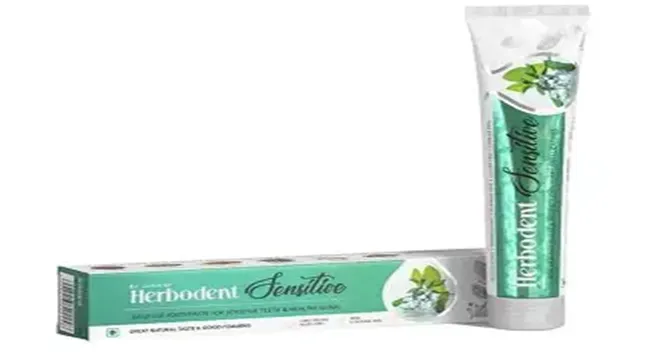
Fig. No. 1. Herbal Sensitive Toothpaste
Types of Toothpaste
Toothpastes are categorized based on their primary therapeutic or cosmetic function:
Most often found on shelves, these contain either sodium fluoride or stannous fluoride built to rebuild tooth surface while stopping decay before it starts. What you see here works quietly beneath the surface.
Some toothpaste works on touchy teeth by calming nerves inside. One kind uses a salt made of potassium that stops pain signals fast. Another picks minerals like strontium or calcium to plug tiny tubes in worn enamel. These blockers slow how deep hot or cold feelings go. Nerve quieting happens when certain ingredients rush in ahead of sharp sensations
Some formulas include pyrophosphates; others rely on zinc citrate instead. These help stop soft plaque from turning stiff. Calcification is blocked before it can begin. The biofilm stays looser, less likely to harden. Protection happens step by step, day after day.
Some formulas include chemicals such as hydrogen peroxide. These work alongside stronger scrubbing particles that lift marks from the tooth's outer layer. Brightening happens when discoloration is lifted away gradually. Tiny gritty elements help polish while active liquids break down stubborn spots. The mix targets visible dullness without altering the enamel deeply.
Herbal/Natural Toothpaste: From plants, oils, and earth-derived minerals comes a different kind of clean - one that skips lab-made ingredients entirely. This mix fights germs, soothes irritation, and scrubs away buildup without relying on artificial compounds. People who want their mouth care to work with the body, not against it, tend to lean toward these kinds of formulas. Nature's components step in where chemicals used to dominate, offering an option rooted in what grows, not what’s cooked up in a lab [4].
Functions and Uses of Toothpaste
MATHOD AND MATERIALS
MATERIALS USED:
1. Sorbitol: -
Chemical Name: D-glucitol
Chemical constituents: Polyol (Sugar alcohol)
Uses:
1. Prevents the formulation from dehydrating and cracking.
2. Provides a smooth texture and glossy appearance to the paste.
3. Imparts a safe, non-cavity-causing sweetness.
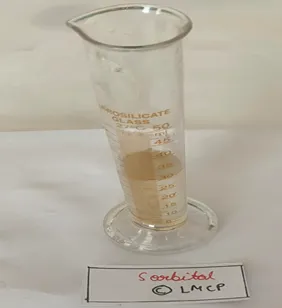
Fig. No. 2. Sorbitol
2. Sodium Lauryl Sulphate (SLS): -
Chemical Name: Sodium dodecyl sulphate
Chemical constituents: Alkyl sulfate (Anionic surfactant)
Uses:
1. Creates the primary foaming action to wash away debris.
2. Facilitates the even dispersion of active ingredients throughout the oral cavity.
3. Assists in dislodging sticky plaque biofilm from the tooth surface.
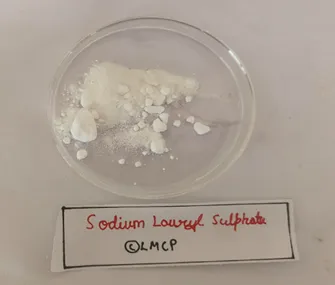
Fig. No. 3. Sodium Lauryl Sulphate: -
3. Xanthan Gum: -
Microbial Source: Extracellular polysaccharide produced by Xanthomonas campestris
Chemical constituents: Glucose, mannose, and glucuronic acid
Uses:
1. Acts as a primary binder to prevent the separation of liquid and solid phases.
2. Provides the toothpaste with optimal thickness and stand-up properties.
3. Stabilizes the heavy particulate clays within the humectant base.
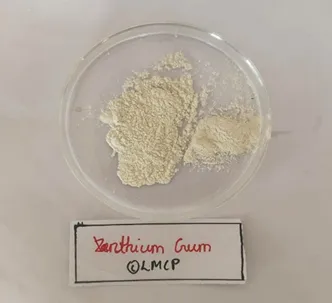
Fig. No. 4. Xanthan Gum
4. Calcium Carbonate: -
Mineral Name: Precipitated Calcium Carbonate (CaCO3)
Chemical constituents: Calcium, carbon, and oxygen
Uses:
1. Mechanically removes plaque and exogenous surface stains.
2. Buffers oral cavity acids to halt enamel erosion.
3. Provides a localized pool of bioavailable calcium in the saliva.
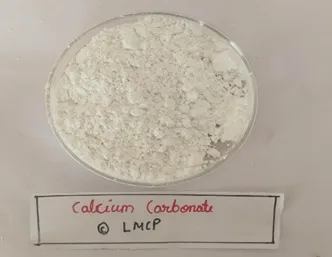
Fig. No. 5. Calcium Carbonate
5. Silica (Silica Gel Powder): -
Chemical Name: Amorphous Silicon Dioxide (SiO2)
Chemical constituents: Silicon and Oxygen
Uses:
1.Acts as a rheology modifier to control the paste's thickness.
2.Functions as a mild, controlled abrasive for cleaning.
3.Ensures the physical stability of the formulation.
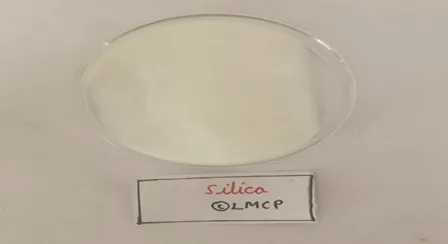
Fig. No. 6. Silica
6. Kaolin: -
Chemical / Mineral Name: Hydrated aluminium silicate
Family: Kaolinite clay group
Chemical constituents: Silica, alumina, and water
Uses:
1. Provides non-traumatic, low-abrasion polishing for sensitive teeth.
2. Helps remove superficial stains gently.
3. Assists heavier clays in the micro-occlusion of dentinal tubules.
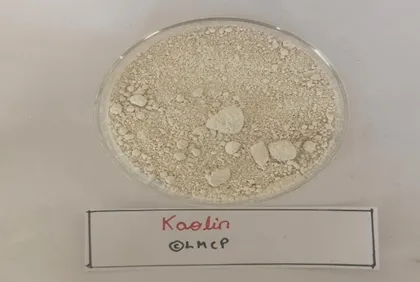
Fig. No. 7. Kaolin
7. Potassium Nitrate:-
Chemical Name: Potassium Nitrate (KNO3)
Chemical constituents: Potassium ions and nitrate ions
Uses:
1. Chemically depolarizes the dental nerve to block pain signals.
2. Provides rapid relief from hypersensitivity to cold, hot, and sweet stimuli.
3. Acts synergistically with physical tubule-occluding clays.
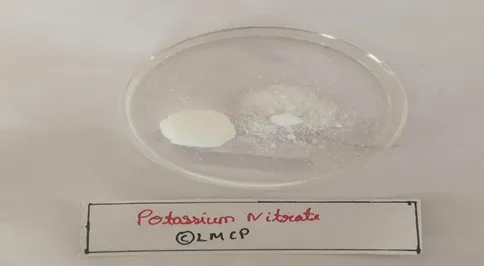
Fig. No. 8. Potassium Nitrate
8. Glycerine: -
Chemical Name: Glycerol
Chemical constituents: Trihydric alcohol (Polyol)
Uses:
1. Acts as a humectant to retain moisture in the paste.
2. Lubricates the oral cavity during brushing to reduce mechanical friction.
3. Serves as an effective solvent to extract and carry herbal phytochemicals.
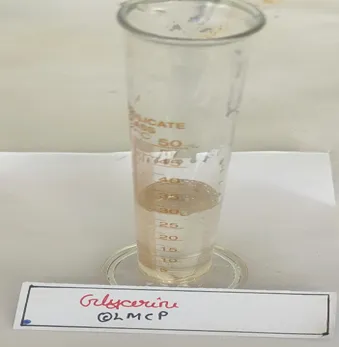
Fig. No. 9. Glycerine
9. Sodium Benzoate: -
Chemical Name: Sodium salt of benzoic acid
Chemical constituents: Benzoate anion and sodium cation
Uses:
1. Prevents bacterial and fungal contamination inside the tube.
2. Maintains the sterility and safety of the final product.
3. Extends the commercial shelf life of the formulation.
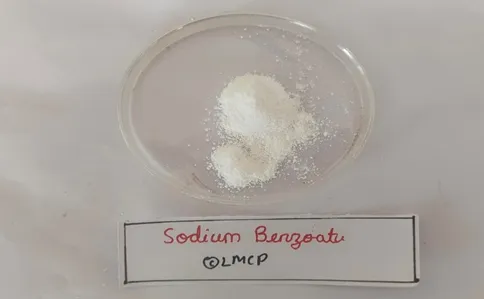
Fig. No. 10. Sodium Benzoate
10. Saccharin: -
Chemical Name: Sodium Saccharin
Chemical constituents: Artificial non-nutritive sweetener
Uses:
1. Dramatically improves the palatability of the toothpaste.
2. Masks the bitter and astringent taste of herbs and clays.
3. Provides sweetness without contributing to tooth decay.
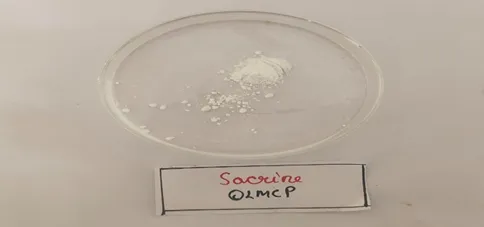
Fig. No. 11. Saccharin
11. Dead Sea Mud: -
Chemical / Mineral Name: Mineral Poloid
Chemical constituents: Magnesium, Calcium, Potassium, Sodium, and Bromides
Uses:
1. Improves the gingival barrier and reduces inflammation.
2. Provides highly bioavailable minerals for structural enamel repair.
3. Draws out toxins and bacterial byproducts from the gum line.
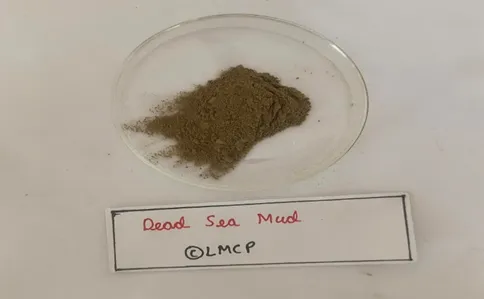
Fig. No. 12. Dead Sea Mud
12. Multani Mitti (Fuller's Earth): -
Chemical / Mineral Name: Hydrous aluminium silicates
Chemical constituents: Silica, iron oxide, lime, magnesia, and water
Uses:
1. Acts as a powerful de-greasing agent that adsorbs environmental toxins.
2. Assists in physically plugging the exposed dentinal tubules.
3. Provides a mild astringent effect to tighten inflamed gingival tissues.
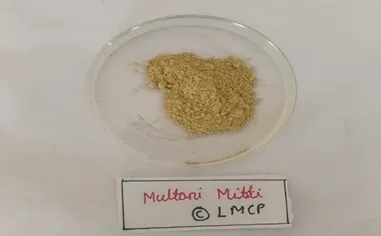
Fig. No. 13. Multani Mitti
13. Bentonite Clay: -
Chemical / Mineral Name: Montmorillonite (Aluminium Silicate)
Family: Smectite clay group
Chemical constituents: Sodium or Calcium montmorillonite
Uses:
1. Swells to create a semi-permanent physical blockade over open dentinal tubules.
2. Functions as a carrier for herbal actives and provides mechanical antibacterial action.
3. Neutralizes acidic oral environments due to its high alkaline pH.
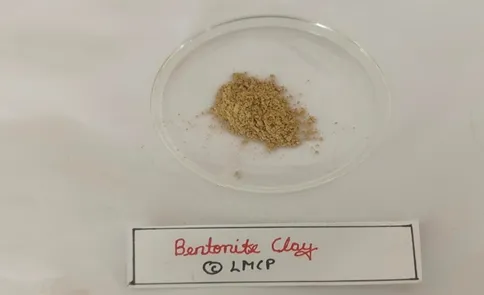
Fig. No. 14. Bentonite Clay
14. Neem Powder: -
Botanical Name: Azadirachta indica
Family: Meliaceae
Chemical constituents: Azadirachtin, Nimbin, Nimbidin, and various Flavonoids
Uses:
1. Provides primary antibacterial, antifungal, and anti-inflammatory defence.
2. Inhibits the proliferation of Streptococcus mutans.
3. Reduces gingival bleeding and treats underlying periodontal inflammation.
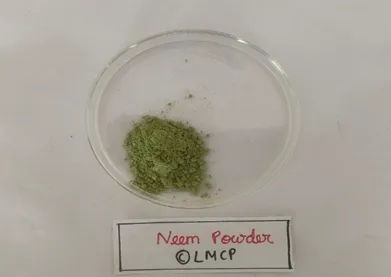
Fig. No. 15. Neem Powder
15. Mulethi Powder (Licorice): -
Botanical Name: Glycyrrhiza glabra
Family: Fabaceae
Chemical constituents: Glycyrrhizin, glabridin, and liquiritin
Uses:
1. Soothes irritated oral mucosa and inflamed gums.
2. Provides a natural, non-cariogenic sweetness to the formulation.
3. Helps inhibit acid production by cariogenic bacteria.
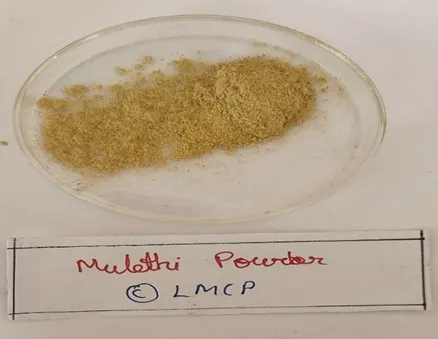
Fig. No. 16. Mulethi Powder
16. Clove Oil: -
Botanical Name: Syzygium aromaticum
Family: Myrtaceae
Chemical constituents: Eugenol (up to 90%), beta-caryophyllene
Uses:
1. Acts as a rapid, natural anaesthetic to relieve acute tooth sensitivity.
2. Provides powerful antiseptic action against oral pathogens.
3. Imparts a refreshing, spicy flavour that combats halitosis (bad breath).
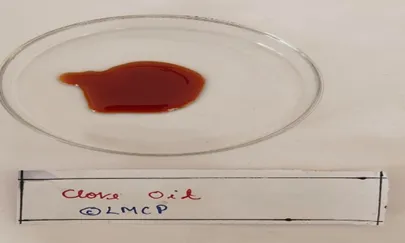
Fig. No. 17. Clove Oil
Table No.1. List of Instruments and Their Roles
|
S. No. |
Equipment |
Role in Formulation Process |
|
1 |
Electronic Weighing Balance |
Used to accurately measure the precise weight and quantities of each raw liquid and dry ingredient prior to mixing, ensuring formulation precision. |
|
2 |
Mortar and Pestle (Porcelain) |
Used for the trituration and homogenization process, where all ingredients are manually blended to create a smooth, uniform paste. |
|
3 |
Sieve (No. 80 Mesh) |
Used to filter the dry herbal and mineral powders before mixing, breaking up aggregates to obtain a uniform and standardized particle size. |
|
4 |
Digital pH Meter |
Used to test the acidity/alkalinity of the final toothpaste formulation to ensure it is compatible with oral tissues (neutral to slightly alkaline). |
|
5 |
Measuring Cylinders & Glass Beakers |
Used for the accurate volumetric measurement and transfer of liquid humectants like Sorbitol, Glycerine, and Clove Oil. |
Table No. 2. Formulation Profile: Ingredients and Their Roles
|
S. No. |
Ingredients |
Uses in Toothpaste Formulation |
|
1 |
Dead Sea Mud |
Reduces gingival inflammation and provides essential trace minerals for potential enamel support. |
|
2 |
Multani Mitti |
Acts as a mechanical adsorbent to pull out toxins and assists in the physical occlusion of open tubules. |
|
3 |
Bentonite Clay |
Swells upon hydration to create a strong physical plug in exposed dentin, providing long-lasting sensitivity relief. |
|
4 |
Kaolin |
Functions as an ultra-fine polishing agent that cleans compromised teeth without causing abrasive trauma. |
|
5 |
Neem Powder |
Inhibits the growth of cavity-causing bacteria and prevents the formation of sticky plaque biofilm. |
|
6 |
Mulethi Powder |
Soothes irritated gums and oral mucosa while providing natural sweetness and mild anti-inflammatory action. |
|
7 |
Clove Oil |
Contains a high concentration of eugenol, providing immediate localized pain relief and strong antiseptic benefits. |
|
8 |
Sorbitol |
Non-cariogenic humectant that prevents the paste from hardening and provides a smooth texture. |
|
9 |
Glycerine |
Powerful solvent and humectant that lubricates the paste and dissolves herbal phytochemicals. |
|
10 |
Calcium Carbonate |
Mild abrasive buffer that neutralizes acidic environments and safely removes surface plaque. |
|
11 |
Silica |
Rheology modifier that controls paste thickness and provides gentle cleaning friction. |
|
12 |
Sodium Lauryl Sulphate (SLS) |
Surfactant that lowers surface tension, creating the foaming action necessary to wash away debris. |
|
13 |
Xanthan Gum |
Hydrocolloid binder that stabilizes the heavy solid clays, keeping them evenly suspended in the liquid phase. |
|
14 |
Potassium Nitrate |
Synthetic active ingredient clinically proven to treat hypersensitivity via nerve desensitization. |
|
15 |
Sodium Benzoate |
Broad-spectrum preservative added to inhibit microbial/fungal growth and extend shelf life. |
|
16 |
Saccharin |
Zero-calorie artificial sweetener used to effectively mask the bitter taste of the herbs and earthy clays. |
METHOD OF PREPARATION
Table No. 3. Trial batch Formulation of Mud Herbal Sensitive Toothpaste
|
S.No. |
Ingredients |
Category / Phase |
Quantity for 61.23g |
|
1 |
Sorbitol |
Humectant / Liquid Phase |
15 ml |
|
2 |
Glycerine |
Solvent & Humectant / Liquid Phase |
15 ml |
|
3 |
Potassium Nitrate |
Chemical Desensitizer / Active Solute Phase |
2.5 g |
|
4 |
Sodium Benzoate |
Preservative / Additive Phase |
0.58 g |
|
5 |
Saccharin (Sacrine) |
Sweetener / Additive Phase |
0.10 g |
|
6 |
Calcium Carbonate |
Base Abrasive / Powder Phase |
12.5 g |
|
7 |
Silica |
Rheology Modifier / Powder Phase |
5.0 g |
|
8 |
Xanthan Gum |
Binder & Stabilizer / Powder Phase |
0.5 g |
|
9 |
Sodium Lauryl Sulphate (SLS) |
Surfactant / Additive Phase |
0.5 g |
|
10 |
Kaolin |
Polishing Agent / Mineral Powder Phase |
2.5 g |
|
11 |
Dead Sea Mud |
Therapeutic Mineral / Clay Phase |
1.5 g |
|
12 |
Multani Mitti |
Adsorbent Base / Clay Phase |
1.5 g |
|
13 |
Bentonite Clay |
Tubule Occluding Agent / Clay Phase |
0.5 g |
|
14 |
Neem Powder |
Herbal Antimicrobial / Active Powder Phase |
0.5 g |
|
15 |
Mulethi Powder |
Herbal Anti-inflammatory / Active Powder Phase |
0.05 g |
|
16 |
Clove Oil |
Essential Oil & Analgesic / Final Additive Phase |
4 Drops |
Table No. 4. Final batch Formulation of Mud Herbal Sensitive Toothpaste
|
S.No |
Ingredients |
Category / Phase |
Quantity for 122.50g |
|
1 |
Sorbitol |
Humectant / Liquid Phase |
30 ml |
|
2 |
Glycerine |
Solvent & Humectant / Liquid Phase |
30 ml |
|
3 |
Potassium Nitrate |
Chemical Desensitizer / Active Solute Phase |
5 g |
|
4 |
Sodium Benzoate |
Preservative / Additive Phase |
1.16 g |
|
5 |
Saccharin |
Sweetener / Additive Phase |
0.20 g |
|
6 |
Calcium Carbonate |
Base Abrasive / Powder Phase |
25 g |
|
7 |
Silica |
Rheology Modifier / Powder Phase |
10.0 g |
|
8 |
Xanthan Gum |
Binder & Stabilizer / Powder Phase |
1 g |
|
9 |
Sodium Lauryl Sulphate (SLS) |
Surfactant / Additive Phase |
1 g |
|
10 |
Kaolin |
Polishing Agent / Mineral Powder Phase |
5 g |
|
11 |
Dead Sea Mud |
Therapeutic Mineral / Clay Phase |
3 g |
|
12 |
Multani Mitti |
Adsorbent Base / Clay Phase |
3 g |
|
13 |
Bentonite Clay |
Tubule Occluding Agent / Clay Phase |
1 g |
|
14 |
Neem Powder |
Herbal Antimicrobial / Active Powder Phase |
1 g |
|
15 |
Mulethi Powder |
Herbal Anti-inflammatory / Active Powder Phase |
0.1 g |
|
16 |
Clove Oil |
Essential Oil & Analgesic / Final Additive Phase |
4 Drops |
The Mud Herbal Sensitive Toothpaste was prepared using the standard trituration method in a clean, controlled environment.
Step 1: Weighing and Collection All dry powders, clays, and liquid humectants were accurately measured using an electronic weighing balance according to the master formula.
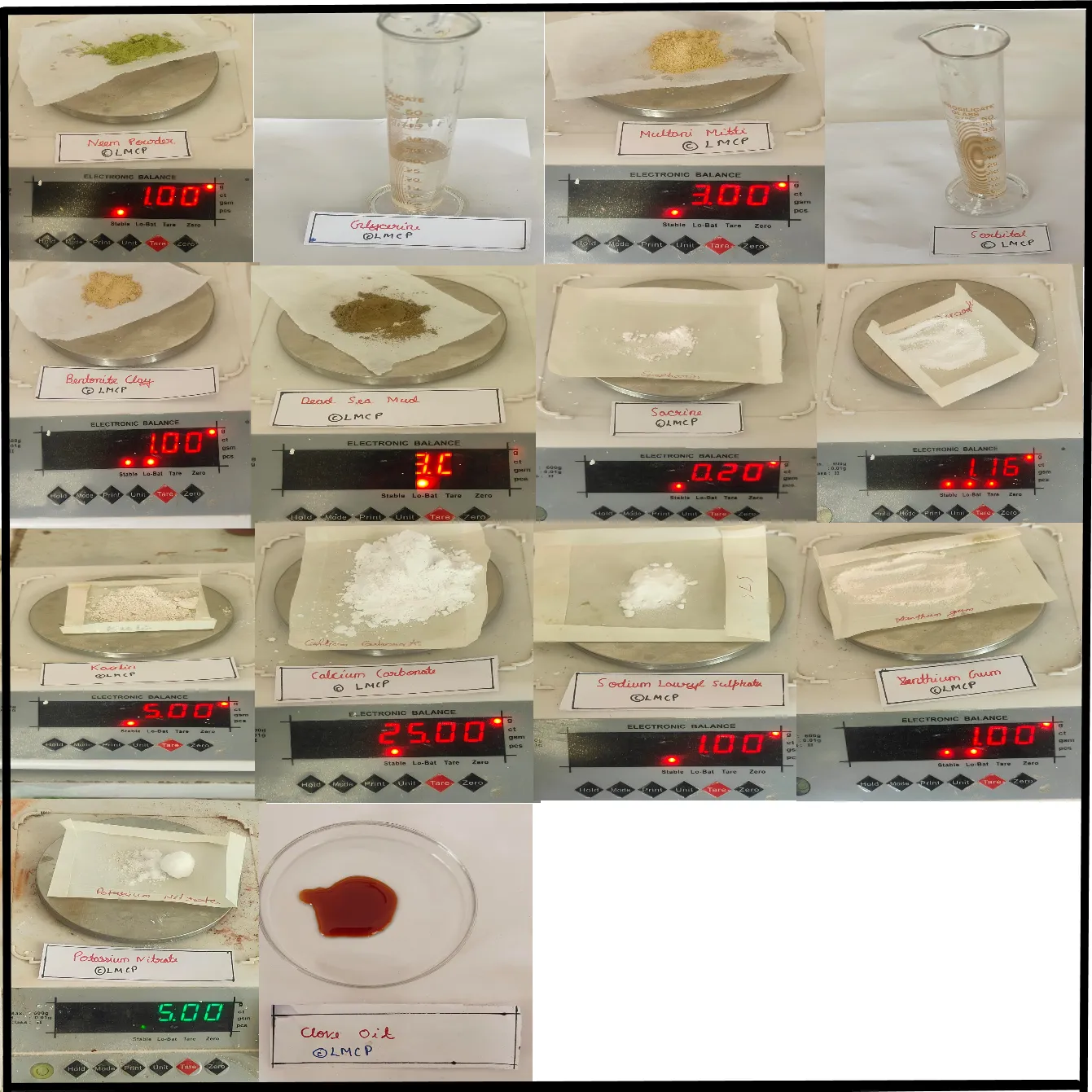
Fig. No. 18. Image of all ingredients weighed on the electronic balance
Step 2: Sieving of Dry Ingredients To ensure a smooth, grit-free final product, all dry mineral powders (Calcium Carbonate, Silica, Kaolin, Bentonite, Multani Mitti) and herbal powders (Neem, Mulethi) were passed through a No. 80 mesh sieve to break down any agglomerates
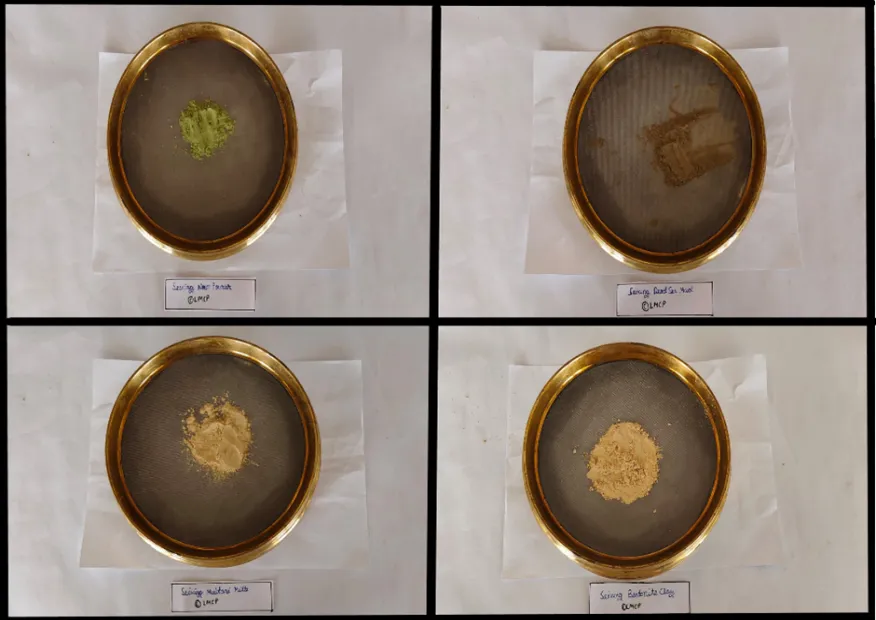
Fig. No. 19. sieving process
Step 3: Preparation of Liquid Humectant Base In a clean porcelain mortar, the liquid phase was initiated by adding Sorbitol and Glycerine. These act as the primary humectant and solvent vehicle for the formulation. To the liquid base, Calcium Carbonate was added gradually with continuous trituration. Next, Xanthan gum was sprinkled slowly into the mixture to begin building the rheological structure (viscosity) of the paste.
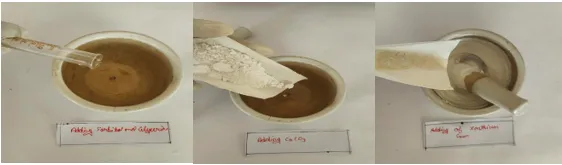
Fig No. 20. Adding sorbitol + glycerine+CaCo3 and Xanthum Gum
Sodium Lauryl Sulphate (SLS) was then added carefully. Trituration was kept gentle at this stage to prevent excessive, premature foaming. The primary chemical desensitizing agent, Potassium Nitrate, was triturated into the mixture until completely dissolved in the humectant base. Then Sodium Benzoate was added to preserve the formulation against microbial spoilage.
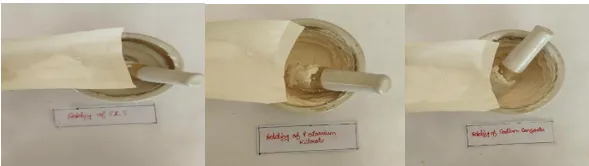
Fig No. 21. Adding SLS+ Potassium Nitrate and Sodium Benzoate
Saccharine was incorporated to provide sweetness and mask the earthy/bitter notes of the subsequent additions. The therapeutic minerals were introduced to the paste sequentially. Kaolin was added first for its fine polishing properties. Silica was added to adjust the abrasively and finalize the thickness of the paste.
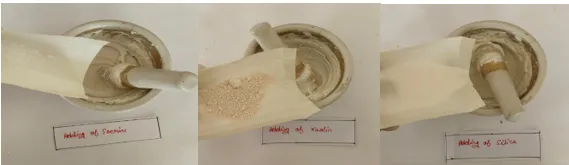
Fig No. 22. Adding Saccharine+ Koalin+ Silica
Dead Sea Mud was then folded into the mixture, imparting its rich mineral profile and characteristic colour. Following this, Bentonite Clay and Multani Mitti were incorporated. Due to their high swelling capacity, intensive trituration was required to ensure a homogeneous, lump-free consistency. Once the mineral base was uniform, the shade-dried and micro-pulverized Neem powder and Mulethi powder were added. Finally, 4 drops of Clove Oil were introduced to the centre of the paste and triturated thoroughly to lock the volatile eugenol into the clay matrix.
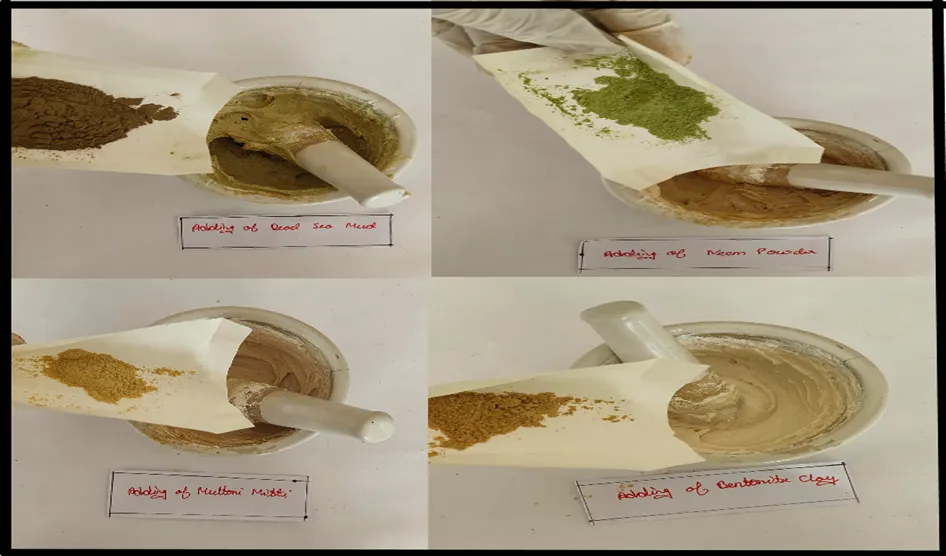
Fig. No. 23. Adding Dead Sea Mud+ Bentonite Clay+ Multani Mitti and Neem powder
Step 4: Final Homogenization
The entire mixture was triturated vigorously for an additional 15–20 minutes to ensure a perfectly smooth, glossy, and uniform toothpaste structure.
Step 5: Evaluation and Testing
The finalized paste was subjected to immediate physicochemical evaluation, including pH measurement, spreadability testing, and homogeneity checks.
Step6: Packaging The prepared Mud Herbal Sensitive Toothpaste was transferred into an airtight, squeezable tube container, properly labelled, and stored at room temperature for further stability and antibacterial evaluation.
Evaluation of Mud Herbal Sensitive Toothpaste
Following standard dental and pharmacopeial guidelines, the prepared mud herbal sensitive toothpaste underwent conventional physicochemical and quality control assessments:
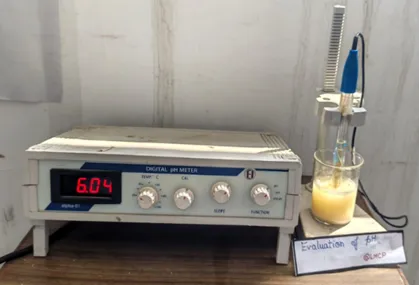
Fig. No. 24. Evaluation of pH
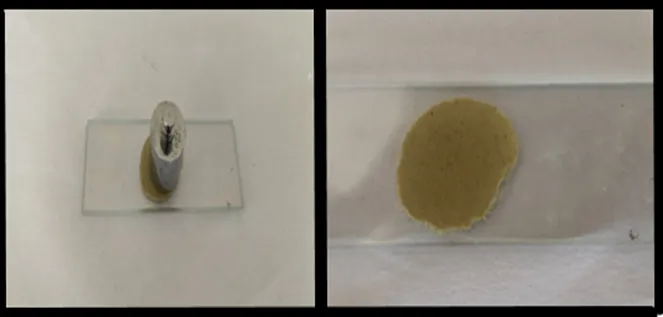
Fig. No. 25. Spread ability Test
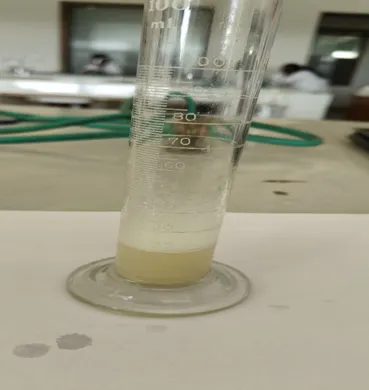
Fig. No. 26. Foaming Ability Test
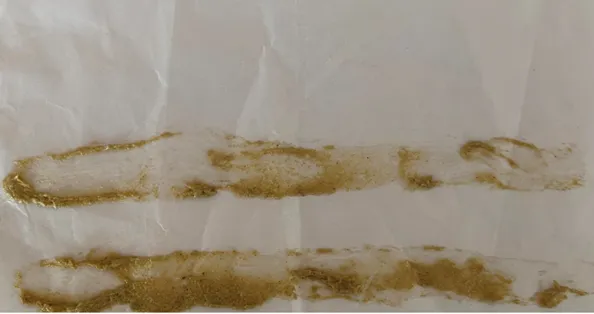
Fig. No. 27. Abrasiveness Assessment
RESULT
Physicochemical and sensory quality control analyses were conducted on the prepared Mud Herbal Sensitive Toothpaste for its safety, stability, and acceptability. This study proves that the trituration and homogenization technique was able to produce a good-quality toothpaste dentifrice.
Table No. 5. The results of the evaluation parameters are summarized in the table below:
|
Evaluation Parameter |
Observation / Result |
Reference |
|
Color |
Light earthy-green with a smooth, uniform dispersion |
Visual Inspection (Standard Organoleptic Evaluation) |
|
Odour |
Pleasant, characteristic spicy-herbal aroma (Clove dominating, effectively masking the clays) |
Olfactory Assessment (Standard Organoleptic Evaluation) |
|
Appearance & Texture |
Smooth, uniform, highly viscous paste without any hard lumps or coarse grittiness |
Visual & Tactile Evaluation |
|
pH (1% w/v aqueous dispersion) |
6.04 |
Indian Pharmacopoeia (IP) 2018 (Dentifrice Standards) |
|
Spread ability / Extrudability |
Excellent; extrudes easily from the tube and spreads uniformly on bristles without excessive drag |
Parallel Plate Method / Standard Tube Extrusion Test |
|
Foaming Ability |
Good; produces dense, stable lather upon mechanical brushing |
Standard Foam Height Test |
|
Washability (Rinsability) |
Good; easily expectorated and rinses cleanly with water, leaving no stubborn clay residue |
ICH Guidelines (Topical Formulation Criteria) |
|
Irritancy / Grit Assessment |
Non-irritating; provided gentle mechanical polishing without inducing scratching on the enamel or gums |
Standard Dentifrice Abrasivity Assessment |
CONCLUSION
The combination of these natural ingredients can bring about great relief to aching teeth and inflamed gums. Clay is extracted from the Dead Sea and kaolin is added in order to form an outer coating for open canals within the tooth’s surface, while maintaining the acidity of one’s mouth to neutral level. The mechanical protection by means of the two aforementioned components comes along with potassium nitrate, which soothes sensitive nerves found within each tooth. Clove oil, along with the antibacterial neem and mulethi, fights cavities, while relieving irritated gum tissues. The paste is firmly held together using xanthan gum, which covers enamel evenly without drips or falling apart. The paste is hydrated via sorbitol and glycerine, providing a soft texture that remains intact even when brushed frequently. The foaming effect occurs mildly due to activation of sodium lauryl sulphate during the rubbing process. All pieces fit tight and form layers upon layers until everything feels complete. All angles are covered in testing for stability, safety, and comfort, and after passing those tests, the formula becomes loyal to its daily performance without strange odors or residue.
REFERENCES


Sarita Rawat, Shashank Tiwari*, Divyanshi Awasthi, Shrey Gerg, Formulation & Evaluation of Mud Herbal Sensitive Toothpaste, Int. J. Med. Pharm. Sci., 2026, 2 (6), 343-357. https://doi.org/10.5281/zenodo.20779873
 10.5281/zenodo.20779873