
We use cookies to ensure our website works properly and to personalise your experience. Cookies policy
Lucknow Model College of Pharmacy, Lucknow, India
Hyperpigmentation, caused by UV damage, lifestyle factors, or dehydration, often requires a balance between aesthetic concealment and clinical treatment. Mud Butter Hybrid Lipstick introduces a novel formulation that bridges the gap between decorative cosmetics and dermatological care. By merging mineral-rich medicinal muds with intensive botanical butters, this hybrid lipstick creates a unique delivery system for depigmenting actives. The "Mud" component provides a natural, matte-satin finish that masks discoloration while stabilizing active ingredients. Simultaneously, the "Butter" base ensures deep emollient action, allowing brightening agents—such as antioxidants and melanin inhibitors—to penetrate the delicate lip tissue effectively. This dual-action approach not only offers immediate visual correction but also works to reduce hyperpigmentation at the cellular level over time. Ultimately, this research presents a multifunctional solution that transforms daily lip care into a proactive treatment for long-term skin health and restoration.
Definition of lipstick: Lipstick may be basically defined as dispersion of the colouring matter in a base consisting of a suitable blend of oils, fats, and waxes with suitable perfume and flavours moulded in the form of sticks to impart attractive glossy and colour, when applied on lips. Lipsticks provide moist appearance to the lips accentuating them and disgusting their effects. [1]
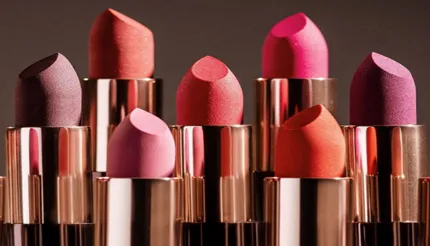
Fig. 1: Lipsticks
Lipsticks are commonly composed of several different components, such as vegetable oils (castor oil, almond oil), mineral derivatives (Vaseline oil, white petrolatum), pigments and waxes, which are not only used for aesthetic purposes but can also act as bioactive agents in extreme weather, e.g., UV protection [2]. Lipsticks are one of the most widely used cosmetic products. Social, psychological, and therapeutic benefits can be attained from using lipstick. The beauty and attractiveness of a person are enhanced as lipsticks colour the lips and protect them from the external environment [3]. However, current lip care products not only emphasize aesthetic value but also preferably have added medicinal value to the lip of consumers. This led to the emergence in the market of medicated lipsticks with active medicinal ingredients. The medicated lipsticks may provide protection against infections of bacteria due to the presence of an active medicinal ingredient in the formulation. This function adds on to the existing role of lipsticks, which provide moisture and emollient action to prevent cracking and chapping of the lips [4]. Lipsticks is a cosmetic product used to apply coloration and texture to lips, often made of wax and oil. Different pigment are used to produce colour, and minerals such as silica may be used to provide texture. The use of lipstick dates back to early civilizations such as Sumer and the Indus Valley Civilization, and was popularized in the western world in the 16th century. Some lipsticks contain traces of toxic materials, such as lead and PFAS, which prompted health concerns and regulation. Lipstick has been prominent in several women’s fashion trends, often associated with sexuality. The colour of lipstick has aesthetic and cultural significance as different colours carry different connotations. Red lipstick has historically been associated with sensuality or women's independence while black lipstick is worn by both men and women in alternative subcultures, especially punk and goth. Celebrities such as Monroe, Elizabeth Taylor, Madonna, and taylor swift have contributed to the popularity and iconic images of lipstick in fashion and mainstream media.
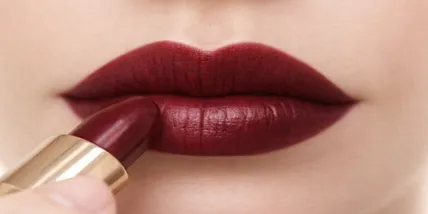
Fig. 2: A Women Applying Lipsticks
Lips are the most important part in the face. It needs proper nourishment and hydration as it is the only part in our body which lacks pores. Cosmeceuticals like lip balms, lip serum lip rouge, lip oils, lip masks, lip scrubs, lipsticks, and exfoliators have evolved which protects the lip skin from dehydration, hyperpigmentation, inflammation etc. Out of all lipsticks is the integral part of daily make up routine.
Mud Butter Lipstick: -
In the context of a Mud Butter Lipstick, the word hybrid refers to a "best of both worlds" formulation. It means the product is combining two traditionally opposite textures and functions into one single delivery system. Think of it as the "crossover vehicle" of the makeup world. Here is the breakdown of that fusion:
1. The Texture Hybrid (Feel) Usually, you have to choose between two extremes:
2. The Functional Hybrid (Action) This is where the "novel approach" to hyperpigmentation comes in. It blends:
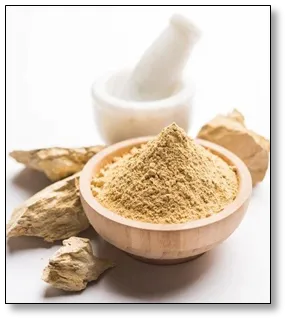
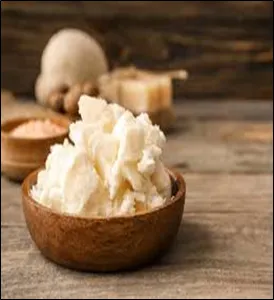
Fig. 3(b): Shea Butter
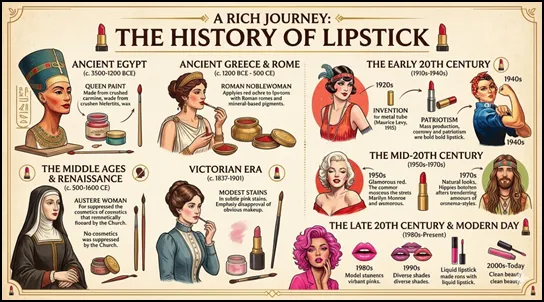
Fig. 4: The History of Lipstick
Ancient Lipstick Preparation Procedure: -
Collection of Natural Materials
↓
Selection of Pigments
(e.g., crushed gemstones, red ochre, plant dyes)
↓
Preparation of Base
(e.g., animal fat, beeswax, plant oils)
↓
Grinding & Mixing
(pigments finely ground and blended with base)
↓
Heating (if required)
(to melt wax/fat for uniform mixing)
↓
Cooling & Solidification
↓
Storage in Containers
(shells, pots, or small jars)
↓
Application using fingers or sticks
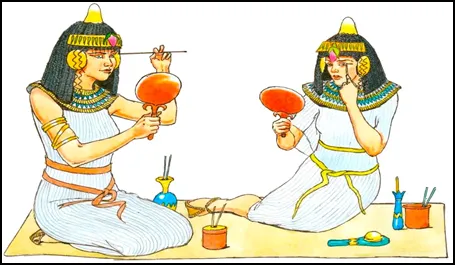
Fig. 5: Ancient Women applying Lipstick
MATERIALS AND METHOD
Collection of Ingredients: - All the ingredients used in the formulation of the Mud Hybrid Butter Lipstick are collected from the different sources, such as Shea Butter, Multani Mitti, Castor oil, Vitamin-E capsules, Almond oil, and Flavour Fragrance are collected from the market. The Remaning ingredients Bentonite Clay, Iron oxide Colour are purchased from the E-commerce website (Amazon, Flipkart, etc). The chemical ingredients used in the formulation are obtained from the college Laboratory.
Materials Used in the Formulation: -
Chemical Ingredients: -
Instruments: -
Materials Used in the Formulation and their Uses/Roles: -
Materials and their uses: -
Table 1: Herbal Ingredients and their uses
|
S. No |
Ingredients |
Uses |
|
1 |
Shea Butter |
Moisturizes lips and provides smooth texture |
|
2 |
Multani Mitti |
Absorbs excess oil and improves texture |
|
3 |
Castor Oil |
Provides shine and enhances spreadability |
|
4 |
Vitamin E Capsule |
Acts as antioxidant and nourishes lips |
|
5 |
Almond Oil |
Softens and hydrates lips |
|
6 |
Flavour/Fragrance |
Provides pleasant smell and taste |
|
7 |
Bentonite Clay |
Improves consistency and stability |
|
8 |
Moroccan Red Clay |
Provides natural color and smooth finish |
Synthetic Ingredients and their uses: -
Table 2: Synthetic Ingredients and their uses
|
S. No |
Ingredients |
Uses |
|
1 |
Cetyl Alcohol |
Acts as thickener and improves texture |
|
2 |
Hard Paraffin Wax |
Provides structure and hardness to lipstick |
|
3 |
Bees Wax |
Acts as binder and gives firmness |
Instruments and their uses
Table 3: Instruments and their uses
|
S. No |
Instruments |
Uses |
|
1 |
Weighing Balance |
Accurate measurement of ingredients |
|
2 |
pH Meter |
Determines pH of formulation |
|
3 |
Water Bath |
Heating and melting of ingredients |
Materials Used in the Formulation of Lipstick: -
Shea Butter: - Shea butter is a natural fat extracted from the nuts of the shea tree, commonly found in Africa. It has been used for centuries for its rich moisturizing and healing properties. Shea butter is packed with essential nutrients such as vitamins A, E, and F, along with fatty acids that help nourish and protect the skin. It is solid at room temperature but melts easily when applied to the skin, making it a popular ingredient in many skincare and cosmetic products. Its natural composition makes it suitable for all skin types, including sensitive skin. Shea butter is widely known for its ability to deeply hydrate the skin, making it especially useful for dry and rough areas. It also has anti-inflammatory properties that help soothe irritation, redness, and minor skin conditions. In addition to skincare, shea butter is used in hair care to improve texture, reduce dryness, and add shine. It also provides mild protection against sun damage and harsh weather conditions.
Chemical Composition & Nutritional Value:
Uses:
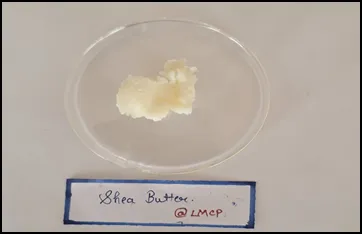
Fig. 6: Shea Butter
Almond Oil: - Almond oil is a natural oil extracted from the seeds of almonds, widely valued for its nutritional richness and versatility. It is typically available in two forms—sweet almond oil, which is commonly used for culinary and cosmetic purposes, and bitter almond oil, which is mainly used in aromatherapy and fragrance products. Packed with essential nutrients like vitamin E, healthy fats, antioxidants, and minerals, almond oil has been used for centuries in traditional medicine and beauty routines. One of the primary uses of almond oil is in skincare. It acts as an excellent moisturizer, helping to nourish dry skin, reduce dark circles, and improve overall complexion. Its anti-inflammatory properties make it beneficial for soothing irritation and minor skin conditions. In hair care, almond oil strengthens hair, reduces dandruff, and promotes shine and smoothness. It is also commonly used as a massage oil due to its light texture and relaxing effect on muscles.
Types of Almond Oil:
Uses:
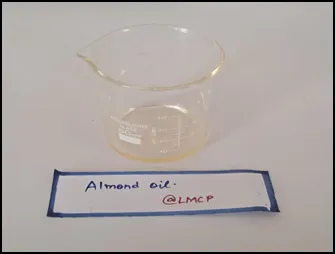
Fig. 7: Almond Oil
Vitamin E: Vitamin E, also known as tocopherol, is a fat-soluble antioxidant widely used in cosmetic and skincare formulations, including anti-wrinkle creams. It plays a crucial role in protecting the skin from oxidative stress caused by free radicals, which are a major factor in aging and wrinkle formation. Derived from natural sources such as vegetable oils or synthesized in laboratories, Vitamin E has moisturizing properties and helps maintain the overall health and elasticity of the skin.
In anti-wrinkle creams, Vitamin E helps reduce the appearance of fine lines and wrinkles by protecting collagen and other structural proteins from oxidative damage. It also supports skin hydration by strengthening the lipid barrier and promotes healing and repair of damaged or stressed skin. Its antioxidant properties help enhance the stability of other sensitive ingredients in the cream, ensuring long-lasting effectiveness. Vitamin E is compatible with a wide range of oils, emulsifiers, and active compounds, making it a versatile ingredient in modern anti-aging formulations.
Chemical and Physical Properties:
Uses:
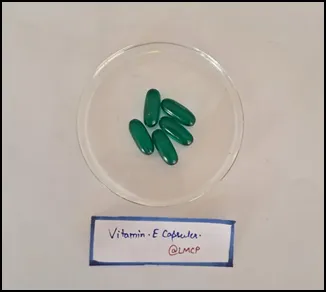
Fig. 8: Vitamin E capsules
Multani Mitti:- Multani mitti is a natural clay extracted from mineral-rich soil, commonly found in India and other parts of Asia. It has been used for centuries for its excellent cleansing and cooling properties. Multani mitti is packed with essential minerals such as magnesium, silica, calcium, and iron oxides, along with natural absorbent compounds that help purify and protect the skin. It is usually in powder form and mixes easily with other ingredients, making it a useful component in many skincare and cosmetic products. Its natural composition makes it suitable for most skin types, especially oily and combination skin. Multani mitti is widely known for its ability to absorb excess oil and impurities, making it especially useful for maintaining a clean and matte finish. It also has soothing properties that help reduce irritation, redness, and minor skin conditions. In addition to skincare, multani mitti is used in cosmetic formulations like lipstick to improve texture, control oiliness, and provide a smooth finish. It also provides mild protection against environmental impurities and harsh conditions.
Chemical Composition & Nutritional Value:
Key Components: -
Minerals:-
Uses:
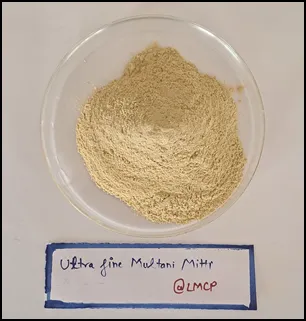
Fig. 9: Multani Mitti
Castor Oil: - Castor oil is a natural vegetable oil extracted from the seeds of the castor plant (Ricinus communis). It has been used for centuries for its moisturizing, medicinal, and cosmetic properties. Rich in essential nutrients and fatty acids that help nourish and protect the skin. Thick in consistency with a pale yellow color and mild odor. Commonly used in skincare, hair care, and cosmetic products including lipsticks. Suitable for most skin types, especially dry and sensitive skin. Known for its excellent moisturizing and emollient properties. Helps retain moisture and prevent dryness. Has anti-inflammatory and antimicrobial properties. Promotes smooth, soft, and healthy skin and lips. Enhances shine and improves texture in cosmetic formulations. Provides protection against dryness and harsh environmental conditions.
Chemical Composition & Nutritional Value:
Key Components:
Vitamins:
Nutritional Value:
Uses:
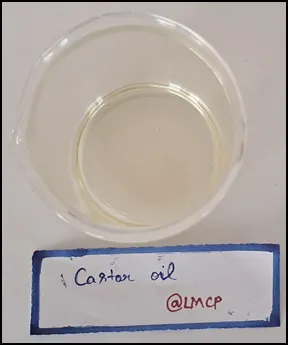
Fig. 10: Castor Oil
Fragrance:- Fragrance in lipstick refers to the pleasant scent added to enhance the overall user experience of the product. It is commonly derived from natural essential oils or synthetic aromatic compounds and is used to mask the odor of raw ingredients like waxes and oils. Fragrance has been widely used in cosmetic products for many years to make them more appealing and enjoyable to use. It is usually added in small amounts to ensure safety and avoid irritation. Its presence in lipstick helps improve consumer acceptance and adds a luxurious feel to the product. One of the main benefits of fragrance in lipstick is that it enhances the sensory appeal, making the product more pleasant during application. It also helps to mask any unpleasant smell from base ingredients. In addition, certain natural fragrances may provide mild soothing effects. However, fragrances are carefully selected and used in controlled quantities to ensure they are safe for use on lips, especially for sensitive skin.
Composition: -
Low Concentration:
Fragrance is used in very small amounts to avoid irritation and ensure safety.
Natural & Synthetic Sources:
May include essential oils (like mint, vanilla, or fruit extracts) and synthetic aroma compounds.
Aromatic Compounds:
Contains volatile compounds responsible for pleasant smell and quick evaporation.
Stability Factors:
Formulated to remain stable and retain scent without reacting with other ingredients.
Uses:
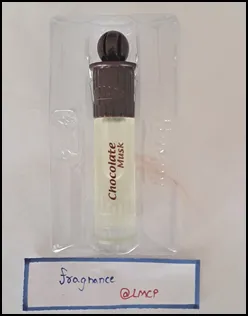
Fig. 11: Fragrance
Bentonite Clay: Bentonite clay is a natural clay formed from volcanic ash and is widely known for its strong cleansing and detoxifying properties. It has been used for centuries in skincare and cosmetic products due to its ability to absorb toxins and impurities. Bentonite clay is rich in minerals such as calcium, magnesium, and iron, which help nourish and protect the skin. It is usually available in fine powder form and can be easily mixed with other ingredients, making it suitable for use in lipsticks and other cosmetic formulations. Its natural composition makes it suitable for most skin types, especially oily and acne-prone skin. One of the main benefits of bentonite clay is its ability to absorb excess oil and remove impurities from the skin. It also helps in detoxifying and cleansing the skin surface. Bentonite clay has soothing properties that may help reduce irritation and inflammation. In addition, it can improve the texture and consistency of cosmetic products like lipstick by providing a smooth finish.
Nutritional Composition: -
Low Irritation:
Generally safe when used in small quantities in cosmetic products.
Minerals:
Rich in calcium, magnesium, silica, and iron which support skin health.
Active Compounds:
Contains natural adsorbent compounds that bind toxins and impurities.
Uses:
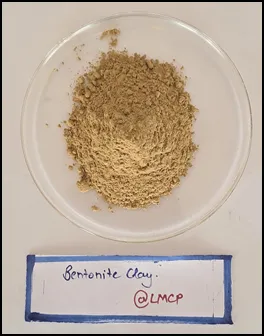
Fig. 12: Bentonite Clay
Moroccan Red Clay: Moroccan red clay is a natural mineral clay sourced from the Atlas Mountains of Morocco. It has been traditionally used for skincare due to its cleansing, exfoliating, and nourishing properties. This clay is rich in minerals such as iron oxide, silica, and magnesium, which help improve skin texture and appearance. It is usually available in fine powder form and is commonly used in cosmetic products, including lipsticks, for its natural color and skin benefits. Its gentle nature makes it suitable for most skin types. One of the main benefits of Moroccan red clay is that it helps cleanse and purify the skin while improving circulation. It also provides mild exfoliation, helping to remove dead skin cells. In lipstick formulations, it is valued for its natural red pigment, which adds color along with skin-friendly benefits. It also helps in improving the texture and smoothness of the product.
Nutritional Composition:
Low Irritation:
Safe and gentle for most skin types when used properly.
Minerals:
Contains iron oxide, silica, magnesium, and calcium which nourish the skin.
Active Compounds:
Provides natural pigments and mild exfoliating properties.
Uses:
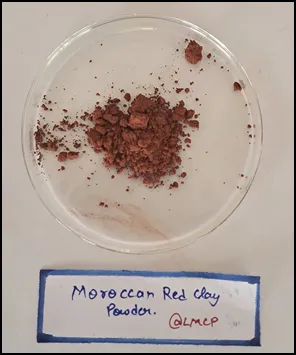
Fig. 13: Moroccan Red Clay
Chemical Ingredients used in the formulation of lipstick: -
Cetyl alcohol: Cetyl alcohol is a fatty alcohol widely used in cosmetic and skincare formulations, including anti-wrinkle creams. Despite the name “alcohol,” it is non-drying and acts primarily as an emollient, thickener, and stabilizer in creams and lotions. Derived either from natural sources like coconut oil and palm oil or synthesized in laboratories, cetyl alcohol has a waxy texture that helps provide structure and consistency to creams. In anti-wrinkle formulations, cetyl alcohol plays a key role in softening and smoothing the skin, forming a protective layer that reduces water loss and helps maintain hydration. By enhancing the viscosity of creams, it ensures that the product has a pleasant, spreadable texture, making it easier to apply evenly on the skin. Additionally, cetyl alcohol acts as an emulsion stabilizer, helping to keep oil and water phases combined and preventing separation over time.
Chemical and Physical Properties:
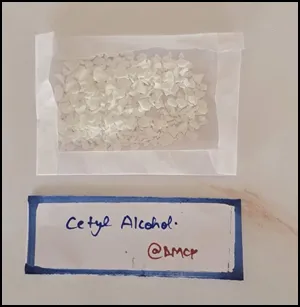
Fig. 14: Cetyl Alcohol
Hard Paraffin: Hard paraffin is a solid mixture of hydrocarbons derived from petroleum, commonly used in cosmetic and skincare formulations due to its protective and structuring properties. It appears as a white, odorless, wax-like substance and is widely used in products such as creams, ointments, and lipsticks. Hard paraffin helps provide firmness and stability to formulations, ensuring that products maintain their shape under different conditions. In cosmetic formulations like lipsticks and creams, hard paraffin plays an important role in forming a protective barrier over the skin, which helps reduce moisture loss and prevents dryness. It also contributes to the hardness and consistency of products, making them easier to handle and apply. Additionally, it enhances the durability and longevity of the product by improving its resistance to temperature changes and external conditions.
Chemical and Physical Properties:
Uses in Cosmetic Products:
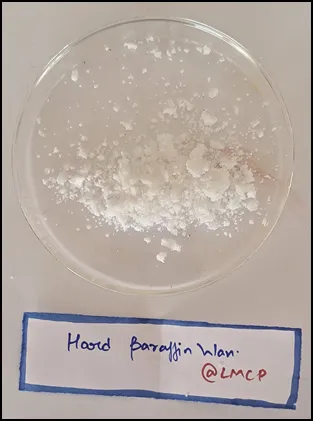
Fig. 15: Hard Paraffin wax
Beeswax: Beeswax is a natural wax produced by honeybees and is widely used in cosmetic and skincare products for its protective and moisturizing properties. It is obtained from the honeycomb and has a soft, pliable texture with a mild, pleasant aroma. Beeswax is valued for its ability to act as a natural emulsifier, thickener, and skin conditioner in creams, balms, and lipsticks. In cosmetic formulations, beeswax helps to lock in moisture by forming a protective barrier on the skin without clogging pores. It also improves the texture and consistency of products, making them smooth and easy to apply. In lipsticks, beeswax contributes to firmness, stability, and a glossy finish. Additionally, it has soothing properties that help calm irritated or dry skin.
Chemical and Physical Properties:
Uses: -
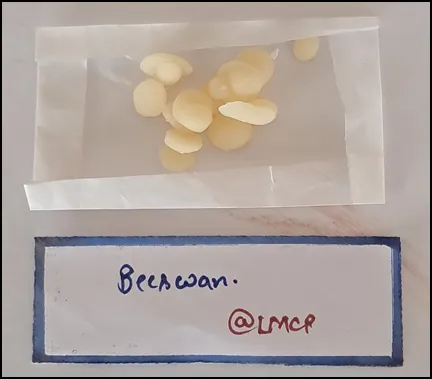
Fig. 16: Bees Wax
Formulation of Mud Hybrid Butter Lipstick: -
Table 4: Formulation of Mud Hybrid Butter Lipstick
|
S. No |
Ingredients |
Quantity |
|
1 |
Shea Butter |
5 gm |
|
2 |
Multani Mitti |
0.80 gm |
|
3 |
Castor Oil |
4 ml |
|
4 |
Vitamin-E Capsule |
0.20 gm |
|
5 |
Almond Oil |
2 ml |
|
6 |
Fragrance |
2-3 drops |
|
7 |
Moroccan Red clay |
2 gm |
|
8 |
Bentonite Clay |
0.40 gm |
|
9 |
Cetyl alcohol |
0.30 gm |
|
10 |
Hard paraffin wax |
1.5 gm |
|
11 |
Bees Wax |
3 gm |
Method of Preparation: -
Step 1: - Collection of all ingredients.
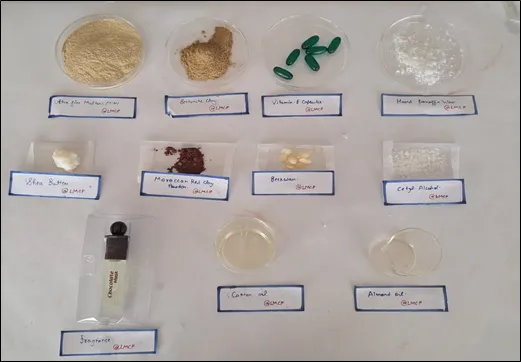
Fig. 16: Collected ingredients
Step 2: - Accurately weigh all the ingredients as per given quantities.
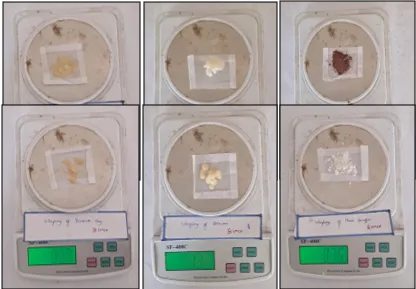
Fig. 17: Weighing of ingredients
Step 3:- Prepare Oil Phase:- Take a clean beaker and add: Shea butter (5 gm), Beeswax (3 gm), Hard paraffin wax (1.5 gm), Cetyl alcohol (0.30 gm) and Heat the beaker using a magnetic stirrer on low flame until all solid ingredients melt completely. Stir gently to ensure uniform melting.
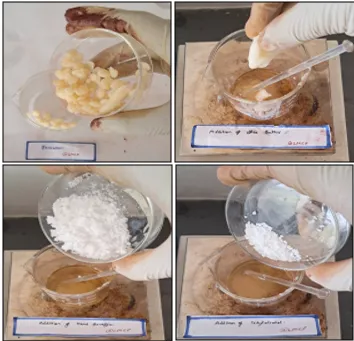
Fig. 18: Preparation of Oil Phase
Step 4: - Add Liquid Oils: - Once melted, add: Castor oil (4 ml), Almond oil (2 ml)
Mix well to form a uniform liquid base.
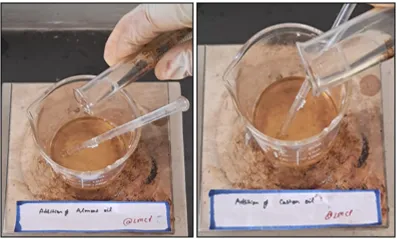
Fig. 19: Addition of liquids
Step 5:- Prepare Powder Phase:- In a separate bowl, mix all powders: Multani mitti (0.80 gm), Moroccan red clay (2 gm), Bentonite clay (0.40 gm), Mix thoroughly to avoid lumps.
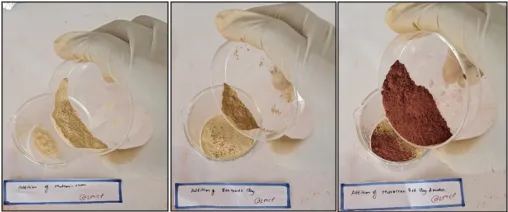
Fig. 20: Preparation of Powder base
Step 6: -Combine Phases: - Slowly add the Oil phase into the base while stirring continuously to avoid clumping.
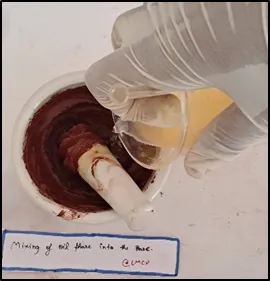
Fig. 21: Combine Phases
Step 7: - Add Vitamin-E (0.20 gm) and mix properly.
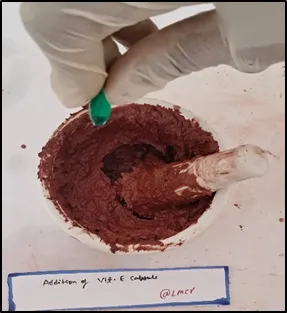
Fig. 22: Addition of Vitamin-E Capsule
Step 8: - Stir continuously to get a smooth, lump-free, uniform mixture.
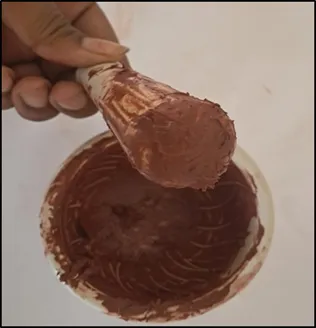
Fig. 23: Uniform Mixture
Step 9: - Pour the mixture into lipstick molds carefully, allow it to cool at room temperature or refrigerate for faster setting. Once fully set, remove from molds and store in a cool, dry place.
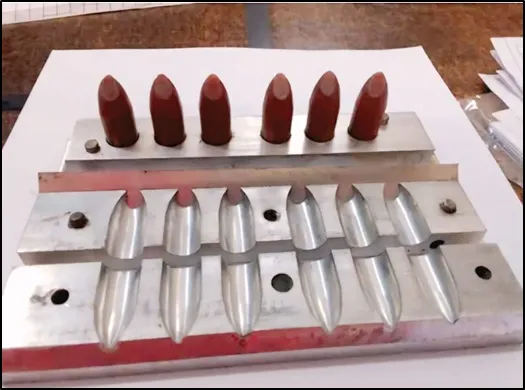
Fig. 24: Lipstick Mould
Evaluation of Herbal Lipstick:
The formulated herbal lipstick was evaluated for different evaluation tests such as melting point, skin irritation, perfume stability, surface abnormalities, aging stability, solubility test, pH.
1. Organoleptic properties:
The formulated lipstick was evaluated for organoleptic properties such as colour, odor, and texture.
2. Solubility test
The prepared herbal lipstick was dissolved in many solvents like acetone, hexane, petroleum ether, water, alcohol etc. and determine the solubility.
3. Melting point:
Melting point is determined to indicate the limit of safe storage. The melting point of prepared herbal lipstick was determined by capillary tube method. The melting point of lipstick was done by taking melted sample in a capillary tube and then capillary tube is subjected to the ice for 2hrs for cooling then capillary tube is tied to a thermometer. Then capillary tube was dipped into the beaker containing water which was subjected to continuous stirring. A temperature at which the sample start to increase along with capillary tube it is considered as melting point.
4. Skin Irritation test:
The prepared herbal lipstick formulations were studied for the skin irritation test. The skin irritation test done by applying the formulated herbal lipstick on the skin for 15 minutes and observe results.
5. Determination of pH:
The pH of the prepared of herbal lipstick was determined by using pH meter.1 gram of lipstick was dissolved in 100 ml of distilled water and measure the pH.
6. Perfume stability:
Perfume stability test done by storing the prepared lipstick at 40°c and periodically comparing, after bringing the temperature down; with the fresh lipstick.
7. Surface abnormalities:
Surface abnormalities studied by the surface defects such as formation of crystals on surface, contamination by moulds, fungi etc. Formation of wrinkles, exudation of liquid substances and of solid fatty substances.
RESULT AND DISCUSSION
The prepared mud butter hybrid lipstick was successfully formulated as a smooth, semi-solid product, exhibiting a uniform red-brown color derived from Moroccan red clay and Multani mitti. The lipstick demonstrated good structural integrity, with no cracks and no phase separation after setting. Its texture was soft, easy to apply, and provided a comfortable matte finish on the lips. The formulation showed good spreadability due to the presence of castor oil and almond oil, while shea butter and vitamin E provided moisturizing and nourishing effects. The matte appearance of the lipstick was mainly due to the inclusion of natural clays such as multani mitti, Moroccan red clay, and bentonite clay, which also contributed to oil absorption. Butter-like beeswax, hard paraffin wax, and cetyl alcohol play a crucial role in providing hardness, shape retention, and stability to the lipstick. Beeswax also improved the smoothness of application. The combination of oils and butters balances the dryness caused by clays, preventing the lipstick from looking too dry or flaky. Adding vitamin E improved the stability of the product, as it acts as an antioxidant and also enhances lip conditioning. The fragrance added a pleasant sensory appeal to the final product.
REFERENCES


Sarita Rawat, Shashank Tiwari*, Divyanshi Awasthi, Preet Patel, Mud Hybrid Butter Lipstick A Novel Approached to Hyperpigmentation, Int. J. Med. Pharm. Sci., 2026, 2 (6), 67-85. https://doi.org/10.5281/zenodo.20606622
 10.5281/zenodo.20606622