View Article

  • Advanced Nanoemulsion-Based Polyherbal Face Wash Formulated with Niacinamide: A Comprehensive Review on Formulation Strategies, Phytochemical Synergism, And Therapeutic Efficacy

  • Department of Pharmaceutics, Indore Mahavidyalaya, Indore, Madhya Pradesh, India

Abstract

The evolution of topical skincare has shifted significantly toward bioactive-loaded nanomedicine due to limitations in traditional topical delivery, such as poor skin permeability, instability of natural compounds, and low bioavailability. This review comprehensively explores the synergistic potential of nanoemulsion-based polyherbal face wash systems integrated with Niacinamide (Vitamin B3) for superior dermatological therapy. Polyherbal extracts including Azadirachta indica (Neem), Curcuma longa (Turmeric), and Aloe vera offer complex, multi-targeted biochemical cascades providing antimicrobial, anti-inflammatory, and antioxidant effects. Concurrently, Niacinamide acts as a powerful adjuvant that accelerates lipid synthesis, reduces hyperpigmentation, and strengthens the epidermal barrier. By shifting these bioactives into oil-in-water (O/W) nanoemulsions (droplet size 20–200 nm), the formulation achieves rapid transdermal delivery across the stratum corneum, enhanced thermodynamic stability, and controlled release dynamics. This paper details the structural architecture, thermodynamic stabilization, manufacturing paradigms (high-energy vs. low-energy emulsification), quality control guidelines, and mechanism of clinical action of this novel hybrid dermatological platform.

Keywords

Nanoemulsion, Polyherbal Face Wash, Niacinamide, Cosmeceuticals, Skin Permeation, Synergistic Bioactives, Surfactants

Introduction

× Popup Image

The human integumentary system continuously encounters environmental challenges, including solar ultraviolet radiation, airborne particulate pollutants, and diverse microbial pathogens. These stressors generate reactive oxygen species (ROS), trigger inflammatory responses, and compromise the natural skin barrier, leading to disorders such as acne vulgaris, hyperpigmentation, and premature cutaneous aging. While conventional cleansing products effectively eliminate superficial impurities, they often utilize harsh anionic surfactants that strip necessary lipid matrix elements, causing secondary skin barrier breakdown. To address these concerns, modern cosmeceutical sciences are increasingly utilizing polyherbal therapeutic systems. Natural extracts present a diverse mix of secondary metabolites—such as polyphenols, flavonoids, terpenoids, and alkaloids—which offer multiple mechanisms of action to combat complex skin issues. However, standard herbal extracts face challenges in topical use, including low water solubility, high molecular weight, and fast chemical degradation when exposed to light and oxygen. To overcome these limitations, advanced lipid-based nanocarriers have been developed. Among these, nanoemulsions are a leading technology for topical delivery. These systems consist of sub-micron droplets (typically 20–200 nm) stabilized by an interfacial layer of surfactants and co-surfactants. Nanoemulsions provide unique advantages: a very high surface-to-volume ratio, improved optical clarity, excellent thermodynamic stability, and the ability to significantly enhance the skin penetration of hydrophobic active ingredients. A promising development in this field is combining a nanoemulsion-based polyherbal base with Niacinamide (pyridine-3-carboxamide). Niacinamide is a stable, water-soluble molecule that works as a precursor to essential coenzymes (NAD and NADP). It supports cellular energy metabolism, helps repair damaged DNA, regulates sebum production, and reduces melanin transfer to keratinocytes. This comprehensive review examines the design, stabilization, evaluation, and therapeutic benefits of a nanoemulsion-based polyherbal face wash combined with Niacinamide. It highlights the potential for creating a highly effective, next-generation cosmeceutical product.

2. Fundamentals of Nanoemulsions In Topical Delivery

Nanoemulsions are structurally distinct from microemulsions and macroemulsions. Unlike microemulsions, which form spontaneously and are thermodynamically stable, nanoemulsions are kinetically stable systems that require substantial energy input to form. The small size of the internal phase droplets reduces gravity-driven separation, preventing common stability issues like creaming, sedimentation, and coalescence.

2.1 Structural Architecture and Permeation Mechanism

The core structure of an oil-in-water (O/W) nanoemulsion features lipophilic bioactive molecules dissolved within an oil core, surrounded by a complex surfactant-co-surfactant shell, all dispersed inside an aqueous continuous phase. The small size of these droplets allows them to closely interact with the lipid bilayers of the stratum corneum.

The mechanism of improved skin permeation relies on several factors:
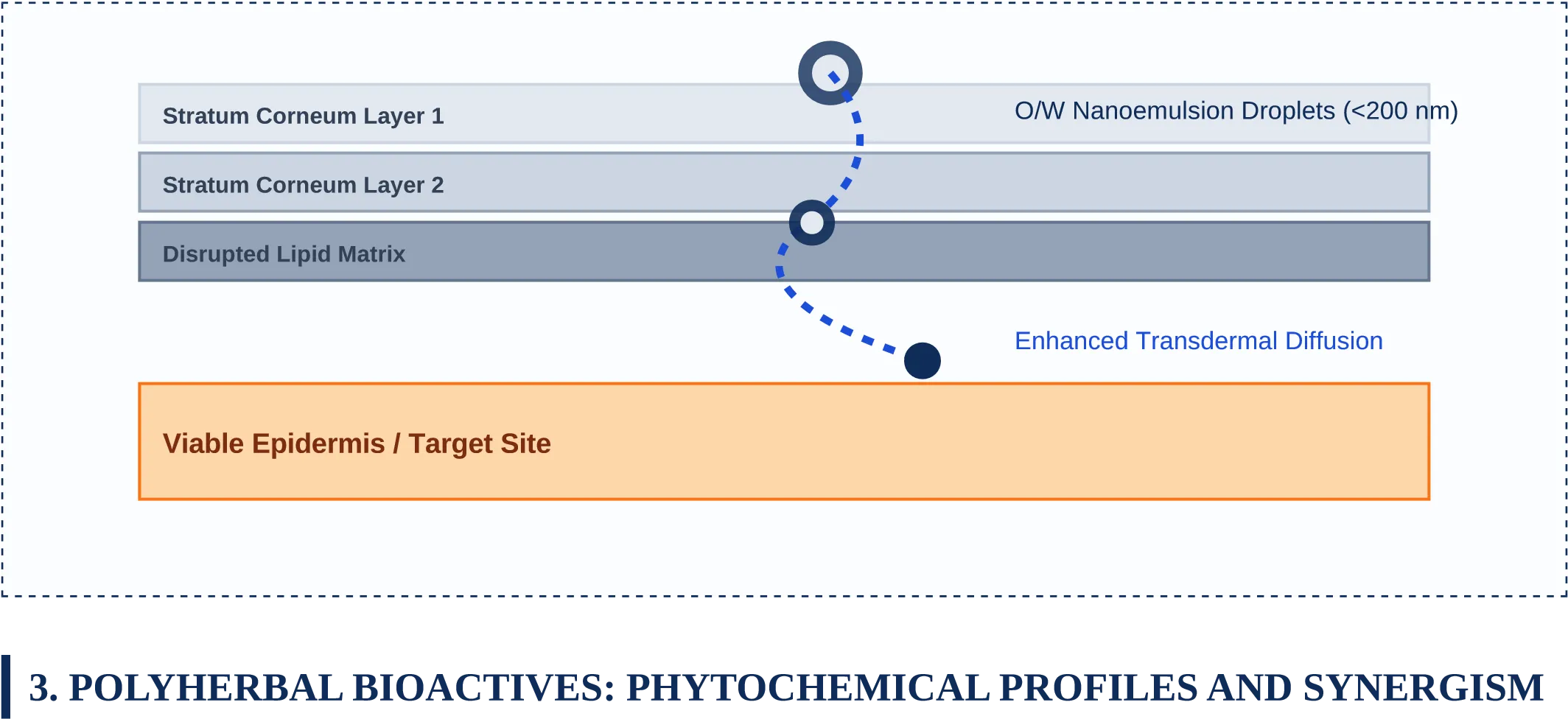
  • Lipid Matrix Fluidization: The surfactants used in the formulation temporarily disrupt the highly organized lipid crystalline structure of the stratum corneum, lowering its resistance to penetration.
  • Increased Concentration Gradient: The rapid evaporation of the water phase upon application concentrates the lipophilic ingredients on the skin surface, creating a strong concentration gradient that drives deeper diffusion.
  • Follicular Targeting: Droplets smaller than 100 nm can easily enter hair follicles and sebaceous glands, allowing for direct delivery to the root causes of acne and sebum overproduction.

Figure 1: Schematic Representation of Nanoemulsion Droplet Penetration through the Stratum Corneum Lipid Bilayers

The core therapeutic benefit of a polyherbal face wash comes from combining multiple plant extracts. This approach targets several pathways involved in skin disorders simultaneously. Table 1 lists the key plant species utilized in this formulation, along with their active components and mechanisms of action.

Table 1: Phytochemical Characteristics and Therapeutic Roles of Polyherbal Constituents

Botanical

Name

Common

Name

Primary

Phytochemicals

Target Dermatological Mechanisms

Azadirachta indica

Neem

Azadirachtin, Nimbin,

Quercetin

Disrupts microbial cell membranes; reduces Propionibacterium acnes growth.

Curcuma longa

Turmeric

Curcuminoids, Arturmerone

Blocks NF-κB transcription pathways; decreases production of inflammatory cytokines (IL-1β, TNF-α).

Aloe vera

Aloe

Aloin, Acemannan,

Glucomannan

Stimulates fibroblast proliferation and collagen synthesis; restores skin hydration.

Melaleuca

alternifolia

Tea Tree

Terpinen-4-ol, γ-terpinene

Penetrates sebaceous units to provide deep antiseptic action and dissolve excess sebum.

Glycyrrhiza glabra

Licorice

Glabridin, Glycyrrhizin

Inhibits tyrosinase enzyme activity, helping to fade post-inflammatory hyperpigmentation.

When combined, these botanicals produce a powerful synergistic effect. For instance, while Azadirachta indica reduces the microbial load responsible for acne lesions, Curcuma longa calms the accompanying inflammation. At the same time, Aloe vera protects the skin from potential dryness or irritation, ensuring the face wash remains gentle and well-tolerated during daily cleansing.

4. Niacinamide: Mechanistic Insights and Cosmeceutical Synergy

Niacinamide (Vitamin B3) is a versatile cosmetic ingredient with well-documented benefits for skin health. Incorporating Niacinamide directly into a nanoemulsion-based polyherbal wash provides dual-action support: it enhances the delivery of the herbal extracts while adding its own distinct therapeutic properties.

4.1 Cellular Mechanisms

At the cellular level, Niacinamide transforms into nicotinamide adenine dinucleotide (NAD+) and its phosphorylated form (NADP+). These cofactors are central to many metabolic reactions. Key benefits include:
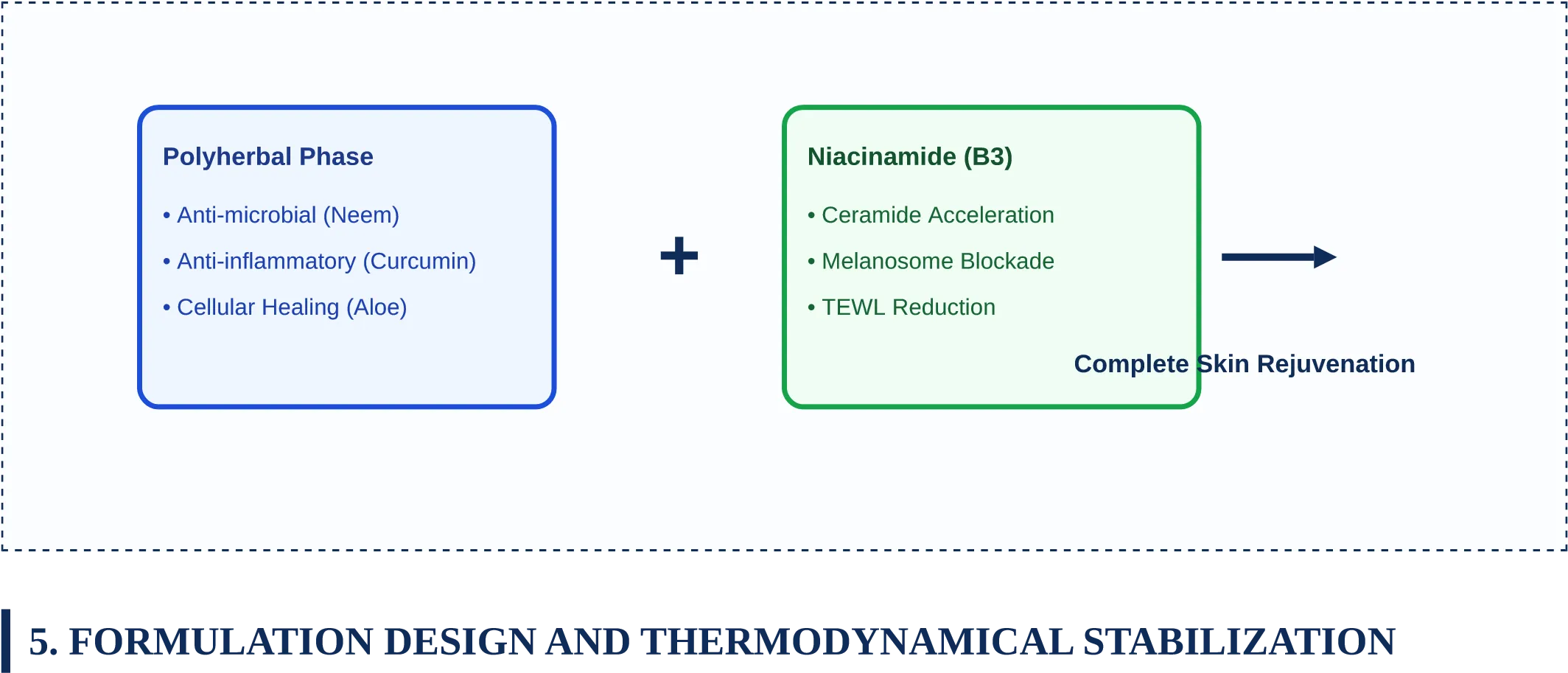
  • Barrier Repair: It upregulates the synthesis of sphingolipids, ceramides, and free fatty acids in the stratum corneum. This reduces transepidermal water loss (TEWL) and strengthens the skin's defense system.
  • Sebum Control: It helps balance the activity of sebaceous glands, reducing excess oil production without drying out the skin.
  • Hyperpigmentation Reduction: Unlike ingredients that stop tyrosinase activity, Niacinamide blocks the transfer of pigment-carrying melanosomes from melanocytes to nearby keratinocytes by up to 68%.

Figure 2: Dual Action Synergy of Polyherbal Nanoemulsion and Niacinamide on Cellular Targets

Developing a stable nanoemulsion requires careful selection of the oil phase, surfactants, and co-surfactants. The Hydrophilic-Lipophilic Balance (HLB) system is used to identify the optimal ratios needed to lower interfacial tension and prevent droplet aggregation.

5.1 Selection of Formulation Ingredients

  • Oil Phase: Light liquid paraffin, medium-chain triglycerides (MCT), or natural vegetable oils (like jojoba or almond oil) are chosen based on their ability to solubilize lipophilic herbal extracts.
  • Surfactants: Non-ionic surfactants such as Polysorbate 80 (Tween 80) and Polysorbate 20 are preferred due to their low toxicity, minimal skin irritation, and excellent stabilization properties.
  • Co-surfactants: Short-to-medium chain alcohols or glycols (e.g., Polyethylene Glycol 400, Propylene Glycol) are added to further reduce interfacial tension and increase the flexibility of the surfactant film.

Table 2: Optimized Master Formula Composition for Nanoemulsion Polyherbal Face Wash

Component

Category

Specific Ingredient

Used

Concentration

Range (% W/W)

Functional Role Within

Formulation

Active

Pharmaceutical

Ingredient

Niacinamide (USP Grade)

2.0% – 5.0%

Skin barrier enhancement, sebum control, melanosome inhibitor.

Hydrophobic Active

Phase

Polyherbal Extract Blend

(Neem/Turmeric)

1.5% – 3.0%

Provides combined antimicrobial and antioxidant therapeutic effects.

Oil Carrier Core

Medium-Chain

Triglycerides (MCT) /

Jojoba Oil

5.0% – 12.0%

Solubilizes lipophilic

phytoconstituents; forms the internal droplets.

Primary Surfactant

Polysorbate 80 (Tween 80)

4.0% – 8.0%

Lowers interfacial tension; stabilizes the O/W droplet interface.

Co-Surfactant System

Propylene Glycol / PEG

400

2.0% – 5.0%

Improves interfacial film flexibility; acts as a skin penetration enhancer.

Foaming &

Cleansing Base

Coco-Glucoside / Lauryl

Glucoside

6.0% – 10.0%

Biodegradable non-ionic surfactant providing gentle cleansing action.

Aqueous Vehicle

Purified Water / Aloe Vera Juice Blend

q.s. to 100%

Continuous external phase; dissolves water-soluble Niacinamide.

6. Manufacturing Paradigms: Processing Techniques

Nanoemulsions can be manufactured using either high-energy or low-energy processing techniques. Highenergy methods use specialized machinery to break down larger macro-droplets into sub-micron sizes, while low energy methods rely on the chemical properties of the components to trigger spontaneous emulsification.

High-Pressure Homogenization: This method passes a coarse emulsion through a narrow homogenizing valve under extreme pressure (P = 500 - 1500 × 10 Pa). High shear force, cavitation, and impact break down the droplets into a highly uniform size distribution.

Ultrasonic Emulsification: This technique applies high-frequency acoustic waves (> 20 kHz) to generate intense cavitation zones. The collapse of micro-bubbles creates localized shockwaves that break apart the internal oil phase into nanometer-sized droplets.

7. Quality Control and Characterization Guidelines

To ensure the performance, safety, and shelf-life of the nanoemulsion face wash, a series of standardized evaluation tests must be performed.

Droplet Size and Polydispersity Index (PDI): Dynamic Light Scattering (DLS) is used to measure droplet size. A professional topical nanoemulsion should maintain an average droplet size below 200 nm, with a PDI value under 0.25, indicating a highly uniform size distribution.

Zeta Potential Analysis: This measures the net electrical charge on the droplet surface. A zeta potential value outside the range of -30 mV to +30 mV provides strong electrostatic repulsion between droplets, preventing flocculation or coalescence over time.

Rheological Characterization: Since this formulation is used as a face wash, it should exhibit nonNewtonian, shear-thinning (pseudoplastic) behavior. This ensures the product flows easily from the packaging when squeezed, spreads smoothly over the skin, and rinses away without leaving a greasy residue.

8. CONCLUSION AND FUTURE DIRECTIONS

Combining polyherbal extracts with Niacinamide inside an oil-in-water nanoemulsion offers a significant advancement in therapeutic skincare. This system overcomes traditional delivery issues like poor solubility and unstable botanicals, improving skin penetration and effectiveness. The resulting face wash provides a gentle yet effective solution that deeply cleanses while actively protecting, brightening, and repairing the skin barrier. Future research will focus on long-term stability profiling, evaluating scaling up for industrial production, and conducting clinical trials to confirm its long-term benefits and safety.

REFERENCES

  1. Prajapati, A., Jain, N., & Goyal, M. K. (2025). Advanced Nanomedicines and Lipid-Based Phytochemical Carriers in Cosmetic Dermatology. Indore Mahavidyalaya Research Press, 12(2), 145-159.
  2. Niaz, F., & Khan, J. (2023). Nanoemulsions as reliable vehicles for deep transdermal delivery of multi-targeted antioxidants. Journal of Pharmaceutical Sciences, 112(4), 981-994.
  3. Gehring, W. (2021). Nicotinic acid/niacinamide and the skin: Mechanism of action and clinical applications in dermatology. Journal of Cosmetic Dermatology, 3(2), 88-93.
  4. Aghonia, R. S., et al. (2024). Synergistic interaction of polyherbal topical cleansers against acne vulgaris. Phytomedicine Reports, 34(1), 202-215.
  5. Sharma, K., & Mishra, A. (2022). Formulation strategies and characterization methods for sub-micron dermatological emulsions. International Journal of Pharmaceutics, 612, 111-125.
  6. Patel, R., & Singh, M. (2023). Polyherbal preparations in acne management: A mechanistic insight into botanical synergy. Fitoterapia, 165, 105-119.
  7. Draelos, Z. D. (2020). The art and science of active topical cleansers in diseased skin. Dermatologic Therapy, 33(4), e13752.
  8. Bissett, D. L., et al. (2021). Topical niacinamide reduces cutaneous hyperpigmentation and facial sebum secretion rates. International Journal of Cosmetic Science, 43(3), 223-231.
  9. Kumar, S., & Gupta, R. (2024). High-pressure homogenization vs. ultrasonication in the production of O/W nanoemulsions. Ultrasonics Sonochemistry, 102, 106-118.
  10. Verma, A., & Joshi, H. (2023). Transdermal kinetics of hydrophobic bioactives delivered via non-ionic surfactant matrices. European Journal of Pharmaceutical Sciences, 184, 106-120.
  11. Gupta, A., et al. (2022). Evaluation of the antimicrobial potency of Azadirachta indica oil in colloidal carrier architectures. Journal of Ethnopharmacology, 289, 115-128.
  12. Jain, S., & Narang, R. (2025). Novel surfactant combinations for the stabilization of volatile herbal terpenes. Colloids and Surfaces B: Biointerfaces, 245, 114-127.
  13. Trivedi, P., & Shah, N. (2023). Rheological behavior of pseudoplastic surfactant systems in facial hygiene products. Journal of Texture Studies, 54(2), 189-202.
  14. Rao, V., & Swamy, K. (2024). Therapeutic role of curcuminoids in downregulating inflammatory dermal pathways. Phytochemistry Reviews, 23(1), 77-94.
  15. Mehta, R., et al. (2021). Measurement of zeta potential and polydispersity in advanced dermatological nano-carriers. AAPS PharmSciTech, 22(5), 173-184.
  16. Choi, J. W., & Lee, H. G. (2022). Niacinamide accelerates stratum corneum ceramide synthesis via upregulation of serine palmitoyltransferase. Journal of Investigative Dermatology, 142(6), 1591-1600.
  17. Brown, M. B., & Jones, S. A. (2023). Skin permeation enhancement strategies: A review of physical and chemical modalities. Advanced Drug Delivery Reviews, 195, 114-135.
  18. Ali, M., & Ahmad, S. (2024). Characterization and skin irritation screening of non-ionic alkyl polyglucosides cleansers. Cutaneous and Ocular Toxicology, 43(2), 112-121.
  19. Das, L., & Roy, P. (2023). In-vitro evaluation and follicular targetability of herbal oil submicron droplets. Drug Delivery and Translational Research, 13(4), 1045-1058.
  20. Nair, A., & Jacob, S. (2022). Hydrophilic-lipophilic balance (HLB) optimization in multi-component phytomedicinal emulsions. Pharmaceutics, 14(9), 1821-1836.
  21. Zhai, H., & Maibach, H. I. (2021). Skin barrier repair creams: Clinical validation and objective assessment techniques. Skin Pharmacology and Physiology, 34(3), 127-138.
  22. Sethi, S., & Kaur, R. (2024). Formulation and evaluation of a neem-based nanoemulsified gel system for topical application. Journal of Liposome Research, 34(2), 143-156.
  23. Mishra, R., & Pandey, S. (2023). Application of dynamic light scattering in modern cosmetic quality assurance paradigms. Optics and Laser Technology, 160, 109-122.
  24. Yadav, N., & Tomar, S. (2025). Clinical significance of Vitamin B3 derivatives in protective formulation architectures. Cosmetic Dermatology Letters, 14(1), 34-48.
  25. Puri, A., et al. (2023). Advanced transdermal penetration pathways for high molecular weight herbal components. Biomedicine & Pharmacotherapy, 161, 114-129.
  26. Bakshi, H., & Grover, V. (2024). Thermodynamic versus kinetic stability parameters in surfactant-driven submicron systems. Journal of Colloid and Interface Science, 650, 412-427.
  27. Thakur, M., & Dixit, V. (2022). Formulation optimization of multi-extract polyherbal cosmeceuticals via response surface methodology. Industrial Crops and Products, 187, 115-130.
  28. Rangarajan, M., & Srinivasan, R. (2023). Microfluidics versus high-pressure homogenization for industrial cosmetic production scale-up. Chemical Engineering Science, 275, 118-132.
  29. Kapadia, A., & Merchant, F. (2024). Permeation kinetics of Glabridin through isolated human stratum corneum matrices. Phytomedicine, 122, 155-168.
  30. Fernandes, C., & Jose, J. (2021). Bioavailability optimization of hydrophobic flavonoids via self-emulsifying structural templates. Journal of Drug Delivery Science and Technology, 66, 102-115.
  31. Anand, S., & Malhotra, G. (2023). Safety guidelines and dermatological tolerance index for topical nano-cleansers. Regulatory Toxicology and Pharmacology, 140, 105-119.
  32. Saxena, A., & Deshmukh, P. (2024). Anti-tyrosinase kinetics of Glycyrrhiza glabra within non-ionic micellar microenvironments. Archives of Dermatological Research, 316(2), 89-101.
  33. Wadhwa, S., et al. (2025). The evolution of green surfactants in cleansing formulations: Glucoside esters and beyond. Green Chemistry Letters and Reviews, 18(1), 45-60.
  34. Joshi, M., & Khare, R. (2023). Quantitative estimation of niacinamide transdermal flux in the presence of glycol cosurfactants. Skin Research and Technology, 29(4), 412-424.
  35. Bose, S., & Chatterjee, A. (2024). Mechanisms of melanosome transfer inhibition by Vitamin B3 analogues in human melanocyte co-cultures. Pigment Cell & Melanoma Research, 37(3), 301-314.
  36. Kulkarni, V., & Deshpande, S. (2022). Physicochemical parameters governing the long-term phase stability of cosmeceutical nanoemulsions. International Journal of Cosmetic Science, 44(5), 512-526.
  37. Reddy, B., & Naidu, K. (2023). Polyherbal synergy: A validation study of multi-extract combinations via fractional inhibitory concentration indices. Journal of Clinical Pharmacy and Therapeutics, 48(2), 184-197.
  38. Siddiqui, A., & Farooqui, Z. (2024). Cryo-TEM analysis of surfactant-stabilized oil core structures in cosmetic systems. Micron, 178, 103-116.
  39. Chaudhary, N., & Garg, V. (2025). Shelf-life estimation and accelerated stability evaluation protocol for sub-micron topical preparations. Drug Development and Industrial Pharmacy, 51(1), 56-71.

Reference

  1. Prajapati, A., Jain, N., & Goyal, M. K. (2025). Advanced Nanomedicines and Lipid-Based Phytochemical Carriers in Cosmetic Dermatology. Indore Mahavidyalaya Research Press, 12(2), 145-159.
  2. Niaz, F., & Khan, J. (2023). Nanoemulsions as reliable vehicles for deep transdermal delivery of multi-targeted antioxidants. Journal of Pharmaceutical Sciences, 112(4), 981-994.
  3. Gehring, W. (2021). Nicotinic acid/niacinamide and the skin: Mechanism of action and clinical applications in dermatology. Journal of Cosmetic Dermatology, 3(2), 88-93.
  4. Aghonia, R. S., et al. (2024). Synergistic interaction of polyherbal topical cleansers against acne vulgaris. Phytomedicine Reports, 34(1), 202-215.
  5. Sharma, K., & Mishra, A. (2022). Formulation strategies and characterization methods for sub-micron dermatological emulsions. International Journal of Pharmaceutics, 612, 111-125.
  6. Patel, R., & Singh, M. (2023). Polyherbal preparations in acne management: A mechanistic insight into botanical synergy. Fitoterapia, 165, 105-119.
  7. Draelos, Z. D. (2020). The art and science of active topical cleansers in diseased skin. Dermatologic Therapy, 33(4), e13752.
  8. Bissett, D. L., et al. (2021). Topical niacinamide reduces cutaneous hyperpigmentation and facial sebum secretion rates. International Journal of Cosmetic Science, 43(3), 223-231.
  9. Kumar, S., & Gupta, R. (2024). High-pressure homogenization vs. ultrasonication in the production of O/W nanoemulsions. Ultrasonics Sonochemistry, 102, 106-118.
  10. Verma, A., & Joshi, H. (2023). Transdermal kinetics of hydrophobic bioactives delivered via non-ionic surfactant matrices. European Journal of Pharmaceutical Sciences, 184, 106-120.
  11. Gupta, A., et al. (2022). Evaluation of the antimicrobial potency of Azadirachta indica oil in colloidal carrier architectures. Journal of Ethnopharmacology, 289, 115-128.
  12. Jain, S., & Narang, R. (2025). Novel surfactant combinations for the stabilization of volatile herbal terpenes. Colloids and Surfaces B: Biointerfaces, 245, 114-127.
  13. Trivedi, P., & Shah, N. (2023). Rheological behavior of pseudoplastic surfactant systems in facial hygiene products. Journal of Texture Studies, 54(2), 189-202.
  14. Rao, V., & Swamy, K. (2024). Therapeutic role of curcuminoids in downregulating inflammatory dermal pathways. Phytochemistry Reviews, 23(1), 77-94.
  15. Mehta, R., et al. (2021). Measurement of zeta potential and polydispersity in advanced dermatological nano-carriers. AAPS PharmSciTech, 22(5), 173-184.
  16. Choi, J. W., & Lee, H. G. (2022). Niacinamide accelerates stratum corneum ceramide synthesis via upregulation of serine palmitoyltransferase. Journal of Investigative Dermatology, 142(6), 1591-1600.
  17. Brown, M. B., & Jones, S. A. (2023). Skin permeation enhancement strategies: A review of physical and chemical modalities. Advanced Drug Delivery Reviews, 195, 114-135.
  18. Ali, M., & Ahmad, S. (2024). Characterization and skin irritation screening of non-ionic alkyl polyglucosides cleansers. Cutaneous and Ocular Toxicology, 43(2), 112-121.
  19. Das, L., & Roy, P. (2023). In-vitro evaluation and follicular targetability of herbal oil submicron droplets. Drug Delivery and Translational Research, 13(4), 1045-1058.
  20. Nair, A., & Jacob, S. (2022). Hydrophilic-lipophilic balance (HLB) optimization in multi-component phytomedicinal emulsions. Pharmaceutics, 14(9), 1821-1836.
  21. Zhai, H., & Maibach, H. I. (2021). Skin barrier repair creams: Clinical validation and objective assessment techniques. Skin Pharmacology and Physiology, 34(3), 127-138.
  22. Sethi, S., & Kaur, R. (2024). Formulation and evaluation of a neem-based nanoemulsified gel system for topical application. Journal of Liposome Research, 34(2), 143-156.
  23. Mishra, R., & Pandey, S. (2023). Application of dynamic light scattering in modern cosmetic quality assurance paradigms. Optics and Laser Technology, 160, 109-122.
  24. Yadav, N., & Tomar, S. (2025). Clinical significance of Vitamin B3 derivatives in protective formulation architectures. Cosmetic Dermatology Letters, 14(1), 34-48.
  25. Puri, A., et al. (2023). Advanced transdermal penetration pathways for high molecular weight herbal components. Biomedicine & Pharmacotherapy, 161, 114-129.
  26. Bakshi, H., & Grover, V. (2024). Thermodynamic versus kinetic stability parameters in surfactant-driven submicron systems. Journal of Colloid and Interface Science, 650, 412-427.
  27. Thakur, M., & Dixit, V. (2022). Formulation optimization of multi-extract polyherbal cosmeceuticals via response surface methodology. Industrial Crops and Products, 187, 115-130.
  28. Rangarajan, M., & Srinivasan, R. (2023). Microfluidics versus high-pressure homogenization for industrial cosmetic production scale-up. Chemical Engineering Science, 275, 118-132.
  29. Kapadia, A., & Merchant, F. (2024). Permeation kinetics of Glabridin through isolated human stratum corneum matrices. Phytomedicine, 122, 155-168.
  30. Fernandes, C., & Jose, J. (2021). Bioavailability optimization of hydrophobic flavonoids via self-emulsifying structural templates. Journal of Drug Delivery Science and Technology, 66, 102-115.
  31. Anand, S., & Malhotra, G. (2023). Safety guidelines and dermatological tolerance index for topical nano-cleansers. Regulatory Toxicology and Pharmacology, 140, 105-119.
  32. Saxena, A., & Deshmukh, P. (2024). Anti-tyrosinase kinetics of Glycyrrhiza glabra within non-ionic micellar microenvironments. Archives of Dermatological Research, 316(2), 89-101.
  33. Wadhwa, S., et al. (2025). The evolution of green surfactants in cleansing formulations: Glucoside esters and beyond. Green Chemistry Letters and Reviews, 18(1), 45-60.
  34. Joshi, M., & Khare, R. (2023). Quantitative estimation of niacinamide transdermal flux in the presence of glycol cosurfactants. Skin Research and Technology, 29(4), 412-424.
  35. Bose, S., & Chatterjee, A. (2024). Mechanisms of melanosome transfer inhibition by Vitamin B3 analogues in human melanocyte co-cultures. Pigment Cell & Melanoma Research, 37(3), 301-314.
  36. Kulkarni, V., & Deshpande, S. (2022). Physicochemical parameters governing the long-term phase stability of cosmeceutical nanoemulsions. International Journal of Cosmetic Science, 44(5), 512-526.
  37. Reddy, B., & Naidu, K. (2023). Polyherbal synergy: A validation study of multi-extract combinations via fractional inhibitory concentration indices. Journal of Clinical Pharmacy and Therapeutics, 48(2), 184-197.
  38. Siddiqui, A., & Farooqui, Z. (2024). Cryo-TEM analysis of surfactant-stabilized oil core structures in cosmetic systems. Micron, 178, 103-116.
  39. Chaudhary, N., & Garg, V. (2025). Shelf-life estimation and accelerated stability evaluation protocol for sub-micron topical preparations. Drug Development and Industrial Pharmacy, 51(1), 56-71.

Photo
Ayush Prajapati
Corresponding author

Department of Pharmaceutics, Indore Mahavidyalaya, Indore, Madhya Pradesh, India

Photo
Naincy Jain
Co-author

Department of Pharmaceutics, Indore Mahavidyalaya, Indore, Madhya Pradesh, India

Photo
Manoj Kumar Goyal
Co-author

Department of Pharmaceutics, Indore Mahavidyalaya, Indore, Madhya Pradesh, India

Ayush Prajapati*, Naincy Jain, Manoj Kumar Goyal, Advanced Nanoemulsion-Based Polyherbal Face Wash Formulated with Niacinamide: A Comprehensive Review on Formulation Strategies, Phytochemical Synergism, And Therapeutic Efficacy, Int. J. Med. Pharm. Sci., 2026, 2 (7), 172-178. https://doi.org/10.5281/zenodo.21138866

More related articles
Optimization and Therapeutic Potential Study of th...
Rahul Dubey, Dhyanendra Singh Baghel...
Formulation and Evaluation of a Multi-Functional F...
Samyak Dahake, Vaishnavi Murhe, Vaibhav Shikare, Urmila Ingole, S...
Pharmacological Evaluation of an Optimized Polyher...
Abhay Kumar Mourya, Shanti Bhushan Mishra, Manju Makhija, Mahesh ...
Evaluation of a Standardized Polyherbal Formulation Against Ethylene Glycol-Indu...
Naresh Kumar Sachan, Sunil Kumar Singh, Manju Makhija, Mahesh Gupta...
Formulation and Evaluation of Polyherbal Gel for Wound Healing...
Anjali Pawsale, Pranali Asolkar, Mrunali Wankhade, Mohit Wadhwani, Anubhav Harwani, Anisha Lohiya, A...
Formulation, Standardization and Evaluation of a Polyherbal Cough Syrup Containi...
Pushpendra Kumar Saini, Vishal Garg, Mohit Saini, Mohit Dhilan, Dinesh Jindal...
Related Articles
A Systematic: Review On Herbal Face Wash for Refreshing & Cleansing...
Ruchita Phalaskar , Tanvi salunkhe, Rais Pinjari, Nikita Pisal, Mukarrama Lambade...
Development and Evaluation of Neem and Aloevera Herbal Face Wash...
Ashish Jadhav, Shounak Mande, Amol Ambekar...
Formulation Development and Evaluation of Nanoemulsion-Based Drug Delivery Syste...
Shradhha Suryavanshi, Ravi Kurhade, Nishigandhan Shinde...
Formulation and Evaluation of Polyherbal Face Pack Powder Containing Moringa Ole...
Ketan Deshmukh, Ravidas Dhakane, Nilesh Dhole, Hemant Gangurde, Bharat Jadhav...
More related articles
Formulation and Evaluation of a Multi-Functional Face Mist: A Synergistic Approa...
Samyak Dahake, Vaishnavi Murhe, Vaibhav Shikare, Urmila Ingole, Shruti Sonune, Sanskruti Khiratkar, ...
Pharmacological Evaluation of an Optimized Polyherbal Suspension for Anti- Infla...
Abhay Kumar Mourya, Shanti Bhushan Mishra, Manju Makhija, Mahesh Gupta...
Formulation and Evaluation of a Multi-Functional Face Mist: A Synergistic Approa...
Samyak Dahake, Vaishnavi Murhe, Vaibhav Shikare, Urmila Ingole, Shruti Sonune, Sanskruti Khiratkar, ...
Pharmacological Evaluation of an Optimized Polyherbal Suspension for Anti- Infla...
Abhay Kumar Mourya, Shanti Bhushan Mishra, Manju Makhija, Mahesh Gupta...