

We use cookies to ensure our website works properly and to personalise your experience. Cookies policy
Department of Pharmaceutics, Assistant Professor, Apollo college of pharmacy, Kanchipuram, Tamilnadu – 602105
The present study aimed to formulate and evaluate a thermoresponsive in-situ gel containing Centella asiatica leaf extract and Calendula officinalis oil for wound healing activity. Conventional topical formulations have limitations such as poor retention, frequent application, and uncontrolled drug release. To overcome these problems, an in-situ gel system was developed using Poloxamer 407 and Carbopol 940. The formulation was optimized using Box–Behnken design and evaluated for gelation temperature, viscosity, pH, spreadability, clarity, and drug content. Centella asiatica possesses wound healing, anti-inflammatory, antioxidant, and antimicrobial properties, while Calendula officinalis enhances tissue regeneration and collagen formation. The optimized formulation showed satisfactory physicochemical properties and sustained drug release. The study concluded that the developed thermoresponsive in-situ gel is a promising topical drug delivery system for effective wound healing and improved patient compliance.
Pharmaceutical formulation is the process of combining an active pharmaceutical ingredient (API) with suitable excipients to produce a stable, safe, and effective dosage form. Depending on the route of administration, pharmaceutical formulations are broadly classified as oral, parenteral, and topical dosage forms. Among these, topical drug delivery systems are extensively used for the treatment of skin disorders because they deliver the drug directly to the affected site, minimize systemic adverse effects, and improve patient compliance. Common topical dosage forms include ointments, creams, gels, lotions, pastes, and transdermal patches [1,2]. Topical drug delivery offers several advantages over conventional oral therapy, including avoidance of first-pass hepatic metabolism, reduced gastrointestinal side effects, improved bioavailability at the target site, and ease of application. Drugs applied topically penetrate the skin mainly through the stratum corneum, the outermost layer of the epidermis, which serves as the primary barrier to drug absorption. Drug permeation may also occur through hair follicles and sweat glands, although these pathways contribute minimally compared to intercellular diffusion through the stratum corneum. The extent of drug penetration depends on several factors, including the physicochemical properties of the drug, the formulation, and the physiological condition of the skin [3,4]. Despite the advantages of conventional topical formulations, they often suffer from limitations such as poor retention at the site of application, frequent dosing, inadequate drug penetration, and patient inconvenience due to greasiness or poor cosmetic acceptability. To overcome these drawbacks, advanced drug delivery systems such as thermoresponsive in-situ gels have been developed. These formulations exist as free-flowing liquids at room temperature but undergo rapid transformation into a gel when exposed to body or skin temperature. This unique property increases the residence time of the formulation at the site of application and provides sustained and controlled drug release [5]. Thermoresponsive in-situ gels are mainly prepared using temperature-sensitive polymers such as Poloxamer 407, Poloxamer 188, and other biodegradable polymers. These polymers exhibit reversible sol-gel transition at physiological temperatures (32–37°C). The gel formed after application acts as a drug reservoir, allowing prolonged release of the therapeutic agent while maintaining an effective drug concentration at the wound site. Such systems reduce the frequency of application, improve patient compliance, and minimize systemic drug absorption and associated adverse effects [6,7]. In-situ gel systems may undergo gelation through different mechanisms, including temperature-sensitive, pH-sensitive, ion-activated, swelling-induced, diffusion-controlled, and chemically cross-linked processes. Among these, thermally triggered systems are the most suitable for topical administration because they undergo gelation under physiological conditions without requiring external stimuli. Thermoresponsive hydrogels also maintain a moist wound environment, facilitate autolytic debridement, reduce scar formation, protect the wound from microbial contamination, and enhance tissue regeneration [8]. The skin is the largest organ of the human body and functions as a protective barrier against physical injury, microbial invasion, ultraviolet radiation, and excessive water loss. It consists of three principal layers: the epidermis, dermis, and subcutaneous tissue. The epidermis provides the major barrier to drug permeation, whereas the dermis contains connective tissue, blood vessels, lymphatics, nerve endings, sebaceous glands, sweat glands, and hair follicles that support wound healing and tissue repair. A thorough understanding of skin anatomy and the mechanisms of drug penetration is essential for the successful design of topical drug delivery systems [9]. The development of an optimized topical formulation requires systematic evaluation of formulation variables and their influence on product performance. Statistical optimization techniques such as Response Surface Methodology (RSM) are widely employed in pharmaceutical research to establish relationships between formulation variables and critical quality attributes. Among these techniques, the Box–Behnken Design (BBD) is one of the most commonly used experimental designs because it requires fewer experimental runs while effectively studying the interaction between independent variables. This approach facilitates optimization of parameters such as polymer concentration, gelation temperature, viscosity, spreadability, drug release, and stability, thereby improving formulation quality and reducing development time [10,11]. Thus, thermoresponsive in-situ gel systems represent a promising advancement in topical drug delivery. Their ability to transform into a gel at physiological temperature, prolong residence time, provide sustained drug release, improve patient convenience, and enhance therapeutic efficacy makes them highly suitable for wound healing applications. Furthermore, optimization using statistical experimental designs ensures the development of safe, effective, and reproducible formulations with improved pharmaceutical performance.
MATERIALS AND METHODS
Centella asiatica extract was prepared in lab for the study. Calendula officinalis extract was obtained from Raasa Oil. Poloxamer 407 was procured from Sai Mirra Innopharm Pvt. Ltd. Carbopol 934, ethanol, and glycerine were purchased from Chennai Chemicals, Chennai. All the chemicals and reagents used in the study were of analytical grade.
Preparation of Centella asiatica Extract
Fresh leaves of Centella asiatica were collected, washed thoroughly with tap water followed by distilled water, and shade-dried at room temperature for 7–10 days. The dried leaves were powdered using a mechanical grinder and stored in an airtight container. About 50 g of the powdered material was extracted with 500 mL of ethanol (1:10, w/v) by hot maceration at 50–60°C for 2–3 h with occasional stirring. The extract was filtered through Whatman No.1 filter paper and concentrated on a water bath below 50°C until a semisolid mass was obtained. The dried extract was weighed to determine the percentage yield and stored at 4°C until further use [12,13].
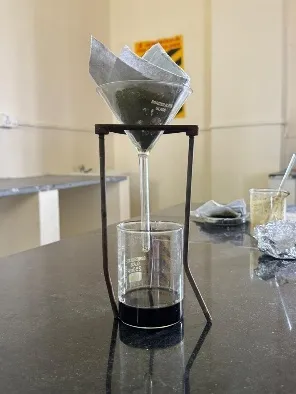
Figure 1: Preparation of Centella Asiatica Extract
Determination of λmax
A stock solution of Centella asiatica extract was prepared by dissolving 10 mL of the extract in 100 mL of phosphate buffer (pH 7.2). From this stock solution, 10 mL was further diluted to 100 mL with the same buffer. The solution was scanned over the wavelength range of 200–400 nm using a UV–Visible spectrophotometer to determine the wavelength of maximum absorbance (λmax)
Preparation of Calibration Curve
The stock solution was serially diluted with phosphate buffer (pH 7.2) to obtain concentrations ranging from 5–25 μg/mL. The absorbance of each solution was measured at 299 nm using a UV–Visible spectrophotometer, and a calibration curve was constructed by plotting absorbance against concentration
Optimization of Thermoresponsive In-situ Gel Using Box–Behnken Design
The formulation of the thermoresponsive in-situ gel containing Centella asiatica extract and Calendula officinalis oil was optimized using a three-factor, three-level Box–Behnken Design (BBD) generated by Design-Expert® software (Version 13). The independent variables selected were Poloxamer 407 concentration (18–22%), Carbopol 940 concentration (0.2–0.6%), and glycerine concentration (2–4%), while gelation temperature (R1) and viscosity (R2) were chosen as the dependent responses. A total of 13 experimental runs were performed to evaluate the individual, interaction, and quadratic effects of the formulation variables. The experimental data were fitted to a second-order polynomial equation, and statistical analysis was carried out using analysis of variance (ANOVA). The optimized formulation was selected based on the desirability function, and the predicted responses were validated by comparing them with the experimental values to determine the prediction error and model accuracy. Independent and dependent variables are listed in Table 1. The Polynominal equation generated by this experimental design is as follows,
Y = β0+ β1X1+ β2X2+ β3X3+ β12X1X2 + β13X1X3+ β23X2X3 + β11X12+ β22X22 + β33X32
Where Y is the dependent variable, β0 is the intercept, β1 to β33 are the regression coefficient and X1, X2 and X3 are the independent variables selected from preliminary experiments.
Table 1: Summary of Experimental Design
|
Independent Variables |
Units |
Levels |
||
|
Low (-1) |
Medium (0) |
High (+1) |
||
|
A = Poloxamer 407 CONC |
% |
18 |
20 |
22 |
|
B = Carbopol 940 Conc |
% |
0.2 |
0.4 |
0.6 |
|
C = Glycerine CONC. |
% |
2 |
3 |
4 |
|
Dependent Variables |
Units |
Constraints |
||
|
R1 = Gelation Temp |
0C |
In Range |
||
|
R2 = Viscosity |
Cps |
Maximize |
||
Preparation of Thermoresponsive In-situ gel
The hydrogels were prepared by Cold method of preparation. In this first step the required amount of P407(18-22%w/v, varied as per the design in BBD) were added to pre-cooled (4ºC) deionized water with continuous stirring using a magnetic stirrer for 2 hours to ensure proper hydration of the polymers. Carbopol 940(0.2-0.6 w/v as per design) also added to that polymer mixture. The temperature of water was maintained at 4±2ºC throughout the preparation. This polymeric solution was kept atleast 24 hrs in refrigerator for complete dissolution of polymers. From this polymer mixture the weighed amount of drug was added by dissolving in a suitable solvent (Ethanol).
Table 2: Formulation Table
|
S.No |
Formulation Code |
Centella asiatica extract (g) |
Calendula officinalis extract (ML) |
Poloxamer 407 (%) |
Carbopol 940 (%) |
Glycerin (ML) |
Distilled water (ml) |
|
1 |
F1 |
0.2 |
1.5 |
22 |
0.6 |
3 |
q.s |
|
2 |
F2 |
0.2 |
1.5 |
20 |
0.2 |
4 |
q.s |
|
3 |
F3 |
0.2 |
1.5 |
18 |
0.2 |
3 |
q.s |
|
4 |
F4 |
0.2 |
1.5 |
18 |
0.4 |
4 |
q.s |
|
5 |
F5 |
0.2 |
1.5 |
20 |
0.6 |
4 |
q.s |
|
6 |
F6 |
0.2 |
1.5 |
20 |
0.4 |
3 |
q.s |
|
7 |
F7 |
0.2 |
1.5 |
22 |
0.4 |
4 |
q.s |
|
8 |
F8 |
0.2 |
1.5 |
22 |
0.2 |
3 |
q.s |
|
9 |
F9 |
0.2 |
1.5 |
18 |
0.6 |
3 |
q.s |
|
10 |
F10 |
0.2 |
1.5 |
22 |
0.4 |
2 |
q.s |
|
11 |
F11 |
0.2 |
1.5 |
20 |
0.2 |
2 |
q.s |
|
12 |
F12 |
0.2 |
1.5 |
20 |
0.6 |
2 |
q.s |
|
13 |
F13 |
0.2 |
1.5 |
18 |
0.4 |
2 |
q.s |
Characterization of Thermoresponsive In-situ Gel
Determination of Sol–Gel Transition Temperature
The gelation temperature was determined using the tube inversion method. Two millilitres of the formulation were placed in a test tube and heated gradually in a thermostatically controlled water bath. The temperature at which the formulation ceased to flow upon inversion of the test tube was recorded as the gelation temperature [14].
Determination of Viscosity
Viscosity of formulation at solution state and gel state was measured at physiological and nonphysiological temperature using Brookfield viscometer and spindle number 62 at 10 rpm. First The viscosity of gel solution was measured. The gelling state viscosity of in-situ gel was allowed to convert gel by increasing the temperature of the solution with the help of water bath whose temperature was maintained at 32-35ºC. Then the viscosity of this formed gel is measured. The average of two determinants taken [15,16].
Clarity
The formulations were visually inspected under black and white backgrounds for the presence of particulate matter and graded as turbid (+), clear (++), or very clear (+++).
Gelling Capacity
A drop of the formulation was added into a beaker maintained at 32–35°C, and the time required for gel formation and the duration of gel integrity were visually observed and graded as described in previous reports [17,18].
Determination of pH
The pH of each formulation was measured using a calibrated digital pH meter at room temperature. Measurements were performed in triplicate, and the average value was recorded.
Spreadability [19]
During the measurement using the parallel plate method, 1 g of the sample was prepared in 48 h before the test is placed between two glass plates 20 x 20 cm. A weight of 500 g is placed on top for 1 minute. Then the diameter of the sample between the plates is measured. Spreadability is determined by the formula:
Si=d2×π/4,
Where,
Si– spreading area (mm2) depending on mass,
d– spreading area diameter (mm)
Drug Content [20]
An accurately weighed quantity of gel equivalent to 10 mg of drug was dissolved in phosphate buffer (pH 7.4), suitably diluted, and analysed at 299 nm using a UV–Visible spectrophotometer. Drug content was calculated from the calibration curve.
In-vitro Drug Diffusion Study
In-vitro drug release was evaluated using a Franz diffusion cell fitted with a cellophane membrane. The receptor compartment contained phosphate buffer (pH 7.4) maintained at 35 ± 1°C under continuous stirring. Samples were withdrawn at predetermined intervals up to 8 h, replacing each withdrawn sample with fresh buffer. Drug release was determined spectrophotometrically at 299 nm.
In-vitro Antibacterial Activity
The antibacterial activity of the optimized formulation was evaluated by the agar well diffusion (Kirby–Bauer) method using Mueller–Hinton agar. The inoculated plates were incubated at 37°C for 24 h, and the zone of inhibition was measured and compared with that of the marketed formulation [21].
RESULTS AND DISCUSSION
Determination of ƛ Max
The Centella asiatica extract absorption spectrum was scanned between 200-400nm in phosphate buffer. The peak was shown in Figure no.2.
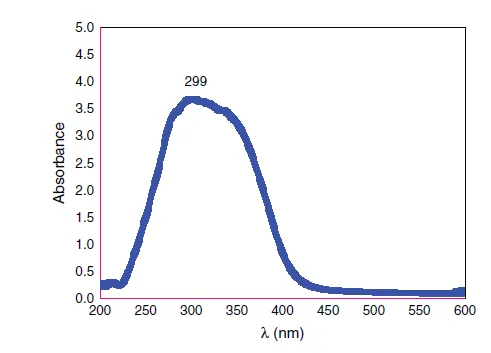
Figure 2: Absorption spectrum of Centella asiatica extract.
Calibration curve of Centella asiatica extract
The λmax Centella asiatica of extract was determined by scanning the prepared solution in the wavelength range of 200-400 nm. The maximum wavelength was found to be 299nm. The calibration curve of Acalypha indica extract was constructed by dissolving the drug in pH 7.2 phosphate buffer. The calibration curve obtained is shown in Figure no.3.
Figure 3: Calibration curve of Centella asiatica extract.
Optimization Of Thermoresponsive In-situ Gel using Box Behnken Design
The effect of 3 independent variables at 3 levels on various responses was evaluated using the Box-Behnken design. These independent variables included Polaxomer 407, Carbopol 940, and glycerin with Gellation temp, and Viscosity as responses. 13 batches (F1-F13) generated by Design Expert Software (Design Expert 11, Stat-Ease, Minneapolis, MN) were prepared. The measured responses were used to construct 3D response surface plots to establish the relationship between variables and their interaction. Table 3 shows the 13 formulation compositions and their responses.
Table 3: Box-Behnken experimental design with measured responses.
|
S. No |
Formulation Code |
Factor 1 A: Poloxamer 407 % |
Factor 2 B: Carbopol 940 % |
Factor 3 C: Glycerin % |
Response 1 Gellation Temp 0c |
Response 2 Viscosity Cps |
|
1 |
F1 |
22 |
0.6 |
3 |
31 |
1354 |
|
2 |
F2 |
20 |
0.2 |
4 |
30 |
1440 |
|
3 |
F3 |
18 |
0.2 |
3 |
32 |
1561 |
|
4 |
F4 |
18 |
0.4 |
4 |
41 |
1250 |
|
5 |
F5 |
20 |
0.6 |
4 |
33 |
1169 |
|
6 |
F6 |
20 |
0.4 |
3 |
30 |
977 |
|
7 |
F7 |
22 |
0.4 |
4 |
33 |
1280 |
|
8 |
F8 |
22 |
0.2 |
3 |
32 |
1369 |
|
9 |
F9 |
18 |
0.6 |
3 |
41 |
1280 |
|
10 |
F10 |
22 |
0.4 |
2 |
33 |
1124 |
|
11 |
F11 |
20 |
0.2 |
2 |
31 |
996 |
|
12 |
F12 |
20 |
0.6 |
2 |
32 |
880 |
|
13 |
F13 |
18 |
0.4 |
2 |
33 |
1487 |
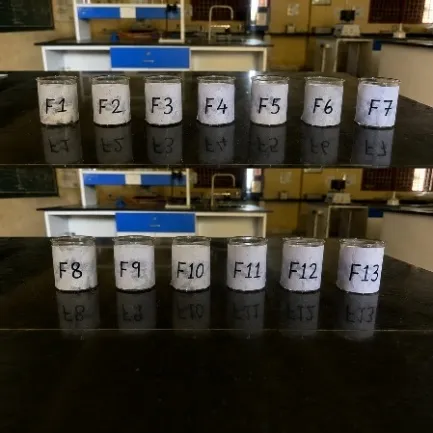
Figure 4: Formulation of Thermoresponsive Insitu Gel
Effect of independent factors on Gellation temp
The observed Gellation temp varied from 300C to 410C in different formulation batches. In the polynomial Eq, the model F-value was found to be 21.49, hence it can be inferred that the model is significant (p < 0.0001). Simultaneously, a quadratic sequential p-value of 0.0018 indicated the significance of the model and the lack of fit F-value (0.6371) implied an insignificant lack of fit. The predicted and adjusted R2 values for the vesicle size were in reasonable agreement. Finally, the precision of 13.6408 indicated a good signal, thereby demonstrating that the model could be used to navigate the design space.
Gellation Temp = 30 - 2.25A + 1.5B + 1C -2.5AB-2AC + 0.5BC + 3.75A2 + 0.25B2 + 1.25C2
The positive coefficient of ‘B’ and ‘C’ indicates that there would be an increase in Gellation temp with the increase in the Carbopol 940 and Glycerin concentration respectively, whereas, the negative coefficient of ‘A’ indicate the simultaneous decrease in Gellation temp with an increase in the concentration of Polaxomer 407. To find out the factors which affect the response perturbation graphs were plotted Fig. 5. For response Y1, factor A show high curvature which indicates that concentration of Polaxomer 407 have a significant effect on the Gellation temp of Thermoresponsive Insitu Gel. The factors B and C shows less curvature which indicates that conc of Carbopol 940 and Glycerin has a less significant effect on the Gellation temp of Thermoresponsive Insitu Gel.
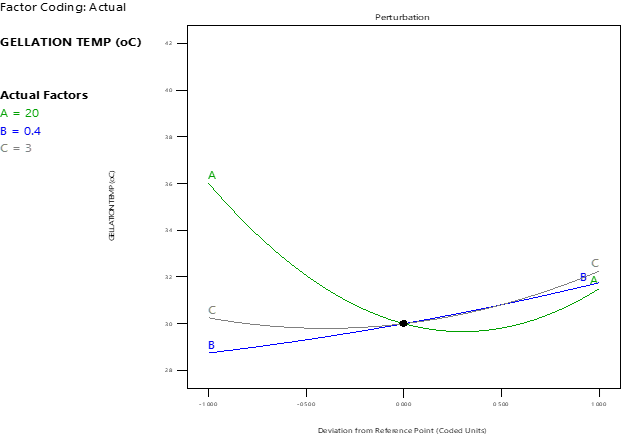
Figure 5: Perturbation plot for Response Y1.
The effect of the changes of the independent variables on Gellation temp are depicted in the 3-dimensional surface plot (Fig.6).
Figure 6: 3D Response surface plot for Response Y1
Effect of independent factors on Viscosity
The observed Viscosity varied from 880 cps to 1561 cps in different formulation batches, In the polynomial Eq, the model F-value was found to be 25.97, hence it can be inferred that the model is significant (p < 0.0001). Simultaneously, a quadratic sequential p-value of 0.0011 indicated the significance of the model and the lack of fit F-value (0.3858) implied an insignificant lack of fit. The predicted and adjusted R2 values for the vesicle size were in reasonable agreement. Finally, the precision of 13.5279 indicated a good signal, thereby demonstrating that the model could be used to navigate the design space.
Viscosity = 977 -56.375 A -85.375B + 81.5C + 66.5AB + 98.25AC-38.75 BC + 289A2 + 125B2 + 19.25C2
The positive coefficient of ‘C’ indicates that there would be an increase in Viscosity with the increase in the Glycerin concentration, whereas, the negative coefficient of ‘A’ and ‘B’ indicate the simultaneous decrease in Viscosity with an increase in the concentration of Polaxomer 407 and Carbopol 940 respectively. To find out the factors which affect the response perturbation graphs were plotted Fig. 7. For response Y1, factor A show high curvature which indicates that concentration of Polaxomer 407 have a significant effect on the Viscosity of Thermoresponsive Insitu Gel. The factors B and C shows less curvature which indicates that conc of Carbopol 940 and Glycerin has a less significant effect on the Viscosity of Thermoresponsive Insitu Gel.
Fig.7: Perturbation plot for Response Y2.
The effect of the changes of the independent variables on Viscosity is depicted in the 3- dimensional surface plot (Fig.8)
Fig.8: 3D Response surface plot for Response Y2.
Selection of optimized batch
The selection of optimized batch for Thermoresponsive Insitu gel was done by making various trials with the goal of least Gellation temp (300C - 410C) and least Viscosity (880 cps – 1561 cps). The selection of the batch was done by numeric optimization with a desirability function. The constraints for Gellation temp (Y1), and Viscosity (Y2) was minimized. The optimized batch given by the software was prepared and analyzed. The optimized batch consisted of Polaxomer 407 conc (A=21.39%), Carbopol 940 conc (B=0.3714 %), and Glycerin conc (C= 2%) with Gellation temp and Viscosity predicted to be 320C and 949.476 Cps respectively. The Gellation temp observed was 310C and Viscosity of 1346 Cps. Thus, the batch giving minimum Gellation temp and minimum Viscosity was selected as the optimized batch.
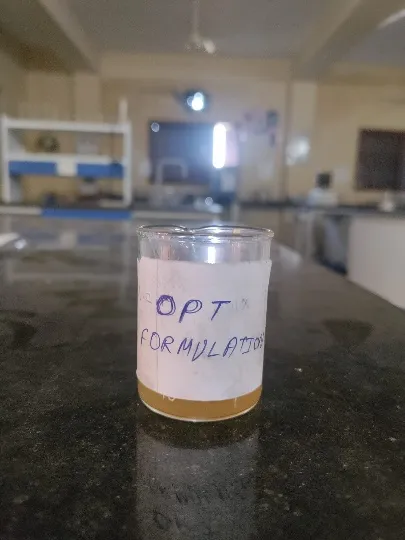
Fig.9: Optimized Thermoresponsive Insitu gel formulation
Characterization of Thermoresponsive Insitu Gel:
The solution to gelling temperature of optimized In-situ gel formulation was found to 31ºC, which shows the optimized formulation converted to gel on the surface of the skin after application.
The viscosity of optimized formulation was 116 cps this viscosity offer easy to administration the formulation in solution state by using spraying system. The gelling state viscosity of optimized formulation was 1346 cps.
The clarity of optimized formulation was found to be very clear (+++).
The gelling capacity of optimized formulation was (+++) immediate gelation remains for nearly an hour
The pH of optimized In-situ gel formulation was found to be 5.57, which shows the optimized formulation was compatible with skin pH and the drug molecule more active at this pH level of the formulation.
The spreadability of optimized Mupirocin In-situ gel formulation was found to be 5.7cm .The optimized formulation majorly and evenly covering the affected area.
The drug content of optimized formulation was determined by UV-visible spectrophotometric method the drug content was found to be 94.76%.
In-vitro Release profile of optimized formulation of mupirocin In-situ gel and market formulation shown in figure 10 The results of optimized formulation shows (72.32%) of drug released upto 8 hrs. The In-vitro drug release results shows the drug released from the In-situ gel polymeric system sustained manner and expected to release remaining medicaments some extend period of time.
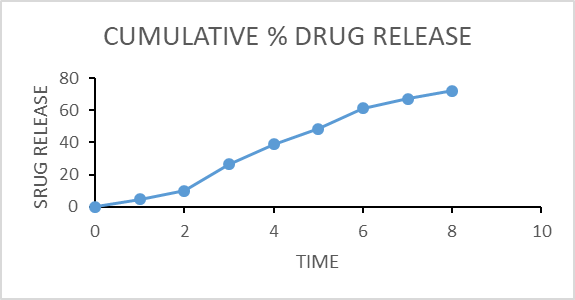
Fig.10: In vitro % drug release
The zone of inhibition for the best formulation was compared with the zone of inhibition of the gentamicin (positive control). The zone of inhibition for gentamicin (S) was found to be 25 mm and for best formulation (T) 23.5 mm, indicating that the OPT formulation was sensitive to the microorganism s. aureus.
Fig.11: zone of inhibition of OPT-Formulation
CONCLUSION:
Conventional topical formulations often exhibit limitations such as poor retention at the application site, frequent dosing, and inadequate drug release. To overcome these drawbacks, a thermoresponsive in-situ gel system was developed using Poloxamer 407 and Carbopol 940, which undergo sol-to-gel transition at skin temperature, thereby enhancing residence time and sustained drug release. Centella asiatica extract was prepared by ethanolic extraction and characterized using UV-visible spectrophotometry. The maximum absorption wavelength (λmax) was observed at 299 nm, and a calibration curve was established for quantitative analysis. The formulation variables were optimized using a three-factor, three-level Box–Behnken design with Design-Expert® software. Thirteen formulations were prepared and evaluated for gelation temperature, viscosity, pH, spreadability, clarity, gelling capacity, drug content, in-vitro drug diffusion, and antibacterial activity. Among the prepared formulations, the optimized batch exhibited a gelation temperature close to physiological skin temperature, appropriate viscosity, satisfactory spreadability, acceptable drug content, and sustained drug release. The optimized formulation also demonstrated significant antibacterial activity and showed promising wound-healing potential due to the combined therapeutic effects of Centella asiatica and Calendula officinalis. In conclusion, the developed thermoresponsive in-situ gel proved to be a stable, effective, and patient-friendly topical drug delivery system. The formulation enhanced drug retention, reduced the frequency of application, and improved therapeutic efficacy. Therefore, it represents a promising herbal alternative for wound management and warrants further preclinical and clinical studies for future commercialization.
REFERENCES

Ajay Kumar R.*, Formulation, Optimization and Evaluation of Thermoresponsive In-Situ Gel of Centella Asiatica Leaf Extract, Int. J. Med. Pharm. Sci., 2026, 2 (7), 336-348. https://doi.org/10.5281/zenodo.21244322
 10.5281/zenodo.21244322