

We use cookies to ensure our website works properly and to personalise your experience. Cookies policy
RJS College of Pharmacy Kokamthan
The present study was aimed at the formulation and evaluation of an antibacterial microemulsion-based gel containing Tetracycline Hydrochloride for topical drug delivery. Tetracycline Hydrochloride is a broad-spectrum antibiotic widely used for the treatment of various bacterial skin infections. However, conventional topical formulations often exhibit limited skin penetration and reduced drug retention at the site of action, resulting in suboptimal therapeutic efficacy. To overcome these limitations, a microemulsion-based gel system was developed to enhance drug solubility, permeability, stability, and localized drug delivery. Microemulsions were prepared using suitable oil, surfactant, co-surfactant, and aqueous phases and subsequently incorporated into a gel base to obtain a stable and patient-friendly formulation. The prepared formulations were evaluated for various physicochemical parameters, including appearance, pH, viscosity, spreadability, drug content, globule size, in-vitro drug release, stability, and antibacterial activity. The optimized formulation exhibited desirable characteristics such as good homogeneity, acceptable pH, enhanced drug release, improved skin permeation, and effective antibacterial activity against selected bacterial strains. Stability studies indicated that the formulation remained stable under different storage conditions without significant changes in its physicochemical properties. The results of the study suggest that the developed microemulsion-based gel is a promising topical drug delivery system for Tetracycline Hydrochloride, offering enhanced therapeutic efficacy, improved patient compliance, and effective management of bacterial skin infections. Therefore, the formulation may serve as a suitable alternative to conventional topical antibiotic preparations.
Topical Dosage Forms:
Topical drug delivery system allow localized administration of the drug anywhere in the body through ophthalmic, vaginal, skin and rectal topical formulations encompass a wide variety of formulations intended for cosmetic or dermatological application, to healthy as well as diseased skin. These formulations range in physicochemical nature from solid through semisolid to liquid drug substances are infrequently administered alone, but rather as part of a formulation, in combination with one or more non- medicated agents that serve varied and specialized pharmaceutical function. Drug absorption through the skin is enhanced if the drug substance is in solution, if it has a favourable lipid/water applied to the skin are intended to serve some local action and as such are formulated to provide prolonged local contact with minimal systemic drug absorption. Drugs that applied to the skin for their local action include antiseptics, antibacterial agent, antifungal agent, skin emollient, anti- inflammatory, partition coefficient and if it is a non-electrolyte. For the most part, pharmaceutical preparations analgesic and protectant.
Topical Drug Delivery System:
Topical drug delivery is the potential route to deliver the drug producing low side effect in comparison with any other dosage forms. Drug concentration can be optimized to low concentration due to lack of metabolic elimination of drug before reaching the targeted site. Skin is the biggest organ in the body. It is considered as an external défense system, it covers the outside of the body a has other functions beside the defense mechanism it serve as a mechanical barrier between the inner part of the body and the external world.
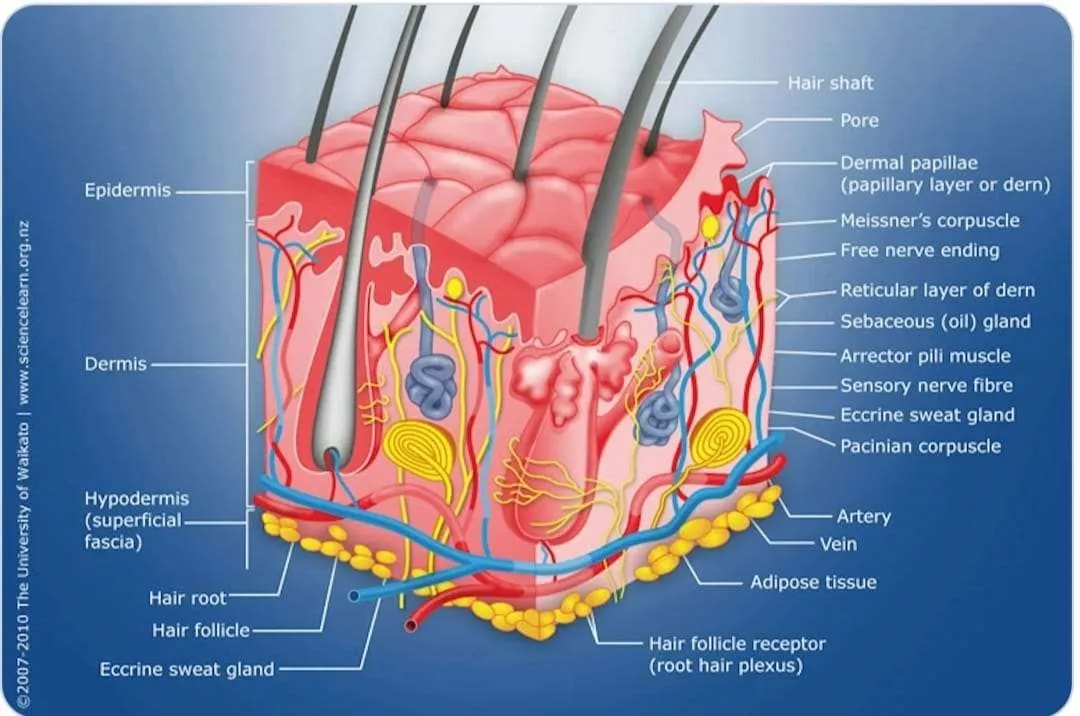
Fig no.1. Structure of the skin
Advantages and Disadvantages of Topical drug delivery system:
Topical drug delivery system have many advantages like local treatment and direct effectiveness of medications like anti- bacterial, antifungal, acne preparation and other medications that used for different purposes. It is characterized by avoidance of gastrointestinal incompatibility and avoidance of first pass metabolism. Also more selective to a specific site, improve patient and suitability for self medication. local drug administration has some disadvantages like skin irritation or possibility of allergic reactions. Other disadvantages is low penetration of drugs of large particle size, which means not easily to be absorbed through the skin.
Factors Affecting Topical Absorption of Medications:
Skin penetration:
Skin penetration refers to the process where substances, like chemicals, drugs or ingredients from skincare products, pass through the skin's outermost layer (the epidermis) and into the deeper layers. it's a crucial aspect of various applications, including skincare, drug delivery, and understanding environmental exposures.
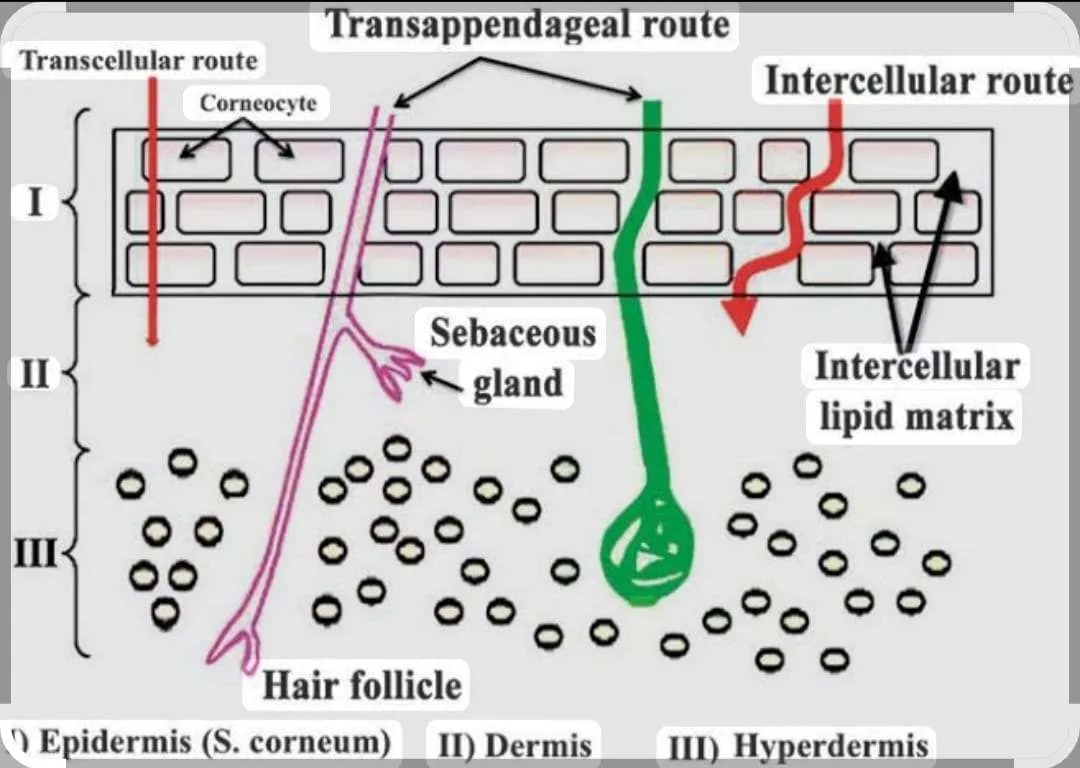
Fig no.2 Representation of skin showing different routes of penetration.
Mechanism of Skin Penetration:
Skin penetration enhancers are the molecules which reversible to remove the barrier resistance of the stratum carenum. They allow drugs to penetrate more readily to the viable tissues and hence enter the systemic circulation. The intercellular routes accelerants may interact at the polar head groups of the lipid, within aqueous region between lipid head group and between the hydrophobic tails of the barrier. The common mechanism is to protect the body for unwanted particles from the environment. The main barrier of the skin is located in the outermost layer of skin that is epidermis. Since the lipid regions in the stratum corneum forms the only continuous structure, substance applied on to the skin always have to pass these region. The major obstacle for topical drug delivery is the low diffusion rate of drug across the stratum corneum. Several methods have been increased the permeation assessed to rate of drugs temporarily.
Microemulsion development: -
A micro emulsion is a thermodynamically stable, transparent or translucent system consisting of:
Oil phase
Water phase (dissolved API)
Surfactant and co- surfactant (Smix)
Drug profile – Tetracycline Hydrochloride
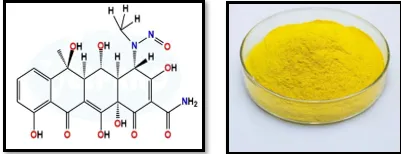
Fig.no.3 Tetracycline hydrochloride drug and it’s structure
Name: Tetracycline hydrochloride
Molecular formula: CoH24NO: ·HCI
Class: Broad spectrum antibiotic
Mechanism of action:
Tetracycline hydrochloride bind to to the 30s ribosomal subunit of bacteria
↓
Prevent the aminoacyl- tRNA from binding to the A-site of ribosome
↓
Inhibition of protein synthesis (Inhibition stop the amino acid)
Dosage forms:
Tablet
Capsule
Topical formulations (ointment, Solution)
Adverse effects –
Nausea
Vomiting
Diarrhoea
Abdominal discomfort
Rashes
Itching
Advantages of Microemulsion system:
1. Because of their superior thermodynamic stability, microemulsions are simple to make and require minimal energy input.
2. Microemulsion creation is reversible.
3. Microemulsions allow the system to self - emulsify and are thermodynamically stable.
4. In contrast to emulsions, Microemulsion are less viscous.
5. Being able to transport both hydrophilic and lipophilic medications.
6. The hydrophilic or lipophilic dispersion phase (O/W or W/O) may serve as possible reservoir for hydrophilic or lipophilic medications, respectively.
Disadvantages of Microemulsion system:
1. Having a limited ability to dissolve compounds that melt easily.
2. A lot of surfactants are needed to stabilize the droplet.
MATERIALS AND METHODS: -
Chemicals:
Tetracycline HCl solubility research -
Tetracycline hydrochloride is a water-soluble broad-spectrum antibiotic, exhibiting high solubility in aqueous media due to its ionizable hydrochloride salt form. It is freely soluble in water.
Formula –
Table no. 1 Role of ingredients
|
Sr.no |
Ingredients |
Role |
|
|
Tetracycline hydrochloride |
Anti-bacterial drug |
|
|
Olive oil |
Emollient, Penetration enhancer |
|
|
Tween 80 |
Emulsifier, Solubilize and stabilizing agent |
|
|
PEG-400 |
Humectant, Improve drug solubility |
|
|
Carbopol 934 |
Gelling agent |
|
|
Methyl paraben |
Preservative |
|
|
Triethanolamine |
pH adjuster |
|
|
Distilled water |
Vehicle |
Instruments used -
1. Magnetic stirrer
2. UV visible spectrophotometry
3. Weighing balance
4. Zeta sizer
5. pH meter
6. Incubator
Formula for Microemulsion [ 20 ml] –
Table no. 2 Composition of microemulsion formula
|
Sr.no |
Ingredients |
Quantity |
|
|
Tetracycline hydrochloride |
500 mg |
|
|
Olive oil |
7 ml |
|
|
Tween 80 |
6 ml |
|
|
Poly-ethylene glycol |
4 ml |
|
|
Distilled water |
QS to 20 ml |
Formula for Gel base [ 20 gm] –
Table no. 3 Composition of gel base
|
Sr.No. |
Ingredients |
Quantity |
|
|
Carbopol 934 |
0.2 gm |
|
|
Methyl paraben |
0.4 gm |
|
|
Triethanolamine |
1 ml |
|
|
Distilled water |
QS |
Method –
1. Phase Titration method –
1. Firstly weigh accurate quantity of Tetracycline hydrochloride in a beaker and solubilized in distilled water.
⬇️
2. In another beaker, prepare mixture of surfactant and cosurfactant (S/CoS) and add in oil phase. Mix properly. Then dissolve drug add in (S/Cos) mixture.
⬇️
3. Titration with aqueous phase: Add water gradually drop by drop, while stirring constantly, untill the mixture becomes translucent and clear, signifying the creation of a microemulsion.
2. The alternative phase Inversion method –
1. Combine surfactant, cosurfactant and oil phase.
⬇️
2. Slowly add water while stirring until a clear microemulsion forms and inversion takes place.
B. Preparation of Microemulsion based gel-
Procedure:
1. Disperse the gelling agent (Carbopol 934) in distilled water. Allow it to hydrate.
⬇️
2. Then add preservative (methyl paraben). Adjust pH to 6-7 using triethanolamine to form a clear gel.
C. Formulation of Microemulsion based gel-
1. Slowly add the microemulsion to the gel base with gentle stirring to avoid air entrapment
⬇️
2. Check pH, Viscosity
Experimental Work-
Components Required:
Oil phase: Olive oil
Aqueous phase: Distilled water or buffer solution
Surfactant: Tween 80
Co-surfactant: polyethylene glycol
Procedure - (By phase titration method)
A. Preparation of Microemulsion -
1. Firstly weigh accurate quantity of Tetracycline hydrochloride in a beaker and solubilized in distilled water
↓
2. In second beaker prepare the mixture for Tween 80 and poly- ethylene glycol and mix them together. Add oil phase. Then dissolve drug added in S/ Cos mixture.
↓
3. Titration with aqueous phase: Add water gradually drop by drop while stirring constantly, untill the mixture becomes translucent and clear.
↓
4. When the clear, stable microemulsion was formed then stirr this whole mixture on magnetic stirrer for 1 hour.
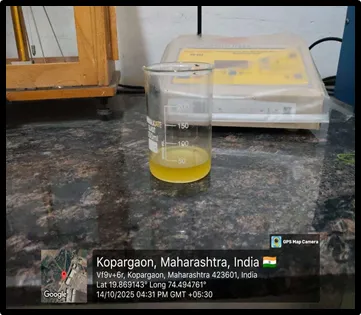
Fig no. 4 Preparation of Microemulsion
B. Preparation of Microemulsion based gel-
1. Prepare gel base:
Disperse the gelling agent (Carbopol 934) in distilled water, allow it to hydrate.
2. Neutralize:
Add in preservative, and adjust pH to 6 – 7 using triethanolamine to form a clear gel.
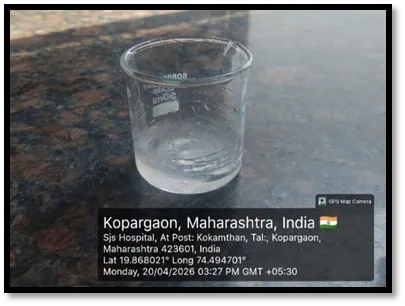
Fig no.5 Gel base
C. Formulation of Microemulsion based gel-
Slowly add the microemulsion to the gel base with gentle stirring to avoid air entrapment.
Check pH and viscosity.
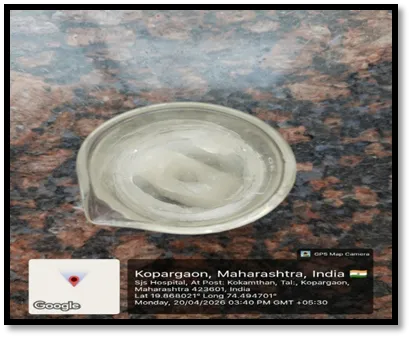
Fig no.6 Microemulsion based gel
Evaluation of Microemulsion: -
Evaluation of microemulsion involves assessing their physical and chemical properties. Here's a structured overview of key evaluation parameters:
1. Physical Evaluation -
1. Appearance:
Microemulsion are typically light yellow coloured or slightly opalescent. Visual inspection can reveal phase separation of turbidity.
1.2. Determination of pH:
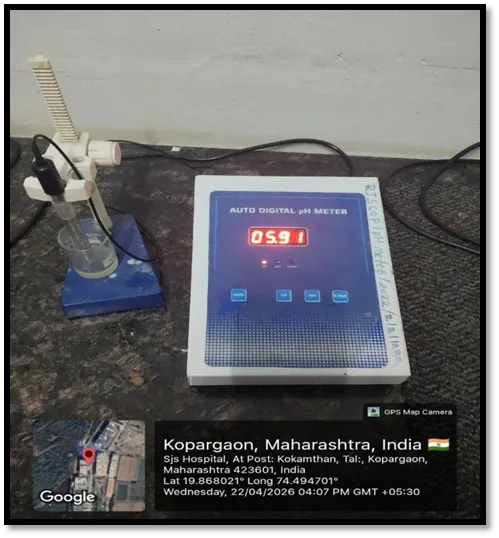
Fig no. 5 pH of the Microemulsion
Accurately measure 1ml of prepared microemulsion and dispersed in 100ml of distilled water. The pH was measured by digital pH meter. In order to ensure that formulation can be used without the harm of kin irritancy, the pH (5.9) of the preparation has been determined.
1.3. Droplet size & Distribution :
Measured using Zeta size. Microemulsion usually have droplet sizes between 50 - 500 nm.
1.4. Zeta potential:
It indicates surface charge and stability of the formulation.
General zeta potential ranges:
+0 to +10 mV: Low stability (particles likely to aggregate)
+10 to +30 mV: Moderate stability
+30 mV or more: High stability (good electrostatic repulsion).
The zeta potential (29 mV) has been determined.
1.5. Viscosity:
The viscosity (1.613cp) of the preparation has been determined.
1.6. Conductivity:
Helps differentiate between oil- in- water ( O/W) (10 to1000uS/cm) and water- in- oil (W/O) systems (<10uS/cm). The conductivity (595us/cm) of the preparation has been determined.
Evaluation of Gel –
1. Determination of pH-
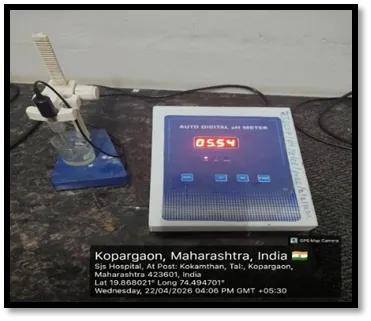
Fig no 7. pH of Carbopol gel
Accurately measure 1gm of prepared gel dispersed in 10ml of distilled water. The pH was measured by digital pH meter. In order to ensure that formulation can be used without the harm of skin irritancy, the pH (5.5) of the preparation has been determined.
2. Appearance – Gel are typically transparent. Highly viscous in nature.
Evaluation of microemulsion based gel –
1. Physical Evaluation –
1.1 Appearance – Should be homogenous, smooth and slightly opalescent.
1.2 Determination of pH – Accurately measured 1gm of prepared microemulsion based gel and dispersed in 10ml distilled water. The pH was measured by digital pH meter. In order to ensure that formulation can be used without the harm of skin irritancy, the pH (6.3) of the preparation has been determined.
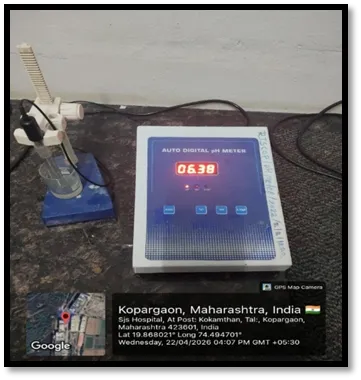
Fig no 8. pH of Microemulsion based gel
1.3 Colour –
The formulation were viewed for their visual appearance and for no colour change. White colour is obtained.
1.4. Consistency of microemulsion –
To determine the consistency of the prepared gel, a small amount of gel was squeezed between the thumb and the index finger and the consistency of the gel was observed and determined.
1.5 Homogeneity of Microemulsion based gel-
The formulated gel was visually inspected for Homogeneity after they were stored for 7 days in the container and examined for availability of any aggregates and appearance.
1.6 Spreadability –
The spreadability of the microemulsion gel was tested using two glass slides. The formulation whose spreadability was to be evaluated was spread across one slide, and the gel was sandwiched between the two by placing the other slide on top of it. The slides were pressed together to eliminate any potential air before the adhering gel was removed. It was recorded how long it took the upper slide to fully separate from the lower slide. Where T is the time it takes to separate the slide, 1 is the length of glass slide, and M is the weight attached to the upper slide.
Formula: S= M*L/T
Where:
S= Spreadability
M= Weight tied to upper slide (g)
L= Length of glass slide (cm)
T= Time taken to separate slides (sec)
M=20g
L=7.5cm
T=20sec
Then, S= 20×7.5÷20 = 7.5g.cm/see
The spreadability of microemulsion based gel was found to be 7.5cm
2.Chemical Evaluation –
2.1 Drug Content -Amount of active pharmaceutical ingredient ( API) in the formulation, measured using UV – Visible spectrophotometer.
Procedure
1. Preparation of Standard Solution
o Accurately weigh 10 mg of tetracycline hydrochloride.
o Dissolve in a small amount of methanol or buffer.
o Transfer to a 100 mL volumetric flask and make up the volume - 100 μg/mL stock solution.
o Prepare suitable dilutions (e.g, 2-10 μg/ml) to construct – calibration curve.
2. Preparation of Sample Solution
o Weigh accurately 1 g of microemulsion gel. Transfer into a 100 mL volumetric flask.
o Add about 50 mL of methanol or phosphate buffer (pH 6.8).
o Sonicate or stir for 20-30 minutes to extract the drug completely.
o Make up the volume to 100 mL.
o Filter the solution using Whatman filter paper.
o Dilute appropriately if required.
3. Measurement
o Measure the absorbance of the sample solution at kmax (= 275 nm)using a UV spectrophotometer.
o Use the blank (solvent) as reference.
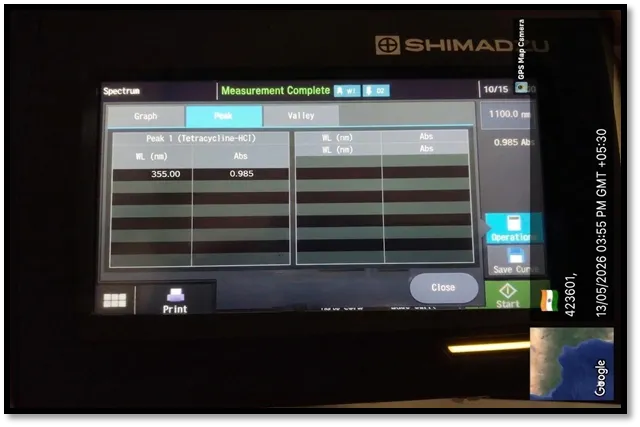
Fig no. 9 Result of UV- Visible spectrophotometer
Table no 5. Reading of calibration curve
|
Sr. no |
Concentration |
Absorbance |
|
|
1 |
0.972 |
|
|
2 |
0.978 |
|
|
3 |
0.981 |
|
|
4 |
0.984 |
Drug Content (%) = Actual amount of drug
×100
Theoretical amount of drug
Drug Content (%) = 492
× 100
500
=0.984×100
=98.4%
Drug Content was found to be 98.4%
Biological Evaluation –
Antibacterial Test –
Procedure -
1. Test organism (E-coli, and streptococcus) spread on the muller hinter agar.
2. Then, wells are made on it with the help of cork borer.
3. Then inoculated the sample into these wells.
4. Keep it in freeze for 10 min
5. For diffusion of sample, then incubated the plates at 37’ C in incubator for 24hrs.
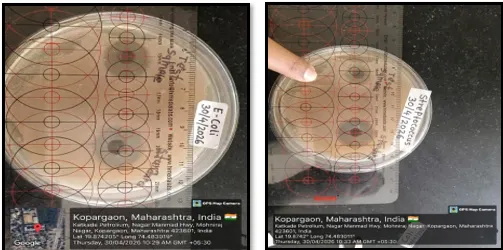
Fig no .10 Antibacterial Activity
RESULT AND DISCUSSION:
Table no. 5 Evaluation parameter of microemulsion, Gel, Microemulsion based gel
|
Sr. no. |
Evaluation Parameter |
Microemulsion |
Gel |
Microemulsion based gel |
|
|
Colour |
Light yellow |
Transparent |
Light yellow |
|
|
pH |
5.9 |
5.5 |
6.3 |
|
|
Homogeneity |
Good |
Good |
Good |
|
|
Consistency |
Good |
Good |
Good |
|
|
Spreadability |
Good |
Good |
Good |
DISCUSSION -
The present study successfully formulated and evaluated an antibacterial microemulsion-based gel containing Tetracycline Hydrochloride for topical drug delivery. The prepared microemulsion showed good stability, transparency, and absence of phase separation, indicating successful formulation development. The formulated gel exhibited satisfactory physicochemical properties such as suitable pH, viscosity, homogeneity, and spreadability, making it appropriate for topical application. Drug content and entrapment efficiency studies confirmed uniform drug distribution and effective Incorporation of the drug into the microemulsion system. The in vitro drug release study demonstrated sustained and enhanced drug release, which may improve therapeutic effectiveness. Viscosity, homogeneity and spreadability it appropriate for topical application. Drug content and entrapment efficiency studies confirmed uniform drug distribution and effective incorporation of the drug into the microemulsion system. The antibacterial activity study showed significant zone of inhibition against bacterial strains, confirming effective antibacterial action of the formulation. Stability studies also indicated that the optimized gel remained stable during storage. Overall, the developed microemulsion-based gel containing Tetracycline Hydrochloride can be considered a promising and effective topical drug delivery system for the treatment of bacterial skin infections.
SUMMARY AND CONCLUSION:
SUMMARY -
To develop and evaluate of microemulsion based gel containing tetracycline hydrochloride for topical drug delivery. Tetracycline hydrochloride a broad-spectrum antibacterial agent. Developing a microemulsion based gel system can enhance its solubility. The formulated microemulsion is characterize for physicochemical properties such as zeta potential, drug content, viscosity and pH. The optimize formulation aim to provide a safe topical treatment for bacterial infection. The formulation of an microemulsion involved strategic selection of oil, surfactant and cosurfactant to create a thermodynamically stable, isotropic system. This formulation of microemulsion advantages such as reduced irritation and better patient compliance. Overall topical microemulsion system represent a promising strategy to deliver antibacterial agents effectively for localised skin infections.
CONCLUSION –
The present study successfully formulated and evaluated an antibacterial microemulsion-based gel containing Tetracycline Hydrochloride for topical drug delivery. The developed Microemulsion system showed good physical stability, transparency, homogeneity, and suitable pH for skin application. Incorporation of the microemulsion into gel base improved the Viscosity and spreadability, making the formulation convenient for topical use. The prepared gel demonstrated satisfactory drug content, entrapment efficiency, and in vitro drug Release profile, indicating effective incorporation and controlled release of the drug. The Antibacterial activity study confirmed significant Inhibition against selected bacterial strains, proving the effectiveness of the formulation in topical antibacterial therapy. Overall, the microemulsion-based gel enhanced the solubility, stability, and topical delivery of tetracycline hydrochloride and may serve as a promising alternative to conventional topical formulations. The study suggests that the Developed formulation has potential for improved Therapeutic efficacy, patient compliance, and localized treatment of bacterial skin infections.
REFERENCES

Prerana Jamdhade*, Suvarna Sangale, Snehal Gondkar, Tanveer Pathan, Vaishnavi Dhage, Kanchan Gursal, Formulation and Evaluation of Anti-Bacterial Microemulsion Based Gel Containing Tetracycline Hydrochloride for Topical Drug Delivery, Int. J. Med. Pharm. Sci., 2026, 2 (6), 401-413. https://doi.org/10.5281/zenodo.20949876
 10.5281/zenodo.20949876