

We use cookies to ensure our website works properly and to personalise your experience. Cookies policy
1Student, Department of Pharmaceutical Quality Assurance, Delonix Society’s Baramati College of Pharmacy, Barhanpur, Maharashtra, India.
2Head, Department of Pharmaceutical Quality Assurance, Delonix Society’s Baramati College of Pharmacy, Barhanpur, Maharashtra, India.
3Principal, Delonix Society’s Baramati College of Pharmacy, Barhanpur, Maharashtra, India
Analytical Quality by Design (AQbD) has evolved as a contemporary, science- and risk-based method to developing and validating analytical techniques in the pharmaceutical industry. This review seeks to offer a full overview of AQbD principles and their application to the recently adopted ICH Q14 and ICH Q2(R2) guidelines. A thorough literature search was undertaken with peer-reviewed articles, regulatory guidelines, and open-access resources such as PubMed, Google Scholar, ScienceDirect, and official ICH publications. The study covers essential AQbD features such as the Analytical Target Profile (ATP), risk assessment, Design of Experiments (DoE), Method Operable Design Region (MODR), lifecycle management, and chromatographic, dissolution, and spectroscopic applications. Furthermore, emerging concepts such as Green Analytical Chemistry, White Analytical Chemistry, Artificial Intelligence, and Machine Learning are discussed. The findings show that AQbD increases analytical robustness, regulatory flexibility, and method lifecycle management, and that future analytical research will be more driven by AI-assisted and sustainable methodologies.
Analytical methods are critical in the pharmaceutical sector because they ensure the identity, purity, potency, and safety of medicinal ingredients and products throughout their entire lifecycle. These techniques are used in drug discovery, process development, quality control, stability testing, and regulatory filings. Accurate and dependable analytical processes are required for producing credible data that supports regulatory approval and protects patient health. Inadequate analytical procedures can lead to incorrect results, batch failures, product recalls, and possible hazards to patient safety. As a result, the development of scientifically sound analytical processes is a critical prerequisite for pharmaceutical quality assurance. The importance of analytical procedures has grown in tandem with the increasing complexity of modern pharmaceutical products, such as biologics, nanomedicines, and combination therapies. The validation of analytical methods guarantees that they are fit for their intended purpose and consistently produce reliable findings. This notion serves as the foundation for current analytical quality systems in the pharmaceutical industry. [1,2] The rising complexity of pharmaceutical goods, along with tight regulatory constraints, has underlined the importance of strong analytical procedures. A reliable analytical procedure can maintain its performance despite minor deliberate changes in method parameters such as pH, temperature, flow rate, or mobile phase composition. Robust approaches lower variability, reduce out-of-spec outcomes, and boost laboratory efficiency. Furthermore, robust procedures permit the transfer of analytical methods between laboratories and assure compliance throughout the product's lifecycle. In today's regulatory context, analytical procedures are expected to function consistently throughout everyday use as well as meet validation standards. As a result, robustness has become a key component of analytical technique development and lifecycle management. Implementing robustness studies during technique development increases trust in analytical performance and promotes regulatory flexibility. [3,4] Traditionally, analytical method development used a trial-and-error methodology in which one variable was altered at a time while the other parameters remained constant. Although this methodology was straightforward to apply, it frequently failed to provide a thorough knowledge of the connections between method variables. As a result, solutions built using traditional strategies usually lacked robustness and necessitated repeated optimization and validation. To address these limitations, the pharmaceutical industry eventually developed systematic and science-based approaches that prioritize method knowledge and risk management. The concept of Analytical Quality by Design (AQbD) arose from the successful use of Quality by Design concepts during pharmaceutical development. AQbD uses risk assessment, experimental design, and lifecycle management to construct analytical procedures, resulting in more dependable and flexible methodologies. [5,6] Quality by Design (QbD) has replaced Quality by Testing (QbT) as the paradigm for pharmaceutical quality. End-product testing is the main method used in the conventional QbT approach to evaluate product quality. This reactive approach might not be able to identify every cause of variability throughout development and manufacture, though. QbD, on the other hand, is a proactive method that uses scientific knowledge, risk assessment, and process control to incorporate quality into goods and procedures. ICH standards, including ICH Q8 (Pharmaceutical Development), ICH Q9 (Quality Risk Management), and ICH Q10 (Pharmaceutical Quality System), established the concepts of QbD. These recommendations place a strong emphasis on lifecycle management, methodical development, and ongoing improvement. Globally, pharmaceutical quality systems and regulatory flexibility have been greatly improved by the effective application of QbD. [7,8] Analytical Quality by Design (AQbD), a methodical and risk-based approach to analytical method development, was created as a result of applying QbD ideas to the analytical sciences. The first step in AQbD is to define an Analytical Target Profile (ATP), which outlines the analytical method's performance requirements and intended use. Risk assessment is then used to determine Critical Method Parameters (CMPs) and Critical Method Attributes (CMAs). To determine a technique Operable Design Region (MODR) and examine the impact of technique variables, Design of Experiments (DoE) is utilized. Throughout the analytical lifespan, this methodical approach guarantees method robustness, regulatory flexibility, and ongoing performance verification. Therefore, AQbD is a major improvement over traditional methods of analytical development. [5,9] Recent regulatory improvements, including the publishing of ICH Q14 and the amendment of ICH Q2(R2), have altered analytical technique development. ICH Q14 provides consistent guidance on scientific and risk-based analytical procedure development, whereas ICH Q2(R2) outlines contemporary principles for analytical process validation. These guidelines were established concurrently to complement one another and aid in the lifetime management of analytical methods. The combination of these rules and AQbD principles fosters better method knowledge, fast post-approval adjustments, and regulatory flexibility. As a result, ICH Q14 and Q2(R2) are projected to influence the future of analytical sciences and pharmaceutical quality assurance. [1]
1. Concept of Analytical Quality by Design (AQBD)
Analytical Quality by Design (AQbD) is a systematic, science- and risk-based approach to analytical method development that guarantees analytical processes are fit for their intended purpose and consistently offer reliable performance across their entire lifecycle. AQbD is based on the broader Quality by Design (QbD) idea, which was first introduced in pharmaceutical development and applies comparable principles to analytical sciences. Unlike traditional trial-and-error methods, AQbD prioritizes technique understanding, risk assessment, and continual improvement. The major goal of AQbD is to include quality into analytical processes rather than depending exclusively on end-of-process testing and validation. This method makes it easier to create strong, versatile, and regulatory-compliant analytical procedures that perform well even under ordinary operating settings. [1-3] The AQbD methodology begins by developing an Analytical Target Profile (ATP), which establishes an analytical procedure's intended purpose and performance requirements. The Critical Method Attributes (CMAs) and Critical Method Parameters (CMPs) are then discovered using scientific knowledge and risk assessment tools such as Failure Mode and Effects Analysis (FMEA) and Ishikawa diagrams. The impact of method variables on analytical performance is then studied using Design of Experiments (DoE), allowing for the creation of a Method Operable Design Region (MODR) in which the method consistently achieves preset requirements. Finally, a control strategy and lifecycle management technique are created to ensure long-term method performance and enable ongoing improvement. [2,4]
Principles of AQbD:
AQbD's key principles include established objectives, scientific understanding, risk assessment, experimental design, and lifecycle management. The analytical technique is created with a thorough grasp of its intended use and performance requirements. Risk management tools are used to detect issues that may affect method performance, and multivariate experimental designs aid in optimizing analytical settings. AQbD also encourages continuous monitoring and verification of method performance throughout its lifecycle, which ensures reliability and regulatory compliance. The incorporation of these concepts improves method resilience, reduces variability, and increases flexibility for post-approval adjustments. [1,5]
Key Principles of AQbD:
Advantages of AQbD over traditional analytical development:
AQbD has various advantages over traditional analytical method development. Traditional methodologies frequently rely on one-factor-at-a-time testing and a limited grasp of variable interactions, resulting in procedures that must be modified and revalidated on a regular basis. In contrast, AQbD uses rigorous experimentation and risk assessment to create strong analytical procedures with a better understanding of their performance. The creation of a design space provides regulatory flexibility, allowing certain technique alterations to be made without obtaining regulatory permission. Furthermore, lifecycle management ensures continual monitoring and improvement, lowering the chance of method failure while increasing overall analytical efficiency. As a result, AQbD supports the regulatory expectations specified in ICH Q14 and ICH Q2(R2), contributing to better pharmaceutical quality assurance. [2,3,6]
Table 1: Comparison between Conventional and AQbD Approaches
|
Parameter |
Traditional Approach |
AQbD Approach |
|
Development Strategy |
Trial-and-error |
Science- and risk-based |
|
Method Understanding |
Limited |
Comprehensive |
|
Variable Assessment |
One-factor-at-a-time |
Multivariate (DoE) |
|
Robustness |
Evaluated post-development |
Built into the method |
|
Risk Assessment |
Rarely performed |
Integral component |
|
Design Space |
Not established |
MODR established |
|
Lifecycle Management |
Limited |
Continuous monitoring |
|
Regulatory Flexibility |
Less |
Greater flexibility |
|
Method Transferability |
Moderate |
Improved |
|
Revalidation Requirement |
Frequent |
Reduced |
Schematic representation of the AQbD workflow:

Figure:1 AQbD Workflow
2. Analytical Target Profile (ATP)
A key component of Analytical Quality by Design (AQbD) is the idea of Analytical Target Profile (ATP), which has become increasingly important from a regulatory standpoint with the adoption of ICH Q14 and ICH Q2(R2) guidelines. By precisely outlining the intended use and necessary performance parameters of an analytical method, ATP acts as the basis for the creation of analytical procedures. ATP creates predetermined goals that direct method development, validation, and lifecycle management, much to the Quality Target Product Profile (QTPP) in pharmaceutical development. Analytical techniques are ensured to be scientifically valid, appropriate for their intended purpose, and able to produce dependable results over the course of their lifecycle due to the ATP-driven methodology. By establishing method requirements early in the development process, ATP promotes risk assessment, method optimization, and regulatory flexibility while decreasing the possibility of method failure. [1-3]
Definition of Analytical Target Profile (ATP)
ICH Q14 defines an Analytical Target Profile (ATP) as a projected overview of the analytical procedure's intended purpose, including the quality attributes to be measured and the required level of performance. ATP specifies what an analytical method must achieve rather than how it should be produced. This performance-based approach allows for greater flexibility when selecting analytical techniques and promotes continual improvement throughout the analytical lifetime. Method development and validation are based on quantifiable criteria established by ATP, including as accuracy, precision, specificity, and reportable range. As a result, ATP guarantees that analytical processes consistently produce data appropriate for regulatory compliance and decision-making. [1,2]
Components of ATP
An ATP is often made up of many key components that jointly establish the analytical method's performance requirements. These components are the analyte of interest, analytical technique, reportable range, accuracy, precision, specificity, and decision criteria. The ATP should explicitly identify the analytical procedure's intended purpose and specify quantitative acceptance criteria that must be met throughout validation and routine use. Well-defined ATPs increase method comprehension and simplify lifetime management.
Major Components of ATP
The effective establishment of ATP allows for the identification of Critical Method Attributes (CMAs) and Critical Method Parameters (CMPs), which are then evaluated through risk assessment and Design of Experiments (DoE). [2-4]
Role of ATP in Analytical Method Development
ATP is critical in AQbD-based analytical development because it gives established objectives for evaluating method performance. The ATP directs technique selection, experimental design, optimization, validation, and lifecycle management. During development, ATP helps to discover technique variables that influence performance and set acceptable operating ranges. It also promotes risk-based decision-making and regulatory flexibility by permitting technique changes within set limits while maintaining analytical performance. Additionally, ATP integrates analytical method development with the lifecycle strategy recommended by ICH Q14 and ICH Q2(R2). Continuous monitoring of ATP performance throughout everyday use ensures that analytical methods stay fit for purpose and produce consistent results. As a result, ATP serves as the foundation for creating strong, dependable, and regulatory-compliant analytical procedures. [1,3,5]
The Functions of ATP in Method Development
3. Risk Assessment Tools In AQBD
Risk assessment is a key component of Analytical Quality by Design (AQbD), allowing for the systematic identification, evaluation, and control of factors influencing analytical method performance. The implementation of risk management concepts aids in the identification of variables that may have a substantial impact on method quality, allowing for the construction of strong and trustworthy analytical methods. In the AQbD framework, risk assessment occurs after creating the Analytical Target Profile (ATP) and before to conducting experimental optimization studies. The systematic evaluation of risks provides effective resource allocation, enhanced technique comprehension, and adherence to the regulatory requirements indicated in ICH Q14 and ICH Q2(R2). Ishikawa diagrams, Failure Mode and Effects Analysis (FMEA), and Risk Ranking and Filtering procedures are common risk assessment tools used in AQbD. [1-3]
4. Critical Method Attributes (CMAS)
Critical Method Attributes (CMAs) are measurable analytical performance characteristics that must be kept within predetermined limitations to ensure that an analytical method consistently achieves the standards outlined in the Analytical Target Profile (ATP). Within the AQbD paradigm, CMAs reflect analytical outputs that have a direct impact on method performance, dependability, and suitability for the intended purpose. These characteristics are controlled by Critical Method Parameters (CMPs) such as mobile phase composition, pH, flow rate, column temperature, and detector settings. As a result, detecting and managing CMAs is critical for creating robust analytical procedures and meeting regulatory requirements described in ICH Q14 and ICH Q2(R2). [1-3] CMAs are often identified during the risk assessment and method development stages. The CMAs used rely on the analytical methodology and procedure objectives. Commonly observed CMAs for chromatographic procedures like HPLC and UPLC are resolution, retention duration, peak asymmetry, theoretical plates, peak area precision, and signal-to-noise ratio. These characteristics serve as indications of technique performance and are assessed during development, validation, and everyday use. CMAs are well controlled to guarantee that analytical techniques produce accurate and trustworthy results on a consistent basis. [2,4,11,12]
5. Critical Method Parameters (CMPS)
Critical Method Parameters (CMPs) are analytical method variables that have a major impact on the performance of Critical Method Attributes (CMAs) and, as a result, the analytical procedure's capacity to achieve the Analytical Target Profile (ATP) requirements. CMPs are systematically identified within the Analytical Quality by Design (AQbD) paradigm based on prior knowledge, risk assessment, and experimental research. These parameters are closely monitored and managed since even minor differences might have an impact on method robustness, accuracy, precision, specificity, and overall analytical performance. Identifying and optimizing CMPs is critical for establishing a Method Operable Design Region (MODR) and maintaining consistent method performance throughout its lifecycle. [1-3] Common chromatographic method parameters (CMPs) include mobile phase pH, flow rate, mobile phase composition, column temperature, injection volume, and detection wavelength. These characteristics have a direct impact on chromatographic responses, including resolution, retention time, peak symmetry, and theoretical plate count. As a result, AQbD stresses conducting systematic investigations of CMPs utilizing risk assessment tools and Design of Experiments (DoE) to better understand their effects and connections with technique performance. [2,4]
6. Design of Experiments (DOE) [1-22]
Design of Experiments (DoE) is a systematic statistical strategy used in Analytical Quality by Design (AQbD) to assess the effects of several method variables at the same time and understand how they interact with Critical Method Attributes (CMAs). Unlike the classic one-factor-at-a-time (OFAT) methodology, DoE delivers comprehensive knowledge regarding analytical technique behaviour while requiring fewer tests. The use of DoE allows for the identification of Critical Method Parameters (CMPs), optimization of analytical conditions, formation of the Method Operable Design Region (MODR), and the development of robust analytical techniques. As a result, DoE is regarded as one of the most significant tools for facilitating the implementation of ICH Q14 and ICH Q2(R2) standards. [1-12] In AQbD, DoE is typically performed in two stages. The first stage entails screening designs to identify significant factors influencing analytical performance. The second stage incorporates optimization designs, which determine the ideal combination of method parameters and establish response surfaces. This systematic approach increases technique knowledge, promotes robustness, and facilitates regulatory flexibility across the analytical lifecycle. [2,4]
6.1 Screening Designs
Screening designs are used in the early stages of method development to identify critical method parameters (CMPs) that have a significant impact on critical method attributes (CMAs). These approaches enable researchers to analyze multiple factors simultaneously while minimizing experimental effort. The basic goal of screening studies is to separate essential parameters from less impact variables before moving on to optimization studies. Full Factorial Designs and Fractional Factorial Designs are two common screening designs. These experimental procedures provide useful information about main effects and factor interactions, allowing for the identification of significant factors for further investigation. Screening studies reduce development time and improve resource efficiency during AQbD deployment [3-6].
Benefits of Screening Designs
1. Identification of significant variables.
2. Reduced the experimental workload.
3. Efficient resource utilization.
4. Increased understanding of factor interactions.
5. Foundation for optimization research.
6.1.1 Full Factorial Design
The Full Factorial Design considers all potential combinations of selected factors and factor levels. This design provides comprehensive information on the main effects and interactions between variables. Although extremely informative, the number of experiments grows quickly as the number of parameters increases. A 2³ factorial design assesses three factors at two levels, resulting in eight experimental runs. In AQbD, Full Factorial Designs are commonly used for preliminary screening and comprehensive evaluation of analytical variables.
Example
Factors: pH, Flow Rate, and Column Temperature
Levels: Low: (-1) High: (+1)
Number of runs: 2 * 3 equals 8.
Advantages: Complete information., Identifies factor interactions., High statistical power.
Limitations: A large number of experiments. Increased expense and time.
6.1.2 Fractional Factorial Design
Fractional Factorial Design assesses only a subset of all potential trial combinations while providing information on significant factors. This design is especially beneficial when multiple variables are being investigated. Fractional Factorial Designs are often used in AQbD to reduce variables and do preliminary risk assessments. They provide effective screening of several factors with fewer experimental runs than Full Factorial Designs.
Advantages: Fewer experiments., Cost-effective., Suitable for a wide range of variables.
Limitations: Some interactions may be confounded., Less information than in Full Factorial Design.
6.2 Optimization Designs
Following the identification of significant variables through screening tests, optimization strategies are used to discover the ideal operating conditions and define the Method Operable Design Region (MODR). The link between CMPs and CMAs is assessed using mathematical models and response surface methodology (RSM).
Optimization studies aid in identifying factor interactions, nonlinear effects, and optimal operating conditions to ensure strong analytical performance. The most common AQbD optimization designs are Central Composite Design (CCD) and Box-Behnken Design (BBD). [2,4]
Objectives of Optimization Designs
1. Determine the best circumstances.
2. Establish response surfaces.
3. Define MODR.
4. Increase robustness.
5. Support lifecycle management.
6.2.1 Central Composite Design (CCD)
Central Composite Design (CCD) is one of the most used response surface approaches in AQbD. CCD uses factorial points, axial points, and center points to create quadratic models that may describe curvature in experimental data. CCD allows researchers to examine factor interactions and adjust analytical settings with high precision. It is especially beneficial when analytical responses show nonlinear behaviour.
Components of CCD
Advantages: Efficient optimization., detects quadratic effects., Accurate reaction prediction.,
Applications: HPLC technique optimization, Mobile phase optimization, Chromatographic robustness studies.
6.2.2 Box–Behnken Design (BBD)
Box-Behnken Design is another popular response surface methodology for analytical optimization. Unlike CCD, BBD lacks severe experimental points, making it safer and more useful for pharmaceutical applications. BBD takes fewer experimental runs than CCD and produces more reliable quadratic response surface estimates. As a result, it is widely utilized for optimizing chromatographic processes and assessing factor interactions.
Advantages
Applications
Table 2: Common Experimental Designs Used in AQbD
|
Design |
Purpose |
|
Full Factorial Design |
Screening of variables and interaction effects |
|
Fractional Factorial Design |
Variable reduction and preliminary screening |
|
Central Composite Design (CCD) |
Optimization and quadratic modeling |
|
Box–Behnken Design (BBD) |
Response surface optimization |
Table 3: Comparison of Screening and Optimization Designs
|
Parameter |
Screening Designs |
Optimization Designs |
|
Objective |
Identify significant factors |
Determine optimum conditions |
|
Stage |
Early development |
Later development |
|
Information Obtained |
Main effects |
Main effects + interactions + curvature |
|
Experimental Runs |
Lower |
Higher |
|
Output |
Significant variables |
MODR and response surfaces |
DoE Strategy in AQbD
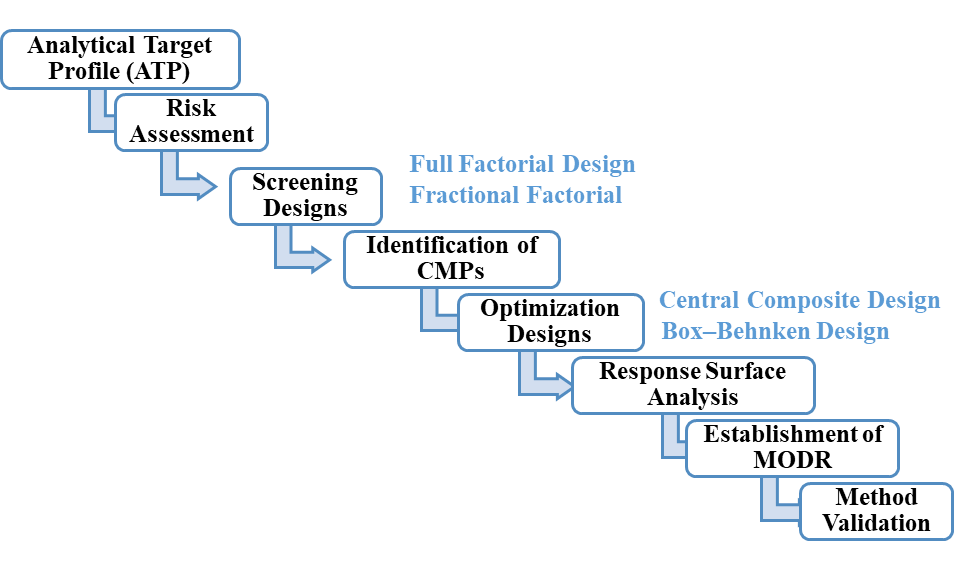
Figure 2: DoE Strategy in AQbD
7. Method Operable Design Region (MODR) [1-22]
The Method Operable Design Region (MODR) is a key concept in Analytical Quality by Design (AQbD). MODR is a multidimensional set of Critical Method Parameters (CMPs) that continually assures that analytical procedure performance matches the predefined Analytical Target Profile (ATP). Variations in method parameters have no negative impact on Critical Method Attributes (CMAs) within this region, ensuring consistent and robust analytical performance. The notion of MODR is similar to the design space outlined in pharmaceutical Quality by Design (QbD), and it is highly supported by the lifecycle-based approach recommended in the ICH Q14 and ICH Q2(R2). [1-3]
Importance of MODR
The development of MODR has numerous scientific, operational, and regulatory benefits. Traditional analytical methods are frequently established under a single ideal environment, leaving them vulnerable to minor fluctuations during everyday operation. MODR, on the other hand, identifies a set of operating circumstances that maintain acceptable analytical performance. This strategy increases method robustness by ensuring that normal fluctuations in analytical parameters do not result in method failure. Furthermore, MODR promotes regulatory flexibility because changes made inside the approved design region may not necessitate substantial regulatory submissions, depending on the relevant regulatory frameworks. Furthermore, MODR simplifies the transfer of analytical methods between laboratories and promotes continual development throughout the analytical lifespan. Consequently, MODR is seen as a significant outcome of AQbD deployment.
Establishment of MODR Using DoE
MODR is primarily established through the Design of Experiments (DoE) and response surface methodologies. Following the identification of significant Critical Method Parameters (CMPs) via risk assessment and screening investigations, optimization experiments are carried out utilizing designs such as Central Composite Design (CCD) or Box-Behnken Design (BBD). Regression models are used to describe the link between CMPs and Critical Method Attributes (CMAs). Statistical software creates response surfaces and contour plots to visually display analytical performance across the experimental domain. The MODR is defined as the region in which all ATP conditions are met simultaneously.
8. Robustness and Control Strategy
The Analytical Quality by Design (AQbD) paradigm relies heavily on robustness and control strategies. After creating the Method Operable Design Region (MODR), it is critical to confirm that the analytical technique consistently meets stated acceptance criteria during everyday use. Robustness refers to an analytical method's ability to stay unaffected by minor but deliberate adjustments in method parameters, exhibiting reliability under normal conditions. A control strategy combines predefined controls, monitoring activities, and system appropriateness requirements to assure continuous method performance throughout the analytical lifespan. According to ICH Q14 and ICH Q2(R2), a scientifically justified control plan is critical for ensuring method fitness for purpose and lifetime support. [1-4] The AQbD technique differs from standard validation practices in that robustness is integrated into the analytical method during development rather being examined during validation. This proactive method reduces variability, increases reproducibility, and lowers the risk of Out-of-Specification (OOS) results. As a result, robustness and control approach provide substantial contributions to regulatory compliance, method transferability, and continual improvement. [5,6]
8.1 Robustness
Robustness is defined as an analytical procedure's ability to withstand slight purposeful alterations in method parameters while maintaining acceptable performance characteristics. AQbD-based development achieves robustness by understanding the relationship between Critical Method Parameters (CMPs) and Critical Method Attributes (CMAs) and building a Method Operable Design Region (MODR).
For HPLC procedures, robustness studies often analyze deliberate alterations in:
The effect of these modifications on analytical responses such as resolution, retention duration, tailing factor, and theoretical plates is investigated. A robust technique shows little performance fluctuations within preset operating parameters. [3,5]
8.2 System Suitability Testing (SST)
System Suitability Testing (SST) is a series of analytical checks performed prior to and during normal analysis to ensure that the analytical system is operating properly. SST acts as the initial line of control in the analytical control strategy, ensuring that chromatographic systems can provide correct data. According to USP and ICH guidelines, system suitability parameters should be determined based on analytical technique needs and ATP objectives. These tests are performed prior to sample analysis and may be repeated during subsequent analytical runs.
Table 4: Common System Suitability Parameters for HPLC
|
Parameter |
Typical Acceptance Criteria |
|
Resolution (Rs) |
≥ 2.0 |
|
Tailing Factor |
≤ 2.0 |
|
Theoretical Plates (N) |
≥ 2000 |
|
Retention Time RSD |
≤ 1.0% |
|
Peak Area RSD |
≤ 2.0% |
8.3 Control Limits.
Control limits specify allowable operating ranges for Critical Method Parameters (CMPs) and Critical Method Attributes (CMAs). These limits are determined utilizing data collected during risk assessment, design of experiments (DoE), robustness studies, and MODR development. Control limits ensure that analytical techniques adhere to verified operating conditions and continue to meet ATP criteria.
Importance of Control Limits
Control limits should be revised on a regular basis, drawing on previous performance data and continuing monitoring procedures. [2,10]
8.4 Continuous Monitoring and Lifecycle Management
One of the most important developments introduced by ICH Q14 is the concept of analytical procedure lifecycle management. Analytical methods should not be considered static after validation; rather, they should be regularly evaluated throughout their lifecycle to ensure long-term performance.
Continuous monitoring includes:
The goal is to detect performance changes before they impact analytical quality.
Lifecycle Monitoring Activities
Example
If a progressive decline in resolution is detected, corrective actions such as column replacement or mobile phase optimization can be taken before the method fails. [1,4,16]
Analytical Control Strategy in AQbD
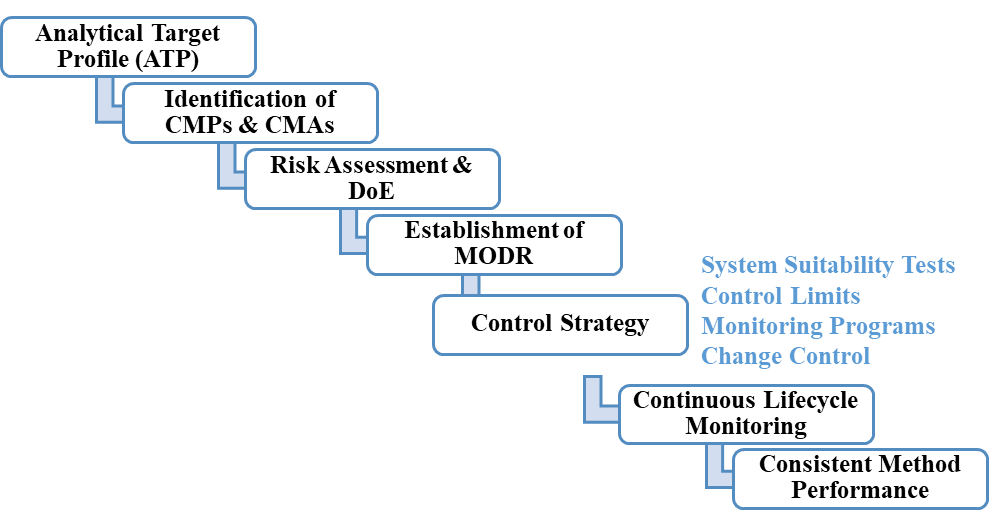
Figure 3: Analytical Control Strategy in AQbD
9. Overview of ICH Q14 Guideline
Introduction
The International Council for Harmonisation (ICH) established ICH Q14: Analytical Procedure Development to create a globally consistent scientific basis for analytical procedure development. Adopted in 2023, ICH Q14 supplements ICH Q2(R2) Validation of Analytical Procedures by providing specific guidelines on systematic analytical method development, knowledge management, risk-based decision-making, and lifecycle management. The guideline promotes the use of Analytical Quality by Design (AQbD) principles and encourages a science- and risk-based approach to developing analytical methods that are robust, reliable, and appropriate for their intended use. Prior to ICH Q14, analytical development procedures differed significantly between pharmaceutical corporations and regulatory agencies. Method development information presented to regulatory agencies was frequently insufficient, resulting in decreased method knowledge and regulatory flexibility. ICH Q14 tackles these issues by emphasizing improved development methods, organized knowledge management, and lifecycle-oriented analytical procedure management. As a result, the recommendation marks a significant advancement in pharmaceutical analytical science and regulatory standards. [1-3]
Objectives of ICH Q14
The main goals of ICH Q14 are to:
9.1 Scope of ICH Q14
Definition and Scope
ICH Q14 provides guidance on the development of analytical procedures used for:
The guideline applies to analytical procedures used throughout pharmaceutical development, registration, and post-approval lifecycle management.
Analytical Procedures Covered
ICH Q14 applies to:
Analytical Techniques Included
Examples include:
What ICH Q14 Emphasizes
The guideline focuses on:
rather than simply reporting optimized analytical conditions.
Significance
The scope of ICH Q14 extends beyond traditional validation and encourages developers to generate scientific knowledge throughout method development.
10. Overview of ICH Q2(R2) Guideline
Introduction
The International Council for Harmonisation (ICH) Q2(R2): Validation of Analytical Procedures guideline was adopted in 2023, together with ICH Q14 Analytical Procedure Development. It replaces the previous ICH Q2(R1) (2005) and establishes a new framework for analytical procedure validation that is consistent with the principles of Analytical Quality by Design (AQbD) and Analytical Procedure Lifecycle Management (APLM). ICH Q2(R2) has several significant modifications, including the Analytical Target Profile (ATP) idea, improved validation methodologies, lifecycle thinking, and a greater emphasis on scientific understanding. Unlike Q2(R1), which was primarily concerned with validation features, Q2(R2) incorporates validation efforts into analytical process creation and lifecycle management. This unified strategy enhances method dependability, regulatory flexibility, and analytical robustness throughout the product's lifecycle. [1-3]
The guideline applies to analytical procedures used for:
and supports analytical procedures developed using either traditional or enhanced AQbD approaches. [1]
Objectives of ICH Q2 (R2)
The main objectives are:
10.1 Accuracy Definition
Accuracy is the degree of agreement between the measured value obtained by the analytical technique and the true or accepted reference value.
According to ICH Q2(R2), accuracy should be demonstrated over the targeted analytical range and compared to ATP requirements.
Determining Accuracy: Here are some common approaches:
Recovery Studies: Known amounts of analyte are introduced into the matrix and retrieved using the analytical technique.
Analyze reference materials: Comparison to verified reference standards.
Comparative Method Studies: Comparison with known, tested methodologies.
Table 5: Example
|
Level |
Amount Added |
Amount Recovered |
Recovery (%) |
|
80% |
80 mg |
79.5 mg |
99.4 |
|
100% |
100 mg |
100.3 mg |
100.3 |
|
120% |
120 mg |
119.6 mg |
99.7 |
|
|
|
|
Mean Recovery = 99.8% |
Table 6: Typical Acceptance Criteria
|
Assay Type |
Acceptance Criteria |
|
Assay Methods |
98–102% |
|
Impurity Methods |
80–120% |
|
Biological Assays |
Method-specific |

10.2 Precision
Precision represents the closeness of agreement among a series of measurements obtained from multiple samplings of the same homogeneous sample.
Precision evaluates random analytical variability
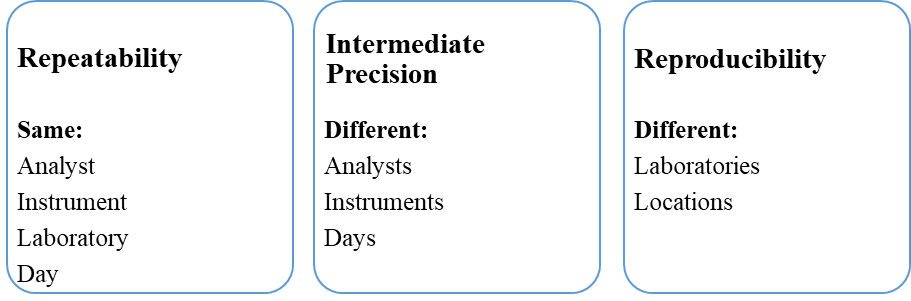
Measurement: Precision is generally expressed as:
RSD(%)=SDMean×100

Table 7: Typical Acceptance Criteria
|
Method Type |
RSD (%) |
|
Assay |
≤ 2.0 |
|
Dissolution |
≤ 5.0 |
|
Impurities |
≤ 10.0 |

10.3 Specificity
Specificity is the ability of an analytical procedure to accurately measure the analyte in the presence of components that may be expected to be present.
Potential interferences include:
Example: A stability-indicating HPLC method demonstrates:
Conclusion: Method is specific.

10.4 Detection Capability
Major Change in ICH Q2(R2)
One of the most important revisions is the replacement of separate concepts:
Q2(R1)
with the broader concept:
Q2(R2)
Detection Capability
This change reflects modern analytical technologies and ATP-based validation approaches.
Definition: Detection capability describes the ability of an analytical procedure to detect and/or quantify an analyte at low concentrations.
Common Determination Approaches
Signal-to-Noise Method [19]
LOD:

LOQ:

Where:
Calibration Curve Method Using:
10.5 Range
Range is the interval between the upper and lower concentrations of analyte that have been demonstrated to provide acceptable levels of accuracy, precision, and linearity.
Example
Evaluation
The range is established by demonstrating:
across the proposed concentration interval.

10.6 Robustness
Robustness is the ability of an analytical procedure to remain unaffected by small deliberate variations in analytical conditions.
Q2(R2) places greater emphasis on robustness than Q2(R1), particularly for methods developed using AQbD principles.
Table 8: Typical Variables Evaluated
|
Parameter |
Variation |
|
pH |
±0.2 |
|
Flow Rate |
±10% |
|
Temperature |
±5°C |
|
Mobile Phase Composition |
±2% |
|
Wavelength |
±2 nm |

Evaluation Criteria
Monitor effects on:
Major Differences Between ICH Q2(R1) and ICH Q2(R2)
The revision introduces several important scientific and regulatory improvements.
Table 9: Comparison of ICH Q2(R1) and ICH Q2(R2)
|
Aspect |
ICH Q2(R1) (2005) |
ICH Q2(R2) (2023) |
|
Regulatory Focus |
Validation only |
Validation + lifecycle |
|
ATP Concept |
Not included |
Included |
|
Link with Development |
Limited |
Integrated with ICH Q14 |
|
AQbD Support |
Minimal |
Strong |
|
Detection Capability |
LOD & LOQ |
Broader detection capability |
|
Lifecycle Management |
Not emphasized |
Strong emphasis |
|
Risk-Based Validation |
Limited |
Enhanced |
|
Knowledge Management |
Not addressed |
Encouraged |
|
Continuous Verification |
Not included |
Supported |
Table 10: Validation Characteristics Under ICH Q2(R2)
|
Validation Parameter |
Purpose |
|
Accuracy |
Measure trueness |
|
Precision |
Measure variability |
|
Specificity |
Measure selectivity |
|
Detection Capability |
Measure sensitivity |
|
Range |
Define applicable concentration interval |
|
Robustness |
Demonstrate reliability |
Scientific Significance of ICH Q2(R2)
The adoption of ICH Q2(R2) represents a major transition from a validation-focused paradigm to a lifecycle-oriented analytical quality system. By incorporating ATP-driven validation, AQbD principles, risk management, and continued verification, the guideline improves analytical method understanding and aligns validation activities with modern pharmaceutical quality systems. For pharmaceutical industries implementing AQbD, ICH Q2(R2) provides the regulatory foundation for demonstrating that analytical procedures remain fit for purpose throughout their lifecycle.
11. Integration of AQBD With ICH Q14 And ICH Q2(R2)
Introduction
The integration of Analytical Quality by Design (AQbD) into ICH Q14 and ICH Q2(R2) is one of the most significant advances in modern pharmaceutical analytical sciences. Historically, analytical technique development and validation were considered independent processes. Analytical procedures were often established through trial and error and then validated based on predetermined criteria. This technique frequently resulted in incomplete method understanding, insufficient robustness, and issues managing post-approval revisions. The publication of ICH Q14 (Analytical Procedure Development) and the revision of ICH Q2(R2) (Validation of Analytical Procedures) have changed the paradigm by presenting a full lifecycle-based framework that is closely aligned with AQbD concepts. These principles work together to provide a consistent scientific and regulatory framework for analytical process development, qualification, validation, and continuous performance verification. AQbD forms the scientific foundation, while ICH Q14 and ICH Q2(R2) provide the regulatory framework for execution. [1-5] This integration allows pharmaceutical scientists to methodically design analytical objectives, identify sources of variability, create scientifically justified working regions, validate analytical performance, and continually monitor methods throughout their lifecycle. As a result, analytical techniques become more robust, adaptable, and dependable, supporting regulatory compliance and continuous improvement. [1,2,]
11.1 Relationship Between AQbD, ICH Q14 and ICH Q2(R2)
AQbD is based on the same concepts as pharmaceutical Quality by Design (QbD):
ICH Q14 is largely concerned with the development of analytical methods, whereas ICH Q2(R2) is concerned with the qualification and validation of such methods. Together, they create a comprehensive analytical lifecycle framework.
Table 11: Integration of AQbD with ICH Q14 and ICH Q2(R2) [1-22]
|
AQbD Element |
ICH Q14 |
ICH Q2(R2) |
|
Analytical Target Profile (ATP) |
Core Requirement |
Validation Basis |
|
Risk Assessment |
Explicitly Required |
Indirectly Supported |
|
Design of Experiments (DoE) |
Strongly Encouraged |
Supported Through Validation Knowledge |
|
Critical Method Attributes (CMAs) |
Included |
Used During Qualification |
|
Critical Method Parameters (CMPs) |
Included |
Indirect Support |
|
Method Operable Design Region (MODR) |
Supported |
Indirect Support |
|
Control Strategy |
Major Component |
Supports Qualification |
|
Lifecycle Management |
Strong Emphasis |
Strong Emphasis |
|
Knowledge Management |
Explicitly Included |
Supported |
|
Continued Performance Verification |
Included |
Included |
|
Robustness |
Built During Development |
Validation Requirement |
|
Validation Activities |
Partial |
Major Focus |
12. Applications of Analytical Quality by Design (AQBD)
Analytical Quality by Design (AQbD) has evolved as an effective framework for developing, optimizing, validating, and managing analytical procedures over their whole lifecycle. The AQbD methodology combines scientific knowledge, risk assessment, Design of Experiments (DoE), and continuous monitoring to verify that analytical procedures consistently satisfy set Analytical Target Profile (ATP) standards. Unlike traditional trial-and-error procedures, AQbD offers a methodical way to identifying essential variables, understanding method behaviour, and constructing stable working areas. AQbD has been implemented on a variety of analytical platforms, including HPLC, UPLC, dissolution testing, stability-indicating procedures, and spectroscopy techniques. Regulatory agencies are progressively encouraging the use of AQbD because it improves method robustness, allows for regulatory flexibility, supports lifecycle management, and increases overall analytical reliability. [1-22]
13. Green Analytical Chemistry (GAC) And White Analytical Chemistry (WAC)
13.1 Green Analytical Chemistry (GAC)
Green Analytical Chemistry (GAC) is a new analytical method that seeks to reduce the environmental impact of analytical procedures while preserving analytical performance. GAC, which was introduced by Mikhail V. Pletnev and further developed by various researchers, supports reduced solvent use, safer reagents, lower energy usage, waste minimization, and operator safety. In pharmaceutical analysis, GAC principles are progressively being applied to HPLC, UPLC, spectroscopic, and electrochemical methods to promote sustainability while maintaining method quality. The use of AQbD promotes the development of greener analytical techniques by improving experimental settings using risk assessment and Design of Experiments (DoE). [23,24]
13.2 AGREE Metric
The AGREE (Analytical GREEnness Metric Approach) is a software-based instrument designed to quantitatively measure the greenness of analytical techniques using the twelve principles of Green Analytical Chemistry. The AGREE tool gives a circular pictogram and a numerical score on a scale of 0 to 1, with values closer to 1 indicating a greener analytical procedure. The metric assesses sample preparation, reagent toxicity, solvent consumption, waste generation, energy needs, and operator safety. AGREE has emerged as one of the most widely accepted tools for comparing the environmental sustainability of analytical procedures, and it has been extensively employed in recent AQbD-based analytical research. [25,26]
13.3 RGB Model for Analytical Methods
The RGB (Red-Green-Blue) model was developed as a more comprehensive way to assessing analytical procedures than just environmental sustainability. In this model, green symbolizes environmental friendliness, red denotes analytical performance and quality, and blue represents practical and economic factors like cost, productivity, and operational efficiency. The RGB approach allows for a fair assessment of analytical procedures by taking into account analytical excellence, ecological effect, and practical application all at the same time. This multidimensional evaluation is consistent with AQbD principles in that it promotes comprehensive method optimization rather than depending just on analytical performance. [27]
13.4 White Analytical Chemistry (WAC)
White Analytical Chemistry (WAC) is a sophisticated idea based on the RGB paradigm that combines analytical performance, environmental sustainability, and practical efficiency into a unified framework. White Analytical Chemistry considers three dimensions at once: analytical quality (red), environmental effect (green), and practical/economic efficiency (blue). The combination of these qualities results in a "white" analytical procedure that is precise, environmentally sustainable, cost-effective, and user-friendly. WAC is rapidly emerging as the next-generation analytical philosophy, and it is extremely important to AQbD because both approaches emphasize holistic method optimization, lifecycle thinking, and continuous development. Recent papers indicate that future analytical process development under ICH Q14 and ICH Q2(R2) will progressively utilize White Analytical Chemistry principles. [27,28]
Table 12: Comparison of GAC, RGB, and WAC Concepts
|
Concept |
Primary Focus |
Evaluation Criteria |
|
Green Analytical Chemistry (GAC) |
Environmental sustainability |
12 GAC principles |
|
AGREE Metric |
Greenness assessment |
Score (0–1) |
|
RGB Model |
Holistic evaluation |
Analytical, ecological, practical |
|
White Analytical Chemistry (WAC) |
Comprehensive optimization |
Quality + Sustainability + Practicality |
14. Artificial Intelligence (AI) And Machine Learning (ML) IN AQBD [36]
14.1 Predictive Modeling
AI and Machine Learning (ML) are increasingly being used in AQbD to predict analytical technique performance based on historical and experimental data. Predictive models can forecast important method attributes (CMAs) like resolution, retention time, peak asymmetry, and sensitivity without requiring substantial laboratory testing. By assessing complex interactions among crucial method parameters (CMPs), ML algorithms improve method knowledge, shorten development time, and facilitate data-driven decision-making during analytical process development. This technique is consistent with the enhanced development strategy recommended by ICH Q14 and contributes to effective analytical lifecycle management. [29,30]
14.2 Automated Optimization
Automated optimization uses AI algorithms, Design of Experiments (DoE), and laboratory automation technologies to determine optimal analytical settings with minimal human intervention. Machine learning algorithms may continuously examine experimental results and recommend changes to parameters like pH, mobile phase composition, flow rate, and temperature. Compared to traditional optimization methods, AI-driven optimization dramatically decreases experimental burden, accelerates method development, and enhances robustness. Such automated workflows are projected to play an increasing role in AQbD deployment and future regulatory science. [30,31]
14.3 Chemometrics
Chemometrics is the use of mathematical and statistical methods to obtain useful information from analytical data. Chemometric technologies commonly utilized in AQbD include Principal Component Analysis (PCA), Partial Least Squares (PLS), Artificial Neural Networks (ANN), and Multivariate Data Analysis (MVDA). Chemometrics improves analytical comprehension by revealing hidden correlations between variables and facilitating the development of strong analytical methodologies. It is particularly useful for spectroscopic approaches, PAT applications, and multivariate AQbD research. [32,33]
14.4 Digital Analytical Laboratories
Digital analytical laboratories are the next stage of AQbD and analytical science. These labs use AI, machine learning, robots, cloud computing, LIMS, and real-time data analytics to create highly automated and intelligent analytical environments. Digital laboratories enable continuous monitoring, predictive maintenance, automated data interpretation, and real-time decision-making. When combined with AQbD principles, digital analytical laboratories can increase analytical efficiency, improve data integrity, support regulatory compliance, and enable lifecycle-based analysis management. The notion is consistent with the pharmaceutical industry's shift to Industry 4.0 and smart manufacturing systems. [34,35]
Table 13: Role of AI and ML in AQbD
|
Technology |
Application in AQbD |
Benefit |
|
Predictive Modeling |
Prediction of CMAs and method performance |
Reduced experimental work |
|
Automated Optimization |
Optimization of CMPs |
Faster development |
|
Chemometrics |
Multivariate data analysis |
Better method understanding |
|
Digital Laboratories |
Intelligent analytical systems |
Enhanced efficiency and compliance |
CHALLENGES AND FUTURE PERSPECTIVES
15.1 Software Limitations
Despite the benefits of AQbD, its implementation frequently necessitates specialized statistical tools for risk assessment, Design of Experiments (DoE), multivariate analysis, and MODR construction. Commercial software packages like JMP, Design-Expert, and Minitab can be costly and need specialist knowledge. Additionally, changes in methods and data interpretation may impair repeatability between businesses. Future improvements are projected to prioritize user-friendly, cloud-based, and AI-enabled analytical development platforms. [37,38]
15.2 Regulatory Harmonization
Although ICH Q14 and ICH Q2(R2) provide a worldwide harmonized framework for analytical process development and validation, there may still be differences in implementation and regulatory requirements amongst health authorities. Variations in documentation standards, lifecycle management techniques, and post-approval change procedures can provide issues for international pharmaceutical companies. Continued collaboration among regulatory bodies is expected to increase uniformity and facilitate the global implementation of AQbD principles. [39,40]
15.3 Training Requirements
To successfully implement AQbD, multidisciplinary competence in analytical chemistry, statistics, risk management, Design of Experiments, chemometrics, and regulatory science are required. Many laboratories confront difficulties due to inadequate training and practical expertise with modern AQbD tools. Continuous professional development programs, academic-industry collaborations, and specific training workshops are critical for building expertise and promoting effective AQbD adoption in pharmaceutical enterprises. [37,41]
15.4 Data Integrity
Data integrity is a key challenge in AQbD due to the vast amount of experimental and lifecycle monitoring data generated throughout analytical development and validation. Ensuring compliance with the ALCOA+ principles (Attributable, Legible, Contemporaneous, Original, Accurate, Complete, Consistent, Enduring, and Available) is critical for data reliability and regulatory compliance. Future analytical laboratories are expected to make greater use of electronic data management systems, audit trails, and digital quality systems to improve data integrity and traceability. [42]
15.5 AI-Assisted AQbD (Future Perspective)
AI and machine learning (ML) are projected to transform AQbD by providing predictive modeling, automated technique optimization, intelligent risk assessment, and real-time lifecycle monitoring. AI algorithms can assess massive experimental datasets, forecast method performance, determine ideal operating conditions, and assist digital analytical laboratories. Future AQbD frameworks may include AI-driven MODR prediction, automated validation procedures, digital twins, and continuous performance verification, resulting in more efficient and adaptive analytical systems that adhere to Industry 4.0 concepts. [43,44]
Table 14: Challenges and Future Directions of AQbD
|
Challenge |
Impact |
Future Direction |
|
Software Limitations |
High cost and complexity |
AI-enabled platforms |
|
Regulatory Harmonization |
Variable global expectations |
Greater international alignment |
|
Training Requirements |
Limited expertise |
Specialized AQbD education |
|
Data Integrity |
Compliance concerns |
Digital quality systems |
|
AI Integration |
Emerging technology |
Predictive and autonomous analytics |
CONCLUSION
Analytical Quality by Design (AQbD) has evolved as a game-changing approach to analytical method development, offering systematic, science-based, and risk-driven methodologies to improve method comprehension, robustness, dependability, and regulatory flexibility. The implementation of ICH Q14 and ICH Q2(R2) has strengthened analytical process creation and validation by include Analytical Target Profiles (ATP), risk assessment, knowledge management, and lifecycle-based analytical procedure management. Together, AQbD, ICH Q14, and ICH Q2(R2) form a complete framework that guarantees analytical methods are fit for purpose throughout their lifecycle. Looking ahead, the integration of Artificial Intelligence (AI), Machine Learning (ML), chemometrics, digital analytical laboratories, and White Analytical Chemistry concepts is projected to drive the next generation of analytical development, allowing smarter, more sustainable, data-driven and continuously optimized analytical procedures for the pharmaceutical industry.
REFERENCES


Bhagwan Gite*, Sakshi Giri, Jyoti Shingate, Swati Burungale, Rajendra Patil, Implementation of Analytical Quality by Design (AQbD) in Analytical Method Development and Validation: Current Trends and Regulatory Perspectives Under ICH Q14 and ICH Q2(R2), Int. J. Med. Pharm. Sci., 2026, 2 (7), 413-435. https://doi.org/10.5281/zenodo.21265164
 10.5281/zenodo.21265164