

We use cookies to ensure our website works properly and to personalise your experience. Cookies policy
1Lucknow Model College of Pharmacy, Lucknow, UP, India
2Skymap Pharmaceuticals Pvt Ltd, Roorkee, UK, India
Phytopharmaceuticals are receiving growing growing interest as possible alternative and complementary therapeutic broad spectra agents due to their various pharmacological activities, better acceptance through patients and relatively lower toxicity. On the other hand, traditional herbals drug development faces several challenges such as variability in phytochemical constituents and hence inconsistency of herbal quality, low bioavailability of phytochemicals belonging to different classes and sustainability issues as well. Modern biotechnology has come to the rescue as a powerful means to overcome some of these constraints, such as the incorporation of molecular biology, genomics, metabolomics, synthetic biology, tissue culture, metabolic engineering (ME), nanotechnology and artificial intelligence (AI)-based approaches into the phytopharmaceutical research and development arena. These technologies promote identification of new bioactive compounds, increase efficiency in secondary metabolite production, improve quality control measures, and optimize extraction processes to reduce the time required for drug development pipelines. The integration of more advanced analytical methodologies made possible by vaious omics technologies have dramatically improved phytochemical profiling and biomarker identification, while various nanotechnology-based delivery systems have led to higher effectiveness and bioavailability of herbal medicines. Genome editing technologies (e.g., CRISPR/ Cas9) and synthetic biology can provide great potential applications in the biopharmaceutical fields for engineering medicinal plants with desired production of biologically active phytochemicals. Additionally, artificial intelligence and machine learning assist with the rapid identification of bioactive molecules, prediction of biological activities as well as optimization of formulation strategies. However, despite the advances, regulatory harmonisation, challenges to commercialisation of CR technologies and biosafety plus sustainable resource management needs are critical barriers. This review summarizes recent biotechnological advances and applications made in phytopharmaceuticals development, regulatory perspectives, current trends and existing challenges toward developing safer, standardized, and evidence-based herbal therapeutics.
For centuries, medicinal plants are the pillars of healthcare and even today they form an important component in modern days medicines. Approximately 80 percent of the world population, mostly in developing countries, relies on herbal medicines for primary health care (World Health Organization). Highlighting the potential therapeutic properties of medicinal plants are many plant derived compounds that have successfully been developed into clinically important pharmaceuticals such as paclitaxel, artemisinin, vincristine and morphine. The domain of phytopharmacy transitioned from age-old herbal pharmaceuticals to scientifically controlled, standardized plant-derived medicines supported by clinical evidence. Continued improvements and new technologies in the fields of phytochemistry, pharmacology, molecular biology and analytical sciences have thus allowed for better identification, separation and characterization of bioactive phytoconstituents with increased efficacy due to their isolation from surrounding moieties as well as a further characterisation profile on the aspects of safety based upon standardization. Thus, phytopharmaceuticals have become but an essential part of the new pathways of modern drug discovery and development. Conventional herbal medicines offer therapeutic benefits, but they come with a number of limitations including variable composition in terms of phytochemicals, poor standardization, low bioavailability or solubility, quality inconsistencies and contamination as well as over-exploitation of medicinal plant resources. These challenges frequently impede clinical adoption, regulatory clearance and mass commercialization. Current advances in biotechnology have recently emerged as a promising strategy to tackle these challenges by capturing plant tissue culture along with metabolic engineering, synthetic biology, genome editing, omics technologies, nanotechnology, bioinformatics and artificial intelligence for the delivery of phytopharmaceuticals. These technologies provide significant improvement in bioactive metabolites production, quality control, sustainable cultivation, fast drug discovery and better formulation. Global Phytopharmaceutical Market Report Overview However, the increase in consumption of natural products, the increasing prevalence of chronic diseases and rising investment on herbal drug research represent some other important factors that are helping to drive growth and development along with a few more during 2017-2030. The market is expected to grow steadily in the next decade owing to technological advancements along with rising industrial adoption of biotechnology-based solutions.
This review provides an overview of recent developments in contemporary biotechnology for the production of phytopharmaceuticals with a focus on emerging technologies, industrial applications, quality assurance approaches and regulatory aspects as well as challenges and prospects to produce safe, standardized and sustainable plant-based drugs.
Phytopharmaceuticals are scientifically developed medicines from plants or their bioactive components for the prevention, diagnosis, or treatment of diseases. Phytopharmaceuticals are standardized using modern scientific methods to achieve the characteristics of quality, safety, efficacy and reproducibility usually expected from conventional pharmaceutical products. They consist of known and quantified phytochemical compounds or standardized plant extracts with proven pharmacological properties, developed by rigorous processes that incorporate phytochemical analysis, pharmacological investigation, toxicology testing, and clinical development. Phytopharmaceuticals represent a middle ground between traditional herbal medicine and synthetic pharmaceuticals. They provide the therapeutic benefits of natural products but meet quality standards found in contemporary pharmaceuticals. Lastly, some essential clinical drugs like paclitaxel Medicinal plants have played a significant role in the history of human civilization and carry a treasure of phytochemicals; which are now being less investigated, even though they have immense therapeutic potential Modern therapeutics still rely on the use of plant-derived chemicals Phytopharmaceuticals or botanical drugs are gaining importance due to increased demand for safe, affordable and poly pharmacological treatment of complex, chronic and lifestyle-related disorders such as cancer, diabetes and other metabolic diseases, cardiovascular disorders, inflammatory diseases and neurodegenerative conditions. Plant-derived medicines have often shown antioxidant, anti-inflammatory, antimicrobial, immunomodulatory and anticancer activities; therefore they are valuable candidates for drug discovery. Phytopharmaceutical development is challenged by variability in phytochemical composition, low bioavailability, difficulties with standardisation and sustainable sourcing of the medicinal plant. Various modern biotechnological methods such as plant tissue culture, metabolic engineering, genome editing, nanotechnology and omics technologies have been identified to overcome these constraints by enhancing quality control (e.g. potency assays) and exploring phytochemical production and drug delivery system optimization.
In conclusion, phytopharmaceuticals are new category of drug that combines the traditional healing wisdom with tools of modern day pharmaceutical and biotechnological innovations and holds a great promise for developing safe, effective, evidence-based plant medicines.
Modern biotechnology has dramatically transformed the groundwork and development of phytopharmaceuticals through the introduction of advanced molecular, cellular, and computational technologies into various aspects, including the discovery, production, standardization, and commercialization of medicines from plants. Abstract Conventional cultivation and extraction processes of medicinal plants are usually constrained by seasonality, low yields of desired bioactive compounds, genetic heterogeneity and variable quality. To address these limitations, biotechnological strategies facilitate sustainable production, improved phytochemical biosynthesis and quality control. Through in vitro " Plant tissue culture techniques such as micropropagation, callus culture, cell suspension culture and hairy root culture can ensure large-scale production of medicinal plants along with valuable secondary metabolite under controlled conditions. Pathway manipulation and heterologous expression of biosynthetic genes are also employed to improve the production of desired phytochemicals by the more-phosphorylated biologically forms such as metabolic engineering and synthetic biology. Genome editing technologies, especially CRISPR/Cas systems, can be utilized for precise genetic modifications to improve metabolite production as well as disease resistance and stress tolerance in medicinal plants. The recent development of omics technologies genomics, transcriptomics, proteomics, and metabolomics has helped to characterize biosynthetic pathways and gene regulation, and has enabled high-throughput profiling of the metabolic potential from microbial cell factories that could facilitate the discovery of novel bioactive compounds. The ratio of knowledge on this topic is further supported by bioinformatics and AI techniques that allow for virtual screening, molecular docking, target prediction approaches, network pharmacology and prediction modeling, thereby lowering the time and cost of phytopharmaceutical research. Nanobiotechnology is another strategy that can be used to enhance the therapeutic efficacy of plant products. These nanocarriers include liposomes, phytosomes, nanoemulsions and polymeric nanoparticles; and these are employed to improve the solubility, stability, bioavailability and targeted delivery of plant derived bioactive compounds. Also, its precise identification, authentication and quality standardization using the latest analytical technologies such as HPLC, LC–MS/MS, GC–MS, NMR spectroscopy and DNA barcoding are mentioned. Together, these modern biotechnological strategies have revolutionized phytopharmaceutical development to facilitate a more efficient drug discovery process, promote product uniformity and safety, maximize therapeutic potential in the clinic, and preserve sustainable medicinal plant resource utilization. The subsequent sections go through each of these methods and their uses in detail.
Now Molecular biotechnology has become an essential tool for harnessing genetic improvement of medicinal plants towards the creation of high-yielding, disease-resistant and phytochemically enriched varieties. Conventional breeding techniques are usually time-consuming, limited by genetic diversity, extended generation times and environmental forces. Molecular biotechnology, on the other hand, offers specific tools to improve bioactive secondary metabolites without compromising favourable agronomic traits. Marker-assisted selection (MAS) is an effective practice, which combined with molecular markers like simple sequence repeats (SSRs), single nucleotide polymorphisms (SNPs), and amplified fragment length polymorphisms (AFLPs) allows identifying and using superior genotypes for traits with high medicinal value. DNA barcoding has emerged as a more robust method for authenticating species of medicinal plants, reducing the occurrence of adulteration and assuring the quality and safety of phytopharmaceutical offerings. Abstract: Agrobacterium tumefaciens and Agrobacterium rhizogenes mediated genetic transformation techniques provide the acceptance foundation for the fabric of desired genes in medicinal plants leading to an increase in therapeutically crucial compound biosynthesis. In addition, genome sequencing and functional genomics have facilitated the rapid identification of genes associated with secondary metabolite biosynthesis and enable higher efficacy in batch manipulation of metabolic pathways. Recent emergence of CRISPR/Cas-based genome editing has transformed the field by enabling highly precise modifications in selected genes and generating high-end transformants to obtain metabolite-enriched, stress-resistant and pest- and pathogen-resistant clones. Molecular biotechnology also plays a crucial role in conservation of several endangered medicinal plants by molecular characterization, analyzing genetic diversity and our primary focus being germplasm preservation. Together, these approaches promote the sustainable use of important genetic resources in food plants and conserving biodiversity. In general, molecular biotechnology is a powerful set of tools for improving medicinal plants to maintain uniformity, maximize yield, and play an important role in the effort to produce standardized phytopharmaceuticals that are safe and efficacious. Next-generation technologies, including various omics and metabolic engineering, will also further boost the evolution of plant-based drug discovery/development through its integration to PPM.
As part of the global push towards a greener and more sustainable industry, the industrial manufacture of phytopharmaceutical medicine has been adapted to meet modern-day standards with large-scale applications through sustainable and standardized processes using state-of-the-art biotechnological innovations. Routine growing and harvesting strategies usually are hampered with the aid of
(1) seasonality, not on time remedies;
(2) sporadic phytochemical concentration;
(3) scarcity of scientific flora.
Biotechnology provides solutions to these difficulties by supplying controllable generation systems that enable steady great manufacturing, most beneficial yields and every year on hand bioactive compounds. Cell suspension cultures, hairy root cultures, organ cultures are a few methods widely used in the plant tissue culture technologies for commercial production of valuable secondary metabolites as under sterile and controlled conditions. These systems not only lessen reliance on natural plant populations, but also maximize output of relevant pharmacologically important compounds including alkaloids, flavonoids, terpenoids and phenolics. Laboratory, pilot-scale, and industrial bioreactors are used for large-scale cultivation of microorganisms under controlled environmental biosafety standards through the manipulation of parameters such as pH, temperature, aeration (oxygen delivery), nutrient supply, and agitation to yield high concentrations of desired metabolites. The conversion of feedstocks into valuable phytochemicals that takes place on a massive scale in nature can be further harnessed for industrial productivity by engineering biosynthetic pathways and increasing the levels of target phytochemicals through metabolic engineering and synthetic biology. Furthermore, alternative production platforms for complex plant-based metabolites have emerged as microbial fermentation systems using genetically modified bacteria, yeast and fungi which provide greater scalability possibilities and cost-effectiveness. Industrial phytopharmaceutical production encompasses a significant downstream processing phase which includes the extraction, purification, concentration, drying, formulation and packaging of active bioactive compounds. HPLC, LC–MS/MS, GC–MS and spectroscopic methods are routinely employed for quality control to obtain batch-to-batch consistency (purity, potency) with compliance to Good Manufacturing Practices (GMP). The progression of automated manufacturing systems, process analytical technology (PAT), and Quality-by-Design (QbD) principles have also improved production efficiency and regulatory compliance. They facilitate the commercialization of standardized phytopharmaceutical products, avert excessive production costs and minimize environmental impact. In conclusion, industrial biotechnology has revolutionized the production of pharmacologically active plant natural products into reliable, scalable and sustainable processes required to deliver sufficiently high-quality medicines from plant-derived sources to an increasing global community that depends on safe and efficacious herbal therapeutics.
Quality control is a fundamental part of phytopharmaceutical development because the therapeutic efficacy and safety of natural medicines are based on the authenticity, purity, consistency and composition profile of bioactive phyto-constituents. Traditional quality testing methods usually do not provide sensitive information on the detection of contamination, species substitution or variations in the bioactive constituents. Through incorporating advances in molecular and analytical tools, such biotechnological approaches can provide the means to authenticate, standardize, and assure product quality of phytopharmaceuticals. Molecular methods for specific identification and authentication of medicinal plants, including DNA barcoding, simple sequence repeats (SSRs), single nucleotide polymorphisms (SNPs), and amplified fragment length polymorphisms (AFLPs) methods have been designated more commonly in recent years. These sequential methods allow for the identification of adulterants, verification of botanical identity and genetic purity of raw materials in herbal products. We apply advanced chromatographic and spectroscopic techniques such as high-performance liquid chromatography (HPLC), ultra-highperformance liquid chromatography (UHPLC), gas chromatography–mass spectrometry (GC–MS), liquid chromatography–massspectrometry (LC–MS/MS), nuclear magnetic resonance (NMR) and Fourier-transform infrared (FTIR)spectroscopy to obtain phytochemical fingerprints or quantification of marker compounds. Such analytical methodologies also provides batch-to-batch consistency, active constituents monitoring and product purity verification. Metabolomics and chemometric analysis furnish a comprehensive profile of the major metabolites in medicines, which facilitates monitoring of both raw plant material and finished formulations. These methods, in tandem with bioinformatics and artificial intelligence (AI), allow rapid interpretation of data, detection of quality discrepancies, and prediction of product authenticity. And also Process Analytical Technology (PAT) and Quality-by-Design (QbD) principles help to monitor and optimize manufacturing processes in real time thus providing consistent product quality during the whole life cycle of production. The production of phytopharmaceuticals requires International quality standards like Good Agricultural and Collection Practices (GACP), Good Manufacturing Practices (GMP) and pharmacopeia guidelines, compliance with which is essential for the manufacture of safe and efficacious. Biotechnology-derived quality control systems enhance product reliability and regulatory compliance, increase consumer confidence in herbal products, and facilitate global commercialization of standardized plant-based medicines.
Phytopharmaceuticals need to be regulated in order to align the market for global acceptance, by helping define quality, safety, efficacy and consistency from batch to batch. Phytopharmaceuticals through manufacturing standardization and quality control, preclinical evaluation, clinical validation-compliance to strict scientific regulatory standards as opposed to a traditional herbal medicine. The evolution of regulatory frameworks has advanced biotechnology and the commercialisation of plant based therapeutics considerably. Quality assurance, safety assessment and standardization of herbal medicines have been focused including good agricultural practices (GAP), active constituents and levels of pharmaceutical standards organization in general. Good agricultural and collection practices (GACP) guidelines are implemented by World Health Organization (WHO) through it [9] show reliable guidance on the cultivation of health-promoting plants. Similarly, in India also CDSCO has created the guidelines for phytopharmaceutical drugs in the frame of specific regulation governed under Drugs and Cosmetics Rules (2015) related to extensive data required for botanical identity, phytochemical characteristic manufacturing processes along with Quality control assurance (Quality Control), preclinical studies demonstrating pharmacological activity including toxicology study, clinical efficacy. The regulatory paradigm proposed is an eclectic integration of the historical practices associated with herbal medicines and regulations applicable to pharmaceutical products designed for modern medicine. The U.S. FDA outlines its expectations for botanical drugs in its Botanical Drug Development Guidance regarding aspects such as quality control, chemistry and manufacturing, preclinical studies and clinical trials related to this class of drug products on a global basis. Similarly, The European Medicines Agency (EMA) has a governing board known as Committee on Herbal Medicinal Products (HMPC), which outlines of scientific guidelines regarding quality, safety and efficacy for the registration and assessment of herbal medicinal products. Although substantial progress has been made, several regulatory issues remain regarding global harmonization, non-equivalent quality standards, heterogeneous botanicals composition profile, lack of clinical data as well as challenges for control in the herbal multi-component formulations. The broad usage of new biotechnological strategies genome editing, synthetic biology and nanotechnology opening up skill gaps in support of highly-evolved regulations are also planning biosafety issues with the status to monitor products long-run. Gaps but harmonized regulatory frameworks are essential for stimulating innovation, ensuring public safety and complementary support of assistance to promote progeny and science-based testing prior to global deployment of plant-originated bioactive agents. Additionally, continued collaboration between regulatory authorities, researchers and the pharmaceutical industry is essential for establishing globally harmonised standards for plant-produced medicinal products.
The application of modern biotechnological approaches has extensively broadened the opportunities for various industrial applications of phytopharmaceuticals in pharmaceutical, nutraceutical, cosmeceutical, and healthcare industries. Biotechnology is also appealing, as it allows the industrial-scale production of standardized quality plant bioactive compounds with greater consistency and therapeutic potential for potentially fulfilling the growing demand for natural efficacious products worldwide. Phytopharmaceuticals are predominantly used as an active ingredient for medicine formulation in the pharmaceutical industry for cancer medication, infectious diseases, diabetes treatment, cardio and cerebrovascular conditions, inflammatory diseases and neurological problems. Technologies such as plant tissue culture, metabolic engineering and synthetic biology assist in producing economically relevant secondary metabolites like alkaloids, flavonoids, terpenoids and phenolic compounds. Bioactive compounds from plants are utilized in the nutraceutical industry for dietary supplements, functional foods, and health-promoting formulations. Biotechnology helps in improving production & standardisation of antioxidants, polyphenols, carotenoids and other phytochemicals that help in reducing diseases and maintaining a good health. Phytopharmaceutical ingredients are widely used in the cosmeceutical sector, including skin-care, hair-care and anti-aging products owing to their antioxidant, anti-inflammatory, antimicrobial and photoprotective properties. Herbal cosmetic formulations have been accompanied by nanotechnology-based delivery systems for enhanced stability, skin penetration and efficacy. Modern biotechnology will also enable to develop functional foods, personalized herbal medicines and veterinary phytopharmaceuticals, which broadens the commercial area of plant-based therapeutics. Also, quality assurance and formulation optimization through advanced analytical technologies born from bioinformatics which help in rapid screening of novel phytochemicals for eventual commercial purposes; and artificial intelligence that helps is forming a powerful equation in researchers industrial applications. In summary, biotechnology has changed phytopharmaceuticals from products with commercialization potential based on traditional uses into standardized and scientifically validated products that have revolutionized innovation in every area of health care. These emerging fields utilizing molecular biotechnology, nanotechnology, and digital technologies will surely continue to support companies working towards global market acceptance of phytopharmaceuticals and their industrial proliferation.
Nevertheless, Multiple scientific, technical, regulatory and economic challenges persist in the development and commercialization of phytopharmaceuticals despite advances in biotechnology. Specifically, the product may vary both in content and quality with respect to phytochemical composition due to inherent plant genetic varietal differences, geographical location, climatic conditions under which it has been grown, methods of cultivation and harvesting time , hence posing a question on quality and therapeutic scalability. Most bioactive compounds are difficult fulfilled at a large scale because they generate low metabolites, incur high production costs, and plant tissues cultured in bioreactors have not yet been effectively scaled. Additionally, a large number of medicinal plants are either slow growing or endangered, presenting challenges for sustainable supply and conservation of biodiversity. While metabolic engineering and synthetic biology are powerful solutions, they are still constrained by the technical complexities and infrastructure requirements when considering their industrial implementation. The key barriers to the full scale up remain standardization and quality control because phytopharmaceuticals are complex mixtures of two or more bioactive constituents. This results in the necessity of advanced analytics and rigorous validation protocols to establish robust quality standards, identify appropriate biomarkers, and ensure batch-to-batch consistency. Even so, the process of commercialisation globally is hampered by regulatory issues. Diverse regulatory requirements between countries, limited harmonization of standards, insufficient clinical evidence for efficacy and the length of time taken to obtain approval to market are all factors that result in slow or delayed access to the markets by phytopharmaceutical products. Moreover, advances in genome editing, synthetic biology and nanotechnology are providing new biosafety, ethical and regulatory challenges which call for updated guidelines. Other major issues include lack of protection of intellectual property, limited technology transfer between research laboratories and the private sector, insufficient investment in translational research and poor public knowledge about scientifically well founded phytopharmaceutical products. Overcoming these barriers and ensuring the successful application of biotechnology-derived phytopharmaceuticals in therapeutic and commercial markets will require integration of multi-disciplinary expertise, development of robust regulatory approaches, implementation of sustainable production protocols, and continued innovation.
FUTURE PERSPECTIVES
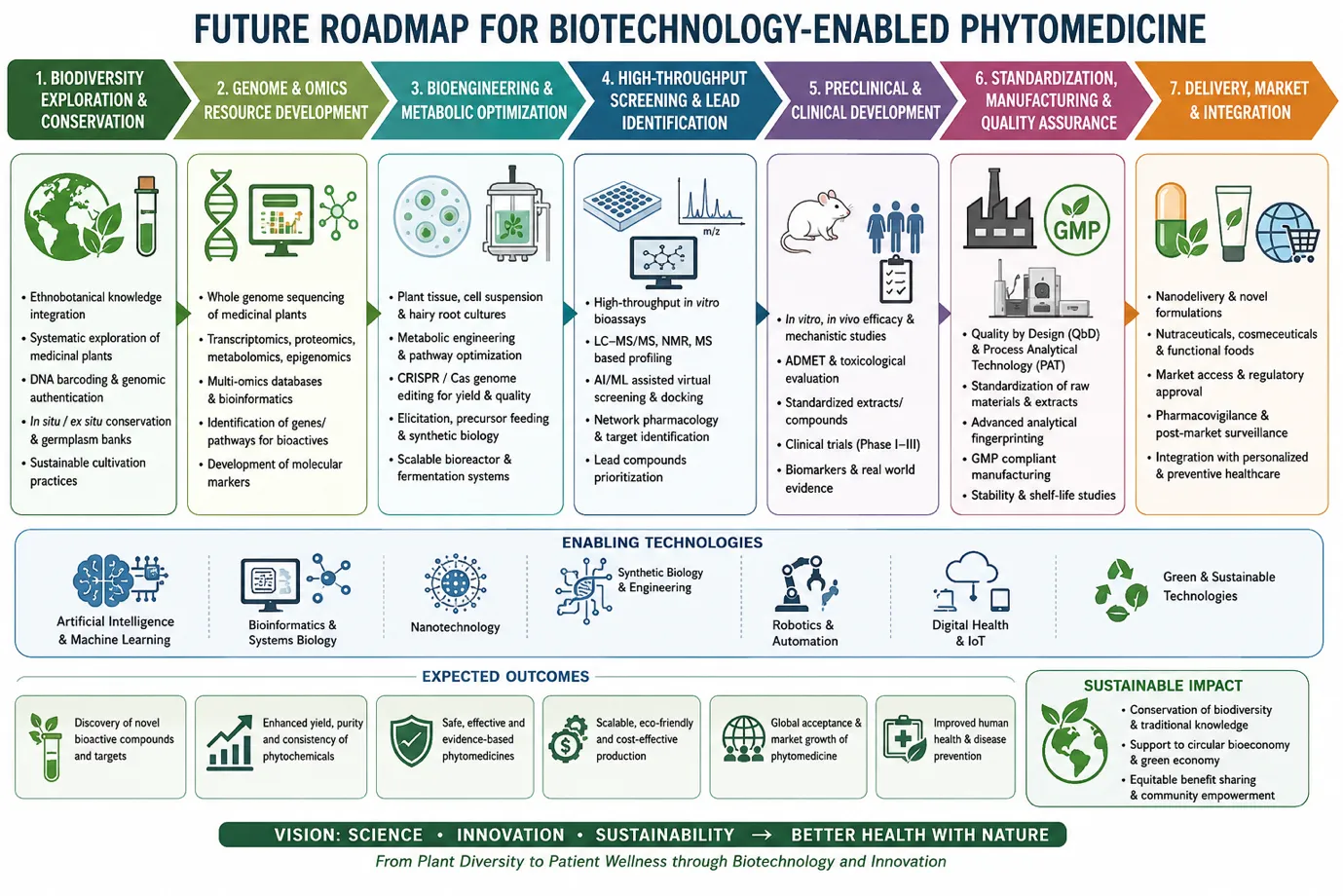
The future of phytopharmaceutical development is dependent on the progressive combination and merging of biotechnological, computational, and precision medical advances. Advancements in genome editing, synthetic biology, multi-omics, AI and nanotechnology will facilitate the discovery, generation and commercialization of new plant-based therapeutics. These concepts will allow for the production of high-yield medicinal plants and/or optimized biosynthetic pathways (targeted overexpression or gene editing) as well as sustainable phytochemical production systems. With the progress of AI, machine learning and bioinformatics, we can screen large libraries of bioactive compounds, predict pharmacological activities and toxicity and optimize drug formulation with artificial intelligence so that the time period and cost incurred in phytopharmaceutical research may be significantly reduced. In the same way, integration genomics, transcriptomics, proteomics and metabolomics will give a robust understanding of medicinal plant biology, and discovery possible therapeutic targets as well as biomarkers.
CRISPR/Cas-based genome editing and metabolic engineering can increase the yield of bioactive secondary metabolites as well as disease resistance, stress tolerance, and phytochemical quality in medicinal plants. In addition, new technologies for plant cell culture, bioreactor systems, and microbial biosynthesis will enable supported sustainable large-scale production without dependency on environmental conditions as well as seasonal variations. This will provide new horizons in improving bioavailability, stability, targeted delivery and therapeutic efficacy of phytopharmaceuticals using nanotechnology-based drug delivery systems along with digital manufacturing approaches (Quality-by-Design (QbD) and Process Analytical Technology(PAT) that can enhance industrial production and quality assurance. Abstract The environmentally friendly production of phytopharmaceuticals will also result from the combined introduction of green biotechnology, circular bioeconomy principles, and sustainable cultivation practices. In conclusion, future advances relies on better partnership between academia, industry and regulatory bodies to develop harmonized guidelines, high-quality clinical evidence and global adoption of biotechnology-derived phytopharmaceuticals. These advances ultimately will bring phytopharmaceuticals to the forefront of standardized, evidence-based, and personalized approaches to therapeutic intervention as a result from this merging of biotechnology-and-pharmaceutical sciences with expanded opportunities for successful prevention and treatment of many human diseases.
CONCLUSION
Due to significant advances in modern biotechnology, the area of phytopharmaceutical development has been revolutionized reducing most of the limitations of classic herbal medicines, such as variable quality and quantity of bioactive compounds with poor bioavailability and challenges at standardization. The application of modern technologies including plant tissue culture, metabolic engineering, synthetic biology, CRISPR/Cas genome editing methods, various omics techniques and bioinformatics as well as artificial intelligence aids the discovery and production of PAHs in terms of quality control and therapeutic efficacy. Such biotechnological advances have further permitted qualitative production of valuable phytochemicals, with more stringent quality assurance supported via enhanced analytical methodologies and expedited development of standardized phytopharmaceutical products exhibiting greater clinical relevance. Moreover, the establishment of biotechnology-based manufacturing processes as well as regulatory frameworks has reinforced the commercialization and international acceptance of evidence-based herbal therapeutics. While this advances rapidly, many issues such as large-scale production capabilities, streamlined regulatory environment for drug discovery and development, concerted efforts to validate clinical efficacy for various predictive molecular targets/indications, mechanisms of bioactive compounds against cancer cells and adequate protection of IP regarding medicinal plants are yet to address. Surmounting these barriers will require ongoing interdisciplinary research and technological innovation in addition to collaboration among academia, industry, and regulatory authorities. Modern biotechnological development therefore redefines future phytopharmaceuticals ranging from bio-safety to intact pharmacologically active herbal matrices along with standardized medicinal plants for best use either as raw materials or formulations (Herbs & Medicines). The integration of biotechnology with pharmaceutical sciences, computational technologies, and precision medicine is anticipated to fuel the next Deca century of phytopharmaceuticals an essential element in global healthcare and sustainable drug discovery.
DECLARATIONS
Author CRediT Statement
Sandhya Kumari: Conceptualization, Literature Review, Writing – Review & Editing, Validation, Supervision.
Himani Singh: Data Curation, Literature Review, Investigation, Visualization, Writing – Review & Editing.
Prof. Shashank Tiwari: Conceptualization, Methodology, Supervision, Project Administration, Critical Review & Editing, Resources, Final Approval of the Manuscript.
All authors have read and approved the final version of the manuscript and agree to be accountable for all aspects of the work, ensuring the accuracy and integrity of the published content.
Funding
In this research the authors did not receive any specific funding from any public, commercial or not-for-profit funding agency.
CONFLICTS OF INTEREST
Conflicts of interest The authors declare that they have no known competing financial interests or personal relationships that could have appeared to influence the work reported in this manuscript; All authors follow the principle of transparency regarding conflicts of interest. This is a review article and does not involve any studies with human participants or animals performed by any of the authors. Hence, ethical approval was not necessary
Consent for Publication
All authors contributed to the writing of the manuscript and consent for it to be published.
ACKNOWLEDGEMENTS
The authors sincerely thank the researcher community across the globe whose published work provided the scientific basis for this review. The authors thank their institutions for providing access to scientific resources and a supportive research environment.
REFERENCES



Sandhya Kumari, Himani Sharawat, Shashank Tiwari*, Modern Biotechnological Approaches in Phytopharmaceutical Development: Advances, Applications, Challenges, And Future Perspectives, Int. J. Med. Pharm. Sci., 2026, 2 (7), 848-858. https://doi.org/10.5281/zenodo.21405861
 10.5281/zenodo.21405861