
We use cookies to ensure our website works properly and to personalise your experience. Cookies policy
1JBS Institute of Pharmacy, Malinpur, Ramsanehi Ghat, Barabanki- 225409 (U. P.) India
2School of Pharmacy, Monad University, N.H. 9, Delhi Hapur Road, Village & Post Kastla, Kasmabad, P.O. Pilkhuwa - 245304, Dist. Hapur (U.P.), India
Diabetes mellitus remains a global health challenge, prompting continued interest in phytochemical alternatives with fewer side effects than synthetic drugs. Vinca rosea (Catharanthus roseus) has long been used in traditional medicine for its purported hypoglycemic properties. The primary aim of this study was to evaluate the antidiabetic efficacy of Vinca rosea leaf extracts in an experimental model of alloxan-induced diabetes in rats. Diabetes was induced in Wistar albino rats via a single intraperitoneal injection of alloxan. The subjects were divided into control and experimental groups, with the latter receiving oral administration of Vinca rosea extracts (ethanolic or aqueous) at specified dosages. Blood glucose levels, body weight, and lipid profiles were monitored over a predetermined period. The present study was carried out to evaluate the antidiabetic activity of Vinca rosea methanolic whole plant extracts in alloxan induced diabetic rats for 14 days. The methanolic whole plant extract at high dose (500 mg/kg) exhibited significant antihyperglycemic activity than whole plant extract at low dose (300 mg/kg) in diabetic rats. The methanolic extracts also showed improvement in parameters like body weight and lipid profile as well as regeneration of β-cells of pancreas in diabetic rats. Histopathological studies reinforce the healing of pancreas, by methanolic Vinca rosea extracts, as a possible mechanism of their antidiabetic activity.
The hallmark of diabetes mellitus, a chronic metabolic disease, is persistent hyperglycemia brought on by deficiencies in either insulin action or secretion, or both. It is a major global health concern, associated with severe complications such as cardiovascular disease, neuropathy, nephropathy, and retinopathy. Despite the availability of synthetic antidiabetic drugs, their limitations—including side effects, high cost, and limited accessibility—have prompted the search for safer, plant-based alternatives. Medicinal plants have long been recognized for their therapeutic potential in managing diabetes, owing to their bioactive phytochemicals that can modulate glucose metabolism and protect pancreatic β-cells. Among these, Vinca rosea (also known as Catharanthus roseus), a perennial herb widely cultivated for its ornamental and medicinal value, has attracted considerable attention. Traditionally used in Ayurveda and other systems of medicine, the plant is known for its alkaloids, flavonoids, and tannins, which exhibit diverse pharmacological activities. The plant has long been utilized in Ayurveda and other medical systems. It is well-known for its tannins, alkaloids, and flavonoids, all of which have a variety of pharmacological properties. Vinca rosea extracts have been shown in experiments to considerably lower blood glucose levels, improve lipid profiles, and promote pancreatic β-cell regeneration in alloxan-induced diabetic rats, a well-established model for type 1 diabetes. These findings suggest that Vinca rosea possesses promising antidiabetic properties, making it a potential candidate for the development of novel phytotherapeutic agents. One of the prevalent metabolic diseases that causes substantial morbidity and death is diabetes mellitus, which can lead to both microvascular and macrovascular problems. It is regarded as one of the world's top five causes of death [1, 2]. There is currently no appropriate, efficient treatment for diabetes mellitus in modern medicine [3]. Because of the negative effects of using insulin and oral hypoglycemic medications, patients are increasingly requesting natural products with antidiabetic properties [4–6]. Allium sativum (garlic), Azadirachta indica (neem), Vinca rosea (nayantara), Trigonella frenum (fenugreek), Momordica Charania (bitter ground), and Ocimum sanctum (tulsi) are among the many traditional medicinal plants that have been shown to have hypoglycemic qualities. In cases of severe diabetes, several of these are less successful in decreasing blood glucose levels.
Worldwide, Vinca rosea (C. roseus) Linn. (Apocynaceae) is a herbaceous subshrub that is also referred to as Lechner rosea, Vinca rosea, or Madagascar periwinkle. Its alkaloids, which have anticancer properties, are the primary reason it is grown [7]. Vinca has two kinds of active compounds: tannins and alkaloids. In various organs, Catharanthus roseus produces over 100 monoterpenoids and indole alkaloids (TIA) [8]. The dimeric alkaloids vincristine and vinblastine, which are essential cancer medications, are found in the leaves and stems, while ajmalicine and serpentine, which are antihypertensive, are found in the roots [9].
In several parts of the world, such as Nigeria, the West Indies, and India, the leaves are traditionally used to treat diabetes [10]. 150 beneficial alkaloids and other pharmacologically active substances have been found in the leaves. In experimental animals, leaf extracts (hydroalcoholic or dichloromethane-methanol) have been shown to have significant antihyperglycemic and hypotensive effects [11]. In both normal and alloxan-diabetic rabbits, fresh leaf juice of C. roseus has been shown to lower blood glucose levels [12]. In rats with diabetes produced by streptozotocin, Catharanthus roseus leaves and twigs have been shown to have hypoglycemic action [13]. In this study, alloxan-induced diabetic rats were used to examine the long-term (up to 14 days) effects of methanolic extracts of the entire Vinca rosea plant on fasting blood glucose (FBG) and biochemical parameters like serum total cholesterol (TC), LDL, HDL, creatinine, urea, and alkaline phosphatase. Because of this, no research has been done on methanolic extracts of the entire Vinca rosea plant in rats that have been given alloxan to induce diabetes. Therefore, the current study aims to evaluate the antidiabetic properties of the entire Vinca rosea plant.
MATERIALS AND METHODS
Plant Material Collection and Extraction: Fresh Vinca rosea plants were collected, authenticated, and shade-dried. The dried material was powdered and subjected to extraction using methanol in a Soxhlet apparatus. The extract was concentrated under reduced pressure and stored at 4 °C until use.
Experimental Animals: Healthy adult Wistar albino rats (150–200 g) were used. Animals were housed under standard laboratory conditions (12 h light/dark cycle, 25 ± 2 °C) with free access to food and water. All experimental procedures were conducted in accordance with institutional ethical guidelines for animal care and use.
Induction of Diabetes: Diabetes was induced by a single intraperitoneal injection of alloxan monohydrate (150 mg/kg body weight). After 72 hours, fasting blood glucose levels were measured, and rats with glucose levels above 250 mg/dL were considered diabetic and included in the study.
Plant Material: The basic plant material of Vinca rosea Linn,the whole plant used for the investigation, was obtained from Mount Opera Garden, Near Ramoji Film City, Nalgonda Dist, Andhra Pradesh, India. The plant can be identified and authenticated by the Department of Botany research office (Botanist), Anwar-ul-loom College of Pharmacy, Hyderabad.
Alcoholic Extraction: The whole plants were collected and shade-dried. The shade-dried whole plants were subjected to pulverisation to get coarse powder. The coarsely powdered whole plant (1 kg) of Vinca rosea Linn was used for extraction with methanol in soxhlate apparatus. The extract was evaporated to dryness under vacuum and dried in a vacuum desiccator (15.5% w/w).
Animals: Wistar albino rats (8–10 weeks) of both sexes were obtained from the animal house of Nizam Institute of Pharmacy, Deshmukh, Ramoji Film City, Hyderabad. Before and during the experiment, rats were fed with a standard diet (Gold Moher, Lipton India Ltd). After randomisation into various groups and before initiation of the experiment, the rats were acclimatised for a period of 7 days under standard environmental conditions of temperature, relative humidity, and dark/light cycle. Animals described as fasting were deprived of food and water for 16 hours ad libitum.
Oral Glucose Tolerance Test: Rats were divided into six groups containing six animals in each group. All animals fasted before treatment. Group I was kept as vehicle control, which received 5% Tween 80 p.o., group II received glucose only, group III received methanolic extract 300 mg/kg, group IV received methanolic extract 500 mg/kg, and group V and VI received only extracts (300 mg/kg and 500 mg/kg) in a vehicle, respectively. Thirty minutes following the administration of the medication, the rats in groups III and IV were loaded with glucose (3 g/kg, p.o.). Blood samples were collected from puncturing the retroorbital sinus just before drug administration, and 30, 90, and 150 minutes after loading glucose. Serum glucose level was measured immediately by using a glucose estimation kit (Span Diagnostic Pvt. Ltd., Surat, India).
Acute Oral Toxicity Studies: Vinca rosea at the dose range of 100 mg–2000 mg/kg was administered orally to different groups of rats, comprised of ten rats in each group. Mortality was observed after 72 hours. Acute toxicity was determined according to the method of Litchfield and Wilcoxon [14].
Experimental Design: Five groups of rats, six in each, received the following treatment schedule.
Group I : Normal control (saline).
Group II : Alloxan-treated control (150 mg/kg. i.p).
Group III : Alloxan (150 mg/kg. ip) + Vinca rosea. Whole plant extract (300 mg/kg, p.o),
Group IV : Alloxan (150 mg/kg. ip) + Vinca rosea. Whole plant extract (500mg/kg, p.o),
Group V : Alloxan (150 mg/kg, ip) + Standard drug, Glibenclamide (5mg/kg, p.o).
Whole plant extracts and standard drug Glibenclamide (5 mg/kg) and saline were administered with the help of a feeding cannula. Group I serve as the normal control, which received saline for 14 days. Groups II to V are diabetic control rats. Group III to Group V (which previously received alloxan) are given a fixed dose of whole plant extract (300 mg/kg, p.o), (500 mg/kg, p.o) and standard drug Glibenclamide (5mg/kg) for 14 consecutive days.
Induction of Diabetes in Experimental Animals: Rats were made diabetic by a single intraperitoneal injection of alloxan monohydrate (150 mg/kg) [15]. Alloxan was first weighed individually for each animal according to the body weight and then solubilised with 0.2ml saline (154mM NaCl) just before injection. Two days after alloxan injection, rats with plasma glucose levels of >140 mg/dl were included in the study. 48 hours after the alloxan injection, treatment with plant extracts began.
Collection of Blood Sample and Blood Glucose Determination: Blood samples were drawn from the tail tip of the rat at weekly intervals till the end of the study (i.e., 2 weeks). Fasting blood glucose estimation and body weight measurement were done on days 1, 7, and 14 of the study. Blood glucose estimation can be done by one touch electronic glucometer using glucose test strips. On day 14, blood was collected from retro-orbital plexus under mild ether anaesthesia from overnight Blood sugar levels in fasting rats were estimated [16]. Serum was separated and analysed for serum cholesterol [17], serum triglycerides by enzymatic DHBS colourimetric method [18], serum HDL [19], serum LDL [20], serum creatinine [21], serum urea [22], and serum alkaline phosphatase hydrolysed phenol amino antipyrine method [23] was estimated. Following animal sacrifice, each animal's entire pancreas was removed, collected in a 10% formalin solution, and processed right away using the paraffin procedure. For histological analysis, 5μ thick sections were cut and stained with hematoxylin and eosin (H & E).
Statistical Analysis: All the values of body weight, fastingblood sugar, and biochemical estimations were expressed as meanstandard error of mean (S.E.M.) and analysed for ANOVA and post hoc Dunnett’s t-test. Differences between groups were considered significant at P < .01 levels. The renewal of β cells in diabetes has been studied in several animal models. The total β-cell mass reflects the balance between the renewal and loss of these cells. It was also suggested that regeneration of islet ß cells following destruction by alloxan may be the primary cause of the recovery of alloxan-injected guinea pigs from the effects of the drug [24]. Vinca rosea whole plant alcoholic extracts have been shown to act by β-cell regeneration. Similar effects in streptozotocin-treated diabetic animals were reported by pancreas tonic [25], ephedrine [26], and Gymnema sylvestre leaf extracts [27]. In our studies, the damage to the pancreasin alloxan-treated diabetic control rats (Figure 1 GroupII) and the regeneration of β cells by glibenclamide (Figure 1Group V) were observed. It is found that the methanolic whole plant extract at high dose (500 mg/kg) is more effective than the whole plant extract at low dose (300 mg/kg) after 14days of treatment. Hence, the above discussion reveals that methanolic whole plant extract at high dose (500 mg/kg) is more effective and shows a similar curative effect as the standard, that is, glibenclamide (5mg/kg). This could be due to the possibility that some β-cells are still surviving to be acted upon by Vinca rosea extract to exert its insulin-releasing effect. Histopathological studies reinforce the healing of the pancreasby Vinca rosea extracts, as a possible mechanism of theirantidiabetic activity.
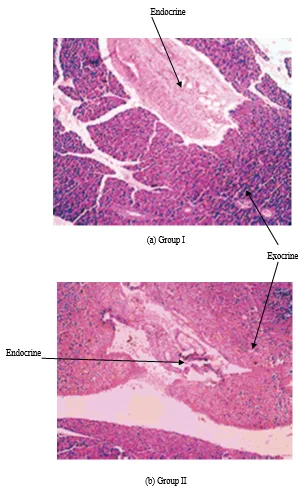
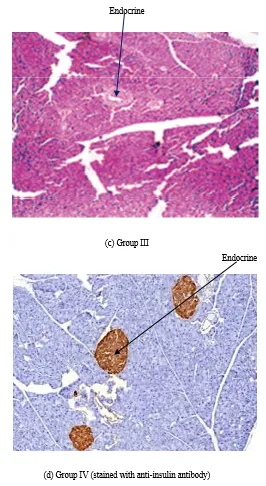
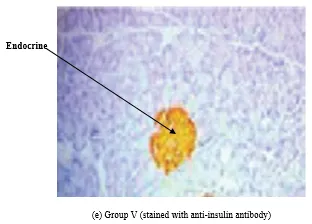
Figure 1: Histopathological studies of pancreas: Group I (Control), Group II (Alloxan 150 mg/kg), Group III (Alloxan + Whole Plant 300 mg/kg), Group IV (Alloxan +Whole Plant 500 mg/kg) and Group V (Alloxan + Glibenclamide (5mg/kg).
RESULTS
Glucose Tolerance: The effects of extracts of Vinca rosea (500 mg/kg and 300 mg/kg) on the glucose tolerance test are shown in Figure 2. The supplementation of Vinca rosea improved the glucose tolerance in the fasted normal rats. After that, serum glucose level was lowered significantly (P <.05) at 90 minutes and varied significantly (P <.01) at 150 minutes. The extract also showed a significant hypoglycaemic effect after 90 minutes of treatment.
Experimental Results: The acute oral toxicity study of Vinca rosea showed no mortality upto 2000 mg/kg. The anti-hyperglycemic effect of the extracts on the fasting blood sugar levels of diabetic rats is shown in Figure 3. Administration of alloxan (150 mg/kg, i.p.) led to 1.5-fold elevation of fasting blood glucose levels, which was maintained over a period of 2 weeks. Two weeks of daily treatment of various extracts of Vinca rosea led to a dose-dependent fall in blood sugar levels by 25%–50%. The effect was maximum till 14 days of treatment. Vehicle control animals were found to be slightly increased in their bodyweight, but diabetic rats showed a significant reduction in body weight during 14 days (Figure 4). Alloxan caused bodyweight reduction, which is reversed by whole plant extract at high dose (500 mg/kg) more effectively than whole plant extract at low dose (300 mg/kg) after 14 days of treatment (Figure 4). Alloxan treatment will increase the serum enzyme levels such as cholesterol, LDL, creatinine, ureaand alkaline phosphatase and decrease the HDL level, but Glibenclamide (5mg/kg) and whole plant extracts of Vincarosea reversed the above alloxan-induced changes (Table 1). Histopathological studies (Figure 1) showed normal aciniand normal cellular population in the islets of Langerhansin the pancreas of control rats (Group I). Extensive damage to the islets of Langerhans and reduced dimensions of islets (Group II), restoration of normal cellular population size ofislets with hyperplasia by Glibenclamide (Group V) were also shown. The partial restoration of normal cellular population and enlarged size of β-cells with hyperplasia were shown by methanolic extracts (Figure 1. Group III & Group IV).
Table 1: Effect of various groups of Vinca rosea on serum profile in alloxan (150 mg/kg, i.p.) induced diabetic albino rats after 14 days of treatment.
|
Groups
|
Cholesterol (mg/dl) |
H.D.L (mg/dl) |
L.D.L (mg/dl) |
Creatinine (mg/dl) |
Urea (mg/dl) |
Alkaline Phosphatase (mg/dl) |
|
Normal control |
145.36 ± 3.2 |
36.83 ± 2.5 |
91.32 ± 1.2 |
0.54 ± 0.3 |
31.83 ± 2.2 |
120 ± 3.2 |
|
Diabetic control |
271.16 ± 10.5 |
30.00 ± 1.9 |
189 ± 12.4 |
2.4 ± 0.1 |
62.6 ± 1.8 |
276.00 ± 3.6 |
|
Alloxan +Whole plant extract (300 mg/kg, p.o) |
184.32 ± 2.5* |
34.22 ± 4.3∗ |
120.27 ± 1.4∗ |
0.98 ± 0.3∗ |
43.32±3.8∗ |
146.35 ± 4.9∗ |
|
Alloxan +Whole plant extract (500 mg/kg, p.o) |
158.46 ± 5.6∗ |
36.63 ± 2.1∗ |
93.65 ± 3.6∗ |
0.60 ± 0.2∗ |
32.33±2.0∗ |
135.55 ± 4.9∗ |
|
Alloxan + Glibenclamide (5 mg/kg) |
145.42 ± 5.3∗ |
36.73 ± 1.5∗ |
92.35 ± 3.1∗ |
0.58 ± 0.1∗ |
31.24±4.0∗ |
130.75 ± 2.9∗ |
Values are given as mean ± SEM for groups of six animals each *P < .01 (Dunnett t-test). Diabetic control was compared with the vehicle control, and extract treated groups were compared with the diabetic control.
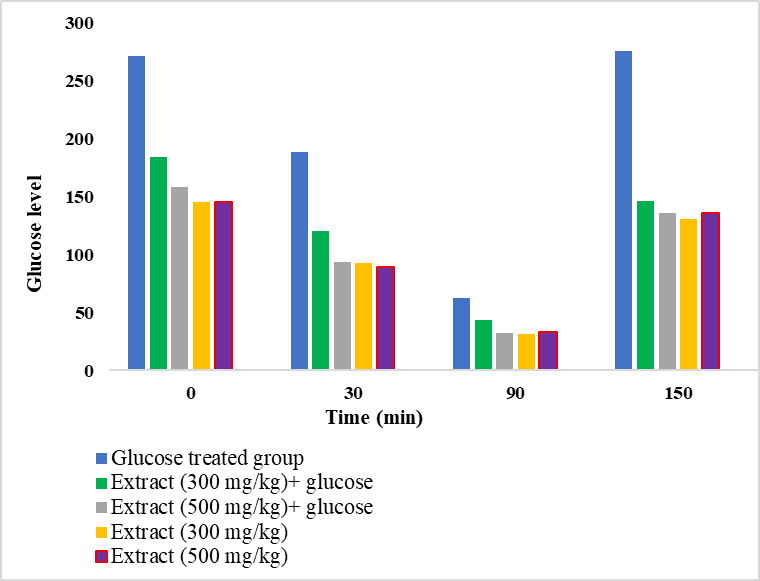
Figure 2: Effect of the methanolic extract of Vinca rosea on glucose tolerance test.
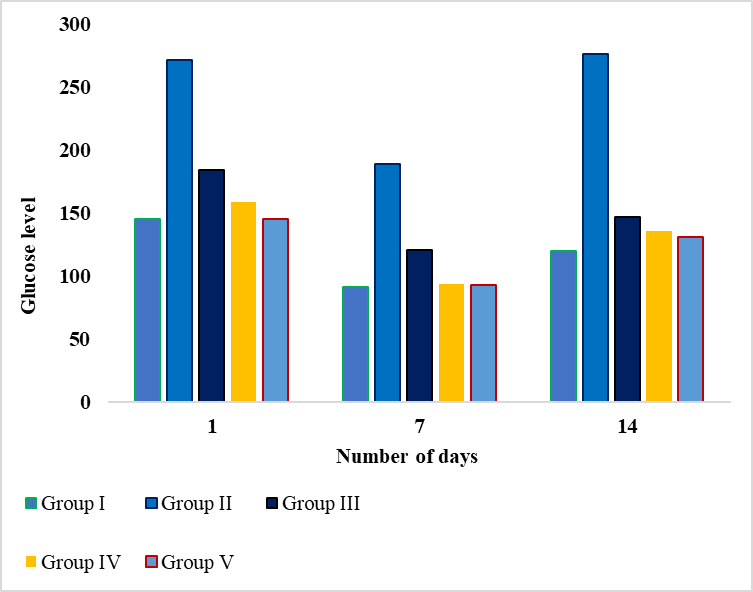
Figure 3: Effect of different groups on blood glucose (mg/dl) level in alloxan-induced diabetic.
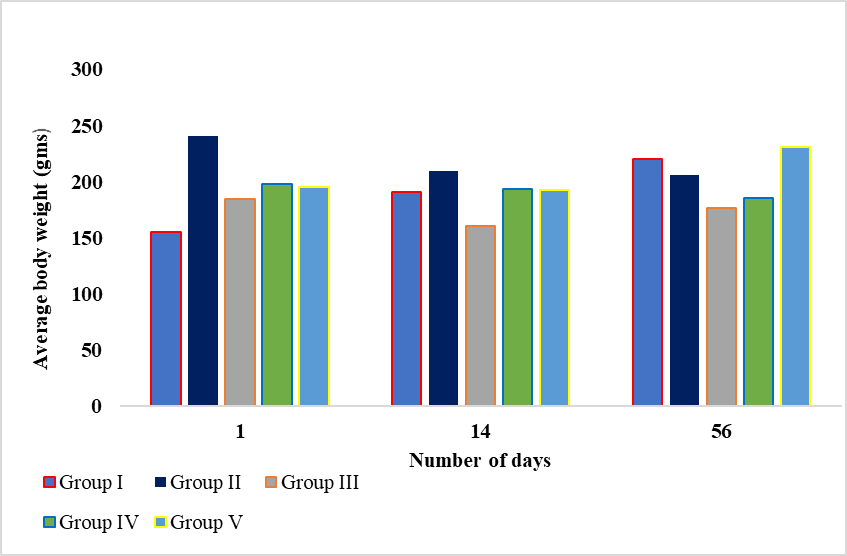
Figure 4: The effect of 2-week treatment with various extracts of Vinca rosea on body weight (g) after alloxan (150 mg/kg i.p.) induced diabetes in rats.
DISCUSSION:
In light of the results, our study indicates that methanolic extracts of Vinca rosea have good antidiabetic activity. Alcoholic extracts of Vinca rosea exhibited significant antihyperglycemic activities in alloxan-induced hyperglycemicrats without significant change in body weight; they can also improve the condition of Diabetic mellitus as indicated byparameters like body weight & lipid profile along with serum creatinine, serum urea and serum alkaline phosphatase.
CONCLUSIONS:
The whole plant extracts did not show a consistent effect on normal blood sugar levels, but they effectively reversed the alloxan-induced changes in the blood sugar level and the beta-cell population in the pancreas. It also showeda protective effect when it was given before alloxan administration. The action of whole plant extracts on the pancreatic beta-cells and the absence of acute toxicity may offera new hope to diabetics in future. From the above discussion, it is concluded that alcoholic whole plant extracts of Vinca rosea at high dose (500 mg/kg) exhibited significant antihyperglycemic activity than whole plant extract at low dose (300 mg/kg) in alloxan-induced diabetic rats. These extracts also showed improvement in parameters like body weight and lipid profile, as well as regeneration of β cells of the pancreas, and so might be of valuein diabetes treatment. Further investigation is necessary to determine the exact phytoconstituents (s) responsible for the antidiabetic effect.
ACKNOWLEDGMENTS:
The authors are thankful to all the resources and facilities of JBS Institute of Pharmacy, Malinpur R S Ghat Barabanki.
REFERENCES



Anil Kumar*, Shahnawaz Ahmad, Akansha Chauhan, Scientific Studies on- Vinca Rosea Extracts Demonstrate Significant Antidiabetic Activity in Alloxan-Induced Diabetic Rats, Int. J. Med. Pharm. Sci., 2026, 2 (7), 163-171. https://doi.org/10.5281/zenodo.21138605
 10.5281/zenodo.21138605