
We use cookies to ensure our website works properly and to personalise your experience. Cookies policy
Swami Vivekanand College of Pharmacy, Indore M.P
In the Present study Meloxicam is a NSAIDs (Nonsteroidal anti-inflammatory drugs) analgesic and antipyretic drug. Because of the limited aqueous solubility it exhibits poor dissolution characteristics and its oral absorption is dissolution rate limited. Therefore, in the present study an attempt has been made to increase its solubility and formulation into rapid disintegrating tablet using various suprdisintegrants.The slightly soluble drug needs modification to make them water soluble. Among different approaches using one of the important approach is “solvent deposition” for water insoluble/ poorly water soluble drug in which drug adsorbed on lactose. This is the most common approach used and it has been shown to improve pharmaceutical properties like-Solubility Dissolution Stability Even palatability without affecting their intrinsic lipophilicity or pharmacological The selection of Meloxicam for the formulation of RDT because-Meloxicam is an effective non steroidal anti-inflammatory drug used for the treatment of rheumatoid arthritis and osteoarthritis
According to the Pharmacopoeia of Indian “Pharmaceutical tablets are solid, lat or biconvex discs, prepared by compressing a drug or a mixture of drugs, with or without diluents. Tablet is the most popular among all dosage forms existing today because of its convenience of self administration, compactness and easy manufacturing; however hand tremors, dysphasia in case of geriatric patients, the underdeveloped muscular and nervous systems in young individuals and in case of uncooperative patients, the problem of swallowing is common phenomenon. To overcome these drawbacks, mouth dissolving tablets (MDT) or rapid disintegrating tablets (RDT) has emerged as alternative oral dosage forms. These are novel types; of tablets that disintegrate/dissolve/ disperse in saliva within few seconds. According to European Pharmacopoeia, the ODT should disperse/disintegrate in less than three minutes. Different dosage forms that can be used for oral administration of drug into human body such as, Tablets, Capsules, Powders, Syrups, Biphasic liquid dosage form like emulsion, suspension.
The various dosage forms available solid oral dosage form is the most preferred class. Until now tablet single is the largest selling dosage form because of the ease of administration. Dysphasia or difficulty in swallowing is common among all age groups. According to a study by Sastry et al., dysphasia is common in about 35% of the general population as well as an additional 30–40% of elderly institutionalized patients and 18–22% of all persons in long-term care facilities. Common complaints about the difficulty in swallowing tablets in the order of frequency of complaints are size, surface, form, and taste of tablets. Geriatric and pediatric patients and traveling patients who may not have ready access to water are most in need of easy swallowing dosage forms. Another study shows that an estimated 50% of the population suffers from this problem. The ease studies show an urgent need for a new dosage form that can improve patient compliance. Solid dosage forms that can be dissolved or suspended with water in the mouth for easy swallowing are highly desirable for the pediatric and geriatric population, as well as other patients who prefer the convenience of readily administered dosage forms. Recent market studies indicate that more than half of the patient population prefers FDTs to other dosage forms and most consumers would ask their doctors for FDTs (70%), purchase FDTs (70%), or prefer FDTs to regular tablets or liquids (>80%) . These responses may, in part, be attributed to known FDT advantages such as ease of administration, ease of swallowing, pleasant taste, and the availability of several flavors. FDTs also offer clinical advantages such as improved safety and, in some cases, improved efficacy and other broader indications.
1.1) RAPID DISINTEGRATING TABLET:
In recent decades, a variety of pharmaceutical research has been conducted to develop new dosage forms. Considering quality of life, most of these efforts have been focused on ease of medication. Among the various dosage forms developed to improve the ease of administration, the rapid disintegrating tablet (RDT) is the most widely preferred commercial products. The oral cavity is an attractive site for the administration of drugs because of ease of administration. Various dosage forms like Tablets, Capsules, and Liquid preparations are administered by oral route. During the last decade, fast disintegrating tablet (FDT) technologies that make tablets disintegrate in the mouth without chewing and additional water intake have drawn a great deal of attention.
MATERIAL & METHOD:
Identification of Drug by-
• UV/ visible spectrophotometer method:
In 0.1N HCL:
The identification of meloxicam done by UV spectrophotometer method. The small amount of drug dissolves in 0.1N Hydrochloric acid and scanned in UV. The highest peak is λmax for the meloxicam. From the spectra 342 nm (λmax of meloxicam) was obtained. The spectral data from this scan was used for the preparation of calibration curve of meloxicam. The scanned spectrum is shown in fig. 7.1.
In SSF (6.8 pH):
The identification of meloxicam was done by UV spectrophotometer method. The small amount of drug dissolved in simulated salivary fluid (pH 6.8) and scanned in UV range.
• Melting Point:
Melting Point determination of meloxicam was done by using Melting Point Apparatus. In this method the presealed capillary was filled by the small amount of drug. Then capillary and Thermometer was placed in placed point apparatus. Then see capillary for malting the drug. The temperature were noted when the drug start to melt and the drug till complete melt.
• IR studies:
The IR spectra were recorded using Infrared spectrophotometer (company). The IR spectrum of pure meloxicam interpreted and compared with standard. The IR spectrum is shown in fig 7.4.
• Preparation of Standard Curve in 0.1N HCL:
Standard stock solution of Meloxicam was prepared by dissolving 100 mg drug in 100 ml 0.1 N HCL (i.e.1000μg/ml). Aliquot of this solution are further prepared by taking 10 ml of above solution and diluting it up to 100 ml (i.e. 100 µg/ml). From the above solution further dilutions are prepared in range of 5-35 µg/ml.
Standard curve of lornoxicam in 0.05 N NaOH. Absorbance were taken on UV Double beam spectrophotometer at 342 nm against 0.1 N HCL as a blank. From these absorbance’s, the standard curve is plotted. Standard curve equation and regression value is obtained. The absorptivity coefficient of drug at desired wavelengths was determined.
• Preparation of Standard Curve in SSF:
Standard stock solution of meloxicam was prepared by dissolving 100 mg drug in 100 ml simulated salivary fluid (pH 6.8) (i.e. 1000 μg/ml). From above this stock solution 10 ml was taken and dilute it up to 100 ml (i.e. 100 μg/ml) in phosphate buffer solution (pH 6.8). From the above solution further dilutions are prepared in range of 4-24 µg/ml. Absorbance were taken on UV Double beam spectrophotometer at 360 nm against 6.8 PBS as a blank.
Standard curve of lornoxicam in 0.05 N NaOH. From these absorbance’s, the standard curve is plotted. Standard curve equation and regression value is obtained. The absorptivity coefficient of drug at desired wavelengths was determined.
Preformulation study:
Prior the development of dosage form with a new drug candidate, it is essential certain fundamental, physical and chemical properties of the drug molecule and other drug derived properties are determined. This information will dedicate many of the subsequent events and possible approaches in formulation development.
Preformulation testing of the active substances may provide useful information. It may be necessary to consider the physicochemical characteristics of the active substances. Physical properties may need to be examined include solubility, water content, particle size etc.
• Solubility:
Qualitative Solubility:
Qualitative solubility analysis for meloxicam was done by dissolving 5 mg. of drug in 5ml of solvent. Different solvent were used for the solubility determination in different solvents like water, Acetone, Chloroform, Methanol, phosphate buffer (pH 6.8), 0.1N HCL, Ethanol to determine the solubility of drug. The qualitative solubility of meloxicam is shown in Table 7.3.
Quantitative Solubility:
Quantitative solubility analysis for meloxicam was done by taking 2ml. solvents and drug into the solvents until the saturation of solvents with drug. Different solvents ware used for the solubility determination like water, Acetone, Chloroform, Methanol, phosphate buffer (pH 6.8), 0.1N HCL and Ethanol. The conc. of drug was measured by UV Spectrophotometric technique. The quantitative solubility of meloxicam is shown in Table 7.4.
• Partition Coefficient:
Partition Coefficient determination of meloxicam was done by simple shaking flask method. The 50 mg. of drug was dissolved in 10 ml. of distilled water and 10 ml. of carbon tetra chloride in separating funnel. The funnel was shaken well for 5- 6 hrs than stand for at least 24 hrs. for phase separation. After water phase is separated out and measure the conc. of drug after suitable dilution. The conc. of drug was measured by UV spectrophotometric method.
| Po/w = Coil / C water |
|---|
• Particle Size:
Particle size determination of meloxicam was done by optical microscopy using stage micrometer. A very little amount of drug was taken on slide 1 drop of liquid paraffin was added on slide, it was observed under microscope. Observe the particle size of 100 particles under microscope. The average particle size of the drug was calculated.
• pH determination:
Prepare buffer solution (7.0 pH) by dissolved buffer tablet (7.0 pH) in water and calibrate the pH meter at 7.0 pH. 1 gm. of meloxicam dissolved in 100 ml. boil water and cool properly. After the cooling drug sol. pH was determined in pH meter.
• Compatibility study of drug with excipients by-
While developing a new formulation, it is necessary to check the drug compatibility with the carrier or excipients used and that the drug has not undergone any degradation when it passes through the various processes. Suitable evidential experiments are conducted to justify and prove the intactness of the drug in the formulations.
• In humidity chamber:
A small amount of drug substance with excipients that is, physical mixture of the drug and excipients (in 1:1 ratio were prepared to have maximum likelihood interaction between them) was placed in a vial and sealed properly. A storage period of 2 weeks at 60˚C, and the sample was retained for 2 months at 40˚C. After storage the sample were observed physically for liquefaction, caking, colour, odour, discoloration. The result was shown in table 7.6.
Effect of different disintegrants on disintegrating time of tablet:
The various disintegrants was used for the determination of disintegrating time. Five different disintegants was used in a different concentration range and prepared tablet using filler by direct compression method. Finally determine the disintegration time of tablet.
Table: 1 Effect of Disintegrants on Disintegrating Time
| Ingredients (mg) | DST (sec.) |
|||||||||
|---|---|---|---|---|---|---|---|---|---|---|
| Batch | SSG | SCMC | Starch1500 | Natural starch | MC | MS | SS | Mannitol | ||
| F1 | 7.0 | 7.0 | - | 7.0 | - | 3 | 1.5 | 174.5 | 44 | |
| F2 | 7.0 | - | - | 7.0 | 7.0 | 3 | 1.5 | 174.5 | 75 | |
| F3 | - | 7.0 | 7.0 | 7.0 | - | 3 | 1.5 | 174.5 | 122 | |
| F4 | - | 7.0 | - | 7.0 | 7.0 | 3 | 1.5 | 174.5 | 90 | |
| F5 | - | - | 7.0 | 7.0 | 7.0 | 3 | 1.5 | 174.5 | 115 | |
Where-
SSG – Sodium starch glycolate,
SCMC – Sodium corboxymethylcellulose
MC - Microcrystalline cellulose,
MS – Magnesium stearate
SS – Sodium saccharine,
DST – Disintegrating time
Optimization of disintsgrants concentration:
From above study three disintegrants was selected for further determination of its actual concentration to quick disintegrate the tablet. Same filler and method was used for the preparation of tablet.
Table 2 Optimization of disintegrants concentration
| Batch | Ingredients (mg) | DST (sec.) |
|||||
|---|---|---|---|---|---|---|---|
| SSG | SCMC | Potato Starch | MS | SS | Mannitol | ||
| F1 | 30 | 3 | 1.5 | 165.5 | 125±0.26 | ||
| F2 | 30 | 3 | 1.5 | 165.5 | 112±0.96 | ||
| F3 | 30 | 3 | 1.5 | 165.5 | 96±0.76 | ||
| F4 | 15 | 15 | 3 | 1.5 | 165.5 | 130±0.44 | |
| F5 | 15 | 15 | 3 | 1.5 | 165.5 | 80±0.43 | |
| F6 | 15 | 15 | 3 | 1.5 | 165.5 | 82±0.36 | |
| F7 | 22 | 3 | 1.5 | 173.5 | 66±0.24 | ||
| F8 | 22 | 3 | 1.5 | 173.5 | 70±0.34 | ||
| F9 | 22 | 3 | 1.5 | 173.5 | 16±0.24 | ||
| F10 | 11 | 11 | 3 | 1.5 | 173.5 | 50±0.23 | |
| F11 | 11 | 11 | 3 | 1.5 | 173.5 | 14±0.32 | |
| F12 | 10 | 10 | 3 | 1.5 | 173.5 | 20±0.33 | |
Enhance the solubility of drug by solvent deposition system:
Aqueous solubility of meloxicam was enhanced by preparing solvent deposition system (SDS) by adsorbing it on lactose. SDS of meloxicam was prepared by taking meloxicam: lactose in the ratios of 1: 0, 1:0.5, 1:1 and 1:1.5, 1: 2. Meloxicam solution was prepared in acetone followed by dispersing the known quantity of lactose in it. The resulting dispersion was dried at room temperature. The dried SDS of meloxicam was passed through 60-mesh sieve and subjected for aqueous solubility determination. An excess different ratio of SDS was added in each four test tube containing 5 ml of water and shaking continuously. Then the solutions were centrifuged at 5000 rpm for a minute and the absorbance of the meloxicam test solutions was measured at the characteristic wavelength of 342nm by UV spectrophotometer (Shimadzu-1600).
The formulation composition is shown in table-
Table 3: composition of rapid disintegrating tablet of meloxicam
| Ingredients (mg) | F1 | F2 | F3 | F4 | F5 | F6 | F7 |
|---|---|---|---|---|---|---|---|
| SDS-M | 30 | 30 | 30 | 30 | 30 | 30 | 30 |
| SSG | 20 | - | - | 10 | - | 10 | 6.66 |
| SCMC | - | 20 | - | 10 | 10 | - | 6.66 |
| Potato Starch | - | - | 20 | - | 10 | 10 | 6.66 |
| MS | 3 | 3 | 3 | 3 | 3 | 3 | 3 |
| M | 145.5 | 145.5 | 145.5 | 145.5 | 145.5 | 145.5 | 145.5 |
| SS | 1.5 | 1.5 | 1.5 | 1.5 | 1.5 | 1.5 | 1.5 |
Where-
SDS-M – Solvent deposition system of meloxicam; Meloxicam: lactose (1:1)
SSG – Sodium starch glycolate,
SCMC – Sodium carboxy methyl cellulose
MS- Magnesium stearate,
M- Mannitol,
SS- Sodium saccharine
METHOD:
Tablets were prepared by direct compression method using the composition given in Table. Amount of SDS meloxicam was taken equivalent to 20 mg of meloxicam for each formulation. Sodium saccharin was used as sweetening agent to protect mild bitter after taste of meloxicam. All the ingredients were passed through 60- mesh sieve and mixed homogeneously in geometrical proportion. The resulted blend was compressed into tablets using 8 mm diameter die in single station tablet compression machine. The final weight of tablets was kept 200 mg. The hardness of the tablets was kept between 2.5 and 4 kg/cm2. The prepared tablets have been stored in airtight container before evaluation.
Evaluation of tablet formulation
10.1.1) Evaluation of powder blend
Rapid disintegrating tablets were manufactured by several processes but for all of them, first a blend of various ingredients (APIs and excipients) is made. The quality of tablet, formulated is generally depending upon the quality of physicochemical properties of blends. There are many formulation and process variables involved in mixing and all these can affect the characteristics of blends produced. The various characteristics of blends tested are as given below.
• Bulk Density:
Apparent bulk density was determined by pouring the 5 gram of meloxicam into a 100 ml granulated cylinder. The bulk volume (V) poured drug was determined. The bulk density was calculated using the formula.
| ρb = M / V |
|---|
Were : ρ b - bulk density.
M- is the weight of powder drug, V- is the volume of powder drug.
• Tapped Density:
Weight 5 g. of meloxicam and placed in a measuring cylinder. Measuring cylinder containing known mass (5 gm) of drug was tapped for 100 times or fixed time. The minimum volume (Vt) occupied was measured. The tapped density was calculated using following formula.
| ρt = M / Vt |
|---|
• Compressibility Index:
The simplest way for measurement of free flow of powder is compressibility, a indication of the ease with which a material can be induced to flow is given by Compressibility Index. The value below 15% indicates a powder with give rice to good flow properties, whereas above 25% indicate poor flow ability. Which is calculated follows.
| % C.I. = ρt - ρb ρt x 100 |
|---|
Table 4: Relationship between % compressibility and flow ability
| % Compressibility | Flow ability |
|---|---|
| 5 – 12 | Excellent |
| 12 – 16 | Good |
| 18 – 21 | Fair Passable |
| 23 – 35 | Poor |
| 33 – 38 | Very Poor |
| < 40 | Very Very Poor |
• Hausner ratio:
Hausner ratio is an indirect index of ease of powder flow. Hausner ratio is the ratio of tapped density to bulk density. Lower the value of Hausner ratio better is the flow property. Powder with Hausner ratio less than 1.18, 1.19, 1.25, 1.3- 1.5 and greater the 1.5 indicate excellent, good, passable, and very poor, respectively. It is calculated by following formula.
| Hausner ratio = ρt ρt |
|---|
• Porosity:
The porosity € of powder is defined as the ratio of void volume to the bulk volume of the packaging. The porosity of the powder is given by
| € = Vb -Vp / Vb = 1-Vp / Vb |
|---|
Porosity is frequently expressed in percentage and is given as-
| % € = (1 - Vp / Vb ) X 100 |
|---|
The porosity of powder indicates the types of packaging a powder undergoes when subject to vibrations, when stored, or in tablet machine when passed through hopper or feed frame.
• Voide Volume:
Voide volume (V) was obtained by difference between bulk volume (Vb) and tapped volume (Vp).Voide volume can be calculated by following formula.
| V = Vb - Vp |
|---|
• Angle of repose:
The angle of repose was determined using funnel method. Funnel that can be fit vertically with stand at 6.3 cm. height. The opening end of funnel is closed with thumb until drug is poured. The 5 gm of meloxicam was poured into funnel that can be raised vertically until a maximum cone height (h) was obtained. Radius of the heap (r) was measured and the angle of repose (θ) was calculated using the formula.
| θ = Tan-1 ( h / r ) |
|---|
Table 5: Angle of repose as an Indication of Powder Flow Properties
| Sr. No | Angle of repose (°) | Type of Flow |
|---|---|---|
| 1 | < 20 | Excellent |
| 2 | 20 – 30 | Good |
| 3 | 30 – 34 | Passable |
| 4 | > 34 | Very Poor |
10.1.2) Evaluation of tablets
The general appearance of a tablet, its visual identity and over all "elegance" is essential for consumer acceptance. The various evaluation testing includes tablet's size, shape, colour, presence or absence of an odour, taste, surface texture, physical flaws and consistency and legibility of any identifying marking.
• Size and Shape
The size and shape of the tablet can be dimensionally described, monitored and controlled.
• Thickness:
Tablet thickness was measured using a simple procedure. 5 tablets were taken and their thickness was measured using Varnier calipers.
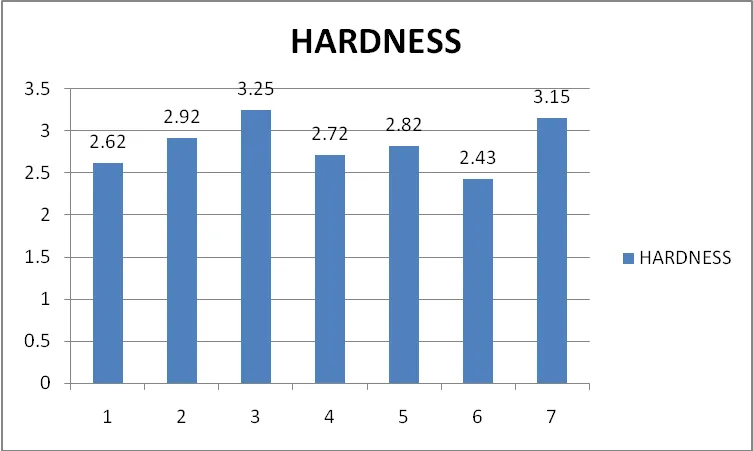
• Hardness:
It is the force required to break a tablet by compression in the radial direction, it is an important parameter in formulation of mouth dissolve tablets because excessive crushing strength significantly reduces the disintegration time. In the present study the crushing strength of the tablet was measured using Pfizer hardness testers. An average of three observations is reported.
• Uniformity of weight:
I.P. procedure for uniformity of weight was followed, twenty tablets were taken and their weight was determined individually and collectively on a digital weighing balance. The average weight of one tablet was determined from the collective weight. The weight variation test would be a satisfactory method of determining the drug content uniformity.
Table 6 Weight Variation Specification as per IP
| Average Weight of Tablet | % Deviation |
|---|---|
| 80 mg or less | ±10 |
| More than 80 mg but less than 250 mg |
±7.5 |
| 250 mg or more | ±5 |
• Friability test:
Friability of the tablets was determined using Roche friability (Electrolab, Mumbai). This device subjects the tablets to the combined effect of abrasions and shock in a plastic chamber revolving at 25 rpm and dropping the tablets at a height of 6 inches in each revolution. Preweighed sample of tablets was placed in the friabilator and were subjected to 100 revolutions. Tablets were de dusted using a soft muslin cloth and reweighed. The friability (f) is given by the formula.
| f = (1- W0 / W) × 100 |
|---|
Where,
W0 is weight of the tablets before the test and W is the weight of the tablet after the test.
• In-vitro dispersion time test:
To determine dispersion time 10 ml measuring cylinder was taken in which 6 ml pH 6.8 phosphate buffer at 37±0.5˚ was added and tablet was dropped in it. Time required for complete dispersion was determined.
• Wetting time:
A piece of tissue paper folded twice was kept in a Petridish (inter diameter 5.5cm) containing 6ml of purified water. The tablet was placed on the tissue paper and allowed to wet completely. The time required for complete wetting of the tablet was then recorded.
• Water absorption ratio:
A piece of tissue paper folded twice was placed in a small Petridish containing 6 ml of water. A tablet was put on the paper & the time required for complete wetting was measured. The wetted tablet was then weighed. Water absorption ratio, R, was determined using following equation,
| R = 10 (Wa / Wb) |
|---|
Where-
Wb is weight of tablet before water absorption
Wa is weight of tablet after water absorption.
• Disintegration time:
The test was carried out on 6 tablets using the apparatus specified in I.P.-1996 simulated salivary fluid at 37ºC ± 2ºC was used as a disintegration media and the time in second taken for complete disintegration of the tablet with no palatable mass remaining in the apparatus was measured in seconds. To comply the test all tablets should disintegrate within 3 minutes.
• Content uniformity:
Ten randomly selected tablets were weighed and average weight is calculated, the tablets was powdered in a glass mortar. The weight equivalent to 10 mg of meloxicam is weighed. The weighed amount is dissolved in solvent system in separate 100ml volumetric flask using magnetic stirrer, the volume is adjusted with buffer pH 6.8 in separate volumetric flasks in Lambert’s-Beer’s range. The drug content in formulation is determined very easily by UV spectrophotometer (Shimadzu 1600).
The development of dissolution methods for RDTs is comparable to the approach taken for conventional tablets, and is practically identical. Dissolution conditions for drugs listed in a pharmacopoeia monograph, is a good place to start with scouting runs for a bioequivalent RDT. Other media such as 0.1N HCl and buffers (pH - 4.5 and 6.8) should be evaluated for ODT much in the same way as their ordinary tablet counter parts.
The USP 2 Paddle apparatus has been used for this purpose which is the most suitable and common choice for rapid-disintegrating tablets, with a paddle speed of 50 rpm commonly used. Typically the dissolution of RDT is very fast when using USP monograph conditions; hence slower paddle speeds may be utilized to obtain a profile. The USP 1 Basket apparatus may have certain applications but sometimes tablet fragments or disintegrated tablet masses may become trapped on the inside top of the basket at the spindle where little or no effective stirring occurs, yielding irreproducible dissolution profiles.
In vitro dissolution studies of rapid disintegrating tablets of meloxicam and commercial conventional tablet was performed according to UPS XXIII Type-II dissolution apparatus employing a paddle stirrer at 50 rpm using 900 ml of pH 6.8 phosphate buffer at 37± 0.5˚ as dissolution medium. One tablet was used in each test. Aliquots of the dissolution medium (5ml) was withdrawn at specific time intervals (5, 10,15,20,25 and 30 min) and replaced with the equal volume of fresh medium. The samples was filtered through 0.22 um membrane filter disc and analyzed for drug content by measuring the absorbance at 342nm. Drug concentration was calculated from the standard calibration curve and expressed as percent drug dissolved.
RESULTS AND DISCUSSION:
• Organolaptic Properties:
• Identification of drug by-
• UV/ Visible spectrophotometer:
• In 0.1N HCl:
UV spectrophotometric method was used for the analysis of meloxicam. The UV scane of the drug sample showed highest peak at 342 nm which is nearby to the standard value. This shows that the drug is pure.
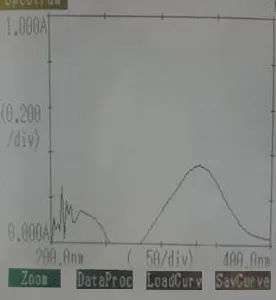
(Fig. 1 Peak detection λmax for meloxicam in 0.1N HCL)
• Melting Point :
Melting point of drug was found 253-255˚ C which is nearby to standard value of meloxicam. So it shows that the drug is pure.
• IR spectrum of meloxicam
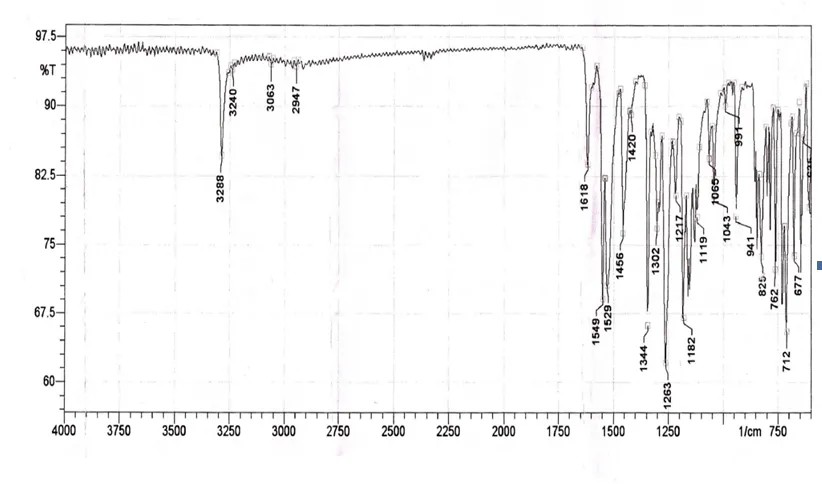
(Fig. 2 : IR spectrum of meloxicam drug sample)
IR spectrum of drug sample has been interpreted and compared with standard IR spectrum of meloxicam. There is no any change in functional group of drug sample or same with standard shown in figure 7.4. It shows that the drug sample is meloxicam.
• Standard curve of meloxicam in 0.1N HCL :
Standard curve calibration of meloxicam was prepared in 0.1N HCl at 342 nm in UV spectrophotometer.
(Table 7 Standard drug and conc. absorbance at 342 nm)
| S. No. | Concentration (µg/ml) | Absorbance |
|---|---|---|
| 1 | 5 | 0.076 |
| 2 | 10 | 0.147 |
| 3 | 15 | 0.216 |
| 4 | 20 | 0.298 |
| 5 | 25 | 0.367 |
| 6 | 30 | 0.438 |
| 7 | 35 | 0.513 |
Standard curve of meloxicam-
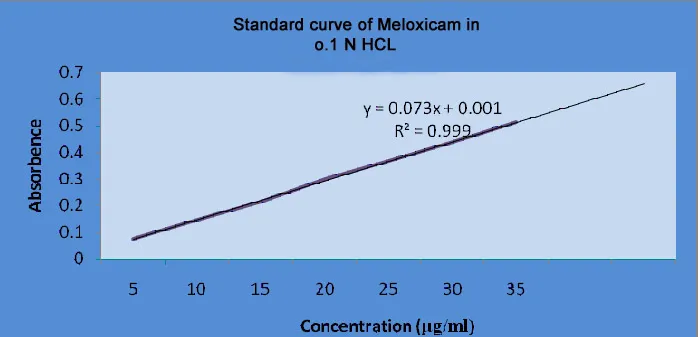
(Fig 3: Standard curve calibration of meloxicam)
Equation -
Y = 0.073x+0.001
R2 = 0.9992
X = Concentration in micro gram
For preparation of standard curve, solution of the drug sample were prepared in 0.1N HCl and there absorbance were measured at 342 nm the linearity range were found to be 2 – 14 mcg./ml.
• Standard curve of meloxicam in simulated salivary fluid (6.8 pH):
Standard curve calibration of meloxicam was prepared in SSF (pH 6.8) at 360 nm in UV.
(Table 8: Standard drug conc. and absorbance at 360 nm)
| S. No. | Concentration (µg/ml) | Absorbance |
|---|---|---|
| 1 | 0 | 0 |
| 2 | 4 | 0.1672 |
| 3 | 8 | 0.3354 |
| 4 | 12 | 0.4885 |
| 5 | 16 | 0.6515 |
| 6 | 20 | 0.8225 |
| 7 | 24 | 0.9663 |
• Standard curve of meloxicam in simulated salivary fluid (6.8 pH):
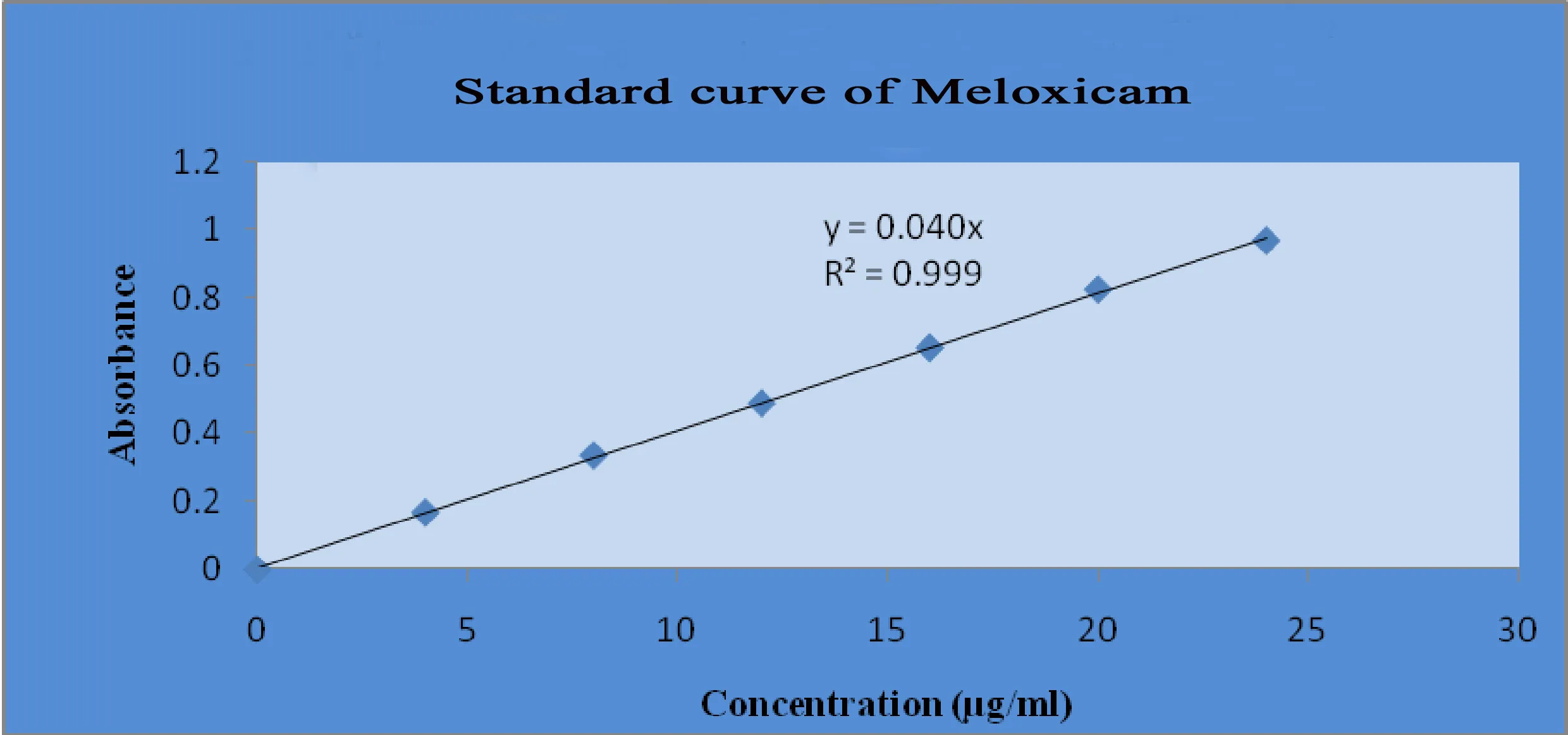
(Fig. 4: Standard curve of meloxicam)
For preparation of standard curve, solution of the drug sample was prepared in SSF (6.8pH) and there absorbance measured at 360 nm.
• Solubility Properties:
Qualitative Solubility-
The value of qualitative solubility of meloxicam are shown below
(Table 9: Qualitative solubility of meloxicam)
| Solvents | Solubility Properties of the drug |
|---|---|
| Distilled Water | ++ |
| Acetone | ++++ |
| Methanol | +++ |
| Ethanol | +++ |
| n-butanol | ++ |
| CCl4 | ++++ |
| CHCl3 | ++ |
+ Insoluble
++ Poorly soluble
+++ Slightly soluble
++++ Freely soluble
Qualitative solubility studies of drug shown in table 7.3 depicted that the drug is more soluble in organic solvents as compare to hydrophilic solvents so it can be concluded that drug is lipophilic in nature.
Quantitative Solubility:
The result of quantitative solubility of meloxicam are given below-
Table 10 Quantitative Solubility of meloxicam
| Solvent (2ml) | Concentration of drug in solvent |
|---|---|
| Distilled water | 0.035 mg of drug was present in 1ml of distilled water |
| Acetone | 20 mg of drug was present in 1 ml acetone |
| Methanol | 5.67 mg of drug was present in 1 ml of methanol |
| Ethanol | 6.50 mg of drug was present in 1 ml of ethanol |
| n-butanol | 2.96 mg of drug was present in 1 ml of n-butanol |
| CCl4 | 4.00 mg of durg was present in 1 ml of CCl4 |
| 0.1N HCL | 3.70 mg drug was present in 1 ml of 0.1N HCL |
| CHCl3 | 8.56 mg drug was present in 1ml of CHCl3 |
Quantitative solubility studies shown in table 7.4 confirm that the drug more soluble in organic solvents.
• Partition coefficient :
Partition coefficient was found 3.6-4.
The result has been shows that the drug is lipophilic.
• Particle size :
The results of the Microscopic evaluation for the measurement of particle size of the drug particles are given below in table 7.4
(Table 11 Particle size of meloxicam)
| S. No. | Size Range | Mid Point (M. P.) |
No. of Particles (N) |
M. P. × N | M. P. × N × L. C. (d) |
|---|---|---|---|---|---|
| 1. | 0-1 | 0.5 | 06 | 03 | 5.82 |
| 2. | 1-2 | 1.5 | 09 | 13.5 | 12.15 |
| 3. | 2-3 | 2.5 | 11 | 27.5 | 53.35 |
| 4. | 3-4 | 3.5 | 27 | 94.5 | 183.33 |
| 5. | 4-5 | 4.5 | 23 | 103.5 | 200.79 |
| 6. | 5-6 | 5.5 | 24 | 132 | 256.06 |
| ∑n=100 | ∑d=714.5 |
Least Count (L. C.) = 1.94
Particle size of meloxicam = ∑d / ∑n
= 714.5/100
= 7.14 micrometer
Particle size was found to be 7.145 µm. Particle size distribution pattern depicted in fig. 7.4 shows that drug particles are distributed in a range of 1-6 µm and maximum number of particles are present in size range of 4-6 µm. This distribution pattern also indicates that the drug is amorphous in nature.
Particle size distribution of meloxicam-
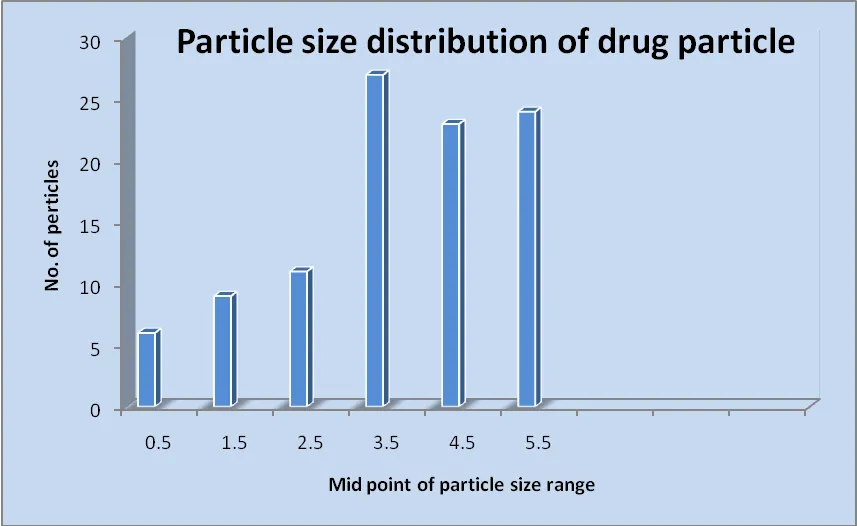
(Fig. 5: particle size distribution of meloxicam)
• pH determination:
• In humidity chamber:
(Table 12: Drug- excipients compatibility observations)
| Additives ( 100 mg each) with drug | Observation at 60˚C for 2 weeks | Observation at 40˚C for 2 months | Remarks |
|---|---|---|---|
| Drug meloxicam | No change | No change | Accepted |
| Drug+ lactose | No change | No change | Accepted |
| Drug+ Sodium starch glycolate | No change | No change | Accepted |
| Drug+ Sodium carboxy methyl cellulose | No change | No change | Accepted |
| Drug+ Magnesium stearate | No change | No change | Accepted |
| Drug + Mannitol | No change | No change | Accepted |
| Drug+ Sodium saccharine | No change | No change | Accepted |
Compatibility studies of drug and excipients mixture was studied and observed physically. There is no changes in liquefaction, caking, colour, odour , discoloration meloxicam drug.
The word optimize is defined as, to make as perfect, effective or functional as possible. Optimization may be interpreted as to find out the values of controllable independent variables, that gives the most desired value of dependent variables.
The disintegrating time of tablet formulation was found 44- 122 sec.
Observed that the effect of disintegrating agent on the disintegrating time of tablet in a table 8.1. It shows that the combination of SSG, SCMC and potato starch in the tablet formulation F1 the disintegrating time should be quick (i.e. 44 seconds) as compare to other disintegrants in a tablet.
Hence SSG, SCMC and potato starch has been selected for further formulation of rapid disintegrating tablets.
• Optimized the concentration of selected disintsgrating agents
The disintegrating time of tablet using different concentration of disintegrants was found 14- 130 sec.
It is observed that the disintegrating time of tablet quick in the concentration range 5-10% of the selected disintegrating agents. This concentration range of disintegrants has been used for the formulation of rapid disintegrating tablet.
This study involves the solvent deposition system of meloxicam and formulation development of rapid disintegrating tablet using various super-disintegrating agents like sodium starch glycolate, sodium carboxymethylcellulose, potato starch were treated as a independent variable and other common tabletting excipiets remained constant.
Sodium starch glycolate, sodium carboxymethylcellulose, potato starch used as a disintegrants in tablet formulation.
In addition to this magnesium stearate used as lubricant, potato starch act as binder, disintegrants and direct compressible vehicle, sodium saccharine used as sweetening agent and mannitol used as diluents in formulation of rapid disintegrating tablets.
Six batches were prepared F1, F2, F3, F4, F5, and F6.
Solubility enhancement of meloxicam
(Table 13 Solubility data)
| Meloxicam: Lactose | Aqueous solubility (mg/ml) |
|---|---|
| 1:0 | 0.028 ± 0.03 |
| 1:0.5 | 6.578 ± 0.04 |
| 1:1 | 12.22 ± 0.05 |
| 1:1.5 | 11.23 ± 0.04 |
| 1:2 | 10.25 ± 0.03 |
The aqueous solubility of Meloxicam was enhanced after converting it into SDS. The results of solubility study have been shown in Table10.4. The solubility study indicated enhancement of aqueous solubility of meloxicam by solvent deposition on lactose. SDS of Meloxicam prepared with Meloxicam: lactose in the ratio of 1:1 was selected to prepare the tablet formulations.
10.2.2) Pre-compression parameter
(Table 14 Evaluation of Mixed Blend of Drug and Excipients)
| Formu- lation Code |
Bulk density (gm/ml) | | Tapped density (gm/ml) | Hausner ratio | Compressibil-ity index (%) |
Angle of repose | Voide Volume |
|---|---|---|---|---|---|---|
| F1 | 0.395 | 0.449 | 1.13 | 12.02 | 27˚.22´ | 3.1 |
| F2 | 0.383 | 0.429 | 1.12 | 10.72 | 26˚.92’ | 2.8 |
| F3 | 0.392 | 0.450 | 1.14 | 12.88 | 27˚.83´ | 3.2 |
| F4 | 0.379 | 0.444 | 1.17 | 14.63 | 24˚.32´ | 3.9 |
| F5 | 0.377 | 0.446 | 1.18 | 15.47 | 23˚.44´ | 4.5 |
| F6 | 0.379 | 0.448 | 1.18 | 15.40 | 23˚.81´ | 4.0 |
| F7 | 0.378 | 0.440 | 1.16 | 14.09 | 26˚.25´ | 3.7 |
The angle of repose for the formulated powder blend was determined and result was found 23˚.44´ to 27˚.83´. Indicating that the powdered blend having excellent flow property.
Compressibility index of powder blend was found 10.72 to 15.47 indicated that powder give rise to good flow characteristics.
Hausner ratio was found 1.12 to 1.18 indicated that good flow properties.
10.2.3) Post-compression evaluation parameter of tablets:
(Table 15 Evaluation of various batches of RDTs)
| Evaluation parameter | Formulation Code | ||||||
|---|---|---|---|---|---|---|---|
| F1 | F2 | F3 | F4 | F5 | F6 | F7 | |
| Thickness (mm) |
2.92±0.04 | 2.86±0.02 | 2.98±0.01 | 2.81±0.01 | 2.80±0.02 | 2.58±0.03 | 3.22±0.02 |
| Hardness (kg/cm2) |
2.62±0.044 | 2.92±0.073 | 3.25±0.043 | 2.72±0.052 | 2.82±0.022 | 2.43±0.032 | 3.15±0.023 |
| Friability (%) |
0.92±0.01 | 0.71±0.01 | 0.73±0.02 | 0.78±0.01 | 0.68±0.02 | 0.53±0.03 | 0.75±0.01 |
| Weight variation | Passes | Passes | Passes | Passes | Passes | Passes | Passes |
| Wetting time (sec) |
73± 11 | 55± 16 | 79± 33 | 35± 41 | 53± 65 | 51± 13 | 74± 22 |
| Water absorption ratio(%) | 34.01±0.34 | 33.48±0.34 | 37.75±0.96 | 37.70±0.34 | 32.34±0.45 | 31.14±0.83 | 40.17±0.64 |
| Dispersion time | 54± 05 | 63± 11 | 57± 97 | 46± 01 | 27± 25 | 44± 14 | 65± 05 |
| Disintegration time (sec) |
61.5±0.32 R2 = 0.6370 |
49.2±0.51 R2 = 0.5618 |
73.5±0.82 R2 = 0.3851 |
14.9±0.60 R2 = 0.9320 |
12.5±0.69 R2 = 0.9424 |
15.8±3.40 R2 = 0.7677 |
19.5±0.41 R2 = 0.2441 |
| % Drug content | 91± 0.77 | 90± 0.97 | 91± 0.25 | 96± 0.84 | 97± 0.70 | 96± 0.615 | 92± 0.28 |
| % Drug Release | 90±0.42 R2= 0.767 |
89± 0.24 R2= 0.672 |
86± 0.72 R2= 0.301 |
96± 0.12 R2= 0.869 |
98± 0.88 R2= 0.955 |
97± 0.75 R2= 0.240 |
92± 0.91 R2= 0.205 |
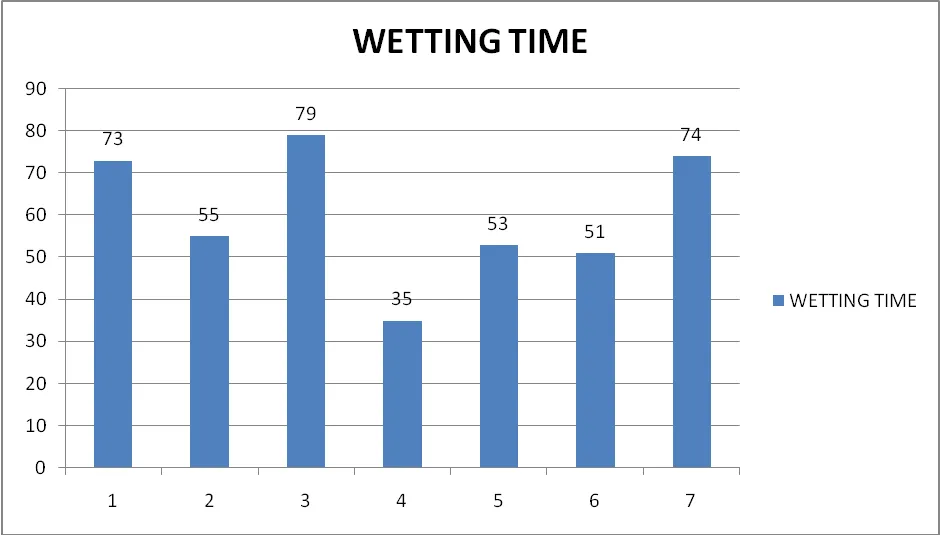
(Fig. 6: Comparative graph of wetting time for different preliminary batches)
[Figure - see the formatted PDF]
[Figure - see the formatted PDF]
(Fig. 7: Dispersion pattern of formulation F1, F2, F3, F4, F5, F6, F7)
The tablet containing equal proportion of Potato starch and Sodium carboxy methyl cellulose disintegrates faster than tablets prepared with other formulation as shown in Table 10.6. The disintegration time was supported by the data obtained from wetting time and percentage of water absorption studies for all the formulations. The rapid disintegration of tablets was due to the penetration of saliva into the pores of the tablets, which lead to the swelling and wicking of super disintegrants to create enough hydrodynamic pressure for quick and complete disintegration of the tablet.
• Hardness:-
• Disintegration Time:-
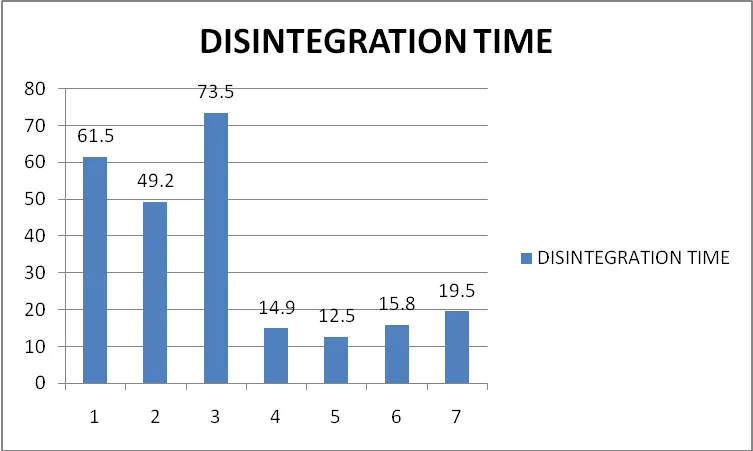
• Comparative Study of DT and hardness:-
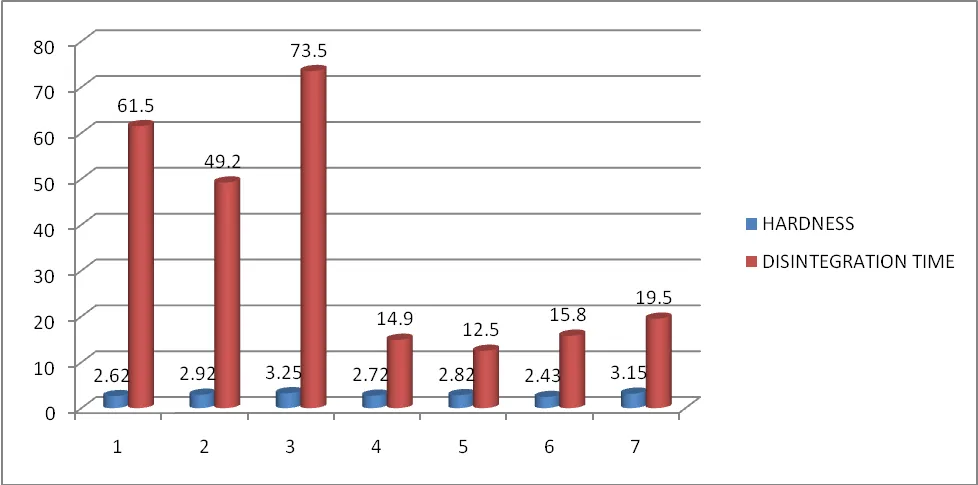
(Fig. 8: Comparative Study of DT and hardness)
Result show that formulation F5 having quick disintegration in 12.5±0.69 seconds and R2 value found highest R2 = 0.9424 as compared to other formulation.
It indicated that amongst the disintegrants used Potato starch and NaCMC was better disintegrants to formulate rapidly disintegrating tablets by direct compression method for meloxicam than SSG. This can be attributed to the extent of water uptake and consequently the strong swelling power of these disintegrants caused sufficient hydrodynamic pressure to induce complete disintegration. These disintegrants swell to a large extent when they come in contact with water to disintegrate tablets.
Result also revealed that formulation F5 having highest drug releases 98% and R2 value found highest R2 = 0.955 as compare to other formulation.
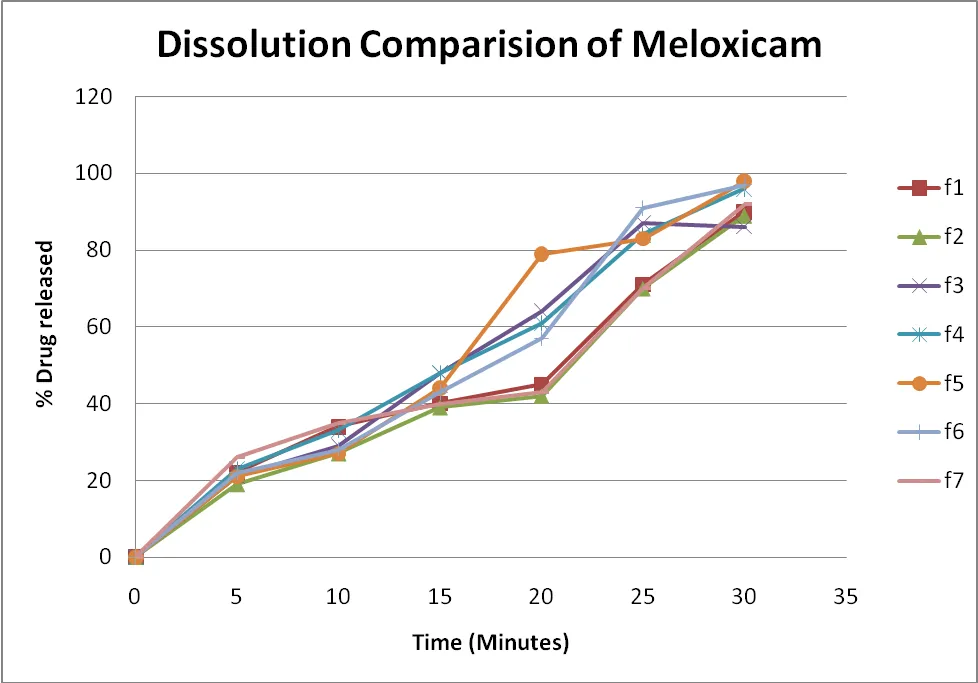
(Fig. 9: Comparisons of dissolution profile of F1 to F7 formulation)
The Orally disintegrating tablets are packed in suitable packaging and stored under the following conditions for a period as prescribed by ICH guidelines for accelerated studies.
In order to determine the change in hardness, drug content, in-vitro disintegrating time on storage, stability study of batch F4, F5, F6 was carried out at 40oC, 50˚C and 60˚C, in a humidity chamber having 75% RH. Sample were withdrawn after one month interval to 3 months and evaluated for change in hardness, dispersion time in-vitro disintegrating time and drug content.
Stability
Drug content at 40oC, 50˚C and 60˚C was calculated and graph was plotted between time in days and % drug remaining at different temperature and humidity. With the help of graph, the value of slope was calculated by using the following equation-
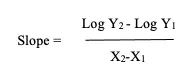
From the above equation slope value was calculated using the following formula
Slope = - k / 2.303
Value of k was determined.
After getting the value of k, T1/2 was calculated by using the following formula
T1/2 = 0.693 / k
After getting the value of T1/2, T10% was calculated by using the following formula
T10% = 0.152 × T1/2
Physicochemical parameters
(Table 16 Physicochemical parameters of tablet during stability study of formulation F4, F5 and F6)
| Parameter | Studies at different temperature and relative humidity | ||||||||
|---|---|---|---|---|---|---|---|---|---|
| 40˚C ± 60 % RH | 50˚C ± 75 % RH | 60˚C ± 75 % RH | |||||||
| F4 | F5 | F6 | F4 | F5 | F6 | F4 | F5 | F6 | |
| Hardness (Kg/cm2) |
2.60± 0.054 |
2.79± 0.021 |
2.39± 0.022 |
2.60± 0.042 |
2.79± 0.022 |
2.39± 0.042 |
2.49± 0.056 |
2.20± 0.024 |
2.10± 0.038 |
| Disintn (sec.) |
15.6± 0.64 |
13.2± 0.73 |
17.1± 3.31 |
15.9± 0.64 |
12.9± 0.71 |
20.02± 3.4 |
16.8± 0.67 |
13.9± 0.66 |
18.3± 3.35 |
| % Drug content |
91± 0.73 |
95.1± 0.93 |
91± 0.516 |
90± 0.53 |
94± 0.83 |
91± 0.016 |
90± 0.26 |
95± 0.13 |
90± 0.616 |
The tablet depicted that there is no significant changes was found in the hardness, disintegration, when the formulation F4, F5, and F6 were kept in the different climate condition like 40˚C, 50˚C and 60˚C. Only drug content was found to be decreased as the temperature increased. It concludes that the data obtained after stability study shows that the tablet stable at room temperature.
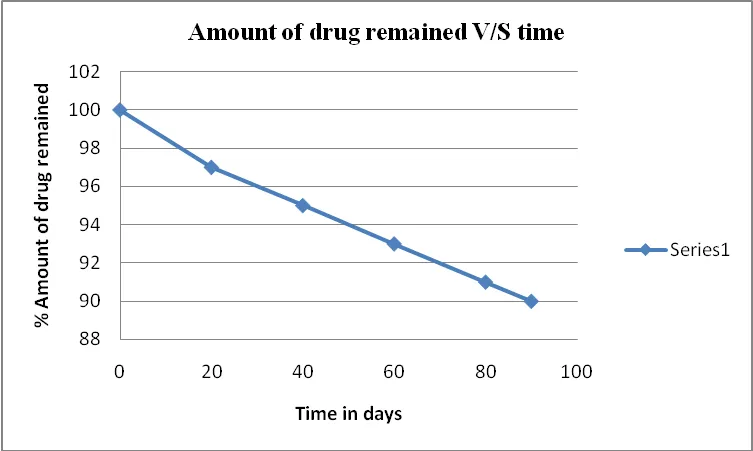
(Fig 10.: Drug content at different time interval when storage at 40˚C of batch F4)
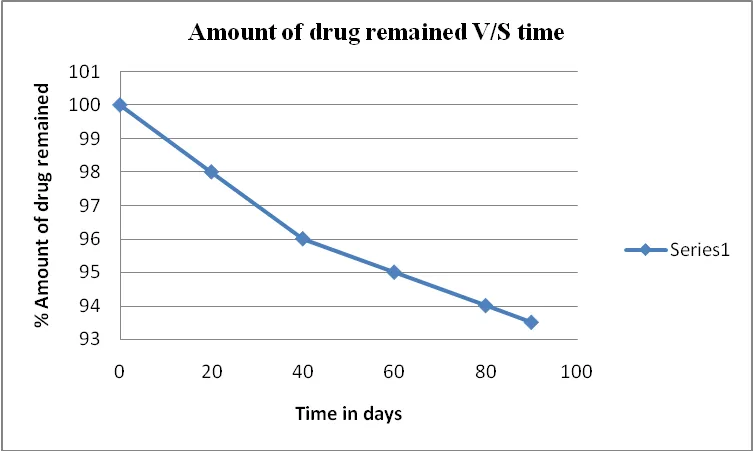
(Fig 11: Drug content at different time interval when storage at 40˚C of batch F5)
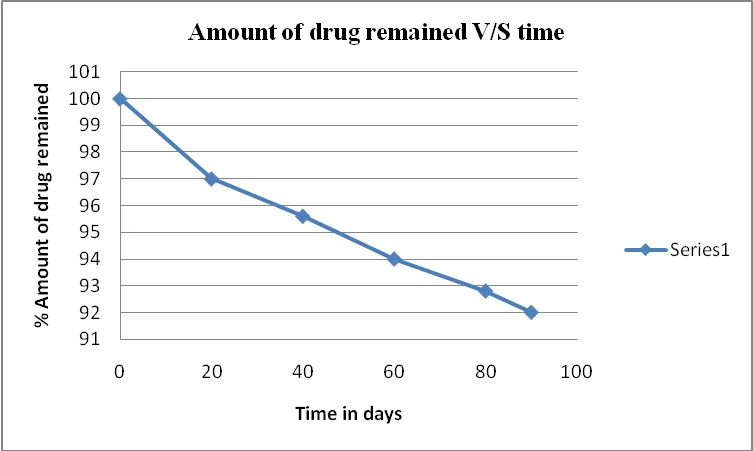
(Fig 12.: Drug content at different time interval when storage at 40˚C of batch F6)
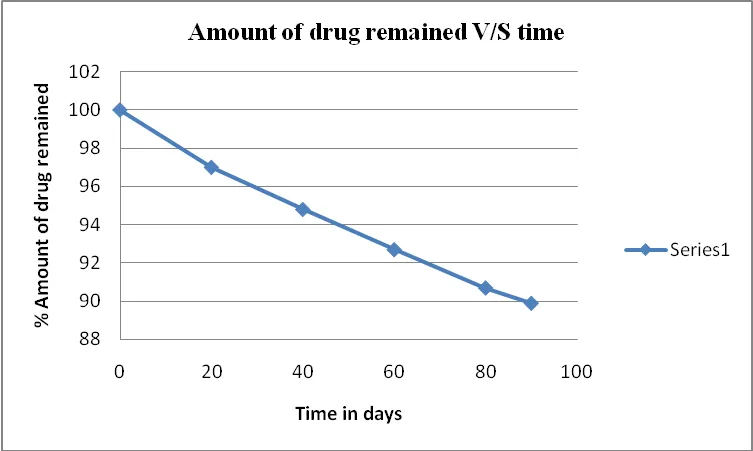
(Fig 13.: Drug content at different time interval when storage at 50˚C of batch F4)
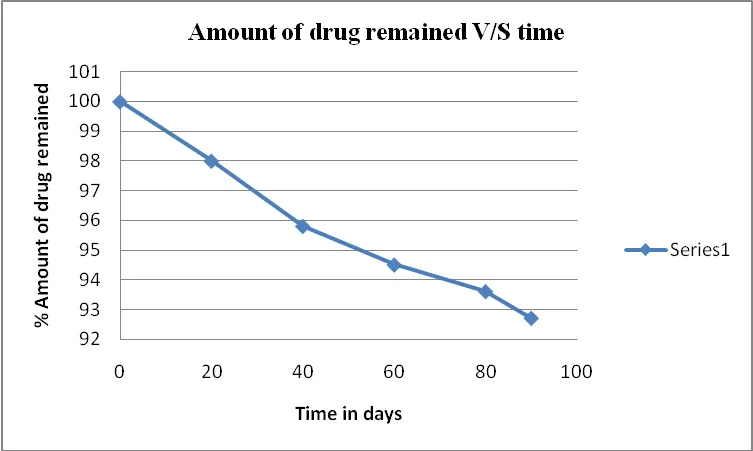
(Fig 14.: Drug content at different time interval when storage at 50˚C of batch F5)
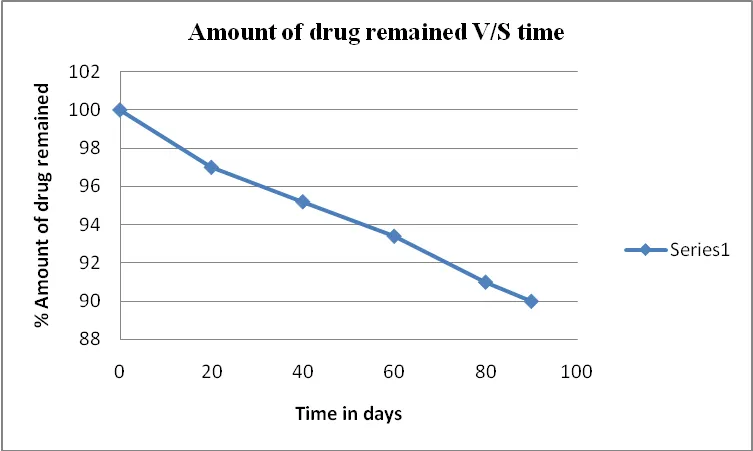
(Fig 15.: Drug content at different time interval when storage at 50˚C of batch F6)
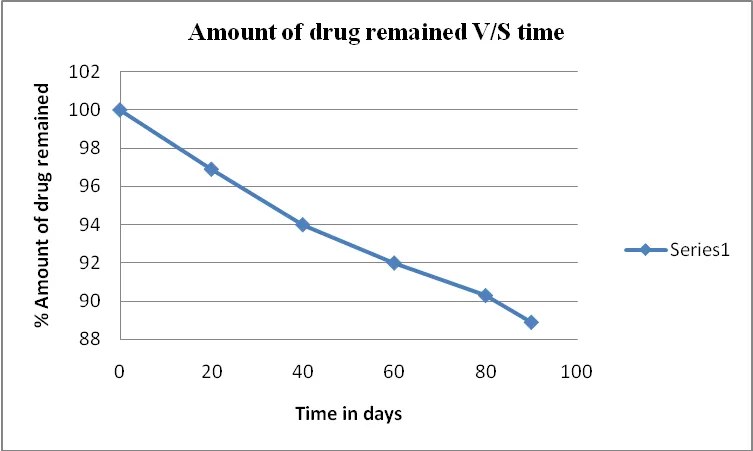
(Fig 16.: Drug content at different time interval when storage at 60˚C of batch F4)
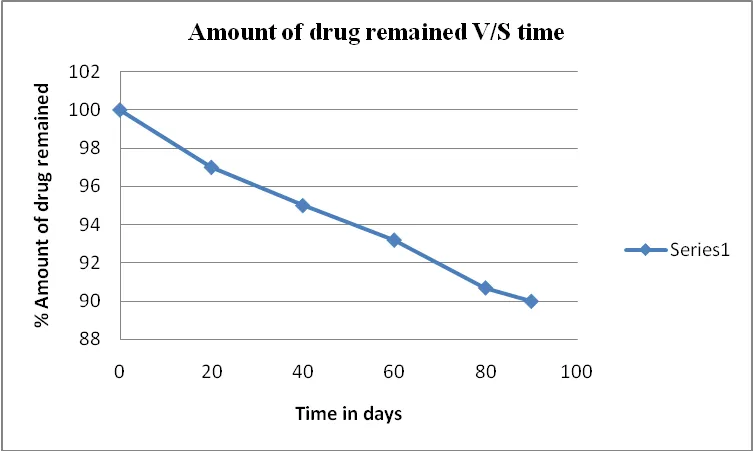
(Fig 17.: Drug content at different time interval when storage at 60˚C of batch F5)
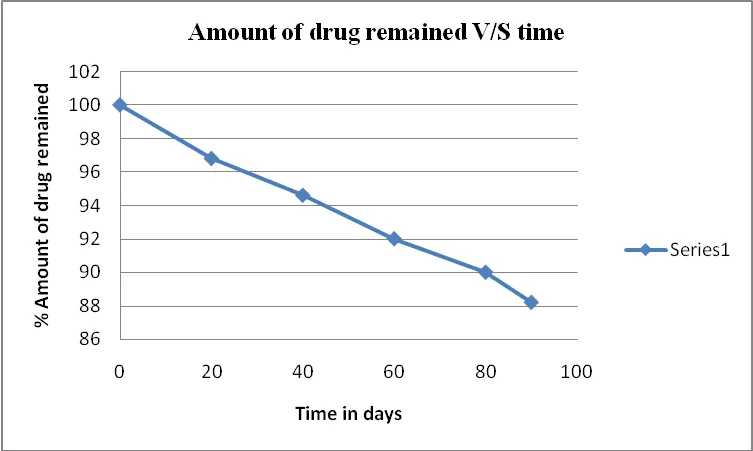
Fig 18: Drug content at different time interval when storage at 60˚C of batch F6
• Half life, Shelf life:
Table 17: Half Life and Shelf Life of batch F4, F5 and F6
| Parameters | F4 | F5 | F6 | ||||||
|---|---|---|---|---|---|---|---|---|---|
| At 40˚C | At 50˚C | At 60˚C | At 40˚C | At 50˚C | At 60˚C | At 40C | At 50˚C | At 60˚C | |
| Half Life (in days) | 916 | 646 | 607 | 1312 | 1122 | 607 | 916 | 574 | 508 |
| Shelf Life (in days) | 143 | 102 | 96 | 203 | 174 | 96 | 143 | 92 | 81 |
SUMMARY AND CONCLUSION:
The preformulation study for the meloxicam was conducted and λmax was found at 342 nm. Melting point was found 253-255˚C, IR spectrum of meloxicam which is comparatively same as standard value. This shows that the drug is pure. The standard curve of meloxicam was prepared in phosphate buffer (pH 6.8 or simulated salivary pH 6.8) and r2 value was obtained 0.999, which are shows that the linearity of absorbance follows Lambert beer law. Organoleptic properties was determined and observed that the meloxicam is pale coloured powder, bitter in taste and odourless drug. Quantitave solubility studies showed that the meloxicam poorly soluble in water. Quantitative solubility of meloxicam showed that the drug is more soluble in organic solvent. The partition coefficient was found to be 4.0 the obtained value of meloxicam was more than 1 which showed that the drug is lipophilic in nature. Meloxicam is poorly water soluble drug so solvent deposition system is used to increase the solubility of drug. The aqueous solubility of Meloxicam was enhanced after converting it into SDS. The solubility study indicated enhancement of aqueous solubility of Meloxicam by solvent deposition on lactose. SDS of Meloxicam prepared with Meloxicam: lactose in the ratio of 1:1 was selected to prepare the tablet formulations. Rapid disintegrating tablet of meloxicam was prepared by using different super disintegrating agents. The prepared tablet was evaluated for different parameters like thickness, hardness, weight variation, friability, wetting time, water absorption ratio, dispersion time, drug content, drug release.All the formulation has been evaluated for disintegration and drug release study. Study were carried out for all the formulation and result reported in table 10.6, shows that the formulation F5 shows quick disintegrating time and good % drug release profile of meloxicam. Stability study has been carried out for selected formulation (F4, F5 and F6) and found that the formulation is stable enough at different temperature conditions (40˚C, 50˚C and 60˚C). This study was carried out for three months and this study showed that formulation F4, F5 and F6 were stable during stability testing. The result of solubility study has been suggested that the solubility of meloxicam, a poorly water soluble drug was increased by solvent deposition technique using lactose as adsorbent. Solvent deposition system as a good method to enhance aqueous solubility of poorly soluble drugs. Solvent deposition system of meloxicam has been successfully formulated into rapid disintegrating tablets.The formulation F5 containing Potato Starch and Sodium carboxy methyl cellulose in equal proportion showed the rapid disintegration with faster drug release as compared to the other formulations. It is thus concluded that by selecting proper amount and combination of superdisintegrants in tablet formulation, tablet with rapid-disintegration has been produced.Rapid disintegrating tablet of meloxicam has been used for the patients having acute condition of pain, gout required immediate release of drug.
REFERENCES

Rohit Choure, Sunita Sonartiya, Rajat Pawar, Dishant Gupta, P. K. Dubey, Solubility Enhancement of Poorly Soluble Drug and Formulation Development of Rapid Disintegrating Tablet of Meloxicam, Int. J. Med. Pharm. Sci., 2026, 2 (10),
 10.5281/zenodo.23646974