

We use cookies to ensure our website works properly and to personalise your experience. Cookies policy
1Ezhuthachan College of Pharmaceutical Sciences, Marayamuttom, Thiruvananthapuram
2Assistant Professor, Department of Pharmacy Practice, Ezhuthachan College of Pharmaceutical Sciences, Marayamuttom, Thiruvananthapuram
3D. Sc., NIMS-SPECTRUM-Child Development Research Centre, NIMS Medicity, Thiruvananthapuram
4Principal/HOD, Department of Pharmacy Practice Ezhuthachan College of Pharmaceutical Sciences, Marayamuttom, Thiruvananthapuram
Background: Parents of children with Autism frequently balance intensive caregiving responsibilities with employment and family commitments. These demands may affect their physical, psychological, and social well-being, leading to difficulties in maintaining a healthy work–life balance. Although the impact of ASD on caregivers has been widely recognized, evidence regarding the day-to-day work–life balance of parents remains fragmented and influenced by individual, occupational and healthcare-related factors. Therefore, the present study was undertaken to assess the knowledge, attitude, and perceived barriers regarding daily work–life balance among parents of children with ASD. The evidence synthesized in this study can serve as a foundation for future research and guide the implementation of policies and support programs aimed at reducing caregiver burden and improving family functioning among parents. Methods: A cross-sectional questionnaire-based study was conducted among parents of children with Autism at NIMS Spectrum Child Development and Research Centre, Trivandrum, from April to May 2026. A total of 57 parents were recruited using convenience sampling. Of these, 53 parents completed the questionnaire and were included in the final analysis . Data were collected using a validated self-structured questionnaire comprising sections on sociodemographic characteristics, knowledge, attitude, and perceived barriers. Statistical analysis was performed using Jamovi version 2.7.18. Descriptive statistics, Chi-square test, and Pearson correlation analysis were used, with a p-value of <0.05 considered statistically significant. Result: Among the 53 participants, the majority were female (98.1%), and over half belonged to the 25–29 years age group (52.8%). Good knowledge regarding ASD was observed in 79.2% of participants, while 83.0% demonstrated a positive attitude towards balancing employment and caregiving responsibilities. More than half of the participants (54.7%) experienced severe barriers to maintaining work–life balance, with financial difficulties, long working hours, therapy or hospital visits, and limited workplace or family support identified as the major challenges. Correlation analysis showed no significant association between knowledge and attitude scores (r = −0.092, p = 0.511) or between knowledge and barrier scores (r = 0.117, p = 0.406). However, a significant positive correlation was observed between attitude and barrier scores (r = 0.355, p = 0.009). Conclusion: Parents of children with Autism demonstrated good knowledge and a positive attitude towards balancing caregiving and employment responsibilities. Despite this, many experienced moderate to severe barriers that negatively affected their daily work–life balance. These findings highlight the need for workplace flexibility, financial assistance, and strengthened family and social support to improve the well-being of parents caring for children with ASD. Future multicentre studies with larger and more gender-balanced samples are recommended to obtain a broader understanding of parental work–life balance and its determinants.
Autism Spectrum Disorder (ASD) is a neurodevelopmental condition characterized by persistent difficulties in social communication and interaction, along with restricted or repetitive patterns of behaviour. The condition generally begins in early childhood and continues throughout life, often requiring long-term support in areas such as education, therapy, communication, and daily functioning [1]. The global prevalence of ASD has increased over recent decades, with current estimates indicating that approximately 1 in 100 children are affected worldwide [2]. In India, the prevalence of ASD has also shown an increasing trend, reflecting improved awareness, early diagnosis, and expanded access to healthcare services [3]. In addition to providing continuous caregiving and coordinating therapy sessions, many parents must simultaneously fulfil occupational and family responsibilities. Balancing these multiple roles often results in increased stress, reduced work productivity, financial strain, and impaired psychological well-being [4]. However, limited research has comprehensively evaluated parents knowledge of ASD, their attitudes towards balancing employment and caregiving, and the barriers affecting their daily work–life balance, particularly in the Indian healthcare setting. Understanding these aspects is essential for identifying the challenges faced by parents and for developing supportive workplace policies and family-centred interventions [5,6]. The present study was conducted to assess knowledge and awareness regarding ASD, attitudes towards balancing employment and caregiving responsibilities, and perceived barriers to maintaining daily work–life balance among parents of children with ASD. A total of 53 parents, predominantly mothers, participated in the study. Data were collected using a structured self-administered questionnaire consisting of four sections covering sociodemographic characteristics, knowledge, attitude, and perceived barriers.
MATERIALS AND METHODS
A hospital-based, cross-sectional study was conducted to assess the knowledge, attitude, and perceived barriers regarding daily work–life balance among parents of children with ASD. Participants were recruited using a convenience sampling method based on their availability and willingness to participate during the study period. The study was conducted at NIMS Spectrum Child Development and Research Centre, NIMS Medicity, Trivandrum. The sample size of the study was 57. Of these, 53 parents completed the questionnaire, and their responses were included in the final statistical analysis. The survey was conducted among the parents having autistic children within the age group of 25 - 40 years from April – May 2026. The researcher obtained signed informed consent and explained the background of the study, the purpose, the principle of privacy and confidentiality and the precaution before conduction the survey. The questionnaire was prepared after reviewing relevant literature and was assessed for content validity by subject experts. Necessary modifications were incorporated based on expert recommendations before its administration. There questionnaire included 3 sections including understanding and knowledge, attitude and barriers which constitute a total of 28 questions. All the data were entered in Microsoft Excel Spreadsheet and proper analysis was carried out using Jamovi version 2.7.18. The study was conducted after protocol approval by the Institutional Research Committee of Ezhuthachan College of Pharmaceutical Sciences.
Inclusion Criteria
Exclusion Criteria
Statistical Analysis
Descriptive statistics including frequencies, percentages, mean, standard deviation, median, and interquartile range were used to summarize the data. Associations between categorical variables including age group, gender, occupation and the classified levels of knowledge, attitude and barriers were examined using the Chi-square test while Pearson’s correlation coefficient was applied to determine the relationship between knowledge, attitude, and barrier scores. A p-value of less than 0.05 was considered statistically significant. A p-value of less than 0.05 was considered statistically significant. Data analysis was performed using “Jamovi version 2.7.18.
RESULTS
Demographic Characteristics
Among the 57 parents recruited, 53 provided complete responses and were considered for analysis. Table 1 summarizes the sociodemographic characteristics of the participants. Females accounted for the majority of the study population (98.1%), while over half of the participants were aged 25–29 years (52.8%). Employment was the most common occupational status (35.8%).
Table 1: Age Distribution
|
Age in years |
Frequency (n) |
Percent (%) |
|
25-30 |
28 |
52.8 |
|
31- 35 |
18 |
34 |
|
36 - 40 |
7 |
13.2 |
|
Total |
53 |
100 |
The table shows the age distribution of 53 study participants. Majority of the study participants 28 (52.8%), were in the 25 –29 years age group. This was followed by 18 (34.0%) participants aged 30–34 years, while 7 (13.2%) participants belonged to the 35–39 years age group. These findings indicate that more than half of the participants were young adults between 25 and 29 years of age.
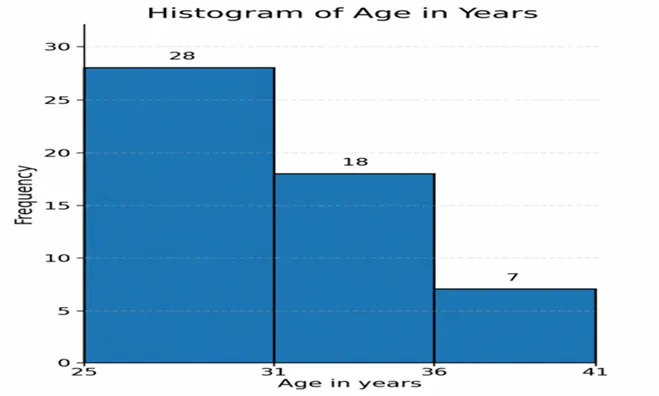
Figure 1: Histogram of age in years
Table 2: Gender Distribution
|
Gender |
Frequency (n) |
Percent (%) |
|
Male |
1 |
1.9 |
|
Female |
52 |
98.1 |
|
Total |
53 |
100 |
This table represents the gender distribution of the study population. Out of the total 53 participants, the vast majority, 52 (98.1%) were female, while only 1 (1.9%) participant was male.
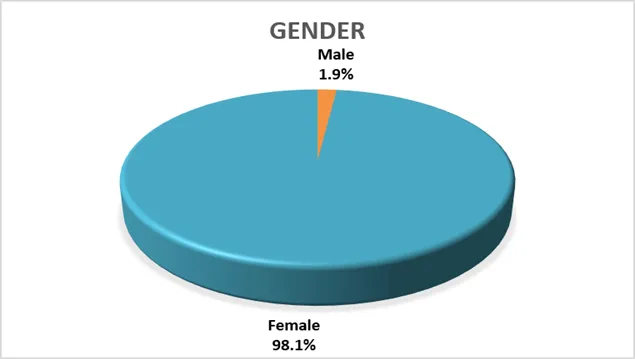
Figure 2: Percentage distribution of participants by gender
Table 3: Occupational Distribution
|
Occupation |
Frequency (n) |
Percent (%) |
|
Unemployed |
16 |
30.2 |
|
Self-employed |
5 |
9.4 |
|
Homemaker |
13 |
24.5 |
|
Employed |
19 |
35.8 |
|
Total |
53 |
100 |
The occupational distribution of the study population. Out of the 53 participants, 19 (35.8%) were employed, representing the largest proportion. This was followed by 16 (30.2%) participants who were unemployed, 13 (24.5%) who were homemakers, and 5 (9.4%) who were self-employed.
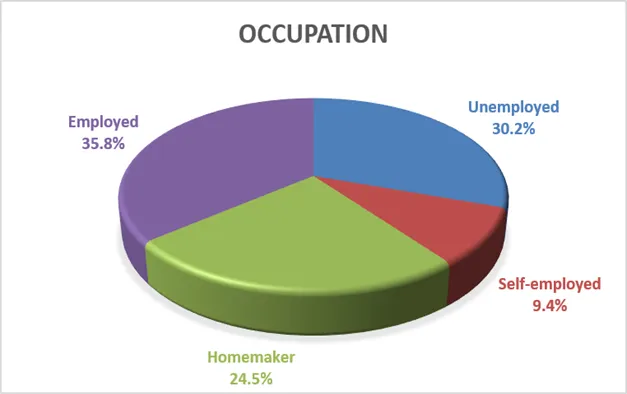
Figure 3: Percentage distribution of participants by Occupation
Knowledge Regarding Autism Spectrum Disorder
The findings showed that majority of participants had good knowledge about Autism Spectrum Disorder (ASD). Most participants correctly recognized that ASD affects communication and behavior (84.9%), requires extra care (96.2%), influences learning and social interaction (90.6%), affects parents' work and daily routine (90.6%), increases parental stress (79.2%), and requires proper planning to balance work and caregiving (92.5%).
Table 4: Distribution of responses on understanding and awareness regarding Autism
|
Knowledge Statements |
No |
Yes |
||
|
n |
% |
n |
% |
|
|
Autism Spectrum Disorder (ASD) affects a child’s communication and behavior. |
8 |
15.1 |
45 |
84.9 |
|
Children with ASD need extra care and attention in daily life. |
2 |
3.8 |
51 |
96.2 |
|
ASD can influence a child’s learning abilities and social interactions. |
5 |
9.4 |
48 |
90.6 |
|
Parenting a child with ASD can affect work schedules and job performance and daily routine |
5 |
9.4 |
48 |
90.6 |
|
Parenting a child with ASD can increase psychological stress for parents. |
11 |
20.8 |
42 |
79.2 |
|
Managing work and caregiving together needs proper planning. |
4 |
7.5 |
49 |
92.5 |
Table 5: Descriptive statistics of overall knowledge score
|
|
Mean ± SD |
Median |
IQR |
Range |
|
Total Knowledge score |
5.4 ± 1 |
6 |
6 - 6 |
3 - 6 |
It showed that participants had a high overall knowledge score, with a mean of 5.4 ± 1 and a median of 6. The knowledge scores ranged from 3 to 6, indicating generally good knowledge about ASD among the participants.
Table 6: Categorization of Knowledge Level
|
Knowledge |
Frequency (n) |
Percent (%) |
|
Good |
42 |
79.2 |
|
Moderate |
11 |
20.8 |
|
Total |
53 |
100 |
The categorization of the overall knowledge level of the study population, based on the total knowledge score, where a score of less than 3 was considered poor, 3-4 as moderate, and greater than 4 as good. Out of the 57 participants, the majority, 42 (79.2%), had good knowledge, while 11 (20.8%) had moderate knowledge. None of the participants fell into the poor knowledge category.
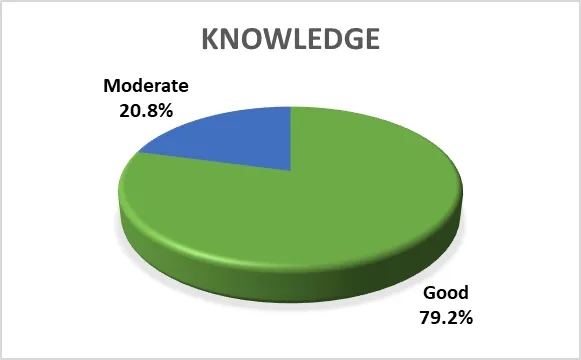
Figure 5: Percentage distribution of participants by of Knowledge level
Attitude Towards Work- Life Balance
Participants attitudes towards balancing employment and caregiving responsibilities were assessed using six statements. Most participants demonstrated a positive attitude, with 83.0% showing a favorable attitude towards maintaining work–life balance.
Table 7: Parent's Attitude towards Work-Life balance
|
Attitude statements |
Yes |
No |
Don’t know |
|||
|
n |
% |
n |
% |
n |
% |
|
|
Feel it is difficult to balance your job and caring for your child with ASD |
0 |
0 |
13 |
24.5 |
40 |
75.5 |
|
Child’s condition affected your work performance or career growth |
0 |
0 |
16 |
30.2 |
37 |
69.8 |
|
Work-related stress and caregiving responsibilities affect your mental well-being |
1 |
1.9 |
11 |
20.8 |
41 |
77.4 |
|
Feel unhappy when work prevents you from spending time with your child |
3 |
5.7 |
23 |
43.4 |
27 |
50.9 |
|
Flexible working hours help you manage caregiving better |
3 |
5.7 |
16 |
30.2 |
34 |
64.2 |
|
Employer understands your caregiving responsibilities |
12 |
22.6 |
16 |
30.2 |
25 |
47.2 |
|
Ever considered reducing work hours or leaving your job due to caregiving demands |
7 |
13.2 |
22 |
41.5 |
24 |
45.3 |
|
Believe both parents should share caregiving responsibilities equally |
1 |
1.9 |
2 |
3.8 |
50 |
94.3 |
|
Feel confident in managing both employment and your child’s care |
2 |
3.8 |
7 |
13.2 |
44 |
83 |
|
Feel support at the workplace can improve your work–life balance |
7 |
13.2 |
10 |
18.9 |
36 |
67.9 |
A small proportion reported positive responses regarding workplace support, confidence in managing both responsibilities, flexible working hours, and shared caregiving, while many were unsure about these aspects.
Table 8: Descriptive statistics of Overall Attitude Score
|
|
Mean ± SD |
Median |
IQR |
Range |
|
Total Attitude Score |
15.9 ± 2.3 |
16 |
16 - 17 |
11 - 20 |
This table summarizes that the overall attitude score and had a mean of 15.9 ± 2.3 and a median of 16. The scores ranged from 11 to 20, indicating an overall positive attitude among participants. The majority of participants (83%) had a positive attitude towards balancing employment and caregiving for children with ASD, while 17% had a neutral attitude. No participants had a negative attitude.
Table 9: Categorization of Attitude Level
|
Attitude |
Frequency (n) |
Percent (%) |
|
Positive |
44 |
83 |
|
Neutral |
9 |
17 |
|
Total |
53 |
100 |
Barriers Affecting Work–Life Balance
Table 10: Barriers Affecting Work–Life Balance
|
Barriers affecting work–life balance |
No |
Sometimes |
Yes |
|||
|
n |
% |
n |
% |
n |
% |
|
|
Long working hours interfere with my caregiving responsibilities. |
4 |
7.5 |
14 |
26.4 |
35 |
66 |
|
Therapy sessions or hospital visits often conflict with my work schedule. |
10 |
18.9 |
15 |
28.3 |
28 |
52.8 |
|
Lack of support from my workplace negatively affects my work–life balance. |
14 |
26.4 |
17 |
32.1 |
22 |
41.5 |
|
Financial difficulties related to my child’s care increase my stress levels. |
12 |
22.6 |
5 |
9.4 |
36 |
67.9 |
|
Limited family or social support makes caregiving more difficult. |
10 |
18.9 |
16 |
30.2 |
27 |
50.9 |
Perceived barriers affecting daily work–life balance were evaluated using six items. Financial difficulties, long working hours, therapy or hospital visits, and limited family or workplace support were among the most frequently reported challenges. Overall, 54.7% of participants experienced severe barriers to maintaining work–life balance. The major barriers affecting work–life balance were financial difficulties (67.9%), long working hours (66%), therapy or hospital visits conflicting with work (52.8%), and limited family or social support (50.9%). Many participants also reported that lack of workplace support affected their ability to balance work and caregiving (41.5%).
Table 11: Descriptive of Overall Barriers Score
|
Mean ± SD |
Median |
IQR |
Range |
|
|
Total barriers Score |
6.8 ± 2.6 |
7 |
7 - 9 |
1 - 10 |
It showed that the overall barriers score had a mean of 6.8 ± 2.6 and a median of 7, with an inter quartile range of 7-9 and scores ranging from 1 to 10. These findings indicates that most participants generally experienced moderate to severe barriers in balancing work and caregiving responsibilities. Although the wide range of scores reflects variability in the challenges encountered by individual participants.
Table 12: Categorization of Barrier Level
|
Barriers |
Frequency (n) |
Percent (%) |
|
Mild |
6 |
11.3 |
|
Moderate |
18 |
34 |
|
Severe |
29 |
54.7 |
|
Total |
53 |
100 |
This table describes the categorization of barrier levels among the study participants. Out of 53 participants majority (54.7%, n = 29) experienced severe barriers in balancing work and caregiving responsibilities. Moderate barriers were reported by (34.0 %, n = 18), while (11.3% , n = 6) had mild barriers. This indicates that most parents faced considerable challenges in maintaining a balance between professional and caregiving responsibilities.
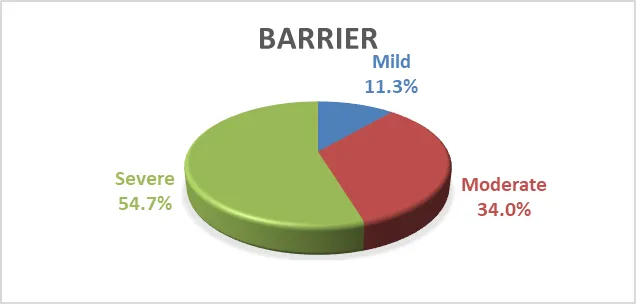
Figure 6: Percentage distribution of overall Barrier levels
Correlation Between Knowledge, Attitude, And Barriers Scores
Pearson correlation analysis revealed no significant association between knowledge and attitude scores or between knowledge and barriers scores among parents of children with ASD. However, a statistically significant positive correlation was observed between attitude and barriers scores (r = 0.355, p = 0.009). This suggests that while parents’ knowledge about ASD was not related to their attitudes or perceived barriers, their attitudes toward balancing work and caregiving were significantly associated with the barriers they experienced.
Table 13: Correlation Between Knowledge, Attitude and Barriers Scores
|
|
Pearson Correlation |
|
|
r |
p |
|
|
Correlation between Knowledge score and Attitude Score |
-0.092 |
0.511 |
|
Correlation between Knowledge score and barrier Score |
0.117 |
0.406 |
|
Correlation between Attitude Score and barrier Score |
.355** |
0.009 |
There was no statistically significant correlation between knowledge score and attitude score (r = -0.092, p = 0.511). This indicates that parents' level of knowledge about ASD was not associated with their attitudes toward balancing work and caregiving. A statistically significant positive correlation was observed between attitude score and barriers score (r = 0.355, p = 0.009). This suggests that parents with higher attitude scores also reported greater barriers in managing work-life balance. There was no statistically significant correlation between knowledge score and barriers score (r = 0.117, p = 0.406). This indicates that parents' knowledge regarding ASD was not significantly associated with the barriers they experienced in balancing work and caregiving.
Correlation Between Socio-Demographic Variables and Knowledge, Attitude and Barriers
The association between selected sociodemographic variables (age, gender, and occupation) and participants’ knowledge, attitude, and perceived barrier levels was analysed using the Chi-square test.
Table 14: Association between Age and Knowledge Level
|
Age in years |
Knowledge |
Total |
χ2 |
df |
p |
||||
|
Good |
Moderate |
||||||||
|
n |
% |
n |
% |
n |
% |
||||
|
25-30 |
23 |
82.1 |
5 |
17.9 |
28 |
100 |
0.427 |
2 |
0.808 |
|
31-35 |
14 |
77.8 |
4 |
22.2 |
18 |
100 |
|||
|
36-40 |
5 |
71.4 |
2 |
28.6 |
7 |
100 |
|||
|
Total |
42 |
79.2 |
11 |
20.8 |
53 |
100 |
|
|
|
Among the 53 participants, the highest percentage of good knowledge was seen in the 25-30 years age group and the percentage was 82.1%, followed by the 31–35 years was 77.8% and for 36 – 40 years was 71.4%. However, the association between age and knowledge level was not statistically significant (χ² = 0.427, df = 2, p = 0.808).
Table 15: Association between Gender and Knowledge Level
|
Gender |
Knowledge |
Total |
χ2 |
df |
p |
||||
|
Good |
Moderate |
||||||||
|
n |
% |
n |
% |
n |
% |
||||
|
Male |
0 |
0 |
1 |
100 |
1 |
100 |
3.892 |
1 |
0.049 |
|
Female |
42 |
80.8 |
10 |
19.2 |
52 |
100 |
|||
|
Total |
42 |
79.2 |
11 |
20.8 |
53 |
100 |
|
|
|
Among the 53 participants, there was only one male participant, who had moderate knowledge. Among female participants, 80.8% had good knowledge and 19.2% had moderate knowledge. The association between gender and knowledge level was statistically significant (χ² = 3.892, df = 1, p = 0.049). Gender showed a statistically significant association with knowledge level.
Table 16: Association between Occupation and Knowledge Level
|
Occupation |
Knowledge |
Total |
χ2 |
df |
p |
||||
|
Good |
Moderate |
||||||||
|
n |
% |
n |
% |
n |
% |
||||
|
Unemployed |
15 |
93.8 |
1 |
6.3 |
16 |
100 |
7.511 |
3 |
0.057 |
|
Self-employed |
3 |
60 |
2 |
40 |
5 |
100 |
|||
|
Homemaker |
12 |
92.3 |
1 |
7.7 |
13 |
100 |
|||
|
Employed |
12 |
63.2 |
7 |
36.8 |
19 |
100 |
|||
|
Total |
42 |
79.2 |
11 |
20.8 |
53 |
100 |
|
|
|
Parents who were unemployed (93.8%) and homemakers (92.3%) had the highest proportion of good knowledge. Employed parents had comparatively lower good knowledge (63.2%). However, the association between occupation and knowledge level was not statistically significant (χ² = 7.511, df = 3, p = 0.057). The table shows the association between age and attitude level of the study population. Among participants in the 25-30 years age group, 23 (82.1%) had a positive attitude and 5 (17.9%) had a neutral attitude, out of a total of 28 (100%) participants in this group.
Table 17: Association between Age and Attitude Level
|
Age in years |
Attitude |
Total |
χ2 |
df |
p |
||||
|
Positive |
Neutral |
||||||||
|
n |
% |
n |
% |
n |
% |
||||
|
25-30 |
23 |
82.1 |
5 |
17.9 |
28 |
100 |
1.122 |
2 |
0.571 |
|
31-35 |
16 |
88.9 |
2 |
11.1 |
18 |
100 |
|||
|
36-40 |
5 |
71.4 |
2 |
28.6 |
7 |
100 |
|||
|
Total |
44 |
83 |
9 |
17 |
53 |
100 |
|
|
|
Among those in the 31-35 years age group, 88.9% had a positive attitude and 11.1% had a neutral attitude. Among those in the 36-40 years age group, 71.4% had a positive attitude and 28.6% had a neutral attitude. The association between age and attitude level was not statistically significant (χ² = 1.122, df = 2, p = 0.571).
Table 18: Association between Gender and Attitude Level
|
Gender |
Attitude |
Total |
χ2 |
df |
p |
||||
|
Positive |
Neutral |
||||||||
|
n |
% |
n |
% |
n |
% |
||||
|
Male |
0 |
0 |
1 |
100 |
1 |
100 |
4.983 |
1 |
0.026 |
|
Female |
44 |
84.6 |
8 |
15.4 |
52 |
100 |
|||
|
Total |
44 |
83 |
9 |
17 |
53 |
100 |
|
|
|
Among female participants, 84.6 % had a positive attitude and 15.4 % had a neutral attitude. The only male participant had a neutral attitude. The association between gender and attitude level was statistically significant (χ² = 4.983, df = 1, p = 0.026).
Table 19: Association between Occupation and Attitude Level
|
Occupation |
Attitude |
Total |
χ2 |
df |
p |
||||
|
Positive |
Neutral |
||||||||
|
n |
% |
n |
% |
n |
% |
||||
|
Unemployed |
13 |
81.3 |
3 |
18.8 |
16 |
100 |
1.087 |
3 |
0.78 |
|
Self-employed |
4 |
80 |
1 |
20 |
5 |
100 |
|||
|
Homemaker |
12 |
92.3 |
1 |
7.7 |
13 |
100 |
|||
|
Employed |
15 |
78.9 |
4 |
21.1 |
19 |
100 |
|||
|
Total |
44 |
83 |
9 |
17 |
53 |
100 |
|
|
|
Table 19 presents the association between occupation and attitude level of the study population. Most of the participants had a positive attitude. Positive attitude was observed among 81.3 % of unemployed, 80 % of self employed, 92.3 % of homemakers and 78.9 % of employed participants. The association was not statistically significant (χ² = 1.087, df = 1, p = 0.780).
Table 20: Association between Age and Barrier Level
|
Age in years |
Barrier |
Total |
χ2 |
df |
p |
||||||
|
Mild |
Moderate |
Severe |
|||||||||
|
n |
% |
n |
% |
n |
% |
n |
% |
||||
|
25-30 |
3 |
10.7 |
9 |
32.1 |
16 |
57.1 |
28 |
100 |
2.806 |
4 |
0.591 |
|
31-35 |
3 |
16.7 |
5 |
27.8 |
10 |
55.6 |
18 |
100 |
|||
|
36-40 |
0 |
0 |
4 |
57.1 |
3 |
42.9 |
7 |
100 |
|||
|
Total |
6 |
11.3 |
18 |
34 |
29 |
54.7 |
53 |
100 |
|
|
|
Table 20 presents the association between age and barrier level of the study population. Among parents aged 25–30 years, 57.1% experienced severe barriers, 32.1% experienced moderate barriers, and 10.7% experienced mild barriers. Similarly, most parents in the 31–35 years (55.6%) and 36–40 years (42.9%) age groups also experienced severe barriers. However, the association between age and barrier level was not statistically significant (χ² = 2.806, df = 4, p = 0.591).
Table 21: Association between Gender and Barrier Level
|
Gender |
Barrier |
Total |
χ2 |
df |
p |
||||||
|
Mild |
Moderate |
Severe |
|||||||||
|
n |
% |
n |
% |
n |
% |
n |
% |
||||
|
Male |
0 |
0 |
0 |
0 |
1 |
100 |
1 |
100 |
0.844 |
2 |
0.656 |
|
Female |
6 |
11.5 |
18 |
34.6 |
28 |
53.8 |
52 |
100 |
|||
|
Total |
6 |
11.3 |
18 |
34 |
29 |
54.7 |
53 |
100 |
|
|
|
This table presents the association between gender and barrier level of the study population. Among female participants, 53.8% experienced severe barriers, 34.6% experienced moderate barriers, and 11.5% experienced mild barriers. The only male participant experienced severe barriers. The association between gender and barrier level was not statistically significant (χ² = 0.844, df = 2, p = 0.656).
The table 22 , represents the association between occupation and barrier level of the study population. Among unemployed parents, 75% experienced severe barriers. Among homemakers, 53.8% experienced severe barriers, while among employed parents 42.1% experienced severe barriers. However, the association between occupation and barrier level was not statistically significant (χ² = 10.819, df = 6, p = 0.094).
Table 22: Association between Occupation and Barrier Level
|
Occupation |
Barrier |
Total |
χ2 |
df |
p |
||||||
|
Mild |
Moderate |
Severe |
|||||||||
|
n |
% |
n |
% |
n |
% |
n |
% |
||||
|
Unemployed |
1 |
6.3 |
3 |
18.8 |
12 |
75 |
16 |
100 |
10.819 |
6 |
0.094 |
|
Self-employed |
0 |
0 |
3 |
60 |
2 |
40 |
5 |
100 |
|||
|
Homemaker |
0 |
0 |
6 |
46.2 |
7 |
53.8 |
13 |
100 |
|||
|
Employed |
5 |
26.3 |
6 |
31.6 |
8 |
42.1 |
19 |
100 |
|||
|
Total |
6 |
11.3 |
18 |
34 |
29 |
54.7 |
53 |
100 |
|
|
|
DISCUSSION
The present study found that most parents (79.2%) of children with Autism had good knowledge and 83% had a positive attitude towards balancing employment and caregiving responsibilities, although they experienced significant barriers in maintaining work–life balance. These findings are similar to the study by Dr. Nihal Rehim et al. (2025), which reported that participants had good knowledge of ASD, but higher knowledge did not always lead to better practical outcomes or confidence [7]. Likewise, in the present study, despite parents having good knowledge and awareness, 54.7% experienced severe barriers in maintaining work–life balance. This suggests that knowledge alone is not sufficient to reduce the challenges faced by parents and should be supported by practical assistance and workplace accommodations. The finding from other studies reported that although participants demonstrated good knowledge, their attitudes and confidence in applying that knowledge were only moderate. The present findings are also consistent with Zuleyha Cidav et al. (2012), who reported that parents, especially mothers of children with ASD, were less likely to be employed, worked fewer hours, and experienced financial difficulties [8]. However, many parents still faced major challenges such as financial burden, long working hours, therapy appointments, and limited family or workplace support. The significant relationship between attitude and barriers indicates that parents who are more aware of work–life balance also recognize the challenges they face more clearly. In addition, the findings agree with Gülsah Zengin Yazici and Yildirim et al. (2025), found that parents of children with autism had reduced occupational balance and lower life satisfaction. Therefore, the present study supports previous research and emphasizes that improving work–life balance among parents of children with ASD requires not only awareness but also financial support, flexible workplace policies, and stronger family and community support systems [1,9]. The present study also showed that 83% of parents had a positive attitude, but many were uncertain about flexible working hours, workplace support, and equal sharing of caregiving responsibilities. Both studies indicate that improving awareness alone is not enough, and parents require guidance, counselling, and supportive policies to confidently manage both employment and caregiving responsibilities. More than half of the parents in the present study experienced severe barriers, with financial burden, long working hours, therapy appointments, limited family support, and inadequate workplace support being the most common problems. Similarly, the present study found that financial burden was the most frequently reported barrier affecting work–life balance, highlighting the significant economic impact of caring for a child with ASD. Overall, the present study agrees with previous research by showing that parents of children with ASD generally have good awareness of the disorder but continue to face significant financial, occupational, and social challenges. These findings highlight the need for family-centered interventions, flexible workplace policies, caregiver support programmes, and financial assistance to improve the quality of life and work–life balance of parents caring for children with ASD [10,11]. These findings are consistent with Karst et al. (2012), who reported that although parents of children with ASD are well informed about their child's condition, they experience high levels of caregiver stress and difficulties in managing family and work responsibilities [4,12].
CONCLUSION
The study concludes that parents of children with ASD generally possess good knowledge and demonstrate a positive overall attitude towards balancing caregiving and employment responsibilities. Nevertheless, a large proportion experience moderate to severe barriers that interfere with their daily work–life balance [13]. Financial strain, long working hours, frequent therapy and hospital visits, limited family support, and insufficient workplace support emerged as major challenges. Thus, the burden experienced by these parents appears to arise not primarily from a lack of awareness, but from practical, financial, occupational, and social constraints. These findings emphasise the need for family-centred interventions, caregiver education programmes, flexible workplace policies, and financial assistance to support parents caring for children with ASD. Policymakers and healthcare professionals should collaborate to develop services that reduce caregiver burden and promote a healthier work–life balance [15]. Future research involving larger and more diverse populations from multiple centres is recommended to further explore factors influencing work–life balance and to evaluate interventions aimed at improving the well-being of parents of children with ASD.
REFERENCES

Arya B. Mohan, Sani Anil, Drishya L.*, M. K. C. Nair, Shiju S. Dharan, An Assessment on Daily Work-Life Balance Among Parents with Autistic Children, Int. J. Med. Pharm. Sci., 2026, 2 (10), 19-31. https://doi.org/10.5281/zenodo.23089588
 10.5281/zenodo.23089588