
We use cookies to ensure our website works properly and to personalise your experience. Cookies policy
1Assistant Professor, Dept. of General Surgery, BLDE DU Shri B. M. Patil Medical College, Hospital and Research Centre, Smt. Bangaramma Sajjan Campus, Vijayapura- 586 101
2Assistant Professor, Dept. of General Medicine, BLDE DU Shri B. M. Patil Medical College, Hospital & Research Centre, Smt. Bangaramma Sajjan Campus, Vijayapura- 586101
3Department of Clinical Pharmacy and Practice, BLDEA S S M College of Pharmacy, Smt. Bangaramma Sajjan Campus, Vijayapura-586101
Background: Refractory diarrhoea is a debilitating clinical condition that affects nutritional status, impairs absorption of therapeutic drugs and increases the risk of death in people with HIV. Bovine colostrum is a potentially beneficial and cost-effective supplemental option to improve patient outcomes and restore gastrointestinal homeostasis, given its rich nutrient profile of immunoglobulins and bioactive growth modulators. The objective of this study was to evaluate the therapeutic effect of oral bovine colostrum supplementation on recurrent episodes of diarrhoea in people living with HIV. Methods: This was a prospective interventional study over three months from August 2025 to October 2025 at BLDE Deemed to be University's Shri B. M. Patil Medical College, Hospital and Research Centre, Vijayapura, India. This was an observational study recruiting 25 participants with chronic diarrhoea (≥ 3 weeks duration) and confirmed HIV diagnosis meeting the WHO clinical stage 3 criteria. After hospitalization, the subjects were monitored for three consecutive days according to standard therapeutic protocols, with the addition of bovine colostrum at a dose of 15 g twice a day. Clinical parameters were collected systematically and included assessment of stool form using the Bristol Stool Scale, number of daily diarrheic episodes, fever, abdominal discomfort and gastrointestinal symptoms such as nausea and emesis. Statistical analysis was performed using Cochran's Q test with post-hoc pairwise comparisons and statistical significance was set at p<0.05. Results: The study sample consisted of 25 participants (36% female, 64% male). All measured clinical indicators improved statistically meaningfully. The appearance of semi-formed stools increased (4% to 80%, P<0.001) while liquid stools decreased (96% to 20%, P<0.001) from Day 1 to Day 3. Mean daily stool frequency decreased from 2.80 to 2.12 episodes (p<0.001). Pyrexia (28% to 4%), abdominal discomfort (44% to 12%) and nausea/vomiting episodes (32% to 28%) were also significantly reduced (p<0.05 for all parameters). Conclusion: The present study demonstrates that short-term administration of bovine colostrum results in clinically significant improvement in HIV-associated refractory diarrhoea and associated constitutional symptoms. This naturally derived intervention appears safe, reliable and cost-effective as an adjunctive treatment strategy and may be particularly useful in settings with limited healthcare infrastructure. Larger randomized controlled trials are still needed to confirm these observations and to develop standardized treatment protocols.
The continued threat of Human Immunodeficiency Virus (HIV) infection still prevails in the global health arena which has taken the lives of about 42.3 million people since the onset of the epidemic. According to epidemiological data from the the completion of the year 2023, roughly 39 million individuals are presently coping up with HIV infection worldwide, alongside nearly about 65% of this population are in the WHO African Region. The epidemic still exacts a heavy toll around the world: in 2023 alone, an estimated 1.3 million new infections were reported and some 630,000 people died from HIV-related causes. India is the third largest country in terms of absolute HIV burden with an estimated 2.3 million HIV positive persons as of 2021. (1,2) The World Health Organization classification system defines Advanced HIV Disease (AHD) in adults and adolescents as having a CD4 cell count <200 cells/mm³ or clinical stage 3 or 4 according to WHO. (3,4) This definition includes all children less than five years of age irrespective of CD4 count or clinical stage. (5) The classification is equally applied to people starting antiretroviral therapy for the first time and those who resume treatment after interruption. Progression to WHO Clinical Stage 3 indicates development of more severe manifestations of disease. Loss of weight greater than 10% of body weight for no apparent reason, chronic episodes of diarrhoea, and fever lasting more than one month are clinically important features of this stage. Common clinical presentations at this stage include oral candidiasis, oral hairy leukoplakia and pulmonary tuberculosis. Serious bacterial infections such as meningitis, pneumonia and osteoarticular involvement may also occur in patients. (6) Refractory diarrhoea, defined as 3 or more daily episodes, is a common and potentially life-threatening complication in people living with HIV (PLHIV), even in the era of effective antiretroviral therapy. (7) Refractory diarrhoea results in a cascade of adverse outcomes including nutritional compromise, progressive weight loss, impaired bioavailability of medications and increased risk of mortality. The etiology of this syndrome is multi-factorial with opportunistic pathogens (particularly Cryptosporidium and CMV), direct mucosal injury, intestinal microbial dysbiosis and underlying immunological dysfunction. (8) Bovine colostrum is the first mammary secretion following parturition in cows and comprises a complex mixture of immunoglobulins, growth-promoting peptides and antimicrobial compounds that have the ability to enhance mucosal immune defenses and promote mechanisms of intestinal repair. (9) The main bioactive components are immunoglobulins (especially the IgG subclass), lactoferrin, insulin-like growth factor-1 (IGF-1) and transforming growth factor-β (TGF-β), all of which have been demonstrated to possess antibacterial, antiviral, anti-inflammatory and tissue regenerative properties. (10,11) Small studies have provided preliminary evidence that bovine colostrum may improve intestinal barrier function and reduce severity of diarrhoea. (12) Plettenberg and colleagues found that 64% of HIV patients with chronic refractory diarrhoea achieved complete or partial remission when treated with colostrum-derived immunoglobulins. (7) Likewise, Florén and colleagues reported a significant reduction in the number of stools per day from 7.0 to 1.3 in HIV patients receiving a bovine colostrum-based product. (13) However, clinical data addressing HIV-related diarrhoea directly are still limited, and further exploration is needed. The aim of this study is to evaluate bovine colostrum as a naturally-occurring, safe and cost-effective adjuvant therapy in the management of persistent diarrhoeal episodes in PLHIV. Interventions to improve gastrointestinal health, particularly in resource-limited healthcare settings, may improve nutrient absorption, optimize the effectiveness of antiretroviral therapy and improve quality of life outcomes. (14)
LITERATURE REVIEW
Epidemiology of HIV infection in the world
At the end of 2023, the number of people living with HIV continues to represent a public health issue for more than 39.9 million people worldwide. (1,15) Although important progress has been made in the field of prevention strategies and therapeutic interventions, the epidemic continues to have a significant impact, in particular in sub-Saharan Africa. Social stigma, discrimination and inequities in access to health care, particularly among marginalized populations, continue to impede efforts to control the epidemic. (2) Prevention strategies, education campaigns, and increasing the availability of testing and treatment services are critical to reducing transmission. Addressing social determinants of health and equitable delivery of health care is critical to achieving the goal of ending AIDS by 2030. (1)
Classification of Advanced HIV
WHO criteria for Advanced HIV Disease: CD4 cell numbers less than 200 cells/mm3 and clinical staging of WHO level 3 or even 4 in both adults and adolescents. Children who are under five years of age are presumed to be suffering from an advanced form of HIV. (3,4) Even after starting ART, people with a diagnosis of AHD continue to be at extremely high risk of mortality, and such risk escalates with reductions in CD4 counts. Tuberculosis, other serious bacterial infections, and cryptococcal meningitis are common causes of severe illness and death in this population. (3)
HIV-Associated Enteropathy
HIV-associated diarrhoea occurs at some stage during the course of the disease in almost all but a few AIDS patients in developing countries. Diarrhoeal manifestations are associated with depletion of the helper T-cell (CD4+) population and are a consequence of HIV-related immunological dysfunction. (8) Common enteric pathogens identified in HIV-associated diarrhoea include Cryptosporidium species, Entamoeba histolytica and Campylobacter species. Refractory diarrhoeal states are a major contributor to malnutrition, weight loss, impaired drug absorption and increased mortality. (12)
Bovine Colostrum: Composition Analysis
Bovine colostrum is the first mammary secretion of the first 24-48 hours after parturition. (9) This biological fluid contains a rich variety of bioactive molecules such as immunoglobulins, growth factors, lactoferrin, hormones, enzymes and vitamins. These components have important roles in the promotion of tissue regeneration, the reduction of inflammatory processes and the improvement of immune function. (10)
Main bioactive compounds:
Clinical Evidence of Bovine Colostrum in Diarrhoea and HIV
Plettenberg et al. (1993) In an open uncontrolled prospective study twenty-five HIV positive patients with chronic refractory diarrhoea were treated with bovine colostrum derived immunoglobulins (Lactobin) 10 g/day for ten days. In seven patients with cryptosporidiosis, three had complete remission and two had partial remission. Among the 18 patients with no pathogen identified, 7 recovered completely and 4 entered a partial remission. In total, clinical improvement was observed in 64% of treated patients (40% complete and 24% partial). (7,8) Florén et al. (2006): Thirty HIV patients with diarrhoea were treated with Colo Plus, a product based on bovine colostrum, for four weeks. Stool frequency decreased dramatically from 7.0 ± 2.7 to 1.3 ± 0.5/day. (13) Fatigue reported by patients dropped significantly by 81% (average body weight increased by 7.3 kg per patient and CD4+ count improved by 125%.
Barakat et al. (2020): In a double-blind, randomized controlled trial of 160 children with acute diarrhoea, the bovine colostrum group had significantly less frequency of vomiting, diarrhoea and Vesikari scoring compared to the placebo group at 48 hours (p=0.000). Bovine colostrum was effective against viral and bacterial aetiologies of diarrhoea. (16)
Kaducu et al. (2011) A randomized controlled trial of a colostrum-derived food supplement (Colo Plus) for HIV-associated diarrhoea in Northern Uganda. Mean daily stool frequency reduced by 79% (7.5 to 1.3 stools per day) in the colostrum group, compared to 58% reduction in the control group (p<0.001). (17)
Odong et al. (2015) -- Field observational study on effect of Colo Plus on undernourished HIV-positive children in Uganda. Results showed reduced fatigue, weight gain, and improved well-being. CD4+ counts were significantly increased at weeks 4 and 8. (18)
Byakwaga H et al. (2011) Randomized controlled trial of addition of hyperimmune bovine colostrum (HIBC) to antiretroviral therapy in HIV patients with suboptimal CD4+ T-cell response. Addition of HIBC for 24 weeks did not demonstrate a significant effect on CD4+ T-cell count compared to placebo. (19)
Integrating Evidence
The accumulated research evidence suggests that bovine colostrum has considerable promise in the treatment of diarrhoeal conditions and HIV patients' clinical outcomes. (9) Its rich immunoglobulin, growth factor and antimicrobial peptide content stimulates gastrointestinal healing, suppresses inflammatory processes and enhances immune function. (10) However, larger randomized controlled trials are still necessary to establish standardized protocols as the majority of studies available involve relatively small sample sizes. (17)
AIMS AND OBJECTIVES
AIMS:
To assess the therapeutic effect of colostrum supplementation in the management of refractory diarrhoea in HIV positive subjects.
OBJECTIVES:
MATERIALS AND METHODS
Design and Setting
The study was carried out in the Department of Medicine, BLDE DU's Shri B. M. Patil Medical College, Hospital and Research Centre, Vijayapura, India. The study was designed as a prospective, interventional, randomized, open label study.
Duration of Study
The investigation spanned three months, from August 2025 to October 2025.
Study Population
All persons living with HIV who presented to Outpatient and Inpatient services and met eligibility criteria were eligible for recruitment.
Inclusion Criteria
Exclusion Criteria
Sample size estimation
Using an expected mean change in stool frequency of 3.4 + 2.62 from previous work by Kaducu et al. (17) and assuming a 95% confidence level with precision of 1.0, a sample size of 25 patients was calculated using:
n = [Z² * S²] / d²
Where Z is Z statistic at α significance level (1.96 for 95% CI), S is common standard deviation and d is absolute error.
Data Collection and Intervention
Statistical Analysis
RESULTS
We enrolled 25 patients with HIV-associated refractory diarrhoea (N=25). Table 1 shows demographic and baseline clinical characteristics.
Table 1: Baseline Demographic and Clinical Characteristics
|
Characteristic |
Category |
N (%) |
|
Age (Years) |
≤ 40 |
6 (24.0) |
|
41 - 60 |
16 (64.0) |
|
|
≥ 61 |
3 (12.0) |
|
|
Gender |
Male |
16 (64.0) |
|
Female |
9 (36.0) |
|
|
Hydration Status |
Dehydrated |
16 (64.0) |
|
Hydrated |
9 (36.0) |
|
|
Level of Consciousness |
Responsive |
16 (64.0) |
|
Altered/Unresponsive |
9 (36.0) |
|
|
Co-morbidities |
None (HIV only) |
10 (40.0) |
|
Type 2 Diabetes Mellitus |
8 (32.0) |
|
|
Hypertension |
6 (24.0) |
|
|
Others (COPD, Anemia, AKI) |
1 (4.0) each |
Interpretation: Most study participants were males (64%) and belonged to the age group of 41-60 years (64%). At baseline assessment, 64% had clinical dehydration and 60% had at least one co-morbid condition, with Type 2 Diabetes (32%) being most frequently seen.
Table 2: Clinical Parameters Over 3 Days (N=25)
|
Parameter |
Day 1 |
Day 2 |
Day 3 |
Test Statistic |
p-value |
|
Stool Consistency |
Cochran's Q = 31.684 |
<0.001* |
|||
|
Loose Watery |
24 (96.0) |
20 (80.0) |
5 (20.0) |
||
|
Semi-Solid |
1 (4.0) |
5 (20.0) |
20 (80.0) |
||
|
Diarrhoea Frequency (Mean ± SD) |
2.80 ± 0.82 |
2.60 ± 0.65 |
2.12 ± 0.60 |
Cochran's Q = 21.778 |
<0.001* |
|
Fever (Present) |
7 (28.0) |
5 (20.0) |
1 (4.0) |
- |
- |
|
Abdominal Pain (Present) |
11 (44.0) |
4 (16.0) |
3 (12.0) |
Cochran's Q = 11.400 |
0.003* |
|
Nausea/Vomiting (Present) |
8 (32.0) |
7 (28.0) |
7 (28.0) |
Cochran's Q = 12.286 |
0.002* |
*Statistically significant at p<0.05.
(Graphical representation of change in stool consistency from watery loose to semi-solid from Day 1 to Day 3)
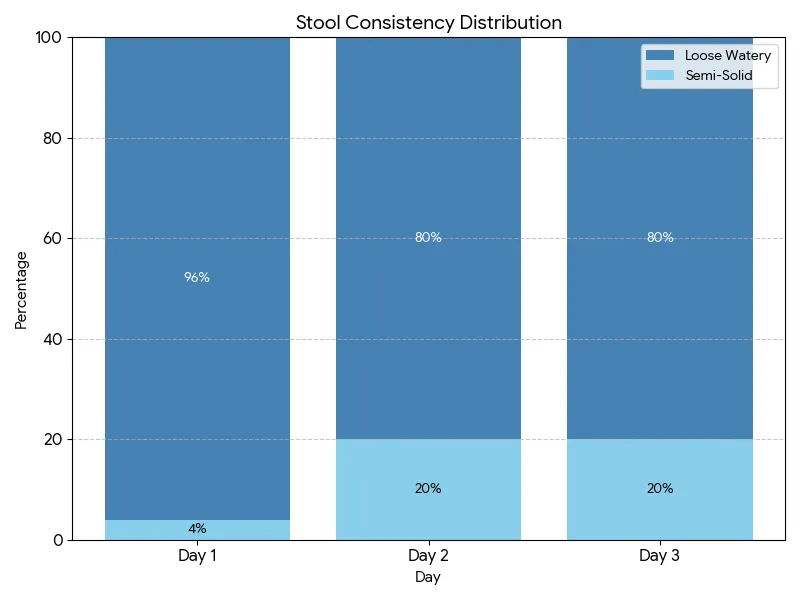
Figure 1: Stool Consistency For 3 Days
(Graphical representation showing progressive decline in mean diarrhoeal episodes from Day 1 to Day 3)
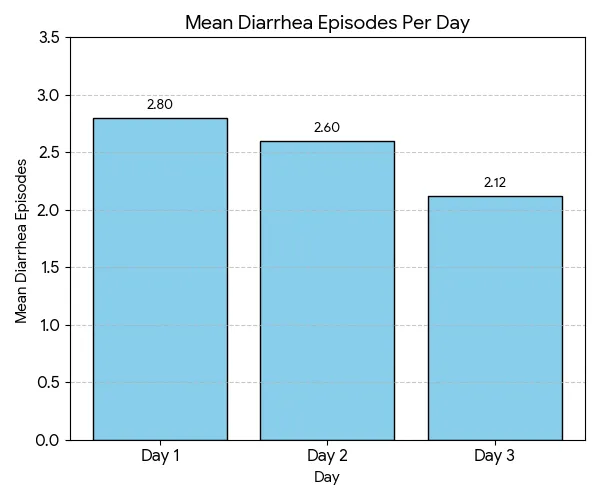
Figure 2: Mean Diarrhoea Frequency Over 3 Days
(Graphical display of declining trends of fever, abdominal pain, and nausea/vomiting from Day 1 to Day 3)
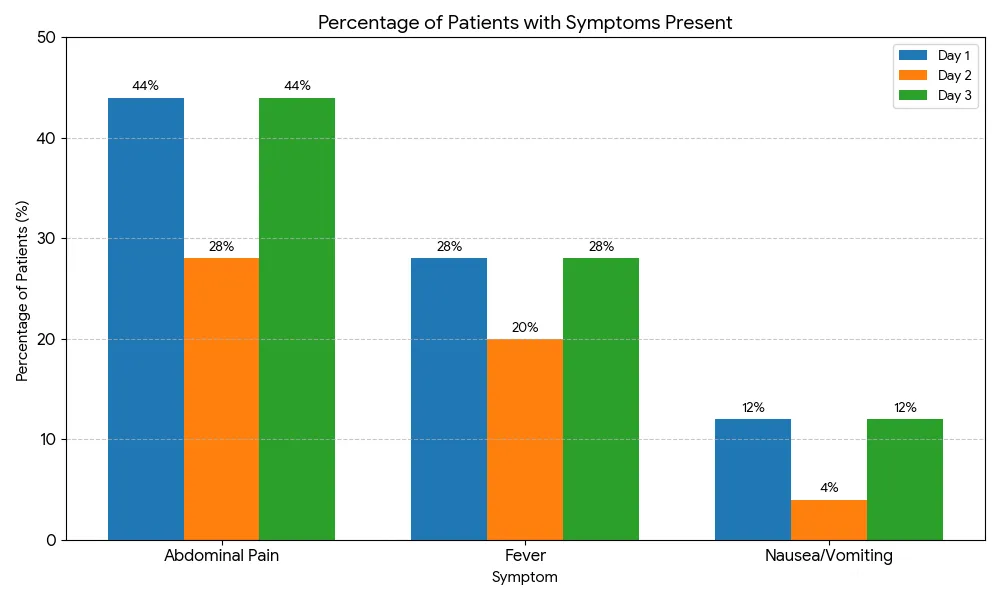
Figure 3: 3-Day Resolution of Associated Symptoms
Table 3: Summary of Clinical Improvement (Day 1 vs Day 3)
|
Parameter |
Day 1 |
Day 3 |
Absolute Change |
Relative Reduction |
p-value |
|
Loose Watery Stools (%) |
96.0 |
20.0 |
-76.0% |
79.2% |
<0.001* |
|
Diarrhoea Frequency (Mean) |
2.80 |
2.12 |
-0.68 |
24.3% |
<0.001* |
|
Fever Present (%) |
28.0 |
4.0 |
-24.0% |
85.7% |
0.009 |
|
Abdominal Pain Present (%) |
44.0 |
12.0 |
-32.0% |
72.7% |
0.002 |
|
Nausea/Vomiting Present (%) |
32.0 |
28.0 |
-4.0% |
12.5% |
0.001 |
*Statistically significant p<0.05
Other Details
Baseline Characteristics: The study cohort had 25 patients (64% males and 36% females) with a mean age of 45-50 years. The majority (64%) were aged between 41 and 60 years. At enrolment, 64% presented with clinical dehydration and 36% with altered consciousness. The commonest co-morbid conditions were Type 2 Diabetes (32%) and Hypertension (24%) in 60% of patients.
Stool Consistency: The dramatic and statistically significant improvement of stool consistency from the beginning to the end of the 3-day observation period was seen (Cochran's Q = 31.684, p<0.001). Loose watery stools decreased from 96% (24/25) on Day 1 to 80% (20/25) on Day 2 and only 20% (5/25) on Day 3. In contrast, semi-solid stool increased from 4% (1/25) on Day 1 to 20% (5/25) on Day 2 and 80% (20/25) on Day 3. Post-hoc pairwise evaluations demonstrated significant improvements across Day 1 to Day 3 (p<0.001) as well as Day 2 to Day 3 (p<0.001) as illustrated in Figure 1.
Diarrhoea Frequency: Between 2.80±0.82 occurrences on Day 1 through 2.60±0.65 on Day 2 but 2.12±0.60 on Day 3, the average daily frequency of stool dropped gradually and considerably (Cochran's Q = 21.778, p<0.001). Between day one and day 3, post-hoc evaluation indicated substantial improvements (p=0.002). Figure 2 illustrates this tendency.
Fever: The percentage of patients with fever dropped significantly from 28% (7/25) on day 1 to 20% (5/25) on day 2 and only 4% (1/25) on day 3. Post-hoc comparisons revealed a significant reduction between Day 1 and Day 3 (p=0.009). This trend is shown in figure 3.
Abdominal Pain: Abdominal pain significantly decreased from 44% (11/25) on Day 1 to 16% (4/25) on Day 2 and 12% (3/25) on Day 3 (Cochran's Q = 11.400, p=0.003). Post-hoc analysis confirmed a significant difference between Day 1 and Day 2 (p=0.007) and Day 1 and Day 3 (p=0.002).
Nausea and Vomiting: Significant improvement was observed in these symptoms (Cochran's Q = 12.286, p=0.002) with reduction from 32% (8/25) on Day 1 to 28% on Day 2 and 3. post-hoc comparison revealed significant improvement from day 1 to day 3 (p=0.001) and day 2 to day 3 (p=0.005).
DISCUSSION
Refractory diarrhoea continues to be a major clinical problem in HIV patients, particularly in those with advanced disease progression. Even though treatment with antiretroviral drugs is widely available, chronic diarrhoea still continues to impair nutrient absorption, delay normal clinical recovery, and increase morbidity. (8,17) In this regard, bovine colostrum has attracted attention as a potential therapeutic adjunct for gastrointestinal restoration due to its rich content of immunoglobulins, growth factors (IGF-1, TGF-β), lactoferrin, and antimicrobial peptides. (9,10) The aim of this study was to evaluate the effects of colostrum supplementation on clinical outcomes in patients with HIV and refractory diarrhoea. The present results demonstrate statistically significant and rapid clinical improvement in patients with oral supplementation of bovine colostrum. Significant change in stool consistency was seen in only 3 days from predominantly loose watery stools (96%) to semi-solid stools in 80% patients. These findings are in agreement with known biological properties of colostrum, which contains insulin-like growth factors (IGF-1) and transforming growth factor-β (TGF-β) important for mucosal healing, epithelial regeneration and restoration of gut barrier function. (11,20) Such a rapid improvement suggests colostrum may have a direct effect on the lining of the intestine to increase absorptive capacity and reduce inflammatory processes. Similarly, Barakat et al. demonstrated that bovine colostrum significantly reduced the frequency and severity of diarrhoea in children with acute diarrhoea, supporting its role in the recovery of the gastrointestinal system. (16) The significant reduction in the mean number of episodes of diarrhoea daily from 2.80 to 2.12 further supports this hypothesis. In a study by Florén et al. (13), HIV patients who were administered colostrum-based supplements showed a significant reduction in stool frequency from 7.0 to 1.3 evacuations per day. Kaducu and colleagues also reported a 79% decrease in stool frequency in HIV patients who were administered colostrum-based supplements for four weeks. (17) Even though our study was for a shorter duration (3 days), the consistency of a positive effect on stool frequency is notable and supports the potential of colostrum as an effective anti-diarrhoeal agent in HIV enteropathy. The study showed that, besides gastrointestinal symptoms, there were significant improvements in systemic parameters such as fever, abdominal pain and nausea/vomiting. By Day 3, the resolution of fever and abdominal pain may be due to improved hydration, reduced intestinal inflammation, and possibly decreased translocation of microbial products across a now more intact gut barrier. A key result is an improvement in hydration status since dehydration is a leading cause of morbidity in these patients. The findings of this study are similar to those of Plettenberg et al, who found clinical improvement in 64% of HIV patients with refractory diarrhoea treated with bovine colostrum immunoglobulins. (7) Treatment with 10 g/day of colostrum-derived immunoglobulins resulted in complete remission in 40% and partial remission in 24% of patients. The multiple benefits seen are likely due to the synergistic effect of the antimicrobial (immunoglobulins, lactoferrin) and trophic (growth factors) factors in colostrum. (10) Bovine colostrum mechanism of action in HIV associated diarrhoea is multifactorial. Firstly, its high immunoglobulin content (especially IgG) binds enteric Lactoferrin and lactoperoxidase are highly antimicrobial and may help control bacterial overgrowth and opportunistic infections. (10) Secondly, growth factors such as IGF-1 and TGF-β promote epithelial regeneration and repair, which is particularly useful in HIV enteropathy characterised by villous atrophy, crypt hyperplasia and compromised barrier function. (11,20) Thirdly, the anti-inflammatory properties of colostrum components may help reduce chronic inflammation associated with HIV infection and diarrhoea. (9)
Study Limitations: The study has several limitations. The short follow-up period (3 days) limits the ability to assess sustainability of observed benefits. The sample size was relatively small (N=25) and the lack of a placebo-controlled, randomized design introduces potential bias and limits definitive attribution of improvements solely to colostrum supplementation. Additionally, the study did not stratify patients by CD4 count or ART regimen, which may affect response. However, the consistency of improvement across multiple parameters strongly suggests therapeutic effect.
Clinical implications: The present study results are clinically promising, but not without limitations. They suggest that bovine colostrum, being safe, available and cheap, could be a useful adjunct therapy in the management of refractory diarrhoea in HIV patients, especially in resource-poor settings where access to advanced therapies is limited. (17) By improving gut health, colostrum may also improve absorption of ART and other essential nutrients, thereby potentially improving overall treatment outcomes and quality of life for PLHIV. (18)
CONCLUSIONS
This study demonstrates that short-term supplementation with bovine colostrum brings about significant and rapid clinical improvement in stool consistency, diarrhoea frequency and associated symptoms including fever, abdominal pain and nausea/vomiting in HIV patients with refractory diarrhoea. These findings support the therapeutic potential of bovine colostrum as a safe, affordable and effective adjunct to standard care in the management of HIV-associated enteropathy. These promising results need to be further investigated in large-scale, randomized, placebo-controlled trials with longer follow-up periods to validate these observations and to establish standardized dosing protocols.
REFERENCES



Shruti Sheelin, Deepak Chinagi*, Shalini Vagadurgi, Nivedita Patil, Role of Colostrum Supplementation in Refractory Diarrhoea in HIV Infected Patients, Int. J. Med. Pharm. Sci., 2026, 2 (8), 207-215. https://doi.org/10.5281/zenodo.21803598
 10.5281/zenodo.21803598