

We use cookies to ensure our website works properly and to personalise your experience. Cookies policy
Department of Pharmacy Practice, Hillside College of Pharmacy and Research Centre, Raghuvanahalli, Bengaluru – 560062, Karnataka, India
Pneumonia is a leading cause of hospitalization and mortality among children worldwide, and the initial empirical antibiotic regimen is frequently modified during hospitalization in response to the evolving clinical course. Such therapeutic switching has been documented in various settings, but prospective, India-specific data on its prevalence, types and reasons in hospitalized children with pneumonia remain limited. This prospective observational study was conducted over six months in the Paediatric Department of a tertiary care teaching hospital in Bengaluru, India, in children aged 6 months to 12 years with clinically or radiologically confirmed pneumonia. Of 209 children enrolled, 190 completed follow-up and were analysed; data on therapeutic modifications were obtained from treatment charts, physician notes and direct ward observation using a structured data collection form. Therapeutic switching occurred in 145 of 190 children (76.3%), at a mean of 4.20 ± 2.13 days after admission. Intra-class switching was the most frequent type (37.9%), followed by formulation change, principally intravenous-to-oral conversion (34.5%), and inter-class switching (33.8%); dose (11.0%) and frequency (0.7%) changes were less common, and some children underwent more than one type of switch. Clinical improvement, generally reflecting de-escalation or intravenous-to-oral step-down, accounted for most switches (77.2%), escalation to a broader-spectrum agent for 21.3%, and only 1.3% followed lack of response. Therapeutic switching is therefore common and largely improvement-driven in hospitalized paediatric pneumonia in this setting, supporting the development of structured switch protocols to standardize decision-making and reinforce antimicrobial stewardship.
Pneumonia remains one of the foremost causes of morbidity, hospitalization, and mortality in children under five years of age, particularly in developing countries such as India1. Empirical antibiotic therapy, selected on the basis of the patient’s age, disease severity, and locally prevalent pathogens, forms the cornerstone of initial management, as recommended by the Indian Academy of Paediatrics (IAP)2. The initial regimen is, however, frequently modified during the course of hospitalization in response to clinical improvement, inadequate response, adverse effects, or new diagnostic information, a practice broadly described as therapeutic switching, or sequential therapy3. Therapeutic switching may take several forms: intra-class switching (replacement of one agent with another within the same pharmacological class), inter-class switching (a change to an agent of a different class), formulation change (commonly, step-down from the intravenous to the oral route once the child is clinically stable), dose adjustment, or a change in dosing frequency. Unlike treatment failure, which denotes a lack of response despite completion of an intended course, therapeutic switching is generally an interim, evidence-informed adjustment made in response to the evolving clinical picture3. In children, such switching assumes particular relevance because of age-related pharmacokinetic variability, the difficulty of eliciting symptoms in young patients, and a higher risk of complications compared with adults. Structured early intravenous-to-oral switch practices have been associated with a safe reduction in intravenous antibiotic exposure and hospital stay in some paediatric cohorts4,5, yet the extent to which switching is actually implemented in routine practice, and the types and reasons underlying it, appear to vary considerably across settings; reported rates of timely, planned switching have been as low as 22% in some paediatric populations5,6. In India specifically, while the World Health Organization (WHO) and the IAP provide clear guidance on empirical first-line therapy, there is comparatively little structured, prospective documentation of how, when, and why therapy is subsequently modified once initiated in hospitalized children with pneumonia1,2. Understanding the prevalence, types, and reasons underlying therapeutic switching in this setting is of practical relevance: it can help clarify whether switching in routine practice is predominantly a planned, stewardship-aligned adjustment or a reactive response to inadequate initial therapy, and can inform the development of locally relevant, structured switch protocols. This study was accordingly designed to prospectively assess the prevalence, types, and reasons for therapeutic switching among children hospitalized with pneumonia at a tertiary care teaching hospital in Bengaluru, India.
MATERIALS AND METHODS:
This prospective observational study was conducted over a six-month period in the Paediatric Department of BGS Global Institute of Medical Sciences, Kengeri, a tertiary care teaching hospital in Bengaluru, Karnataka, India, in collaboration with the Department of Pharmacy Practice, Hillside College of Pharmacy and Research Centre, Bengaluru.
Children aged 6 months to 12 years with clinically and/or radiologically confirmed pneumonia, admitted for a minimum of 48 hours and initiated on antibiotic and supportive therapy, were eligible for inclusion after written informed consent was obtained from a parent or legal guardian. Children younger than 6 months or older than 12 years; those with significant chronic comorbidities or structural anomalies (e.g., congenital heart disease, epilepsy); immunocompromised children, including those with HIV infection, severe acute malnutrition, malignancy, or prolonged immunosuppressive therapy; children discharged against medical advice before outcome assessment; and children whose guardians declined or were unable to provide consent were excluded. Based on an initially calculated minimum sample size of 188, adjusted by approximately 10% to 209 to allow for possible loss to follow-up, 209 children were enrolled; 19 (9.1%) were subsequently excluded because of loss to follow-up, leaving 190 children (90.9%) for final analysis. Data were prospectively collected using a structured, pre-piloted data collection form, from treatment charts, medication orders, physician progress notes, and direct observation during daily ward rounds, supplemented by discussion with treating physicians regarding the rationale for treatment modification. For each child, the initial antimicrobial and supportive regimen was recorded, and any subsequent modification was documented and classified as intra-class switching (replacement within the same drug class), inter-class switching (change to a drug of a different class), formulation change (principally intravenous-to-oral conversion), dose adjustment, or frequency change, together with the day of switch relative to admission and the documented clinical or non-clinical reason. Where more than one type of switch occurred in the same child, each was recorded individually. Data were entered in Microsoft Excel (Microsoft Corp., Redmond, WA, USA) and analysed using SPSS version 29 (IBM Corp., Armonk, NY, USA). Continuous variables (e.g., day of switch) are presented as mean ± standard deviation with range; categorical variables (e.g., type of and reason for switch, demographic and clinical characteristics) are presented as frequencies and percentages, including cross-tabulation against age group, sex, nutritional status, immunization status, and diagnosis. The study was approved by the Institutional Ethics Committee of BGS Global Institute of Medical Sciences, Bengaluru (Ref: IEC BGS GIMS/APP/JUN/07/2025-26) and was conducted in accordance with the ethical principles of the Declaration of Helsinki. Written informed consent was obtained from the parent or legal guardian of each participating child prior to enrolment.
RESULTS:
Of 209 children enrolled over the six-month study period, 19 (9.1%) were lost to follow-up and excluded from analysis; the remaining 190 children (90.9%) constituted the study population. The baseline demographic and clinical characteristics of these 190 children are summarized in Table 1. The largest age subgroup was late childhood (6–12 years; 40.5%), and a slight male predominance was observed (55.3%). Most children had normal nutritional status (66.3%) and were only partially immunized (62.6%); bronchopneumonia was the predominant radiological diagnosis (90.6%).
Table 1: Baseline Demographic And Clinical Characteristics Of The Study Population (N = 190)
|
Variable |
Category |
n |
% |
|
Age group (years) |
0.6–2 (toddlerhood) |
62 |
32.6 |
|
|
3–5 (early childhood) |
51 |
26.8 |
|
|
6–12 (late childhood) |
77 |
40.5 |
|
Sex |
Male |
105 |
55.3 |
|
|
Female |
85 |
44.7 |
|
Nutritional status |
Normal |
126 |
66.3 |
|
|
Underweight |
28 |
14.7 |
|
|
Overweight |
20 |
10.5 |
|
|
Obese |
16 |
8.4 |
|
Immunization status |
Fully immunized |
68 |
35.8 |
|
|
Partially immunized |
119 |
62.6 |
|
|
Not immunized |
3 |
1.6 |
|
Diagnosis |
Bronchopneumonia |
172 |
90.6 |
|
|
Lobar pneumonia |
13 |
6.8 |
|
|
Community-acquired pneumonia |
5 |
2.6 |
A therapeutic switch was required in 145 of the 190 children (76.3%), whereas 45 (23.7%) continued on their initial regimen without modification (Figure 1). The mean day of switch, relative to admission, was 4.20 ± 2.13 days (range, 1–19 days), indicating that most treatment modifications occurred within the first week of hospitalization (Table 2).
Table 2: Prevalence and Timing Of Therapeutic Switching
|
Parameter |
Value |
|
Prevalence |
|
|
Children with therapeutic switch, n (%) |
145 (76.3) |
|
Children without therapeutic switch, n (%) |
45 (23.7) |
|
Timing |
|
|
Day of switch, mean ± SD (days) |
4.20 ± 2.13 |
|
Day of switch, range (days) |
1–19 |
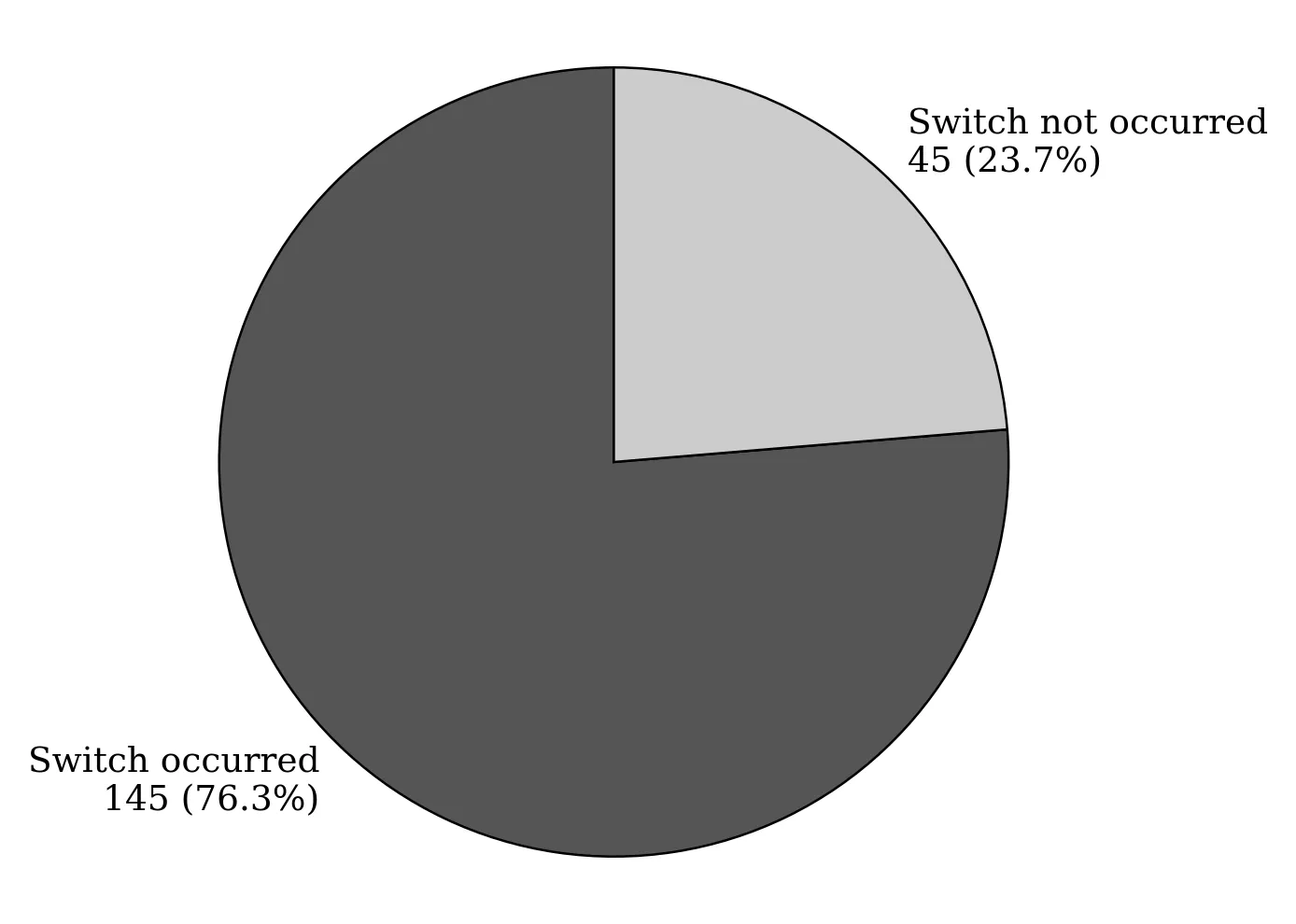
Figure 1: Prevalence of therapeutic switching among hospitalized children with pneumonia (N = 190).
The occurrence of switching was broadly distributed across demographic and clinical subgroups, without a marked concentration in any single category (Table 3). Children who underwent switching were somewhat more often male, of normal nutritional status, partially immunized, and diagnosed with bronchopneumonia, a pattern that largely mirrored the composition of the overall study population (Table 1) rather than indicating a distinct high-risk subgroup.
Table 3: Prevalence of Therapeutic Switch According to Demographic and Clinical Variables
|
Variable |
Category |
Switch occurred n (%)* |
Switch not occurred n (%)* |
|
Age group (years) |
0.6–2 |
49 (33.8) |
13 (28.9) |
|
|
3–5 |
39 (26.9) |
12 (26.7) |
|
|
6–12 |
57 (39.3) |
20 (44.4) |
|
Sex |
Male |
78 (53.8) |
27 (60.0) |
|
|
Female |
67 (46.2) |
18 (40.0) |
|
Nutritional status |
Normal |
99 (68.3) |
27 (60.0) |
|
|
Underweight |
22 (15.2) |
6 (13.3) |
|
|
Overweight |
17 (11.7) |
3 (6.7) |
|
|
Obese |
7 (4.8) |
9 (20.0) |
|
Immunization status |
Fully immunized |
44 (30.3) |
24 (53.3) |
|
|
Partially immunized |
98 (67.6) |
21 (46.7) |
|
|
Not immunized |
3 (2.1) |
0 (0.0) |
|
Diagnosis |
Bronchopneumonia |
131 (90.3) |
41 (91.1) |
|
|
Lobar pneumonia |
11 (7.6) |
2 (4.4) |
|
|
Community-acquired pneumonia |
3 (2.1) |
2 (4.4) |
*Column percentages are calculated within the switch-occurred (n = 145) and switch-not-occurred (n = 45) groups, respectively.
Among the 145 children who underwent switching, intra-class switching was the most frequent type (37.93%), followed closely by formulation change, principally intravenous-to-oral conversion (34.48%), and inter-class switching (33.79%); dose adjustment (11.03%) and frequency change (0.69%) were comparatively uncommon (Table 4, Figure 2). Because some children underwent more than one type of switch, these proportions are not mutually exclusive and do not sum to 100%.
Table 4: Types of Therapeutic Switch Among Children Who Underwent Switching (N = 145) *
|
Type of switch |
n |
% |
|
Intra-class switching |
55 |
37.93 |
|
Formulation change |
50 |
34.48 |
|
Inter-class switching |
49 |
33.79 |
|
Dose change |
16 |
11.03 |
|
Frequency change |
1 |
0.69 |
*Some children underwent more than one type of switch; percentages therefore do not sum to 100%.
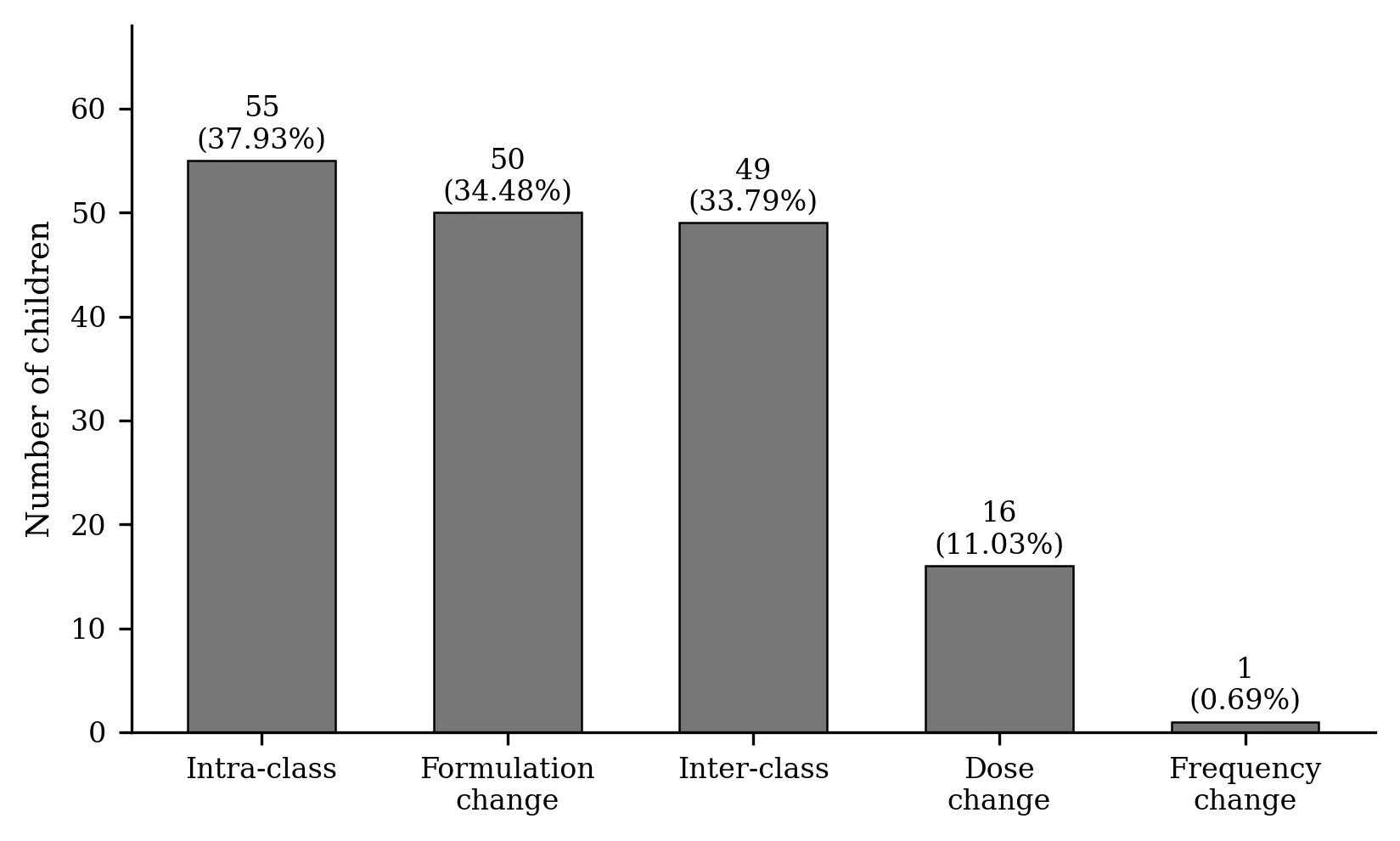
Figure 2: Types of therapeutic switch among children who underwent switching (n = 145). Percentages are not mutually exclusive (see Table 4).
When examined by age group, inter-class switching and formulation change predominated among toddlers (0.6–2 years), whereas intra-class switching and formulation change were the most frequent types in early childhood (3–5 years) and late childhood (6–12 years). By immunization status, partially immunized children accounted for the largest share of every switch type, consistent with their predominance in the overall cohort. By diagnosis, children with bronchopneumonia accounted for most switches across all types, while switching among children with lobar pneumonia and community-acquired pneumonia was comparatively infrequent, reflecting the smaller number of children with these diagnoses. The most frequently documented reason for switching was clinical improvement, generally corresponding to de-escalation or intravenous-to-oral step-down, accounting for 112 of 145 switches (77.2%). Escalation to a broader-spectrum antibiotic because of an inadequate initial response accounted for 31 switches (21.3%), while only 2 switches (1.3%) followed frank lack of response to therapy (Table 5).
Table 5: Reasons for Therapeutic Switch (N = 145)
|
Reason for switch |
n |
% |
|
Clinical improvement (de-escalation / IV-to-oral step-down) |
112 |
77.2 |
|
Escalation to broader-spectrum agent (inadequate response) |
31 |
21.3 |
|
Lack of response |
2 |
1.3 |
Clinical improvement was the predominant reason for switching across all age groups, sexes, nutritional categories, immunization statuses, and diagnostic subgroups, consistent with its overall predominance in the cohort. Escalation to a broader-spectrum agent was distributed relatively evenly across these subgroups, while the two instances of switching due to lack of response were both recorded among fully immunized children in the late-childhood age group.
DISCUSSION:
This prospective study found that therapeutic switching occurred in more than three-fourths of hospitalized children with pneumonia (76.3%), at a mean of 4.2 days after admission. This prevalence is considerably higher than the 5.8% early (by day 3) and 30.8% pre-discharge intravenous-to-oral switch rates reported by Deshpande et al. in a large adult cohort with community-acquired pneumonia across United States hospitals7, and higher than the 22% timely-switch rate reported by Morales-Junior et al. in hospitalized children with uncomplicated community-acquired pneumonia, where switching was frequently triggered by incidental loss of intravenous access rather than by planned clinical assessment5. Our findings are, however, more comparable to the pattern described by In-iw et al., in whom early, planned switch therapy was feasible and non-inferior to conventional therapy in a paediatric community-acquired pneumonia cohort8. The comparatively high switching rate observed in our cohort may reflect close daily clinical monitoring in a tertiary teaching-hospital setting, together with a practice of routinely reassessing therapy once fever and respiratory distress began to resolve; direct comparison across these studies should nonetheless be made cautiously, given differences in patient age, setting, and switch definitions. Intra-class switching was the most frequent type recorded (37.9%), closely followed by formulation change, principally intravenous-to-oral step-down (34.5%), and inter-class switching (33.8%); dose and frequency adjustments were comparatively uncommon. This pattern, in which within-class substitution and route conversion outweighed outright change of antimicrobial class, is broadly consistent with a stewardship-oriented approach in which the antimicrobial spectrum is preserved or narrowed rather than broadened. The frequency of formulation (intravenous-to-oral) switching in our cohort aligns with a wider move, illustrated by Cotter et al., toward oral-first or early-switch antibiotic strategies in paediatric pneumonia, which have been associated with reduced healthcare resource utilization without an increase in adverse outcomes9. Switching patterns also appeared to vary somewhat by age, immunization status, and underlying diagnosis in this cohort; however, several subgroups were small, and because a given child could undergo more than one type of switch, these distributions should be viewed as descriptive rather than as evidence of differential risk. Obese children were the only subgroup in which switching was not the predominant course, with 7 of 16 children (43.8%) undergoing a modification of therapy; given the very small number of children in this category, this observation is best regarded as incidental rather than as evidence that nutritional status influences switching practice. The majority of switches in this cohort were prompted by clinical improvement (77.2%), generally corresponding to de-escalation or intravenous-to-oral step-down, while escalation to a broader-spectrum agent because of inadequate initial response accounted for a smaller proportion (21.3%), and outright lack of response accounted for only 1.3%. This distribution is consistent with the switch criteria recommended in the American Thoracic Society and Infectious Diseases Society of America guidelines, which advocate conversion to oral therapy once a patient is afebrile, clinically stable, and able to tolerate oral intake10, and mirrors the reasons for switching identified in the SEQUENCE cohort of hospitalized adults with gram-positive infection, where switch criteria were explicitly defined by fever resolution, haemodynamic stability, and normalizing white blood cell counts, rather than physician judgment alone11. The escalation rate observed here (21.3%) was higher than the approximately 10% reported by Pokhrel et al. in a cohort of Nepalese children with community-acquired pneumonia admitted to a tertiary care public hospital12; we are not aware of comparable, India-specific paediatric pneumonia data against which to directly benchmark this figure, and this comparison should therefore be interpreted with due caution. The clinical relevance of documenting the reasons for such switches is further underscored by the observation, reported by Bekele et al. in Ethiopian children with severe pneumonia, that antibiotic modification during treatment can itself be associated with the subsequent trajectory of recovery13, reinforcing the value of understanding not only whether switching occurs, but why. Taken together, these findings suggest that therapeutic switching is common in this setting and appears to be predominantly an improvement-driven, stewardship-consistent practice rather than a reactive response to treatment failure. This is broadly reassuring, though it should be interpreted in the context of the descriptive design of this study, which did not include microbiological confirmation of the causative organism and relied on the treating clinicians’ documented rationale for each switch. Locally derived, structured switch protocols, of the kind evaluated for short-course antibiotic therapy in other paediatric cohorts14, may help standardize the timing and criteria for such modifications and further embed antimicrobial stewardship principles into routine paediatric pneumonia care in Indian tertiary care hospitals.
CONCLUSION:
In this prospective observational study of children hospitalized with pneumonia at a tertiary care hospital in Bengaluru, therapeutic switching was observed in more than three-fourths of patients, most commonly within the first week of admission. Intra-class substitution, intravenous-to-oral formulation change, and inter-class switching were the predominant types, while clinical improvement rather than treatment failure accounted for the large majority of switches. These findings suggest that, in this setting, therapeutic switching is chiefly practiced as a planned, stewardship-consistent adjustment to therapy rather than as a rescue measure for non-response. Prospective, multicentric studies incorporating microbiological confirmation and standardized switch criteria are needed to validate these observations and to support the development of structured, evidence-based switch protocols for paediatric pneumonia in Indian tertiary care settings.
ACKNOWLEDGEMENT:
We are heartily thankful to Dr. Purnima Samayam, Professor and Head of the Department of Paediatrics, BGS Global Institute of Medical Sciences, Kengeri, Bengaluru, for her inspiring guidance and constant encouragement throughout the project work. We would also like to extend our sincere gratitude to Kavya M, Lecturer in Statistics, Department of Statistics, KLE Institutions, for her valuable statistical guidance and support in the analysis of data for this study. We are also grateful to the medical and nursing staff of BGS Global Institute of Medical Sciences, Kengeri, Bengaluru, for their cooperation and support during data collection, and to the parents and guardians of the participating children for their consent and cooperation throughout the study.
CONFLICTS OF INTEREST:
The authors declared no conflict of interest.
REFERENCES


Shravya C.*, Rasmi Debnath, Priyanka Halder, Priyanka Sarkar, Yadhava Murthy, Pooja N. Y., Jesindha Beyatricks, Prevalence, Types, And Reasons for Therapeutic Switching in Hospitalized Children with Pneumonia: A Prospective Observational Study, Int. J. Med. Pharm. Sci., 2026, 2 (10), 73-80. https://doi.org/10.5281/zenodo.23119033
 10.5281/zenodo.23119033