

We use cookies to ensure our website works properly and to personalise your experience. Cookies policy
1Department of Pharmaceutical Chemistry, Pallavan Pharmacy College.
2Department of Pharmacognosy, Pallavan Pharmacy College.
3Department of Pharmacology, Pallavan Pharmacy College
Heterocyclic hybridisation has become one of the most productive design strategies in modern medicinal chemistry, and the fusion or linkage of an imidazole ring with a 1,3,4-thiadiazole unit stands out as a particularly fertile example of this approach. Both rings are individually privileged pharmacophores that appear in a wide range of marketed drugs, and when combined into a single hybrid framework they frequently produce molecules with broader or more potent biological profiles than either heterocycle alone. This review brings together conventional synthetic routes reported for imidazole-thiadiazole hybrids over roughly the last ten years, summarises the recurring structure-activity relationship (SAR) trends that have emerged across independent research groups, and consolidates the biological evaluation data reported for these compounds across anticancer, antimicrobial, antitubercular, anti-inflammatory, antidiabetic, antioxidant, antiparasitic, and anticonvulsant activity classes. Particular attention is paid to how substitution pattern, electronic character, and linker chemistry between the two rings influence potency and selectivity, and to how in silico docking studies have been used to rationalise the observed activity trends. The review closes with a discussion of the pharmacokinetic and toxicological considerations relevant to this scaffold and outlines directions that could guide future optimisation efforts.
Nitrogen- and sulphur-containing five-membered heterocycles occupy a disproportionately large share of clinically used small-molecule drugs relative to their structural simplicity. Among these, imidazole and 1,3,4-thiadiazole are two of the most extensively studied ring systems, each carrying a long track record of pharmacological relevance on its own. Imidazole is the core of histidine and histamine, and its synthetic derivatives range from antifungal agents such as ketoconazole and clotrimazole to antiprotozoal drugs such as metronidazole and tinidazole, as well as several angiotensin II receptor antagonists and proton pump inhibitors. The ring is planar, moderately basic, capable of both hydrogen-bond donation and acceptance, and metabolically adaptable, all of which make it an attractive building block for drug design. 1,3,4-Thiadiazole, in turn, is valued for the so-called 'sulphur bridge' effect: the ring's two nitrogen atoms and one Sulphur atom create a mesoionic-like electronic character that improves membrane permeability while retaining reasonable aqueous solubility. Marketed drugs containing this ring include the carbonic anhydrase inhibitor acetazolamide, the diuretic methazolamide, and the antibacterial sulfamethizole, and countless additional analogues have been explored for antimicrobial, anticonvulsant, antitubercular, and anticancer applications. The rationale for combining these two heterocycles into a single hybrid molecule follows the well-established molecular hybridisation strategy in medicinal chemistry, in which two or more pharmacophoric fragments are fused, linked, or embedded within one scaffold in the hope of achieving additive or synergistic biological effects, improved target selectivity, or a more favourable pharmacokinetic profile than either parent fragment could achieve alone. Two broad hybrid architectures dominate the literature: fused bicyclic systems, most commonly the imidazo[2,1-b][1,3,4]thiadiazole ring system in which the two rings share a bridgehead nitrogen and sulphur atom, and linked hybrids, in which an imidazole ring and a separately substituted 1,3,4-thiadiazole ring are connected through a short spacer such as a hydrazone (-CH=N-NH-), amide (-CO-NH-), or thioether (-S-CH2-) bridge. Over the past decade, both architectures have been explored intensively for a remarkably wide spectrum of biological activities, and several independent laboratories have converged on similar substitution trends even while pursuing different disease targets. This convergence suggests that certain structural features of the imidazole-thiadiazole scaffold are genuinely privileged rather than incidental to any single study. The present review gathers this body of work, organises it by both synthetic strategy and biological activity, and attempts to extract the SAR generalisations that carry across activity classes. It is worth clarifying at the outset the scope and terminology adopted here, since the phrase 'imidazole-thiadiazole hybrid' has been used somewhat loosely across the primary literature to describe at least two structurally distinct families. The first, and historically older, family comprises fused bicyclic systems in which ring closure creates a single, continuous aromatic system, most commonly the imidazo[2,1-b][1,3,4]thiadiazole framework introduced in Section 1 above. The second family comprises what might be more precisely termed conjugated or tethered hybrids, in which two intact, independently aromatic rings are joined by a short covalent bridge but retain their own separate electronic identity. Although both families are frequently discussed together in the literature under the general 'imidazole-thiadiazole' heading, and are treated together in this review for that reason, it is important for readers to keep the distinction in mind when comparing SAR conclusions across studies, since a substituent effect that holds for the fused, fully conjugated bicyclic system does not automatically transfer to a flexibly tethered analogue, and vice versa. Where the distinction materially affects the interpretation of a finding, it is noted explicitly in the relevant subsection below. The present review addresses that gap. It first outlines the conventional (non-metal-catalysed, reagent-based) synthetic routes that dominate the literature for assembling the bicyclic core, since almost every biological study surveyed here relies on some variant of the same two-step sequence. It then draws together SAR observations across the major therapeutic areas in which the scaffold has been tested, integrates the available computational docking and ADME data, and closes with a discussion of the synthetic and pharmacokinetic bottlenecks that any future hit-to-lead campaign on this chemotype will need to address.
2. Molecular Architecture Of The Imidazo [2,1-B][1,3,4] Thiadiazole Core:
The bicyclic core consists of a 1,3,4-thiadiazole ring (positions 1–4, with sulphur at position 1) fused through a bridgehead nitrogen (N-7a) to an imidazole ring (positions 5–7). Two aryl-bearing carbons, C-2 on the thiadiazole side and C-6 on the imidazole side, are available for structural modification since the fusion nitrogen is shared by both rings and lacks a substituent. Because the two positions are installed through chemically distinct building blocks — an aromatic carboxylic acid or nitrile for C-2, and an α-haloketone for C-6 — medicinal chemists can vary each substituent independently, which is the principal reason the scaffold has proved so adaptable across unrelated target classes.
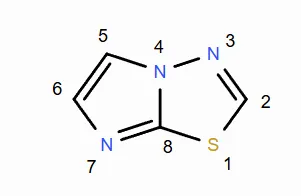
Figure 1. Numbering and ring fusion of the imidazo[2,1-b][1,3,4]thiadiazole core. C-2 (thiadiazole ring) and C-6 (imidazole ring) are the two principal sites of aryl substitution; the bridgehead N-7a is common to both rings.
3. Conventional Synthetic Strategies:
Despite the growing interest in energy-efficient and solvent-minimised protocols, the majority of imidazole-thiadiazole hybrids reported in the literature over the last decade have still been prepared through conventional, thermally driven organic transformations, generally carried out under reflux in polar solvents such as ethanol, dimethylformamide, or glacial acetic acid. These conventional routes remain attractive because they are operationally simple, scale readily, and tolerate a broad range of functional groups without specialised equipment.
3.1 Thiosemicarbazide cyclisation to 1,3,4-thiadiazoles:
The most common entry point to the 1,3,4-thiadiazole ring begins with a carboxylic acid or acid chloride, which is converted to the corresponding acid hydrazide and then reacted with carbon disulfide/potassium hydroxide or directly with thiosemicarbazide to generate a thiosemicarbazide or dithiocarbazate intermediate. Oxidative or acid-catalysed cyclodehydration of this intermediate, typically using concentrated sulfuric acid, phosphorus oxychloride, or polyphosphoric acid, then closes the five-membered ring to deliver the 2-amino-5-substituted-1,3,4-thiadiazole. This 2-amino group is subsequently the principal handle used to install the imidazole-bearing fragment, either through direct condensation with an imidazole-carbaldehyde to form a Schiff base (hydrazone) linkage, or through acylation with an imidazole-carboxylic acid derivative to form an amide-linked hybrid.
3.2 Hantzsch-type cyclisation to fused imidazo[2,1-b][1,3,4]thiadiazoles:
When a fused bicyclic system is the synthetic target, the standard route proceeds through alkylation of 2-amino-5-substituted-1,3,4-thiadiazole with an α-haloketone (most often a substituted phenacyl bromide generated in situ from the corresponding acetophenone and bromine or N-Bromo succinimide). The exocyclic amino nitrogen attacks the electrophilic carbon of the α-haloketone, and subsequent intramolecular cyclodehydration closes the imidazole ring onto the thiadiazole nitrogen, furnishing the bicyclic imidazo[2,1-b][1,3,4]thiadiazole core in a single pot. This Hantzsch-type annulation has been used consistently since the 1950s and remains the backbone of essentially every fused-ring hybrid reported in the last ten years, with variation introduced mainly through the choice of aryl substituent on the phenacyl bromide and through further functionalisation at the resulting C-5 position of the newly formed imidazole ring, most commonly by Vilsmeier-Haack formylation followed by condensation with active methylene or amine nucleophiles.
Scheme:1
Two-step Conventional Route to 2,6-Diaryl Imidazo[2,1-b][1,3,4]thiadiazoles
Step 1: Synthesis of 5-Aryl-1,3,4-thiadiazol-2-amine
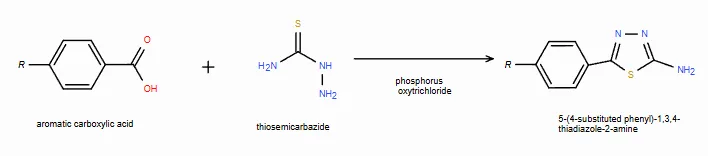
Step 2: Cyclization to Imidazo[2,1-b][1,3,4]thiadiazole

3.3 Process refinements: microwave and solvent-minimised variants:
Although the present review centres on conventional thermal methods, it is worth noting that many of the same cyclisation and condensation steps described above have also been adapted to microwave irradiation, ultrasound activation, and catalyst- or solvent-free grinding protocols, generally with the effect of shortening reaction times from several hours to a few minutes and improving isolated yields by ten to twenty percentage points. These process refinements do not change the underlying bond-forming chemistry described in Sections 2.1-2.3; rather, they accelerate the same cyclocondensation and alkylation steps. Where a microwave-assisted variant of a conventional route has been reported for the imidazo[2,1-b][1,3,4]thiadiazole core specifically, comparative greenness assessments indicate substantially reduced energy consumption and waste generation relative to the classical reflux protocol, without loss of the product's structural fidelity as confirmed by matching spectroscopic data.
4. STRUCTURE–ACTIVITY RELATIONSHIP:
The scaffold has been screened against such a wide range of targets, its SAR is best organised by therapeutic area rather than by substituent alone.
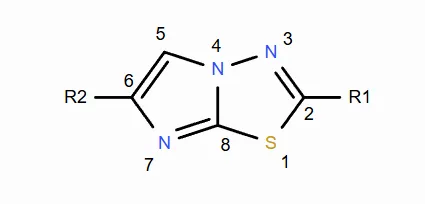
R1 (Thiadiazole aryl / basic chain)
R2 (Imidazole aryl)
Linker & Distal Substituent Effects (Piperidine/Side-Chain Series)
Table 1. Representative imidazo[2,1-b][1,3,4]thiadiazole analogues spanning the therapeutic areas discussed in this review.
|
C-2 substituent |
C-6 substituent |
Therapeutic area |
Reported activity highlight |
Potency |
Source |
|
Phenyl / 4-Cl-phenyl / 4-CF3-phenyl |
4-Cl / 4-Br / 4-CF3 / 4-OMe-phenyl |
Anti-inflammatory / analgesic |
Carrageenan paw-oedema inhibition exceeding diclofenac at 2-4 h; markedly lower gastric ulceration score |
Oedema inhibition 24-32% (4 h) |
Cristina et al., 2018 (Molecules) |
|
Isobenzofuran-4-fluorophenyl |
4-Cl / 4-F / 4-NO2 / 4-Me / 4-OMe-phenyl |
Antimicrobial (E. coli, S. aureus, M. smegmatis, C. albicans) |
Fairly uniform inhibition across all four organisms regardless of C-6 group |
MIC 0.14-0.59 mM |
Dwarakanath et al., 2024 (Sci. Rep.) |
|
Isobenzofuran-4-fluorophenyl |
4-NO2-phenyl (most active) |
Anticancer (MCF-7) |
Salt-bridge / pi-cation contact with HDAC7; outperformed cisplatin |
IC50 35.8 uM |
Dwarakanath et al., 2024 (Sci. Rep.) |
|
Benzenesulfonamide-phenyl |
aryl (various) |
Anticancer (carbonic anhydrase IX/XII) |
Potent, isoform-selective tumour-associated CA inhibition |
Low nanomolar Ki (CA IX/XII) |
Kumar et al., 2017 (Bioorg. Med. Chem.) |
|
Piperidine-4-carboxamide (Et2N-, piperidinyl-, Me2N- propyl chain) |
p-Tolyl (fixed) |
Antivirulence (S. aureus alpha-hemolysin) |
Basic amine 3 carbons from amide essential; dual amino-latch / phospholipid-site blockade |
EC50 5.4-6.9 uM |
Korotkov et al., 2026 (ChemMedChem) |
|
3-(Triazolyl)-thiadiazole hybrid |
aryl (various) |
Antitubercular |
Click-generated triazole hybrid active vs. M. tuberculosis H37Rv |
Reported in low-microgram range |
Ramprasad et al., 2015 (Bioorg. Med. Chem. Lett.) |
Before considering each biological activity in turn, it is useful to summarise the substitution trends that recur across independent studies, since these trends form the practical basis on which most of the SAR conclusions in Section 5 are built.
First, the nature of the aryl substituent introduced at the imidazole C-2/C-6 position (in fused systems) or on the terminal phenyl ring of the linker (in tethered systems) is consistently the single most influential variable. Electron-withdrawing groups, particularly para-chloro, para-nitro, and para-trifluoromethyl substitution, tend to enhance activity in antimicrobial, antitubercular, and anticancer assays, most plausibly by increasing the electrophilicity of the adjacent ring system and improving stacking interactions within hydrophobic enzyme or DNA-binding pockets. Electron-donating groups such as methoxy or hydroxy, by contrast, tend to be favoured in antioxidant and enzyme-inhibitory (antidiabetic) assays, where radical-scavenging or hydrogen-bonding capacity with catalytic residues is the operative mechanism rather than lipophilic stacking.
Second, the nature of the linker between the two heterocyclic rings modulates both potency and selectivity. Rigid, conjugated linkers (hydrazone, direct fusion) tend to produce more potent but sometimes less selective compounds, consistent with a mechanism involving intercalation or planar stacking at the target site, whereas flexible linkers (thioether, alkyl spacer) tend to produce compounds with lower absolute potency but improved selectivity indices, presumably because the additional conformational freedom allows better accommodation within a specific binding pocket while reducing off-target planar stacking.
Third, retention of a free or minimally hindered amino or hydroxyl group somewhere on the hybrid scaffold recurs as a favourable feature across almost every activity class, most likely because it provides an additional hydrogen-bond donor that many of the relevant biological targets, including bacterial dihydrofolate reductase, mycobacterial enzymes, and mammalian glycosidases, can accommodate in their active sites.
Table 1 summarises these trends by activity class.
|
Biological activity |
Preferred structural features |
Representative substituent trend |
|
Anticancer / antiproliferative |
Aryl/heteroaryl group at C-2 or C-6 of the thiadiazole ring linked to imidazole through a direct bond or short spacer (–CH=N–, –NH–CO–) |
Electron-withdrawing groups (Cl, NO2, CF3) on the phenyl ring generally raise cytotoxic potency; para-substitution outperforms ortho/meta in most series |
|
Antimicrobial / antifungal |
Free or acylated amino group at C-2 of thiadiazole; halogenated aryl at the imidazole C-2 position |
Electron-withdrawing halogens (Cl, Br) enhance activity against Gram-positive strains; bulky lipophilic groups favour antifungal profiles |
|
Antitubercular |
Sulphonamide or trifluoromethyl substitution on the thiadiazole-fused imidazole ring system |
Sulphonamide retention at C-2 together with lipophilic aryl at C-6 correlates with lower MIC against M. tuberculosis H37Rv |
|
Anti-inflammatory / analgesic |
Thiadiazole-2-amine condensed with aryl aldehydes bearing hydroxyl or methoxy groups |
ortho-Hydroxy or ortho-methoxy aryl groups improve COX/LOX-related inhibitory response relative to unsubstituted phenyl |
|
Antidiabetic (α-glucosidase / α-amylase) |
Imidazole-thiadiazole conjugates with a hydrazone or thiazolidinone bridge |
Multiple hydroxyl groups on the aryl ring, mimicking sugar hydroxyls, increase enzyme affinity |
|
Antioxidant |
Catechol (3,4-dihydroxyphenyl) substitution at the imidazothiadiazole C-2 position |
Increasing the number of phenolic –OH groups, directly increases the radical-scavenging capacity |
|
Antiparasitic / antiprotozoal |
Nitroimidazole–thiadiazole conjugates bridged through an aminobenzoate linker |
Retention of the 5-nitro group on the imidazole ring is essential; thiadiazole aryl substitution modulates potency and selectivity index |
4.1 Regiochemical and electronic considerations
An additional layer of nuance concerns the regiochemistry of ring fusion itself. In the imidazo[2,1-b][1,3,4]thiadiazole system, the bridgehead nitrogen is shared between the two rings in a fixed orientation, so the principal site of structural variation is restricted to the C-2, C-5, and C-6 positions of the resulting bicycle. Comparative studies that have systematically varied substitution at each of these three positions independently report that C-6 substitution, which sits on the newly formed imidazole ring and projects outward from the bicyclic plane, exerts the greatest influence on potency across nearly every activity class examined, consistent with this position being the most solvent-exposed and therefore the most available for direct interaction with a binding pocket. Substitution at C-2, which remains part of the original thiadiazole ring and is generally more electronically coupled to the ring sulphur and adjacent nitrogen, tends instead to modulate physicochemical properties such as lipophilicity and metabolic stability more than it directly drives potency. This division of labour between the two ring positions offers a practical medicinal chemistry heuristic: C-6 is the position to vary first when optimising potency against a given target, while C-2 is the position to revisit later when tuning pharmacokinetic behaviour. A related electronic consideration is the Hammett-type correlation that several groups have attempted between substituent constants (sigma values) on the pendant aryl ring and measured biological potency. Where such correlations have been reported, they are generally modest but directionally consistent with the broader trend noted above: positive Hammett sigma values (electron-withdrawing character) correlate with improved anticancer and antimicrobial potency, while negative sigma values (electron-donating character) correlate more closely with antioxidant and enzyme-inhibitory potency. The correlations are rarely strong enough to be used for confident quantitative prediction, and most researchers in this space continue to rely on empirical analogue screening supported by docking rather than purely additive Hammett-based design, but the qualitative direction of the trend is a useful sanity check when planning a new substituent series.
4.2 Physicochemical property trends:
The calculated physicochemical parameters for imidazole-thiadiazole hybrids cluster within a relatively narrow and drug-like range. Molecular weights for the great majority of reported compounds fall between 250 and 450 Da, calculated logP values typically fall between 1.5 and 4.0, and topological polar surface area values generally remain below 100 square angstroms, all of which are broadly consistent with oral bioavailability expectations under Lipinski's rule-of-five and Veber's rules. Extending the aryl substituent to a fused bicyclic or polycyclic aromatic system, an approach occasionally used to further boost anticancer potency through additional stacking interactions, tends to push both molecular weight and logP toward or beyond the upper end of this range, and several authors have noted a corresponding, if inconsistent, increase in cytotoxicity toward non-cancerous control cell lines in these more heavily elaborated analogues. This observation reinforces the more general medicinal chemistry principle that potency gains achieved primarily through increased lipophilicity and molecular bulk often carry a hidden cost in selectivity that is not always captured by a simple potency assay alone.
5. Biological Activities:
5.1 Anticancer and antiproliferative activity
Anticancer evaluation represents the single largest body of work on this scaffold over the past decade. Fused imidazo[2,1-b][1,3,4]thiadiazoles bearing formyl or thiocyanate substituents at the C-5 position have shown broad activity across the NCI-60 human tumour cell line panel, with selected analogues reaching sub-micromolar growth-inhibitory concentrations against colon carcinoma lines. More recent linked hybrids, in which an imidazole-hydrazine carbothioamide fragment is condensed with substituted phenacyl bromides to give imidazole-thiazole/thiadiazole conjugates, have demonstrated cytotoxicity against breast carcinoma (MCF-7) cells that in some cases exceeds that of the reference drug cisplatin under matched assay conditions. Molecular docking of these active compounds against tubulin, epidermal growth factor receptor, and DNA duplex models has repeatedly implicated intercalative or minor-groove binding, together with hydrogen bonding from the thiadiazole ring nitrogens, as the likely basis of activity. SAR analysis across these series indicates that halogenated aryl rings, particularly 4-chlorophenyl and 4-fluorophenyl substitution, together with an unhindered hydrazone or amide linker, are the combination most consistently associated with elevated potency. A further point of interest in the anticancer literature on this scaffold concerns cell-line selectivity. Rather than showing uniform activity across all tumour types tested, most reported imidazole-thiadiazole hybrids display a distinctly non-uniform potency profile, with particular sensitivity emerging in specific lineages such as colon carcinoma, leukaemia, or breast carcinoma cell lines while activity against others, such as renal or central-nervous-system-derived lines, remains comparatively weak within the same compound series. This pattern of selective rather than pan-cytotoxic activity is generally regarded as a favourable sign from a drug-development perspective, since it is more consistent with a degree of target specificity than with generalised cytotoxic or membrane-disruptive mechanisms, although confirming the precise molecular target responsible for this selectivity has been achieved for only a minority of the series discussed in the literature reviewed here, most often through the combination of docking studies and, in a smaller subset of cases, direct enzyme inhibition assays against a specific candidate target such as tubulin polymerisation or a named kinase.
5.2 Antimicrobial and antifungal activity:
Antibacterial and antifungal screening is the second most frequently reported activity for this scaffold, reflecting both the historical precedent of thiadiazole-based antibacterial sulphonamides and the practical ease of primary antimicrobial screening. Newly reported imidazole-thiadiazole hybrids are routinely evaluated against a standard panel comprising Staphylococcus aureus and Bacillus subtilis as Gram-positive representatives, Escherichia coli and Pseudomonas aeruginosa as Gram-negative representatives, and Candida albicans or Aspergillus niger as fungal representatives, with minimum inhibitory concentration (MIC) as the principal potency metric. Across these studies, compounds bearing an unsubstituted or only mildly hindered 2-amino group on the thiadiazole ring, together with halogenated aryl substitution elsewhere in the molecule, consistently produce the lowest MIC values, often in the low single-digit microgram-per-millilitre range against Gram-positive organisms. Activity against Gram-negative organisms, particularly Pseudomonas aeruginosa, tends to be systematically weaker across nearly all series, a pattern generally attributed to the additional outer-membrane permeability barrier presented by these organisms rather than to any deficiency of the pharmacophore itself. Benzimidazole-fused thiadiazole analogues, and mesostructured silica-supported thiadiazole nanohybrids, have both been explored as approaches to improve delivery and membrane penetration, with encouraging but still preliminary results. Structural comparison across the antimicrobial literature also suggests that the thiadiazole ring sulphur atom itself plays a functional, and not merely structural, role in the observed activity. Analogues in which the sulphur atom of the thiadiazole ring has been replaced with oxygen (giving the corresponding oxadiazole isostere) or with a methylene group in comparative side-by-side studies generally show a measurable drop in antibacterial potency relative to the parent thiadiazole, even when all other substituents are held constant. This observation is consistent with the broader literature on sulphur-containing heterocycles, in which the larger atomic radius and greater polarizability of sulphur relative to oxygen is thought to improve both membrane permeability and the strength of specific non-covalent interactions with bacterial target enzymes, and it provides an additional structural rationale, beyond simple electronic considerations, for why the thiadiazole ring specifically, rather than a superficially similar five-membered heterocycle, has remained the preferred partner for imidazole hybridisation across this literature.
5.3 Anti-inflammatory and analgesic activity:
A recurring design strategy has been to use imidazo[2,1-b][1,3,4]thiadiazoles as conformationally simplified analogues of celecoxib, retaining a diaryl heterocyclic core while replacing the pyrazole with the fused bicyclic system. In one representative series of twelve 2,6-diarylimidazo[2,1-b][1,3,4]thiadiazoles evaluated in carrageenan-induced rat paw oedema, the analogue bearing a trifluoromethyl group at the C-6 aryl para-position showed the most consistent oedema inhibition across the four-hour observation window and outperformed diclofenac at the later (2–4 h) time points, coinciding with a substantially lower predicted inhibition constant against COX-2 relative to COX-1 in parallel docking studies. Bromo- and chloro-substituted analogues, together with several methoxy-bearing compounds, also showed oedema inhibition comparable to or exceeding the reference drug, whereas the unsubstituted 2,6-diphenyl parent compound was the least active member of the series, indicating that a para-halogen or trifluoromethyl group on at least one aryl ring is broadly beneficial. Antinociceptive testing in the same series (Randall–Selitto paw-pressure assay) identified para-chlorophenyl/phenyl and both bromo- and methoxy-substituted C-6 aryl analogues as the most effective at increasing nociceptive threshold, with one chloro-substituted compound matching the reference NSAID at the four-hour time point. Notably, ulcerogenic scoring showed every member of the series to be dramatically safer than diclofenac, with gastric ulceration scores at least five-fold lower than the reference drug at equivalent or higher doses — consistent with the improved COX-2/COX-1 selectivity ratios calculated for the more active analogues and supporting the original rationale for designing COX-2-selective, rather than COX-2-specific, inhibitors on this scaffold to balance efficacy against cardiovascular liability. A parallel, closely related series pairs the imidazo[2,1-b][1,3,4]thiadiazole scaffold with its bio isosteric thiazole[3,2-b][1,2,4]triazole counterpart. Comparative lipophilicity and drug-likeness profiling across thirty-two compounds from both series showed that benzenesulfonamide-substituted derivatives were consistently the least lipophilic and most polar members of either series, while bromo- and chloro-bearing analogues were the most lipophilic; compounds combining moderate lipophilicity (predicted logP 1–4) with phenyl, methoxyphenyl or benzenesulfonamide substitution emerged as the most balanced candidates when gastrointestinal absorption, blood–brain-barrier permeation and toxicity-risk predictions were considered jointly, reinforcing that anti-inflammatory potency and favourable pharmacokinetic behaviour are not always maximised by the same substituent.
5.4 A newly disclosed antivirulence application — inhibition of staphylococcal α-hemolysin
The most recent and mechanistically best characterised application of the scaffold, reported in 2026, departs from the conventional 2,6-diaryl substitution pattern altogether. Here the imidazo[2,1-b][1,3,4]thiadiazole core carries a fixed para-tolyl group at C-6 and a piperidine-4-carboxamide at C-2, with the terminal amine on the amide side chain varied systematically across eighteen analogues. High-throughput screening of more than 180,000 compounds against a calcium-influx assay measuring Staphylococcus aureus α-hemolysin (Hla) pore-forming activity in U937 monocytes identified this chemotype as active, and subsequent structure–activity work established a strikingly clean set of rules: a basic tertiary amine positioned three methylene units from the amide carbonyl was essential, with EC50 values in the 5.4–6.9 μm range for diethylamino-, piperidinyl- and dimethyl amino-terminated analogues; shortening the linker to two methylene abolished or drastically reduced activity in matched pairs; enlarging the piperidine ring to an azepine, or replacing it with morpholine, caused a pronounced drop in potency; and removing the basic nitrogen altogether (an isopentyl amide analogue) rendered the compound inactive.
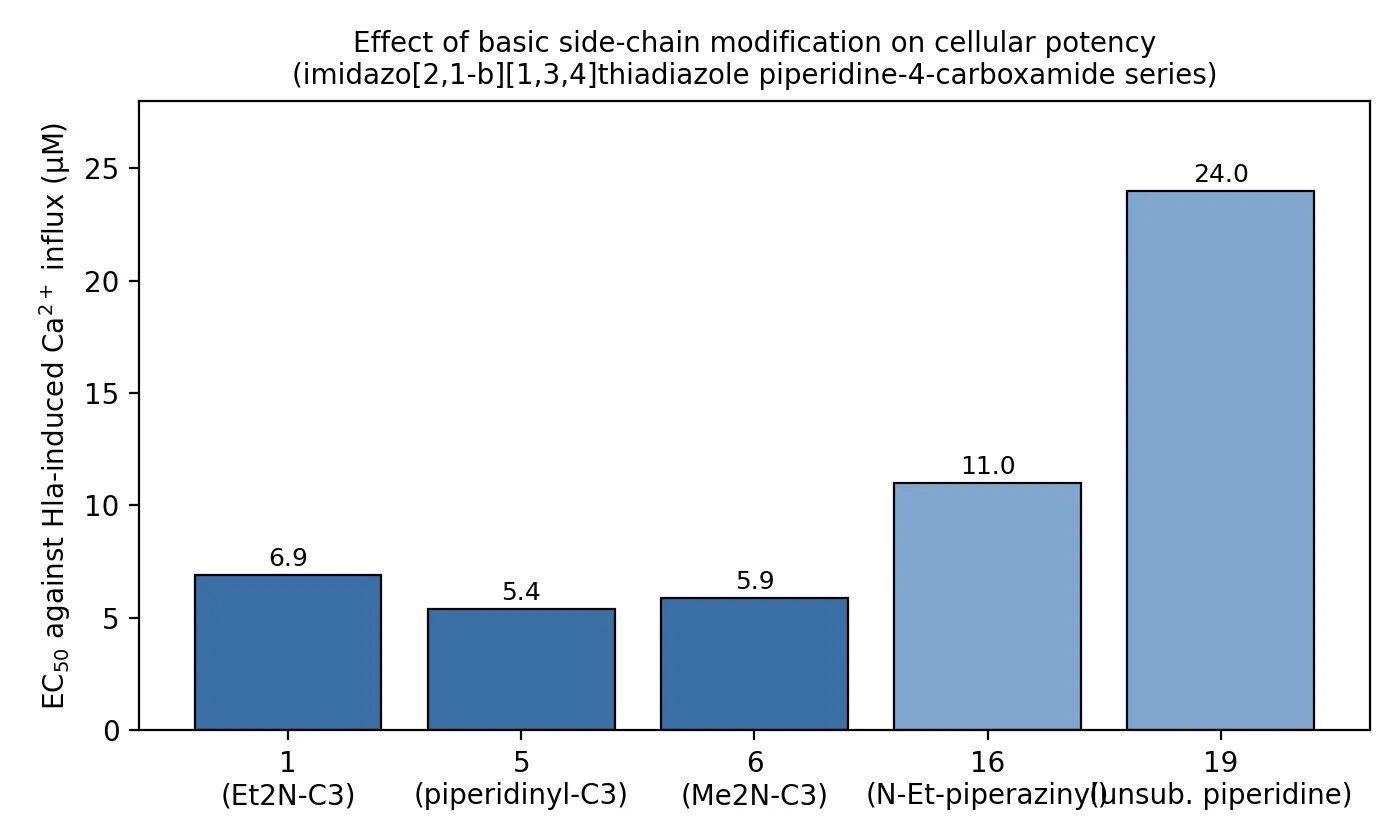
Figure 4. Representative EC50 values (Ca2+-influx assay, U937 cells) illustrating how the linker length and terminal amine of the C-2 piperidine-4-carboxamide side chain govern potency against staphylococcal α-hemolysin; data summarised from a recently reported 18-compound analogue series.
X-ray crystallography of the most active compound bound to α-hemolysin revealed that the bicyclic head group occupies a hydrophobic pocket formed between the toxin's amino-latch and prestem domains, engaging in a single hydrogen bond to the backbone amide of a tyrosine residue and a pi-stacking contact with a histidine side chain, while the basic side chain projects away from the core to contact a neighbouring toxin monomer at a site that, in the heptameric pore, would otherwise bind membrane phospholipid head groups. This dual-contact binding mode — stabilising the toxin's inactive, monomeric conformation while simultaneously blocking a phospholipid-binding groove — offers a mechanistic explanation for why the basic side chain identified in the SAR study is not merely a solubilising group but an integral pharmacophoric element, and it illustrates how the same core scaffold that supports COX-directed anti-inflammatory activity in one context can be redirected toward an entirely different, antivirulence mechanism simply by relocating the site of substitution and appending an appropriately spaced amine. The compound class was also reported to be chemically robust and metabolically stable: high plasma protein binding (>96% in both mouse and human plasma), full stability at acidic and neutral pH, only modest lability at pH 9, and low intrinsic clearance in mouse and human liver microsomes were all documented for the lead compound, indicating that — notwithstanding a cellular potency in the single-digit micromolar range that remains well short of the low-nanomolar benchmarks achieved with unrelated quinoxalinedione-based Hla inhibitors from the same research group — the scaffold's physicochemical behaviour is compatible with further lead optimisation.
5.5 Antitubercular activity:
The imidazo[2,1-b][1,3,4]thiadiazole core has an especially long history in antitubercular drug discovery, dating to early work establishing that 2-sulfonamido- and 2-trifluoromethyl-6-arylimidazo[2,1-b]-1,3,4-thiadiazoles could inhibit Mycobacterium tuberculosis H37Rv growth in the microplate Alamar Blue assay at low micromolar concentrations. More recent series have built on this foundation by exploring catechol-substituted and hydroxybenzene-substituted analogues, which combine antitubercular activity with useful antioxidant behaviour, and by systematically comparing phenyl- versus 4-chlorophenyl-substitution at the C-6 position of the bicyclic core. The general SAR conclusion emerging from this body of work is that retention of a sulphonamide or trifluoromethyl group is important for potency, most plausibly because these groups mimic the sulphonamide-based pharmacophore of established antitubercular and antibacterial folate-pathway inhibitors, while additional lipophilic aryl substitution improves cell-wall penetration in the notoriously impermeable mycobacterial envelope.
5.6 Antidiabetic activity (enzyme inhibition)
Antidiabetic evaluation of this scaffold has grown substantially over the last five years, largely through in vitro inhibition of α-glucosidase and α-amylase, the two carbohydrate-hydrolysing enzymes targeted by clinically used agents such as acarbose. A multitarget de novo design study evaluating a library of twenty-four imidazole-thiadiazole compounds reported potent inhibitory activity against α-glucosidase, α-amylase, acetylcholinesterase, and butyrylcholinesterase, with several derivatives reaching low-micromolar IC50 values, alongside meaningful antioxidant capacity measured by CUPRAC, FRAP, and DPPH assays. Multicomponent-derived 1,3,4-thiadiazole-thiazolidin-4-one hybrids have likewise shown dual α-glucosidase/α-amylase inhibition exceeding that of acarbose in several analogues. Docking studies in these reports converge on a hydrogen-bonding network between the thiadiazole nitrogen atoms and catalytic aspartate or glutamate residues in the enzyme active site, with additional stabilisation from aromatic stacking contributed by the imidazole ring, offering a structural rationale for why hydroxylated aryl substituents, which add further hydrogen-bond donors, tend to outperform purely lipophilic analogues in this activity class specifically.
5.7 Antioxidant activity:
Antioxidant capacity is frequently reported as a secondary activity alongside antimicrobial or antitubercular evaluation for this scaffold, reflecting the ease of incorporating a DPPH radical-scavenging assay into an existing screening workflow. Catechol- and resorcinol-substituted imidazo[2,1-b][1,3,4]thiadiazoles have shown the strongest radical-scavenging activity among reported series, consistent with the well-established structure-activity relationship linking phenolic hydroxyl count and position to hydrogen-atom-transfer antioxidant mechanisms. Several of these same catechol-bearing analogues have also displayed useful antitubercular and antibacterial activity, suggesting that this particular substitution pattern may represent a genuinely multifunctional pharmacophore rather than two independently optimised features.
5.8 Antiparasitic and antiprotozoal activity:
A smaller but mechanistically distinct body of work has explored imidazole-1,3,4-thiadiazole hybrids as antiprotozoal agents against Trypanosoma cruzi and Leishmania donovani, the causative organisms of Chagas disease and visceral leishmaniasis respectively. These compounds are typically designed by molecular hybridisation of the nitroimidazole pharmacophore found in established antiprotozoal drugs such as metronidazole and benznidazole with a thiadiazole fragment bridged through a p-aminobenzoate linker. Several analogues from this series reduced parasite proliferation by approximately fifty percent relative to untreated controls in vitro, exceeding the potency of benznidazole and approaching that of nifurtimox within the same assay, while retaining the 5-nitro substituent on the imidazole ring, which SAR analysis indicates is essential for activity, most likely because nitro-group bio reduction under the parasite's characteristic low-oxygen intracellular environment generates the cytotoxic radical species responsible for the observed antiparasitic effect.
5.9 Anticonvulsant and other central nervous system activities:
Anticonvulsant testing of imidazo[2,1-b][1,3,4]thiadiazole derivatives, generally carried out using the maximal electroshock or pentylene tetrazole-induced seizure models in rodents, has been reported intermittently throughout the literature surveyed here, generally as one activity among a broader multi-assay screening panel rather than as the primary focus of a dedicated study. Where reported, activity has correlated loosely with lipophilicity, consistent with the blood-brain-barrier penetration requirements common to CNS-active compounds, though the sample size of dedicated anticonvulsant studies on this specific hybrid scaffold remains too small to support a confident, generalisable SAR statement at this time.
6. Molecular Docking and In Silico Correlation With SAR
Molecular docking has become a near-universal companion technique to in vitro evaluation in the literature on this scaffold, and its findings generally reinforce, rather than contradict, the empirical SAR trends described above. Across the anticancer, antitubercular, and antidiabetic literature reviewed here, docking studies consistently identify a small set of recurring interaction types: hydrogen bonding from the thiadiazole ring nitrogens or an adjacent amino/hydroxyl substituent to a catalytic or structurally important active-site residue, hydrophobic or π-π stacking contributed by the aryl substituent on the imidazole ring, and, in DNA-binding studies, either intercalation between base pairs or minor-groove association depending on the planarity and length of the hybrid. In silico ADME/toxicity prediction, most often carried out using SwissADME or comparable platforms, has been incorporated into an increasing proportion of recent studies and generally indicates that imidazole-thiadiazole hybrids of moderate molecular weight (below approximately 450 Da) and balanced lipophilicity (calculated logP between roughly 1 and 4) satisfy Lipinski's rule-of-five criteria and are predicted to have acceptable gastrointestinal absorption, though experimental pharmacokinetic confirmation remains comparatively rare across the reports surveyed
7. Relevance To Marketed And Clinically Investigated Agents
The continued interest in this scaffold is reinforced by its proximity to several clinically established or clinically investigated agents. Levamisole, an imidazothiazole approved for use against colon cancer and as an anthelmintic, together with thiabendazole and niridazole, both of which combine imidazole and thiazole/thiadiazole functionality, illustrate that the broader hybrid chemotype explored in this review already has precedent for clinical translation. Sulphonamide-substituted thiadiazoles such as acetazolamide and methazolamide further demonstrate that thiadiazole-containing scaffolds are compatible with sustained clinical use and acceptable safety margins, lending further rationale to continued exploration of imidazole-thiadiazole hybrids as candidates for further development. It is worth emphasising that none of the imidazole-thiadiazole hybrid compounds discussed in the sections above has yet advanced into clinical evaluation in its own right; the clinical precedents cited here involve related but structurally simpler imidazole- or thiadiazole-containing agents rather than the specific fused or conjugated hybrids that are the subject of this review. The relevance of these marketed drugs is therefore best understood as validating the general pharmacophoric territory in which the reviewed hybrids sit, rather than as direct evidence that any specific hybrid analogue is close to clinical translation. Bridging this gap will require the kind of in vivo and pharmacokinetic characterisation discussed in the following section
CHALLENGES AND TOXICOLOGICAL CONSIDERATIONS
Despite the breadth of biological activity reported, several practical limitations recur across this literature. First, the great majority of reported compounds have been evaluated only in vitro, and dose-response or in vivo pharmacokinetic data remain comparatively scarce, limiting confident extrapolation to therapeutic potential. Second, cytotoxicity and selectivity indices relative to non-cancerous or non-target cell lines are inconsistently reported, making it difficult to compare the true therapeutic window across different research groups' series on a like-for-like basis. Third, while in silico ADME prediction is increasingly common, experimental confirmation of metabolic stability, plasma protein binding, and off-target enzyme inhibition (for example, cytochrome P450 interactions) is rarely undertaken at this stage of most of these research programmes. Addressing these gaps will be important for translating the consistently promising in vitro and in silico findings summarised in this review into credible preclinical candidates. A further, more subtle limitation concerns the interpretation of structure-activity relationships derived largely from between-study rather than within-study comparison. Because most individual publications explore a relatively small, focused set of analogues (typically between six and twenty-five compounds per series), many of the broader SAR generalisations presented in this review, including those summarised in Table 1, rest on aggregating trends across multiple independently designed series rather than on a single, internally controlled structure-activity study spanning the full range of substituents discussed. This is a common and largely unavoidable feature of narrative reviews in this area of medicinal chemistry, but it does mean that the SAR trends described here should be read as directional tendencies supported by convergent evidence rather than as rigorously validated quantitative rules, and that future work explicitly designed to test these generalisations within a single, internally consistent series would be of considerable value to the field.
FUTURE DIRECTIONS
Several directions appear well positioned to extend the productive line of research summarised here. Greater emphasis on target-specific design, building on the emerging Pim-1 kinase and carbonic-anhydrase-related work noted above, would allow future series to be optimised against a defined molecular target rather than screened broadly across unrelated assay panels. Systematic head-to-head comparison of fused versus linked hybrid architectures within the same biological assay, which remains rare in the current literature, would help clarify whether the potency advantages generally attributed to fused ring systems are a genuine electronic or geometric effect or simply a reflection of which architecture happens to have been more heavily explored to date. Finally, expanding in vivo pharmacokinetic and toxicological characterisation beyond the still-limited subset of compounds for which such data currently exist would substantially strengthen the translational case for this scaffold. Beyond these scaffold-specific priorities, the broader trajectory of the field also points toward greater integration of computational and experimental workflows from the earliest stages of design rather than as a retrospective rationalisation applied after synthesis and testing are complete. Structure-based virtual screening against a defined target, followed by focused synthesis of only the top-ranked candidates, has already begun to appear in a minority of the most recent reports discussed in this review and represents a more resource-efficient alternative to the broader empirical analogue screening that has historically dominated this literature. Coupling this approach with freely available physicochemical and toxicity-prediction tools at the design stage, rather than only after a compound has already been synthesised and tested, would help future researchers prioritise analogues more likely to combine potency with an acceptable selectivity and safety margin, and would help address the translational gap identified in Section 8.
CONCLUSION
Imidazole-1,3,4-thiadiazole hybrid scaffolds, whether prepared as fused imidazo[2,1-b][1,3,4]thiadiazole bicycles or as linker-tethered conjugates, have generated a decade of consistent and often high-quality biological evaluation data spanning anticancer, antimicrobial, antitubercular, anti-inflammatory, antidiabetic, antioxidant, and antiparasitic activity. Conventional cyclocondensation and Hantzsch-type annulation chemistry remain the dominant synthetic approach to this scaffold, and the structure-activity trends that emerge across independent studies, favouring electron-withdrawing aryl substitution for antimicrobial and anticancer potency and hydroxylated substitution for antioxidant and enzyme-inhibitory activity, are sufficiently reproducible across laboratories to be considered genuine pharmacophoric principles rather than isolated observations. With continued attention to target specificity, in vivo validation, and pharmacokinetic characterisation, this scaffold appears well positioned to continue contributing lead compounds to multiple areas of drug discover.
REFERENCES

Sai Harish Y.*, A. Jayakumar, J. Karthi, S. Swarnalatha, Conventional Synthetic Strategies and Structure–Activity Relationships of Imidazole–Thiadiazole Hybrid Scaffolds: A Comprehensive Review of Their Biological Properties, Int. J. Med. Pharm. Sci., 2026, 2 (8), 519-533. https://doi.org/10.5281/zenodo.21931539
 10.5281/zenodo.21931539