

We use cookies to ensure our website works properly and to personalise your experience. Cookies policy
1Wani College of Pharmacy, Ganegaon, Maharashtra. Affiliated to Dr. Babasaheb Aambedkar Technological University, Lonere, Raigad
2Assistant Professor, Wani College of Pharmacy, Ganegaon, Maharashtra. Affiliated to Dr. Babasaheb Aambedkar Technological University, Lonere, Raigad
The rapid development of digital technology has significantly transformed healthcare delivery, including the procurement and distribution of medicines. E-pharmacy, also known as online pharmacy or internet pharmacy, refers to the sale, dispensing, distribution, and provision of pharmaceutical services through websites, mobile applications, and other electronic platforms. In India, e-pharmacy has emerged as an important component of the digital healthcare ecosystem because of increasing internet penetration, smartphone use, digital payments, electronic prescriptions, and consumer demand for doorstep delivery. E-pharmacy can potentially improve medication access for patients living in geographically remote areas, elderly individuals, patients with mobility limitations, and those requiring long-term medicines. It can also facilitate medicine availability, price comparison, digital prescription management, refill reminders, and electronic documentation. The rapid expansion of online medicine services has raised concerns regarding patient safety and pharmaceutical care. Important challenges include inappropriate self-medication, dispensing of prescription-only medicines without adequate prescription verification, counterfeit or substandard medicines, medication errors, inadequate pharmacist counselling, inappropriate antibiotic use, inappropriate storage and transportation, data privacy concerns, and the operation of unregulated or illicit online pharmacies. The Indian regulatory environment has continued to evolve, with existing drug laws and proposed e-pharmacy-specific provisions forming important elements of regulatory discussion. This review examines the concept and development of e-pharmacy in India, its impact on medication access, patient safety, pharmaceutical care, pharmacist involvement, medication adherence, antimicrobial stewardship, digital health integration, regulatory challenges, data security, advantages, limitations, research gaps, and future perspectives. The available evidence indicates that e-pharmacy can complement conventional pharmacy services when supported by appropriate regulatory oversight, licensed pharmacists, prescription verification, secure supply chains, quality assurance, patient counselling, and pharmacovigilance.
Digitalization has become an important component of modern healthcare delivery. The widespread use of smartphones, internet connectivity, electronic payment systems, telemedicine, electronic prescriptions, and online healthcare platforms has changed the way patients obtain healthcare products and services. Pharmacy practice has also undergone significant transformation through the emergence of e-pharmacy. E-pharmacy can broadly be defined as the electronic sale, distribution, dispensing, or facilitation of medicines through websites, mobile applications, and other digital platforms. Unlike conventional community pharmacies, e-pharmacies allow patients to search for medicines, upload prescriptions, place orders, make digital payments, and receive medicines at their homes. India is a particularly important setting for the development of e-pharmacy because of its large population, geographical variation in healthcare infrastructure, rapidly expanding digital economy, and significant demand for medicines. A 2024 India-specific scoping review identified 47 full-text publications and reported that e-pharmacy may improve access to medicines, particularly for remote populations, older adults, and individuals with difficulty accessing conventional pharmacies. The review also identified potential benefits related to supply-chain efficiency, cost reduction, and tracking of dispensed medicines. At the same time, online medicine supply introduces new patient-safety concerns. Unlike a conventional pharmacy, an online platform may have limited direct interaction between the patient and pharmacist. Inadequate prescription verification, misleading product information, counterfeit medicines, inappropriate self-medication, privacy risks, and improper transportation can potentially affect treatment outcomes. Therefore, e-pharmacy should not be viewed only as an online medicine purchasing mechanism. It should be considered as an evolving pharmaceutical service model in which technology, pharmacists, healthcare professionals, patients, logistics providers, and regulatory authorities interact.
Evolution of E-Pharmacy in India
The Indian pharmacy system has traditionally depended on community pharmacies and hospital pharmacies. The development of e-commerce and digital health technologies created opportunities for medicines to be ordered remotely.
Several factors have contributed to the growth of e-pharmacy in India:
Concept of E-Pharmacy
E-pharmacy involves the use of digital technology for one or more pharmaceutical activities, including medicine searching, prescription submission, prescription verification, medicine ordering, pharmacist review, payment processing, dispensing, packaging, home delivery, patient counselling, refill reminders, medication management, pharmacovigilance, and customer support. A mature e-pharmacy system should therefore provide more than product delivery. It should incorporate professional pharmaceutical care and patient-safety mechanisms.
E-Pharmacy Workflow
The general workflow of an e-pharmacy can be represented as:
Patient/Consumer → Medicine Search / Prescription Upload → Prescription Verification → Pharmacist Review → Medicine Selection and Dispensing → Quality and Packaging Check → Transportation → Home Delivery → Patient Counselling / Drug Information → Adherence Monitoring and Follow-up → Pharmacovigilance.
This workflow demonstrates that pharmacist participation can occur at multiple stages rather than only during dispensing.
Types of E-Pharmacy Models
1. Inventory-Based Model
In this model, medicines are maintained within a centralized or distributed inventory system. Orders received through the digital platform are fulfilled from the available stock.
2. Marketplace Model
A marketplace connects consumers with participating pharmacies. The platform facilitates ordering, payment, communication, and delivery while the participating pharmacy performs dispensing.
3. Hybrid Model
Hybrid systems combine inventory-based operations with marketplace services.
4. Telepharmacy-Integrated Model
Telepharmacy combines digital medicine services with remote pharmacist interaction. Patients can communicate with pharmacists using telephone, video, chat, or messaging services. This model has particular potential for pharmaceutical care because online medicine supply can be combined with professional counselling.
Medication Access Through E-Pharmacy
Access to medicines depends on availability, affordability, geographical accessibility, and the ability of patients to obtain appropriate medicines when required.
1. Geographical Accessibility
India has substantial geographical variation in healthcare infrastructure. Patients living in rural, remote, or underserved areas may experience difficulty accessing particular medicines. Epharmacy can potentially connect such patients with pharmacies and medicine inventories beyond their immediate locality.
2. Accessibility for Elderly Patients
Older adults may experience mobility limitations, chronic diseases, dependence on caregivers, and difficulties with repeated travel. Home delivery can reduce the need for frequent physical visits to pharmacies.
3. Chronic Disease Management
Patients with chronic diseases frequently require long-term medication refills. E-pharmacy platforms can potentially support repeat ordering, refill reminders, medication records, home delivery, and adherence reminders.
4. Medicine Availability
Online platforms can allow patients to check whether a particular medicine is available before placing an order.
5. Affordability and Price Comparison
Digital platforms may allow consumers to compare prices among different products and suppliers. Discounts and generic alternatives may reduce expenditure in certain circumstances. However, lower price should not be considered independently of medicine quality, authenticity, prescription requirements, and professional pharmaceutical care.
6. Convenience
Convenience is one of the major characteristics of e-pharmacy. Patients can search, order, pay for, and receive medicines without physically visiting a pharmacy.
Impact of E-Pharmacy on Patient Safety
Patient safety represents one of the most important considerations in digital medicine supply.
1. Prescription Verification
Prescription medicines require appropriate professional oversight. E-pharmacy platforms should establish systems to verify prescription validity, prescriber details, patient details, medicine name, strength, dose, quantity, duration, and refill requirements.
2. Self-Medication
Easy online access may encourage some patients to purchase medicines without consulting a healthcare professional. Self-medication can result in incorrect diagnosis, incorrect medicine selection, incorrect dose, drug interactions, contraindications, adverse drug reactions, treatment failure, and delayed medical consultation.
3. Counterfeit and Falsified Medicines
One of the major concerns associated with illicit online pharmacies is the availability of counterfeit, falsified, substandard, or inappropriate medicines.
4. Medication Errors
Medication errors may occur at prescription interpretation, product selection, strength selection, dosage-form selection, quantity selection, substitution, packaging, labelling, delivery, and patient administration stages.
5. Storage and Transportation
Some pharmaceutical products require controlled environmental conditions. Important examples include insulin, vaccines, certain biological products, and some ophthalmic preparations.
6. Wrong Medicine or Strength
Medicines with similar names may be confused during online ordering. A robust system should clearly display generic name, brand name, strength, dosage form, pack size, and manufacturer.
Pharmaceutical Care in E-Pharmacy
Pharmaceutical care is an important component of modern pharmacy practice. The pharmacist is responsible for supporting appropriate medication use and identifying drug-related problems. Epharmacy provides opportunities to extend pharmaceutical care beyond the physical pharmacy.
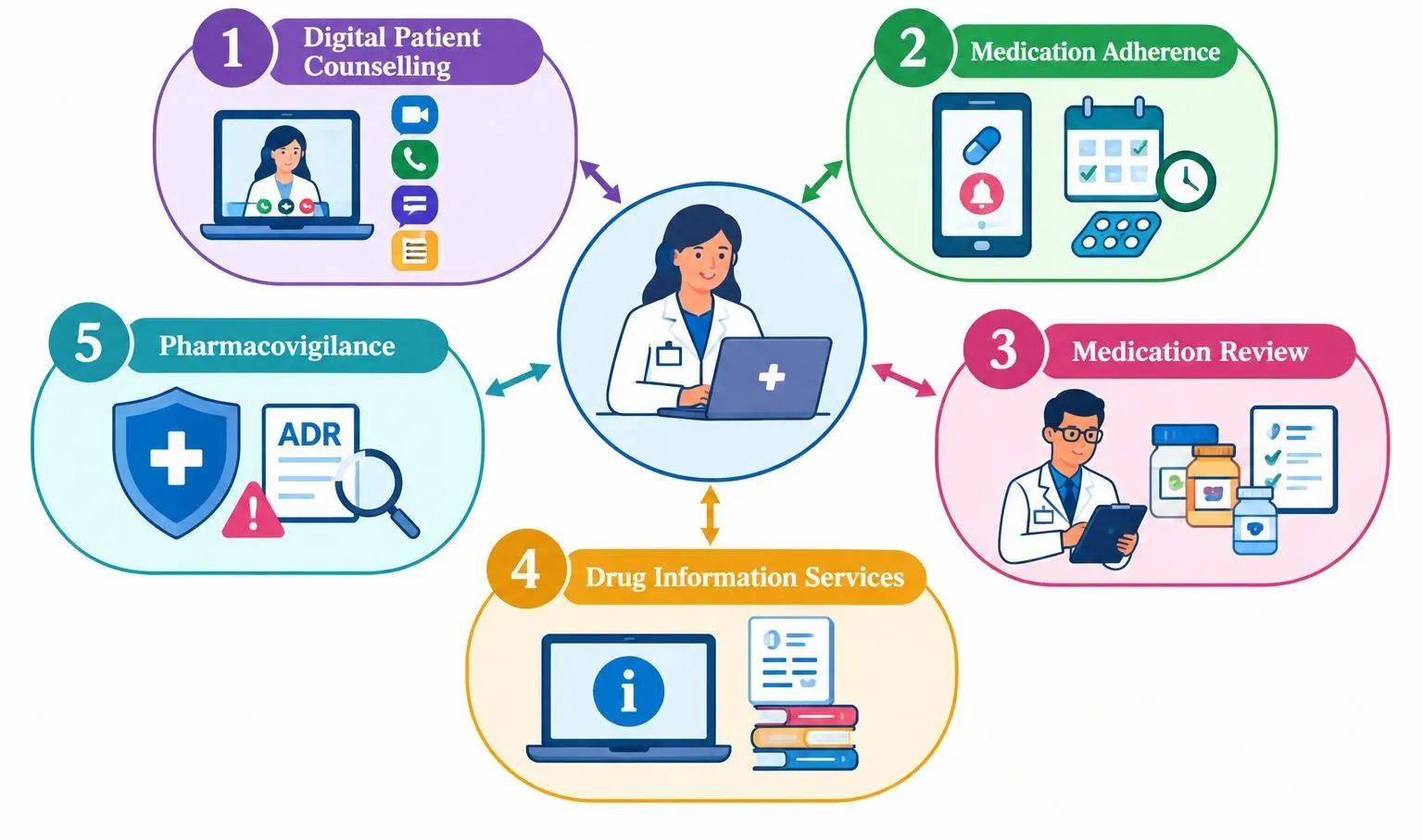
Fig 1: Pharmaceutical Care in E-Pharmacy
1. Digital Patient Counselling
Pharmacists can provide counselling through video calls, telephone calls, live chat, secure messaging, and digital educational material. Counselling may include dose, route, timing, duration, administration technique, storage, adverse effects, precautions, drug interactions, and missed-dose instructions.
2. Medication Adherence
Digital platforms can support adherence through refill reminders, medication reminders, automated notifications, repeat-order systems, treatment calendars, and pharmacist follow-up.
3. Medication Review
For patients using multiple medicines, pharmacists can perform digital medication reviews to identify drug-drug interactions, duplicate therapy, incorrect dosing, potential contraindications, and adherence problems.
4. Drug Information Services
E-pharmacies can provide scientifically validated information regarding indications, dose, administration, contraindications, precautions, adverse effects, interactions, and storage.
5. Pharmacovigilance
Digital platforms can facilitate reporting of suspected adverse drug reactions. Electronic reporting systems can potentially improve documentation and communication of safety information.
Role of Pharmacists in E-Pharmacy
The pharmacist should remain an important healthcare professional within the e-pharmacy system. Major responsibilities include prescription verification, drug interaction assessment, dose verification, identification of contraindications, patient counselling, medication adherence support, druginformation provision, adverse drug reaction identification, pharmacovigilance, medication reconciliation, patient education, appropriate referral to physicians, antibiotic-use counselling, and identification of inappropriate self-medication.
E-Pharmacy and Antimicrobial Stewardship
Antibiotic availability through online platforms requires particular attention because inappropriate antibiotic use contributes to antimicrobial resistance. Potential problems include purchase without appropriate prescription, inappropriate antibiotic selection, inadequate treatment duration, repeated self-medication, excessive ordering, and use for viral infections. A responsible e-pharmacy should incorporate prescription verification, pharmacist review, quantity monitoring, patient education, repeat-order monitoring, adverse-effect counselling, and referral when clinically appropriate.
E-Pharmacy and Medication Adherence
Medication non-adherence is an important problem in chronic disease management. E-pharmacy platforms can potentially support adherence through refill reminders, medication reminders, automated ordering after appropriate prescription verification, medication calendars, pharmacist follow-up, and digital records. However, technology alone cannot guarantee adherence. Patient understanding, affordability, adverse effects, treatment complexity, and disease characteristics continue to influence medication-taking behaviour.
E-Pharmacy and Telemedicine
E-pharmacy can be integrated with telemedicine to create a more complete digital healthcare pathway:
Teleconsultation → Electronic Prescription → Pharmacist Verification → Medicine Dispensing → Home Delivery → Digital Counselling → Follow-up.
Such integration can reduce fragmentation between diagnosis, prescribing, dispensing, and medication monitoring.
Limitations of E-Pharmacy
Data Privacy and Cybersecurity
E-pharmacy platforms handle sensitive information such as patient identity, contact details, prescription information, medication history, health-related information, payment information, and delivery address. Potential threats include unauthorized access, data leakage, phishing, identity theft, payment fraud, unauthorized sharing of health information, and cyberattacks. Appropriate safeguards should include secure authentication, encryption, restricted data access, audit trails, secure payment systems, and appropriate data-governance practices.
Regulatory Aspects of E-Pharmacy in India
Regulation is one of the most important issues surrounding e-pharmacy in India.
Medicine sale and distribution are governed principally through India's existing drug regulatory framework, including the Drugs and Cosmetics Act, 1940 and Drugs and Cosmetics Rules, 1945, along with other applicable legal and professional requirements. A 2018 draft framework specifically proposed provisions concerning e-pharmacy registration, inspection, sale and distribution, monitoring, and complaint redressal. Important regulatory components should include verification of pharmacy authorization, registered pharmacist involvement, prescription verification, medicine traceability, storage and transportation requirements, record maintenance, complaint handling, product recall mechanisms, pharmacovigilance, data protection, and monitoring of illicit online sellers.
Quality Assurance in E-Pharmacy
Quality assurance should cover the entire pharmaceutical supply chain.
Procurement: Medicines should be sourced through authorized channels.
Storage: Products should be stored under appropriate environmental conditions.
Dispensing: Medicine selection should be checked by trained personnel.
Packaging: Packaging should protect medicines against physical and environmental damage.
Transportation: Delivery systems should maintain product-specific storage requirements.
Receipt: Patients should be able to verify medicine name, strength, batch number, expiry date, manufacturer, and packaging integrity.
Complaint Management: A systematic mechanism should exist for handling complaints regarding medicine quality, wrong products, damaged products, or adverse events.
Patient Education in E-Pharmacy
Patient education is essential because increased access to medicines does not necessarily guarantee appropriate medicine use. Patients should be educated regarding correct dosage, correct administration, treatment duration, storage, missed doses, possible adverse effects, drug interactions, warning symptoms, appropriate disposal, avoidance of unnecessary self-medication, and appropriate antibiotic use. Educational information should be written in simple language and, where possible, offered in regional languages to improve accessibility.
Role of Artificial Intelligence and Emerging Technologies
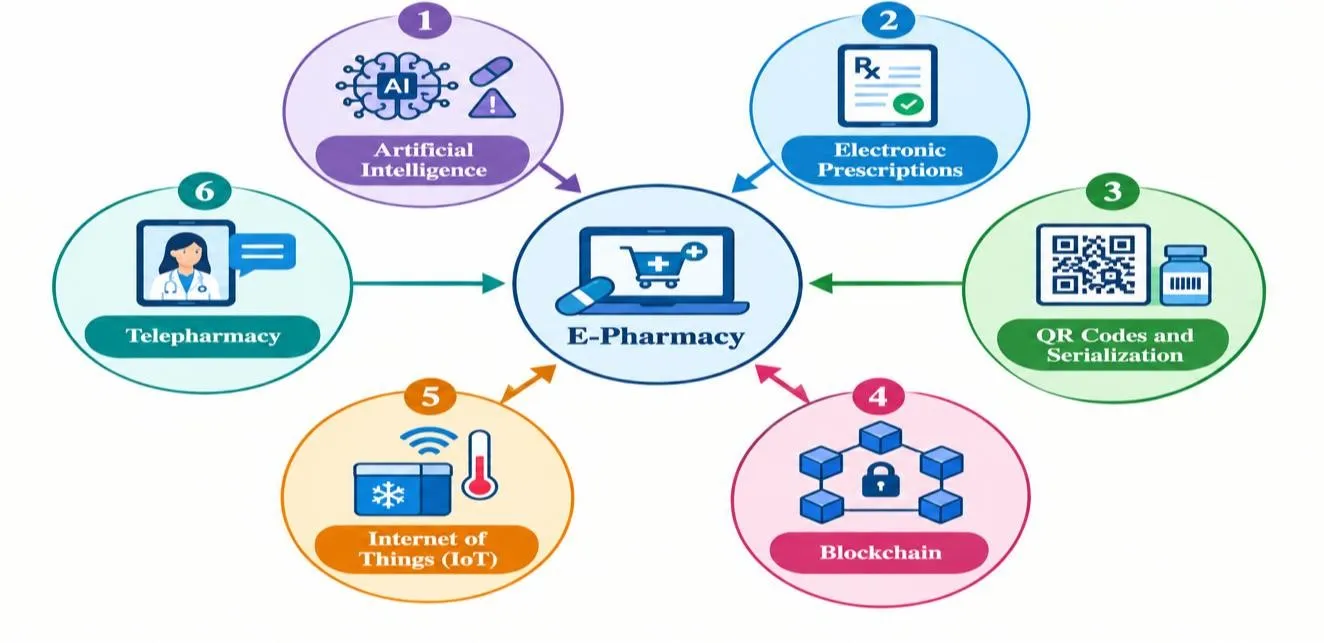
Fig: Role of Artificial Intelligence and Emerging Technologies
FUTURE PERSPECTIVES
The future development of e-pharmacy in India is likely to involve integration with broader digital healthcare services.
Electronic Health Record → Teleconsultation → Electronic Prescription → Pharmacist Verification → Automated/Assisted Dispensing → Quality-Controlled Delivery → Digital Counselling → Medication Adherence Monitoring → Pharmacovigilance.
Future priorities should include strong regulatory oversight, accreditation of legitimate e-pharmacies, registered pharmacist involvement, standardized prescription verification, secure medicine supply chains, temperature monitoring, medicine traceability, digital pharmacovigilance, antibiotic stewardship, patient education, data-security systems, telepharmacy integration, multilingual interfaces, and improved rural accessibility.
CONCLUSION
E-pharmacy is an important development in India's evolving digital healthcare ecosystem. It offers potential advantages in terms of convenience, home delivery, medicine availability, geographical accessibility, price comparison, digital prescription management, and chronic medication support. India-specific evidence indicates that e-pharmacy may particularly benefit remote populations, older adults, and patients who experience difficulty accessing conventional pharmacy services. However, the expansion of e-pharmacy also creates important challenges for patient safety and pharmaceutical care. Inappropriate self-medication, inadequate prescription verification, counterfeit or substandard medicines, medication errors, inappropriate storage and transportation, antibiotic misuse, limited pharmacist interaction, and privacy concerns require systematic attention. The pharmacist should remain central to the e-pharmacy model through prescription assessment, medication review, counselling, adherence support, pharmacovigilance, and patient education. Regulatory authorities should ensure that online medicine services operate with appropriate licensing, traceability, quality assurance, professional accountability, and data-security measures. The future of e-pharmacy in India should therefore focus not only on increasing online medicine availability but also on developing a safe, regulated, pharmacist-supported, patient-centred pharmaceutical-care system. Appropriate integration of e-pharmacy with telemedicine, electronic prescriptions, digital health records, artificial intelligence, and pharmacovigilance may provide a stronger model for digitally enabled pharmaceutical services.
REFERENCES

Mayuri Kotkar*, Vaishnavi Kalamkar, E-Pharmacy in India: Impact on Medication Access, Patient Safety, And Pharmaceutical Care, Int. J. Med. Pharm. Sci., 2026, 2 (10), 203-210. https://doi.org/10.5281/zenodo.23233175
 10.5281/zenodo.23233175