

We use cookies to ensure our website works properly and to personalise your experience. Cookies policy
Dept. of Pharmacy Practice, Channabasweshwar Pharmacy college (Degree), near Basweshwar Chowk, Kava Road, Latur- 413512, Maharashtra
Epilepsy is a common neurological disorder characterized by a persistent predisposition to generate epileptic seizures and is associated with substantial medical, psychological, social, and economic consequences . Although Antiseizure medications (ASMs) remain the primary treatment for most individuals with epilepsy, a considerable proportion of patients continue to experience seizures despite appropriate pharmacological therapy . Consequently, increasing attention has been directed toward complementary and non-pharmacological strategies, particularly ketogenic dietary therapies and lifestyle modification . The ketogenic diet is a high-fat, low-carbohydrate dietary intervention that induces a metabolic state of ketosis and may reduce neuronal excitability through several proposed mechanisms, including alterations in cellular energy metabolism, neurotransmitter regulation, ion-channel activity, and mitochondrial function . Different dietary approaches, including the classical ketogenic diet, medium-chain triglyceride diet, modified Atkins diet, and low-glycemic-index treatment, have been investigated for seizure control . Lifestyle interventions are also an important component of comprehensive epilepsy management and include adequate sleep, stress management, regular physical activity, medication adherence, and avoidance of individual seizure triggers . ASMs remain essential for seizure control, but their effectiveness and tolerability vary according to seizure type, epilepsy syndrome, patient characteristics, and comorbidities . This review discusses the current understanding of epilepsy management, with particular emphasis on ketogenic dietary therapies, lifestyle interventions, and ASMs. It also examines their mechanisms of action, clinical applications, therapeutic benefits, limitations, and adverse effects. An integrated, individualized approach combining appropriate pharmacological treatment with dietary and lifestyle strategies may improve seizure control, quality of life, and overall patient outcomes in selected individuals with epilepsy.
Epilepsy is a chronic neurological disorder characterized by a predisposition to recurrent epileptic seizures and is associated with significant medical, psychological, social, and economic consequences [1,2]. Effective epilepsy management aims not only to achieve sustained seizure control but also to minimize treatment-related adverse effects, improve adherence, and enhance the patient’s overall quality of life [2,3]. Antiseizure medications (ASMs) remain the primary treatment for most individuals with epilepsy [3]. However, some patients continue to experience seizures despite appropriate pharmacological treatment and may develop drug-resistant epilepsy, creating a need for additional therapeutic approaches [4]. The ketogenic diet (KD) is an established non-pharmacological treatment option, particularly for selected patients with drug-resistant epilepsy [5,6]. The diet is characterized by a high proportion of fat, adequate protein, and restricted carbohydrate intake, resulting in a metabolic state of ketosis [5,7]. Several dietary therapies, including the classical ketogenic diet and modified Atkins diet, have demonstrated potential to reduce seizure frequency in appropriately selected patients [5,6]. However, these interventions require individualized nutritional planning, monitoring, and long-term adherence [6,8]. In addition to dietary therapy, lifestyle modification plays an important supportive role in epilepsy management. Adequate sleep, stress reduction, regular physical activity when appropriate, consistent medication adherence, avoidance of individualized seizure triggers, and patient education may contribute to better self-management and overall well-being [9,10]. Although lifestyle factors may not directly control seizures in every patient, recognizing and managing potential triggers can complement medical treatment and improve quality of life [9,10]. The management of epilepsy therefore increasingly involves a multimodal and individualized approach, in which ASMs remain central while ketogenic dietary therapy and lifestyle interventions may be incorporated when clinically appropriate [4-6,9]. This review discusses the role of ketogenic dietary therapy, lifestyle modification, and Antiseizure medications in epilepsy management, focusing on their potential benefits, limitations, safety considerations, and complementary roles in achieving optimal seizure control and improving the quality of life of individuals with epilepsy.
Epidemiology and Burden Epilepsy:
Epilepsy is one of the most common chronic neurological disorders worldwide and affects people of all ages. It is characterized by a persistent predisposition to recurrent epileptic seizures and represents a significant public health concern [1,2]. The burden of epilepsy is particularly high in low- and middle-income countries, where access to neurological services, diagnostic facilities, Antiseizure medications, and specialized epilepsy care may be limited [1,3]. The global epilepsy treatment gap is substantially greater in low-resource settings and is influenced by healthcare-system capacity, availability of medicines and diagnostic services, socioeconomic conditions, and stigma [3,4]. The occurrence and outcomes of epilepsy vary between regions because of differences in socioeconomic conditions, healthcare infrastructure, infectious diseases, perinatal complications, head injuries, genetic factors, and other underlying causes [1,2]. The impact of epilepsy extends beyond seizure occurrence. Individuals with epilepsy may experience medication-related adverse effects, cognitive and psychological difficulties, social stigma, educational and employment challenges, and reduced quality of life [2,5,6]. Epilepsy-related stigma can adversely affect psychological well-being, social participation, and quality of life [5,6]. Persistent uncontrolled seizures may also contribute to injuries, restrictions in daily activities, increased healthcare utilization, and dependence on caregivers [2,7]. The condition therefore creates a considerable burden not only for affected individuals but also for families, healthcare systems, and society [1,3]. A major challenge in epilepsy management is drug-resistant epilepsy (DRE), in which adequate trials of two tolerated, appropriately selected, and appropriately used antiseizure medication regimens fail to achieve sustained seizure freedom [8]. These patients may require specialist evaluation and consideration of additional treatment options, including epilepsy surgery, neuromodulation, and dietary therapies such as ketogenic dietary therapy [8,9]. Lifestyle factors, including inadequate sleep, psychological stress, poor medication adherence, and individual seizure triggers, may also influence seizure control in some individuals [10]. The global burden of epilepsy highlights the importance of early diagnosis, appropriate treatment, continuous follow-up, and improved access to comprehensive epilepsy care [1,3]. An integrated management strategy combining Antiseizure medications, ketogenic dietary therapy when appropriate, and supportive lifestyle modifications may help improve seizure outcomes and quality of life for selected patients [9,10]. Greater awareness, reduction of stigma, improved healthcare access, and continued research are essential to reduce the overall burden of epilepsy worldwide [1,3,5].
Pathophysiology Of Epilepsy:
Epilepsy develops when the normal balance between neuronal excitation and inhibition is disrupted, causing abnormal and excessive synchronization of brain neurons. The major mechanisms include increased glutamatergic (excitatory) activity, reduced GABAergic (inhibitory) activity, dysfunction of voltage-gated sodium and calcium channels, and altered neuronal ion homeostasis. These changes increase neuronal hyperexcitability and facilitate the initiation and spread of epileptic seizures. [1-3] Structural and functional abnormalities, such as hippocampal sclerosis, cortical malformations, brain injury, stroke, tumors, genetic mutations, and neuroinflammation, can promote epileptogenesis—the process by which a normal or previously injured brain develops a persistent tendency to generate seizures. Repeated seizures may further modify neuronal networks through synaptic reorganization and changes in receptor expression, potentially increasing seizure susceptibility. [4,5] Ketogenic dietary therapy may reduce neuronal excitability by shifting brain metabolism toward ketone bodies, improving mitochondrial energy metabolism, altering neurotransmitter balance, and influencing ion channels and cellular signaling. Antiseizure medications act mainly by suppressing abnormal neuronal activity through sodium- or calcium-channel modulation, enhancement of GABAergic inhibition, or reduction of excitatory neurotransmission. [6,8] Lifestyle factors such as sleep deprivation, stress, and poor medication adherence may further influence. [11]
Diagnosis of Epilepsy:
The diagnosis of epilepsy is based on a detailed clinical history, eyewitness descriptions of seizure events, neurological examination, and supportive diagnostic investigations. According to the International League Against Epilepsy (ILAE), epilepsy is diagnosed when a person has two or more unprovoked seizures occurring more than 24 hours apart, one unprovoked seizure with a high risk (≥60%) of recurrence over the next 10 years, or a diagnosed epilepsy syndrome (Fisher et al., 2014). Electroencephalography (EEG) is the primary diagnostic test used to detect epileptiform activity and classify seizure types, although a normal EEG does not exclude epilepsy. Brain magnetic resonance imaging (MRI) is the preferred imaging modality to identify structural abnormalities such as hippocampal sclerosis, brain tumors, cortical dysplasia, or vascular malformations. Laboratory investigations, including blood glucose, electrolytes, calcium, liver and renal function tests, help exclude metabolic causes of seizures. In selected patients, video-EEG monitoring, genetic testing, or lumbar puncture may be required to establish the diagnosis and determine the underlying etiology. Early and accurate diagnosis is essential for appropriate treatment and improved patient outcomes.
Classification of Epilepsy:
|
Generalized epilepsy |
Seizures involve both sides of the brain from the beginning. |
|
Combined generalized and Focal epilepsy |
Both seizure types occur. |
|
Unknown epilepsy |
The Seizure onset cannot be clearly determined because of insufficient Inf.. |
Mechanism of Action:
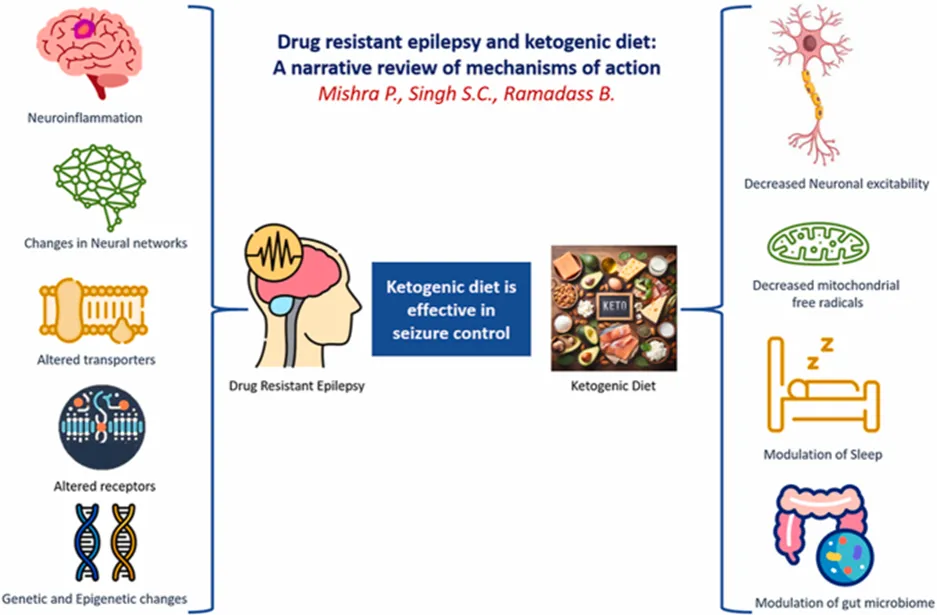
The ketogenic diet (KD) is a high-fat, adequate-protein, and low-carbohydrate dietary therapy that shifts metabolism from glucose utilization toward fatty-acid oxidation and ketone-body production. The major ketone bodies, including β-hydroxybutyrate (BHB) and acetoacetate, can serve as alternative energy substrates for the brain during ketosis [1,2]. The Antiseizure effects of ketogenic therapy are thought to involve multiple complementary mechanisms. These include alteration of brain energy metabolism and mitochondrial function, changes in neuronal metabolic signaling, and improved cellular energy stability [1–3]. Ketogenic therapy may also influence GABAergic and glutamatergic neurotransmission, potentially increasing inhibitory signaling and reducing excessive neuronal excitation [2,4]. In addition, ketone bodies and ketogenic metabolism may affect ATP-sensitive potassium channels and neuronal membrane excitability, thereby contributing to reduced neuronal hyperexcitability [3,5]. Other proposed mechanisms include reduction of oxidative stress and neuroinflammation, as well as modulation of cellular signaling pathways involved in neuronal survival and seizure susceptibility [3,6]. Collectively, these metabolic, neurotransmitter, ion-channel, and cellular effects may contribute to improved neuronal energy stability and reduced abnormal neuronal synchronization [1–6].
Types of Ketogenic Dietary Therapies
Main Characteristics:
Classical Ketogenic Diet (CKD):
Modified Atkins Diet (MAD)
Ketogenic dietary therapy may be considered in:
Clinical Evidence:
Clinical studies and systematic reviews indicate that ketogenic dietary therapies can produce a clinically meaningful reduction in seizure frequency in a proportion of patients with drug-resistant epilepsy. The strongest evidence is available in children, although increasing evidence supports their use in adolescents and adults. [1-6] The classical ketogenic diet has demonstrated significant seizure reduction in several clinical studies. The modified Atkins diet and low-glycemic-index treatment may provide similar benefits for some patients while being easier to follow. The response is variable, and complete seizure freedom occurs in only a subset of patients. [1,6,] Ketogenic therapy is generally considered an adjunctive treatment, meaning it may be used alongside Antiseizure medications rather than automatically replacing them. In some responders, improved seizure control may allow clinicians to reconsider medication burden, but Antiseizure medications should only be reduced or discontinued under medical supervision. [1,2]
Adverse Effects:
|
Short-term |
Long – term |
|
Nausea and vomiting |
Kidney stones |
|
Constipation |
Dyslipidemia |
|
Diarrhoea |
Reduced bone mineral density |
|
Abdominal discomfort |
Growth concerns in children |
|
Fatigue |
Rarely, metabolic abnormalities |
|
Dehydration |
Gastrointestinal problems |
Lifestyle Interventions in Epilepsy Management:
Lifestyle modification is an important complementary component of epilepsy management. It does not replace Antiseizure medications or other medical treatments but may help reduce seizure triggers, improve treatment adherence, and enhance quality of life. [1-3]
Adequate and regular sleep is important because sleep deprivation and irregular sleep patterns may increase seizure susceptibility in some individuals. Patients should maintain a consistent sleep–wake schedule, obtain sufficient sleep, and address sleep disorders when present. Good sleep hygiene may support overall seizure management. [2,4]
Psychological stress is a commonly reported seizure trigger in some people with epilepsy. Stress-management strategies such as relaxation techniques, mindfulness, breathing exercises, yoga, counselling, and cognitive behavioral approaches may help improve psychological well-being and coping. Stress reduction should be considered a supportive strategy rather than a replacement for medical treatment. [2,5]
Regular, appropriate physical activity and exercise can improve cardiovascular health, mood, fitness, and quality of life. For most people with well-controlled epilepsy, exercise is generally encouraged. Activities should be selected according to seizure type, seizure control, and individual safety considerations. Appropriate precautions may be necessary for activities involving heights, water, or machinery. [2-6]
Alcohol consumption and recreational or illicit substances may affect seizure control and can interact with ant seizure medications. Alcohol may also contribute indirectly through sleep disruption, dehydration, and missed medication doses. Avoiding recreational substances and discussing alcohol use with a healthcare professional can help reduce potential risks and interactions. [2-7]
5.Medication Adherence
Consistent adherence to prescribed Antiseizure medication is essential for maintaining seizure control. Missed or irregular doses can increase the risk of breakthrough seizures. Patients should take medications according to the prescribed schedule and should not independently stop or change their medication. Education, reminders, simplified dosing schedules, and regular follow-up can improve adherence. [8,9]
● Anti-seizure Medications and Adverse Effects:
Ant seizure medications (ASMs) are the main pharmacological treatment for epilepsy. They reduce seizure activity by decreasing neuronal excitability or increasing inhibitory neurotransmission. The choice of medication depends on the seizure type, epilepsy syndrome, age, comorbidities, drug interactions, and individual patient factors.
|
Medication |
Mechanisms of action |
Common Adverse Effects |
Clinical Considerations |
|
Valproate |
Increases GABA activity and blocks sodium channels |
Weight gain, tremor, nausea, hair loss, thrombocytopenia, hepatotoxicity |
Avoid during pregnancy because of high teratogenic risk; monitor liver function. |
|
Carbamazepine |
Blocks voltage-gated sodium channels |
Dizziness, diplopia, ataxia, nausea, hyponatremia, skin rash |
Monitor serum sodium and complete blood count. |
|
Lamotrigine |
Inhibits sodium channels and glutamate release |
Headache, dizziness, nausea, insomnia, skin rash |
Slow dose titration reduces the risk of Stevens–Johnson syndrome. |
|
Levetiracetam |
Binds to synaptic vesicle protein SV2A |
Somnolence, dizziness, fatigue, irritability, mood changes |
Monitor for behavioral and psychiatric symptoms. |
|
Phenytoin |
Blocks voltage-gated sodium channels |
Ataxia, nystagmus, gingival hyperplasia, hirsutism, dizziness |
Long-term use may reduce bone mineral density. |
|
Phenobarbital |
Enhances GABA-mediated inhibition |
Sedation, cognitive impairment, dizziness, behavioral changes |
Risk of tolerance and dependence with prolonged use. |
|
Topiramate |
Blocks sodium channels, enhances GABA, inhibits glutamate |
Cognitive slowing, paraesthesia, weight loss, kidney stones, metabolic acidosis |
Ensure adequate hydration; monitor serum bicarbonate. |
|
Lacosamide |
Enhances slow inactivation of sodium channels |
Dizziness, headache, nausea, diplopia |
Use cautiously in patients with cardiac conduction disorders. |
|
Ethosuximide |
Blocks T-type calcium channels |
Nausea, abdominal discomfort, fatigue, headache |
First-line therapy for absence seizures. |
|
Pregabalin |
Modulates calcium channels (α2δ subunit) |
Dizziness, somnolence, peripheral edema, weight gain, blurred vision |
Dose adjustment is required in renal impairment. |
|
Gabapentin |
Modulates calcium channels (α2δ subunit) |
Drowsiness, dizziness, fatigue, peripheral edema, weight gain |
Dose adjustment is required in renal impairment. |
ASM reduction: Successful ketogenic therapy may lead to improved seizure control in some patients. If seizures are substantially reduced, clinicians may sometimes adjust ASM therapy; however, medications should never be reduced or stopped without medical supervision.
Challenges and Limitations in Epilepsy Management
Although a combination of Antiseizure medications, ketogenic dietary therapy, and lifestyle modification can improve epilepsy management, several challenges and limitations remain.
Drug-resistant epilepsy: A significant proportion of patients continue to experience seizures despite appropriate Antiseizure medications, making long-term seizure control difficult. [1-3]
Adverse effects of medications: ASMs may cause neurological, cognitive, gastrointestinal, metabolic, or behavioral adverse effects, which can affect adherence and quality of life. The ketogenic diet can be restrictive and difficult to maintain over the long term. Dietary compliance may be challenging for children, adolescents, and adults because of food preferences, social situations, and cost.
Diet-related adverse effects: Constipation, nutritional deficiencies, kidney stones, dyslipidaemia, and metabolic abnormalities may occur and require regular monitoring. [7-8]
Individual variability: Patients respond differently to ASMs, ketogenic therapy, and lifestyle interventions. A treatment that is effective for one individual may not produce the same results in another. [5,11]
Lifestyle challenges: Maintaining adequate sleep, reducing stress, exercising safely, and consistently avoiding individual seizure triggers can be difficult because of personal, social, educational, or occupational circumstances. [12,13]
Drug–diet interactions: Some combinations of ASMs and ketogenic therapy may increase the risk of metabolic complications, requiring careful monitoring and individualized treatment adjustments. [1,14]
Limited evidence in some populations: Although evidence for ketogenic dietary therapy is relatively strong in children with drug-resistant epilepsy, evidence in adults and certain epilepsy syndromes is more limited. [1,9,15]
Access and cost: Specialized epilepsy care, ketogenic diet programs, nutritional counselling, and newer ASMs may not be readily available or affordable in all healthcare settings. [4,16]
Need for multidisciplinary care: Optimal management may require neurologists, dietitians, pharmacists, psychologists, nurses, and other healthcare professionals, which can be difficult to access in resource-limited settings. [1,4,16]
Despite major advances in epilepsy treatment, several important gaps remain:
Drug-resistant epilepsy: Better therapies are needed for patients who continue to have seizures despite appropriate Antiseizure medications (ASMs).[1]
There is a need for better strategies to improve adherence to medication, dietary therapy, and lifestyle recommendations. education, employment, social functioning, and overall quality of life.
The future of epilepsy management is expected to move toward personalized, precision-based, and multidisciplinary care. Although Antiseizure medications remain the foundation of treatment, increasing attention is being given to combining pharmacological therapy with ketogenic dietary therapy, lifestyle modification, and other non-pharmacological approaches.
Early identification of drug resistance: Earlier recognition of patients unlikely to respond to standard ASMs could enable faster referral for specialized treatment, including dietary therapy, surgery, or neuromodulation.
Future epilepsy management should focus not only on seizure freedom but also on cognition, mental health, education, employment, social participation, and overall quality of life.
CONCLUSION:
Epilepsy management requires a personalized and comprehensive approach that addresses both seizure control and quality of life. Antiseizure medications (ASMs) remain the primary treatment, while ketogenic dietary therapy may be an effective adjunctive option, particularly for selected patients with drug-resistant epilepsy. Lifestyle modifications, including adequate sleep, stress management, regular physical activity, avoidance of individual seizure triggers, and good medication adherence, can further support overall disease management. The combination of appropriate pharmacological treatment, [1,2] dietary therapy, and healthy lifestyle practices may provide better individualized care and improve long-term outcomes. However, treatment should be guided by healthcare professionals and tailored to each patient’s clinical needs. Further research is required to establish the long-term effectiveness of integrated treatment approaches and to advance personalized epilepsy management. [1,3,5].
REFERENCES
https://doi.org/10.1002/epi.70205Digital Object Identifier (DOI)27 March 2026.
https://Doi.10.1080/1028415X.2017.1387721.2017 Oct 25
https://doi.org/10.1002/epi.70205Digital Object Identifier (DOI)27 March 2026.
https://Doi.10.1080/1028415X.2017.1387721.2017 Oct 25



Jyotsna Hake*, Prajakta Kelgaonkar, Runal Surudwad, Sakshi Hindole, Shubhangi Hingmire, Epilepsy Management Through Ketogenic Diet, Lifestyle Modification & Antiseizure Medication, Int. J. Med. Pharm. Sci., 2026, 2 (8), 589-598. https://doi.org/10.5281/zenodo.21983504
 10.5281/zenodo.21983504