

We use cookies to ensure our website works properly and to personalise your experience. Cookies policy
1M. Pharmacy, Department of Pharmaceutical Analysis, The Erode College of Pharmacy, Erode-638112
2B. Pharmacy, The Erode College of Pharmacy, Erode-638112
3Head of The Department, Department of Pharmaceutical Analysis, The Erode College of Pharmacy, Erode-638112
Obesity is a chronic, relapsing metabolic disease associated with substantial morbidity, mortality and healthcare burden. Although dietary modification, physical activity and behavioural therapy remain fundamental to treatment, long-term maintenance of clinically meaningful weight loss is difficult for many individuals. Glucagon-like peptide-1 receptor agonists (GLP-1 RAs) were originally developed for type 2 diabetes mellitus but have become major pharmacological options for chronic weight management because they reduce appetite, increase satiety, delay gastric emptying and improve glucose-dependent metabolic regulation. This review evaluates the efficacy of GLP-1-based therapies for weight management in adults with overweight or obesity, with particular attention to differences between populations with and without type 2 diabetes. Evidence from pivotal trials of liraglutide and semaglutide demonstrates clinically meaningful reductions in body weight, while newer incretin-based approaches have broadened the therapeutic landscape. Weight reduction is accompanied by improvements in glycaemic control, cardiometabolic risk factors, physical function and health-related quality of life. However, treatment response is heterogeneous and important concerns remain regarding gastrointestinal adverse effects, treatment discontinuation, weight regain after withdrawal, preservation of lean mass, long-term adherence, affordability and access. Lifestyle intervention remains an essential component of pharmacotherapy. Overall, GLP-1 RAs represent a major advance in obesity management, but optimal outcomes require individualized patient selection, ongoing safety monitoring and long-term multidisciplinary care.
Obesity is a chronic, relapsing metabolic disease that increases the risk of type 2 diabetes mellitus (T2DM), hypertension, dyslipidaemia, cardiovascular disease, sleep-disordered breathing and several other complications. The source manuscript provided for this review emphasizes that conventional lifestyle and behavioural interventions frequently produce limited or difficult-to-maintain weight loss, creating a need for effective long-term pharmacological strategies. GLP-1 receptor agonists have changed the treatment landscape by targeting biological pathways that regulate appetite, food intake and metabolic homeostasis. Endogenous GLP-1 is an incretin hormone released from intestinal L cells after nutrient intake. Pharmacological GLP-1 receptor agonism enhances glucose-dependent insulin secretion, suppresses inappropriate glucagon secretion, slows gastric emptying and acts through central and peripheral pathways involved in appetite regulation. These combined effects can reduce energy intake and support clinically meaningful weight reduction. Liraglutide 3.0 mg and semaglutide 2.4 mg have provided pivotal evidence for chronic weight management, while continuing research has expanded interest in more potent incretin-based therapies. The present review was developed from the themes and structure of the supplied GLP-1 RA manuscript, including clinical significance of weight loss, variability in treatment response, body composition, effects beyond weight reduction, sustainability, safety, patient-centred outcomes, lifestyle combination, special populations and public-health implications. The discussion has been expanded into a publication-style narrative review and supported with 20 references selected from major peer-reviewed literature indexed through PubMed and/or published on ScienceDirect/Elsevier platforms.
Clinical Significance of Weight Loss
Intentional weight loss in people living with overweight or obesity can produce clinically important improvements in glycaemic control, blood pressure, lipid parameters, physical function and obesity-related complications. A reduction of approximately 5% or more of initial body weight is often considered clinically meaningful, although greater reductions may provide additional benefits for selected outcomes. The clinical value of treatment should therefore not be judged by body weight alone. Changes in waist circumference, metabolic risk factors, functional capacity and patient-reported outcomes provide a broader assessment of therapeutic benefit [1]. In contrast, unintentional weight loss may indicate underlying disease and should not be interpreted as a treatment success. The goal of obesity pharmacotherapy is purposeful reduction of excess adiposity while preserving nutritional status, physical function and, as far as possible, lean tissue. This distinction is particularly important when interpreting the effects of potent pharmacological weight-loss interventions [2].
Mechanism of GLP-1 Receptor Agonists in Weight Management
GLP-1 receptor agonists promote weight loss primarily by reducing energy intake rather than by directly increasing energy expenditure. Activation of GLP-1 receptors influences appetite-related neural circuits and enhances satiety, which can reduce hunger, food cravings and portion size. Delayed gastric emptying may further contribute to early satiety, although the relative contribution of gastric effects may vary with treatment duration and the specific agent [3-5]. The metabolic actions of GLP-1 RAs are also relevant in people with T2DM. Improved glucose-dependent insulin secretion and reduced glucagon activity can improve glycaemic control, while weight reduction may further improve insulin sensitivity. In people without diabetes, the principal clinical effect is often substantial reduction in body weight and adiposity, with associated improvements in cardiometabolic risk factors.
Efficacy in Patients Without Type 2 Diabetes
The SCALE Obesity and Prediabetes trial established the efficacy of liraglutide 3.0 mg as an adjunct to diet and physical activity for chronic weight management. Subsequent studies with semaglutide demonstrated larger average reductions in body weight. In the STEP 1 trial, once-weekly semaglutide 2.4 mg combined with lifestyle intervention produced substantial weight loss in adults with overweight or obesity without diabetes, establishing a major advance in anti-obesity pharmacotherapy [4]. The STEP programme also demonstrated the importance of treatment continuation. In the STEP 4 withdrawal study, participants who continued semaglutide maintained and extended weight reduction, whereas withdrawal was associated with weight regain. Two-year data from STEP 5 further supported the potential for sustained weight reduction with continued therapy. Comparative evidence from STEP 8 showed greater average weight loss with semaglutide 2.4 mg than with liraglutide 3.0 mg under trial conditions [6]. Meta-analytic evidence supports the overall weight-loss effect of GLP-1 RAs in people without diabetes. A systematic review and meta-analysis of randomized trials reported significant reductions in body weight, BMI and waist circumference, with semaglutide showing particularly strong efficacy among evaluated GLP-1 RAs. These findings reinforce the conclusion that pharmacological effects extend beyond glucose lowering and are clinically relevant across a broad obesity population [8].
Efficacy in Patients with Type 2 Diabetes
Weight-loss responses are generally clinically meaningful in patients with T2DM, although the magnitude of weight reduction may differ from that observed in populations without diabetes. Diabetes-related metabolic characteristics, baseline insulin resistance and concomitant glucose-lowering medications may influence the response. The SCALE Diabetes trial demonstrated the efficacy of liraglutide 3.0 mg in patients with T2DM, while the STEP 2 trial demonstrated the benefit of semaglutide 2.4 mg for weight management in adults with overweight or obesity and T2DM [7]. For patients with T2DM, the choice of therapy should consider both weight management and glycaemic control. Treatment goals may also include reducing hypoglycaemia risk associated with concomitant medicines, improving cardiovascular risk factors and simplifying an individualized long-term treatment strategy. Therefore, differences between diabetes and non-diabetes populations should not be interpreted as reduced clinical value; rather, they highlight the need for patient-specific expectations and outcome assessment [8].
Inter-Individual Variability in Weight-Loss Response
The supplied manuscript correctly identifies substantial heterogeneity in weight-loss response. Genetics, baseline body composition, metabolic rate, insulin sensitivity, hormonal regulation, age, sex, dietary behaviour, physical activity and treatment adherence may all influence outcomes. Some patients experience marked weight reduction, whereas others have a more modest response despite receiving the same medicine and dose. Clinical follow-up should therefore focus on response over time rather than assuming that all patients will achieve a uniform result. Assessment should include percentage weight change, adverse effects, medication adherence, dietary intake, physical activity and patient priorities. If benefit is inadequate, clinicians may need to reassess diagnosis, adherence, dose escalation, coexisting conditions and alternative treatment strategies [20].
Impact on Body Composition
A reduction in body weight reflects changes in multiple compartments. Effective obesity treatment should predominantly reduce excess fat mass, but loss of fat-free mass may also occur. Preservation of skeletal muscle is important because lean tissue supports physical function and metabolic health. The clinical interpretation of substantial weight loss should therefore consider body composition when feasible, especially in older adults or individuals at risk of frailty [11-15]. Adequate dietary protein, resistance exercise and regular physical activity may help support lean mass and function during weight reduction. The development of future obesity therapies is increasingly focused not only on total weight loss but also on the quality of weight loss and the preservation of metabolically beneficial lean tissue [17-19].
Effects Beyond Weight Reduction
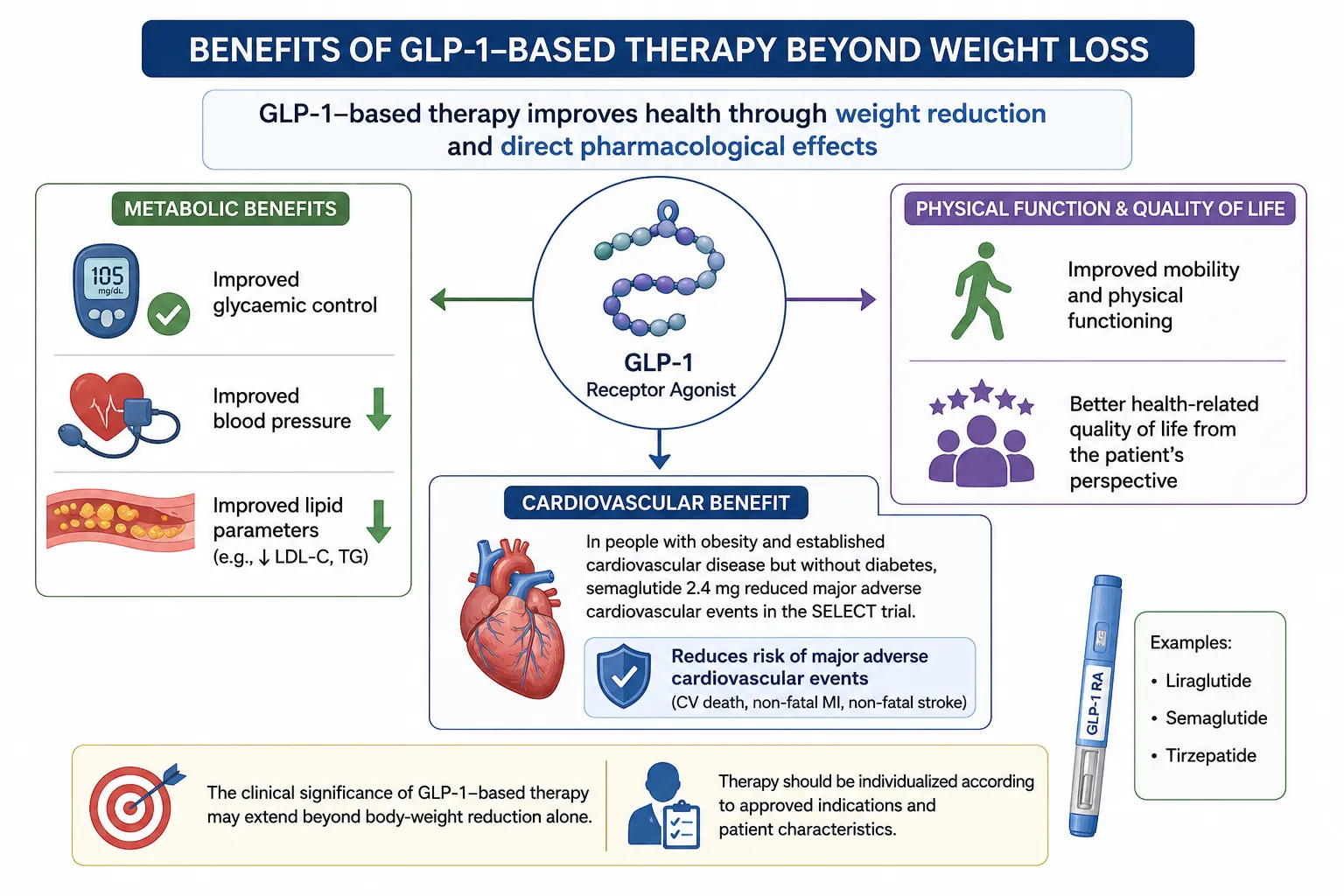
The benefits of GLP-1-based therapy can extend beyond changes on the weighing scale. Weight reduction and direct pharmacological effects may improve glycaemic control, blood pressure and selected lipid parameters. Improvements in mobility, physical functioning and health-related quality of life are also important because these outcomes reflect the daily impact of treatment from the patient's perspective. Cardiovascular outcome research has strengthened interest in this therapeutic class [20]. In people with obesity and established cardiovascular disease but without diabetes, semaglutide 2.4 mg reduced major adverse cardiovascular events in the SELECT trial. Such findings suggest that the clinical significance of GLP-1-based treatment may extend beyond body-weight reduction alone, although therapy should still be individualized according to approved indications and patient characteristics [22].
Sustainability and Weight Regain
Obesity is a chronic relapsing disease, and maintenance is one of the major challenges of treatment. Physiological adaptations to weight loss may include increased appetite, altered satiety signalling and reduced energy expenditure. The withdrawal findings from semaglutide studies illustrate that discontinuation can be followed by substantial weight regain, emphasizing that successful obesity management often requires a long-term strategy rather than a short course of treatment. Long-term sustainability depends on continued clinical support, healthy dietary patterns, regular physical activity and realistic patient expectations. For patients receiving GLP-1 RAs, decisions about treatment duration should be made through periodic reassessment of benefit, tolerability, comorbidities, access and individual goals [22].
Safety and Tolerability
Gastrointestinal adverse effects, particularly nausea, vomiting, diarrhoea and constipation, are among the most common limitations of GLP-1 RA therapy. These effects are often most prominent during dose escalation and may improve with time. Gradual titration, patient counselling and attention to hydration and dietary tolerance can improve treatment persistence. Safety assessment should also consider the patient's medical history and the product-specific prescribing information. Rapid weight loss may be associated with complications such as gallbladder disease in susceptible individuals. Rare but clinically important concerns, contraindications and precautions should be assessed individually. Long-term therapy should therefore include monitoring for tolerability, nutritional adequacy and the balance between benefits and risks [28].
Patient-Centred Outcomes and Quality of Life
A patient-centred approach recognizes that numerical weight loss is only one component of treatment success. Improvements in mobility, energy, self-confidence, participation in daily activities and quality of life may be highly meaningful to patients. Shared decision-making should address expectations regarding the rate of weight loss, possible adverse effects, long-term treatment requirements and the likelihood of weight regain after discontinuation. Stigma should also be avoided. Obesity is a complex chronic disease, and response to treatment should not be framed as a simple test of willpower. Respectful communication and individualized goal setting can improve engagement and support long-term care [31].
Combination with Lifestyle Intervention
Pharmacotherapy is most appropriately viewed as an adjunct to, rather than a replacement for, lifestyle management. Dietary quality, physical activity, behavioural support and sleep-related interventions can contribute to weight reduction and maintenance. The pivotal trials of anti-obesity medicines generally incorporated lifestyle intervention, demonstrating the practical importance of a combined approach. Lifestyle treatment also supports outcomes not fully captured by medication alone, including cardiorespiratory fitness, muscular strength, nutritional quality and psychological well-being. Multidisciplinary programmes may therefore be particularly useful for individuals with severe obesity or multiple comorbidities [28-33].
Special Populations
Older adults, adolescents and individuals with complex comorbidities require particular attention. In older adults, preservation of lean mass, physical function and nutritional adequacy may be especially important. In younger populations, growth, development and psychosocial factors must be considered. Pregnancy and other reproductive considerations require adherence to product-specific guidance and individualized medical assessment. Patients with diabetes, cardiovascular disease or renal impairment may also require careful review of concomitant medicines and clinical priorities. The source manuscript emphasizes that treatment goals should extend beyond weight reduction to include disease control, nutritional adequacy and preservation of function. This principle is particularly relevant when applying potent long-term pharmacotherapy to heterogeneous patient populations [30-32].
Clinical and Public Health Implications
The increasing efficacy of GLP-1-based pharmacotherapy has important implications for clinical practice and public health. At the individual level, effective treatment may reduce the burden of obesity-related complications and improve quality of life. At the population level, however, benefits will depend on equitable access, affordability, continuity of supply and integration with preventive strategies that promote healthy food environments and opportunities for physical activity [33]. The rapid expansion of incretin-based therapies also creates challenges related to cost, long-term adherence and healthcare-system capacity. Future obesity care will need to combine effective pharmacotherapy with prevention, behavioural science, nutritional support and equitable health policy [34].
LIMITATIONS AND FUTURE DIRECTIONS
Although clinical trials provide strong evidence for the efficacy of GLP-1 RAs, important questions remain. Long-term real-world persistence, outcomes after treatment discontinuation, comparative effectiveness across diverse populations, preservation of lean mass and cost-effectiveness require continued study. Head-to-head comparisons and research into personalized predictors of response may help optimize treatment selection. Newer multi-receptor incretin therapies and other emerging anti-obesity agents may provide greater average weight loss, but increasing efficacy should be evaluated alongside safety, tolerability, durability, accessibility and patient preference. Future treatment strategies should aim for sustained improvements in health rather than focusing exclusively on maximal numerical weight reduction [32-35].
CONCLUSION
GLP-1 receptor agonists have transformed the pharmacological management of obesity by providing clinically meaningful and sustained weight loss in many patients with or without T2DM. Liraglutide and semaglutide have established strong evidence for efficacy, while cardiovascular and long-term maintenance studies have expanded understanding of their broader clinical value. Nevertheless, response varies between individuals, treatment discontinuation may be followed by weight regain, and gastrointestinal tolerability, lean-mass preservation, cost and access remain important challenges. The best outcomes are likely to arise from individualized treatment that combines evidence-based pharmacotherapy with lifestyle intervention, patient-centred goal setting and long-term clinical follow-up.
CONFLICT OF INTEREST
The authors declare no conflict of interest.
ACKNOWLEDGMENTS
The authors acknowledge the scientific literature and the source materials used in preparing this narrative review.
DECLARATION
The authors declare that Artificial Intelligence (AI) tools were used solely to assist in the design and generation of the graphical abstract for this manuscript. AI was used as a visual design aid to create and arrange graphical elements based on the scientific content of the manuscript. The authors reviewed and verified the generated graphical abstract and take full responsibility for its scientific accuracy, content, interpretation, and final presentation. No AI tool was used to replace the authors' scientific judgment or authorship.
REFERENCES





Karthika A.*, Karthikeyan M., Santhosh S., Praveenkumar A., V. S. Saravanan, Efficacy, Safety and Clinical Implications of GLP-1 Receptor Agonists for Chronic Weight Management in Patients with or Without Type 2 Diabetes, Int. J. Med. Pharm. Sci., 2026, 2 (9), 207-214. https://doi.org/10.5281/zenodo.22647817
 10.5281/zenodo.22647817