

We use cookies to ensure our website works properly and to personalise your experience. Cookies policy
Department of Pharmaceutical chemistry Shantha College of Pharmacy, Peresandra, Chikkaballapur, India
Chronic and acute pain remain among the leading causes of global disability, and the opioid analgesics that dominate current practice carry well-known risks of tolerance, dependence, respiratory depression, and diversion. This has renewed interest in non-opioid analgesic targets, among which the neurotensin receptor system occupies a prominent place. Neurotensin, a tridecapeptide neurotransmitter/neuromodulator, produces potent, opioid-independent antinociception through its principal receptor, neurotensin receptor 1 (NTSR1), a class A G-protein-coupled receptor (GPCR). Because peptide agonists of NTSR1 cross the blood-brain barrier poorly and produce dose-limiting hypotension and hypothermia, drug discovery efforts have turned to small, orally tractable molecules. The determination of a growing family of inactive-, intermediate-, and active-state NTSR1 structures, together with receptor complexes with G proteins and arrestins, has made the receptor amenable to structure-based virtual screening, in which tens of millions to tens of billions of make-on-demand ('tangible') molecules are computationally docked against the orthosteric or allosteric binding pockets and the top-ranked candidates are synthesized and tested experimentally. This strategy has already yielded potent, chemically novel agonists and biased allosteric modulators at closely related aminergic and peptidergic GPCRs, including the cannabinoid CB1 receptor, the mu- and kappa-opioid receptors, and the serotonin 5-HT2A receptor, several of which show analgesic activity with improved side-effect margins in rodent models. This review summarizes the biology and structural pharmacology of the neurotensin system, the principles and computational workflow of large-library structure-based docking, the specific application of this approach to NTSR1 to identify small-molecule agonists with analgesic activity, and how this effort compares with parallel programs at other GPCR targets. We further discuss the preclinical pharmacology framework, physicochemical and ADME design trade-offs, the position of NTSR1 among other non-opioid analgesic targets, and the regulatory pathway relevant to translating a docking-derived hit into a candidate medicine. We conclude by outlining future directions and the remaining challenges of virtual-library-derived NTSR1 agonists as candidate non-opioid analgesics.
Pain management continues to rely heavily on opioid analgesics despite their narrow therapeutic index and their contribution to a persistent public-health crisis of misuse and overdose. This has focused substantial academic and industrial effort on non-opioid mechanisms capable of producing analgesia without the respiratory depression, tolerance, and abuse liability associated with mu-opioid receptor agonism. The neurotensinergic system is one of the most extensively validated of these alternative mechanisms: exogenous neurotensin produces robust antinociception in rodent pain models through a pathway that is pharmacologically and mechanistically distinct from opioid signaling, and this effect persists even in the presence of opioid tolerance. Translating this biology into a medicine has proven difficult. Neurotensin itself is a peptide that is rapidly degraded by peptidases and does not cross the blood-brain barrier in useful quantities, and peptide agonists developed to overcome these liabilities have tended to produce dose-limiting cardiovascular and thermoregulatory side effects because the receptor is expressed both centrally and in peripheral tissues, including vascular smooth muscle. These limitations have motivated a decades-long search for small, drug-like molecules that engage the neurotensin receptors with the selectivity and pharmacokinetic properties needed for a viable analgesic. Structure-based virtual screening of ultra-large 'tangible' chemical libraries has emerged over the last decade as a powerful route to exactly this kind of molecule. Rather than screening compounds that are physically in hand, this approach computationally docks tens of millions to tens of billions of molecules that can be synthesized on demand from validated chemical reactions, ranks them by predicted complementarity to a target binding site, and sends only a small, prioritized set forward for actual synthesis and testing. Applied to several aminergic and peptidergic GPCRs relevant to pain and reward, this strategy has repeatedly discovered chemotypes unrelated to any known ligand, several of which have translated into potent, selective, and behaviorally active agonists in animal models. This review considers how the same logic has been, and can be, applied to neurotensin receptor 1 to identify small-molecule agonists with analgesic activity, situating this effort within the broader landscape of GPCR-targeted virtual library docking, the structural biology that enables it, and the preclinical and translational framework that would carry a docking-derived hit toward a candidate medicine. The remainder of this review is organized as follows. Section 2 summarizes the neurotensin peptide and its three receptor subtypes. Section 3 reviews the structural biology of NTSR1 that underlies structure-based drug design. Section 4 discusses NTSR1 signaling and the rationale for small-molecule agonism. Section 5 describes the principles and computational workflow of ultra-large virtual library docking. Section 6 applies this workflow specifically to NTSR1. Section 7 reviews precedent from comparable GPCR docking campaigns, and Section 8 discusses allosteric modulation as a complementary strategy. Sections 9 through 13 address preclinical pharmacology, physicochemical and ADME design, the broader landscape of non-opioid analgesic targets, regulatory considerations, and future directions, before Section 14 discusses remaining challenges and Section 15 concludes.
2. The Neurotensin System: Peptide, Receptors, and Physiology
2.1 Discovery and peptide pharmacology
Neurotensin (NT) is a 13-amino-acid peptide first isolated from bovine hypothalamus on the basis of its vasodilatory activity, and subsequently shown to function as both a neurotransmitter/neuromodulator in the central nervous system and a hormone released from enteroendocrine N cells in the gut. In the brain, neurotensin is co-localized and functionally intertwined with dopaminergic circuits, modulating mesolimbic and nigrostriatal dopamine transmission, and it additionally influences thermoregulation, food intake, and blood pressure. In the periphery, neurotensin regulates gastrointestinal motility and secretion and is released postprandially in response to fat ingestion. Only the C-terminal hexapeptide fragment of neurotensin, NT(8-13), is required for full agonist activity at its receptors, and this fragment has served as the starting point for essentially all subsequent peptide and peptidomimetic agonist design.
2.2 NTSR1: the principal mediator of neurotensin pharmacology
The biological actions of neurotensin are mediated by at least three distinct receptor types: NTSR1 and NTSR2, both class A (rhodopsin-like) GPCRs, and NTSR3/sortilin, a type I single-transmembrane-domain sorting receptor unrelated in fold to the GPCRs. NTSR1 is the high-affinity subtype and is the receptor most clearly linked to the peptide's antinociceptive, hypothermic, hypotensive, and dopamine-modulating effects, making it the principal target of analgesic drug-discovery efforts. NTSR1 is expressed both centrally, in regions including the periaqueductal gray, rostral ventromedial medulla, spinal dorsal horn, and dopaminergic nuclei, and peripherally, including in vascular smooth muscle and primary sensory neurons - an expression pattern that explains both its therapeutic potential and its principal safety liabilities.
2.3 NTSR2 and NTSR3/sortilin: distinct but interacting receptors
NTSR2 is a lower-affinity GPCR paralog of NTSR1 that is expressed predominantly in the brain, couples to phospholipase-C-linked signaling, and additionally binds the antihistamine levocabastine with high affinity - a pharmacological property that has historically been used to distinguish NTSR2 from NTSR1 in binding assays. Unlike NTSR1, NTSR2 has not been as clearly linked to opioid-independent antinociception, and its physiological role remains comparatively less well defined, although it has been implicated in mood and stress-related behaviors. NTSR3, also known as sortilin, is structurally unrelated to NTSR1 and NTSR2: it is a type I transmembrane receptor of the Vps10p-domain family that lacks G-protein coupling and instead functions largely in intracellular protein sorting and trafficking. A soluble, shed form of sortilin (sSortilin/NTSR3) also circulates and has been implicated in cancer progression, cardiovascular disease, and depression. Because sortilin can form a complex with NTSR1 at the cell surface and modulate its trafficking, it is a relevant, if indirect, consideration for a comprehensive NTSR1-targeted discovery program even though it is not itself the object of the docking campaigns discussed in this review.
Table A. Overview of the three neurotensin receptor subtypes.
|
Receptor |
Structural class |
Signaling / mechanism |
Relevance to analgesia |
|
NTSR1 |
Class A GPCR (7TM) |
Gq/11-preferring; also recruits beta-arrestin-1/2 |
Principal mediator of opioid-independent antinociception; primary target of this review |
|
NTSR2 |
Class A GPCR (7TM) |
Phospholipase-C-linked signaling; binds levocabastine with high affinity |
Physiological role less well defined; implicated in mood/stress behaviors rather than analgesia per se |
|
NTSR3 / Sortilin |
Type I transmembrane, Vps10p-domain family (non-GPCR) |
Intracellular protein sorting and trafficking; soluble shed form also signals |
Modulates NTSR1 trafficking via complex formation; linked to cancer, cardiovascular disease, and depression |
This review focuses on NTSR1 because it is both the best structurally characterized neurotensin receptor and the subtype most directly implicated in analgesia, but selectivity against NTSR2 in particular remains an important counter-screen for any docking-derived candidate, as discussed further in Section 14.
3. Structural Biology of NTSR1
Structure-based docking is only as good as the structural template it is built upon, and NTSR1 is unusual among peptide-activated GPCRs in the breadth of structural states that have now been captured. This structural progression - from inactive, antagonist-bound conformations through active, agonist- and transducer-bound complexes - both validates the mechanistic model of NTSR1 activation and supplies the specific coordinate sets used as docking templates in the campaigns discussed later in this review.
3.1 Inactive and antagonist-bound structures
Early crystallographic work using thermostabilized NTSR1 constructs solved the receptor in an apo (unliganded) state as well as in complex with the non-peptide inverse agonists SR48692 and SR142948A. These inverse-agonist-bound structures reveal a distinctive large extracellular opening between transmembrane helices VI and VII that is not observed in agonist-bound structures, coupled with a constriction of the intracellular face of the receptor consistent with an inactive, transducer-incompetent conformation. These structures established the orthosteric pocket boundaries relevant to antagonist and inverse-agonist design and provided an essential inactive-state reference point against which agonist-induced conformational changes could be measured.
3.2 Agonist-bound and active-state structures
The first active-like structure of NTSR1 was solved in complex with NT(8-13), the C-terminal agonist fragment of neurotensin, showing the peptide bound in an extended conformation running nearly perpendicular to the membrane plane with its carboxy terminus directed into the receptor core. Subsequent work extended this picture with structures of a partial agonist (RTI-3a) and a novel full non-peptide agonist (SRI-9829), showing that full and partial agonists both induce a contraction of the orthosteric binding pocket relative to the apo and inverse-agonist-bound states, and that agonist efficacy correlates with how closely a ligand mimics the binding mode of the endogenous peptide. Together, these structures define the pharmacophore requirements for orthosteric agonism at NTSR1 and are the structures most directly used as templates for agonist-focused virtual library docking.
3.3 Transducer complexes: G protein and arrestin structures
Cryo-electron microscopy has extended the NTSR1 structural landscape to include full signaling complexes. A structure of NTSR1 bound to the agonist JMV449 and the heterotrimeric Gi1 protein revealed both a canonical, fully active conformation and an additional non-canonical state exhibiting a mixture of active- and inactive-like features, suggesting that this intermediate conformation may represent a distinct step along the activation pathway rather than a simple two-state switch. A separate cryo-EM structure resolved full-length NTSR1 in complex with beta-arrestin-1, showing that receptor phosphorylation at sites in the third intracellular loop and C-terminal tail is required for stable arrestin engagement, and revealing a phosphatidylinositol-4,5-bisphosphate molecule that bridges the receptor transmembrane domain and the arrestin C-lobe. Most recently, a chemical-biology strategy generating site-specifically hexa-phosphorylated NTSR1 enabled high-resolution cryo-EM structures of the receptor in complex with beta-arrestin-1 and the biased allosteric modulator SBI-553, directly visualizing how a small molecule bound outside the orthosteric pocket can favor arrestin engagement over G-protein coupling.
3.4 Structural basis for biased allosteric modulation
The SBI-553-bound arrestin complex, together with mutagenesis and pharmacological data on the closely related analog SBI-810, localizes the biased allosteric site to a pocket distinct from the orthosteric NT(8-13)-binding groove. Occupancy of this allosteric site appears to stabilize a receptor conformation that favors beta-arrestin-2 recruitment while simultaneously antagonizing Gq-mediated signaling triggered by endogenous neurotensin, providing a direct structural rationale for the reduced hypotensive and hypothermic liability observed with these compounds relative to full orthosteric agonists. From a docking perspective, this means that NTSR1 offers not one but at least two independently druggable, structurally defined pockets - the orthosteric neurotensin site and the distinct allosteric site - each of which can, in principle, be targeted by a dedicated virtual-library docking campaign with a different intended pharmacological outcome.
Table B. Representative solved structures of NTSR1 relevant to structure-based drug design.
|
Structural state |
Bound partner(s) |
Structural / mechanistic insight |
|
Apo / inactive |
None (unliganded, thermostabilized construct) |
Baseline inactive conformation for comparison with liganded states |
|
Inverse-agonist-bound |
SR48692; SR142948A (non-peptide) |
Large extracellular opening of helices VI/VII; intracellular constriction |
|
Partial-agonist-bound |
RTI-3a |
Intermediate pocket contraction; partial efficacy correlates with partial mimicry of NT binding mode |
|
Full-agonist-bound (peptide) |
NT(8-13) |
Extended peptide conformation nearly perpendicular to membrane; C-terminus in receptor core |
|
Full-agonist-bound (non-peptide) |
SRI-9829 |
Pocket contraction; agonist efficacy tracks similarity to NT(8-13) binding mode |
|
Active, G-protein complex |
Agonist JMV449 + heterotrimeric Gi1 |
Canonical and non-canonical (intermediate) activation states resolved |
|
Active, arrestin complex |
Beta-arrestin-1 (receptor hexa-phosphorylated) |
Defines phosphorylation-dependent arrestin engagement; PIP2 bridges receptor and arrestin |
|
Biased-modulator / arrestin complex |
Beta-arrestin-1 + allosteric modulator SBI-553 |
Localizes and visualizes the distinct allosteric, arrestin-biasing pocket |
4. NTSR1 Signaling and the Case for Small-Molecule Agonism
NTSR1 couples predominantly to Gq/11 proteins, but, like many class A GPCRs, it also recruits beta-arrestins, and the balance between these pathways shapes both efficacy and side-effect profile. Work on beta-arrestin-biased NTSR1 modulators illustrates this point directly: allosteric compounds such as SBI-553 and its optimized analog SBI-810 bind NTSR1 at a site distinct from the orthosteric neurotensin pocket, selectively recruit beta-arrestin-2 while antagonizing Gq signaling, and produce potent antinociception in mouse models of postoperative, inflammatory, and neuropathic pain through combined central and peripheral mechanisms, including suppression of spinal NMDA-receptor/ERK signaling and reduced surface expression of the Nav1.7 sodium channel in peripheral sensory neurons. Because this signaling bias avoids the Gq-mediated hypotension and hypothermia that limited earlier orthosteric neurotensin agonists, it has been proposed as a safer route to NTSR1-based analgesia. Orthosteric small-molecule agonism, by contrast, aims to reproduce the antinociceptive efficacy of neurotensin itself using a drug-like scaffold that retains oral or systemic bioavailability. Early medicinal-chemistry campaigns, including an NIH Molecular Libraries probe program that produced the compound ML301 through scaffold-hopping from high-throughput screening hits, demonstrated that non-peptidic, full agonists of NTSR1 with low-micromolar potency and good selectivity over NTSR2 and unrelated GPCRs are achievable, but such campaigns typically explore chemical space numbering in the thousands to low millions of compounds. Structure-based virtual library docking extends this search by orders of magnitude and, as described in the next section, is now the method of choice for discovering fundamentally new chemotypes at structurally characterized GPCRs such as NTSR1.
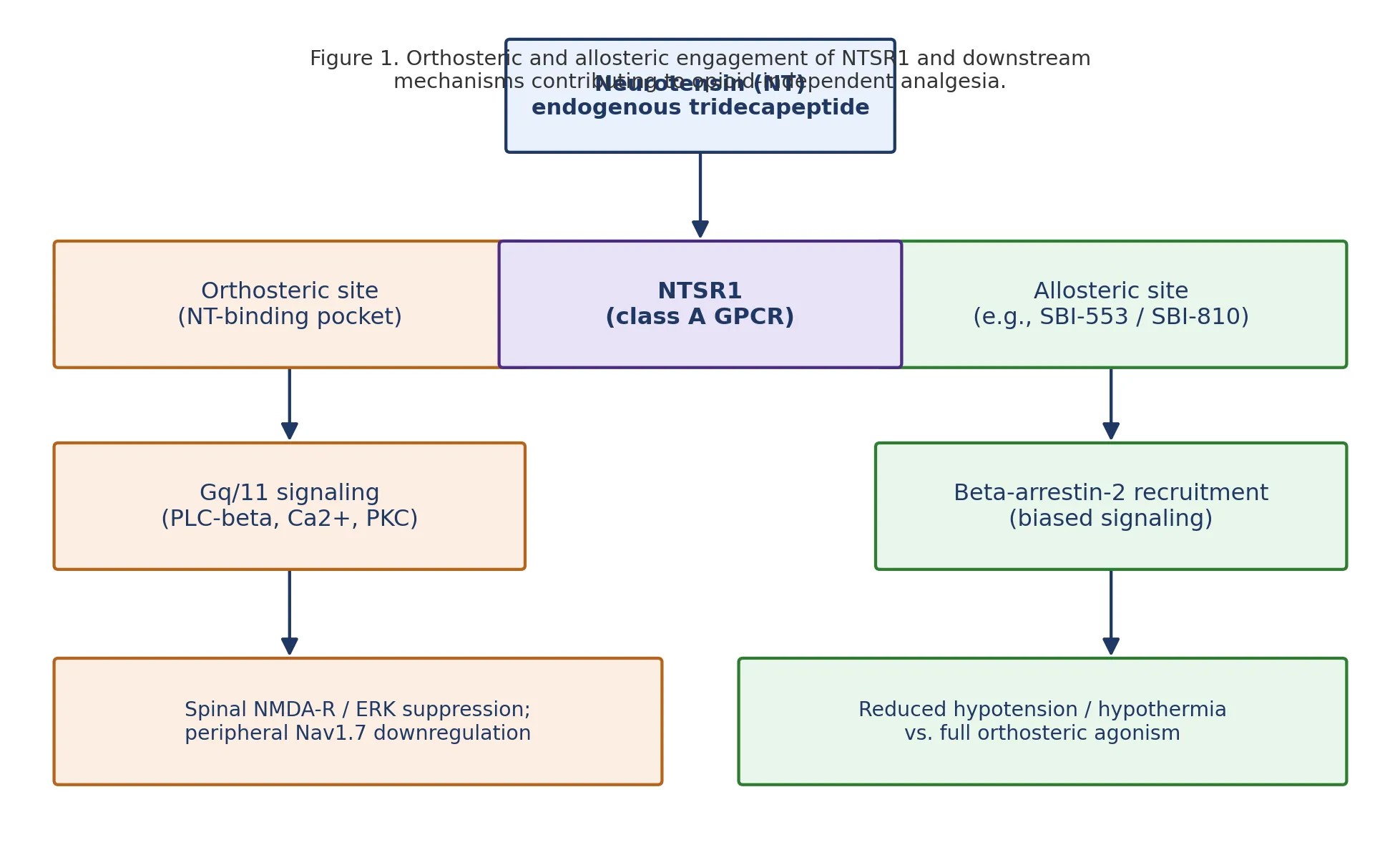
Figure 1. Orthosteric and allosteric engagement of NTSR1 and the downstream signaling mechanisms contributing to opioid-independent analgesia.
5. Structure-Based Docking of Ultra-Large Virtual Libraries: Principles and Workflow
The virtual libraries used in modern structure-based screening are not collections of physical compounds but enumerations of molecules that can be synthesized rapidly and reliably from a defined set of validated building blocks and two- to four-component reactions. Commercial and academic make-on-demand catalogs of this kind have grown enormously over the past decade: the Enamine REAL lead-like library alone expanded from roughly 1.6 billion compounds in 2021 to nearly 4 billion by 2023, related ZINC22-format libraries now contain on the order of 4 billion ready-to-dock three-dimensional structures, and the fully enumerated make-on-demand space now exceeds 75 billion molecules, vastly exceeding the size of any physical screening deck while retaining synthetic tractability.
5.1 Target preparation
A docking campaign begins with a validated three-dimensional structure of the target binding site, typically an agonist- or antagonist-bound crystal or cryo-electron microscopy structure, or, where such structures are unavailable, a carefully validated homology model. For NTSR1, the structures summarized in Section 3 - apo, inverse-agonist-bound, partial- and full-agonist-bound, and G-protein- or arrestin-complexed - together provide multiple orthosteric and allosteric templates suitable for docking campaigns tailored to different pharmacological objectives, whether a conventional full agonist, a partial agonist, or a biased allosteric modulator.
5.2 Construction of tangible, make-on-demand virtual libraries
The 'tangible' character of these libraries comes from their construction: each virtual molecule is not an arbitrary structure but the predicted product of a specific, validated synthetic route - most often a two- to four-component reaction such as amide coupling, reductive amination, or Suzuki coupling - applied combinatorially across large sets of compatible building blocks (commonly on the order of 100,000 or more distinct reagents feeding into well over 100 reaction templates). Because every enumerated structure corresponds to a molecule that a supplier can actually make and deliver within one to a few weeks, a docking hit can move directly from a computational ranking to a physical sample without a bespoke synthesis campaign, which is what allows these screens to test tens to low hundreds of prioritized candidates rather than requiring in-house synthesis of every hit.
5.3 Library docking and prioritization
Each molecule in the virtual library is sampled in many possible conformations, orientations, and protonation states within the target pocket, and each pose is scored for shape and chemical complementarity, including hydrogen bonding, electrostatics, and desolvation penalties. Physics-based docking programs used in these campaigns, such as the DOCK family of programs, combine rigid or flexible ligand sampling with continuum electrostatics and empirical solvation terms rather than relying solely on machine-learned scoring, which has been credited with the ability of these screens to surface chemotypes with little similarity to known ligands. Because the libraries are enormous, this step demands either very large compute allocations or algorithmic shortcuts: brute-force docking of a single-digit-billion-compound library can require substantial CPU-time budgets even when parallelized, which has motivated a family of acceleration strategies, including GPU-accelerated docking engines that report order-of-magnitude speedups over single-core implementations, machine-learning-boosted approaches that predict scores for the bulk of a giga-scale library from a docked subset of only a few percent, and hierarchical synthon-based methods that dock small chemical fragments first and elaborate only the best-scoring combinations, allowing effective screening of libraries of ten billion or more compounds while physically docking well under one percent of them. The output of any of these strategies is a ranked list from which several thousand top-scoring poses are visually inspected by medicinal chemists to remove strained conformations, reactive or unstable groups, and molecules with unfavorable physicochemical properties, yielding a shortlist of typically 20 to 100 candidates for synthesis.
5.4 Experimental validation and optimization
Prioritized molecules are synthesized (or purchased, since they are drawn from a make-on-demand catalog) and tested in radioligand-binding or functional assays against the target receptor. In comparable GPCR campaigns, hit rates - the fraction of tested molecules showing genuine activity - have ranged from roughly 10% to over 20%, substantially higher than typical high-throughput screening of physical libraries, and initial hits have spanned a wide range of potencies from low-micromolar to sub-micromolar. The most promising hits then undergo iterative structure-based optimization, in which the docked pose guides medicinal-chemistry modifications aimed at improving affinity, selectivity, and drug-like properties, often achieving low-nanomolar or sub-nanomolar potency within a small number of synthetic cycles. Cryo-electron microscopy or crystallographic structures of the optimized ligand in complex with the receptor are frequently obtained afterward to confirm that the true binding pose matches the docking prediction, providing a feedback loop that both validates the method and informs further design.
5.5 Computational scale and cost considerations
The practical feasibility of a docking campaign is ultimately bounded by available computing resources, and this has been a central driver of methodological innovation in the field. Reported gigadocking efforts have screened well over a billion molecules against a single target using GPU-accelerated pipelines distributed across cloud or cluster resources, and hierarchical or machine-learning-assisted screening strategies now make campaigns against libraries of ten billion or more compounds tractable on resources far more modest than brute-force docking of the same library would require. For a target such as NTSR1, this means a campaign is not limited to the tens-of-millions-of-molecules scale used in the earliest large-library GPCR docking studies; the same computational infrastructure now supports screening subsets of the full multi-billion-compound tangible universe, potentially improving the diversity and quality of the chemical matter available for prioritization
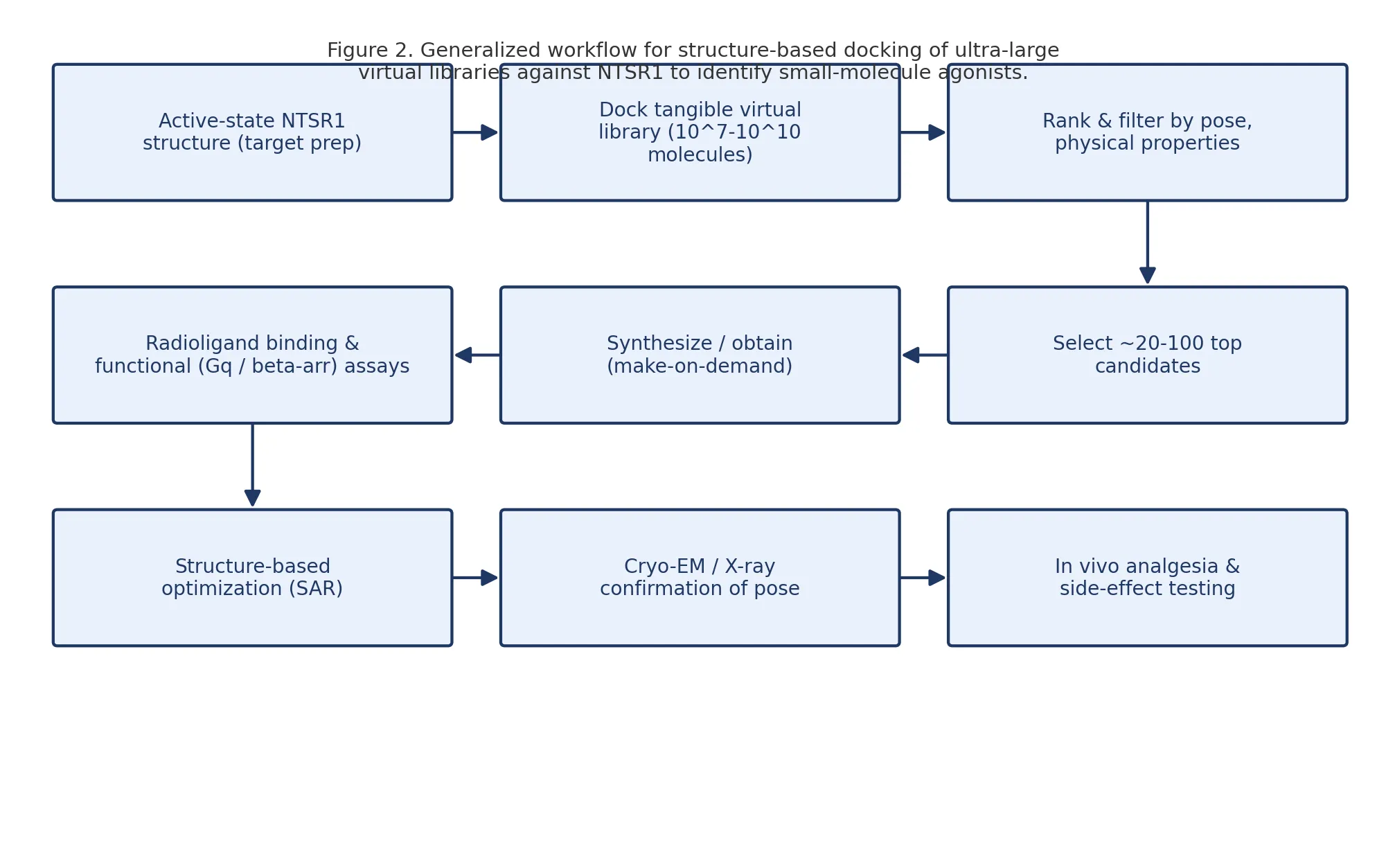
Figure 2. Generalized workflow for structure-based docking of ultra-large virtual libraries against NTSR1 to identify small-molecule agonists.
6. Applying Large-Library Docking to Neurotensin Receptor 1
The same structure-based logic applied at other GPCRs is directly transferable to NTSR1, and the receptor is well positioned for such a campaign for several reasons. First, multiple active-state structures of NTSR1 bound to peptide and non-peptide agonists and to G-protein or arrestin partners are available, giving docking programs a reliable representation of the activated orthosteric pocket. Second, the existence of a structurally and mechanistically distinct allosteric site, defined by biased modulators such as SBI-553 and SBI-810, offers a second, druggable pocket through which agonism or positive allosteric modulation can be pursued without competing against the high-affinity endogenous peptide. Third, prior medicinal-chemistry work, including the ML301 probe series, establishes that non-peptidic small molecules can achieve full agonist efficacy at NTSR1, giving a pharmacological benchmark against which newly docked hits can be compared. A docking campaign against NTSR1 following this template would computationally screen tens of millions to billions of tangible molecules against the orthosteric or allosteric pocket, prioritize a small set of chemically diverse, high-scoring, and synthetically accessible candidates, and test them by radioligand displacement and second-messenger or beta-arrestin recruitment assays to identify genuine agonists. Confirmed hits would then be optimized through structure-guided medicinal chemistry, with the goal of reaching nanomolar potency and full or biased agonist efficacy while retaining physicochemical properties compatible with systemic or central nervous system exposure. Analgesic efficacy would subsequently be assessed in standard rodent nociception assays, as detailed in Section 9, alongside counter-screens for the cardiovascular and thermoregulatory effects that have historically limited neurotensin-based therapeutics, and for abuse-related endpoints such as conditioned place preference, given the receptor's links to dopaminergic reward circuitry. A further design choice specific to NTSR1 is which of the two druggable pockets to prioritize for a given therapeutic goal. Docking against the orthosteric, NT(8-13)-defined pocket is the natural route to a conventional full agonist intended to reproduce or exceed the antinociceptive efficacy of the endogenous peptide. Docking against the allosteric, SBI-553-defined pocket, by contrast, is the natural route to a biased modulator intended to reproduce the favorable safety profile of SBI-810 while potentially improving on its potency, selectivity, or pharmacokinetics. Because these two campaigns target structurally distinct sites, they are not mutually exclusive and could reasonably be pursued in parallel, with the choice of downstream functional assay - Gq mobilization for the orthosteric campaign, beta-arrestin-2 recruitment for the allosteric campaign - tailored accordingly from the outset.
7. Precedent from Comparable G-Protein-Coupled Receptor Campaigns
The plausibility and expected productivity of an NTSR1 docking campaign are well supported by closely analogous programs at other pain-relevant GPCRs, each of which is considered in turn below before being compared directly in Table 1.
7.1 Cannabinoid CB1 receptor
Against the cannabinoid CB1 receptor, docking of a 74-million-molecule tangible library identified 46 candidates for synthesis, nine of which showed genuine activity in radioligand displacement - a roughly 20% hit rate - despite the library having been filtered toward more lead-like physical properties than is typical for CB1R ligands, which are often large and lipophilic. Structure-based optimization of the most potent hit (initial Ki of 0.7 uM) produced a sub-nanomolar (0.95 nM), full Gi/o agonist whose docked pose was subsequently confirmed by a cryo-electron microscopy structure of the ligand in complex with CB1R and its Gi1 partner. In vivo, this lead agonist was strongly analgesic in mice, with a two- to twenty-fold separation between analgesic and sedative or cataleptic doses and no observable conditioned place preference, indicating that the new chemotype could partially decouple analgesia from the sedation, catalepsy, and abuse liability that limit conventional cannabinoids.
7.2 Mu- and kappa-opioid receptors
Against the mu- and kappa-opioid receptors, docking of over 14 million virtual isoquinuclidines - a natural-product-like, functionally congested scaffold rare in general-purpose virtual libraries and built through a modular four-component reaction - yielded 18 prioritized candidates, nine of which showed low-micromolar affinities. Structure-based optimization produced sub-nanomolar dual antagonist/inverse-agonist compounds with joint activity at both receptors, and cryo-electron microscopy structures illuminated the structural basis of this dual-target engagement. In mouse behavioral studies, a potent member of the series with joint MOR-antagonist and KOR-inverse-agonist activity reversed morphine-induced analgesia, phenocopying the anti-overdose agent naloxone, but induced less severe opioid-withdrawal symptoms than naloxone and did not induce conditioned-place aversion, an effect attributed to the compound's KOR-inverse agonism reducing the dysphoria associated with opioid withdrawal.
7.3 Serotonin 5-HT2A receptor
A related bespoke-library campaign against the serotonin 5-HT2A receptor targeted tetrahydropyridines, a scaffold well suited to many aminergic GPCRs but poorly sampled by general-purpose billion-molecule virtual libraries. Docking a purpose-built library of 75 million tetrahydropyridines against a 5-HT2A receptor model led to the synthesis and testing of 17 initial molecules, four of which showed low-micromolar activity at either the 5-HT2A or the closely related 5-HT2B receptor; these hits were subsequently developed toward antidepressant leads. A separate, much larger-scale docking effort against a cryo-EM 5-HT2A structure, screening more than 1.6 billion ZINC22 library molecules, illustrates how the same target can also be approached at the far larger end of the library-size spectrum once GPU-accelerated docking infrastructure is available, underscoring that the choice of library scale is a design decision rather than a fixed constraint of the method.
Table 1. Comparison of large-library structure-based docking campaigns at pain-relevant GPCRs.
|
Target |
Library screened |
Candidates tested |
Confirmed hits / hit rate |
Lead outcome |
|
CB1R (cannabinoid) |
~74 million tangible molecules |
46 |
9 hits (~20%) |
Sub-nM full Gi/o agonist; analgesic in mice with 2-20x window over sedation/catalepsy |
|
MOR / KOR (opioid) |
~14.6 million virtual isoquinuclidines |
18 |
9 hits |
Sub-nM dual antagonist/inverse agonist; reversed morphine analgesia with milder withdrawal than naloxone |
|
5-HT2A (serotonin, bespoke) |
~75 million tetrahydropyridines |
17 |
4 hits |
Low-uM leads advanced toward antidepressant candidates |
|
5-HT2A (serotonin, gigascale) |
~1.6 billion ZINC22 molecules |
Not applicable (large-scale screen) |
Thousands of top-ranking poses filtered computationally |
Illustrates feasibility of billion-scale docking against the same target class |
|
NTSR1 (neurotensin) - prospective |
Tens of millions to billions of tangible molecules (orthosteric or allosteric site) |
~20-100 (proposed) |
Precedent suggests 10-20% |
Target: nanomolar agonist/modulator with analgesic activity and reduced cardiovascular/thermoregulatory liability |
Across these programs, several consistent features emerge that are directly relevant to a prospective NTSR1 effort: docking against a validated active-state structure reliably surfaces chemotypes unrelated to the endogenous ligand or to prior chemical matter; initial hit rates from tens of prioritized candidates are substantially higher than conventional screening; and structure-guided optimization, informed by confirmatory cryo-electron microscopy structures, can compress the path from micromolar hit to nanomolar, in vivo-active lead into a small number of design cycles. These precedents make a strong case that the same pipeline, applied to NTSR1, is likely to yield chemically novel, small-molecule agonists suitable for analgesic evaluation.
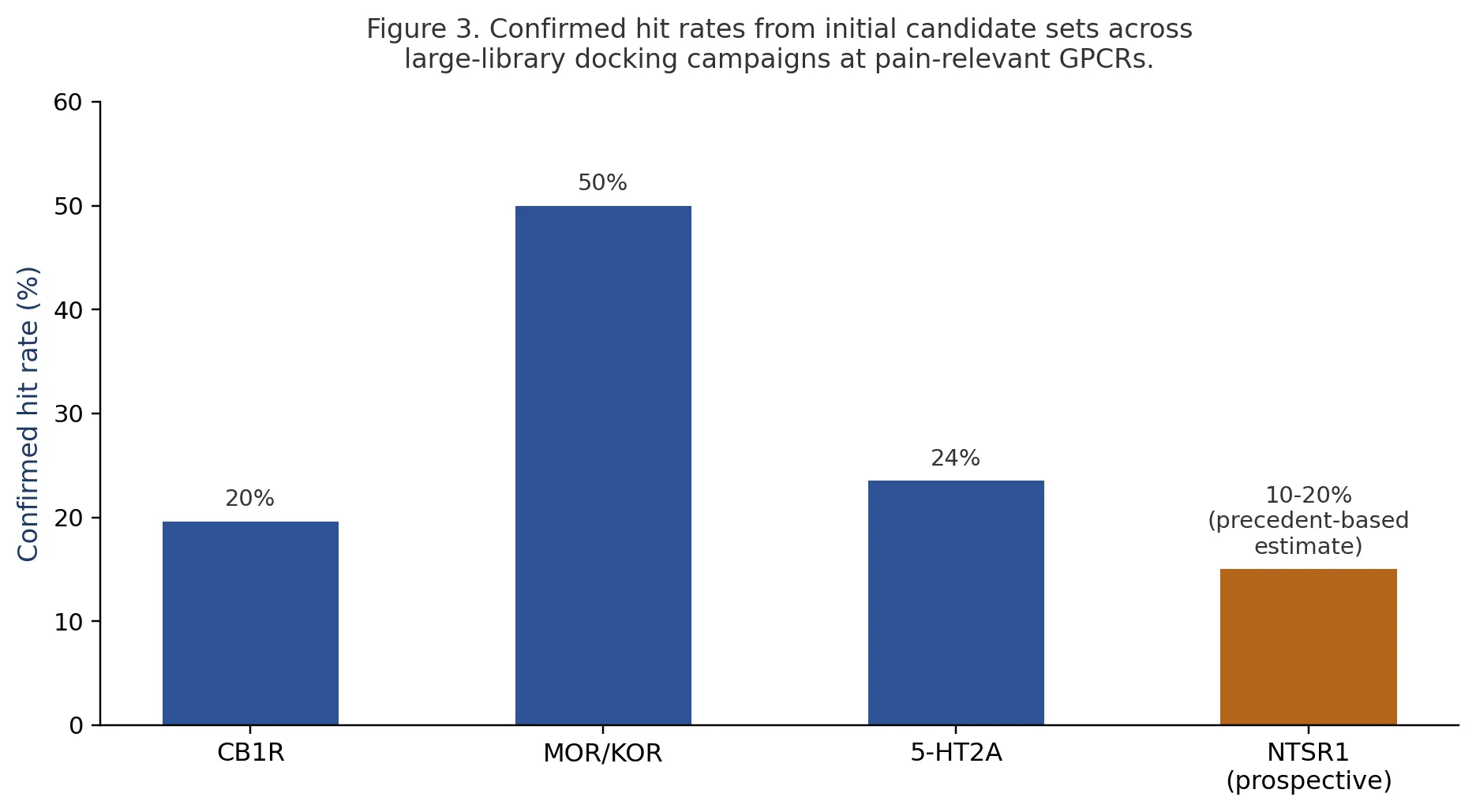
Figure 3. Confirmed hit rates from prioritized candidate sets across large-library docking campaigns at pain-relevant GPCRs, with a precedent-based estimate for a prospective NTSR1 campaign.
8. Allosteric Modulation as a Complementary Discovery Strategy
Alongside orthosteric agonist discovery, allosteric modulation of NTSR1 represents a parallel and potentially safer route to analgesia. Beta-arrestin-biased allosteric modulators such as SBI-810 achieve potent antinociception in postoperative, inflammatory, and neuropathic pain models through combined spinal and peripheral mechanisms - suppressing NMDA-receptor and ERK signaling in nociceptive neurons and reducing Nav1.7 channel surface expression - while avoiding the Gq-driven hypotension and hypothermia associated with orthosteric neurotensin agonism. These compounds also potentiate opioid analgesia and attenuate opioid-associated withdrawal and place-preference behaviors, suggesting a possible role as opioid-sparing adjuncts rather than as opioid replacements alone. Extending large-library docking to this allosteric pocket, in addition to the orthosteric site, broadens the chemical space available for NTSR1-targeted analgesic discovery and allows medicinal chemists to select for a specific, functionally biased signaling profile from the outset of a campaign rather than discovering it only after extensive optimization. The recent cryo-EM structure of NTSR1 in complex with beta-arrestin-1 and SBI-553 is particularly consequential for this strategy, because it is, to date, one of the few examples of a biased-allosteric-modulator-bound GPCR-arrestin complex to be structurally resolved at high resolution. This structure allows the allosteric pocket to be used directly as a docking template rather than inferred indirectly from mutagenesis and pharmacology alone, in principle enabling a virtual-library campaign explicitly designed to enrich for beta-arrestin-biased chemical matter rather than discovering bias serendipitously among orthosteric hits.
Table 2. Classes of NTSR1-targeted agonists and modulators discussed in this review.
|
Ligand class |
Example |
Binding site / signaling bias |
Notable feature |
|
Endogenous peptide |
Neurotensin, NT(8-13) |
Orthosteric; Gq-preferring |
Potent opioid-independent antinociception; poor CNS penetration, rapid degradation |
|
Non-peptide inverse agonist |
SR48692, SR142948A |
Orthosteric; stabilizes inactive state |
Structural reference for inactive-state docking templates |
|
Non-peptidic orthosteric agonist |
ML301 (NIH probe); SRI-9829 |
Orthosteric; full agonist |
Low-uM potency; SRI-9829 co-crystallized with NTSR1, confirming binding mode |
|
Beta-arrestin-biased allosteric modulator |
SBI-553 / SBI-810 |
Distinct allosteric pocket; beta-arrestin-2-biased |
Analgesic in multiple pain models; avoids Gq-driven hypotension/hypothermia; arrestin-bound structure solved |
|
Virtual-library-derived small molecule (prospective) |
Docking-identified hits (this review) |
Orthosteric or allosteric, by design |
Chemically novel scaffolds; nanomolar potency achievable via structure-based optimization |
9. Preclinical Pharmacology and Behavioral Testing Framework
Whatever its origin, a candidate NTSR1 agonist or allosteric modulator must be evaluated across a structured battery of rodent behavioral and physiological assays before it can be considered a credible analgesic lead. This section outlines the framework that has been used, in comparable form, across the CB1R, opioid-receptor, and NTSR1-allosteric-modulator studies discussed above, and that would be expected to apply equally to a docking-derived NTSR1 agonist.
9.1 Nociception assays
Acute thermal nociception is typically assessed with the hot-plate and tail-flick tests, which measure the latency to a withdrawal response upon exposure to a noxious thermal stimulus and are sensitive to both centrally and peripherally acting analgesics. Mechanical sensitivity is assessed with the von Frey filament test, which determines the paw-withdrawal threshold to graded mechanical stimulation and is particularly informative in models of inflammatory or neuropathic hypersensitivity (allodynia). The formalin test, involving injection of a dilute formaldehyde solution into the paw, captures both an acute (phase 1) nociceptive response and a longer, inflammation-driven (phase 2) response, allowing a single assay to probe two mechanistically distinct components of pain.
9.2 Chronic and pathological pain models
Beyond acute nociception, candidate compounds are tested in models more representative of clinical pain states: postoperative pain following surgical incision, inflammatory pain induced by complete Freund's adjuvant (CFA) or carrageenan injection, and neuropathic pain induced by peripheral nerve injury models such as chronic constriction injury or spared nerve injury. These models are essential because a compound's efficacy and potency in acute thermal assays does not always predict its performance in the sustained, sensitized pain states that are most relevant to chronic pain therapeutics, and because they allow separate assessment of central (e.g., intrathecal) versus peripheral (e.g., local, intraplantar) sites of action, mirroring the central-versus-peripheral mechanistic distinction between orthosteric NTSR1 agonism and biased allosteric modulation discussed in Sections 4 and 8.
9.3 Side-effect and safety counter-screens
Because NTSR1 agonism carries well-documented risks of hypotension, hypothermia, and sedation, any behavioral efficacy study must be paired with counter-screens for these effects, typically core body temperature measurement, blood pressure monitoring, and locomotor activity assessment. For cannabinoid-receptor agonists, the analogous 'tetrad' test battery (analgesia, hypothermia, catalepsy, and hypolocomotion) has become a standard framework for quantifying the separation between therapeutic and side-effect doses, and an equivalent multi-endpoint battery - antinociception alongside blood pressure, temperature, and locomotor readouts - is the natural analog for NTSR1-targeted compounds.
9.4 Abuse-liability and dependence-related endpoints
Given the neurotensin system's extensive interaction with mesolimbic dopamine circuitry, candidate compounds should also be assessed for reinforcing or aversive properties using the conditioned place preference (CPP) or conditioned place aversion (CPA) paradigms, in which animals' preference for an environment previously paired with drug administration is used as an indirect measure of rewarding or aversive subjective effects. Where a candidate is intended as an opioid-sparing adjunct rather than a standalone analgesic, additional endpoints assessing its effect on opioid tolerance, withdrawal severity, and opioid-associated place preference - as has been done for both SBI-810 and the opioid-receptor-targeted isoquinuclidines discussed in Section 7.2 - provide directly relevant translational data.
10. Physicochemical and ADME Design Considerations
A defining advantage of structure-based virtual library docking is that physicochemical filters - molecular weight, calculated logP, polar surface area, hydrogen-bond count, and predicted synthetic accessibility - can be applied before a single molecule is synthesized, allowing a campaign to be steered toward a desired pharmacokinetic profile from the earliest stage of triage rather than retrofitted onto a hit discovered by an unconstrained screen. For NTSR1, this design choice bifurcates along the same central-versus-peripheral axis introduced in Sections 4 and 9.3. A centrally acting NTSR1 agonist intended to engage brain and spinal-cord targets requires blood-brain-barrier penetration, which in practice favors relatively low molecular weight, moderate lipophilicity, low polar surface area, and a low propensity to be recognized by the P-glycoprotein efflux transporter - broadly the same central-nervous-system multiparameter optimization (CNS MPO) criteria applied across CNS drug discovery generally. A peripherally restricted NTSR1 agonist or modulator, by contrast, intended to act locally or at the spinal level while minimizing supraspinal and mesolimbic exposure - and thereby minimizing the risk of central side effects such as sedation, thermoregulatory disruption, or engagement of reward circuitry - would instead be optimized in the opposite direction: increased polarity or molecular weight, zwitterionic character, or deliberate design as a P-glycoprotein substrate to limit brain penetration while preserving peripheral and spinal efficacy.
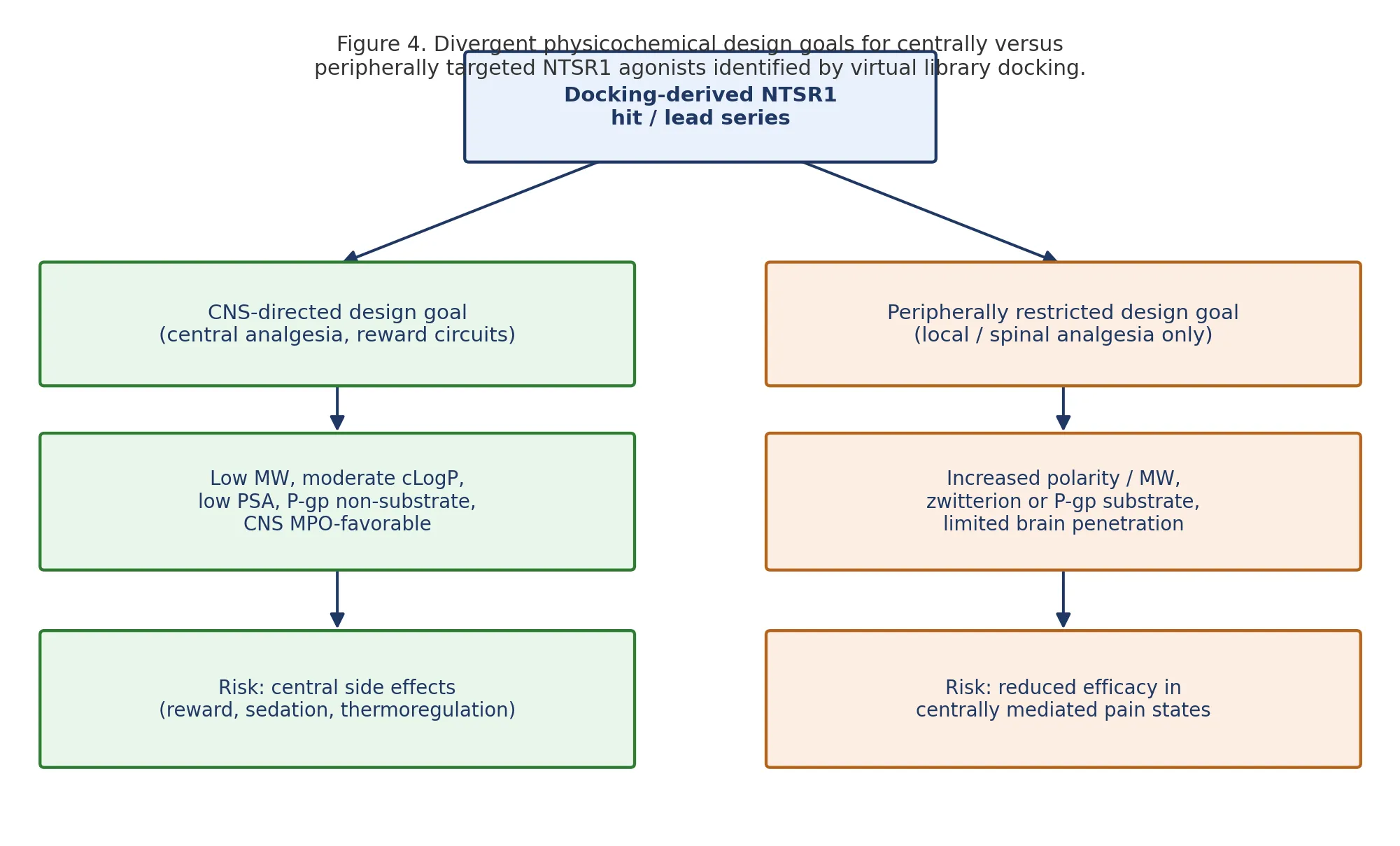
Figure 4. Divergent physicochemical design goals for centrally versus peripherally targeted NTSR1 agonists identified by virtual library docking.
Because this design goal can be specified up front, it should inform not only medicinal-chemistry optimization but also the initial construction or filtering of the virtual library itself - for example, restricting the docked library to a CNS-MPO-favorable physical-property window when a central mechanism is the objective, or conversely enriching for more polar, peripherally restricted chemotypes when a local mechanism is preferred - rather than being treated as a downstream optimization problem to be solved only after a hit has already been identified.
11. NTSR1 in the Landscape of Non-Opioid Analgesic GPCR and Receptor Targets
NTSR1 is one of several receptor systems currently being pursued as an opioid-independent or opioid-sparing analgesic mechanism, and situating it among these related efforts clarifies both its distinctive advantages and the competitive and complementary context in which an NTSR1-focused docking campaign would sit. The cannabinoid CB1 receptor, discussed in Section 7.1, offers strong analgesic efficacy but carries an inherent risk of central cannabinoid-like side effects (sedation, catalepsy, and potential abuse liability) that recent large-library-docking-derived agonists have only partially mitigated. The adenosine A2A receptor has recently been implicated in pain regulation through a microglial mechanism within the paraventricular thalamic nucleus, representing a mechanistically distinct, glial-mediated route to non-opioid analgesia rather than a direct neuronal GPCR agonism strategy. Serotonergic and dopaminergic mechanisms, including 5-HT1D and dopamine D3 receptor signaling in thalamic pain circuits, have also been proposed as non-opioid analgesic targets, illustrating that the broader field is pursuing a diverse portfolio of receptor mechanisms rather than converging on any single target.
Table 3. NTSR1 relative to other non-opioid GPCR-linked analgesic mechanisms discussed in this review.
|
Target |
Proposed mechanism |
Structural docking precedent |
Principal liability |
|
NTSR1 (neurotensin) |
Orthosteric Gq agonism or beta-arrestin-biased allosteric modulation; spinal and peripheral antinociception |
Multiple active-state and arrestin-complex structures available (Section 3) |
Hypotension / hypothermia with full orthosteric agonism |
|
CB1R (cannabinoid) |
Gi/o-coupled agonism in central and peripheral pain circuits |
Demonstrated large-library docking campaign (Section 7.1) |
Sedation, catalepsy, potential abuse liability |
|
A2A receptor (adenosine) |
Microglial modulation within paraventricular thalamic nucleus |
Not yet a reported large-library docking target |
Mechanism recently described; translational path less mature |
|
5-HT1D / D3 receptors |
Modulation of thalamic pain-processing circuits; comorbid with mood regulation |
Not yet a reported large-library docking target |
Overlap with mood-related signaling complicates selectivity |
Relative to these alternatives, NTSR1 has two comparative advantages for a virtual-library docking strategy specifically: an unusually complete structural landscape spanning inactive, active, and both G-protein and arrestin-bound states (Section 3), and a validated, mechanistically distinct second (allosteric) pocket already associated with a favorable preclinical safety profile (Section 8). Few other non-opioid analgesic GPCR targets currently offer both features simultaneously, which is a substantive part of the rationale for prioritizing NTSR1 for a dedicated large-library docking campaign at this time.
12. Regulatory and Translational Development Considerations
Even a highly potent and selective docking-derived NTSR1 agonist would need to traverse a conventional preclinical-to-clinical development pathway before reaching patients, and several NTSR1-specific considerations are worth anticipating early in that process. Standard investigational new drug (IND)-enabling studies - genotoxicity, general and cardiovascular safety pharmacology, and repeat-dose toxicology in at least two species - would need to specifically capture the cardiovascular (hypotension) and thermoregulatory (hypothermia) endpoints already flagged as class liabilities of orthosteric NTSR1 agonism, most likely through dedicated telemetry-based cardiovascular safety pharmacology studies rather than relying solely on standard vital-sign monitoring within general toxicology studies. Abuse-liability assessment, required by regulatory authorities for any centrally active compound with the potential for reinforcing effects, would need to account for the neurotensin system's interaction with dopaminergic reward circuitry (Section 2.2) even though NTSR1 agonism itself is not classically associated with the reinforcing effects seen with direct dopaminergic or opioid agonism; the conditioned place preference and self-administration paradigms noted in Section 9.4 constitute the relevant nonclinical component of such an assessment. Because a biased allosteric modulator such as SBI-810 is mechanistically and structurally distinct from a conventional orthosteric agonist, regulatory and safety-pharmacology strategies may reasonably differ between the two ligand classes discussed in Section 8, with the allosteric-modulator class benefiting from a mechanistic rationale (avoidance of Gq-driven cardiovascular and thermoregulatory signaling) that can be built directly into the nonclinical safety package. Finally, because both orthosteric and allosteric NTSR1 chemical matter emerging from virtual library docking are, by construction, drawn from validated make-on-demand synthetic routes, the transition from a docking hit to a synthetically and analytically well-characterized development candidate - with defined route of synthesis, impurity profile, and scalable process chemistry - is expected to be more direct than for hits arising from more exotic or non-reproducible chemistries, a practical translational advantage of the virtual-library-docking approach that is sometimes underappreciated relative to its purely computational aspects.
FUTURE DIRECTIONS
14. Translational Considerations and Challenges
None of these challenges is unique to NTSR1; each has precedent, and in several cases a documented mitigation strategy, in the CB1R, opioid-receptor, and 5-HT2A docking campaigns discussed above. This existing body of work provides both a methodological template and a set of counter-screens that an NTSR1-focused program can adopt directly.
CONCLUSION
The neurotensin receptor system, and NTSR1 in particular, remains a compelling, opioid-independent target for the treatment of pain, but its clinical translation has long been constrained by the pharmacokinetic and side-effect limitations of peptide agonists. The convergence of an unusually complete structural landscape - spanning inactive, active, G-protein-bound, and arrestin-bound NTSR1 conformations - with structure-based docking of ultra-large, make-on-demand virtual libraries now offers a practical route to chemically novel, drug-like small molecules capable of engaging this receptor at either its orthosteric or allosteric sites. Parallel campaigns at the cannabinoid CB1, mu- and kappa-opioid, and serotonin 5-HT2A receptors demonstrate that this pipeline reliably yields potent, selective, and behaviorally active agonists or modulators with favorable analgesic-to-side-effect margins, often within a small number of design-synthesis-test cycles, and that the same pipeline now scales from tens of millions to billions of screened molecules as computational methods continue to mature. Applying the same strategy to NTSR1, alongside continued development of biased allosteric modulators such as SBI-810 and careful attention to the preclinical pharmacology, ADME design, and regulatory considerations outlined in Sections 9 through 12, represents a promising and increasingly tractable path toward non-opioid or opioid-sparing analgesics. Given the depth of structural, pharmacological, and precedent-based support reviewed here, this approach merits sustained investment as part of the broader effort to diversify the pharmacological toolkit available for pain management.
REFERENCES



Sunil Kumar Busi*, Irene Nethala, E. Gopinath, Structure-Based Virtual Screening of Ultra-Large Chemical Libraries for Small-Molecule Agonists of the Neurotensin Receptor: A Non-Opioid Approach to Analgesia, Int. J. Med. Pharm. Sci., 2026, 2 (8), 77-92. https://doi.org/10.5281/zenodo.21770710
 10.5281/zenodo.21770710