

We use cookies to ensure our website works properly and to personalise your experience. Cookies policy
1M. Pharm. Student and Scholar, Department of Pharmaceutical Chemistry, Global College of Pharmaceutical Technology, Nadia, West Bengal, India
2Assistant Professor, Department of Pharmaceutical Chemistry, Global College of Pharmaceutical Technology, Nadia, West Bengal, India
Diabetes Mellitus (DM) is now a day’s burden for all over the World. It is one of the progressive diseases across the World. It was seen that it is spreading in large databases. One or two members in most of the families affected with diabetes mellitus. Old aged people mainly affected with diabetes. But now young adults can also suffer with diabetes. Gene malfunction is the main reasons for that. Lifestyle modification is another one reason for that. Diabetes mellitus is currently caused by so many targets currently. DM is mainly classified into type I, type II and & Gestational diabetes mellitus (GDM). This paper focussed with DPP4 (Dipeptidyl Peptidase 4) as one of the major target of diabetes mellitus. Many standard drugs fall on this category. The existing molecules resist to human body those are continuously taken this medication due to continuous treatment with those molecules. This paper has shown the virtual screening, molecular docking, generating of pharmacophore and ADMET profiling of novel triazolopyrazine derivatives with their anti-diabetic activities in respect to DPP4 in comparison to standard molecules to overcome the drug resistance.
Diabetes Mellitus (DM) can be described as a metabolic disorder or a group of systemic dysfunctions of the pancreas characterized by hyperglycaemia with metabolic disturbances of carbohydrates, proteins, and fats due to the destruction of beta cells of the pancreas, leading to less insulin secretion or insulin resistance of the organs or both [1-2]. The three major types of Diabetes Mellitus are Type-I, Type-II & Gestational diabetes mellitus (GDM). Type-I diabetes, also known as Insulin-Dependent DM / IDDM, is responsible for impaired insulin secretion. Type-II diabetes, also known as Non-Insulin-Dependent DM / NIDDM, occurs due to insulin resistance in the body. Human body cells are not responding properly, which they should be in the presence of insulin. In 2017, approximately 8.8% of the population, which is about 424.9 million individuals, was identified as having DM. This trend shows that this number will be high, approximately 693 million or 9.9% of the world population in 2040 [3-4]. DM is becoming a growing epidemic disorder by the day. Managing DM should have not only pharmacologic but also non-pharmacologic interventions for better reports. As the most common type of diabetes, type-II DM is the point of interest of most of the pharmacologists and medicinal chemists for the betterment of the prevention and care process of DM patients. Several new oral diabetic agents are being discovered nowadays by them, which include sulfonylurea, thiazolidinediones, etc., along with Dipeptidyl peptidase 4 (DPP-4) inhibitors. DPP-4 inhibitors have moderate efficacy compared to the mainstay treatment of metformin, with a combination of another good-profile drug and insulin. DPP-4 inhibitors are recommended when metformin is contraindicated [5]. There are very few established DPP-4 inhibitors like sitagliptin, gemigliptin, teneligliptin, gosogliptin, etc. [6]. We have taken 20 test compounds as screened by the structure of the established drug using various chemical databases. Docking of test compounds to the target was analysed with the standard DPP-4 inhibitor’s docking result to screen for comparatively better suitable test molecules.
General Information On Enzyme & It’s Inhibitors
In 1966, the first DPP-4 (Molecular weight: 110 kDa) was discovered as an enzyme [7]. It is a type II transmembrane glycoprotein that contained 766 amino acids [7]. The primary three domains of DPP-4 that allow it to attach to the cell membrane are: a brief cytoplasmic domain made up of six amino acids, a transmembrane domain consisting of twenty-two amino acids, and an extracellular domain containing seven hundred thirty-eight amino acids [7]. This extracellular domain can be broken down into three distinct parts: a highly glycosylated region, a cysteine-rich region, and a catalytic region [8,9]. This protein is released from the cell membrane in a non-classical secretary mechanism and degrades substrates, including incretin hormones, cytokines and growth factors [10]. Incretin hormones like GLP-1 (Glucagon-like peptide 1), GIP (glucose-dependent insulinotropic polypeptide) have a marked anti-diabetic property through their ability to stimulate the pancreas to secrete insulin, inhibit glucagon secretion, inhibit beta cell apoptosis, and increase neogenesis. DPP-4 rapidly inactivates the GLP-1 hormone (resulting in a half-life of the active form of GLP-1 reduced to < 2min), causing a negative effect on the above-mentioned physiological activities [11-12]. DPP-4 inhibitors are designed as a way that they can bind specifically with this exopeptidase (DPP-4), causing the blockade of the protein that leads to the inactivation of the physiological activity of the protein. It results in an increased half-life of GLP-1, which results in increased beta cell neogenesis and inhibited apoptosis, increased insulin secretion, etc., and reduced plasma glucose level [13,9].
Parent Molecule & Substructures:
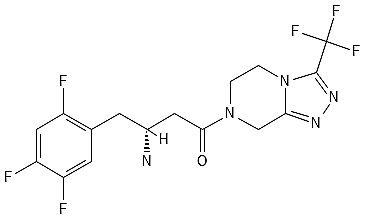
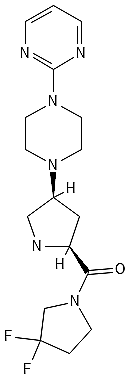
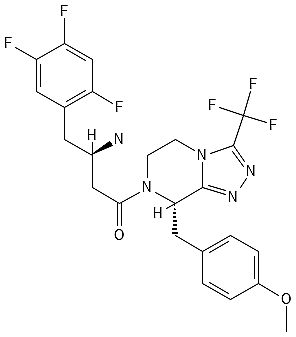
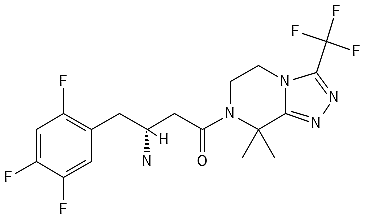
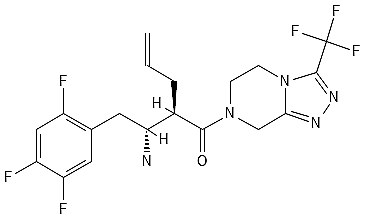
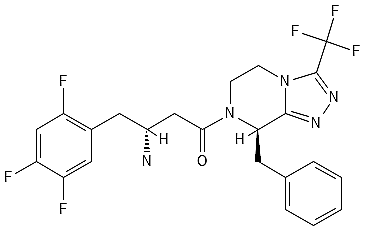
There are many drugs already established in the DPP-4 Inhibitor category, e.g., Sitagliptin, Gemigliptin, Teneligliptin, Gosogliptin, Saxagliptin, Vildagliptin, etc. [14-15]. This research has taken Sitagliptin as a Standard Parent Molecule to screen test compounds from the chemical database. Along with this, 3 more molecules have been taken for the comparison study between a few established compounds and test compounds to understand the activity differences. Sitagliptin was the first oral DPP-4 inhibitor to receive approval from the USFDA, which is the United States Food and Drug Administration. The chemical name of sitagliptin[ (2R)-4- Oxo-4[3-(trifluoromethyl)-5,6-dihydro[1, 2, 4]triazolo[4,3-a]pyrazin-7(8H)-yl] 1-(2,4,5-trifluorophenyl]butan2-amine ]. The structure mainly has a triazolopyrazine heterocyclic ring and a trifluorophenyl group [16]. All 20 test compounds have been taken as substructures of this Sitagliptin parent structure.
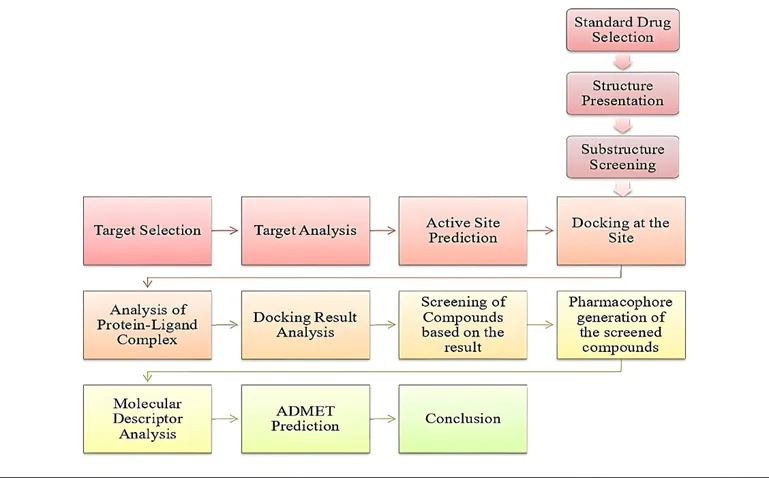
MATERIALS & METHODOLOGY:
Table 1: Computer Software and Web Tools (Academically Free and Trial Versions, April 2026)
|
Sl. No. |
Name |
Type |
Used for |
Reference No. |
|
1 |
PubChem |
Web Database |
Virtual Screening |
[17] |
|
2 |
ZINC20 |
Web Database |
Virtual Screening |
[18] |
|
3 |
RCSB PDB |
Database |
Receptor / Protein research |
[19] |
|
4 |
PDBsum |
Software |
Protein-Ligand Interaction Study |
[20] |
|
5 |
PyMOL |
Software |
Modify protein &3D Protein-Ligand Complex Analysis |
[21] |
|
6 |
UCSF ChimeraX |
Software |
Protein Structure visualization and molecular interaction analysis |
[22] |
|
7 |
CB-Dock2 |
Web Tool |
Docking of Ligands to Protein |
[23] |
|
8 |
Pharmit |
Web Tool |
Pharmacophore Study |
[24] |
|
9 |
ChemMaster Basic |
Software |
Molecular Descriptors Calculation |
[25] |
|
10 |
SwissADME |
Web Tool |
Molecular Descriptors Calculation |
[26] |
|
11 |
pkCSM |
Web Tool |
ADMET Prediction |
[27] |
|
12 |
ProTox 3.0 |
Web Tool |
Carcinogenicity Prediction |
[28] |
RESULT:
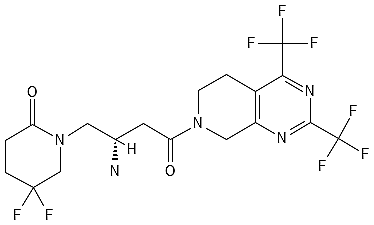
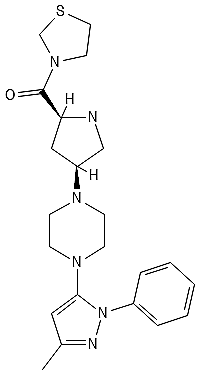
Table 2: List of Standard DPP4 Inhibitors
|
Sl. No. |
Standard Compound Name |
Structure |
|
1 |
Sitagliptin
|
|
|
2 |
Gemigliptin
|
|
|
3 |
Teneligliptin
|
|
|
4 |
Gosogliptin
|
|
Table 3: List of the Test Compounds
|
Sl. No. |
Test Compounds |
Structure |
|
1 |
C1 |
|
|
2 |
C2 |
|
|
3 |
C3 |
|
|
4 |
C4 |
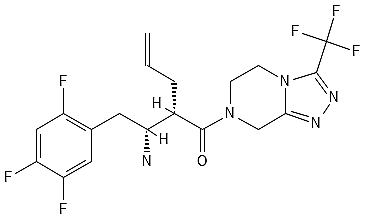
|
|
5 |
C5 |
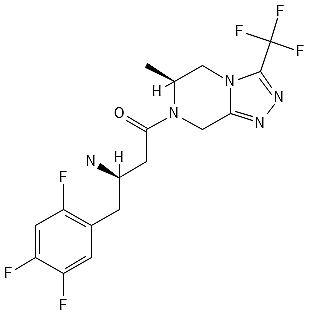
|
|
6 |
C6 |
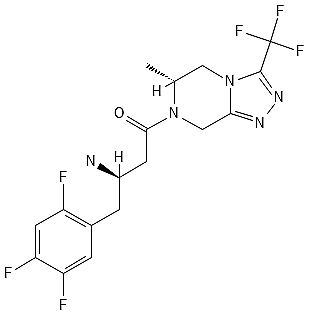
|
|
7 |
C7 |
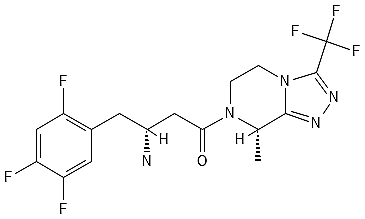
|
|
8 |
C8 |
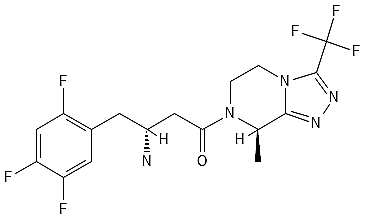
|
|
9 |
C9 |
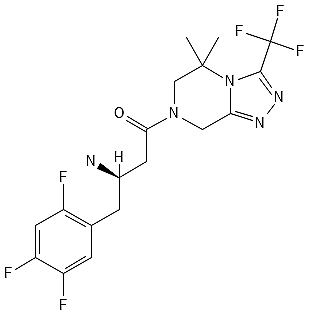
|
|
10 |
C10 |
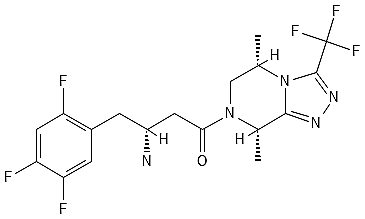
|
|
11 |
C11 |
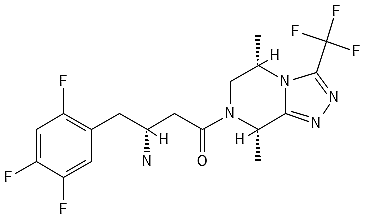
|
|
12 |
C12 |
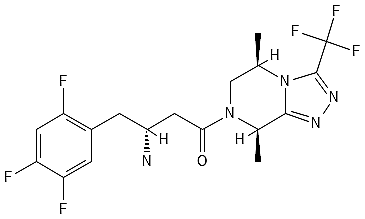
|
|
13 |
C13 |
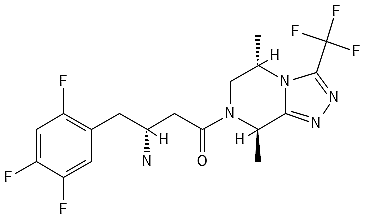
|
|
14 |
C14 |
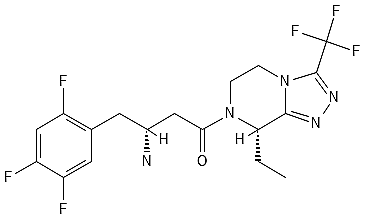
|
|
15 |
C15 |
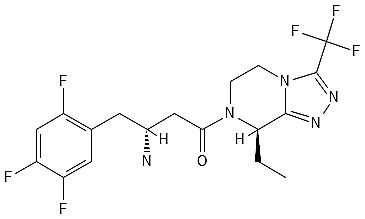
|
|
16 |
C16 |
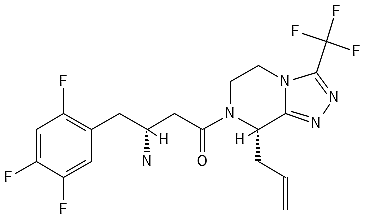
|
|
17 |
C17 |
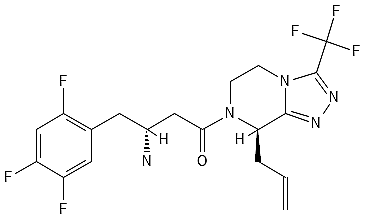
|
|
18 |
C18 |
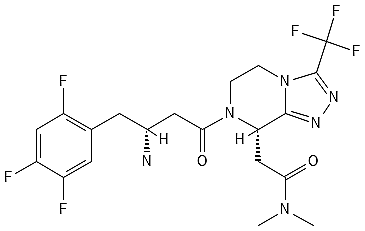
|
|
19 |
C19 |
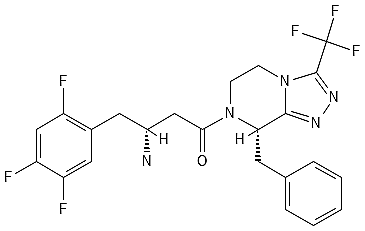
|
|
20 |
C20 |
|
Target:
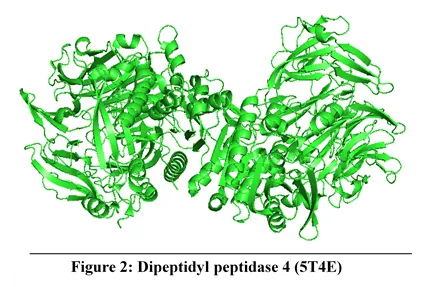
Table 4: Active Site Coordinates of the Protein
|
Receptor |
X |
Y |
Z |
|
Human Dipeptidyl Peptidase 4 (5T4E) |
-14 |
46 |
47 |
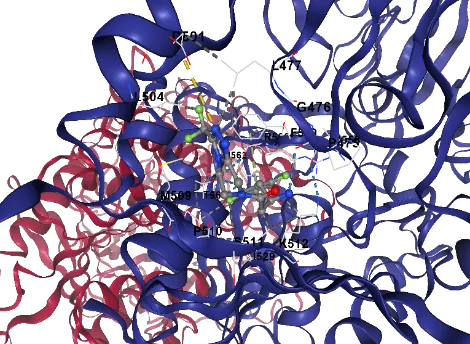
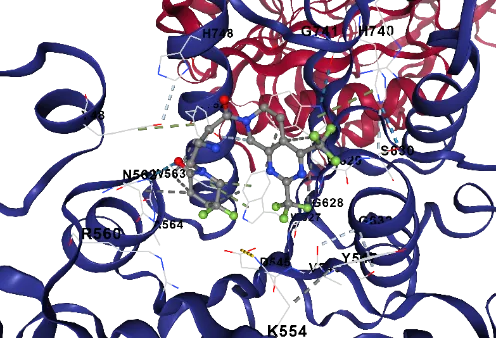
Table 5: Docking of Standard Molecules to the Active site of 5T4E
|
Sl. No. |
Name of the Standard Compound |
Docking Result [Binding Energy (Kcal/mol)] |
Molecular Docking |
|
1 |
Sitagliptin |
-8.1 |
|
|
2 |
Gemigliptin |
-8.3 |
|
|
3 |
Teneligliptin |
-8.0 |
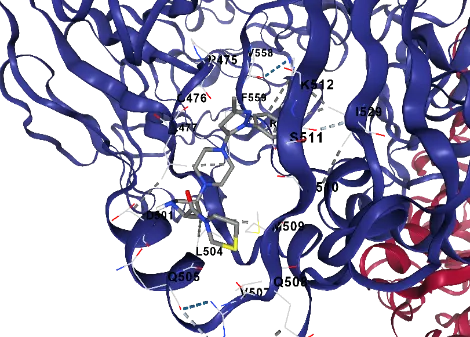
|
|
4 |
Gosogliptin |
-7.7 |
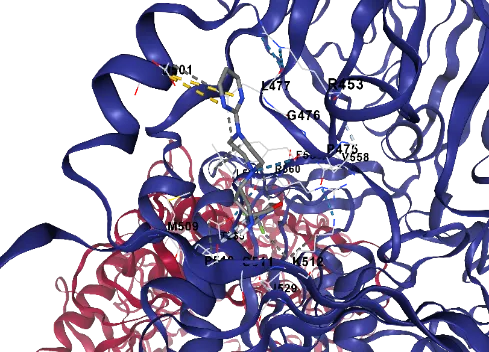
|
Table 6: Docking of Test Molecules to the Active Site of 5T4E
|
Sl. No. |
Name of the Test Compound |
ZINC20 ID |
Docking Result [Binding Energy (Kcal/mol)] |
Molecular Docking |
|
1 |
C1 |
ZINC28967916 |
-7.9 |
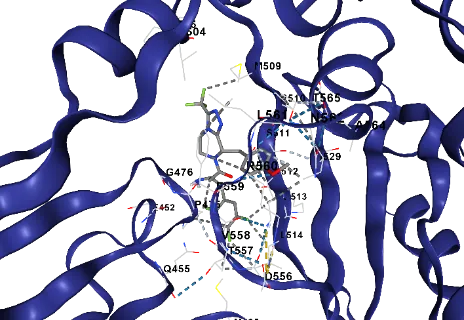
|
|
2 |
C2 |
ZINC3962167 |
-8.4 |
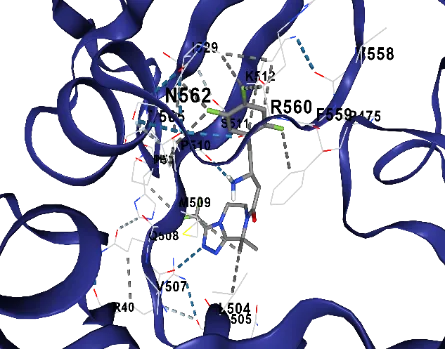
|
|
3 |
C3 |
ZINC14959011 |
-7.8 |
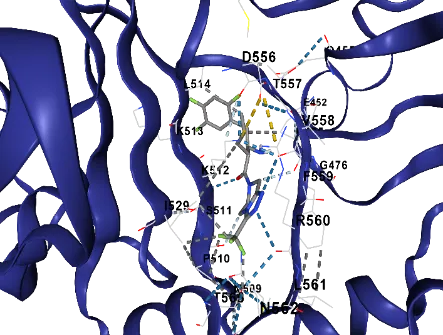
|
|
4 |
C4 |
ZINC14959014 |
-8.1 |
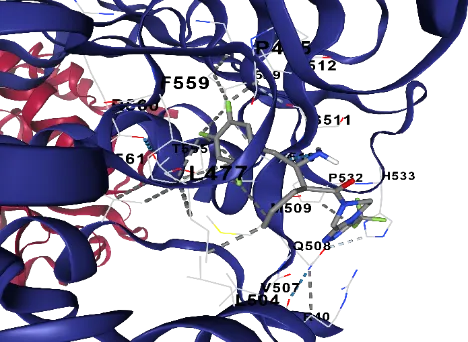
|
|
5 |
C5 |
ZINC28967321 |
-8.4 |
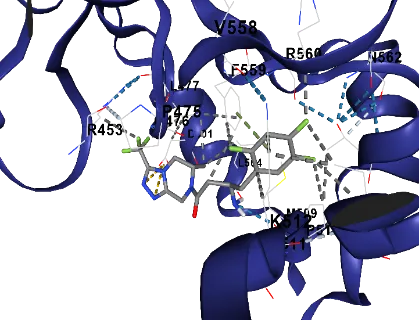
|
|
6 |
C6 |
ZINC28967349 |
-8.2 |
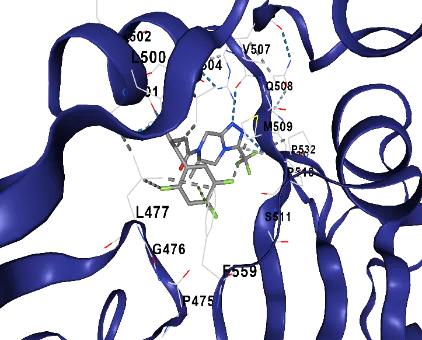
|
|
7 |
C7 |
ZINC28967362 |
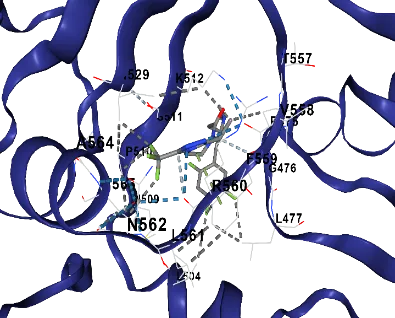
-8.7 |
|
|
8 |
C8 |
ZINC28967367 |
-8.5 |

|
|
9 |
C9 |
ZINC28967377 |
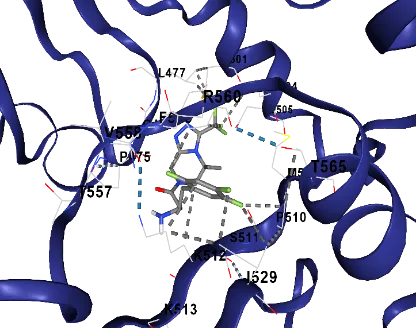
-8.5 |
|
|
10 |
C10 |
ZINC28967407 |
-8.4 |

|
|
11 |
C11 |
ZINC28967412 |
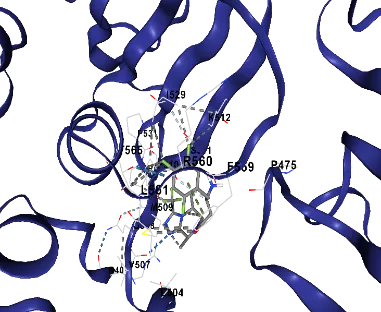
-8.3 |
|
|
12 |
C12 |
ZINC28967417 |
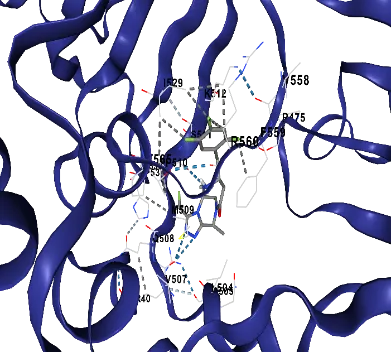
-8.0 |
|
|
13 |
C13 |
ZINC28967422 |
-8.8 |

|
|
14 |
C14 |
ZINC28967651 |
-8.4 |
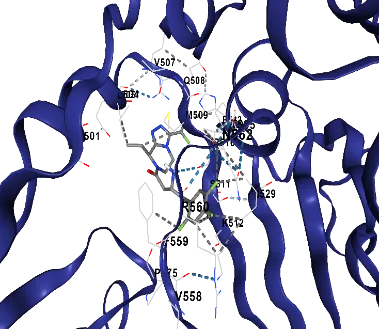
|
|
15 |
C15 |
ZINC28967658 |
-8.8 |
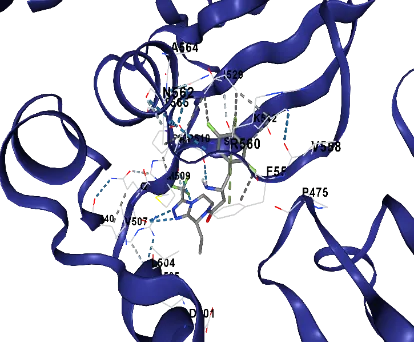
|
|
16 |
C16 |
ZINC28967826 |
-8.3 |
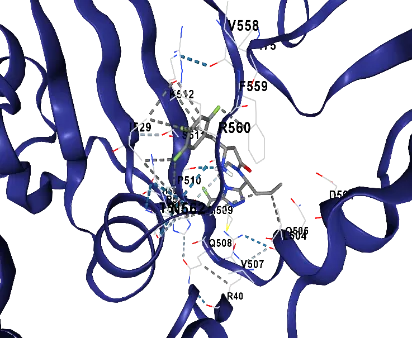
|
|
17 |
C17 |
ZINC28967833 |
-8.0 |
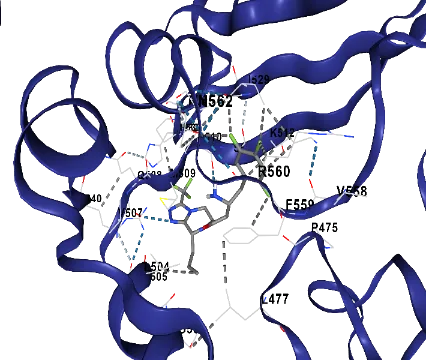
|
|
18 |
C18 |
ZINC28967868 |
-8.0 |
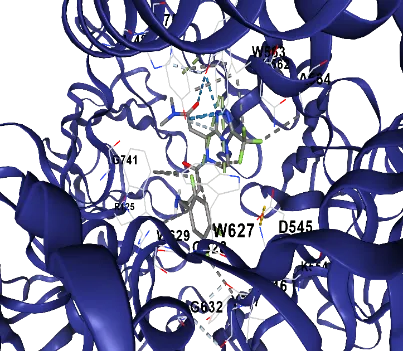
|
|
19 |
C19 |
ZINC28967888 |
-9.0 |
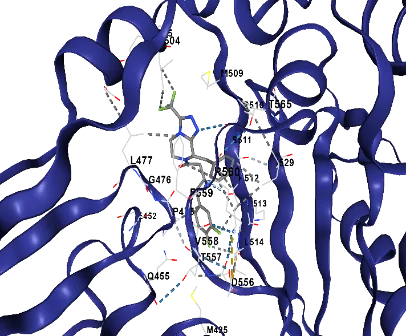
|
|
20 |
C20 |
ZINC28967893 |
-7.4 |
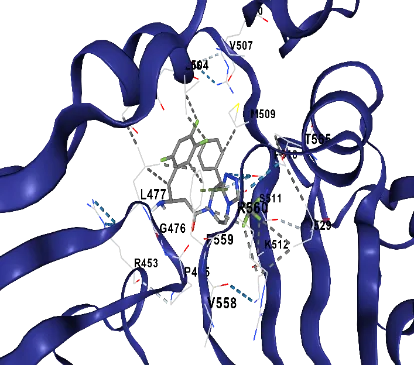
|
Table 7: Screening of Test Compounds (1st Time) Based on Molecular Docking
|
Sl. No. |
Name of the Test Compound |
|
1 |
C4 |
|
2 |
C7 |
|
3 |
C9 |
|
4 |
C14 |
|
5 |
C18 |
|
6 |
C19 |
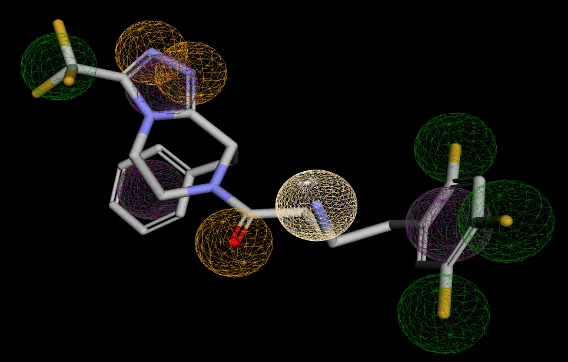
Table 8: Pharmacophoric Features of Screened (1st Time) Test Compound Based on Molecular Docking
|
Test Compounds (Screened) |
Pharmacophoric Structure |
Pharmacophoric Features |
|
C4 |
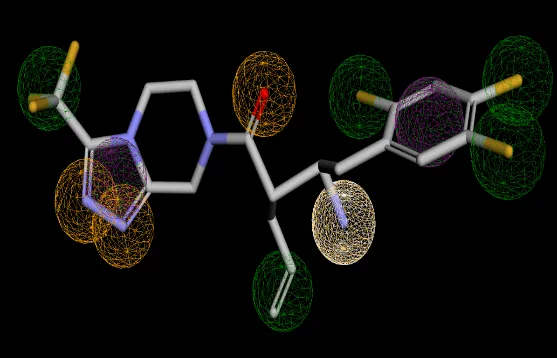
|
Aromatic, Hydrogen Bond Donor, Hydrogen Bond Acceptor, Hydrophobic |
|
C7 |
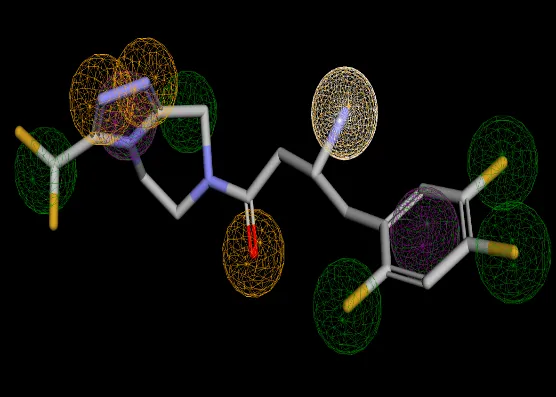
|
Aromatic, Hydrogen Bond Donor, Hydrogen Bond Acceptor, Hydrophobic |
|
C9 |
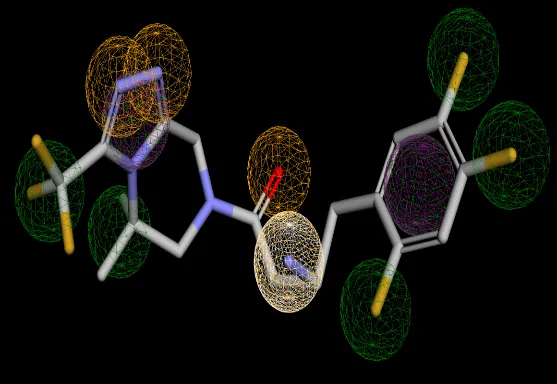
|
Aromatic, Hydrogen Bond Donor, Hydrogen Bond Acceptor, Hydrophobic |
|
C14 |
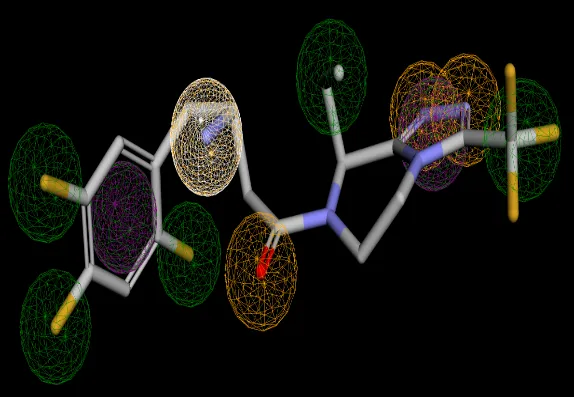
|
Aromatic, Hydrogen Bond Donor, Hydrogen Bond Acceptor, Hydrophobic |
|
C18 |
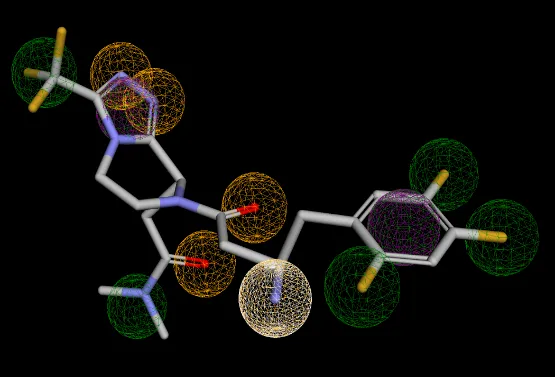
|
Aromatic, Hydrogen Bond Donor, Hydrogen Bond Acceptor, Hydrophobic |
|
C19 |
|
Aromatic, Hydrogen Bond Donor, Hydrogen Bond Acceptor, Hydrophobic |
Table 9: Molecular Formula and Molecular Weight of Standard Compounds
|
Sl. No. |
Name of the Standard Compound |
Molecular Formula |
Molecular weight (g/mol) |
|
1 |
Sitagliptin |
C16H15F6N5O |
407.318 |
|
2 |
Gemigliptin |
C18H19F8N5O2 |
489.367 |
|
3 |
Teneligliptin |
C22H30F2N6OS |
426.59 |
|
4 |
Gosogliptin |
C17H24F2N6O |
366.416 |
Table 10: Molecular Formula and Molecular Weight of Test Compounds
|
Sl. No. |
Name of the Standard Compound |
Molecular Formula |
Molecular weight (g/mol) |
|
1 |
C4 |
C19H19F6N5O |
447.383 |
|
2 |
C7 |
C17H17F6N5O |
421.345 |
|
3 |
C9 |
C18H19F6N5O |
435.372 |
|
4 |
C14 |
C18H19F6N5O |
435.372 |
|
5 |
C18 |
C20H22F6N6O2 |
492.424 |
|
6 |
C19 |
C23H21F6N5O |
497.443 |
Lipinski’s Rule: [29]
Table 11: Lipinski’s Rule for Filtration of Standard Compounds
|
Sl. No. |
Name of the Standard Compound |
Molecular Weight (MW) (g/mol) |
LogP<5 |
H-Donor<5 |
H-Acceptor<10 |
Lipinski’s Rule Following |
|
1 |
Sitagliptin |
407.318 |
2.016 |
1 |
5 |
YES |
|
2 |
Gemigliptin |
489.367 |
2.374 |
1 |
5 |
YES |
|
3 |
Teneligliptin |
426.59 |
1.5661 |
1 |
7 |
YES |
|
4 |
Gosogliptin |
366.416 |
0.1967 |
1 |
6 |
YES |
Table 12: Lipinski’s Rule for Filtration of Screened Test Compounds
|
Sl. No. |
Test Compound |
MW (g/mol) |
LogP<5 |
H-Donor<5 |
H-Acceptor<10 |
Lipinski’s Rule Following |
|
1 |
C4 |
447.383 |
2.819 |
1 |
5 |
YES |
|
2 |
C7 |
421.345 |
2.577 |
1 |
5 |
YES |
|
3 |
C9 |
435.372 |
2.751 |
1 |
5 |
YES |
|
4 |
C14 |
435.372 |
2.751 |
1 |
5 |
YES |
|
5 |
C18 |
492.424 |
2.035 |
1 |
6 |
YES |
|
6 |
C19 |
497.443 |
3.800 |
1 |
5 |
YES |
Veber’s Rule: [30]
Table 13: Veber’s Rule for Filtration of Standard Compounds
|
Sl. No. |
Name of the Standard Compound |
Rotatable Bonds ≤10 |
TPSA (Å2) ≤140 |
Veber’s Rule Following |
|
1 |
Sitagliptin |
4 |
77.04 |
YES |
|
2 |
Gemigliptin |
4 |
92.42 |
YES |
|
3 |
Teneligliptin |
4 |
81.94 |
YES |
|
4 |
Gosogliptin |
3 |
64.60 |
YES |
Table 14: Veber’s Rule for Filtration of Test Compounds
|
Sl. No. |
Name of the Test Compound |
Rotatable Bonds ≤10 |
TPSA (Å2) ≤140 |
Veber’s Rule Following |
|
1 |
C4 |
6 |
77.04 |
YES |
|
2 |
C7 |
4 |
77.04 |
YES |
|
3 |
C9 |
4 |
77.04 |
YES |
|
4 |
C14 |
4 |
77.04 |
YES |
|
5 |
C18 |
6 |
97.35 |
YES |
|
6 |
C19 |
6 |
97.35 |
YES |
PAINS (Pan Assay Interference Compounds) Filter: [31]
Table 15: PAINS Filter of Standard Compounds
|
Sl. No. |
Name of the Standard Compound |
PAINS Alert |
Status |
|
1 |
Sitagliptin |
0 |
Ideal |
|
2 |
Gemigliptin |
0 |
Ideal |
|
3 |
Teneligliptin |
0 |
Ideal |
|
4 |
Gosogliptin |
0 |
Ideal |
Table 16: PAINS Filter of Test Compounds
|
Sl. No. |
Name of the Test Compound |
PAINS Alert |
Status |
|
1 |
C4 |
0 |
Ideal |
|
2 |
C7 |
0 |
Ideal |
|
3 |
C9 |
0 |
Ideal |
|
4 |
C14 |
0 |
Ideal |
|
5 |
C18 |
0 |
Ideal |
|
6 |
C19 |
0 |
Ideal |
SA (Synthetic Accessibility) Score Filter: [32]
1 ≤ SA Score ≤ 10
Where:
Table 17: SA Score Filter of Standard Compounds
|
Sl. No. |
Name of the Standard Compound |
SA Score |
State of Synthesis |
|
1 |
Sitagliptin |
3.50 |
Easier |
|
2 |
Gemigliptin |
3.84 |
Easier |
|
3 |
Teneligliptin |
4.30 |
Moderate |
|
4 |
Gosogliptin |
3.61 |
Easier |
Table 18: SA Score Filter of Test Compounds
|
Sl. No. |
Name of the Test Compound |
SA Score |
State |
|
1 |
C4 |
4.05 |
Moderate |
|
2 |
C7 |
3.96 |
Easier |
|
3 |
C9 |
3.72 |
Easier |
|
4 |
C14 |
4.11 |
Moderate |
|
5 |
C18 |
4.41 |
Moderate |
|
6 |
C19 |
4.45 |
Moderate |
Table 19: Screening of Test Compounds (2nd Time) Based on Lipinski’s Rule, Veber’s Rule, PAINS Filter and SA Score Filter
|
Sl. No. |
Name of the Test Compound |
|
1 |
C4 |
|
|
C7 |
|
3 |
C9 |
Table 20: ADMET Important Pharmacokinetic Properties Prediction of Standard Compounds
|
Sl. No. |
Name of the Standard Compound |
Intestinal absorption (%) |
Caco2 permeability (LogPapp in 10-6cm/s) |
Fractions unbound (Fu) |
BBB Permeability (LogBB) |
Total Clearance (Log/ml/min/kg) |
|
1 |
Sitagliptin |
87.421 |
1.25 |
0.544 |
-0.339 |
0.474 |
|
2 |
Gemigliptin |
79.574 |
0.78 |
0.549 |
-1.431 |
0.277 |
|
3 |
Teneligliptin |
96.869 |
1.036 |
0.394 |
0.159 |
0.637 |
|
4 |
Gosogliptin |
98.332 |
1.443 |
0.419 |
0.575 |
0.493 |
Table 21: ADMET Important Pharmacokinetic Properties Prediction of Screened (2nd Time) Test Compounds
|
Sl. No. |
Name of the Test Compound |
Intestinal absorption (%) |
Caco2 permeability (LogPapp in 10-6cm/s) |
Fractions unbound (Fu) |
BBB Permeability (LogBB) |
Total Clearance (Log/ml/min/kg) |
|
1 |
C4 |
91.563 |
1.158 |
0.25 |
-1.073 |
0.497 |
|
2 |
C7 |
91.993 |
1.094 |
0.31 |
-0.987 |
0.424 |
|
3 |
C9 |
91.882 |
1.176 |
0.258 |
-1.081 |
0.413 |
Table 22: Toxicity Prediction of Standard Compounds
|
Sl. No. |
Name of the Standard Compound |
Hepatotoxicity |
Cardiotoxicity (hERG-I/II inhibition) |
Mutagenicity (AMES toxicity) |
Carcinogenicity |
Oral Rat Acute Toxicity (LD50)(mol/kg) |
|
1 |
Sitagliptin |
YES |
NO |
NO |
NO (Probability: 0.50) |
2.732 |
|
2 |
Gemigliptin |
YES |
YES (II) |
NO |
NO (Probability: 0.64) |
2.933 |
|
3 |
Teneligliptin |
YES |
YES(II) |
YES |
YES (Probability: 0.58) |
2.868 |
|
4 |
Gosogliptin |
NO |
NO |
YES |
NO (Probability: 0.59) |
2.482 |
Table 23: Toxicity Prediction of Screened (2nd Time) Test Compounds
|
Sl. No. |
Name of the Test Compound |
Hepatotoxicity |
Cardiotoxicity (hERG-I/II inhibition) |
Mutagenicity (AMES toxicity) |
Carcinogenicity |
Oral Rat Acute Toxicity(LD50) (mol/kg) |
|
1 |
C4 |
YES |
YES (II) |
NO |
YES (Probability: 0.50) |
2.708 |
|
2 |
C7 |
YES |
NO |
NO |
NO (Probability: 0.51) |
2.753 |
|
3 |
C9 |
YES |
YES (II) |
NO |
NO (Probability: 0.50) |
3.101 |
Table 24: Final Compound Screening Based on ADMET Profile
|
Sl. No. |
Name of the Test Compound |
IUPAC Name |
Molecular Formula |
ZINC20 Database ID |
PubChem CID |
|
1 |
C7 |
(2R)-4-[(8S)-8-methyl-3-(trifluoromethyl)-5,6-dihydro[[1,-2,4]triazolo[4,3-a]pyrazin-7(8H)-yl]-4-oxo-1-(2,4,5-trifluorophenyl)butan-2-amine hydrochloride |
C17H17F6N5O |
ZINC28967362 |
24777692 |
Table 25: Direct Comparison of Important Properties between C7 and Standard Compounds
|
Important Property |
C7 |
Sitagliptin |
Gemigliptin |
Teneligliptin |
Gosogliptin |
|
TPSA (Å2) |
77.04 |
77.04 |
92.42 |
81.94 |
64.60 |
|
SA Score |
3.96 |
3.50 |
3.84 |
4.30 |
3.61 |
|
Intestinal absorption (%) |
91.993 |
87.421 |
79.574 |
96.869 |
98.332 |
|
BBB Permeability (LogBB) |
-0.987 |
-0.339 |
-1.431 |
0.159 |
0.575 |
|
Total Clearance (Log/ml/min/kg) |
0.424 |
0.474 |
0.277 |
0.637 |
0.493 |
DISCUSSION:
As we can see in result section, we have screened 20 substructures of Sitagliptin moiety from the chemical databases and docked them against the 5T4E enzyme. The protein structure was downloaded from RCSB Protein Data Bank and then modified in PyMOL software to ensure uninterpted docking. Six best test candidates (C4, C7, C9, C14, C18, C19) among twenty were selected based on their binding energy obtained from docking. As only from the binding energy or fitting score is not enough to ensure the effective biological action, we have gone through furthurmore for the study of Molecular Descriptors along with Physicochemical properties to obtain a more reliable evaluation. Application of various Medicinal Chemistry filters and screening criteria (Lipinski’s Rule, Veber’s Rule, PAINS Filter, SA Score) then used to remove undesirable compounds from the list. Applying the rules and on the basis of comparison of molecular descriptors, physicochmical propertiesthreetest candidates out of six were taken to study furthur. Furthurmore to get best one molecule, previously screened three test candidates were studied on the basis of ADMET. One best test candidate (C7 or (2R)-4-[(8S)-8-methyl-3-(trifluoromethyl)-5,6-dihydro[[1,-2,4]triazolo[4,3-a]pyrazin-7(8H)-yl]-4-oxo-1-(2,4,5-trifluorophenyl)butan-2-amine hydrochloride) was obtained among four standard compounds (Sitagliptin, Gemigliptin, Teneligliptin and Gosogliptin).
CONCLUSION:
The C7 Molecule ((2R)-4-[(8S)-8-methyl-3-(trifluoromethyl)-5,6-dihydro[[1,-2,4]triazolo[4,3-a]pyrazin-7(8H)-yl]-4-oxo-1-(2,4,5-trifluorophenyl)butan-2-amine hydrochloride) which was obtained from a long research of computational chemistry studies found promising compound among other test molecules. That C7 molecule represents nearly same report as what standard drug molecule Sitagliptin produces. The binding energy, Synthetic Accessibility (SA) score suggest a smooth molecule fitting in protein and easier synthetic strategy. Furthermore the ADMET study involves many important physiological parameters prediction which indicates suitable pharmacokinetic and toxicity properties. Overall, this in silico study demonstrated the efficacy of drug design in finding new and safe DPP4 inhibitors.
ACKNOWLEDGEMENT:
All authors are grateful to Global College of Pharmaceutical Technology for providing us the opportunities to perform this research work.
CONFLICT OF INTEREST: None
REFERENCES



Anirban Ghosh, Soumallya Chakraborty*, Somenath Bhattacharya, In Silico Design of Novel Dipeptidyl Peptidase 4 (DPP4) Inhibitors Containing Triazolopyrazine Derivatives with Respect to their Anti-Diabetic Activities, Int. J. Med. Pharm. Sci., 2026, 2 (6), 229-248. https://doi.org/10.5281/zenodo.20721341
 10.5281/zenodo.20721341