

We use cookies to ensure our website works properly and to personalise your experience. Cookies policy
1Research Scholar, Department of Pharmacy Oriental University, Indore MP
2Professor, Faculty of Pharmacy Oriental University, Indore MP
3Professor & Principal, Faculty of Pharmacy Oriental University, Indore MP
4Associate Professor, Faculty of Pharmacy Oriental University, Indore MP
In present work attempt was made to formulate and evaluate Rifaximin floating tablets to achieve controlled drug release from the dosage form and summary as follows Twenty-one formulations (F1-F7) were prepared by direct compression method using different polymers such as HPMC K 250 Seven formulations were made using various concentrations of each polymer. All the above polymers were innovative and effective in retarding the drug release. The effervescent agents i.e. sodium bicarbonate was used in increase order of their concentrations but floating lag time is not directly proportional to its concentrations. In the preformulation properties was carried out and the values obtained were within the range. FTIR studies results revealed that there was no incompatibility between drug and excipients.Gastric floating tablets were formulated by varying proportions of polymers by direct compression method and they were evaluated. Rifaximin is an oral medication used as a gut-specific antibiotic for treating bacterial gastrointestinal issues like Traveler's Diarrhea, reducing recurrence of Hepatic Encephalopathy, and managing symptoms of Irritable Bowel Syndrome with Diarrhea (IBS-D), and it's also a first-line treatment for Small Intestinal Bacterial Overgrowth (SIBO), working by targeting bacteria in the intestines without significant absorption into the body.
The oral route currently represents the most predominant and preferable route of drug delivery. Unlike majority of parenteral dosage forms, it allows ease of administration by the patient and therefore a highly convenient way for substances to be introduced into the human body. Oral drug delivery systems have progressed from conventional immediate release to site-specific delivery over a period of time. Every patient would always like to have an ideal drug delivery system possessing the two main properties that are single dose or less frequent dosing for the whole duration of treatment and the dosage form must release active drug directly at the site of action (Hwang S. J et al., 1998).
Conventional drug delivery system
Oral drug delivery is the most widely utilized route of administration among all the routes that have been explored for systemic delivery of drugs via pharmaceutical products of different dosage forms.
The oral dosage form has survived due to
Controlled drug delivery system (CDDS) Over the years, as the expense and complications involved in marketing new drug entities have increased with concomitant recognition of the therapeutic advantages of controlled drug delivery, greater attention has been focused on the development of modified release dosage forms. Modified release systems have been developed to improve the pharmacokinetic profiles of active pharmaceutical ingredients (APIs) and patient compliance, as well as reducing side effects. Oral modified release delivery systems are most commonly used for 1) Delayed release (e.g., by using an enteric coating); 2) Extended release (e.g., zero-order, first- order, biphasic release, etc.); 3) Programmed release (e.g., pulsatile, triggered, etc.) and 4) site specific or timed.
MATERIALS AND METHODS OF RIFAXIMIN FDDS
MATERIALS:
The preparation and evaluation of Rifaximin floating tablets were carried out by using following materials (Table 5.1) and equipment (Table 5.2).
Table .1: Materials used in the study of Rifaximin FDDS.
|
Name of chemical |
Source |
|
Rifaximin |
Aurobindo Pharma Ltd., Hyderabad |
|
HPMC K250 PH PRM |
Ashland India Pvt. Ltd. |
|
HPMC K750 PH PRM |
Ashland India Pvt. Ltd. |
|
HPMC K1500 PH PRM |
Ashland India Pvt. Ltd. |
|
Polyox WSR 303 |
Colorcon Asia Pvt, Ltd., Goa |
|
Sodium bicarbonate |
SD Fine Chem. Ltd. |
|
Magnesium stearate |
SD Fine Chem. Ltd. |
|
Talc |
SD Fine Chem. Ltd. |
|
Barium sulphate |
SD Fine Chem. Ltd. |
Table 2: Equipment used in the study of Rifaximin FDDS.
|
Name of equipment |
Manufacturer |
|
Digital balance |
Shimadzu, Japan |
|
Tablet dissolution apparatus |
Electrolab |
|
Compression machine |
Cadmach, Ahmedabad. |
|
Friabilator |
Roche Friabilator, Germany |
|
Hardness tester |
Erweka, Germany |
|
Sieves |
SethiPvt Ltd, Mumbai |
|
UV/Visible spectrophotometer |
Shimadzu UV-1800, Japan |
|
Digimatic vernier caliperse |
Mitutoyo Corporation, China |
METHODS
UV Spectroscopic method for analysis of Rifaximin FDDS
Preparation of 0.1N HCl:
N HCl was prepared by taking the 8.5ml concentrated HCl and make up the volume to1000 mL with distilled water.
Measurement of λmax:
To find the maximum absorbance of drug, 100μg/ml drug solution in suitable medium was scanned over the range of 400-200nm by using UV- Visible spectrophotometer (Shimadzu UV-1800).
Procedure for construction of standard graph of Rifaximin in 0.1N HCl
Stock solution of the drug was prepared by dissolving 10mg of drug in 100ml of 0.1N H C l . From this stock solution 5-40µg/ml concentrations were prepared after suitable dilutions. The absorbance of each test solutions was measured at λmax of 231nm using UV-Visible spectrophotometer against 0.1N HCl.
Formulation method development
Accurately weighed quantities of polymers and MCC were taken in a mortar and mixed geometrically, to this required quantity of Rifaximin was added and mixed slightly with pestle (Li S et al., 2002). Accurately weighed quantity of sodium bicarbonate was taken separately in a mortar and powdered with pestle. The powder is passed through sieve No. 40 and mixed with the drug blend which is also passed through sieve No. 40. The whole mixture was collected in a plastic bag and mixed for three minutes. To this magnesium stearate was added and mixed for five minutes, later talc was added and mixed for two minutes (Rama Rao. T, et al., 2014). The formulation compositions were shown in table 5.3, 5.4 and 5.5.
Table .3: Composition of floating matrix tablets of Rifaximin with HPMC K250 PH PRM
|
Ingredients |
Formulations |
||||||
|
(weight in mg) |
F1 |
F2 |
F3 |
F4 |
F5 |
F6 |
F7 |
|
Rifaximin |
400 |
400 |
400 |
400 |
400 |
400 |
400 |
|
HPMC K250 PH PRM |
40 |
50 |
60 |
70 |
80 |
90 |
100 |
|
WSR 303 |
30 |
30 |
30 |
30 |
30 |
30 |
30 |
|
Sodium bicarbonate |
20 |
22 |
24 |
26 |
28 |
30 |
32 |
|
MCC |
30 |
40 |
50 |
60 |
70 |
80 |
90 |
|
Talc |
3 |
3 |
3 |
3 |
3 |
3 |
3 |
|
Magnesium stearate |
3 |
3 |
3 |
3 |
3 |
3 |
3 |
Evaluation of final blend
The Final blend of all formulations was evaluated for bulk density, tapped density, compressibility index (CI), hausner ratio and angle of repose.
Evaluation of floating matrix tablets of Rifaximin
Weight variation
Twenty tablets from each batch were individually weighed in grams on an analytical balance. The average weight and standard deviation were calculated, individual weight of each tablet was also calculated using the same and compared with average weight.
Thickness
The thickness in millimeters (mm) was measured individually for ten pre-weighed tablets by using Vernier calipers. The average thickness and standard deviation were reported.
Hardness
Tablet hardness was measured using a Monsanto hardness tester. The crushing strength of the ten tablets with known weight and thickness of each was recorded in kg/cm2 and the average hardness, and the standard deviation was reported.
Friability
Twenty tablets were selected from each batch and weighed. Each group of tablets was rotated at 25 rpm for 4 minutes (100 rotations) in the Roche Friabilator. The tablets were then dusted and re-weighed to determine the loss in weight. Friability was then calculated as per weight loss from the original tablets (NishatNasrin, et al., 2008)
In vitro buoyancy studies The in vitro buoyancy was determined by floating lag time. The tablets were placed in a 100 ml beaker containing 0.1N hydrochloric acid. The time required for the tablet to rise to the surface and float was determined as floating lag time (Penners G, et al., 1997). The duration of time for which the dosage form constantly remained on the surface of medium was determined as the total floating time.
Drug content
Twenty tablets were taken, powdered. The powder equivalent to one dose each was transferred to a 100 ml volumetric flask and 0.1N HCl was added. The volume was then made up to the mark with 0.1N HCl. The solution was filtered and diluted suitably and drug content in the samples was estimated using UV-spectrophotometer at 231 nm
In vitro drug release studies
The in vitro drug release study was performed for tablets using USP Type II dissolution apparatus using 900ml of 0.1N HCl at a temperature of 37±0.5ºC at 50 rpm. 5 ml of sample was collected at 0, 2, 4, 6, 8, 12, 16, 20, 24 hours and the same volume of fresh media was replenished the drug content in the samples was estimated using UV visible spectrophotometer at 231 nm
Drug-excipient compatibility studies
Fourier transform infrared spectroscopy (FTIR)
The spectral analysis can be used to identify the functional groups in the pure drug and drug- excipient compatibility. Pure Rifaximin FTIR spectra, physical mixtures and optimized formulation were recorded by using FTIR (SHIMADZU). Weighed quantity of KBr and drug-excipients were taken in the ratio 100: 1 and mixed by mortar. The samples were made into pellet by the application of pressure (Maarten Janssenet al., 2016). Then the FTIR spectras were recorded in the wavelength region between 4000 and 400cm−1
Stability studies
Stability testing was conducted at 40°C ± 2°C/75% RH ± 5% RH for 3 months using stability chamber (Thermo Lab, Mumbai). Samples were withdrawn at predetermined intervals 0, 30, 90- and 180-days period according to ICH guidelines (Lalit Kumar Tyagi and Mohan Lal Kori 2014). Various in vitro parameters like drug content, floating lag time and in vitro release studies were evaluated.
RESULTS AND DISCUSSIONS OF RIFAXIMIN FDDS
Construction of standard graph of Rifaximin in acidic buffer (0.1N HCl) pH 1.2
Rifaximin is a UV absorbing molecule with specific chromophores in the structure that absorb at a particular wave length. The λ max of the drug for analysis was determined by taking scan of the drug sample solution in the entire UV region as shown in Figure 6.1.
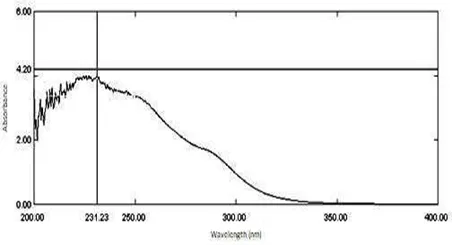
Figure 1: UV scan of Rifaximin.
Table 4: Spectrophotometric data for the estimation of Rifaximin.
|
Concentration (µg/ml) |
Absorbance (231 nm) |
|
5 |
0.155±0.002 |
|
10 |
0.285±0.001 |
|
15 |
0.398±0.001 |
|
20 |
0.521±0.002 |
|
25 |
0.65±0.001 |
|
30 |
0.767±0.001 |
|
35 |
0.899±0.002 |
|
40 |
0.991±0.001 |
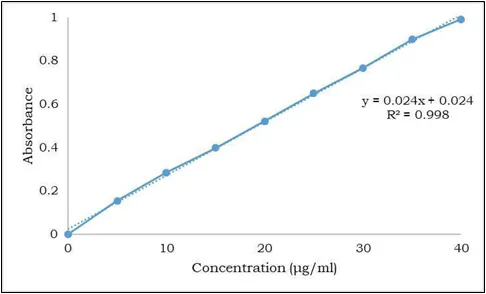
Figure .2: Standard graph of Rifaximin at a λmax.
The correlation coefficient (R2) of the standard curve was found 0.99. Linearity range and calibration curve was presented in Table 6.1 and Figure 6.2
Evaluation of pre-compression parameters of prepared powder blends of Rifaximin FDDS
The prepared blends were evaluated for different pre-compression parameters and results were shown in Table 6.2.
Table 5 Evaluation of pre-compression parameters of prepared powder blends of Rifaximin formulations.
|
Formulation |
Bulk density (g/cc) |
Tapped density (g/cc) |
Angle of repose(ϴ) |
Carrs̕ index (%) |
Hausner ratio |
|
F1 |
0.78±0.09 |
0.85±0.03 |
30.29±0.49 |
16.20±0.2 |
1.06±0.04 |
|
F2 |
0.72±0.02 |
0.84±0.03 |
29.24±1.73 |
15.98±0.3 |
1.13±0.08 |
|
F3 |
0.69±0.10 |
0.75±0.05 |
28.85±0.03 |
13.36±0.2 |
1.10±0.06 |
|
F4 |
0.67±0.08 |
0.78±0.09 |
31.19±0.73 |
22.18±0.4 |
1.16±0.03 |
|
F5 |
0.70±0.01 |
0.82±0.01 |
30.77±1.79 |
13.19±0.2 |
1.17±0.04 |
|
F6 |
0.66±0.05 |
0.75±0.02 |
27.19±0.07 |
22.74±0.3 |
1.18±0.05 |
|
F7 |
0.63±0.03 |
0.71±0.01 |
30.79±1.03 |
15.60±0.2 |
1.05±0.07 |
Above parameters are communicated as average ± standard deviation; (n=3).
The results of bulk densities formulations bearing F1 to F7 were reported to be in the range of 0.52g/cc to 0.78g/cc.
The findings of tapped density formulations F1 to F7 were reported to be in the range of 0.58g/cc to 0.85g/cc.
The angle of repose of all the formulations was found to be satisfactory. The formulations of had angle of repose in the range of 23- 31 thus indicating good flow properties of all the blends.
The compressibility index of all the formulation were found to be in the range of 11-23%. These findings indicated that all formulations exhibited good flow properties.
The Hausner’s ratio values in the space of 1 to 1.2%. These findings designated that the all the batches of formulations exhibited good flow criteria.
Quality control test for Rifaximin floating tablets
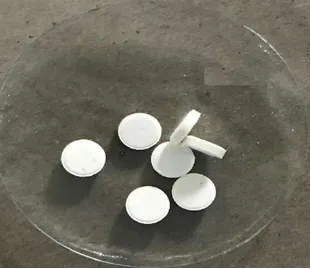
Figure .3: Rifaximin floating tablets.
The prepared tablets were evaluated for different post compression and tablets were shown in Figure 6.3.
Table 6: Evaluation of post compression parameters of Rifaximin floating tablets
|
S. No |
*Average weight (mg) |
#Thickness (mm) |
#Hardness (Kg/Cm2) |
#Friability (%) |
#Content uniformity (%) |
Floating lag time (sec) |
Total floating time (h) |
|
F1 |
499.60±0.2 |
4.3±0.07 |
6.5±0.08 |
0.62±0.02 |
97.23±0.45 |
55 |
>24 |
|
F2 |
498.55±0.2 |
4.2±0.05 |
6.4±0.10 |
0.59±0.05 |
96.48±0.75 |
52 |
>24 |
|
F3 |
497.47±0.5 |
4.2±0.05 |
6.3±0.09 |
0.71±0.02 |
97.68±0.42 |
50 |
>24 |
|
F4 |
499.48±0.6 |
4.3±0.07 |
6.6±0.12 |
0.75±0.04 |
96.29±0.22 |
47 |
>24 |
|
F5 |
497.29±0.5 |
4.4±0.09 |
6.5±0.11 |
0.77±0.09 |
95.79±0.84 |
44 |
>24 |
|
F6 |
496.54±1.2 |
4.5±0.10 |
7.2±0.05 |
0.72±0.02 |
96.70±0.75 |
42 |
>24 |
|
F7 |
498.67±0.3 |
4.4±0.09 |
6.4±0.10 |
0.67±0.09 |
97.26±0.62 |
40 |
>24 |
The post compression parameters of all the formulations were evaluated and presented in Table 6.3.
The maximum weight variation of the formulations was found to be 0.4% which was in the limit allowed that is ± 5% of total tablet weight.
The suitable hardness for compressed tablets is considered as a vital function for the end user. The deliberated crushing strength of fabricated tablets of formulations F1-F21 trended between 6.0- 7.0kg/cm2.
The thickness of all the formulations ranges from 4-4.5 mm.
The friability of all prepared formulation between 0.52-0.78%, the friability properties limits are in between 0-1%.
The drug content of all formulation is in between 95.49-99.18%, drug content depends on the angle of repose since the angle of repose indicates uniform flow nature of powder blend which makes the drug to evenly distribute in all the formulation and to maintain content uniformity in all batches. Tablets of all batches had floating lag time below 60 seconds regardless of viscosity and content of HPMC because of evolution of CO2 resulting from the interaction between sodium bicarbonate and dissolution medium, entrapment of gas inside the hydrated polymeric matrices enables the dosage form to float by lowering the density of the matrices. Total floating time for the Rifaximin with HPMC formulations were more than 24 h. The floating lag time and total floating time of Repagline floating tablets were shown in Figure 6.4.
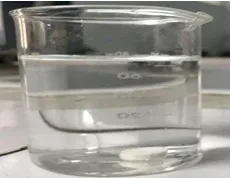
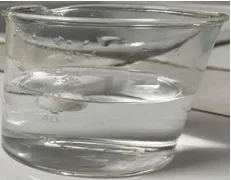
(a) After 36 sec.
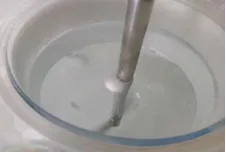
(b) After 24 h
Figure 6.4: (a) In vitro buoyancy lag time of the optimized formulation F21 (b) after 24 hours
In vitro drug release studies of Rifaximin floating tablets
The in vitro drug release study was performed for Rifaximin floating tables using USP Type II apparatus. The results of percent cumulative drug release from floating tablets were shown in Table 6.4, 6.5 and 6.6.
Table 7: In vitro cumulative % drug release profile of Rifaximin floating tablets F1-F7.
|
Time(h) |
F1 |
F2 |
F3 |
F4 |
F5 |
F6 |
F7 |
|
0 |
0±0.00 |
0±0.00 |
0±0.00 |
0±0.00 |
0±0.00 |
0±0.00 |
0±0.00 |
|
2 |
15.60±0.87 |
12.67±0.84 |
10.47±0.76 |
10.18±0.75 |
11.16±0.84 |
7.64±0.72 |
14.20±0.86 |
|
4 |
22.67±1.29 |
20.19±1.23 |
18.20±0.86 |
23.16±1.32 |
22.09±1.29 |
21.45±1.24 |
19.57±0.99 |
|
6 |
31.75±1.81 |
32.16±1.98 |
33.13±1.99 |
37.67±2.15 |
39.46±2.15 |
38.20±2.13 |
35.19±2.01 |
|
8 |
48.20±2.23 |
42.18±2.19 |
40.15±2.17 |
42.97±2.18 |
44.17±2.20 |
43.56±2.19 |
46.70±2.21 |
|
12 |
56.23±2.96 |
54.90±2.84 |
52.67±2.80 |
58.36±2.88 |
57.20±2.97 |
55.19±2.85 |
55.29±2.85 |
|
16 |
62.19±3.05 |
65.67±3.09 |
66.70±3.10 |
67.20±3.11 |
70.56±3.40 |
69.20±3.58 |
68.19±3.14 |
|
20 |
81.90±3.26 |
75.60±3.97 |
75.67±3.94 |
80.60±2.25 |
80.26±3.25 |
78.15±3.98 |
74.68±3.96 |
|
24 |
93.46±3.03 |
92.75±3.02 |
90.23±4.00 |
95.21±3.05 |
91.09±3.01 |
88.90±3.97 |
91.20±4.01 |
Above parameters are communicated as average ± standard deviation;
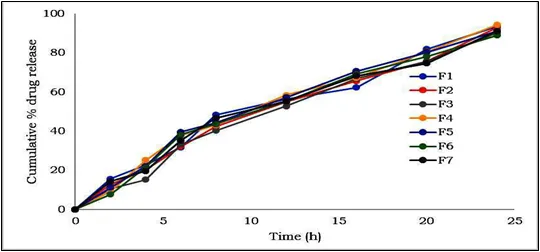
Figure 4: In vitro cumulative % drug release profile of Rifaximin floating tablets F1-F7.
Drug excipient interactions by FTIR spectroscopy
The infra-red spectrum analysis of Rifaximin pure drug and combination blend of optimized formulation were done using KBr pellets and resulting spectrums were shown in figure 6.16 and 6.17.
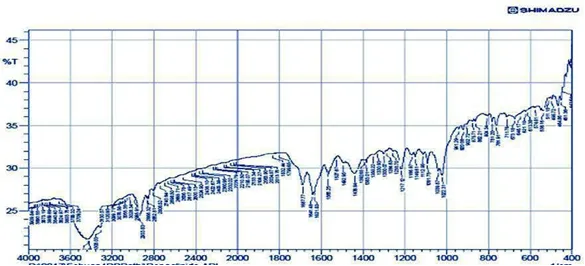
Figure 6.16: FTIR spectroscopy of Rifaximin pure drug.
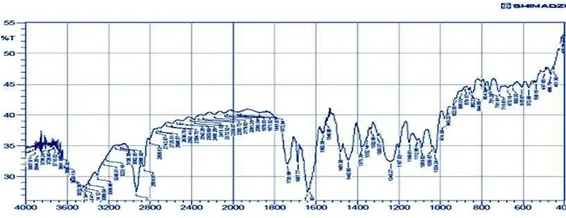
Figure 5: FTIR spectroscopy of Rifaximin optimized formulation F21.
FTIR spectrums were mainly used to determine if there is any interaction between the drug and any of the excipients used. The Rifaximin FTIR spectra showed peaks of 3250, 2935, 1758 and 1552cm-1 due to–C=C-H stretching, -C- H stretching, - C=O stretching and –N-H2 bending respectively. The presence of characteristic absorption bands of Rifaximin p u r e drug and optimized floating tablet (F21) containing Rifaximin suggest that there was no interaction between the drug and excipients used in the formulation
Stability studies: The tablets of optimized formulation were evaluated for various parameters at specified stability period kept at temperature of 40±20C and relative humidity of 75%±5%RH.
Table 8: Parameters after accelerated stability study of optimized Formulation F2
|
Parameters |
Temperature Maintained at 40±20C; relative humidity (RH) maintained at 75%±5%RH |
|||
|
Initial |
After 1 month |
After 3 months |
After 6 months |
|
|
Drug content (%) |
99.18±0.13 |
98.96±0.48 |
98.13±0.37 |
97.12±0.22 |
|
In vitro drug release (%) |
98.92±3.36 |
98.10±3.53 |
97.82±3.42 |
97.50±3.35 |
|
Floating lag time |
36 |
38 |
39 |
42 |
The tablets were visually examined, no tablets were found to be degraded with respect to colour and integrity. There were no changes observed in % drug content, in vitro drug release studies and floating lag time during storage of the optimized formulation and the results are tabulated in Table 6.12. Hence the optimized formulation was found to be stable.
SUMMARY AND CONCLUSION OF RIFAXIMIN FDDS
In present work attempt was made to formulate and evaluate Rifaximin floating tablets to achieve controlled drug release from the dosage form and summary as follows:
Twenty-one formulations (F1-F7) were prepared by direct compression method using different polymers such as HPMC K 250 Seven formulations were made using various concentrations of each polymer. All the above polymers were innovative and effective in retarding the drug release. The effervescent agents i.e. sodium bicarbonate was used in increase order of their concentrations but floating lag time is not directly proportional to its concentrations. In the preformulation properties was carried out and the values obtained were within the range. FTIR studies results revealed that there was no incompatibility between drug and excipients. Gastric floating tablets were formulated by varying proportions of polymers by direct compression method and they were evaluated. All the tablet properties of the formulations were within the limit. The differences in the drug release profiles of various formulations were due to the presence of different concentrations of polymer. The concentrations of polymers were added as increase order to check its drug retarding and release ability upto a certain concentration the release was increased beyond that it shown decrease release. In present work it was identified optimum concentration levels of each polymer. The formulations from each polymer gave better controlled drug release and floating properties in comparison to the other formulations. Among all the formulation was selected as optimized formulation because it showed maximum release in stomach. In vitro drug release studies were carried out to know the drug release with respective of the time. Maximum drug was released from the formulation F1to F7 at the end of 24 h and it was compared with marketed product. Based on the physico-chemical properties and, in vitro drug release, floating lag time and total floating time, the formulation concluded as the best formulation. Release of the drug from a tablet containing hydrophilic polymer generally depends on diffusion
No prominent changes in physico-chemical properties of formulation after its exposure to accelerated conditions of temperature (40±20C) and humidity (75 ± 5%RH) were observed. Hence the developed formulation was found to be stable even after subjecting to accelerated stability conditions. In the present work, it can be concluded that the Rifaximin floating tablets can be an innovative and promising approach for the delivery of Rifaximin for the treatment of Rifaximin is an oral medication used as a gut-specific antibiotic for treating bacterial gastrointestinal issues like Traveler's Diarrhea, reducing recurrence of Hepatic Encephalopathy, and managing symptoms of Irritable Bowel Syndrome with Diarrhea (IBS-D), and it's also a first-line treatment for Small Intestinal Bacterial Overgrowth (SIBO), working by targeting bacteria in the intestines without significant absorption into the body.
REFERENCES

Swati Rawat*, Rajesh Nagar, Sudha Vengurlekar, Jeevan Pate, Formulation and evaluation of a Gastro- retentive Drug Delivery of System of Rifaximin as Floating Tablet, Int. J. Med. Pharm. Sci., 2026, 2 (7), 607-616. https://doi.org/10.5281/zenodo.21324904
 10.5281/zenodo.21324904