

We use cookies to ensure our website works properly and to personalise your experience. Cookies policy
Department of Pharmaceutics, Margadarshana College of Pharmacy, Ilkal, Karnataka, India
Background and Objective: Pharmaceutical gels are semisolid preparations that deliver active ingredients topically, offering prolonged skin contact and reduced systemic side effects. This study aimed to formulate and evaluate anthocyanin-loaded topical gels using different gelling polymers and to assess their anti-inflammatory activity in rheumatoid arthritis (RA) patients. RA is a chronic autoimmune disease characterised by synovial inflammation, cartilage destruction, and permanent joint deformity. Methods: Anthocyanins were extracted from eggplant (Solanum melongena) peels using 3% HCl in methanol. Six gel formulations (F1–F6) were prepared with Carbopol-934, SCMC, and HPMC K4M, individually and in combination, then evaluated for pH, viscosity, spreadability, drug content, and in vitro drug release. Anti-inflammatory activity was assessed in human RA volunteers over 8 weeks; antimicrobial and antifungal activities were determined by macrobroth dilution. Results: FTIR confirmed drug–excipient compatibility. Gel pH was stable at 5.0–5.4 over 3 months. F1 (Carbopol-934) and F4 (Carbopol-934 + SCMC) showed the best drug content (98.5% and 98.0%) and cumulative release at 6h (94.1% and 93.4%). All formulations reduced RA-related inflammation and showed antimicrobial and antifungal activity. Conclusions: Anthocyanin gels can be conveniently prepared using Carbopol-934, SCMC, and HPMC K4M. F1 and F4 are the most promising candidates for topical anti-inflammatory therapy in RA.
Pharmaceutical gels are semisolid systems in which a natural or synthetic polymer forms a three-dimensional matrix throughout a liquid dispersion medium.1 The USP defines gels as semisolid systems containing either suspensions of small inorganic particles or large organic molecules interpenetrated by a liquid.1,2 Topical gels are preferred over conventional creams and ointments because they are transparent, non-greasy, water-washable, and easy to apply, maintaining prolonged contact with target tissue while reducing systemic adverse effects.2,4 Rheologically, gels display pseudoplastic non-Newtonian flow—viscosity decreases on shear, facilitating spreading, and recovers at rest.3 Rheumatoid arthritis (RA) is a chronic progressive autoimmune disease affecting approximately 1.3 million Americans, with women two to three times more affected than men.5,6 It is characterised by persistent synovial inflammation leading to cartilage destruction, bone erosion, and irreversible joint deformity (Figure 1).6,9 RA evolves through four stages: early synovitis (Stage 1), cartilage thinning (Stage 2), fibrous ankylosis and pannus formation (Stage 3), and terminal bony ankylosis (Stage 4).9 Conventional treatment with NSAIDs, corticosteroids, and DMARDs carries substantial long-term risks,6,7 making topical anti-inflammatory preparations a clinically valuable alternative. Anthocyanins are water-soluble flavonoid pigments (C15H11O6; MW 207.25 g/mol) extracted from eggplant (Solanum melongena) peel—a freely accessible source.10 They suppress the NF-κB and MAPK pathways, reducing COX-2 expression and downstream synthesis of prostaglandins, TNF-α, IL-6, and IL-1β.14 They also inhibit PI3K/Akt, ERK1/2, JNK, and p38 kinase, blocking AP-1 activation.14 Anthocyanins from black soybean seed coats have been shown to prevent autoimmune arthritis by suppressing Th17-cell development via NF-κB inhibition.13 Despite this promising profile, no study had investigated eggplant-derived anthocyanin in a topical gel for RA.
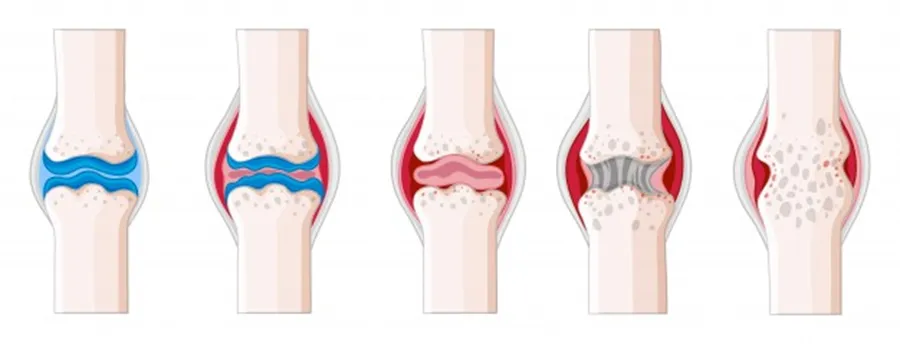
Figure 1: Comparison of a healthy joint and a rheumatoid arthritic joint showing synovial inflammation, pannus formation, and cartilage/bone erosion.
MATERIALS AND METHODS
Drug and Excipient Profile
Anthocyanin was extracted in-house from fresh eggplant peels: molecular formula C15H11O6; MW 207.25 g/mol; soluble in water and alcohols; dose 180–215 mg/day; stored at 2–8°C.10 Carbopol-93411 (carboxypolymethylene; MW ~3×10⁶; pH of 1% dispersion 2.5–3.0; bulk density 1.76 g/cm³) was used as primary gelling agent. SCMC11 (MW 262.19 g/mol; pH 6.0–8.5) served as thickener. HPMC K4M, propylene glycol, ethanol, methyl paraben, propyl paraben, and triethanolamine were of pharmaceutical grade.
Extraction of Anthocyanins
Eggplant peels were macerated in methanol containing 3% HCl (v/v) at room temperature for 24 h.10 Saturated lead acetate was added until precipitation was complete; the precipitate was re-dissolved in methanol/2% HCl and treated with diethyl ether. The brown precipitate was collected and the filtrate evaporated at 55°C. The crude anthocyanin powder was stored at 4°C.
Characterisation
Confirmatory tests:10 (i) AlCl3 addition gave a 12 nm bathochromic UV shift; (ii) UV absorbance at 200–700 nm; (iii) heating with 2 M HCl at 100°C for 5 min maintained stable purple colour (Figure 2); (iv) 2 M NaOH produced a green colour (Figure 3). FTIR was performed on KBr pellets (1:100, 10 t/in²) scanned at 450–3900 cm⁻¹19, UV λmax was established at 516 nm19 (Table 2; Figure 4).
Formulation of Anthocyanin Gels
Six formulations (F1–F6) were prepared using Carbopol-934, SCMC, and HPMC K4M individually or in combination (Table 1). Carbopol-934 gel: polymer dispersed in water at 40°C, 1200 rpm/30 min; pH adjusted with triethanolamine.20 SCMC gel: dissolved at 50°C, 1200 rpm/30 min.20 HPMC K4M gel: hot/cold technique—dissolved at 80°C, cold water added gradually, refrigerated overnight.20 Combination gels: individual polymer gels blended before anthocyanin incorporation.
Evaluation Parameters
pH: Digital pH meter at 24 h, 48 h, 1 week, 2 weeks, 1 month, and 3 months.19Homogeneity: Visual inspection.20Centrifuge stability: 2000 rpm for up to 60 min. Temperature stability: Storage at 2–8°C, 25°C, and 40–45°C for 3 months.20
Viscosity: Brookfield viscometer, spindle no. 64, 50 rpm.19Spreadability: 1 g gel between 20×20 cm glass plates; 1000 g weight for 1 min; diameter in triplicate.18% Drug content: 2 g gel in 100 mL phthalate buffer (pH 5) for 2 h; absorbance at 516 nm.
In vitro drug release: Modified diffusion apparatus; semipermeable membrane; 100 mL phthalate buffer (pH 5, 37±2°C, 50 rpm); 5 mL aliquots at 30, 60, 120, 180, 240, 300, 360 min; absorbance at 516 nm.20
Anti-inflammatory study: RA patients randomised into anthocyanin-gel and placebo groups. Applied at 20 g/h once daily (weeks 1–4), then 10 g/h once daily (weeks 5–8); clinical parameters assessed at baseline and week 8.
Antimicrobial/antifungal activity: Macrobroth dilution against ATCC strains of S. aureus, E. coli, E. faecalis, P. aeruginosa and fungi C. albicans, C. tropicalis; serial two-fold dilutions 6.25–100 µg/mL; ciprofloxacin and ketoconazole as reference standards.15,16
Table 1: Composition of Anthocyanin Gel Formulations F1–F6
|
Code |
Drug (g) |
Carbopol-934 (g) |
SCMC (g) |
HPMC K4M (g) |
Methyl Paraben (g) |
Propyl Paraben (g) |
Ethanol (mL) |
Propylene Glycol (mL) |
Water |
|
F1 |
0.5 |
1.0 |
– |
– |
0.2 |
0.02 |
3 |
4 |
q.s. |
|
F2 |
0.5 |
– |
2.0 |
– |
0.2 |
0.02 |
3 |
4 |
q.s. |
|
F3 |
0.5 |
– |
– |
2.0 |
0.2 |
0.02 |
3 |
4 |
q.s. |
|
F4 |
0.5 |
1.0 |
1.0 |
– |
0.2 |
0.02 |
3 |
4 |
q.s. |
|
F5 |
0.5 |
1.0 |
– |
1.0 |
0.2 |
0.02 |
3 |
4 |
q.s. |
|
F6 |
0.5 |
– |
1.0 |
1.0 |
0.2 |
0.02 |
3 |
4 |
q.s. |
All quantities per 100 g gel; TEA added q.s. to adjust pH; Water q.s. to 100 g
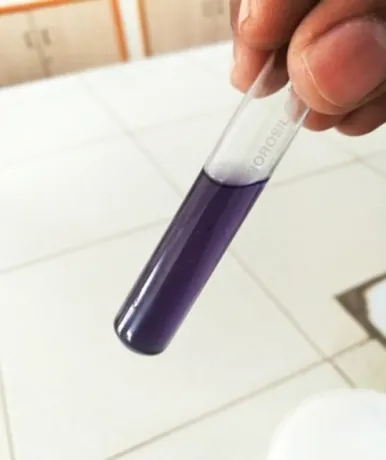
Figure 2: Confirmatory test for anthocyanins using HCl — stable purple colouration at 100°C.
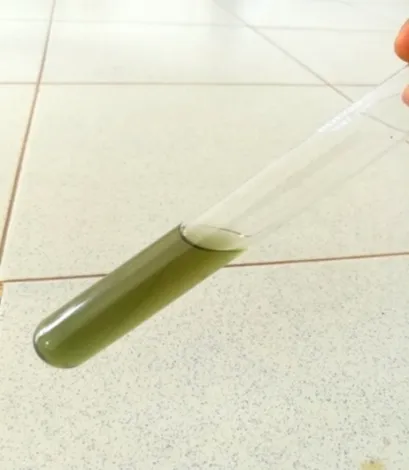
Figure 3: Confirmatory test for anthocyanins using NaOH — characteristic green colour.
RESULTS AND DISCUSSION
Identification and Characterisation of Anthocyanin
All four confirmatory tests were positive, confirming the identity and purity of the extracted material as anthocyanin.10 The UV absorbance at 516 nm and calibration linearity (r²=0.998; slope=0.001; intercept=0.006; Table 2) provide a reliable quantitative method (Figure 6). The pH of the crude extract was stable at 3.75±0.01 throughout 3 months of storage at 4°C. FTIR spectra of pure anthocyanin, pure polymers, and physical mixtures F1 and F4 showed that all characteristic anthocyanin peaks were retained without new peaks or significant shifts confirming complete physicochemical compatibility between the drug and excipients.19 The drug exists in its original form and is available for pharmacological action.
Physical Evaluation of Gel Formulations
All formulations maintained stable pH of 5.0–5.4 over 3 months (Table 3), within the physiologically safe skin pH range of 4.5–6.5,19 with no observed irritation. All gels were homogeneous with no aggregate formation, showed no sedimentation on centrifugation, and remained physically unchanged across all storage temperatures.20 HPMC K4M formulations (F3, F6) exhibited the highest viscosity (11,950–11,990 cps); Carbopol-934-based gels (F1, F4, F5) were least viscous (10,220–10,850 cps) and most spreadable (5.69–5.95 cm), a property beneficial for patient comfort.18,19 Results are shown in Table 4.
Percentage Drug Content
All formulations yielded drug content above 96% (Table 5), within pharmacopoeial acceptance limits. F1 (98.5%) and F4 (98.0%) were superior, reflecting uniform anthocyanin distribution within Carbopol-934 matrices and confirming reproducibility of the formulation process.
In Vitro Drug Release
All gel formulations exhibited sustained drug release over 6 h (Table 6; Figure 5), compared with the pure drug which released ~97.9% within 180 min alone. Formulations with lower viscosity released drug faster yet in a sustained manner: F1 (94.1%) and F4 (93.4%) were best at 6 h, following the rank F1 > F4 > F5 > F2 > F3 > F6—directly inversely proportional to viscosity.20
Anti-Inflammatory Activity in Human Volunteers
All anthocyanin gel formulations produced clinically observable reduction in RA-associated joint inflammation after 8 weeks compared with placebo. This aligns with anthocyanins' known inhibition of NF-κB-mediated COX-2 expression and suppression of Th17-cell-dependent cytokine production.13,14 The sustained release of F1 and F4 likely underpins their clinical efficacy by maintaining adequate dermal drug concentrations.5,7,12
Antimicrobial and Antifungal Activity
F1 and F2 showed the lowest MICs against gram-positive organisms (E. faecalis, S. aureus: 25–50 µg/mL; Table 7). Activity against gram-negative bacteria was generally weaker (>100 µg/mL), consistent with their outer-membrane barrier.15 F1, F5, and F6 showed moderate antifungal activity against C. albicans (MIC 50 µg/mL; Table 8). These properties are clinically relevant given RA patients' increased infection risk.16
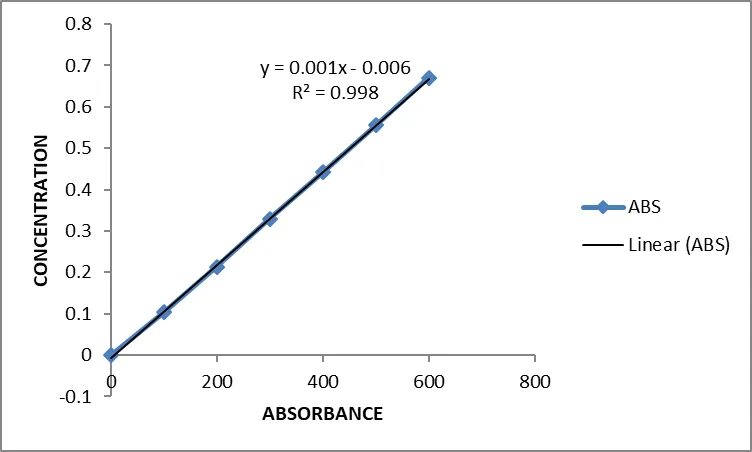
Figure 4: Calibration curve of anthocyanin at λmax 516 nm (r² = 0.998).
Table 2: Calibration Curve Data for Anthocyanin At 516 Nm
|
Concentration (µg/mL) |
Absorbance |
|
0 |
0.000 |
|
100 |
0.109 |
|
200 |
0.229 |
|
300 |
0.331 |
|
400 |
0.432 |
|
500 |
0.549 |
|
600 |
0.681 |
r² = 0.998; slope = 0.001; intercept = 0.006; Beer–Lambert range: 100–600 µg/mL
Table 3: PH of Anthocyanin Gel Formulations Over 3 Months
|
Time |
F1 |
F2 |
F3 |
F4 |
F5 |
F6 |
|
24 h |
5.2 |
5.4 |
5.3 |
5.4 |
5.2 |
5.3 |
|
48 h |
5.4 |
5.3 |
5.4 |
5.4 |
5.1 |
5.3 |
|
1 week |
5.2 |
5.3 |
5.3 |
5.3 |
5.2 |
5.2 |
|
2 weeks |
5.3 |
5.3 |
5.3 |
5.3 |
5.2 |
5.2 |
|
1 month |
5.2 |
5.4 |
5.2 |
5.2 |
5.1 |
5.3 |
|
3 months |
5.2 |
5.3 |
5.3 |
5.3 |
5.2 |
5.3 |
Table 4: Viscosity and Spreadability Of Anthocyanin Gel Formulations
|
Code |
Viscosity (cps) |
Spreadability (cm) |
|
F1 |
10850 |
5.69 |
|
F2 |
11890 |
6.71 |
|
F3 |
11950 |
6.88 |
|
F4 |
10770 |
5.81 |
|
F5 |
10220 |
5.95 |
|
F6 |
11990 |
6.97 |
Table 5: Percentage Drug Content and Cumulative % Drug Release AT 6 H
|
Code |
% Drug Content |
Cumulative % Release (6 h) |
|
F1 |
98.5 |
94.1 |
|
F2 |
97.5 |
92.7 |
|
F3 |
96.0 |
89.5 |
|
F4 |
98.0 |
93.4 |
|
F5 |
97.0 |
91.8 |
|
F6 |
96.5 |
88.6 |
Table 6: Cumulative % Drug Release Vs. Time for All Formulations
|
Time (min) |
Pure Drug |
F1 |
F2 |
F3 |
F4 |
F5 |
F6 |
|
30 |
35.4 |
20.3 |
18.1 |
16.1 |
19.2 |
16.9 |
16.3 |
|
60 |
65.6 |
34.5 |
34.4 |
28.8 |
32.0 |
34.1 |
30.9 |
|
120 |
86.2 |
50.8 |
49.1 |
46.6 |
49.6 |
50.2 |
47.1 |
|
180 |
97.9 |
67.5 |
55.6 |
61.7 |
67.3 |
69.2 |
65.1 |
|
240 |
– |
79.8 |
71.2 |
69.9 |
75.4 |
76.9 |
73.8 |
|
300 |
– |
88.7 |
87.4 |
82.9 |
88.3 |
87.2 |
87.3 |
|
360 |
– |
94.1 |
92.7 |
89.5 |
93.4 |
91.8 |
88.6 |
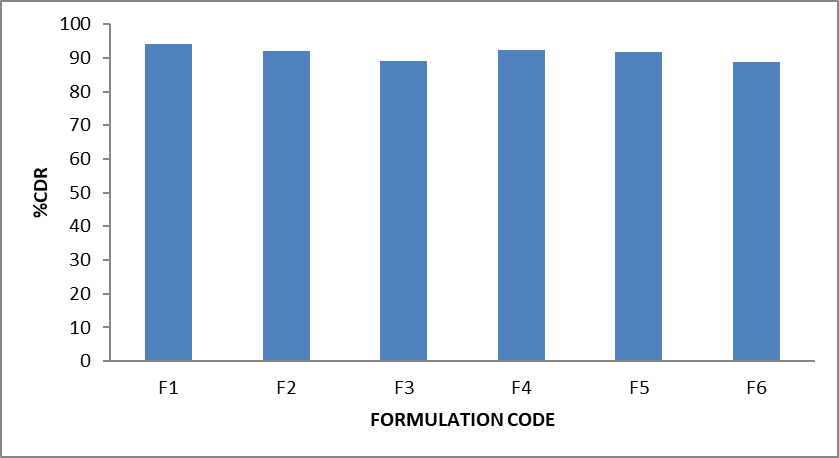
Figure 5: Comparative cumulative % drug release profiles of pure drug and formulations F1–F6 over 360 min.
Table 7: Antimicrobial Mic Values (ΜG/ML) Of Anthocyanin Gel Formulations
|
Formulation |
E. faecalis |
S. aureus |
E. coli |
P. aeruginosa |
|
F1 |
25 |
50 |
>100 |
>100 |
|
F2 |
50 |
25 |
>100 |
>100 |
|
F3 |
>100 |
>100 |
>100 |
>100 |
|
F4 |
>100 |
50 |
50 |
>100 |
|
F5 |
>100 |
>100 |
>100 |
50 |
|
F6 |
>100 |
>100 |
>100 |
>100 |
|
Ciprofloxacin |
6.25 |
6.25 |
6.25 |
6.25 |
MIC values in µg/mL; Ciprofloxacin = reference standard
Table 8: Antifungal MIC Values (ΜG/ML) Of Anthocyanin Gel Formulations
|
Formulation |
C. albicans |
C. tropicalis |
|
F1 |
50 |
25 |
|
F2 |
>100 |
50 |
|
F3 |
>100 |
>100 |
|
F4 |
>100 |
>100 |
|
F5 |
50 |
>100 |
|
F6 |
50 |
100 |
|
Ketoconazole |
6.25 |
12.50 |
Ketoconazole = reference standard
CONCLUSION
Anthocyanin extracted from eggplant (Solanum melongena) peels was successfully incorporated into six topical gel formulations. FTIR confirmed drug–excipient compatibility. Gel pH was stable at 5.0–5.4 over 3 months within safe skin pH range. All formulations were homogeneous, centrifuge-stable, and temperature-stable. Drug content exceeded 96% in all cases (F1: 98.5%; F4: 98.0%). Sustained release over 6 h was confirmed; F1 (94.1%) and F4 (93.4%) were superior, attributed to lower viscosity of Carbopol-934 systems. Clinical evaluation confirmed significant reduction in RA inflammation. All formulations showed antimicrobial activity against gram-positive organisms and antifungal activity against Candida species. F1 and F4 are recommended as the most promising candidates for further development as topical anti-inflammatory preparations for RA management.
ACKNOWLEDGEMENTS
The author gratefully acknowledges the research facilities provided by the MCP College of Pharmacy, Ilka; Dr. M.B. Patil, CNR Rao Research Centre, Bagalkot, for FTIR spectral analysis; City diagnostic bagalkot, for antimicrobial and antifungal testing; and Dr. S.R. Jadimath, Dr. Katti Hospital, Bagalkot, for assistance with the clinical anti-inflammatory study in RA volunteers.
REFERENCES
Jyoti Math*, Formulation and Evaluation of Anthocyanin Gel for Anti-Inflammatory Activity in Rheumatoid Arthritis, Int. J. Med. Pharm. Sci., 2026, 2 (6), 130-137. https://doi.org/10.5281/zenodo.20673742
 10.5281/zenodo.20673742