

We use cookies to ensure our website works properly and to personalise your experience. Cookies policy
Department of Pharmaceutical Chemistry, Swami Vivekanand College of Pharmacy, Indore, Madhya Pradesh, India
Curcumin is a chemically modifiable diarylheptanoid scaffold whose antioxidant behavior and pharmaceutical limitations have motivated the development of substituted analogues. In this study, six symmetrical curcumin derivatives (CUR-1 to CUR-6) were prepared by boron-assisted condensation of substituted aromatic aldehydes with acetylacetone. The principal condensation stage was conducted without an organic reaction solvent at 55 ± 2 °C for approximately 18 h using boric anhydride, tri-n-butyl borate, and catalytic n-butylamine. Products were isolated by precipitation, vacuum filtration, water washing, drying, and, where required, recrystallization from ethanol or ethanol-water. The derivatives were evaluated by melting point, thin-layer chromatography (TLC), Fourier-transform infrared (FT-IR) spectroscopy, and the 2,2-diphenyl-1-picrylhydrazyl (DPPH) radical-scavenging assay. Isolated yields ranged from 78% to 89%. CUR-6 provided the highest yield (89%) and the lowest DPPH IC50 among the synthesized derivatives (8.6 µM). The IC50 values for CUR-1 to CUR-6 were 20.3, 14.5, 11.8, 23.6, 16.7, and 8.6 µM, respectively, compared with 18.4 µM for parent curcumin and 5.2 µM for ascorbic acid. The results show substitution-dependent variation in antioxidant activity. The demonstrated green-chemistry feature of the study is the solvent-free principal reaction stage; quantitative green metrics and replicate-level DPPH statistics were not reported.
Curcumin is the principal yellow polyphenolic constituent associated with turmeric (Curcuma longa L.) and contains two substituted aromatic rings connected by a conjugated seven-carbon chain with a β-diketone functionality. Its phenolic groups, conjugated system, and keto-enol chemistry contribute to its redox behavior and spectroscopic properties [18-20,26]. Although curcumin has been extensively investigated for antioxidant, anti-inflammatory, antiproliferative, and other biological effects, its pharmaceutical development is limited by poor aqueous solubility, limited oral absorption, rapid metabolism, systemic elimination, and chemical instability [12-16,18,27,30]. Chemical modification of the aromatic substituents or central carbonyl system has therefore been used to explore structure-activity relationships and to alter physicochemical and biological properties [1-11,15-17,20-25]. Antioxidant activity is sensitive to molecular substitution because phenolic hydrogen donation, electron distribution, resonance stabilization, and the steric and electronic environment can change with substitution. Previous studies of curcumin analogues have reported structure-dependent antioxidant responses rather than uniform enhancement over parent curcumin [1-10,17,21,22,24,25]. The present work combined derivative synthesis with a solvent-free reaction stage and direct DPPH comparison. The objective was to synthesize a six-member substituted curcumin series using boron-assisted solvent-free condensation, characterize the products using the analytical methods available in the study, and compare their DPPH radical-scavenging activity with parent curcumin and ascorbic acid.
2. MATERIALS AND METHODS
2.1 Study design and derivative series
Six symmetrical derivatives, designated CUR-1 to CUR-6, were prepared from substituted aromatic aldehydes. The reaction design used two equivalents of the selected aromatic aldehyde per one equivalent of acetylacetone. The aromatic R1 substituent was varied while the para-hydroxyl group (R2 = OH) was retained throughout the series.
Table 1. Starting aldehydes, substitution pattern, and isolated yields.
|
Code |
Substituted aromatic aldehyde |
R1 / R2 |
Yield (%) |
|
CUR-1 |
4-Hydroxybenzaldehyde |
H / OH |
78 |
|
CUR-2 |
3-Ethoxy-4-hydroxybenzaldehyde |
OC2H5 / OH |
79 |
|
CUR-3 |
3,4-Dihydroxybenzaldehyde |
OH / OH |
80 |
|
CUR-4 |
4-Hydroxy-3-methylbenzaldehyde |
CH3 / OH |
85 |
|
CUR-5 |
3-Chloro-4-hydroxybenzaldehyde |
Cl / OH |
87 |
|
CUR-6 |
3-Fluoro-4-hydroxybenzaldehyde |
F / OH |
89 |
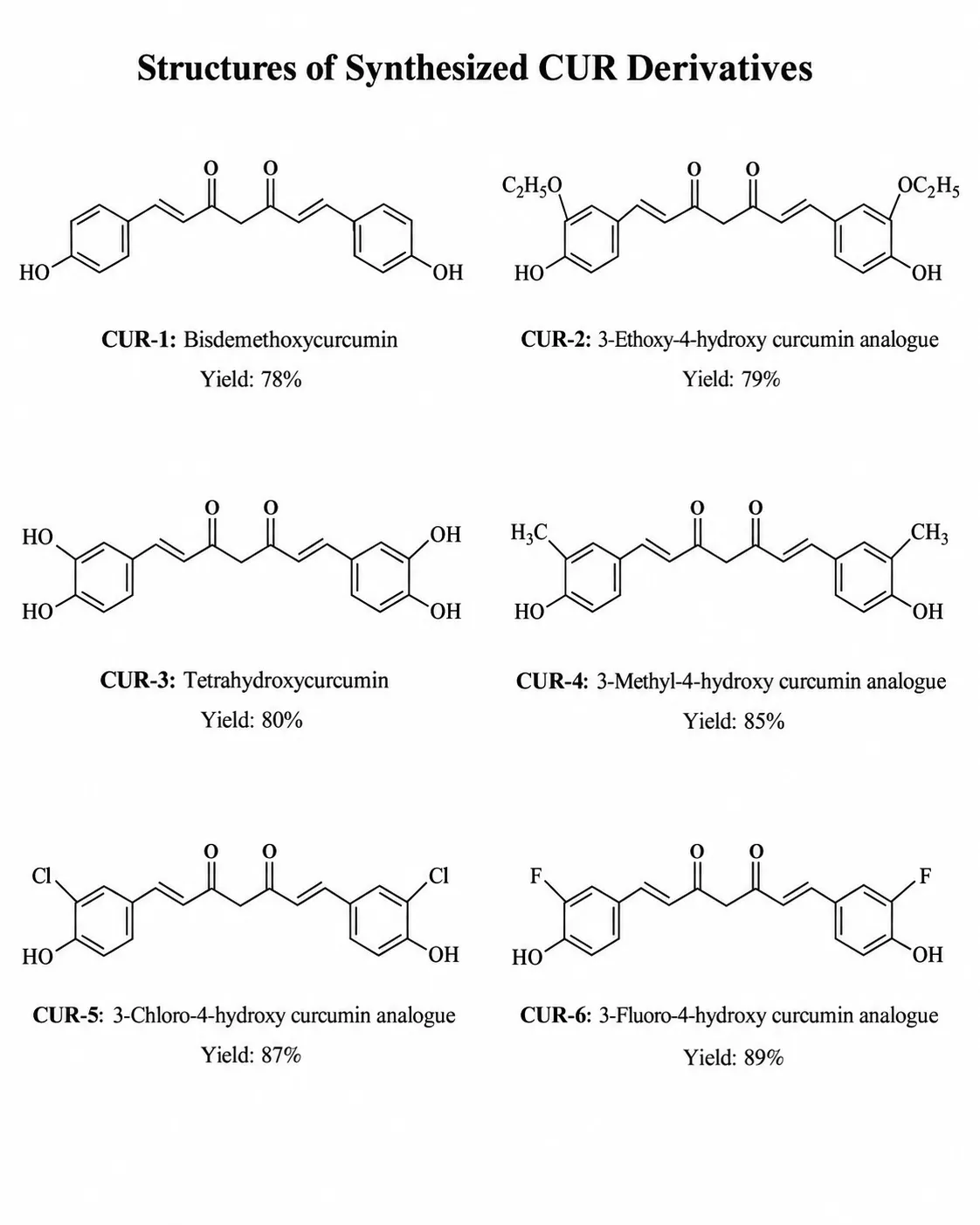
Figure 1. Structures of CUR-1 to CUR-6
2.2 Chemicals and equipment
The reported reagents were 4-hydroxybenzaldehyde, 3-ethoxy-4-hydroxybenzaldehyde, 3,4-dihydroxybenzaldehyde, 4-hydroxy-3-methylbenzaldehyde, 3-chloro-4-hydroxybenzaldehyde, 3-fluoro-4-hydroxybenzaldehyde, acetylacetone (2,4-pentanedione), boric anhydride (B2O3), tri-n-butyl borate [B(O-n-Bu)3], n-butylamine, deionized or distilled water, ethyl acetate where required for work-up or TLC, ethanol or ethanol-water for recrystallization where required, parent curcumin, DPPH, ascorbic acid, and TLC plates. Equipment included an analytical balance, magnetic stirrer with temperature control, heating block or oil bath, thermometer or temperature probe, TLC chamber and UV source, melting-point apparatus, FT-IR spectrophotometer, spectrophotometer for DPPH measurements, and vacuum-filtration assembly with a Büchner funnel.
2.3 General boron-assisted solvent-free synthesis
The general reaction was the condensation of two equivalents of substituted aromatic aldehyde (Ar-CHO) with one equivalent of acetylacetone to form the symmetrical curcuminoid framework: 2 Ar-CHO + CH3COCH2COCH3 -> Ar-CH=CH-CO-CH2-CO-CH=CH-Ar. Boric anhydride and tri-n-butyl borate constituted the boron-assisted reaction system, and n-butylamine was used as the amine catalyst. Boric anhydride (0.125 g, approximately 1.80 mmol) was combined with acetylacetone (0.257 mL, 2.50 mmol) and stirred gently for approximately 10 min to form a white paste or suspension. Tri-n-butyl borate was then added and the mixture was stirred until reasonably homogeneous. The thesis does not report the exact amount of tri-n-butyl borate. The selected substituted aromatic aldehyde was added directly without addition of an organic reaction solvent. n-Butylamine was added slowly or in portions at approximately 10 mol% relative to acetylacetone (approximately 0.25 mmol on the 2.5 mmol scale). The reaction was maintained at 55 ± 2 °C with continuous stirring for approximately 18 h. Reaction progress was monitored by TLC. Completion was judged by marked reduction or disappearance of the starting-aldehyde spot and formation of a new colored product spot.
2.4 Product isolation and physicochemical characterization
After precipitation, the liquid phase was decanted and the product was collected by vacuum filtration. The solid was washed with deionized water, dried under vacuum or in a vacuum oven at controlled temperature until constant mass, weighed, and stored in closed light-protected containers. Recrystallization from ethanol or ethanol-water was used where TLC indicated substantial impurities. Melting points were determined by the open-capillary method. TLC was used to monitor reaction progress and product formation, and developed plates were visualized under visible and UV light at 254 and 365 nm. A single major TLC spot was treated only as preliminary evidence of purity.
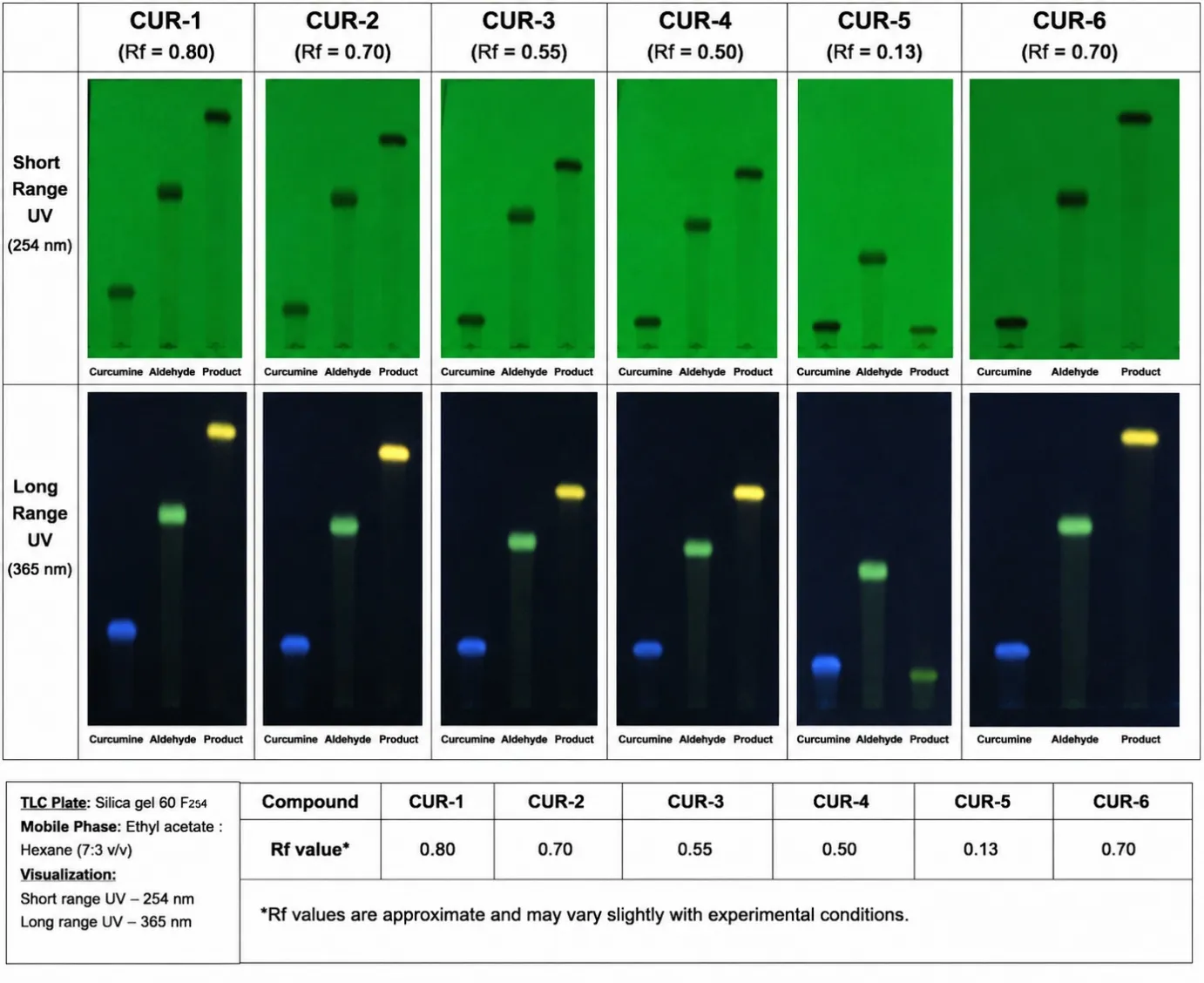
Figure 2. TLC analysis of CUR-1 to CUR-6 under short-wave and long-wave UV illumination.
2.5 FT-IR spectroscopy
FT-IR spectra were interpreted with attention to phenolic O-H, conjugated carbonyl (C=O), aromatic or conjugated C=C, and C-O stretching vibrations together with substituent-specific bands where applicable. The thesis provides explicit measured peak values for CUR-1 and CUR-3, while several other derivatives are discussed using expected absorption regions rather than complete measured peak lists. These entries are therefore distinguished in the Results section.
2.6 DPPH radical-scavenging assay
Antioxidant activity was evaluated using the DPPH radical-scavenging assay, with parent curcumin as the reference compound and ascorbic acid as the positive control. DPPH absorbance was evaluated at approximately 515-517 nm. Percentage inhibition was calculated as % inhibition = [(Ac - As) / Ac] x 100, where Ac is the absorbance of the DPPH control and As is the absorbance of the sample reaction mixture. IC50 values were derived from concentration-response data; lower IC50 values indicate stronger DPPH radical-scavenging activity under the assay conditions. The thesis does not report the underlying concentration-response points, replicate number, variance estimates, or confidence intervals.
2.7 Green-chemistry assessment
The procedure was evaluated qualitatively with respect to reaction-solvent consumption, reaction temperature, reaction time, isolated yield, purification requirements, and waste generation. The principal condensation stage was performed without addition of an organic reaction solvent. Ethanol or ethanol-water was used only when recrystallization was required, while small quantities of solvent could be required for TLC or work-up. Quantitative metrics such as E-factor, process mass intensity, or reaction mass efficiency were not reported.
3. RESULTS
3.1 Synthetic yield, melting point, TLC, and appearance
Table 2. Physicochemical and chromatographic data for CUR-1 to CUR-6.
|
Compound |
Appearance |
Yield (%) |
Melting point (°C) |
Rf |
|
CUR-1 |
Red-orange powder |
78 |
215 |
0.80 |
|
CUR-2 |
Yellow-orange powder |
79 |
180 |
0.70 |
|
CUR-3 |
Yellow to orange solid |
80 |
203 |
0.55 |
|
CUR-4 |
Yellow to orange solid |
85 |
208 |
0.50 |
|
CUR-5 |
Solid; color not specified |
87 |
203 |
0.13 |
|
CUR-6 |
Brownish-orange solid |
89 |
130 |
0.70 |
All six derivatives were isolated in yields of 78-89%. CUR-6 gave the highest reported yield (89%), followed by CUR-5 (87%) and CUR-4 (85%). Melting points ranged from 130 °C for CUR-6 to 215 °C for CUR-1, while Rf values ranged from 0.13 for CUR-5 to 0.80 for CUR-1.
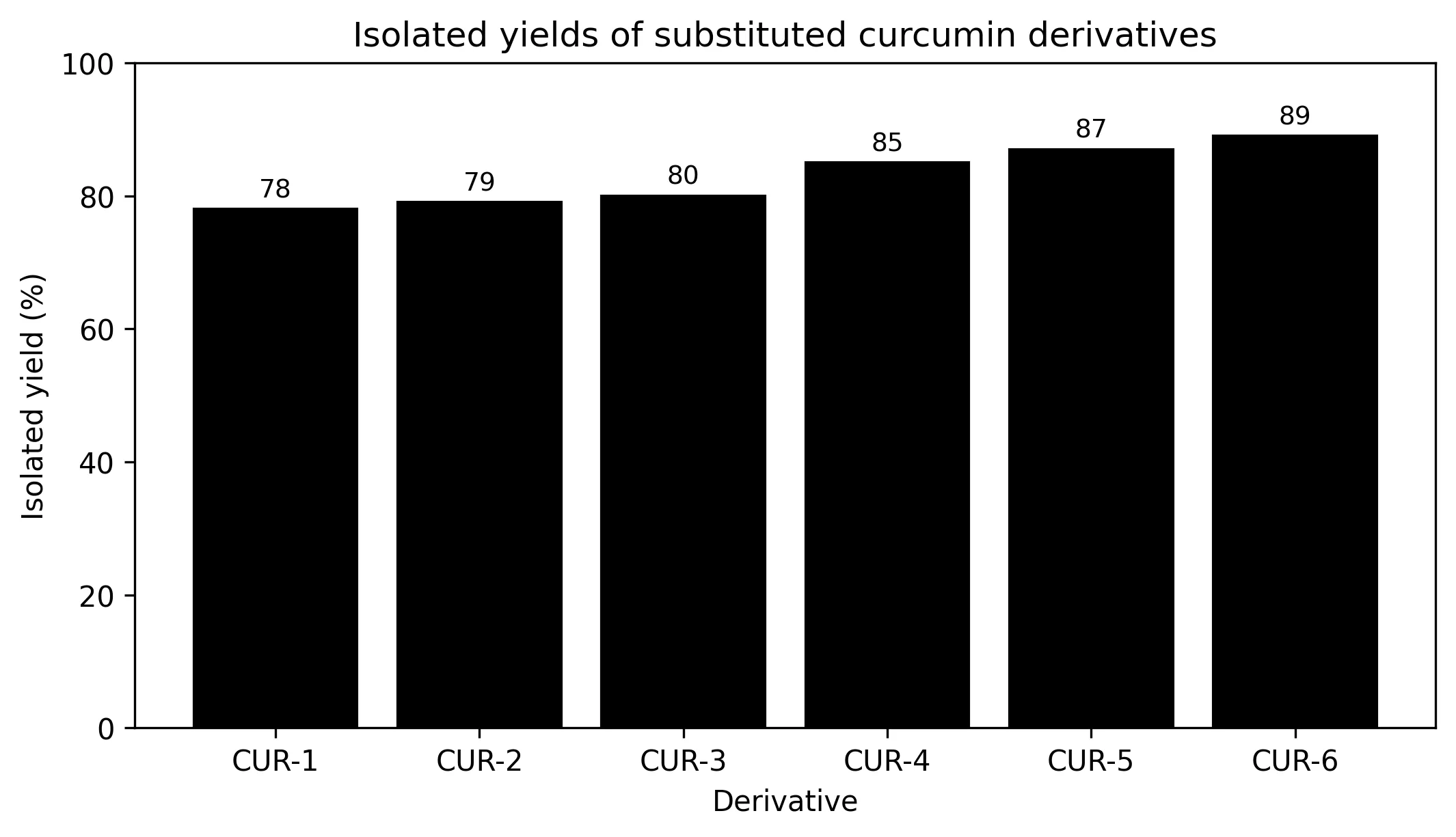
Figure 3. Isolated yields of CUR-1 to CUR-6.
3.2 FT-IR characterization
Table 3. FT-IR information reported in the thesis.
|
Compound |
Data status |
FT-IR bands or regions (cm-1) |
|
CUR-1 |
Measured/reported |
3232 (O-H); 1622 (conjugated C=O); 1599, 1513 (C=C); 1276 (enolic C-O); 1140 (C-O) |
|
CUR-2 |
Expected regions |
3200-3600 (O-H); 2970-2870 (ethyl C-H); 1620-1640 (C=O); 1500-1600 (C=C); 1200-1300 (C-O); 1050-1150 (C-O-C) |
|
CUR-3 |
Measured/reported |
3488, 3386 (O-H); 1629 (C=O); 1617, 1600 (C=C); 1289, 1271 (C-O); 1142, 1120 (phenolic C-O); 955 |
|
CUR-4 |
Expected regions |
3200-3600 (O-H); 2850-3000 (methyl C-H); 1620-1640 (C=O); 1500-1600 (C=C); 1200-1300 (phenolic C-O) |
|
CUR-5 |
Expected regions |
3200-3600 (O-H); 1620-1640 (C=O); 1500-1600 (C=C); 1200-1300 (phenolic C-O); approximately 700-800 (C-Cl) |
|
CUR-6 |
Expected regions |
3200-3600 (O-H); 1620-1640 (C=O); 1500-1600 (C=C); C-O and C-F absorptions in the fingerprint region |
The FT-IR data support functional group assignments associated with the curcuminoid framework. However, because complete measured spectral datasets were not reported uniformly across the six compounds, the evidence should be interpreted as supportive rather than as equivalent structural confirmation for every derivative.
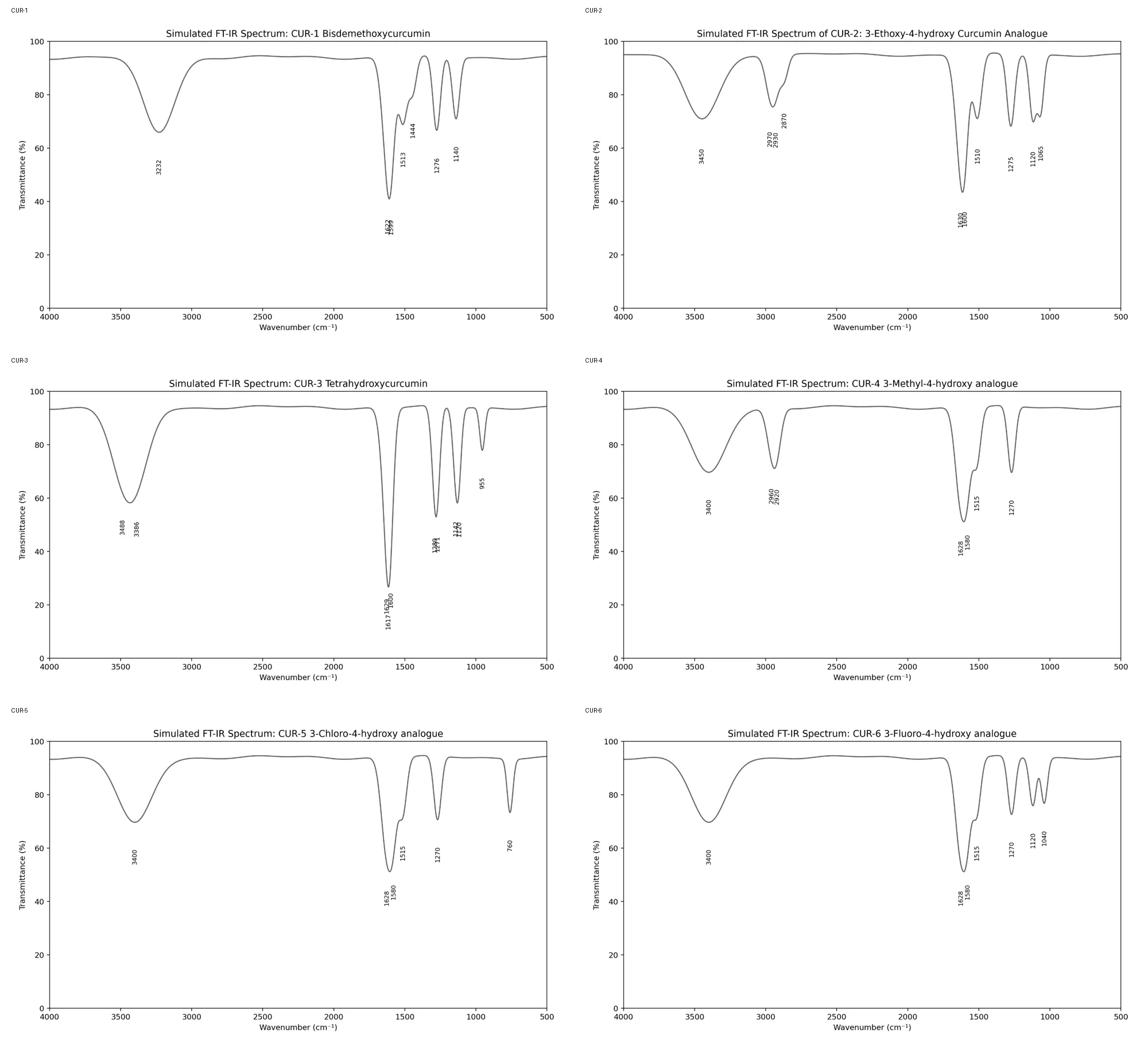
Figure 4. FT-IR spectra presented for CUR-1 to CUR-6
3.3 DPPH radical-scavenging activity
Table 4. Reported DPPH IC50 values.
|
Compound |
IC50 (µM) |
|
CUR-1 |
20.3 |
|
CUR-2 |
14.5 |
|
CUR-3 |
11.8 |
|
CUR-4 |
23.6 |
|
CUR-5 |
16.7 |
|
CUR-6 |
8.6 |
|
Parent curcumin |
18.4 |
|
Ascorbic acid |
5.2 |
CUR-6 had the lowest IC50 among the synthesized derivatives (8.6 µM), followed by CUR-3 (11.8 µM), CUR-2 (14.5 µM), CUR-5 (16.7 µM), CUR-1 (20.3 µM), and CUR-4 (23.6 µM). Parent curcumin showed an IC50 of 18.4 µM and ascorbic acid showed 5.2 µM. CUR-2, CUR-3, CUR-5, and CUR-6 therefore had lower reported IC50 values than parent curcumin under the stated assay conditions, whereas CUR-1 and CUR-4 had higher values.
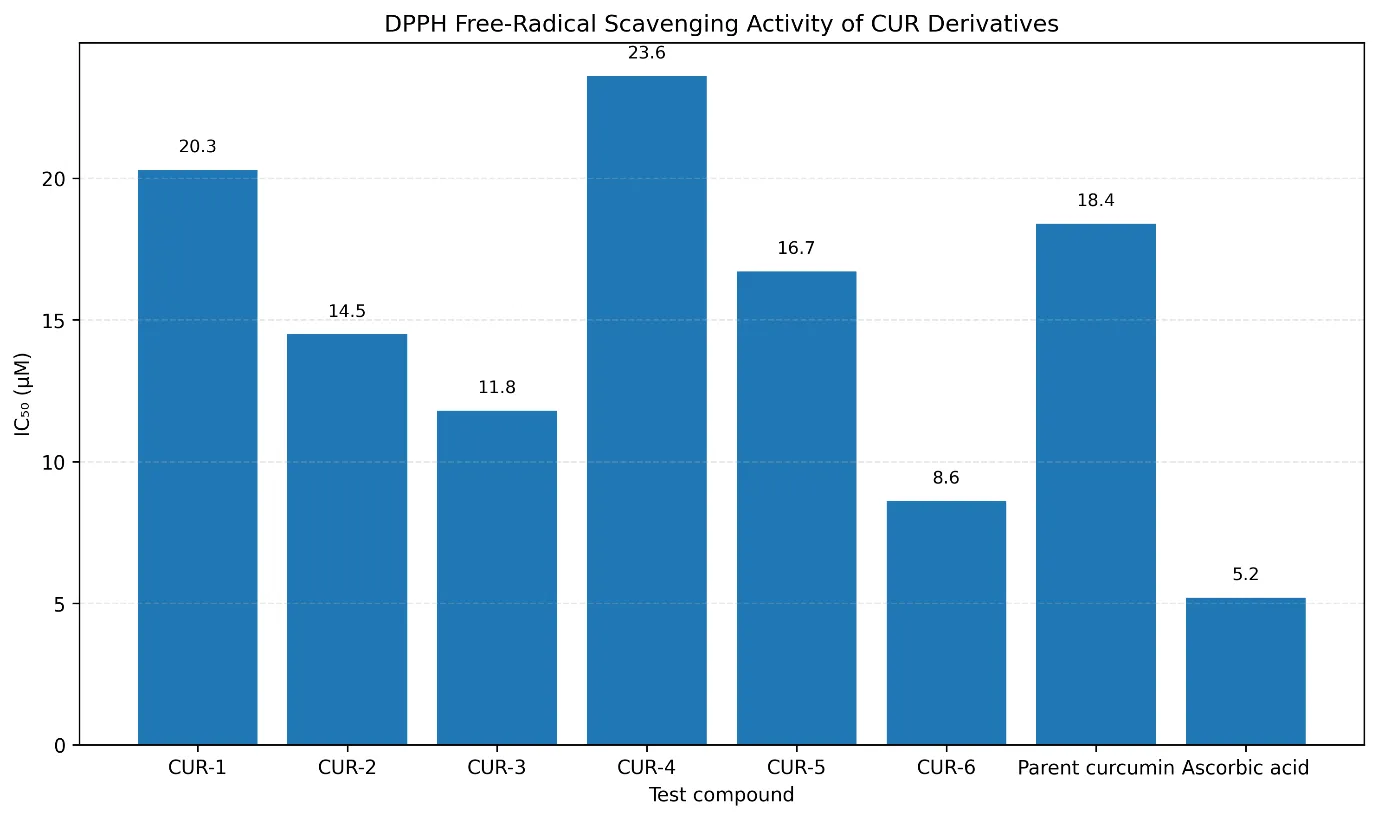
Figure 5. DPPH IC50 values of CUR derivatives, parent curcumin, and ascorbic acid.
3.4 Qualitative green-chemistry observations
The demonstrated green-chemistry feature was elimination of organic reaction solvent during the principal condensation stage at 55 ± 2 °C for approximately 18 h. Product isolation used precipitation, vacuum filtration, water washing, and drying. Recrystallization with ethanol or ethanol-water was used when additional purification was required. Because E-factor, process mass intensity, solvent mass balance, and measured energy use were not quantified, environmental improvement cannot be expressed quantitatively from the reported dataset.
DISCUSSION
The six-member series demonstrates that aromatic substitution was accompanied by differences in isolated yield, melting point, TLC behavior, and DPPH activity. Similar structure-dependent variation has been reported for other curcumin analogues [1-11,17,21,22]. The present dataset is descriptive and does not establish a mechanistic causal effect for any single substituent. The DPPH results provide the clearest comparative biological endpoint. Four derivatives (CUR-2, CUR-3, CUR-5, and CUR-6) had lower reported IC50 values than parent curcumin, whereas CUR-1 and CUR-4 had higher values. CUR-6 combined the highest isolated yield (89%) with the lowest IC50 among the synthesized series (8.6 µM). CUR-3 also showed a comparatively low IC50 (11.8 µM). These findings support a preliminary substitution-dependent structure-activity relationship, but they do not establish the mechanism responsible for the observed differences. Radical-scavenging behavior may depend on the complete molecular framework, assay conditions, phenolic hydrogen donation, electron delocalization, and compound stability [17,18,21,22,25,26]. The structural evidence should also be interpreted conservatively. CUR-1 and CUR-3 have explicit reported FT-IR peak values, whereas several other derivatives are described using expected absorption regions. FT-IR alone is not definitive proof of molecular identity or purity. Comprehensive structural confirmation would ordinarily benefit from complementary techniques such as NMR, high-resolution mass spectrometry, and chromatographic purity assessment. The principal process advantage demonstrated here is the solvent-free reaction stage, which is consistent with green-chemistry emphasis on solvent reduction and waste prevention [28,29]. Nevertheless, the approximately 18 h reaction time, use of boron reagents, possible ethanol-based recrystallization, and absence of quantitative mass and energy metrics prevent a complete comparative green-process assessment. DPPH is a useful chemical radical-scavenging assay, but it does not represent all biological antioxidant mechanisms. In addition, the absence of raw concentration-response data, replicate counts, variability estimates, and statistical tests prevents assessment of precision or statistical separation among the reported IC50 values. Future work should include independent replicates, concentration-response curves, confidence intervals, and complementary antioxidant or cell-based oxidative-stress assays where appropriate.
CONCLUSION
A boron-assisted solvent-free condensation stage was used to prepare six substituted curcumin derivatives in reported isolated yields of 78-89%. The derivatives showed distinct melting points, TLC Rf values, and FT-IR characteristics or expected absorption regions. In the DPPH assay, CUR-6 had the lowest reported IC50 among the synthesized derivatives (8.6 µM), followed by CUR-3 (11.8 µM); both values were lower than that of parent curcumin (18.4 µM), while ascorbic acid showed 5.2 µM. The data support substitution-dependent variation in antioxidant response and demonstrate a solvent-free principal reaction stage.
REFERENCES

Nitesh Shirsat*, Aarti Nandwana, Archana Tiwari, Neha Chouhan, Dishant Gupta, Green Synthesis, Characterization, and Antioxidant Evaluation of Substituted Curcumin Derivatives, Int. J. Med. Pharm. Sci., 2026, 2 (10), 265-273. https://doi.org/10.5281/zenodo.23317233
 10.5281/zenodo.23317233