

We use cookies to ensure our website works properly and to personalise your experience. Cookies policy
1Assistant Professor cum Research Scholar, Department of Pharmacology, Adhiparasakthi College of Pharmacy, Melmaruvathur.
2Assistant Professor, Department of Pharmacology, Adhiparasakthi College of Pharmacy, Melmaruvathur-603319.
3Assistant Professor, Department of Pharmaceutical Chemistry, Adhiparasakthi College of Pharmacy, Melmaruvathur.
4Assistant Professor, Department of Pharmaceutical Chemistry, Karpaga Vinayaga Institute for Pharmaceutical Sciences, Chengalpat.
5Assistant Professor, Department of Pharmacology, Surya School of Pharmacy, Vilupuram
Hygrophila auriculata (Schumach.) Heine is a medicinal herb widely employed in traditional systems of medicine owing to its diverse pharmacological properties. The present study aimed to characterize the phytochemical composition of the hexane leaf extract of H. auriculata using Gas Chromatography–Mass Spectrometry (GC–MS). GC–MS analysis revealed the presence of more than 60 phytochemical constituents, representing a broad spectrum of bioactive compounds, including phenolics, monoterpenes, sesquiterpenes, diterpenes, triterpenoids, phytosterols, and quinone derivatives. The major constituents identified included carvacrol (Phenol, 2-methyl-5-(1-methylethyl)), (Z,Z)-α-farnesene, trans-α-bergamotene, acetyleugenol, copaene, longifolene, caryophyllene, α-humulene, neophytadiene, β-sitosterol, β-amyrone, 9,19-cycloergost-24(28)-en-3-ol, lup-20(29)-en-3-one, lupeol, stigmasta-3,5-diene, α-tocopherolquinone, and campesterol. These compounds have been reported to exhibit a wide range of biological activities, including antioxidant, anti-inflammatory, antimicrobial, anticancer, hepatoprotective, immunomodulatory, and cardioprotective effects. The abundance of terpenoids and phytosterols in the hexane extract highlights the effectiveness of non-polar solvent extraction in recovering lipophilic bioactive metabolites. In particular, the presence of pharmacologically important compounds such as lupeol, β-sitosterol, campesterol, caryophyllene, α-humulene, and carvacrol suggests that the extract possesses considerable therapeutic potential. The GC–MS fingerprint generated in this study provides a comprehensive chemical profile of H. auriculata leaves and offers scientific evidence supporting their traditional medicinal use. The identification of over 60 phytochemicals demonstrates the chemical richness of the hexane extract and underscores its potential as a valuable source of natural bioactive compounds for pharmaceutical, nutraceutical, and functional food applications. Further studies focusing on the isolation, purification, quantitative estimation, and biological evaluation of the major constituents are warranted to validate their pharmacological efficacy and explore their therapeutic applications.
For thousands of years, medicinal plants have played a central role in human healthcare, providing a major source of therapeutic molecules and constituting the basis of traditional medical systems across the world1. Ancient cultures including Egyptian, Greek, and Chinese civilizations, as well as Indigenous groups in Africa, the Americas, and Asia, have long exploited the healing potential of plants to manage various diseases2. Owing to their diverse bioactive constituents, these plants have been employed against common disorders, infectious diseases, and severe conditions, establishing themselves as a vital component of healthcare worldwide. Their relevance extends beyond history, as medicinal plants continue to be a dynamic and evolving area influencing contemporary traditional and modern medicine.3 While medicinal plants have been used in healthcare for centuries, scientific scrutiny of their properties is a relatively recent development. The progress of modern pharmacology has highlighted the importance of validating traditional knowledge and investigating the intricate phytochemical profiles of plants with long histories of medicinal use.4 Despite its promising therapeutic profile, Hygrophila auriculata remains an underexploited medicinal species requiring further systematic investigation. A member of the Acanthaceae family, it is widely distributed in South and Southeast Asia including Nepal, India, Myanmar, Malaysia, and Sri Lanka.5 The plant is a rich source of phytochemicals such as glycosides, polyphenols, phytosterols, fatty acids, alkaloids, proanthocyanidins, enzymes, amino acids, and terpenoids. It demonstrates a broad spectrum of pharmacological effects including cardioprotective, anti-stress, diuretic, anti-inflammatory, anticancer, hepatoprotective, nephroprotective, and neuroprotective activities. In addition, its traditional use in Bengali culinary preparations underscores its potential for translation into functional foods and nutraceuticals that integrate traditional wisdom with modern science.6
Vernacular names:7
Marathi : Kolshinda Talimkhana
Sanskrit : Kokilaksa
Bengali : Kuliyakhara
Gujrati : Ekharo
Hindi : Talmakhana
Kannada: Kolavali
Marathi : Talikhana Kalsunda
Tamil : Golmidi, Neermulli
Urdu : Talmakhana.
Taxonomy8
Traditionally, various parts of the plant including roots, leaves, and seeds have been utilized in Indian medicine as diuretic agents and for managing conditions such as jaundice, dropsy, rheumatism, anasarca, and urinogenital tract diseases. Ayurvedic literature describes kokilaksha as an effective remedy for arthritis. The plant is also credited with improving strength and appetite and with therapeutic efficacy against edema, ascites, excessive thirst, bladder calculi, ophthalmic disorders, and dysentery. Its root decoction exhibits diuretic properties, and a formulation containing its leaves and roots with flowers of Stuea frondosa is employed for leucorrhoea. Additionally, it is traditionally used to address impotence, spermatorrhea, and seminal weakness.8,9 GC–MS analysis of the hexane extract of the leaves of Hygrophila auriculata was performed to identify the phytochemical constituents present in the extract.
MATERIALS AND METHODS
Collection of Plant material
Hygrophila auriculata leaves were collected in the month of April 2025 from Tirunelveli District, Tamil Nadu. The whole plant was authenticated by Dr. M. Syed Ali Fathima, Assistant Professor and Head, Sadakathullah Appa Arts and Science College, Tirunelveli. (Specimen Number: SAC/BOT/2025).
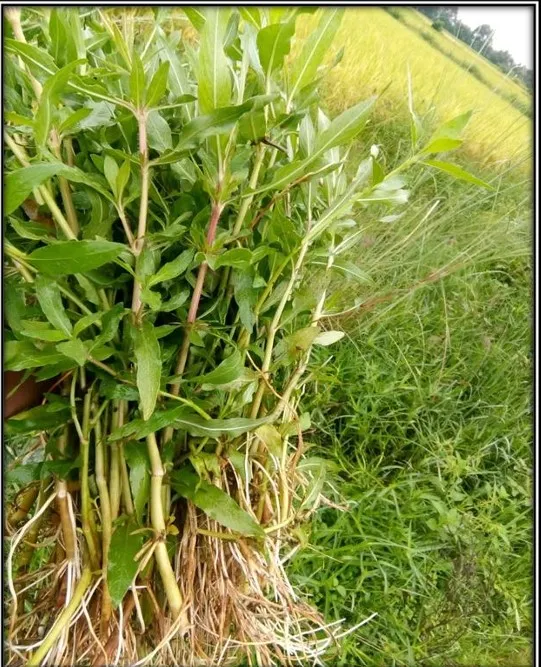
Figure 1: Leaves of Hygrophila auriculata
Extraction of Plant material
The leaves of Hygrophila auriculata was dried and powdered. The dried leaf powder extracted with n-hexane using Soxhlet apparatus. Finally, it was concentrated by vacuum evaporator.
GC-MS Analysis
The phytochemical composition of the hexane leaf extract of Hygrophila auriculata was analysed using Gas Chromatography–Mass Spectrometry (GC–MS) with an Agilent 7890B Gas Chromatograph coupled to an Agilent 5977A Mass Selective Detector (MSD). Separation was achieved using a fused-silica capillary column (30 m × 0.25 mm internal diameter × 0.25 μm film thickness). High-purity helium (99.999%) served as the carrier gas at a constant flow rate of 1.0 mL min⁻¹. A 1 μL aliquot of the sample was injected using a split ratio of 10:1. All samples were analysed in triplicate to ensure the reproducibility and reliability of the analytical results. Quality assurance procedures included instrument calibration before analysis, solvent-blank injections to detect potential contamination, and periodic analysis of a standard reference mixture to verify retention-time consistency, mass accuracy, and overall instrument performance throughout the analytical sequence. The injector and transfer-line temperatures were maintained at 250 °C and 280 °C, respectively. The oven temperature programme was initiated at 60 °C and held for 2 min, followed by a temperature ramp of 10 °C min⁻¹ to 280 °C, where it was maintained for an additional 10 min. The mass spectrometer was operated in electron ionization (EI) mode at an ionization energy of 70 eV, with mass spectra acquired over an m/z range of 40–600. Compound identification was performed by comparing the acquired mass spectra with those available in the National Institute of Standards and Technology (NIST) and Wiley mass spectral libraries. The relative abundance of each identified compound was determined from its percentage peak area in the total ion chromatogram (TIC), providing a semi-quantitative estimate of the phytochemical composition of the extract10.
RESULTS AND DISCUSSION:
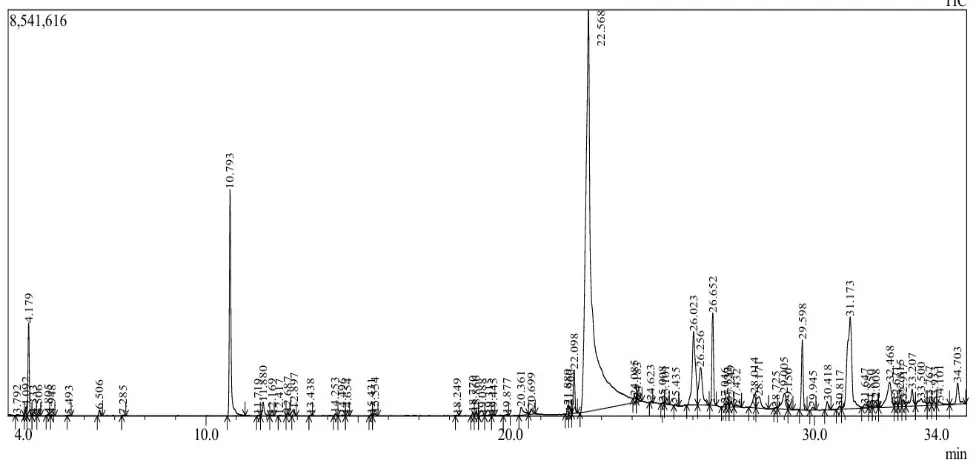
Figure 2: Chromatogram of Hexane extract of Hygrophila auriculata
Table 1: Peak report of Hygrophila auriculata
|
Peak |
Retention time |
Area |
Peak area % |
Height |
Name of the compound |
|
1 |
3.792 |
136691 |
0.06 |
19415 |
p-Xylene |
|
2 |
4.092 |
563275 |
0.23 |
191192 |
Silane, ethenyldiethylmethyl- |
|
3 |
4.179 |
5940997 |
2.45 |
1942861 |
Ethyl 3-ethoxyacrylate |
|
4 |
4.333 |
81060 |
0.03 |
17450 |
3-Heptanol, 2,4-dimethyl- |
|
5 |
4.506 |
60617 |
0.03 |
20242 |
Butane, 1,1,3-trimethoxy |
|
6 |
4.805 |
70347 |
0.03 |
24550 |
Silane, ethenyldiethylmethyl- |
|
7 |
4.948 |
68939 |
0.03 |
23351 |
Isopropyl acetate |
|
8 |
5.493 |
60135 |
0.02 |
18045 |
Decane |
|
9 |
6.506 |
413136 |
0.17 |
129875 |
2-Propanol, 1-[1-methyl-2-(2-propenyloxy)eth |
|
10 |
7.285 |
44244 |
0.02 |
14502 |
Tridecane |
|
11 |
10.793 |
18234004 |
7.53 |
4760606 |
Phenol, 2-methyl-5-(1-methylethyl)- |
|
12 |
11.719 |
47337 |
0.02 |
14778 |
(Z,Z)-.alpha.-Farnesene |
|
13 |
11.880 |
1338171 |
0.55 |
287209 |
Phenol, 2-methoxy-4-(2-propenyl)-, acetate |
|
14 |
12.169 |
70421 |
0.03 |
18385 |
Copaene |
|
15 |
12.417 |
64356 |
0.03 |
14019 |
1H-3a,7-Methanoazulene, octahydro-1,4,9,9-t |
|
16 |
12.687 |
197511 |
0.08 |
62509 |
Longifolene |
|
17 |
12.897 |
462137 |
0.19 |
145776 |
Caryophyllene |
|
18 |
13.438 |
54828 |
0.02 |
19274 |
Humulene |
|
19 |
14.253 |
165101 |
0.07 |
49625 |
1H-Cycloprop[e]azulene, 1a,2,3,4,4a,5,6,7b-o |
|
20 |
14.496 |
107472 |
0.04 |
25341 |
cis-muurola-3,5-diene |
|
21 |
14.654 |
62072 |
0.03 |
17578 |
2(4H)-Benzofuranone, 5,6,7,7a-tetrahydro-4,4 |
|
22 |
15.431 |
131271 |
0.05 |
34064 |
1H-3a,7-Methanoazulene, octahydro-1,4,9,9-t |
|
23 |
15.554 |
239713 |
0.1 |
52006 |
Diethyl Phthalate |
|
24 |
18.249 |
52122 |
0.02 |
17891 |
Sulfurous acid, 2-ethylhexyl isohexyl ester |
|
25 |
18.770 |
233033 |
0.1 |
72745 |
Neophytadiene |
|
26 |
18.866 |
267965 |
0.11 |
77335 |
2-Pentadecanone, 6,10,14-trimethyl- |
|
27 |
19.088 |
59460 |
0.02 |
19276 |
3,7,11,15-Tetramethyl-2-hexadecen-1-ol |
|
28 |
19.315 |
111022 |
0.05 |
26006 |
3,7,11,15-Tetramethyl-2-hexadecen-1-ol |
|
29 |
19.445 |
54760 |
0.02 |
18805 |
Cyclohexene, 3-methyl-6-(1-methylethylidene |
|
30 |
19.877 |
132036 |
0.05 |
29847 |
Pentadecanoic acid, 14-methyl-, methyl ester |
|
31 |
20.361 |
1283448 |
0.53 |
168300 |
n-Hexadecanoic acid |
|
32 |
20.699 |
529307 |
0.22 |
100244 |
Hexadecanoic acid, ethyl ester |
|
33 |
21.889 |
588571 |
0.24 |
173464 |
9,12-Octadecadienoic acid, methyl ester |
|
34 |
21.960 |
511661 |
0.21 |
158376 |
6-Octadecenoic acid, methyl ester, (Z)- |
|
35 |
22.098 |
3036379 |
1.25 |
906891 |
3,7,11,15-Tetramethyl-2-hexadecen-1-ol |
|
36 |
22.568 |
125716579 |
51.94 |
8444092 |
cis-9-Hexadecenal |
|
37 |
24.085 |
172312 |
0.07 |
46682 |
Octacosane, 2-methyl- |
|
38 |
24.183 |
54668 |
0.02 |
19621 |
(4,6,8,9-Tetramethyl-3-oxabicyclo[3.3.1]non-6 |
|
39 |
24.623 |
95454 |
0.04 |
30867 |
3-methyl-5-(2,6-dimethylheptyl)-1,5-Pent-2-en |
|
40 |
25.008 |
146897 |
0.06 |
27449 |
Octane, 1-propoxy- |
|
41 |
25.101 |
187478 |
0.08 |
51287 |
2-Bromotetradecane |
|
42 |
25.435 |
132640 |
0.05 |
38264 |
Oleoyl chloride |
|
43 |
26.023 |
12285209 |
5.08 |
1540446 |
beta-Sitosterol |
|
44 |
26.256 |
6338442 |
2.62 |
784870 |
beta-Amyrone |
|
45 |
26.652 |
6614348 |
2.73 |
1936958 |
Bis(2-ethylhexyl) phthalate |
|
46 |
27.046 |
288175 |
0.12 |
65776 |
Heneicosane |
|
47 |
27.133 |
420669 |
0.17 |
73809 |
Olean-12-en-3-ol, acetate, (3.beta.)- |
|
48 |
27.249 |
627974 |
0.26 |
107429 |
.beta.-Amyrone |
|
49 |
27.432 |
318374 |
0.13 |
41747 |
9,19-Cycloergost-24(28)-en-3-ol, 4,14-dimeth |
|
50 |
28.014 |
1883358 |
0.78 |
288783 |
Pentatriacontane |
|
51 |
28.171 |
2263940 |
0.94 |
238946 |
Lup-20(29)-en-3-one |
|
52 |
28.725 |
111442 |
0.05 |
20584 |
2-Isopropyl-5-methylcyclohexyl methylphosph |
|
53 |
29.005 |
3297194 |
1.36 |
324515 |
Lup-20(29)-en-3-ol, acetate, (3.beta.)- |
|
54 |
29.150 |
335057 |
0.14 |
97106 |
Eicosane |
|
55 |
29.598 |
5745547 |
2.37 |
1469296 |
Squalene |
|
56 |
29.945 |
279905 |
0.12 |
58886 |
Sulfurous acid, 2-propyl tridecyl ester |
|
57 |
30.418 |
673568 |
0.28 |
171924 |
Tetratetracontane |
|
58 |
30.817 |
246117 |
0.1 |
55501 |
Tetratetracontane |
|
59 |
31.173 |
20533449 |
8.48 |
1928206 |
Olean-12-en-3-ol, acetate, (3.beta.)- |
|
60 |
31.647 |
408937 |
0.17 |
57800 |
Heptacosane, 1-chloro- |
|
61 |
31.850 |
109909 |
0.05 |
22720 |
1H-Cyclopropa[3,4]benz[1,2-e]azulene-5,7b,9 |
|
62 |
32.008 |
154314 |
0.06 |
28950 |
Tetrapentacontane, 1,54-dibromo- |
|
63 |
32.468 |
5706068 |
2.36 |
521786 |
Lup-20(29)-en-3-ol, acetate, (3.beta.)- |
|
64 |
32.671 |
494642 |
0.2 |
92842 |
(1R,4aR,5S)-5-[(E)-5-Hydroxy-3-methylpent- |
|
65 |
32.815 |
1116585 |
0.46 |
226690 |
Tetracontane |
|
66 |
32.917 |
879989 |
0.36 |
138301 |
.beta.-Sitosterol acetate |
|
67 |
33.207 |
2607122 |
1.08 |
341905 |
Cholesterol |
|
68 |
33.500 |
2044484 |
0.84 |
148547 |
.alpha.-Tocopherolquinone |
|
69 |
33.767 |
441610 |
0.18 |
59707 |
erythro-9,10-Dibromopentacosane |
|
70 |
33.933 |
361972 |
0.15 |
49164 |
2.beta.,4.beta.,16.alpha.-Tribromoallopregn-16 |
|
71 |
34.101 |
697589 |
0.29 |
71311 |
Dotriacontane, 1-iodo- |
|
72 |
34.703 |
2764291 |
1.14 |
438654 |
Campesterol |
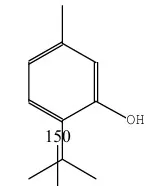
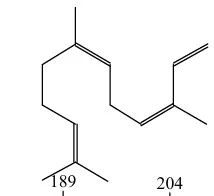
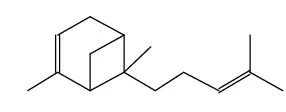
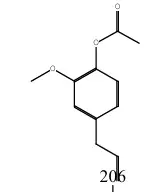
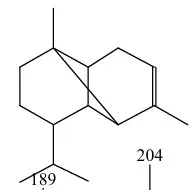
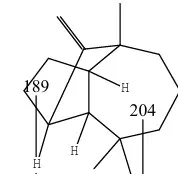
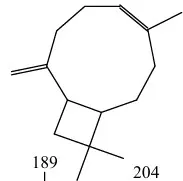
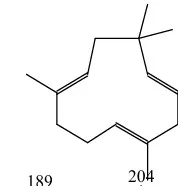
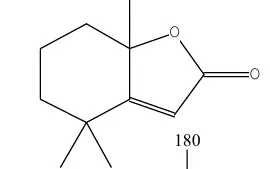
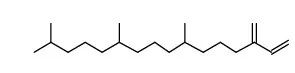
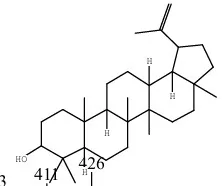
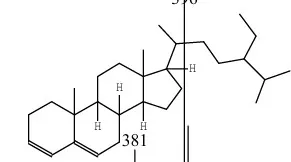
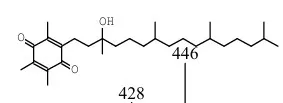
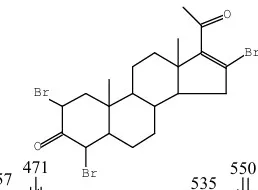
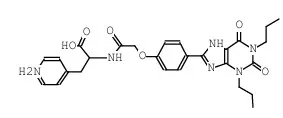
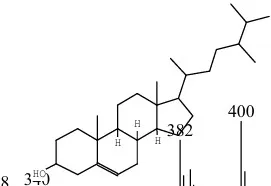
Table 2: Structure, molecular weight, molecular formula for some important compounds
|
Compound Name |
Mol. Formula |
Mol. weight |
Structure |
|
Phenol, 2-methyl-5-(1-methylethyl) or Carvacrol |
C10H14O |
150 |
|
|
(Z,Z) alpha Farnesene |
C15H24 |
204 |
|
|
Trans- alpha-Bergamotene |
C15H24 |
204 |
|
|
Phenol, 2-methoxy-4-(2-propenyl)-, acetate or Acetyleugenol |
C12H14O3 |
206 |
|
|
Copaene or Tricyclo dec-3-ene |
C15H24 |
204 |
|
|
Longifolene |
C15H24 |
204 |
|
|
Caryophyllene or Bicyclo undec-4-ene |
C15H24 |
204 |
|
|
Humulene or alpha Caryophyllene |
C15H24 |
204 |
|
|
2(4H)-Benzofuranone, 5,6,7,7a-tetrahydro-4,4,7a-trimethyl |
C11H16O2 |
180 |
|
|
Neophytadiene or 7,11,15-Trimethyl-3-methylenehexadec-1-ene |
C20H38 |
278 |
|
|
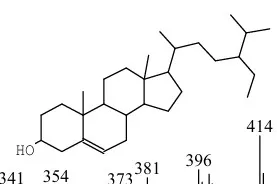
beta-Sitosterol |
C29H50O |
414 |
|
|
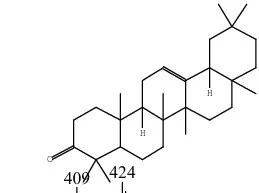
beta-Amyrone |
C30H48O |
424 |
|
|
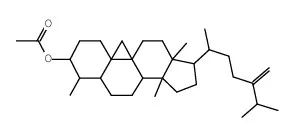
9,19-Cycloergost-24(28)-en-3-ol |
C32H52O2 |
468 |
|
|
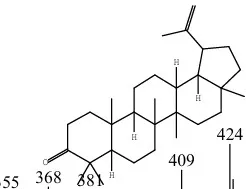
Lup-20(29)-en-3-one |
C30H48O |
424 |
|
|
Lupeol |
C30H50O |
426 |
|
|
Stigmasta-3,5-diene |
C29H48 |
396 |
|
|
Alpha-Tocopherolquinone |
C29H50O3 |
446 |
|
|
2.beta 4.beta 16.alpha Tribromoallopregn-16-ene-3 |
C21H27Br3O2 |
548 |
|
|
Xanthine, 8-[[4-[2-(4-aminophenyl)-1-carboxy] ethylamino] carbonyl] methoxyphenyl]-1,3-dipropyl |
C28H32N6O6 |
548 |
|
|
Campesterol |
C28H48O |
400 |
|
CONCLUSION:
The present study successfully characterized the phytochemical composition of the hexane leaf extract of Hygrophila auriculata using Gas Chromatography–Mass Spectrometry (GC–MS). More than 60 phytochemical constituents were identified, demonstrating the chemical diversity of the extract. The detected compounds included phenolics, sesquiterpenes, diterpenes, triterpenoids, phytosterols, and quinone derivatives, with notable constituents such as carvacrol, (Z,Z)-α-farnesene, trans-α-bergamotene, acetyleugenol, caryophyllene, α-humulene, neophytadiene, β-sitosterol, β-amyrone, lupeol, campesterol, stigmasta-3,5-diene, and α-tocopherolquinone. These compounds are known to possess a broad spectrum of biological activities, including antioxidant, antimicrobial, anti-inflammatory, hepatoprotective, anticancer, and immunomodulatory properties. The predominance of terpenoids and phytosterols indicates that the hexane solvent efficiently extracted lipophilic bioactive metabolites, highlighting the therapeutic potential of the plant. The comprehensive GC–MS profile generated in this study provides valuable baseline information for the chemical standardization and quality assessment of H. auriculata leaf extracts. Furthermore, the findings scientifically support the traditional medicinal use of this species and emphasize its potential as a promising source of bioactive natural products for pharmaceutical, nutraceutical, and functional food applications. Future investigations should focus on the isolation and purification of the major phytochemicals, quantitative analysis, and in vitro and in vivo pharmacological studies to elucidate their mechanisms of action and validate their therapeutic potential.
REFERENCES


Nishvanth F.*, Aswini B., Monika S., Kalaiselvi G., Jeyaprakash G., Phytochemical Characterization of Hexane Extract of Hygrophila Auriculata Leaves Through GC–MS Analysis, Int. J. Med. Pharm. Sci., 2026, 2 (8),0 542-549. https://doi.org/10.5281/zenodo.21932342
 10.5281/zenodo.21932342