
We use cookies to ensure our website works properly and to personalise your experience. Cookies policy
Department of Pharmacology Indore Mahavidyalaya
Lung cancer proceeds to be one of the most troublesome cancers to treat since of late determination, high metastatic potential, checked organic heterogeneity, and the frequent development of resistance to accessible treatments. Non-small cell lung cancer (NSCLC), which accounts for the larger part of all lung cancer cases, remains a major cause of cancer-related passing in spite of advance in surgery, chemotherapy, radiotherapy, immunotherapy, and molecularly focused on drugs. One of the most important reasons for destitute treatment results is that customary anticancer rugs are disseminated non-specifically all through the body, causing off-target toxicity whereas still falling flat to accomplish adequately tall concentrations inside the tumor. Focused on sedate conveyance frameworks have in this manner developed as a major innovation in lung cancer treatment since they are outlined to carry therapeutic operators straightforwardly to the lung tumor or to particular atomic markers on cancer cells, subsequently moving forward viability whereas lessening hurt to solid tissues. These frameworks incorporate liposomes, polymeric nanoparticles, lipid nanoparticles, lipid-polymer crossovers, micelles, inorganic nanocarriers, biomimetic platforms, and inhalable aspiratory frameworks. Among them, inhalable conveyance has become especially appealing since it permits coordinate statement into the respiratory tract, can bypass first-pass digestion system, and may give tall nearby drug concentration with lower systemic harmfulness. This original copy surveys the major forms of focused on medicate conveyance utilized in lung cancer, clarifies detached and active focusing on techniques, talks about the points of interest of aspiratory delivery, and portrays the central boundaries that restrain interpretation from laboratory research to clinical hone. The survey moreover highlights rising patterns such as stimuli-responsive frameworks, receptor-specific carriers, and theranostic nanomedicine, which may characterize the following era of accuracy oncology for lung cancer.
Lung cancer remains a major worldwide wellbeing challenge since it is frequently analyzed late and frequently progresses quickly. Its burden is particularly serious in the case of NSCLC, the most common shape of the malady. Indeed with vital advancements in oncologic care, numerous patients still involvement constrained survival since standard therapies do not accomplish satisfactory selectivity or solid illness control. Conventional chemotherapy can harm both tumor and ordinary cells, producing dose-limiting poisonous quality that decreases treatment concentrated and persistent compliance. Furthermore, the tumor microenvironment in lung cancer is exceedingly complex, containing hypoxia, unusual vasculature, thick extracellular framework, variable receptor expression, and differing cellular populaces that all contribute to therapeutic resistance. Targeted sedate delivery systems were created to address these restrictions by making strides the precision of medicate transport. Or maybe than permitting a sedate to circulate indiscriminately through the circulatory system, a carrier framework can be built to transport the drug more successfully to the tumor location. In lung cancer, this is particularly important since the respiratory framework gives coordinate get to to the diseased tissue through inward breath, whereas the cancer itself regularly shows molecular features that can be misused for focusing on. The fundamental reason of targeted delivery is to increment the concentration of the medicate at the location of disease while minimizing presentation to sound organs. This is why nanocarriers have become a central subject in advanced oncology research. Recent writing shows that inhalable nanotechnology-based frameworks are picking up solid attention because they combine the points of interest of nearby organization with the tunability of nanoscale plan. Liposomes, polymeric nanoparticles, nanostructured lipid carriers, attractive nanoparticles, and biomimetic carriers have all been explored for pneumonic sedate conveyance. At the same time, receptor-targeted systems such as CD44-targeted nanocarriers are being examined to improve precision in NSCLC treatment. This extending field is moving toward platforms that are not as it were restorative but moreover demonstrative and responsive to the tumor environment, reflecting the broader move toward accuracy nanomedicine.
2. Rationale for Focused on Conveyance in Lung Cancer
The require for targeted drug conveyance in lung cancer is based on a few commonsense and biological reasons. To begin with, free anticancer drugs frequently have destitute selectivity and therefore distribute to different organs after organization. This causes toxicities such as myelosuppression, gastrointestinal unsettling influences, renal harm, and neurotoxicity. Moment, tumor cells in the lung may not get a sufficient dose of medicate since the operator is cleared some time recently coming to the tumor or because the tumor is ineffectively perfused. Third, lung tumors regularly create resistance to treatment, which implies that indeed when the medicate comes to the cancer cells, the response may be powerless or transitory. Focused on conveyance makes a difference address these issues by progressing nearby amassing and controlling discharge over time. Another reason targeted systems are profitable is that the lung can be gotten to through the inhalation route. This makes the organ particular from numerous other tumor destinations since the therapeutic specialist can be put specifically where it is required. Inhalable delivery may diminish the dosage required to accomplish a restorative impact, which can lower toxicity and move forward quiet resilience. This is particularly imperative for advanced lung cancer, where long-term treatment is frequently essential and quality of life gets to be a major concern. For this reason, inquire about in lung cancer nanomedicine presently centers not as it were on carrier chemistry but moreover on pulmonary deposition, streamlined behavior, and gadget compatibility.
3. Sorts of Focused on Medicate Conveyance Systems
Targeted sedate conveyance frameworks can be broadly isolated into a few major categories. These incorporate liposomes, polymeric nanoparticles, lipid-based nanoparticles, micelles, inorganic nanoparticles, biomimetic carriers, and inhalable sedate conveyance frameworks. Each category has a diverse component of activity and a diverse adjust of focal points and confinements. In lung cancer, the determination of carrier depends on the physicochemical properties of the medicate, the course of organization, the craved discharge profile, and the natural characteristics of the tumor.
3.1 Liposomes
Liposomes are among the most seasoned and most built up nanocarriers in medicate conveyance. They are round vesicles made of one or more phospholipid bilayers encompassing an watery center. This engineering permits them to typify both hydrophilic and hydrophobic drugs. Hydrophilic operators are set in the inside water stage, whereas lipophilic drugs are joined into the lipid bilayer. Since the external surface takes after common natural films, liposomes are by and large considered biocompatible and can be adjusted for progressed circulation and focusing on. In lung cancer treatment, liposomes have been broadly investigated to move forward the security and viability of anticancer drugs. They can upgrade solvency, secure drugs from debasement, and decrease systemic poisonous quality by changing pharmacokinetics and biodistribution. PEGylated liposomes are particularly imperative since the polyethylene glycol coating makes a difference drag out circulation time and diminishes clearance by the mononuclear phagocyte framework. This can make strides the chances that the carrier comes to the tumor location. Liposomes moreover back ligand connection, which makes receptor-specific dynamic focusing on conceivable.
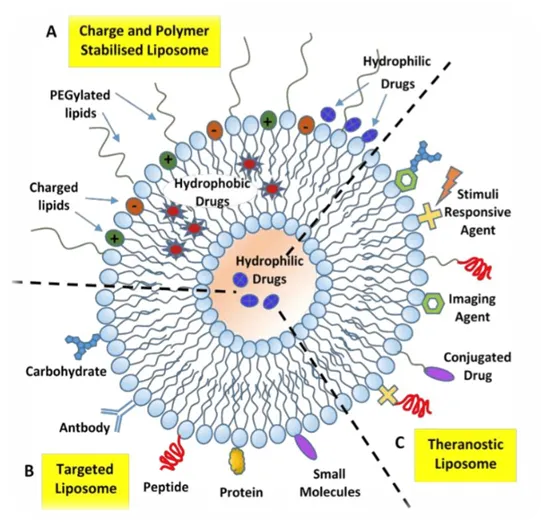
Fig No.-1 Basic structure of liposomal carriers showing phospholipid bilayer and drug encapsulation.
The major restrictions of liposomes incorporate spillage of the typified medicate, flimsiness amid capacity, and cost-intensive generation forms. Their execution in vivo is emphatically affected by molecule estimate, surface charge, lipid composition, and circulation behavior. For these reasons, liposomes stay exceedingly valuable but require cautious detailing plan. In lung cancer, they are particularly promising for conveying platinum drugs, taxanes, and other chemotherapeutics in a more controlled way.
Table 1. Liposomes in lung cancer
|
Feature |
Description |
|
Structure |
Phospholipid bilayer vesicle |
|
Drug loading |
Hydrophilic and hydrophobic drugs |
|
Key benefit |
Biocompatibility and reduced toxicity |
|
Main limitation |
Leakage and instability |
|
Lung cancer role |
Delivery of cytotoxic and targeted agents |
3.2 Polymeric nanoparticles
Polymeric nanoparticles are strong colloidal frameworks made from biodegradable or manufactured polymers. Common illustrations incorporate chitosan, gelatin, alginate, polylactic corrosive, and poly(lactic-co-glycolic corrosive). These carriers are exceptionally imperative since they can be built for controlled discharge, supported discharge, and specific focusing on. Their surface can be altered with ligands, polymers, or charged bunches to impact organic behavior. This tunability makes them one of the most flexible stages for lung cancer therapy.
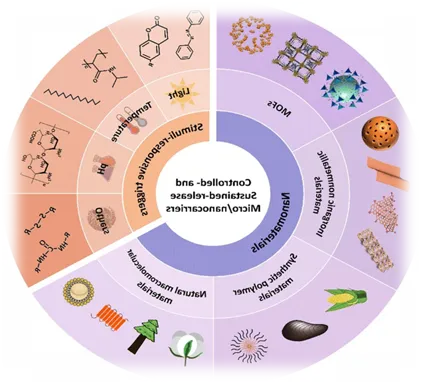
Fig No.-2 Polymeric nanocarriers designed for sustained and targeted drug delivery.
Polymeric nanoparticles are valuable since they can stabilize the medicate, secure it from enzymatic corruption, and permit drawn out sedate introduction at the tumor location. They can moreover carry qualities, proteins, peptides, and little atoms. For inhalation-based conveyance, polymeric nanoparticles can be defined into dry powders, pressurized canned products, or cross breed frameworks. In any case, their complexity may make fabricating issues, and their execution can shift depending on polymer choice and arrangement strategy. For this reason, reproducibility and scale-up stay major challenges in translation.
Table 2. Polymeric nanoparticles
|
Feature |
Description |
|
Common polymers |
Chitosan, alginate, gelatin, PLA, PLGA |
|
Main advantage |
Controlled release |
|
Best use |
Drug and gene delivery |
|
Limitation |
Scale-up and reproducibility issues |
|
Lung cancer value |
Flexible systemic and inhalable therapy |
3.3 Lipid nanoparticles and lipid-polymer hybrids
Lipid nanoparticles are planned to make strides the conveyance of drugs that are ineffectively dissolvable or chemically unsteady. They can carry both little atoms and nucleic acids. In lung cancer, their biocompatibility and lipid-based structure make them alluring for inward breath as well as systemic conveyance. A major advancement in this region is the lipid-polymer cross breed nanoparticle, which combines the auxiliary soundness of a polymer center with the surface properties and biocompatibility of lipids. This crossover plan points to overcome the shortcomings of simply lipid or absolutely polymeric systems. Hybrid nanoparticles are especially curiously since they can offer superior embodiment effectiveness, more steady circulation, and more controlled discharge. Their potential utilize in lung cancer incorporates chemotherapy, RNA conveyance, and focused on aspiratory treatment. The challenge is that crossover frameworks are more complicated to fabricate and must be carefully optimized to maintain a strategic distance from precariousness amid capacity or aerosolization. Indeed so, they are among the most promising plans for the future.
Table 3. Lipid-based carriers
|
Feature |
Lipid nanoparticles |
Lipid-polymer hybrids |
|
Stability |
Moderate |
High |
|
Drug loading |
Good |
Very good |
|
Release control |
Moderate |
Strong |
|
Complexity |
Low to moderate |
Moderate to high |
|
Lung cancer suitability |
High |
Very high |
3.4 Micelles
Micelles are self-assembled nanostructures shaped by amphiphilic particles. They have a hydrophobic center and hydrophilic shell, which makes them particularly valuable for insoluble anticancer drugs. In lung cancer treatment, micelles can make strides dissolvability, back circulation in fluid situations, and allow ligand-based focusing on. Their little measure may offer assistance them enter tumor tissue more effectively than bigger carriers. However, micelles can be less steady after weakening in organic liquids. This can cause untimely discharge of the sedate some time recently it comes to the target location. To address this, analysts are creating cross-linked or something else stabilized micellar frameworks. Micelles stay a valuable choice, especially when the objective is to provide hydrophobic drugs through inward breath or systemic administration.
Table 4. Micelles
|
Feature |
Description |
|
Main function |
Solubilization of hydrophobic drugs |
|
Structure |
Hydrophobic core and hydrophilic shell |
|
Advantage |
Small size and good penetration |
|
Limitation |
Instability upon dilution |
|
Lung cancer use |
Delivery of poorly soluble agents |
3.5 Inorganic nanoparticles
Inorganic nanoparticles incorporate gold nanoparticles, silica nanoparticles, press oxide nanoparticles, and related materials. These are particularly curiously since they can combine medicate conveyance with imaging or physical treatment modalities such as photothermal treatment and attractive focusing on. In lung cancer, inorganic nanoparticles bolster theranostic applications, where conclusion and treatment happen in one framework. This is valuable for observing treatment reaction and progressing precision.
Table 5. Inorganic nanoparticles
|
Feature |
Description |
|
Main role |
Drug delivery plus imaging |
|
Benefit |
Theranostic capability |
|
Limitation |
Safety and clearance issues |
|
Common types |
Gold, silica, iron oxide |
|
Lung cancer application |
Image-guided therapy |
The fundamental confinement of inorganic carriers is that their long-term security is less set up than that of numerous natural frameworks. Concerns incorporate amassing, clearance, and potential harmfulness. For this reason, inorganic carriers are regularly coated or combined with biocompatible materials to make strides natural execution. Their most noteworthy esteem may lie in diagnostic-guided treatment or maybe than in basic sedate transport alone.
3.6 Biomimetic carriers
Biomimetic frameworks are motivated by characteristic organic structures. These incorporate exosomes, cell membrane-coated nanoparticles, and receptor-mimicking definitions. Their request lies in the plausibility of safe avoidance, drawn out circulation, and moved forward cellular acknowledgment. In lung cancer, biomimetic frameworks may be especially valuable since they can abuse the body’s claim transport and signaling pathways to progress tumor targeting. These carriers are still at a generally early organize of improvement, but they are broadly considered one of the most energizing headings in nanomedicine. Their fundamental impediment is fabricating complexity. Separation, refinement, standardization, and large-scale generation stay troublesome, but the potential advantage is tall sufficient to legitimize proceeded investigation.
Table 6. Biomimetic carriers
|
Feature |
Description |
|
Source |
Natural or biomimetic biological structures |
|
Advantage |
Immune evasion and natural recognition |
|
Limitation |
Complex preparation |
|
Lung cancer value |
Precision delivery |
|
Research stage |
Mostly preclinical |
4. Aspiratory conveyance and inward breath systems
Pulmonary sedate conveyance is a especially capable procedure in lung cancer since it places the medicate near to the tumor location. Inward breath can diminish systemic introduction and move forward lung statement. The major conveyance designs incorporate dry powder inhalers, nebulized definitions, and aerosolized suspensions. The victory of these frameworks depends on the streamlined distance across of the particles, their shape, thickness, dispersibility, and mucus-penetrating capacity. If the particles are as well huge, they may store in the upper aviation routes; if as well little, they may be breathed out some time recently coming to the lung tissue. Recent work has appeared that inhalable nanoparticle frameworks can progress the treatment of NSCLC by upgrading medicate solidness, keeping up nearby concentration, and supporting inactive and dynamic focusing on. The pneumonic course is too appealing for macromolecules such as siRNA, proteins, and mRNA, which are troublesome to provide successfully by ordinary courses. In any case, statement in the lungs is emphatically impacted by persistent inward breath procedure, aviation route life structures, and neighborhood clearance components. Subsequently, gadget building must be considered nearby carrier plan.
Inhaled molecule → Aviation routes → Profound lung statement → Tumor contact → Cell take-up → Medicate release
Diagram 1. Pneumonic conveyance pathway
Table 7. Pulmonary delivery
|
Factor |
Importance |
|
Particle size |
Controls deposition |
|
Aerodynamic behavior |
Determines deep-lung reach |
|
Device type |
Affects dose delivery |
|
Mucus barrier |
Influences residence time |
|
Macrophages |
Reduce retention |
5. Focusing on mechanisms
Targeted sedate conveyance for the most part employments two major procedures: detached focusing on and dynamic focusing on. Inactive focusing on depends on the tumor’s anomalous vascular structure and maintenance behavior. Dynamic focusing on employments ligands to tie to overexpressed receptors on cancer cells. In lung cancer, dynamic focusing on is particularly imperative since particular atomic markers such as CD44 and other receptor frameworks may offer assistance carriers specially enter the tumor cell population. [7][4] Stimuli-responsive focusing on is moreover picking up consideration. These frameworks discharge their cargo in reaction to pH, chemicals, redox conditions, or other tumor-related changes. Such discharge components make strides selectivity and lower untimely sedate spillage. Combining inactive, dynamic, and stimuli-responsive highlights in one stage may give the best clinical comes about in the future.
6. Organic barriers
The viability of focused on medicate conveyance in lung cancer is unequivocally affected by a few organic boundaries that exist both in the respiratory tract and inside the tumor microenvironment. In the lungs, breathed in or locally conveyed particles must to begin with pass through the bodily fluid layer, dodge quick expulsion by mucociliary clearance, and elude take-up by alveolar macrophages some time recently they can reach the tumor tissue. These defense instruments are fundamental for securing the respiratory framework from hurtful specialists, but they too meddled with restorative testimony and decrease the home time of nanocarriers in the lung. Once the carrier comes to the tumor locale, it still faces a moment set of impediments, counting thick extracellular network, irregular interstitial weight, hypoxic tissue conditions, destitute vascular perfusion, and heterogeneous receptor conveyance on cancer cells. These obstructions make it troublesome for indeed well-designed nanocarriers to enter profoundly into the tumor mass and disseminate the sedate consistently. As a result, a detailing that performs well beneath streamlined research facility conditions may carry on exceptionally in an unexpected way in vivo. This is why present day inquire about progressively centers on mucus-penetrating particles, biomimetic coatings, stimuli-responsive discharge frameworks, and receptor-specific focusing on approaches that are planning to make strides entrance whereas protecting selectivity.
7. Focal points of focused on delivery
Targeted sedate conveyance frameworks offer numerous vital points of interest over ordinary anticancer treatment, particularly in a malady such as lung cancer where poisonous quality and selectivity are major clinical concerns. One of the most noteworthy benefits is that these frameworks can increment the concentration of the medicate at the tumor location whereas decreasing the sum that comes to sound organs. This makes strides the restorative file, meaning that a more grounded anticancer impact can be accomplished with less unfavorable impacts. Another advantage is the capacity to control medicate discharge over time, which makes a difference keep up a more steady restorative concentration and may decrease the require for visit dosing. Numerous nanocarriers moreover make strides the dissolvability and steadiness of ineffectively water-soluble drugs, which is especially imperative since a few anticancer specialists have solid natural movement but frail definition properties. In expansion, focused on frameworks can bolster combination treatment, quality conveyance, and imaging-guided treatment, making them more flexible than conventional definitions. In lung cancer, the inward breath course assist fortifies these benefits since it empowers coordinate statement in the respiratory tract and may decrease systemic introduction. For patients with progressed malady, these focal points can decipher into way better tolerability, progressed compliance, and possibly more compelling long-term treatment.
8. Challenges in translation
Although focused on sedate conveyance frameworks have appeared solid guarantee in preclinical ponders, their interpretation into schedule clinical utilize remains restricted by a few specialized and organic challenges. The to begin with challenge is definition solidness, since nanocarriers may total, spill their payload, or lose usefulness amid capacity and transport. The moment challenge is scale-up, since a framework that is simple to get ready in the research facility may be troublesome to fabricate reliably at mechanical level. A third issue is organic changeability: the tumor microenvironment varies between patients, and indeed inside the same tumor, which implies that the same carrier may not perform similarly well in each case. Inhalable frameworks too confront device-related issues, since molecule execution depends on nebulizers, dry powder inhalers, shower characteristics, and quiet inward breath method. Another major boundary is the instability encompassing long-term harmfulness, biodistribution, and clearance of certain nanomaterials. Administrative endorsement can hence be moderate, particularly for multifunctional frameworks that combine medicate conveyance with focusing on, imaging, or responsive discharge. These deterrents clarify why numerous nanomedicine stages stay in the exploratory arrange in spite of amazing research facility comes about. Future advance will require streamlined plans, more grounded security information, standardized testing strategies, and closer collaboration between fabric researchers, pharmacologists, clinicians, and administrative agencies.
FUTURE PERSPECTIVES
The future of focused on medicate conveyance in lung cancer is likely to be molded by more astute, more versatile, and more personalized carrier frameworks. One major heading is the advancement of multifunctional nanocarriers that can at the same time transport a sedate, give imaging differentiate, and react to the tumor environment. Another imperative drift is the utilize of biomimetic frameworks, such as exosomes or cell membrane-coated nanoparticles, which may progress safe avoidance and upgrade tumor acknowledgment. Analysts are moreover moving toward receptor-specific stages, counting carriers outlined to target markers such as CD44 and other lung cancer-associated receptors. Computational plan and counterfeit insights are progressively being utilized to optimize carrier estimate, surface chemistry, discharge profiles, and focusing on proficiency some time recently amalgamation, which may quicken advancement and diminish disappointment rates. Inhalable frameworks will proceed to be a major zone of intrigued since they coordinate the life structures of lung cancer treatment so well, but future items will require superior gadget compatibility, superior bodily fluid infiltration, and moved forward control over territorial testimony. The long-term objective is a accuracy medication show in which each quiet gets a nanocarrier definition custom-made to tumor science, infection arrange, and treatment history. If these progresses can be effectively interpreted into the clinic, focused on sedate conveyance may essentially progress results for patients with NSCLC and other shapes of lung cancer.
CONCLUSION
Targeted sedate conveyance frameworks have changed the way analysts think almost lung cancer treatment since they offer a way to overcome the major confinements of routine treatment. Instep of depending on free drugs that spread all through the body and cause far reaching harmfulness, these frameworks point to carry the restorative operator straight forwardly to the tumor or to cells that overexpress particular atomic markers. This moves forward medicate productivity, decreases undesirable side impacts, and opens the entryway to combination treatment, imaging-guided treatment, and localized aspiratory organization. Liposomes, polymeric nanoparticles, lipid-polymer cross breeds, micelles, inorganic carriers, and biomimetic frameworks each offer one of a kind preferences, and no single stage is best for each circumstance. The most promising future methodologies will likely combine different highlights, counting controlled discharge, dynamic focusing on, inhalable conveyance, and responsiveness to tumor-specific signals. In any case, advance from research facility investigate to clinical care will depend on understanding issues of poisonous quality, reproducibility, fabricating, and direction. In spite of these boundaries, the field remains profoundly promising, and focused on conveyance is likely to play an progressively critical part in the another era of lung cancer treatment.
REFERENCES

Ravindra Waskel*, Umesh Parekh, Manoj Goyal, Targeted Drug Conveyance Frameworks in Lung Cancer Treatment: Propels, Challenges, and Future Perspectives, Int. J. Med. Pharm. Sci., 2026, 2 (6), 86-96. https://doi.org/10.5281/zenodo.20641646
 10.5281/zenodo.20641646