

We use cookies to ensure our website works properly and to personalise your experience. Cookies policy
Dr. Uttamrao Mahajan College of B. Pharmacy, Chalisgaon, Dist. Jalgaon, 424101
The present study was focused on the formulation and evaluation of a Poly Herbal Skin Care Cream using natural herbal ingredients possessing beneficial effects on the skin. The cream was prepared using Neem extract, Tulsi extract, Papaya pulp, glycerine, lemon oil, rose oil, gum tragacanth, and distilled water. Herbal cosmetics have gained significant importance due to their safety, effectiveness, biocompatibility, and fewer side effects compared to synthetic cosmetic products. The selected herbal ingredients were chosen because of their antimicrobial, antioxidant, anti-inflammatory, moisturizing, skin nourishing, and wound healing properties. Neem and Tulsi extracts were incorporated for their antimicrobial and skin protective activities, while Papaya pulp was used for exfoliating and rejuvenating effects. Gum tragacanth served as a natural emulsifying and stabilizing agent, whereas glycerine acted as a humectant to maintain skin hydration. The cream was prepared by a simple homogenization method and evaluated for various physicochemical parameters including color, odor, appearance, pH, homogeneity, spreadability, washability, irritancy, viscosity, and stability. The formulated cream showed smooth texture, pleasant herbal odor, good homogeneity, satisfactory spreadability, and acceptable washability. The pH of the formulation was found to be 6.47, which is suitable for topical skin application. No irritation or phase separation was observed during evaluation studies. The study concluded that the formulated Poly Herbal Skin Care Cream is safe, stable, economical, and effective for skin care applications. The formulation demonstrated promising cosmetic and therapeutic benefits due to the synergistic activity of multiple herbal ingredients and may serve as a suitable alternative to synthetic skin care products.
1.1 Introduction to Herbal Cosmetics
Herbal cosmetics are products formulated using natural ingredients obtained from plants such as herbs, roots, leaves, flowers, fruits, and essential oils. These products are mainly used for enhancing beauty, maintaining healthy skin, and preventing various skin disorders without causing harmful side effects. Herbal cosmetics have gained significant popularity due to increasing awareness regarding the adverse effects of synthetic chemicals present in conventional cosmetic products. Skin is the largest organ of the human body and acts as a protective barrier against environmental pollutants, microorganisms, ultraviolet radiation, and chemical substances. Proper skin care is essential for maintaining healthy and attractive skin. Herbal skin care formulations provide nourishment, hydration, protection, and rejuvenation to the skin through naturally active phytoconstituents such as flavonoids, tannins, alkaloids, glycosides, vitamins, and essential oils. A cream is a semisolid dosage form intended for external application on the skin. Herbal creams are commonly used for moisturizing, anti-aging, anti-inflammatory, antimicrobial, antioxidant, and skin-lightening purposes. Poly herbal creams contain more than one herbal ingredient, which enhances therapeutic efficacy due to synergistic action among the herbs. These formulations are considered safer, economical, biodegradable, and compatible with the skin compared to synthetic preparations. In recent years, the demand for herbal cosmetic products has increased worldwide because consumers prefer natural and eco-friendly products. Herbal creams formulated with ingredients such as aloe vera, turmeric, neem, sandalwood, cucumber, licorice, and rose extract are widely used in skin care preparations. These herbs possess medicinal properties that help in soothing the skin, reducing acne, improving complexion, and preventing infections. The present project focuses on the formulation and evaluation of a poly herbal skin care cream using selected herbal ingredients with beneficial effects on the skin. The formulated cream will be evaluated for various parameters such as appearance, pH, spreadability, viscosity, homogeneity, washability, irritancy, and stability to ensure its quality, safety, and effectiveness.
1.2 History of Herbal Skin Care Preparations
The use of herbs and natural substances for skin care dates back to ancient civilizations. Since early times, humans have relied on medicinal plants and natural products for maintaining beauty and treating skin ailments. Herbal skin care preparations have been an important part of traditional systems of medicine such as Ayurveda, Unani, Siddha, Chinese medicine, and Egyptian medicine. In ancient Egypt, natural ingredients such as aloe vera, olive oil, honey, milk, and essential oils were used for maintaining healthy and glowing skin. Cleopatra, the queen of Egypt, was known for using herbal baths and natural cosmetics for beauty enhancement. Similarly, in ancient Greece and Rome, herbal oils, perfumes, and creams were commonly used for skin nourishment and protection. In India, Ayurveda has played a major role in the development of herbal cosmetics. Ayurvedic texts such as Charaka Samhita and Sushruta Samhita describe the use of herbs like turmeric, sandalwood, neem, saffron, and aloe vera for skin care and treatment of skin disorders. Traditional Indian women used herbal face packs, ubtans, and oils prepared from natural ingredients to maintain skin health and beauty. Today, herbal skin care preparations are gaining worldwide acceptance because they are considered safer, more effective, and environmentally friendly. Modern herbal cosmetic industries combine traditional herbal knowledge with scientific research to develop advanced poly herbal formulations with improved quality and therapeutic benefits.
1.3 Importance of Poly Herbal Formulations
Poly herbal formulations are preparations containing two or more herbal ingredients combined in a definite proportion to achieve enhanced therapeutic activity. The concept of poly herbalism has been widely practiced in traditional systems of medicine such as Ayurveda because combining different herbs provides better efficacy compared to a single herb formulation. The major importance of poly herbal formulations lies in their synergistic effect. In synergism, the combined action of multiple herbs produces greater therapeutic benefits than individual herbs alone. Each herb contains various active phytoconstituents that contribute to different pharmacological activities such as antimicrobial, antioxidant, anti-inflammatory, moisturizing, and wound-healing effects. When these herbs are combined, they work together to improve the overall effectiveness of the formulation. Poly herbal skin care creams provide multiple benefits to the skin simultaneously. For example, aloe vera provides hydration and soothing action, neem possesses antimicrobial activity, turmeric acts as an anti-inflammatory and antioxidant agent, while sandalwood helps in cooling and improving complexion. The combination of such herbs helps in maintaining healthy skin and preventing skin disorders. Another important advantage of poly herbal formulations is reduced toxicity and side effects. Since herbal ingredients are natural in origin, they are generally safer and better tolerated by the skin. Combining herbs in suitable proportions may also reduce the dose of individual ingredients, thereby minimizing irritation and adverse reactions.
1.4 Advantages of Herbal Creams
Herbal creams are widely used in cosmetic and pharmaceutical preparations because of their natural origin and reduced side effects compared to synthetic products. These creams contain plant-based ingredients that provide nourishment, protection, and therapeutic benefits to the skin. The major advantages of herbal creams are as follows:
Herbal creams are prepared using natural plant extracts, which are generally safe and compatible with the skin.
Unlike synthetic cosmetics, herbal creams cause minimal irritation, allergic reactions, or toxicity.
Herbal ingredients provide essential nutrients, vitamins, antioxidants, and minerals that help maintain healthy skin.
Herbal creams help in maintaining skin hydration and prevent dryness.
Many herbal ingredients possess antioxidant properties that reduce wrinkles, fine lines, and signs of aging.
Herbal extracts such as neem, turmeric, and aloe vera exhibit antibacterial and antifungal properties that protect the skin from infections.
Herbal products are environmentally friendly and biodegradable in nature.
1.5 Skin Structure and Functions
The skin is the largest organ of the human body and acts as a protective barrier against external environmental factors. It covers the entire body and performs various physiological functions essential for maintaining health.
Structure of Skin
The skin consists of three major layers:
1. Epidermis
The epidermis is the outermost layer of the skin. It protects the body from microorganisms, chemicals, and dehydration. It contains keratinized cells and melanin pigments responsible for skin color.
2. Dermis
The dermis lies below the epidermis and contains connective tissues, blood vessels, nerves, sweat glands, sebaceous glands, and hair follicles. It provides strength, elasticity, and nourishment to the skin.
3. Hypodermis (Subcutaneous Layer)
This is the deepest layer of the skin composed mainly of adipose tissue and connective tissue. It helps in insulation, energy storage, and cushioning of internal organs.
Functions of Skin
Healthy skin is essential for maintaining proper body function and overall well-being.
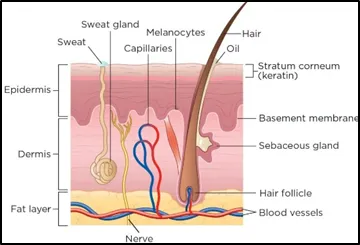
Figure 1 Skin Structure
1.6 Causes of Skin Disorders
Skin disorders are conditions that affect the appearance, structure, or function of the skin. These disorders may occur due to internal or external factors.
Common Causes of Skin Disorders
1. Microbial Infections
Bacterial, fungal, and viral infections can cause skin diseases such as acne, ringworm, and dermatitis.
2. Allergic Reactions
Certain cosmetics, chemicals, foods, and drugs may produce allergic skin reactions resulting in redness, itching, and inflammation.
3. Environmental Factors
Exposure to pollution, UV radiation, dust, and harsh climatic conditions can damage the skin.
4. Hormonal Imbalance
Hormonal changes during puberty, pregnancy, or stress may lead to acne and pigmentation.
5. Poor Hygiene
Improper skin care and poor hygiene can increase the risk of infections and skin irritation.
6. Nutritional Deficiency
Deficiency of vitamins, minerals, and essential fatty acids affects skin health and healing.
7. Stress and Lifestyle
Mental stress, lack of sleep, smoking, and unhealthy diet negatively affect the skin.
8. Genetic Factors
Certain skin disorders such as eczema and psoriasis may be hereditary.
1.7 Role of Herbal Ingredients in Skin Care
Herbal ingredients play a vital role in maintaining healthy skin due to their medicinal, antioxidant, antimicrobial, and anti-inflammatory properties. Natural herbs contain phytochemicals that help in protecting and rejuvenating the skin.
Role of Herbal Ingredients
Moisturizing Effect
Herbs such as Aloe vera and cucumber help in maintaining skin hydration and softness.
Antimicrobial Activity
Neem, turmeric, and tulsi possess antibacterial and antifungal properties that help prevent infections and acne.
Antioxidant Action
Herbs rich in flavonoids and phenolic compounds protect the skin from oxidative stress and premature aging.
Anti-inflammatory Property
Herbal ingredients reduce redness, irritation, and inflammation of the skin.
Wound Healing Activity
Certain herbs promote faster healing of cuts, burns, and damaged skin tissues.
Skin Brightening Effect
Natural ingredients help improve complexion and reduce pigmentation.
1.8 Scope of Herbal Cosmetic Industry
The herbal cosmetic industry is rapidly growing worldwide due to increasing consumer preference for natural and safer cosmetic products. People are becoming more aware of the harmful effects of synthetic chemicals present in conventional cosmetics.
Scope of Herbal Cosmetics
India has a rich heritage of medicinal plants and Ayurveda, which provides significant opportunities for the development of innovative herbal cosmetic formulations. Poly herbal creams have great commercial and therapeutic potential due to their effectiveness, safety, and consumer acceptance.
Formulation Table
Table 1 Formulation Table
|
Sr. No. |
Ingredients |
Quantity |
Use |
|
1 |
Neem Extract |
3 gm |
Helps to fight skin infections, promotes wound healing, and acts as anti-aging agent |
|
2 |
Tulsi Extract |
3 gm |
Prevents blackheads, acne, and relieves skin infections |
|
3 |
Papaya Pulp |
10 gm |
Exfoliates dead skin cells and eases skin impurities |
|
4 |
Glycerine |
2 ml |
Used as humectant |
|
5 |
Lemon Oil |
1.5 ml |
Anti-microbial agent |
|
6 |
Rose Oil |
1 ml |
Used for fragrance |
|
7 |
Gum Tragacanth |
4.5 gm |
Used as emulsifier and stabilizer |
|
8 |
Distilled Water |
30 ml |
Used as vehicle |
MATERIAL AND METHOD OF PREPARATION
1. Neem Extract
Biological Source
Neem consists of the dried leaves, bark, seeds, and oil obtained from Azadirachta indica belonging to the family Meliaceae.
Synonyms
Scientific Classification
Table 2 Scientific Classification of Neem
|
Category |
Details |
|
Botanical Name |
Azadirachta indica |
|
Family |
Meliaceae |
|
Kingdom |
Plantae |
|
Part Used |
Leaves, Seeds, Bark, Oil |
Chemical Constituents Neem contains various active phytoconstituents such as:
Description
Neem is a well-known medicinal plant widely used in herbal and cosmetic preparations. It possesses strong antimicrobial, anti-inflammatory, antioxidant, and wound healing properties. Neem extract is commonly incorporated into skin care creams for the treatment of acne, pimples, skin infections, dryness, and irritation.
Role of Neem Extract in Poly Herbal Skin Care Cream
Table 3 Role of Neem Extract in Poly Herbal Skin Care Cream
|
Property |
Function |
|
Antibacterial Activity |
Prevents bacterial skin infections and acne |
|
Antifungal Activity |
Protects skin from fungal infections |
|
Anti-inflammatory Action |
Reduces redness, irritation, and swelling |
|
Antioxidant Property |
Protects skin from oxidative damage and aging |
|
Wound Healing Property |
Promotes healing of damaged skin |
|
Skin Purifying Action |
Removes impurities and excess oil |
Uses of Neem Extract in Cosmetics
Advantages of Neem Extract
Storage
Neem extract should be stored in a cool, dry place away from direct sunlight in tightly closed containers to prevent degradation of active constituents.
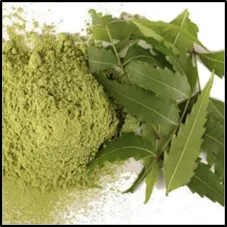
Figure 2 Neem Extract
2. Tulsi Extract
Biological Source Tulsi consists of the fresh and dried leaves of Ocimum sanctum Linn. (also known as Ocimum tenuiflorum), belonging to the family Lamiaceae.
Synonyms
Scientific Classification
Table 4 Scientific Classification
|
Category |
Details |
|
Kingdom |
Plantae |
|
Family |
Lamiaceae |
|
Genus |
Ocimum |
|
Species |
Ocimum sanctum |
Chemical Constituents
Tulsi contains various active constituents such as:
Description
Tulsi is an aromatic medicinal herb widely used in Ayurvedic preparations. The leaves possess strong antimicrobial, antioxidant, anti-inflammatory, and healing properties beneficial for skin care formulations.
Uses in Poly Herbal Skin Care Cream
Pharmacological Activities
Table 5 Pharmacological Activities Tulsi
|
Activity |
Role |
|
Antimicrobial |
Prevents bacterial and fungal growth |
|
Anti-inflammatory |
Reduces redness and irritation |
|
Antioxidant |
Protects skin from oxidative damage |
|
Antiseptic |
Prevents skin infections |
|
Wound Healing |
Promotes repair of damaged skin |
Advantages in Skin Care Formulation
Storage
Tulsi extract should be stored in a well-closed container, protected from light, moisture, and excessive heat.
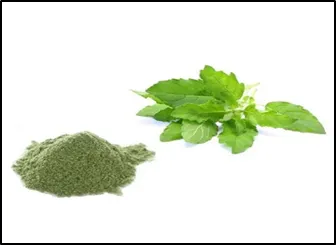
Figure 3 Tulsi Extract
3 Papaya Pulp
Papaya is a tropical fruit widely used in herbal cosmetic and skin care formulations due to its exfoliating, moisturizing, antioxidant, and skin rejuvenating properties. The pulp of ripe papaya contains enzymes, vitamins, and minerals that help maintain healthy skin and improve complexion.
Taxonomical Classification
Table 6 Taxonomical Classification of papaya
|
Category |
Classification |
|
Kingdom |
Plantae |
|
Division |
Magnoliophyta |
|
Class |
Magnoliopsida |
|
Order |
Brassicales |
|
Family |
Caricaceae |
|
Genus |
Carica |
|
Species |
Carica papaya |
Source
Papaya pulp is obtained from the ripe fruits of Carica papaya.
Geographical Source Papaya is commonly cultivated in:
Chemical Constituents
Papaya pulp contains:
Properties of Papaya Pulp
Table 7 Properties of Papaya Pulp
|
Property |
Function |
|
Exfoliating |
Removes dead skin cells |
|
Antioxidant |
Protects skin from free radicals |
|
Moisturizing |
Maintains skin hydration |
|
Skin Brightening |
Improves skin complexion |
|
Anti-aging |
Reduces wrinkles and fine lines |
|
Healing Property |
Supports skin repair |
Uses in Poly Herbal Skin Care Cream
Role in Formulation
In Poly Herbal Skin Care Cream, papaya pulp acts as:
Advantages
Storage
Papaya pulp should be stored:
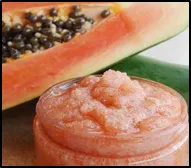
Figure 4 papaya pulp
4. Glycerine
Table 8 All Information about Glycerine
|
Parameter |
Information |
|
Name |
Glycerine / Glycerol |
|
Category |
Humectant |
|
Chemical Formula |
C₃H₈O₃ |
|
Molecular Weight |
92.09 g/mol |
|
Nature |
Colorless, odorless, sweet, viscous liquid |
|
Source |
Obtained from vegetable oils and animal fats |
|
Solubility |
Freely soluble in water and alcohol |
|
pH |
Neutral to slightly acidic |
|
Role in Cream Formulation |
Moisturizing agent and skin softener |
|
Function in Herbal Cream |
Helps retain moisture in skin and prevents dryness |
|
Mechanism of Action |
Attracts water from the environment and deeper skin layers to hydrate the skin surface |
|
Advantages |
Improves skin hydration, enhances smoothness, increases spreadability, and prevents cracking of cream |
|
Uses in Cosmetics |
Used in creams, lotions, soaps, moisturizers, face wash, and ointments |
|
Skin Benefits |
Maintains skin elasticity, softens rough skin, and provides soothing effect |
|
Concentration Used |
2 ml |
|
Appearance in Formulation |
Provides smooth texture and glossy appearance |
|
Storage Condition |
Store in tightly closed container at room temperature |
|
Safety Profile |
Safe and non-irritant when used in suitable concentration |
|
Incompatibility |
Strong oxidizing agents |
|
Importance in Present Study |
Acts as a humectant in Poly Herbal Skin Care Cream and improves moisturizing efficiency and overall stability of the formulation |
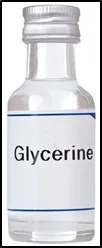
Figure 5 Glycerine
5. Lemon Oil
Introduction
Lemon oil is a natural essential oil obtained mainly from the peel of lemon fruits (Citrus limon). It is widely used in herbal cosmetic and skin care formulations due to its antimicrobial, antioxidant, cleansing, and refreshing properties. In poly herbal skin care cream, lemon oil improves skin appearance, reduces excess oil, and provides a pleasant fragrance.
Biological Source
Table 9 Biological Source of Lemon Oil
|
Parameter |
Information |
|
Biological Name |
Citrus limon |
|
Family |
Rutaceae |
|
Common Name |
Lemon |
|
Part Used |
Fruit Peel |
|
Nature |
Essential Oil |
Synonyms
Method of Extraction
Lemon oil is generally obtained by:
The oil is extracted mainly from the outer peel of fresh lemons.
Chemical Constituents
Table 10 Chemical Constituents of lemon oil
|
Sr. No. |
Chemical Constituent |
Activity |
|
1 |
Limonene |
Antioxidant and fragrance |
|
2 |
Citral |
Antimicrobial activity |
|
3 |
Linalool |
Soothing effect |
|
4 |
β-Pinene |
Anti-inflammatory action |
|
5 |
Terpineol |
Skin conditioning agent |
Properties of Lemon Oil
Table 11 Properties of Lemon Oil
|
Property |
Description |
|
Appearance |
Pale yellow liquid |
|
Odor |
Fresh citrus smell |
|
Solubility |
Soluble in alcohol and oils |
|
Nature |
Volatile oil |
|
pH Nature |
Slightly acidic |
Uses of Lemon Oil in Poly Herbal Skin Care Cream
Advantages of Lemon Oil
Role in Formulation
In the formulated Poly Herbal Skin Care Cream, lemon oil acts mainly as:
Table 12 Role of lemon oil in formulation
|
Function |
Role |
|
Antimicrobial Agent |
Prevents microbial growth |
|
Fragrance Agent |
Provides pleasant aroma |
|
Skin Cleansing Agent |
Removes impurities and oil |
Storage
Lemon oil should be stored:
Precautions
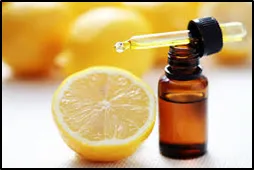
Figure 6 Lemon oil
6. Rose Oil
Introduction
Rose oil is a natural essential oil obtained from the petals of roses, mainly Rosa damascena and Rosa centifolia. It is widely used in herbal cosmetics and skin care formulations because of its pleasant fragrance, soothing effect, and skin nourishing properties.
General Information of Rose Oil
Table 13 General Information of Rose Oil
|
Parameter |
Information |
|
Common Name |
Rose Oil |
|
Biological Source |
Obtained from fresh petals of Rosa damascena |
|
Family |
Rosaceae |
|
Type |
Essential Oil |
|
Appearance |
Pale yellow to light golden liquid |
|
Odor |
Pleasant characteristic rose fragrance |
|
Nature |
Volatile aromatic oil |
|
Method of Extraction |
Steam distillation |
|
Solubility |
Soluble in alcohol and oils |
|
Storage |
Store in airtight container away from light and heat |
Chemical Constituents of Rose Oil
Table 14 Chemical Constituents of Rose Oil
|
Sr. No. |
Chemical Constituents |
|
1 |
Citronellol |
|
2 |
Geraniol |
|
3 |
Nerol |
|
4 |
Phenyl Ethyl Alcohol |
|
5 |
Farnesol |
|
6 |
Eugenol |
Uses of Rose Oil in Poly Herbal Skin Care Cream
Table 15 Uses of Rose Oil in Poly Herbal Skin Care Cream
|
Sr. No. |
Uses |
|
1 |
Provides pleasant fragrance |
|
2 |
Acts as skin soothing agent |
|
3 |
Helps in moisturizing the skin |
|
4 |
Reduces skin irritation and redness |
|
5 |
Gives cooling and refreshing effect |
|
6 |
Improves skin texture and softness |
Advantages of Rose Oil in Skin Care Formulation
Role of Rose Oil in Present Formulation
In the present study, Rose oil was used as a fragrance and skin conditioning agent in the Poly Herbal Skin Care Cream. It improved the aroma, soothing effect, and cosmetic elegance of the formulation while providing mild moisturizing and calming action on the skin.
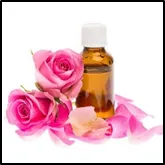
Figure 7 Rose oil
7. Gum Tragacanth
Introduction
Gum Tragacanth is a natural gum obtained from the dried gummy exudation of various species of Astragalus. It is widely used in pharmaceutical, cosmetic, and food formulations as a thickening, suspending, stabilizing, and emulsifying agent.
General Information of Gum Tragacanth
Table 16 General Information of Gum Tragacanth
|
Parameter |
Information |
|
Biological Source |
Dried gummy exudate obtained from Astragalus gummifer and related species |
|
Family |
Fabaceae |
|
Common Name |
Gum Tragacanth |
|
Synonyms |
Tragacanth Gum |
|
Nature |
Natural polysaccharide |
|
Appearance |
White to cream-colored flakes, ribbons, or powder |
|
Odor |
Odorless |
|
Taste |
Mucilaginous |
|
Solubility |
Swells in water to form colloidal gel; insoluble in alcohol |
|
Category |
Natural emulsifier and stabilizer |
|
pH |
Approximately 5–6 |
|
Storage Condition |
Store in airtight container in cool and dry place |
Chemical Constituents
Gum Tragacanth mainly contains:
Properties of Gum Tragacanth
Table 17 Properties of Gum Tragacanth
|
Property |
Description |
|
Thickening Property |
Increases viscosity of formulation |
|
Emulsifying Property |
Helps in formation of stable emulsion |
|
Stabilizing Property |
Prevents phase separation |
|
Suspending Property |
Keeps ingredients uniformly dispersed |
|
Non-toxic Nature |
Safe for topical use |
|
Biocompatibility |
Compatible with herbal ingredients |
Uses of Gum Tragacanth in Poly Herbal Skin Care Cream
Advantages of Gum Tragacanth
Role in Present Formulation
In the present study on Formulation and Evaluation of Poly Herbal Skin Care Cream, Gum Tragacanth was used as a natural stabilizer and emulsifier to obtain a smooth, homogeneous, and stable cream formulation with good consistency and spreadability.
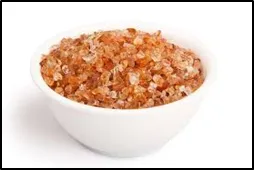
Figure 8 Gum Tragacanth
8. Distilled Water
Table 18 All information about Distilled Water
|
Parameter |
Information |
|
Ingredient Name |
Distilled Water |
|
Category |
Vehicle / Solvent |
|
Chemical Formula |
H₂O |
|
Appearance |
Clear, colorless, odorless liquid |
|
Nature |
Purified water free from dissolved impurities and microorganisms |
|
Role in Formulation |
Used as aqueous phase and vehicle for preparation of cream |
|
Function in Herbal Cream |
Helps in dissolving and dispersing water-soluble ingredients uniformly |
|
Advantages |
Non-toxic, non-irritant, stable, and compatible with most pharmaceutical and cosmetic ingredients |
|
Solubility |
Miscible with many hydrophilic substances |
|
pH |
Approximately 6.5 – 7.0 |
|
Storage Condition |
Store in clean, tightly closed container at room temperature |
|
Uses in Cosmetics |
Used in creams, lotions, gels, ointments, shampoos, and herbal formulations |
|
Safety Profile |
Safe for topical application and generally non-reactive |
|
Importance in Formulation |
Maintains consistency, smooth texture, and uniformity of cream |
|
Quantity Used in Formulation |
30 mL |
|
Mechanism of Action |
Acts as carrier medium for active herbal ingredients and improves spreadability of cream |
METHOD OF PREPARATION
Step 1: Collection and Weighing of Ingredients
Table 19 weighing of ingredients
|
Ingredient |
Quantity |
|
Neem Extract |
3 gm |
|
Tulsi Extract |
3 gm |
|
Papaya Pulp |
10 gm |
|
Glycerine |
2 ml |
|
Lemon Oil |
1.5 ml |
|
Rose Oil |
0.5 ml |
|
Gum Tragacanth |
4.5 gm |
|
Distilled Water |
30 ml |
Accurately weigh all the required ingredients according to the formulation table.
Step 2: Preparation of Aqueous Base
Take 30 ml of distilled water in a clean beaker. Slowly add gum tragacanth with continuous stirring to avoid lump formation. Allow it to soak and swell properly to form a smooth gel base.
Step 3: Preparation of Herbal Mixture
In another clean beaker, add Neem extract and Tulsi extract. Mix properly using a glass rod until a uniform mixture is obtained.
Step 4: Addition of Papaya Pulp
Add fresh papaya pulp to the herbal extract mixture and stir continuously to obtain a homogeneous herbal paste.
Step 5: Addition of Humectant
Add glycerine slowly into the herbal paste and mix thoroughly. Glycerine acts as a moisturizing and softening agent.
Step 6: Addition of Essential Oils
Add lemon oil followed by rose oil into the prepared mixture with continuous stirring for proper distribution and fragrance.
Step 7: Incorporation into Base
Gradually add the prepared herbal mixture into the gum tragacanth gel base with continuous stirring and homogenization until a smooth semisolid cream consistency is achieved.
Step 8: Homogenization
Continue stirring the cream for 10–15 minutes to ensure uniform mixing and proper emulsification of all ingredients.
Step 9: Evaluation of Cream
The prepared cream was evaluated for:
Step 10: Packaging and Storage
Transfer the prepared Poly Herbal Skin Care Cream into clean, dry, airtight containers and store at room temperature away from direct sunlight.
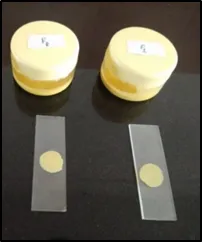
Figure 9 Formulation F1 And F2
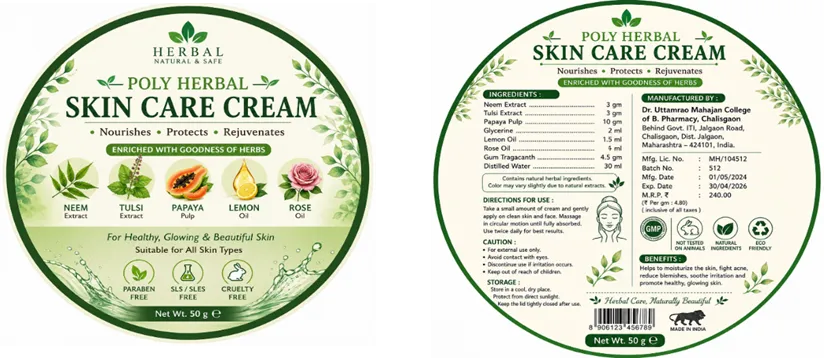
Figure 10 Packaging Label
Evaluation of Herbal Skin Cream
Evaluation of Herbal Skin Care Cream
Observation: - ceramic reddish yellow colour
Observation: - Pleasant herbal odour
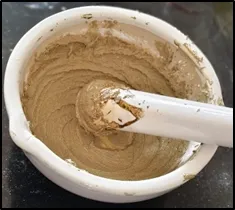
Figure 11 Evaluation of Colour, Odour, and Appearance
Observation: - Smooth and homogeneous cream
2. PH Determination
The pH of the cream was determined using a digital pH meter.

Figure 12 PH Determination
Observation: -
pH 6.47 is considered suitable for skin application.
3. Homogeneity Test
The cream was tested by visual appearance and touch.
Observation:
The cream should show good homogeneity without lumps.
4. Washability
Washability was determined by applying cream on the skin and washing with tap water.
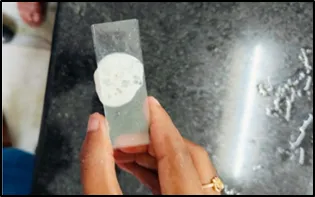
Figure 13 Homogeneity Test and Washability Test
Observation: - The cream should be easily washable without leaving excessive oily residue.
5. Spreadability: -
Spread on glass slide
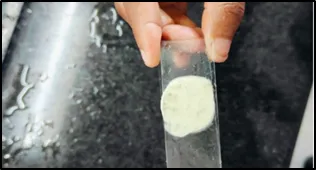
Figure 14. Spreadability test
Observation: - Easily spreadable
6. Irritancy Test
The formulation was checked for skin irritation.
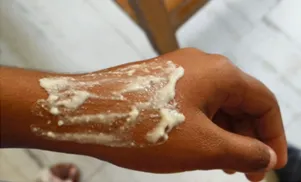
Figure 15 Irritancy Test
Observation:
No irritation or redness should be observed.
RESULT
The Poly Herbal Skin Care Cream was successfully formulated using Neem extract, Tulsi extract, Papaya pulp, Glycerine, Lemon oil, Rose oil, Gum tragacanth, and Distilled water. The prepared cream was evaluated for various physicochemical and stability parameters. The obtained results indicated that the formulation possessed satisfactory characteristics suitable for topical skin application.
Table 20 Evaluation Results
|
Sr. No. |
Evaluation Parameter |
Observation |
Result |
|
1 |
Colour |
Ceramic reddish yellow colour |
Acceptable |
|
2 |
Odour |
Pleasant herbal odour |
Acceptable |
|
3 |
Appearance |
Smooth and homogeneous cream |
Good |
|
4 |
pH |
6.47 |
Suitable for skin |
|
5 |
Homogeneity |
No lumps observed |
Good homogeneity |
|
6 |
Washability |
Easily washable |
Good |
|
7 |
Spreadability |
Easily spreadable |
Satisfactory |
|
8 |
Irritancy Test |
No redness or irritation observed |
Non-irritant |
|
9 |
Stability |
No phase separation observed |
Stable formulation |
Overall, the formulated Poly Herbal Skin Care Cream demonstrated good physicochemical properties, satisfactory stability, and acceptable cosmetic characteristics. The synergistic action of herbal ingredients provided moisturizing, antimicrobial, antioxidant, soothing, and skin nourishing effects, making the formulation suitable for routine skin care applications.
CONCLUSION
The present study on “Formulation and Evaluation of Poly Herbal Skin Care Cream” was successfully carried out using various herbal ingredients such as Neem extract, Tulsi extract, Papaya pulp, Lemon oil, and Rose oil. The prepared formulation was found to possess good appearance, smooth texture, pleasant odor, satisfactory spreadability, proper viscosity, and good homogeneity. The evaluation studies showed that the formulated cream had suitable pH for skin application, good washability, and did not produce any irritation or adverse effects on the skin. Stability studies indicated that the formulation remained stable without phase separation or significant changes in physical characteristics during storage. The use of herbal ingredients provides natural skin protection, moisturizing effect, antimicrobial activity, and nourishment with minimal side effects compared to synthetic cosmetic products. Therefore, the formulated Poly Herbal Skin Care Cream can be considered safe, effective, economical, and suitable for topical application.
REFERENCES








Yash Chaudhari*, Vaishnavi Patil, Kalyani Pachpole, Yamini Chaudhari, Prarthna Sonawane, Vishakha Patil, Mohammed Awais, Saeed Amhed, Topic: Formulation and Evaluation of Poly Herbal Skin Care Cream, Int. J. Med. Pharm. Sci., 2026, 2 (8), 295-313. https://doi.org/10.5281/zenodo.21824645
 10.5281/zenodo.21824645