Pharmaceutical Research Division, Department of Pharmaceutics, Amar Shaheed Baba Ajit Singh Jujhar Singh Memorial College of Pharmacy, Bela (Ropar), Punjab, India, Pin: 140111
Surfactants are amphiphilic compounds with unique ability to reduce surface and interfacial tension and are widely used in pharmaceutical, cosmetic, industrial, biomedical and environmental applications. Their physicochemical properties such as micelle formation, emulsification, solubilization, foaming and wetting make them indispensable in various formulations and processes. This review deals with classification of surfactants into anionic, cationic, non-ionic and amphoteric types and their important properties such as critical micelle concentration (CMC), Krafft point, microemulsion formation and surface activity. The article also emphasizes the wide applications of surfactants in transdermal and mucoadhesive drug delivery systems, nano-particle synthesis, suppository formulations, niosomes, cosmetics, mouthwashes and respiratory distress therapy. In addition, their role in the extraction of bioactive compounds from plants, algae, marine organisms, and microorganisms, as well as their contribution to environmental remediation by removing pollutants, volatile organic compounds, heavy metals and pharmaceutical contaminants, has also been discussed. Recent advances such as biosurfactants, nano-emulsions and magneto-responsive surfactants have demonstrated improved therapeutic efficiency, biocompatibility and environmental sustainability. They have many benefits, but issues of toxicity, environmental persistence, and scalability remain important challenges. Therefore, future studies should concentrate on the development of eco-friendly, biodegradable and cost-effective surfactants with improved safety and industrial applicability. In short, surfactants still play an important role in the progress of modern pharmaceutical, cosmetic and environmental technologies.
Surface-active ingredients called surfactants are frequently found in cosmetic products, especially in shampoos, dentrifrices, and similar things. These agents are known for their ability to generate foam and lower surface or interfacial tension. They possess amphiphilic properties, consisting of both oil soluble and water-soluble parts. These amphiphiles mostly function as detergents, foaming or wetting agents, emulsifiers, solubilizers, or dispersants and form ordered films at interfaces. [1] They aid in the dissolving of polar substances in organic solvents. Surfactants are the principal components in soaps and detergents, typically utilized to detach greasy substances from a specific medium. Due to these characteristics, surfactants are utilized in numerous industrial processes. [2][3] The capacity of a surfactant to reduce surface tension determines its performance. Surfactants are widely used in pharmaceutical, food, cosmetic, industrial, and agricultural applications. [4][5] Surfactants are added to pharmacological dosage forms in order to address the interfacial phenomena. [6] The dispersion of immiscible materials to produce emulsion, the penetration of molecules through biological membranes, and the absorption of drugs onto solid adjuncts in dosage form are all significantly impacted by the interfacial phenomenon. [7] Because of their amphiphilic nature, which allows them to be both water and oil soluble, surfactants are also useful for increasing the solubility of insoluble medicinal moieties. Additionally, surfactants have demonstrated their potential as medication transporters. Since non-ionic surfactants are frequently employed to create stable medication solutions that are poorly soluble in water. In addition to non-ionic phospholipids and surfactants are also employed as a medicine delivery method. [8] Here are a few examples of surfaces and interfaces: Interfaces between liquid and liquid, solid and solid, and solid and solid Liquid-Vapour (surface): In liquids, surfactant monomers can combine to form micelles, which are colloidal-sized clusters (CSCs) that range in size from 1 to 100 nm. The range of surfactant concentrations known as the critical micelle concentration (CMC) is where micelle production takes place [9-10]. Below this concentration, the solution's surfactant monomers disperse. The wide range of possible uses in numerous scientific and technical domains makes surfactant self-assembled nanostructures, such as conventional micelles, reverse micelles, and micro-emulsions, extremely significant. [11]
Classification of surfactants-
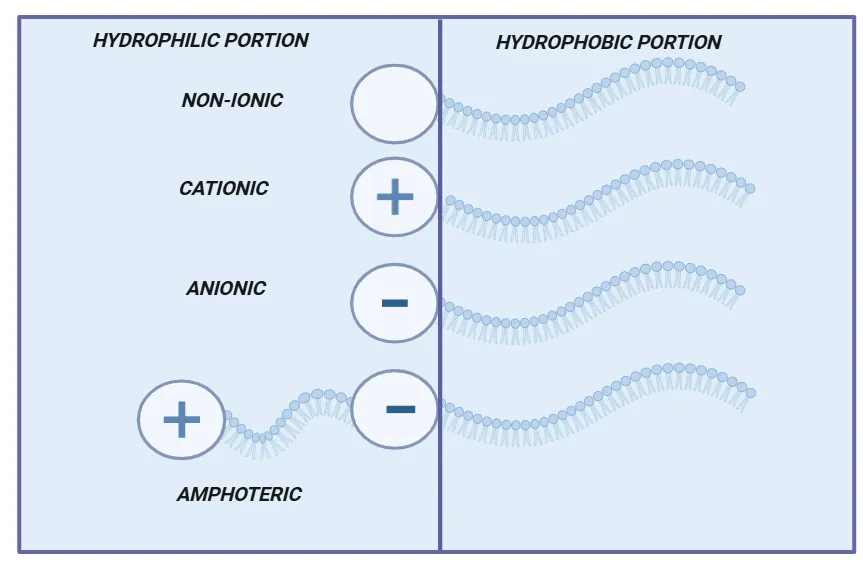
Surfactants come in a variety of forms and are typically categorized as anionic, non-ionic, cationic, or amphoteric based on the charge of the surface-active molecules. Fig.1represents the types of surfactants.
Figure.1 Types of surfactants
Physicochemical properties-
Surfactants have attracted a lot of attention due to their superior physicochemical properties and abilities for efficient solubilization, dispersion, adsorption, suspension, and transportation.
Hydrophilicity and hydrophobicity of surfactant molecules- The hydrophilic functional group of surfactant molecules has a strong tendency to interact with polar materials including water, metals, and other ions. Surfactants frequently stick to metal surfaces, obstructing active regions such those close to corrosive fluid exposure, hence limiting the corrosion assault [12]. It is currently believed that the surfactant adsorption mechanism is dominated by the structure of heterocyclic surfactant molecules. The concentration of surfactant at which a monolayer of molecules sticks to and covers a metal surface is known as the surface aggregation concentration. An increase in surfactant concentration promotes the formation of surface bilayers or multilayers. Surfactant molecules may potentially group together in the aqueous phase at the solubility saturation threshold. At this point, they typically point their hydrophobic tails toward other surfactant molecules and their hydrophilic head groups toward water or hydrophilic surfaces.
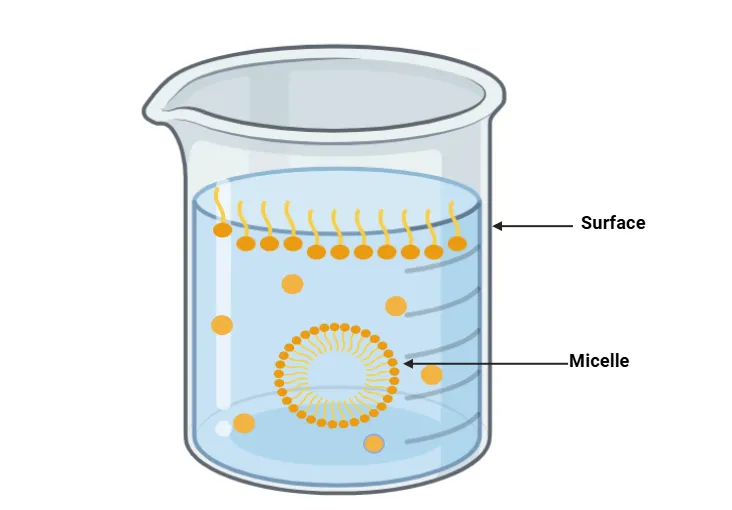
Surface tension- "Surface tension" is the final product of cohesive energy in molecules. Van der Waals forces and hydrogen bonding allow water molecules to interact with one another in aquatic conditions. However, there is not enough hydrogen bonding above the air-water barrier. Van der Waals interactions at the interface are further weakened by the absence of interacting molecules in the air phase [13]. As a result, molecules at the air-water interface have greater energy access and are less likely to form bonds than molecules in the bulk phase. This additional energy creates surface tension. Thus, the name "surfactant" comes from the term "surface-active agent," which lowers surface tension increased cohesive energies between water molecules at the air-water interface are expected to result in increased surface tension as shown in fig.2
Figure.2 Solution of surfactant
Krafft point- The following are some instances of surfaces and interfaces: Solids, liquids, and solid-liquid (surface) liquid-vapor interfaces. Surfactant molecules in aqueous solutions do not substantially dissolve below the Krafft point. At temperatures over the Krafft point, surfactants can form micelles, which significantly improves their overall solubility [14].
Microemulsions- Microemulsions and fluids containing micelles are comparable. They are essentially inflated micelles with liquid droplets ranging in size from 5 to 100 nm. They can exist in either an oil continuous phase with oil droplets inside a water continuous phase with a surfactant shell or an oil continuous phase with water droplets inside a surfactant shell. There are numerous applications for microemulsions, which mix alcohol, water, and oil with an ionic surfactant [15]. One kind of thermodynamically stable emulsion is a microemulsion.
The surfactant partitioning between water and oil- Numerous types of surfactant molecules form in water, oil, and their mixtures. In an oil and water solution, surfactant molecules have been found to be in equilibrium in a number of different forms. In addition to interacting with hydrogen or metal ions to create hydrogenated compounds and metal salts, a surfactant can attach to solid surfaces to form dimers and micelles. It can also split into phases of oil and water [16]. When an aqueous surfactant solution interacts with an immiscible organic liquid, like oil, the surfactant monomers may choose to partition into the organic liquid until equilibrium between the two liquids is reached.
The impact of ions or salt on surfactant behavior- By interfering with surfactant-related processes such as aggregation, adsorption, partitioning, surfactant ion pair, and hydration, inorganic salt combinations frequently present in the aqueous phase of oil fields have an effect on corrosion inhibition. These processes do more than simply accelerate metal corrosion [17]. This should be considered in any modeling and experimental evaluation endeavor.
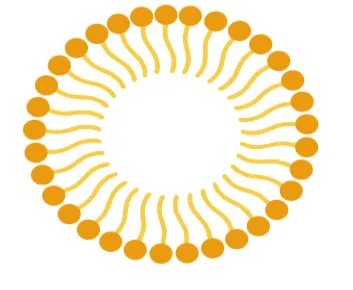
Micelle- Surfactant molecules are forced to assemble into micelle-like structures (as shown in fig.3) above the CMC. A micelle typically consists of tens to hundreds of surfactant molecules. The amount of surfactant monomers in a micelle is indicated by the aggregation number. The molecular weight of a micelle can be obtained by simply multiplying the aggregation number by the molecular weight of the surfactant monomer. Numerous factors, including temperature, the length of the hydrophobic chain, the properties of the head group, and the ionic strength, affect how many surfactants combine. Increasing ionic strength increases the tendency for aggregation through the interaction between ionic head groups and boosting the hydrophobic tail's attraction to the watery medium. Conversely, micelles form and spread in milliseconds [16]. However, these time scales significantly shift as the surfactant's concentration, size, and characteristics change. Vesicles, rod-like or cylindrical micelles, spherical micelles, hemimicelles, plate-like micelles, and more are examples of micelle aggregates. The form of a micelle is determined by the hydrocarbon chain arrangement of the surfactant.
Figure.3Micelle
Critical micelle concentration (CMC)- The critical micelle concentration (CMC) is the concentration of surfactants (amphiphilic molecules) over which micelles form. Micelle nanoparticles range in size from 5 to 100 nm. The CMC of a surfactant is a crucial characteristic. Because there is less free energy driving assembly at this concentration, these molecules start to form the micellar structure. The CMC value for a particular dispersant in a given medium is influenced by temperature, pressure, and, in certain situations, the presence and concentration of other surface-active chemicals and electrolytes [18]. Micelles only form at temperatures higher than the critical micelle or Kraft temperature. Below the Kraft temperature, micelles cannot form.
Applications of the surfactants-
A vital part of cleaning, wetting, dispersing, emulsifying, foaming, and anti-foaming agents, surfactants are utilized in a variety of products, some of which are included below:
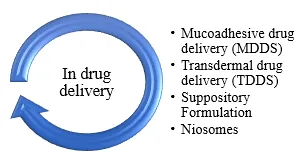
In Drug Delivery-
Surfactants as penetration enhancer in TDDS- In essence, human skin acts as a barrier between the environment and internal organs. It shields our internal organs from the damaging effects of the outside world. In addition to these requirements, this barrier characteristic makes it more difficult for the transdermal medication to enter the skin [19]. Ionic surfactants, also known as penetration enhancers or absorption promoters, are typically employed to increase the permeability of skin in order to overcome this challenge. The uppermost layer of the epidermis, the stratum corneum, is made up of organized layers of lipids and proteins. It has a poor skin permeability to transdermal medications. Ionic surfactants' polar head groups interact with the stratum corneum's organized lipid layers, upsetting the order and denaturing keratin. By removing some structural elements from the stratum corneum, penetration enhancers can also boost skin permeability by reducing the resistance of subsequent lipid barriers to drug diffusion. Surfactants can function as penetration enhancers in several ways [20]. Due to their versatile interactions with keratins and epidermal lipids, anionic surfactants have been shown in recent research to have a higher enhancing ability than cationic or non-ionic surfactants [21]. An ionic surfactant called sodium lauryl sulphate (SLS) is frequently employed as a penetration enhancer [19-21].
In MDDS and nano-particle formulation- MDDS has been developed recently to be administered via a variety of methods, including nasal, oral, ocular, intravenous, and topical [22]. Producing a safe, efficient, stable, and uniform microemulsion system is a difficult task in DDS since the majority of traditional methods are very costly, frequently produce hazardous waste, and take a long time [23]. In order to create homogenous, non-toxic, stable, and biocompatible silver nanoparticles using the environmentally acceptable reverse microemulsion process, glycolipids have recently been employed as bio-emulsifiers and stabilizers [22-24]. It has been reported that several classes of glycolipids, including rhamnolipids, sophorolipids, trehalose lipids, etc., can effectively function as co-surfactants, reverse micelles, shell phase, etc. in the formulation and stabilization of various metal-bounded nanoparticle types and alcohol-free microemulsion [22, 25]. Rhamnolipids are used to create consistent and stable microemulsion formulations with nanoparticles, such as silver, nickel oxide, and poly methyl methacrylate nanoparticles (nPMMA), which have antibacterial and anticancer properties and are widely used in the biomedical field [22–26].
Surfactants in formulations of rectal suppositories- Rectal medication administration has become another area of interest for biochemical and medical researchers in recent years. Riegalman and Crowell have demonstrated that the presence of surfactants and the size of the suspended drug's particles affect how quickly pharmaceuticals diffuse to the suppository surface. Therefore, it has been demonstrated that surfactants can both increase and decrease the rate of medication absorption [27]. The most widely used non-ionic surfactants as suppository vehicles are sorbitan fatty acid esters (Span, Arlacel), polyoxyethylene stearates (Myrj), and polyoxyethylene sorbitan fatty acid esters (tween), which share chemical characteristics with polyethylene glycols [28]. By cleaning the mucous, colonic fluid lowers the surface tension of the rectal membrane. By adding more pores for medication absorption, surfactant-containing suppository vehicles help pharmaceuticals get through the rectal membrane barrier [27]. Additionally, it has been reported that a variety of tweens (polyoxyethylenesorbitan fatty acid esters) are made to melt at body temperature and produce a liquid that quickly disperses in bodily fluids [27].
Niosomes:An Incredibly Adaptable Part in Various Drug Delivery Domains- Usually, non-ionic surfactants aggregate into vesicles to form niosomes. Because of their special capacity to encapsulate both hydrophobic and hydrophilic medications inside bilayer vesicles (uni-lameller and multi-lamellar vesicles), these non-ionic surfactant vesicles, or niosomes, are widely used in the contemporary pharmaceutical business. Niosomes' outstanding in vivo stability and minimal toxicity make them far superior to other nanocarriers like "polymersomes" and "liposomes." Niosomes have been shown to be the best carriers of a variety of medications, including insulin, siRNA, DNA vaccines, and others, as well as for the treatment of fatal illnesses like cancer, Alzheimer's, diabetes, and microbial infections. Niosomes demonstrate their adaptability in oral, penetral, and transdermal drug delivery methods [29]. Pharmaceutical researchers are also drawn to niosomes because these nano-carriers can extend the half-life of drugs in serum, prevent uptake by reticulo-endothelial systems (RESs), minimize non-specific absorption by optimizing its components or creating a multifunctional surface, and protect drugs from degradation in storage and in vivo circulations [30].
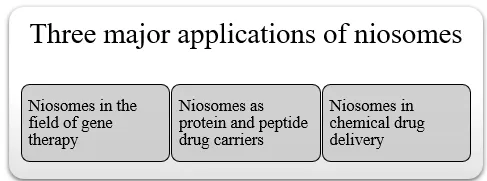
The most significant aspect of niosomes is that, even when compared to liposomes, they are more favorable due to their increased stability, affordability, ease of formulation, and scalability. Understanding the fundamental components of niosomes, their production, and their use in medication delivery are all important. These non-ionic bilayer vesicles have hydrophilic heads facing the organic solvent and hydrophobic heads facing the aqueous solution [31]. There are three major applications of niosomes as shown in fig.4.
Figure.4Applications of Niosomes
In Nano-particles synthesis-
Surfactants are important for the creation of nano-emulsions. The stress required to break up a drop is decreased by reducing the interfacial tension, which also lowers laplace pressure P, or the pressure differential between the inside and outside of the droplet. Surfactants stop freshly produced droplets from coalescing. Increasing the number of surfactants reduces efficiency and may also lessen recoalescence. It is possible to utilize a surfactant mixture that exhibits a decrease in surface tension when compared to the separate components. Smaller droplets are frequently produced when the surfactant is dissolved in the dispersion phase as opposed to the continuous phase. Active substances can be effectively delivered via the skin using nano-emulsions. Actives can penetrate the emulsion system quickly due to its huge surface area. Despite the aforementioned benefits, interest in nano-emulsions has only recently grown since their production frequently necessitates unique application techniques, such as the use of high-pressure homogenizers, and ultrasonics has only recently become accessible. The ion of the metal that is to be produced as nanoparticles can be used as the counter ion in micellar solutions of anionic surfactants. Dodecyl sulfate is the most widely utilized surfactant for this purpose, and several different metal salts have been employed as counterions. Using sodium borohydride as a reducing agent, copper nanoparticles were created from a micellar solution of copper dodecyl sulfate. It has been discovered that a combination of sodium and copper dodecyl sulfate can be used as a surfactant to change the particle size. Smaller particles were produced by increasing the concentration of sodium dodecyl sulfate while maintaining a constant concentration of copper dodecyl sulfate, most likely due to fewer Cu (II) ions per micelle [32].
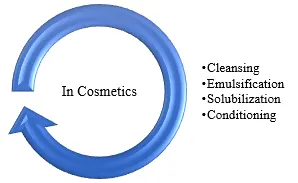
In Cosmetology-
Cleansing surfactants-Micelles are beneficial because they can aid in the suspension of oil in water. A tiny quantity of oily materials will move into the center of the micelle when added to an aqueous solution containing surfactants. Therefore, the oil on a surface, such as skin or hair, will be pulled into the micelles and away from the surface when a surfactant solution is applied. The surface is clean when the surfactant solution has been washed off.
Foaming- You'll need surfactants if you want your product to froth because foam is another property of surfactant solutions. In essence, foam is the result of air being trapped in liquids, and the stability of the foam is maintained by the alignment of the surfactant molecules. It should be mentioned that a product's cleaning capacity has nothing to do with foam. However, as a cosmetic formulator, you will need to add foamy surfactants because customers want washing products to foam.
Emulsification- Many cosmetics are made to add oily ingredients to the face and hair, whereas washing cosmetics remove oils. Because of their unfavourable aesthetic properties when concentrated, these chemicals are typically not suitable for direct application. Because of this, cosmetic chemists use surfactants to make emulsions. Emulsions are semi-stable combinations of oils and water; a thorough examination of emulsion science is outside the purview of this entry. The mixes are stabilized and blended with the aid of an emulsifier, also known as a surfactant. In its most basic form, an emulsion formula is created by combining an oil phase, a water phase, and a surfactant. The oil is trapped in the centers of the micelles the surfactant forms, and it stays suspended throughout the mixture.
Solubilization- The majority of emulsions have the drawback of typically producing opaque results. Sometimes, though, a beauty chemist needs a clear recipe but still wants to mix an oil with a lot of water. Thankfully, some surfactants can produce particles so fine that light can flow through them and the solutions stay clear. Solubilizing surfactants are molecules that accomplish this. They are used to mix natural substances or greasy materials, such as perfumes, into transparent solutions. Polysorbate 20 is one example of a surfactant.
Conditioning- Surfactants have conditioning qualities that can enhance the feel and appearance of skin and hair surfaces because they frequently feature an "oily" portion on their molecule. The surfactants must be non-irritating and left behind for them to function in this manner. A leave-on cosmetic product or surfactants that may attach to surfaces via an electrostatic charge can do this [33].
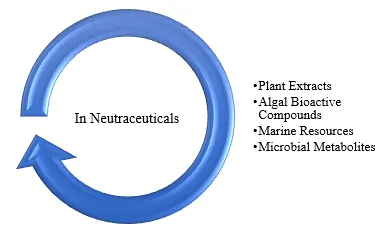
In Neutraceuticals-
Plant Extracts- The effectiveness of target component recovery from plant matrices during the solid–liquid extraction process is largely dependent on the extraction technique and solvent selection. To isolate bioactive molecules, a variety of extraction methods have been developed, including heat-reflux, Soxhlet extraction, ultrasound-assisted extraction, and supercritical fluid extraction (SFE). These techniques, however, frequently take a long time, use hazardous organic solvents, and are expensive and energy-intensive [34].
Essential oils, flavonoids, polyphenols, and other bioactive substances have been extracted from a variety of plant species using surfactants. To enhance the extraction of hydrophobic active compounds from plant leaves and roots, for instance, non-ionic surfactants like Tween 20 and Triton X-100 are frequently utilized [35].
Algal Bioactive Compounds- In order to extract lipids, pigments (like carotenoids), and other useful substances from algae, surfactants are crucial. Surfactants can be used in microalgae extraction to increase lipid yields for biodiesel generation and improve pigment recovery for usage in nutraceuticals and cosmetics. The most researched use of surfactant-assisted extraction technology is algal bioactive extraction [36].
Microalgae have attracted significant attention in the development of biotechnology because to the increasing demand for green biofuels worldwide [37]. The extracellular polymeric materials that microalgae make are crucial components of their bioproducts, which include proteins, lipids, and carbohydrates [38]. Microalgal lipids and carbohydrates are prospective supplies for the effective manufacture of biofuels such biomethane, biodiesel, and bio-oil [39] [40]. Microalgal proteins may also find use in the food and beverage, pharmaceutical, and personal care sectors [41]. Surprisingly, it has been discovered that microalgal proteins help blind people regain some of their visual ability [42].
Marine Resources- Another expanding field in which surfactants are used is the extraction of bioactive substances from marine animals like sponges, corals, and seaweeds. Surfactants facilitate the use of hydrophobic molecules from these sources in medicines and cosmetics by helping to solubilize them [43].
Microbial Metabolites- Enzymes, antibiotics, and other bioactive secondary metabolites can be separated from microbial cultures using surfactant-assisted extraction. Surfactant micellar extraction has been found to be highly effective in a number of investigations, especially for aromatic and high-molecular-weight natural chemicals like curcumin and Taxol (also known as paclitaxel). Researchers have increasingly advocated the use of non-ionic surfactants, which reduce potential molecular configuration variations, to maintain the structural integrity of the recovered natural chemicals [44].
The poor solubility of these compounds in polar solvents or pure water presents a significant challenge during room-temperature extraction. For example, paclitaxel is not very soluble in water [45]. However, at higher temperatures, its solubility significantly rises. Nevertheless, this complicates optimization attempts by introducing a trade-off between solubility and heat stability during the extraction process. Even at temperatures as high as 150 °C, using shorter extraction times has been recommended to reduce heat deterioration. An alternative strategy that shows promise is the addition of ionic surfactant micelles. By improving solubility in polar solvents or ecologically friendly aqueous media, this method allows for effective extraction at room temperature for extended periods of time without sacrificing compound stability [46] [47].
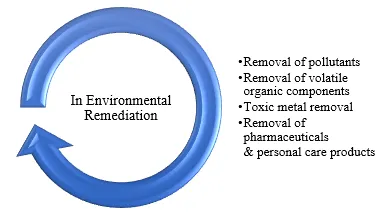
In Environmental Remediation-
Removal of pollutants using surface active agents- Molecules with both a head and a tail that are amphiphiles make up surface-active compounds. These molecules have a significant attraction to both polar and nonpolar species. They serve as a conduit between the liquid and the air in solvents by lowering their surface tension when they accumulate on the surface. The micellar aggregates above CMC are diverse in size and shape, but there is no micellar structure below CMC. VOCs, medications and chemicals meant for personal use, dangerous metals, organic pollutants, dyes, pesticides, and hydrocarbons generated from crude oil are just a few of the pollutants of growing concern that can be eliminated by using surfactants as a method of removing moieties. Numerous surfactants have already been shown to be capable of eliminating these contaminants. Surfactants have been used in soil remediation by Mao et al. [48] Palmer and Hatley [49], on the other hand, talked on the application of surfactants in waste water treatment. Rodriguez-Escales et al. [50] employed Tween Crew, BS-400, and 80Gold to eliminate a mixture of pyrene, phenanthrene, fluorene, and anthracene. The research team examined a clearance range of 57 to 99 percent for soils with less than 15% fine materials; however, removal rates were lower for soils with more than 20% fine materials. It was demonstrated that just a small percentage of the mixture's PAHs might interact with the surfactant. Therefore, increasing the surfactant concentration might not always lead to more PAH removal. When biodegradation and desorption are combined, PAHs are eliminated more effectively than when "pump and treat" approaches separate cleanup and soaking up.
Removal of volatile organic components- VOCs such as ethylbenzene, benzene, xylene, toluene, polychloroethylenes, polychloromethanes, and polychloroethanes are known to induce infertility, respiratory issues, and mutations. Chlorinated organic compounds, such as trichloroethylene (TCE) and tetrachloroethylene (PCE), are a difficult class of solvents. The substances in concern are widely used and have properties including a density higher than water, minimal potential for biodegradation, and restricted solubility in water [51].
A VOC-free atmosphere can be created using a variety of methods, including chemical, physical, and biological ones.73. Out of all the methods being studied, the surfactant-based absorption approach for VOCs is the most successful [52].
Toxic metal removal using surfactants- Humans, animals, plants, aquatic life, and bacteria can all suffer detrimental, long-lasting effects from heavy metals in the water supply. Fertilizer, pesticide, leather, pharmaceutical, and metal manufacturing industries are the main sources of heavy metal pollution. Weathering, erosion, and fuel combustion all contribute to the adulteration of heavy metals [53, 54] Examples of metals include Pb, Cu, Zn, As, Cr, Ni, Cd, and Hg. These metals are mobile, both free and bound, highly toxic, and carcinogenic. They also dissolve readily in water. Researchers have investigated the use of surfactants to remove heavy metals through a range of methods, such as soil-washing, phytoremediation, desorption, and extraction. Surfactants have also demonstrated their ability in the ultrafiltration process. Pre-treating the membrane with surfactants or biosurfactants to eliminate metal ions may increase its capacity [55].
Removal of pharmaceuticals and personal care products using surfactants- Pharmaceuticals and personal care products (PPCPs) constitute a significant category of emerging pollutants [56]. Because of their extensive environmental impact, high output, and high consumption, these products are important. If they are not properly extracted from waste water, they may seep into the ground and move to water reservoirs [57]. PPCPs are physiologically active compounds that can build up and persist in living organisms, posing serious health and environmental hazards. They are also referred to as endocrine disruptors because of their estrogenic properties [56]. The use of cutting-edge technologies was required because conventional treatment facilities were unable to efficiently remove PPCPs from sewage due to their slow disintegration [59]. It has been shown that surfactants are useful in eliminating PPCPs. Surfactants must be added to emulsion-liquid membranes (ELM) in order to extract PPCPs from waste water. Numerous investigations have demonstrated that the best surface-active material for eliminating PPCPs utilizing the ELM approach is SPAN 80 (sorbitan monooleate) [60-62].
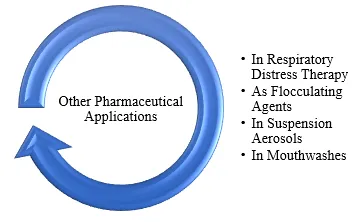
Other Pharmaceutical Applications-
Surfactants In Respiratory Distress Therapy- Premature babies with newborn respiratory distress syndrome (also called hyaline membrane disease) are treated with surfactant formulations as a replacement therapy. About 20% of the 250,000 preterm newborns born in the US each year have this lung disease, which causes 5,000 deaths. The main cause of respiratory distress syndrome is a significant deficiency in the endogenous lung surfactant. In order to promote gas exchange for either preventative or rescue treatment of neonatal respiratory distress syndrome, the lung surfactant preparations are administered in conjunction with additional oxygen and mechanical ventilation. Exogenous surfactants are either synthetic or produced from animals [63].
Surfactants As Flocculating Agents- To stop the floccules from sedimenting, a suspending agent is often added. These compounds can be used singly or in combination and include carboxymethyl cellulose, carbopol 934, veegum, tragacanth, or bentonite. Depending on the starting particle charge as well as the charge carried by the flocculating and suspending agents, this could result in incompatibilities. The addition of an anionic electrolyte, such as monobasic potassium phosphate, flocculates positively charged particles [64].
Surfactants In Suspension Aerosols- The most effective use of surfactants has been in aerosol suspensions. Each particle in suspension is coated by these surfactants, which then align at the solid-liquid interface. By creating a physical barrier, agglomeration is decreased, boosting stability. The research conducted by Young, Thiel, and Laursen [65] shown that non-ionic surfactants were superior to other types of surfactants. For aerosol dispersions, surfactants with an HLB of less than 10, like sorbitan trioleate, may be used. Surbiton monolaurate, sorbitan monoleate, and sorbitan sesqioleate are other agents that were discovered to be beneficial [66].
Surfactants In Mouthwashes- Mouthwashes are aqueous solutions with one or more active substances or excipients, frequently in concentrated form. The liquid in the mouth cavity is swirled to apply them. There are two uses for mouthwashes. They are both cosmetic and therapeutic. Plaque, gingivitis, dental caries, and stomatitis can all be lessened by creating therapeutic mouth rinses or washes. Antimicrobial and/or flavoring ingredients can be included in the formulation of cosmetic mouthwashes to lessen bad breath. Surfactants are employed because their foaming activity helps dissolve flavors and remove dirt [67].
Toxicity And Environmental Impact of Surfactants
Due to their wide range of uses, prior research has demonstrated that significant concentrations of surfactants and their breakdown products are deposited into several environmental compartments [68]. According to Li et al. [69], surfactants can pollute the environment by entering through the effluents produced by home activities, industrial products, and agrochemical products. Agrochemicals include, for example, biocides, herbicides, and pesticides; notable industrial products that consistently contribute to surfactant-assisted environmental pollution include personal care items, emulsifiers, wetting agents, detergents, and coating or softening of fabric, paper, and carpets. Additionally, key household tasks that release surfactants into the environment include fumigation, laundry, and disinfection. Sorption and bio-/photodegradation have a major impact on the fate, distribution, and persistence of surfactants in the environment [70]. The main environmental variables that affect these processes are salinity, temperature, and pH. Numerous studies have demonstrated the detrimental effects of toxic surfactants on humans, other animals, soil fauna, microbes, crustaceans, and terrestrial plants [71, 72]. Additionally, surfactants make persistent organic pollutants (POPs) more soluble in the aqueous phase, and the resulting aerosol and surfactant products have a major influence on the temperature and atmosphere [68]. Aquatic species' physiological and biochemical processes are altered by LAS, which delays their growth and metabolism, damages cell membranes, and breaks the chlorophyll protein complex [73, 74]. When individuals consume polluted food or beverages, some surfactants can have detrimental effects on their health. Surfactants, for instance, have long-term metabolic consequences and disturbance of the human endocrine system when they react with existing proteins in the liver and serum [72, 75]. Similarly, certain surfactants have been linked to respiratory and ocular issues as well as burning or irritation of human skin [76]. Pharmaceutical substances' subsurface penetration is slowed down by alkylphenol ethoxylates and carboxylates. Pisces, mammals, and amphibians are all affected estrogenically by nonylphenol ethoxylates [75, 77]. Certain surfactants, like LAS, alter the structure of the root cell membrane and cause damage to it. As a result, it hindered the transfer and transpiration of vital nutrients and water [78].
Recent Advancements and Innovations
With an emphasis on boosting therapeutic efficacy, targeting delivery, and regulating drug release, the development of novel surfactant-based drug delivery systems is quickening. Improved solubility, bioavailability, and site-specific administration are offered by new nanocarrier trends such lipid-based nanoparticles, surfactant-stabilized micelles, and nano emulsions Magnetic ionic liquids, also known as magneto surfactants, are an intriguing new family of ionic liquid surfactants with magnetic responsivity that have been reported in the last ten years. In addition to the conventional characteristics of surfactants (such as adsorption and micellization), these new types of surfactants also display a distinct magnetic response. Since their initial discovery by Brown et al. in 2012, magneto surfactants have advanced quickly in the biomedical domains. As a way to replace conventional synthetic surfactants, biosurfactant uses for laundry and household cleaning formulations are being investigated more and more, according to recent patents. The industry's dedication to greener options is highlighted by the patented developments in personal care, home, and laundry cleaning formulations as the emphasis on sustainability and environmental stewardship grows. Various biosurfactant compositions intended for cleaning products have been presented in a number of inventions. Rhamnolipid-based formulations for household, industrial, medical, animal, and personal care applications were described by Desanto (Desanto, 2008). Although rhamnolipids have demonstrated potential as natural substitutes for artificial surfactants, their high production costs and poor quality have prevented their widespread use. To further reduce such sourcing costs, the inventor sought to prove the effectiveness of partially purified rhamnolipid blends. Sophorolipids' antibacterial qualities were used to create a hard surface sanitizer and pet spray specifically for at-home care [78]
Future Perspectives-
Because they can improve solubility and make it easier to separate active components from complicated matrices, surfactants—especially those combined with innovative technologies—offer significant benefits for the extraction of bioactive chemicals from natural resources. However, there are still a number of obstacles to overcome when using surfactant-based extraction techniques. Choosing the right surfactant is a crucial task. The target bioactive chemicals and the matrix from which they are extracted must be compatible with the surfactant. Its effectiveness in encouraging extraction must be weighed against the possibility that it will denaturize or degrade delicate chemicals and introduce contaminants into the finished extract. In order to improve extraction efficiency and prevent overuse that can have unfavourable effects, the surfactant concentration must also be optimized. The regulatory ramifications of surfactant use are an additional source of worry. Despite their effectiveness, many synthetic surfactants may be harmful to both human health and the environment. To guarantee sustainability and safety, regulatory agencies require comprehensive evaluations of these substances. In order to minimize negative effects during the extraction process and the subsequent disposal of waste products, the environmental impact and biodegradability of surfactants must be thoroughly assessed. Scalability is still a major challenge with surfactant-based extraction, despite its efficiency and adaptability. Maintaining consistency, efficiency, and cost-effectiveness while scaling up can be a challenge when translating laboratory-scale procedures to industrial-scale manufacturing. Future studies should focus on creating "greener," more sustainable surfactants. In addition to lowering environmental toxicity, these surfactants need to maintain or enhance efficiency of extraction. Furthermore, combining surfactant-assisted extraction with other cutting-edge technologies like SFE and nanotechnology offers a viable way to increase the extraction yields of bioactive chemicals [79]
CONCLUSION-
Surfactants are very important and useful in many scientific, industrial, and biomedical fields because they are amphiphilic and have very good physicochemical properties. They are essential in drug delivery, cosmetics, environmental cleanup, and nanotechnology because they can lower surface tension, increase solubility, and make it easier for substances to interact with each other. Micelles, microemulsions, and other self-assembled structures make them even more useful, especially when it comes to making drugs more bioavailable, stable, and targeted. Recent progress in surfactant research has greatly changed the focus to the creation of new systems like biosurfactants, nano-emulsions, and magneto-responsive surfactants. These systems are more efficient, less toxic, and better for the environment. These new surfactants have shown promise for use in nanoparticle synthesis, transdermal drug delivery, extracting bioactive compounds, and controlling pollution. But even with these improvements, problems like toxicity, environmental impact, production costs, and scalability are still major obstacles to their widespread use. Consequently, forthcoming research must prioritize the advancement of sustainable, biodegradable, and economically viable surfactants, alongside enhanced regulatory adherence and industrial practicability. In conclusion, surfactants are still changing and becoming more powerful and useful. New developments are expected to make them even more important in the fields of pharmaceuticals, the environment, and biotechnology.
REFERENCES
Nanda S, Nanda A, Khar RK. Cosmetic Technology, Birla Publication Pvt. Ltd. 2010;11:330-53.
De S, Malik S, Ghosh A, Saha R, Saha B. A review on natural surfactants. RSC advances. 2015;5(81):65757-67. (https://doi.org/10.1039/C5RA11101C)
P. L. Layman, Chem. Eng. News 1985, 63, 2348. (https://doi.org/10.1021/ie9700829)
Barbosa FG, Ribeaux DR, Rocha T, Costa RA, Guzmán RR, Marcelino PR, Lacerda TM, Silva SS. Biosurfactants: sustainable and versatile molecules. Journal of the Brazilian Chemical Society. 2022 Jun 15;33(8):870-93. (https://doi.org/10.21577/0103-5053.20220074)
Roy A, Fajardie P, Lepoittevin B, Baudoux J, Lapinte V, Caillol S, Briou B. CNSL, a promising building blocks for sustainable molecular design of surfactants: A critical review. Molecules. 2022 Feb 21;27(4):1443. (https://doi.org/10.3390/molecules27041443)
Khare U, Sharma PK, Kumar A. Applications of surfactants in pharmaceutical formulation development of conventional and advanced delivery systems. Int. J. Pharmacogn. 2019; 6:155-63.
Almoazen H. Felton L. Remington: Essentials of Pharmaceutics. Pharmaceutical Press; 2013, 772pp, $69.00 (softcover), ISBN 9780857111050. American Journal of Pharmaceutical Education. 2013 Dec 16;77(10):233. (https://doi.org/10.5688/ajpe7710233)
Rosen MJ, Kunjappu JT. Surfactants and interfacial phenomena. John Wiley & Sons; 2012 Mar 6.
Riviere JE, Monteiro-Riviere NA. Dermal exposure and absorption of chemicals and nanomaterials.
Presley CL, Militello M, Barber C, Ladd R, Laughter M, Ferguson H, Dewey J, Pulsipher KJ, Rundle CW, Dunnick CA. The history of surfactants and review of their allergic and irritant properties. Dermatitis. 2021 Oct 1;32(5):289-97. (https://doi.org/10.1097/DER.0000000000000730)
Verma C, Quraishi MA, Rhee KY. Hydrophilicity and hydrophobicity consideration of organic surfactant compounds: Effect of alkyl chain length on corrosion protection. Advances in Colloid and Interface Science. 2022 Aug 1; 306:102723. (https://doi.org/10.1016/j.cis.2022.102723)
Kawamura H, Yoshino N, Murakami K, Kawamura H, Sugiyama I, Sasaki Y, Odagiri T, Sadzuka Y, Muraki Y. The relationship between the chemical structure, physicochemical properties, and mucosal adjuvanticity of sugar-based surfactants. European Journal of Pharmaceutics and Biopharmaceutics. 2023 Jan 1; 182:1-1.( https://doi.org/10.1016/j.ejpb.2022.11.023)
Gu T, Sjöblom J. Surfactant structure and its relation to the Krafft point, cloud point and micellization: some empirical relationships. Colloids and surfaces. 1992 May 26;64(1):39-46. (https://doi.org/10.1016/0166-6622(92)80160-4)
Hou W, Xu J. Surfactant-free microemulsions. Current Opinion in Colloid & Interface Science. 2016 Oct 1; 25:67-74. (https://doi.org/10.1016/j.cocis.2016.06.013)
Shinoda K, Nakagawa T, Tamamushi BI. Colloidal surfactants: some physicochemical properties. Elsevier; 2013 Oct 22.
Wennerström H, Lindman B. Micelles. Physical chemistry of surfactant association. Physics Reports. 1979 Apr 1;52(1):1-86. (https://doi.org/10.1016/0370-1573(79)90087-5)
Williams RJ, Phillips JN, Mysels KJ. The critical micelle concentration of sodium lauryl sulphate at 25 C. Transactions of the Faraday Society. 1955; 51:728-37. (https://doi.org/10.1039/TF9555100728)
Shah SK, Bhattarai A, Chatterjee SK. Surfactants, its applications and effects on environment. Bibechana. 2011; 7:61-4. (https:// doi. org/ 10. 3126/ bibec hana. v7i0. 4047v)
Anurova MN, Demina NB, Bakhrushina EO. Permeability enhancers in transdermal delivery system technology. Pharmaceutical Chemistry Journal. 2021 Feb;54(11):1162-8. (https://doi.org/10.1007/s11094-021-02336-w)
Tamang N, Shrestha P, Khadka B, Mondal MH, Saha B, Bhattarai A. A review of biopolymers’ utility as emulsion stabilizers. Polymers. 2021 Dec 30;14(1):127. (https://doi.org/10.3390/polym14010127)
Kiran GS, Selvin J, Manilal A, Sujith S. Biosurfactants as green stabilizers for the biological synthesis of nanoparticles. Critical reviews in biotechnology. 2011 Dec 1;31(4):354-64. (https:// doi. org/ 10. 3109/ 07388 551. 2010. 539971)
Kumar CG, Mamidyala SK, Das B, Sridhar B, Devi GS, Karuna MS. Synthesis of biosurfactant-based silver nanoparticles with purified rhamnolipids isolated from Pseudomonas aeruginosa BS-161R. Journal of Microbiology and Biotechnology. 2010;20(7):1061-8. (https:// doi. org/ 10. 4014/ jmb. 1001. 01018)
Hazra C, Kundu D, Chatterjee A, Chaudhari A, Mishra S. Poly (methyl methacrylate) (core)–biosurfactant (shell) nanoparticles: size controlled sub-100 nm synthesis, characterization, antibacterial activity, cytotoxicity and sustained drug release behavior. Colloids and Surfaces A: Physicochemical and Engineering Aspects. 2014 May 1; 449:96-113. (https:// doi. org/ 10. 1016/j. colsu rfa. 2014. 02. 051)
Gianlupi JF. Breaking Barriers in Multiscale Agent-Based Models: Effects of Cell Individuality on Viral Infection Treatment and a Path for Cross-Platform Validation. Indiana University; 2023.
Ohadi M, Shahravan A, Dehghannoudeh N, Eslaminejad T, Banat IM, Dehghannoudeh G. Potential use of microbial surfactant in microemulsion drug delivery system: a systematic review. Drug design, development and therapy. 2020 Feb 5:541-50. (https:// doi. org/ 10. 2147/ DDDT. S2323 25)
Reshad M, Nesbit M, Petrie A, Setchell D. Chlorhexidine gluconate mouthwashes as a surfactant for addition-reaction silicone impressions. The European journal of prosthodontics and restorative dentistry. 2009 Mar 1;17(1):2-8.
Wu YN, Yang LX, Shi XY, Li IC, Biazik JM, Ratinac KR, Chen DH, Thordarson P, Shieh DB, Braet F. The selective growth inhibition of oral cancer by iron core-gold shell nanoparticles through mitochondria-mediated autophagy. Biomaterials. 2011 Jul 1;32(20):4565-73. (https://doi.org/10.1016/j.biomaterials.2011.03.006)
Ge X, Wei M, He S, Yuan WE. Advances of non-ionic surfactant vesicles (niosomes) and their application in drug delivery. Pharmaceutics. 2019 Jan 29;11(2):55. (https://doi.org/10.3390/pharmaceutics11020055)
Barenholz YC. Doxil®—The first FDA-approved nano-drug: Lessons learned. Journal of controlled release. 2012 Jun 10;160(2):117-34. (https://doi.org/10.1016/j.jconrel.2012.03.020)
Mintzer MA, Simanek EE. Nonviral vectors for gene delivery. Chemical reviews. 2009 Feb 11;109(2):259-302. (https://doi.org/10.1021/cr800409e)
Morsy SM. Role of surfactants in nanotechnology and their applications. Int. J. Curr. Microbiol. App. Sci. 2014;3(5):237-60.
Godswill N. Basics and Potential Applications of Surfactants-A Cosmetic Science Perspective. Journal of Cosmetic Science. 2018 Jan 1.
Cui Q, Liu JZ, Wang LT, Kang YF, Meng Y, Jiao J, Fu YJ. Sustainable deep eutectic solvents preparation and their efficiency in extraction and enrichment of main bioactive flavonoids from sea buckthorn leaves. Journal of Cleaner Production. 2018 May 20; 184:826-35.
Mourtzinos I, Christaki S, Tsetsilas A, Kyriakoudi A. Surfactant-Assisted Extraction of Bioactive Compounds from Turmeric (Curcuma longa L.). InProceedings 2024 May 28 (Vol. 105, No. 1, p. 9). MDPI. (https://doi.org/10.3390/proceedings2024105009)
Qin L, Alam MA, Feng P, Zhu S, Wang Z. Advancements in the application of surfactants in microalgal production, harvesting and processing: A review. Journal of Environmental Chemical Engineering. 2022 Jun 1;10(3):107504. (https://doi.org/10.1016/j.jece.2022.107504)
El-Dalatony MM, Saha S, Govindwar SP, Abou-Shanab RA, Jeon BH. Biological conversion of amino acids to higher alcohols. Trends in biotechnology. 2019 Aug 1;37(8):855-69. (https://doi.org/10.1016/j.tibtech.2019.01.011)
Xiao R, Zheng Y. Overview of microalgal extracellular polymeric substances (EPS) and their applications. Biotechnology advances. 2016 Nov 15;34(7):1225-44. (https://doi.org/10.1016/j.biotechadv.2016.08.004)
Adeniyi OM, Azimov U, Burluka A. Algae biofuel: current status and future applications. Renewable and sustainable energy reviews. 2018 Jul 1; 90:316-35. (https://doi.org/10.1016/j.rser.2018.03.067)
Peng L, Fu D, Chu H, Wang Z, Qi H. Biofuel production from microalgae: a review. Environmental Chemistry Letters. 2020 Mar;18(2):285-97. (https://doi.org/10.1007/s10311-019-00939-0)
Castiglia D, Landi S, Esposito S. Advanced applications for protein and compounds from microalgae. Plants. 2021 Aug 16;10(8):1686. (https://doi.org/10.3390/plants10081686)
Sahel JA, Boulanger-Scemama E, Pagot C, Arleo A, Galluppi F, Martel JN, Esposti SD, Delaux A, de Saint Aubert JB, de Montleau C, Gutman E. Partial recovery of visual function in a blind patient after optogenetic therapy. Nature medicine. 2021 Jul;27(7):1223-9. (https://doi.org/10.1038/s41591-021-01351-4)
Vieira FA, Guilherme RJ, Neves MC, Rego A, Abreu MH, Coutinho JA, Ventura SP. Recovery of carotenoids from brown seaweeds using aqueous solutions of surface-active ionic liquids and anionic surfactants. Separation and Purification Technology. 2018 May 8; 196:300-8. (https://doi.org/10.1016/j.seppur.2017.05.006)
Ulloa G, Coutens C, Sánchez M, Sineiro J, Fábregas J, Deive FJ, Rodríguez A, Núñez MJ. On the double role of surfactants as microalga cell lysis agents and antioxidants extractants. Green chemistry. 2012;14(4):1044-51. (https://doi.org/10.1039/C2GC16262H)
Dash AK. The dark side of paclitaxel. Oncology reviews. 2010 Jun;4(2):71-2. (https://doi.org/10.1007/s12156-010-0052-1)
Arun C, Sivashanmugam P. Study on optimization of process parameters for enhancing the multi-hydrolytic enzyme activity in garbage enzyme produced from preconsumer organic waste. Bioresource technology. 2017 Feb 1;226:200-10. (https://doi.org/10.1016/j.biortech.2016.12.029)
Shamskar FR, Meshkani F, Rezaei M. Ultrasound assisted co-precipitation synthesis and catalytic performance of mesoporous nanocrystalline NiO-Al2O3 powders. Ultrasonics Sonochemistry. 2017 Jan 1; 34:436-47. (https://doi.org/10.1016/j.ultsonch.2016.06.021)
Mao X, Jiang R, Xiao W, Yu J. Use of surfactants for the remediation of contaminated soils: a review. Journal of hazardous materials. 2015 Mar 21; 285:419-35. (https://doi.org/10.1016/j.jhazmat.2014.12.009)
Palmer M, Hatley H. The role of surfactants in wastewater treatment: Impact, removal and future techniques: A critical review. Water research. 2018 Dec 15; 147:60-72. (https://doi.org/10.1016/j.watres.2018.09.039)
Saxena N, Islam MM, Baliyan S, Sharma D. A comprehensive review on removal of environmental pollutants using a surfactant-based remediation process. RSC Sustainability. 2023;1(9):2148-61. (DOI:10.1039/D2SU00069E)
Vane LM, Giroux EL. Henry's law constants and micellar partitioning of volatile organic compounds in surfactant solutions. Journal of Chemical & Engineering Data. 2000 Jan 13;45(1):38-47. (https://doi.org/10.1021/je990195u)
Erto A, Lancia A. Solubility of benzene in copolymer aqueous solutions for the design of gas absorption unit operations. Chemical engineering journal. 2012 Apr 1; 187:166-71. (https://doi.org/10.1016/j.cej.2012.01.116)
Giller KE, Witter E, Mcgrath SP. Toxicity of heavy metals to microorganisms and microbial processes in agricultural soils: a review. Soil biology and biochemistry. 1998 Sep 1;30(10-11):1389-414. (https://doi.org/10.1016/S0038-0717(97)00270-8)
Sarubbo LA, Rocha Jr RB, Luna JM, Rufino RD, Santos VA, Banat IM. Some aspects of heavy metals contamination remediation and role of biosurfactants. Chemistry and Ecology. 2015 Nov 17;31(8):707-23. (https://doi.org/10.1080/02757540.2015.1095293)
Xiarchos I, Doulia D, Gekas V, Trägårdh G. Polymeric ultrafiltration membranes and surfactants. Separation & Purification Reviews. 2003 Jan 12;32(2):215-78. (https://doi.org/10.1081/SPM-120026628)
Khetan SK, Collins TJ. Human pharmaceuticals in the aquatic environment: a challenge to green chemistry. Chemical reviews. 2007 Jun 13;107(6):2319-64. (https://doi.org/10.1021/cr020441w)
Brausch JM, Rand GM. A review of personal care products in the aquatic environment: environmental concentrations and toxicity. Chemosphere. 2011 Mar 1;82(11):1518-32. (https://doi.org/10.1016/j.chemosphere.2010.11.018)
Chaouchi S, Hamdaoui O. Acetaminophen extraction by emulsion liquid membrane using Aliquat 336 as extractant. Separation and Purification Technology. 2014 May 29; 129:32-40. (https://doi.org/10.1016/j.seppur.2014.03.02)
Chaouchi S, Hamdaoui O. Extraction of endocrine disrupting compound propylparaben from water by emulsion liquid membrane using trioctylphosphine oxide as carrier. Journal of Industrial and Engineering Chemistry. 2015 Feb 25; 22:296-305. (https://doi.org/10.1016/j.jiec.2014.07.023)
Chaouchi S, Hamdaoui O. Removal of 4-nitrophenol from water by emulsion liquid membrane. Desalination and Water Treatment. 2016 Mar 1;57(12):5253-7. (https://doi.org/10.1080/19443994.2015.1021104)
Ma CC, Ma S. The role of surfactant in respiratory distress syndrome. The open respiratory medicine journal. 2012 Jul 13; 6:44. (https://doi.org/10.2174/1874306401206010044)
Anusuya S, Kesherwani M, Priya KV, Vimala A, Shanmugam G, Velmurugan D, Gromiha MM. Drug-target interactions: prediction methods and applications. Current Protein and Peptide Science. 2018 Jun 1;19(6):537-61. (DOI: https://doi.org/10.2174/1389203718666161108091609)
Mishra M, Muthuprasanna P, Prabha KS, Rani PS, Babu IS, Chandiran IS, Arunachalam G, Shalini S. Basics and potential applications of surfactants-a review. Int. J. PharmTech Res. 2009 Dec;1(4):1354-65.
Lachman L, Lieberman HA, Kanig JL. The theory and practice of industrial pharmacy. Philadelphia: Lea & Febiger; 1976.
Invest JC, Setchell DJ, Nesbit M. A technique for post-orthodontic retention of maxillary anterior teeth in the restored dentition: A case report. The European Journal of Prosthodontics and Restorative Dentistry. 2006 Jun 1;14(2):79-84.
Olkowska E, Ruman M, Polkowska Ż. Occurrence of surface-active agents in the environment. Journal of analytical methods in chemistry. 2014;2014(1):769708. (doi: 10.1155/2014/769708)
Li X, Doherty AC, Brownawell B, Lara-Martin PA. Distribution and diagenetic fate of synthetic surfactants and their metabolites in sewage-impacted estuarine sediments. Environmental pollution. 2018 Nov 1; 242:209-18. (doi: 10.1016/j.envpol.2018.06.064)
Lara-Martín PA, González-Mazo E, Brownawell BJ. Environmental analysis of alcohol ethoxylates and nonylphenol ethoxylate metabolites by ultra-performance liquid chromatography–tandem mass spectrometry. Analytical and bioanalytical chemistry. 2012 Mar;402(7):2359-68. (doi: 10.1007/s00216-011-5449-6)
Domene X, Ramírez W, Solà L, Alcañiz JM, Andrés P. Soil pollution by nonylphenol and nonylphenol ethoxylates and their effects to plants and invertebrates. Journal of Soils and Sediments. 2009 Dec;9(6):555-67. (doi: 10.1007/s11368-009-0117-6)
Stoica C, Stanescu E. Surfactants (Biodegradation, Toxicity and Risk Assessment). Biodegrad.: Life Sci. 2013 Jun 14:83.
Koparal AS, Önder E, Öütveren ÜB. Removal of linear alkylbenzene sulfonate from a model solution by continuous electrochemical oxidation. Desalination. 2006 Oct 2;197(1-3):262-72. (doi: 10.1016/j.desal.2005.12.024)
Borghi CC, Fabbri M, Fiorini M, Mancini M, Ribani PL. Magnetic removal of surfactants from wastewater using micrometric iron oxide powders. Separation and Purification Technology. 2011 Nov 15; 83:180-8. (doi: 10.1016/j.seppur.2011.09.042)
Ying GG. Fate, behavior and effects of surfactants and their degradation products in the environment. Environment international. 2006 Apr 1;32(3):417-31. (doi: 10.1016/j.envint.2005.07.004)
De La Fuente L, Acosta T, Babay P, Curutchet G, Candal R, Litter MI. Degradation of nonylphenol ethoxylate-9 (NPE-9) by photochemical advanced oxidation technologies. Industrial & engineering chemistry research. 2010 Aug 4;49(15):6909-15. (doi: 10.1021/ie901785j)
Jardak K, Drogui P, Daghrir R. Surfactants in aquatic and terrestrial environment: occurrence, behavior, and treatment processes. Environmental Science and Pollution Research. 2016 Feb;23(4):3195-216. (doi: 10.1007/s11356-015-5803-x)
Nagaraj K, Kamalesu S. State-of-the-art surfactants as biomedical game changers: unlocking their potential in drug delivery, diagnostics, and tissue engineering. International Journal of Pharmaceutics. 2025 May 15; 676:125590. https://doi.org/10.1016/j.ijpharm.2025.125590
Shaban SM, Kang J, Kim DH. Surfactants: Recent advances and their applications. Composites communications. 2020 Dec 1; 22:100537. https://doi.org/10.1016/j.coco.2020.100537
Nasser M, Sharma M, Kaur G. Advances in the production of biosurfactants as green ingredients in home and personal care products. Frontiers in Chemistry. 2024 Mar 26; 12:1382547. (doi: 10.3389/fchem.2024.1382547)
Kruschitz A, Nidetzky B. Downstream processing technologies in the biocatalytic production of oligosaccharides. Biotechnology Advances. 2020 Nov 1; 43:107568. (https://doi.org/10.1016/j.biotechadv.2020.107568).
Reference
Nanda S, Nanda A, Khar RK. Cosmetic Technology, Birla Publication Pvt. Ltd. 2010;11:330-53.
De S, Malik S, Ghosh A, Saha R, Saha B. A review on natural surfactants. RSC advances. 2015;5(81):65757-67. (https://doi.org/10.1039/C5RA11101C)
P. L. Layman, Chem. Eng. News 1985, 63, 2348. (https://doi.org/10.1021/ie9700829)
Barbosa FG, Ribeaux DR, Rocha T, Costa RA, Guzmán RR, Marcelino PR, Lacerda TM, Silva SS. Biosurfactants: sustainable and versatile molecules. Journal of the Brazilian Chemical Society. 2022 Jun 15;33(8):870-93. (https://doi.org/10.21577/0103-5053.20220074)
Roy A, Fajardie P, Lepoittevin B, Baudoux J, Lapinte V, Caillol S, Briou B. CNSL, a promising building blocks for sustainable molecular design of surfactants: A critical review. Molecules. 2022 Feb 21;27(4):1443. (https://doi.org/10.3390/molecules27041443)
Khare U, Sharma PK, Kumar A. Applications of surfactants in pharmaceutical formulation development of conventional and advanced delivery systems. Int. J. Pharmacogn. 2019; 6:155-63.
Almoazen H. Felton L. Remington: Essentials of Pharmaceutics. Pharmaceutical Press; 2013, 772pp, $69.00 (softcover), ISBN 9780857111050. American Journal of Pharmaceutical Education. 2013 Dec 16;77(10):233. (https://doi.org/10.5688/ajpe7710233)
Rosen MJ, Kunjappu JT. Surfactants and interfacial phenomena. John Wiley & Sons; 2012 Mar 6.
Riviere JE, Monteiro-Riviere NA. Dermal exposure and absorption of chemicals and nanomaterials.
Presley CL, Militello M, Barber C, Ladd R, Laughter M, Ferguson H, Dewey J, Pulsipher KJ, Rundle CW, Dunnick CA. The history of surfactants and review of their allergic and irritant properties. Dermatitis. 2021 Oct 1;32(5):289-97. (https://doi.org/10.1097/DER.0000000000000730)
Verma C, Quraishi MA, Rhee KY. Hydrophilicity and hydrophobicity consideration of organic surfactant compounds: Effect of alkyl chain length on corrosion protection. Advances in Colloid and Interface Science. 2022 Aug 1; 306:102723. (https://doi.org/10.1016/j.cis.2022.102723)
Kawamura H, Yoshino N, Murakami K, Kawamura H, Sugiyama I, Sasaki Y, Odagiri T, Sadzuka Y, Muraki Y. The relationship between the chemical structure, physicochemical properties, and mucosal adjuvanticity of sugar-based surfactants. European Journal of Pharmaceutics and Biopharmaceutics. 2023 Jan 1; 182:1-1.( https://doi.org/10.1016/j.ejpb.2022.11.023)
Gu T, Sjöblom J. Surfactant structure and its relation to the Krafft point, cloud point and micellization: some empirical relationships. Colloids and surfaces. 1992 May 26;64(1):39-46. (https://doi.org/10.1016/0166-6622(92)80160-4)
Hou W, Xu J. Surfactant-free microemulsions. Current Opinion in Colloid & Interface Science. 2016 Oct 1; 25:67-74. (https://doi.org/10.1016/j.cocis.2016.06.013)
Shinoda K, Nakagawa T, Tamamushi BI. Colloidal surfactants: some physicochemical properties. Elsevier; 2013 Oct 22.
Wennerström H, Lindman B. Micelles. Physical chemistry of surfactant association. Physics Reports. 1979 Apr 1;52(1):1-86. (https://doi.org/10.1016/0370-1573(79)90087-5)
Williams RJ, Phillips JN, Mysels KJ. The critical micelle concentration of sodium lauryl sulphate at 25 C. Transactions of the Faraday Society. 1955; 51:728-37. (https://doi.org/10.1039/TF9555100728)
Shah SK, Bhattarai A, Chatterjee SK. Surfactants, its applications and effects on environment. Bibechana. 2011; 7:61-4. (https:// doi. org/ 10. 3126/ bibec hana. v7i0. 4047v)
Anurova MN, Demina NB, Bakhrushina EO. Permeability enhancers in transdermal delivery system technology. Pharmaceutical Chemistry Journal. 2021 Feb;54(11):1162-8. (https://doi.org/10.1007/s11094-021-02336-w)
Tamang N, Shrestha P, Khadka B, Mondal MH, Saha B, Bhattarai A. A review of biopolymers’ utility as emulsion stabilizers. Polymers. 2021 Dec 30;14(1):127. (https://doi.org/10.3390/polym14010127)
Kiran GS, Selvin J, Manilal A, Sujith S. Biosurfactants as green stabilizers for the biological synthesis of nanoparticles. Critical reviews in biotechnology. 2011 Dec 1;31(4):354-64. (https:// doi. org/ 10. 3109/ 07388 551. 2010. 539971)
Kumar CG, Mamidyala SK, Das B, Sridhar B, Devi GS, Karuna MS. Synthesis of biosurfactant-based silver nanoparticles with purified rhamnolipids isolated from Pseudomonas aeruginosa BS-161R. Journal of Microbiology and Biotechnology. 2010;20(7):1061-8. (https:// doi. org/ 10. 4014/ jmb. 1001. 01018)
Hazra C, Kundu D, Chatterjee A, Chaudhari A, Mishra S. Poly (methyl methacrylate) (core)–biosurfactant (shell) nanoparticles: size controlled sub-100 nm synthesis, characterization, antibacterial activity, cytotoxicity and sustained drug release behavior. Colloids and Surfaces A: Physicochemical and Engineering Aspects. 2014 May 1; 449:96-113. (https:// doi. org/ 10. 1016/j. colsu rfa. 2014. 02. 051)
Gianlupi JF. Breaking Barriers in Multiscale Agent-Based Models: Effects of Cell Individuality on Viral Infection Treatment and a Path for Cross-Platform Validation. Indiana University; 2023.
Ohadi M, Shahravan A, Dehghannoudeh N, Eslaminejad T, Banat IM, Dehghannoudeh G. Potential use of microbial surfactant in microemulsion drug delivery system: a systematic review. Drug design, development and therapy. 2020 Feb 5:541-50. (https:// doi. org/ 10. 2147/ DDDT. S2323 25)
Reshad M, Nesbit M, Petrie A, Setchell D. Chlorhexidine gluconate mouthwashes as a surfactant for addition-reaction silicone impressions. The European journal of prosthodontics and restorative dentistry. 2009 Mar 1;17(1):2-8.
Wu YN, Yang LX, Shi XY, Li IC, Biazik JM, Ratinac KR, Chen DH, Thordarson P, Shieh DB, Braet F. The selective growth inhibition of oral cancer by iron core-gold shell nanoparticles through mitochondria-mediated autophagy. Biomaterials. 2011 Jul 1;32(20):4565-73. (https://doi.org/10.1016/j.biomaterials.2011.03.006)
Ge X, Wei M, He S, Yuan WE. Advances of non-ionic surfactant vesicles (niosomes) and their application in drug delivery. Pharmaceutics. 2019 Jan 29;11(2):55. (https://doi.org/10.3390/pharmaceutics11020055)
Barenholz YC. Doxil®—The first FDA-approved nano-drug: Lessons learned. Journal of controlled release. 2012 Jun 10;160(2):117-34. (https://doi.org/10.1016/j.jconrel.2012.03.020)
Mintzer MA, Simanek EE. Nonviral vectors for gene delivery. Chemical reviews. 2009 Feb 11;109(2):259-302. (https://doi.org/10.1021/cr800409e)
Morsy SM. Role of surfactants in nanotechnology and their applications. Int. J. Curr. Microbiol. App. Sci. 2014;3(5):237-60.
Godswill N. Basics and Potential Applications of Surfactants-A Cosmetic Science Perspective. Journal of Cosmetic Science. 2018 Jan 1.
Cui Q, Liu JZ, Wang LT, Kang YF, Meng Y, Jiao J, Fu YJ. Sustainable deep eutectic solvents preparation and their efficiency in extraction and enrichment of main bioactive flavonoids from sea buckthorn leaves. Journal of Cleaner Production. 2018 May 20; 184:826-35.
Mourtzinos I, Christaki S, Tsetsilas A, Kyriakoudi A. Surfactant-Assisted Extraction of Bioactive Compounds from Turmeric (Curcuma longa L.). InProceedings 2024 May 28 (Vol. 105, No. 1, p. 9). MDPI. (https://doi.org/10.3390/proceedings2024105009)
Qin L, Alam MA, Feng P, Zhu S, Wang Z. Advancements in the application of surfactants in microalgal production, harvesting and processing: A review. Journal of Environmental Chemical Engineering. 2022 Jun 1;10(3):107504. (https://doi.org/10.1016/j.jece.2022.107504)
El-Dalatony MM, Saha S, Govindwar SP, Abou-Shanab RA, Jeon BH. Biological conversion of amino acids to higher alcohols. Trends in biotechnology. 2019 Aug 1;37(8):855-69. (https://doi.org/10.1016/j.tibtech.2019.01.011)
Xiao R, Zheng Y. Overview of microalgal extracellular polymeric substances (EPS) and their applications. Biotechnology advances. 2016 Nov 15;34(7):1225-44. (https://doi.org/10.1016/j.biotechadv.2016.08.004)
Adeniyi OM, Azimov U, Burluka A. Algae biofuel: current status and future applications. Renewable and sustainable energy reviews. 2018 Jul 1; 90:316-35. (https://doi.org/10.1016/j.rser.2018.03.067)
Peng L, Fu D, Chu H, Wang Z, Qi H. Biofuel production from microalgae: a review. Environmental Chemistry Letters. 2020 Mar;18(2):285-97. (https://doi.org/10.1007/s10311-019-00939-0)
Castiglia D, Landi S, Esposito S. Advanced applications for protein and compounds from microalgae. Plants. 2021 Aug 16;10(8):1686. (https://doi.org/10.3390/plants10081686)
Sahel JA, Boulanger-Scemama E, Pagot C, Arleo A, Galluppi F, Martel JN, Esposti SD, Delaux A, de Saint Aubert JB, de Montleau C, Gutman E. Partial recovery of visual function in a blind patient after optogenetic therapy. Nature medicine. 2021 Jul;27(7):1223-9. (https://doi.org/10.1038/s41591-021-01351-4)
Vieira FA, Guilherme RJ, Neves MC, Rego A, Abreu MH, Coutinho JA, Ventura SP. Recovery of carotenoids from brown seaweeds using aqueous solutions of surface-active ionic liquids and anionic surfactants. Separation and Purification Technology. 2018 May 8; 196:300-8. (https://doi.org/10.1016/j.seppur.2017.05.006)
Ulloa G, Coutens C, Sánchez M, Sineiro J, Fábregas J, Deive FJ, Rodríguez A, Núñez MJ. On the double role of surfactants as microalga cell lysis agents and antioxidants extractants. Green chemistry. 2012;14(4):1044-51. (https://doi.org/10.1039/C2GC16262H)
Dash AK. The dark side of paclitaxel. Oncology reviews. 2010 Jun;4(2):71-2. (https://doi.org/10.1007/s12156-010-0052-1)
Arun C, Sivashanmugam P. Study on optimization of process parameters for enhancing the multi-hydrolytic enzyme activity in garbage enzyme produced from preconsumer organic waste. Bioresource technology. 2017 Feb 1;226:200-10. (https://doi.org/10.1016/j.biortech.2016.12.029)
Shamskar FR, Meshkani F, Rezaei M. Ultrasound assisted co-precipitation synthesis and catalytic performance of mesoporous nanocrystalline NiO-Al2O3 powders. Ultrasonics Sonochemistry. 2017 Jan 1; 34:436-47. (https://doi.org/10.1016/j.ultsonch.2016.06.021)
Mao X, Jiang R, Xiao W, Yu J. Use of surfactants for the remediation of contaminated soils: a review. Journal of hazardous materials. 2015 Mar 21; 285:419-35. (https://doi.org/10.1016/j.jhazmat.2014.12.009)
Palmer M, Hatley H. The role of surfactants in wastewater treatment: Impact, removal and future techniques: A critical review. Water research. 2018 Dec 15; 147:60-72. (https://doi.org/10.1016/j.watres.2018.09.039)
Saxena N, Islam MM, Baliyan S, Sharma D. A comprehensive review on removal of environmental pollutants using a surfactant-based remediation process. RSC Sustainability. 2023;1(9):2148-61. (DOI:10.1039/D2SU00069E)
Vane LM, Giroux EL. Henry's law constants and micellar partitioning of volatile organic compounds in surfactant solutions. Journal of Chemical & Engineering Data. 2000 Jan 13;45(1):38-47. (https://doi.org/10.1021/je990195u)
Erto A, Lancia A. Solubility of benzene in copolymer aqueous solutions for the design of gas absorption unit operations. Chemical engineering journal. 2012 Apr 1; 187:166-71. (https://doi.org/10.1016/j.cej.2012.01.116)
Giller KE, Witter E, Mcgrath SP. Toxicity of heavy metals to microorganisms and microbial processes in agricultural soils: a review. Soil biology and biochemistry. 1998 Sep 1;30(10-11):1389-414. (https://doi.org/10.1016/S0038-0717(97)00270-8)
Sarubbo LA, Rocha Jr RB, Luna JM, Rufino RD, Santos VA, Banat IM. Some aspects of heavy metals contamination remediation and role of biosurfactants. Chemistry and Ecology. 2015 Nov 17;31(8):707-23. (https://doi.org/10.1080/02757540.2015.1095293)
Xiarchos I, Doulia D, Gekas V, Trägårdh G. Polymeric ultrafiltration membranes and surfactants. Separation & Purification Reviews. 2003 Jan 12;32(2):215-78. (https://doi.org/10.1081/SPM-120026628)
Khetan SK, Collins TJ. Human pharmaceuticals in the aquatic environment: a challenge to green chemistry. Chemical reviews. 2007 Jun 13;107(6):2319-64. (https://doi.org/10.1021/cr020441w)
Brausch JM, Rand GM. A review of personal care products in the aquatic environment: environmental concentrations and toxicity. Chemosphere. 2011 Mar 1;82(11):1518-32. (https://doi.org/10.1016/j.chemosphere.2010.11.018)
Chaouchi S, Hamdaoui O. Acetaminophen extraction by emulsion liquid membrane using Aliquat 336 as extractant. Separation and Purification Technology. 2014 May 29; 129:32-40. (https://doi.org/10.1016/j.seppur.2014.03.02)
Chaouchi S, Hamdaoui O. Extraction of endocrine disrupting compound propylparaben from water by emulsion liquid membrane using trioctylphosphine oxide as carrier. Journal of Industrial and Engineering Chemistry. 2015 Feb 25; 22:296-305. (https://doi.org/10.1016/j.jiec.2014.07.023)
Chaouchi S, Hamdaoui O. Removal of 4-nitrophenol from water by emulsion liquid membrane. Desalination and Water Treatment. 2016 Mar 1;57(12):5253-7. (https://doi.org/10.1080/19443994.2015.1021104)
Ma CC, Ma S. The role of surfactant in respiratory distress syndrome. The open respiratory medicine journal. 2012 Jul 13; 6:44. (https://doi.org/10.2174/1874306401206010044)
Anusuya S, Kesherwani M, Priya KV, Vimala A, Shanmugam G, Velmurugan D, Gromiha MM. Drug-target interactions: prediction methods and applications. Current Protein and Peptide Science. 2018 Jun 1;19(6):537-61. (DOI: https://doi.org/10.2174/1389203718666161108091609)
Mishra M, Muthuprasanna P, Prabha KS, Rani PS, Babu IS, Chandiran IS, Arunachalam G, Shalini S. Basics and potential applications of surfactants-a review. Int. J. PharmTech Res. 2009 Dec;1(4):1354-65.
Lachman L, Lieberman HA, Kanig JL. The theory and practice of industrial pharmacy. Philadelphia: Lea & Febiger; 1976.
Invest JC, Setchell DJ, Nesbit M. A technique for post-orthodontic retention of maxillary anterior teeth in the restored dentition: A case report. The European Journal of Prosthodontics and Restorative Dentistry. 2006 Jun 1;14(2):79-84.
Olkowska E, Ruman M, Polkowska Ż. Occurrence of surface-active agents in the environment. Journal of analytical methods in chemistry. 2014;2014(1):769708. (doi: 10.1155/2014/769708)
Li X, Doherty AC, Brownawell B, Lara-Martin PA. Distribution and diagenetic fate of synthetic surfactants and their metabolites in sewage-impacted estuarine sediments. Environmental pollution. 2018 Nov 1; 242:209-18. (doi: 10.1016/j.envpol.2018.06.064)
Lara-Martín PA, González-Mazo E, Brownawell BJ. Environmental analysis of alcohol ethoxylates and nonylphenol ethoxylate metabolites by ultra-performance liquid chromatography–tandem mass spectrometry. Analytical and bioanalytical chemistry. 2012 Mar;402(7):2359-68. (doi: 10.1007/s00216-011-5449-6)
Domene X, Ramírez W, Solà L, Alcañiz JM, Andrés P. Soil pollution by nonylphenol and nonylphenol ethoxylates and their effects to plants and invertebrates. Journal of Soils and Sediments. 2009 Dec;9(6):555-67. (doi: 10.1007/s11368-009-0117-6)
Stoica C, Stanescu E. Surfactants (Biodegradation, Toxicity and Risk Assessment). Biodegrad.: Life Sci. 2013 Jun 14:83.
Koparal AS, Önder E, Öütveren ÜB. Removal of linear alkylbenzene sulfonate from a model solution by continuous electrochemical oxidation. Desalination. 2006 Oct 2;197(1-3):262-72. (doi: 10.1016/j.desal.2005.12.024)
Borghi CC, Fabbri M, Fiorini M, Mancini M, Ribani PL. Magnetic removal of surfactants from wastewater using micrometric iron oxide powders. Separation and Purification Technology. 2011 Nov 15; 83:180-8. (doi: 10.1016/j.seppur.2011.09.042)
Ying GG. Fate, behavior and effects of surfactants and their degradation products in the environment. Environment international. 2006 Apr 1;32(3):417-31. (doi: 10.1016/j.envint.2005.07.004)
De La Fuente L, Acosta T, Babay P, Curutchet G, Candal R, Litter MI. Degradation of nonylphenol ethoxylate-9 (NPE-9) by photochemical advanced oxidation technologies. Industrial & engineering chemistry research. 2010 Aug 4;49(15):6909-15. (doi: 10.1021/ie901785j)
Jardak K, Drogui P, Daghrir R. Surfactants in aquatic and terrestrial environment: occurrence, behavior, and treatment processes. Environmental Science and Pollution Research. 2016 Feb;23(4):3195-216. (doi: 10.1007/s11356-015-5803-x)
Nagaraj K, Kamalesu S. State-of-the-art surfactants as biomedical game changers: unlocking their potential in drug delivery, diagnostics, and tissue engineering. International Journal of Pharmaceutics. 2025 May 15; 676:125590. https://doi.org/10.1016/j.ijpharm.2025.125590
Shaban SM, Kang J, Kim DH. Surfactants: Recent advances and their applications. Composites communications. 2020 Dec 1; 22:100537. https://doi.org/10.1016/j.coco.2020.100537
Nasser M, Sharma M, Kaur G. Advances in the production of biosurfactants as green ingredients in home and personal care products. Frontiers in Chemistry. 2024 Mar 26; 12:1382547. (doi: 10.3389/fchem.2024.1382547)
Kruschitz A, Nidetzky B. Downstream processing technologies in the biocatalytic production of oligosaccharides. Biotechnology Advances. 2020 Nov 1; 43:107568. (https://doi.org/10.1016/j.biotechadv.2020.107568).
Sukhpreet Kaur
Corresponding author
Pharmaceutical Research Division, Department of Pharmaceutics, Amar Shaheed Baba Ajit Singh Jujhar Singh Memorial College of Pharmacy, Bela (Ropar), Punjab, India, Pin: 140111
Shailesh Sharma
Co-author
Pharmaceutical Research Division, Department of Pharmaceutics, Amar Shaheed Baba Ajit Singh Jujhar Singh Memorial College of Pharmacy, Bela (Ropar), Punjab, India, Pin: 140111
Punam Gaba
Co-author
Pharmaceutical Research Division, Department of Pharmaceutics, Amar Shaheed Baba Ajit Singh Jujhar Singh Memorial College of Pharmacy, Bela (Ropar), Punjab, India, Pin: 140111
Sukhvir Kaur
Co-author
Pharmaceutical Research Division, Department of Pharmaceutics, Amar Shaheed Baba Ajit Singh Jujhar Singh Memorial College of Pharmacy, Bela (Ropar), Punjab, India, Pin: 140111
Harshita
Co-author
Pharmaceutical Research Division, Department of Pharmaceutics, Amar Shaheed Baba Ajit Singh Jujhar Singh Memorial College of Pharmacy, Bela (Ropar), Punjab, India, Pin: 140111
Sukhpreet Kaur*, Shailesh Sharma, Punam Gaba, Sukhvir Kaur, Harshita, A Comprehensive Review on Surfactants: Classification, Properties, Applications, and Future Perspectives, Int. J. Med. Pharm. Sci., 2026, 2 (6), 414-430. https://doi.org/10.5281/zenodo.21036552






 10.5281/zenodo.21036552