
View Article

Abstract

An essential component of the pharmaceutical Quality Management System (QMS), Correc-tive and Preventive Action (CAPA) supports companies in locating, examining, and resolving the underlying causes of quality-related issues. CAPA guarantees ongoing enhancements to production procedures, system performance, and product quality. The concept, goals, signifi-cance, protocols, regulations, and documentation of CAPA in the pharmaceutical sector are all explained in this article. Tools for root cause analysis, including Fishbone Diagram, FMEA, SPC, and Fault Tree Analysis, are also covered. CAPA enhances customer satisfaction, low-ers risks, and minimizes production failures while supporting regulatory compliance with FDA, ISO, ICH Q9, and ICH Q10 guidelines. An efficient CAPA system improves opera-tional effectiveness, stops problems from reoccurring and improves the pharmaceutical quality management system as a whole.

Keywords

Corrective Action, Preventive Action, Pharmaceutical Quality Management System, Root Cause Analysis, Continuous Improvement, Risk Management

Introduction

× Popup Image

A crucial component of the pharmaceutical quality system, Corrective and Preventive Action (CAPA) is critical to the continual improvement of production procedures, product quality, and system performance. The interconnected procedures that make up a Quality Management System (QMS) are intended to direct and oversee an organization with a focus on quality. Continuous improvement is achieved by continuously assessing and improving the quality system, processes, and products to increase efficacy and efficiency. [6] By using quality policies, quality objectives, audit findings, data analysis, and CAPA activities, organizations are required to consistently improve the performance of their QMS. It provides a systematic and documented approach for identifying issues, investigating root causes, and implementing corrective or preventive measures. This structured process helps ensure thorough investigations, effective solutions, regulatory compliance, and supports ongoing improvement initiatives within the organization. [7] The International Organization for Standardization's (ISO) 9001:2000 continuous improvement approach is represented in CAPA. CAPA works as a quality improvement tool on a dual-loop system, one reactive and one proactive, and is a constant and reliable component of product, process, and quality system enhancement. The FDA defines the purpose of a CAPA procedure as: collecting and analysing information, identifying and investigating product and quality problems, and taking appropriate and effective corrective and/or preventive action to prevent their recurrence.

Definitions: [6] [7] [23]

  • Corrective action: It is a reaction to an unwanted condition or non-conformity that has already occurred. There was a fault or non-conformance and has been documented by both internal and external sources. "The process of eliminating the cause of a detected non-conformity or other undesirable situation is known as corrective action."
  • Preventive action: A preventive action is a proactive method and procedure for identifying potential non-conformances or undesirable circumstances and averting them before they arise. "The process used to eliminate the cause of a potential nonconformity or other undesirable occurrence is known as preventive actions."

Table 1:  Difference between Corrective Actions and Preventive Actions: [19]

Corrective action

Preventive action

Actions taken to address and resolve an existing nonconformity, issue, or problem.

Measures made to stop such concerns, nonconformities, or difficulties before they arise.

Aims to prevent a problem or issue from recurring by addressing its underlying cause or source.

Attempts to locate and get rid of possible sources or causes of issues before happen.

Reactive in nature, implemented after an issue or nonconformity has occurred.

Implemented in a proactive manner, usually prior to the occurrence of an issue or nonconformity.

Prompted by an issue with quality, performance deviation, customer complaint, nonconformity, defect, or problem that has been found.

Caused by examination, historical data, patterns, lessons discovered, risk assessment, evaluation, analysis, and possible hazards and possibilities.

Focuses on identifying the root cause of the issue or nonconformity and implementing corrective action to deal with it successfully.

Focuses on finding and putting into action preventative steps to get rid of or lessen possible sources of issues or nonconformities.

Objective of CAPA:

In any industry, the primary goal of corrective action and preventative action (CAPA) is to identify the weakness, inconsistency, or errors and to carry out an investigation with appropriate measures to stop the issue from reoccurring. The corrective and preventive action subsystem's goals are to collect and evaluate data, find and look into issues with products and quality, and take appropriate and efficient corrective and/or preventative action to stop them from reoccurring. [21] [31] In order to effectively manage products and prevent their recurrence, quality issues, and device failures, it is crucial to verify or validate corrective and preventive actions, communicate corrective and preventive action activities to responsible individuals, provide relevant information for management review, and document these activities. The corrective and preventive action subsystem is one of the most crucial components of the quality system. CAPA identifies actions needed to correct the causes of identified problems and seeks to eliminate permanently the causes of problems that have a negative impact on systems, processes and products. [9] [7]

Importance of CAPA: [11] [4] [5]

  • Regulatory Requirement: An active CAPA program is needed by both the FDA and ISO as an integral component of the quality system.
  • Customer Satisfaction: It facilitates fixing or enforcing regulation of identified issues to avoid future problems that are important for constant satisfaction with customer.
  • For Strong Business Practices: Quality Issues may have a major economic effect on the company.
  • Rectification: Any step that is taken to remove non-conformity is a correction. Corrections do not, however, deal with triggers.

Regulatory Guidelines: [4] [22] [30]

FDA 21 CFR 820.100(Devices) requires manufacturers to analyse quality data, investigate causes of nonconformities, and ensure actions prevent recurrence—implicitly applying risk.

FDA 21 CFR 211.192(Medicinal Products) requires thorough investigations for unexplained discrepancies, yield results, OOS results, or repeated failures.

EU GMP Part I, Chapter 1.4 & Chapter 8require manufacturers to have a system for detecting, investigating, and correcting quality defects based on risk management principles.

EU GMP Part II (ICH Q7) section 2.5 & 2.15require firms to investigate issues and implement corrective actions where appropriate.

ICH Q9(Quality Risk Management) and ICH Q10(Pharmaceutical Quality System) explicitly require risk-based decisions for CAPA escalation. Escalation decisions must be proportional to the level of risk posed to patients, product quality, and compliance.

CAPA procedures: [5] [7] [30]

Maintaining quality standards and fulfilling regulatory requirements depend significantly on an efficient Corrective Action and Preventive Action (CAPA) system. Organizations can utilize the CAPA method to detect difficulties, determine their root causes, implement corrective actions, and prevent similar problems from occurring in the future. In general, the procedure is carried out in six crucial steps.

  1. Identification:

Clearly defining and identifying the issue is the first step. The company has to determine exactly what went wrong and compile all relevant data. This involves determining the location of the issue, gathering information, and providing a thorough account of the circumstances. Before taking any action, adequate identification ensures that the problem is completely recognized.

  1. Evaluation:

The next stage after finding the issue is to assess how serious it is and decide whether any action is required. The company must assess how the problem might affect customers, products, processes, or the company as a whole. In this phase, the problem's risks are evaluated, and the significance of the issue is appropriately recorded.

  1. Investigation:

An investigation strategy is created once the importance of acting is established. This strategy outlines who will be in charge, how the investigation will be conducted, and what resources will be needed. A documented process makes it easier to guarantee that the inquiry is thorough, systematic, and that no crucial information is missed.

  1. Analysis:

The actual investigation to identify the problem's fundamental source occurs at this point. All potential reasons are thoroughly investigated and data is gathered. Finding the root cause of the problem rather than just concentrating on its symptoms is the primary goal. In order to successfully address the issue, any contributing components are also recognized in addition to the root cause.

  1. Action Plan:

An appropriate action plan is created based on the analysis's conclusions. The corrective steps required to address the current issue as well as preventative measures to stay clear of similar problems in the future are included in this plan. Updating records, altering processes or procedures, training staff, and putting monitoring systems or controls in place are all possible components of the strategy. Each task's responsibilities are also clearly assigned to particular people.

  1. Follow-up:

Verifying the efficacy of the steps taken is the last phase. The company must verify whether the CAPA process's goals have been effectively met. It should be verified that all necessary adjustments have been made, the issue has been fixed, and preventive measures are operating as intended. To make sure everyone is aware of the enhancements and new protocols, employee communication and training should also be examined. In order to prevent the same issue from happening again in the future, proper follow-up is essential.
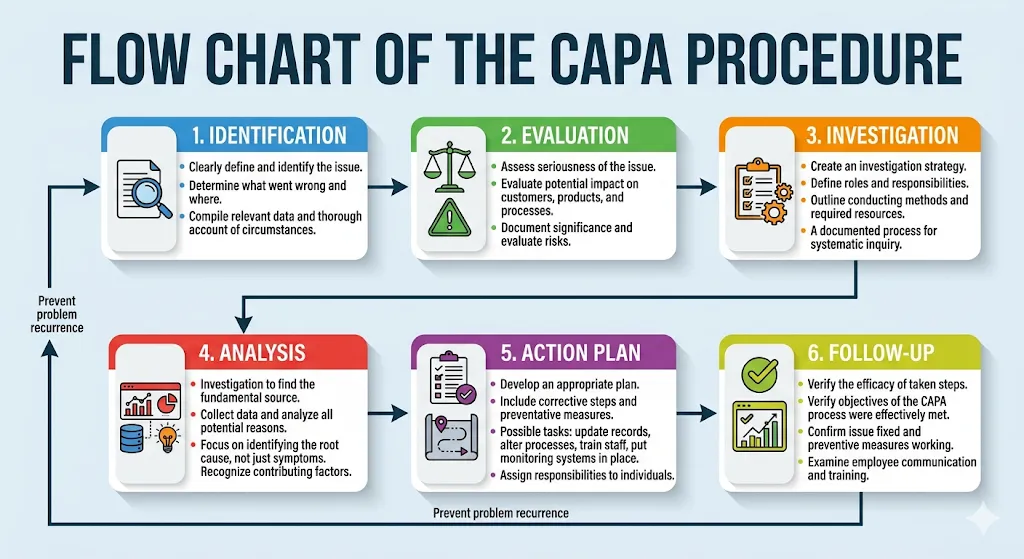
Fig. no.1: Flow chart of the CAPA procedure

Root cause Analysis: [11] [17]

Effective root cause analysis is essential for successful CA because without it, corrective measures may be ineffective. Statistical methods include tools like Statistical Process Control (SPC), which uses Shewhart and Pareto charts, as well as regression analysis, which includes both linear and non-linear forms; additionally, the design of experiments (DOE) is used for variable studies and experimental models; visual representation techniques, such as circle graphs and scatter diagrams, are part of these methods; administrative reviews, on the other hand, entail process evaluation and quality discussions. For CA to be successful, root cause analysis is essential because without it, corrective actions could not work. Regression analysis, which includes both linear and non-linear variations, and Statistical Process Control (SPC), which makes use of Shewhart and Pareto charts, are examples of statistical methodologies. Additionally, variance studies and experimental models use the design of experiments (DOE). These approaches also include pictographic tools like scatter diagrams and circle graphs. Nonstatistical procedures, on the other hand, include administrative evaluations that include process evaluation and quality discussions. [9] Another important method for evaluating possible failure modes and their effects on product performance is Failure mode and effects analysis (FMEA). Fault tree analysis, a deductive approach, is used to graphically represent the causes of failures, especially in the analysis of complaints or deviations. Fishbone analysis, also known as the Ishikawa diagram, is a systematic approach to problem-solving that encourages group involvement and helps identify data for further analysis. The diagram classifies variables based on their potential impact and helps establish a control strategy. [3] A deductive method called fault tree analysis is used to graphically depict the reasons for failures, especially when analysing complaints or deviations.

Ishikawa diagram, or fishbone analysis: By illustrating the connection between effects and their causes, the Ishikawa diagram helps identify possible reasons of quality problems. It encourages group participation, a methodical approach to problem-solving, and the identification of data for additional study. The graphic aids in the establishment of a control strategy by categorizing factors according to their possible impact. For example, this approach can be especially useful in the pharmaceutical sector when examining batch failures, where it might identify individual elements that might have contributed to the issue. Problem analysis form: A problem analysis form can be used to record the specifics of the investigation, acting as a central location for gathering and attaching pertinent data, albeit its use is optional
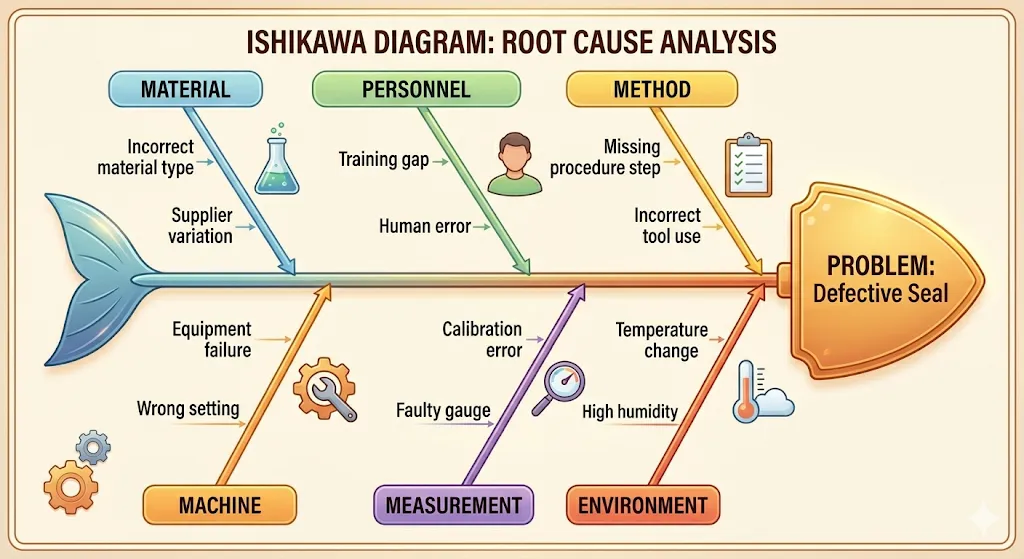
Fig.no.2: Ishikawa diagram: Root cause analysis

Relation of CAPA with Quality Subsystem: [9]  [31]

The CAPA system is a critical component of an effective QMS and it must maintain a close relationship with other quality subsystems. The ultimate goal of any regulated company must be to have a CAPA system that is compliant, effective and efficient. All relevant subsystems that may produce non-conformances must be part of the process. Internal processes encompass both non-conformance and in-conformance results, internal audits and assessments, management reviews and so on. External sources of CAPA process inputs are supplier audits and assessments, customer feedback and results from external audits and assessment such as regulatory agencies, ISO and so on. [34]                                
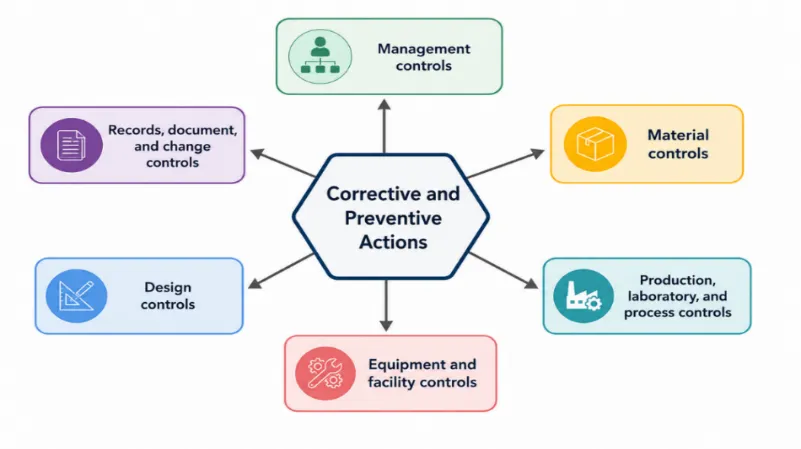
Fig.no.3: Quality subsystems of CAPA

Management system of CAPA: [4] [6]

CAPA refers to two distinct requirements for documented ‘Corrective Action’ and ‘Preventative Action’ procedures that should form part of your med tech Quality Management System. CAPA Management system and necessities of CAPA management system. Corrective Action and Preventive Action (CAPA) is a systematic approach designed to identify, resolve, and prevent issues such as deviations, nonconformities, and complaints. [7] CAPA enhances safety and product quality by reducing defective product risks, optimizing manufacturing processes, minimizing waste, lowering rework costs, and promoting continuous improvement. CAPA management drives continuous improvement in pharmaceutical companies. Systematic trend analysis and preventive measures strengthen the quality management system, ensuring compliance and operational excellence. [21]                   
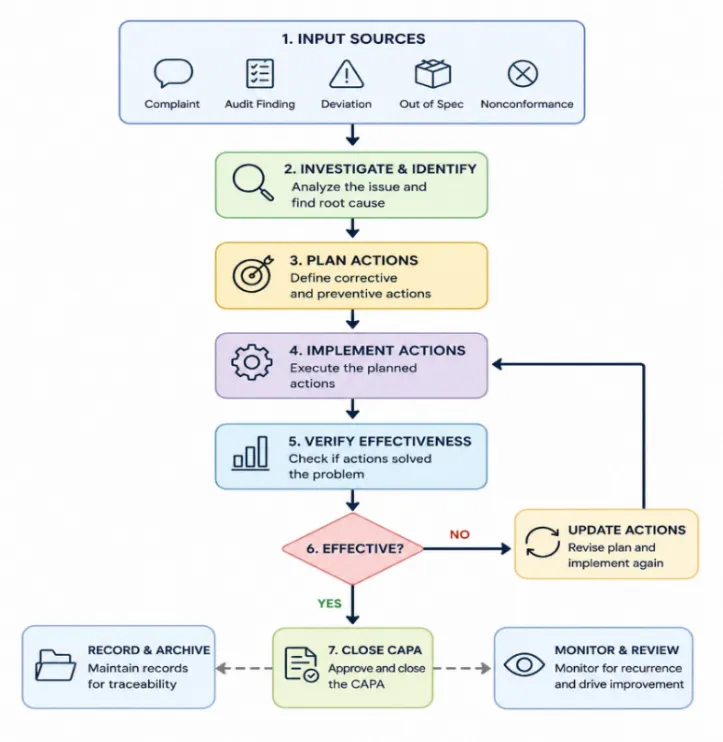
Fig.no.4: CAPA management system

Documentation of CAPA: [8] [20] [35]

CAPA (Corrective and Preventive Action) documentation is a structured record-keeping process used to identify, investigate, and resolve issues, preventing their recurrence. It is essential for regulatory compliance (FDA, ISO 13485) and requires documenting the problem description, root cause investigation, action plans, implementation evidence, and effectiveness checks. Documentation of the root cause analysis, including methods like the "5 Whys" or fishbone diagrams. Records demonstrating that actions were implemented (e.g., training logs, updated procedures, work orders).
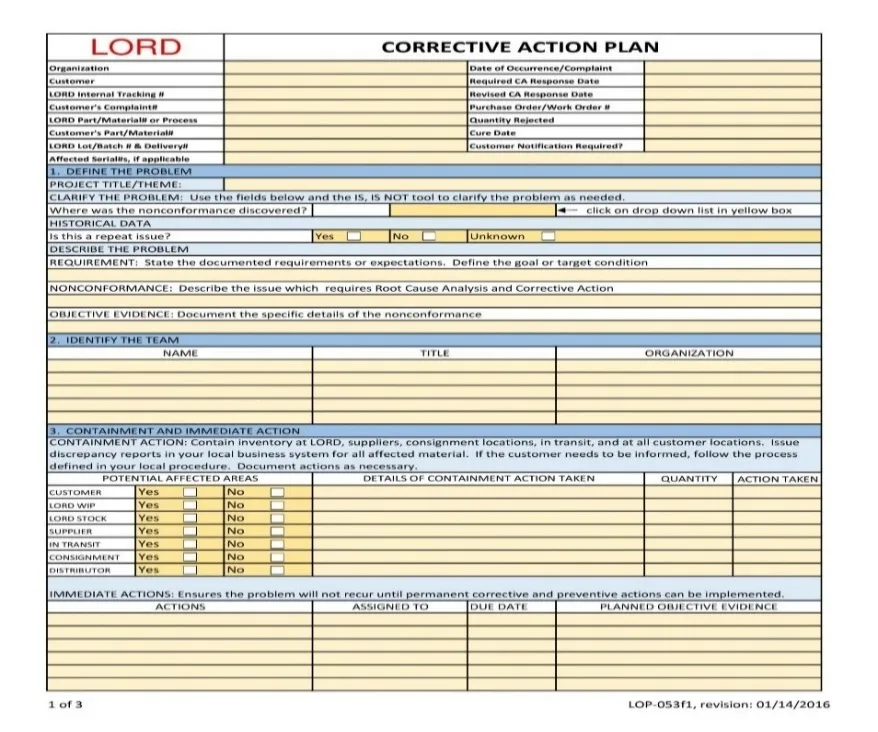
  • A CAPA documentation typically includes:
  • Problem description
  • Immediate correction/containment
  • Root cause analysis
  • Corrective action
  • Preventive action
  • Risk/impact assessment
  • Supporting evidence/documents
  • Effectiveness check
  • Approval and closure records
  • Attachments/references                         

Fig.no.5: Documentation format of CAPA [8]

  1. Industry’s common findings: [4] [11]

Conducting investigations and actions on time seems to be one of the most difficult tasks for organizations. It's commonly believed that everything is an individual incidence. In other cases, issues remain unfixed and are attributed to a single worker, a straightforward lab error, or the system's inability to prevent an issue from spreading to other lots, causing the incident to recur. Making sure it doesn't occur again is the highest standard for appropriate remediation. [17] After the ICH Q10 standard was introduced, CAPA was accepted as a new quality management instrument. According to the ICH Q10 document, which was adopted by the FDA in April 2009 as an industry guideline, a pharmaceutical Quality Management System (QMS) consists of four central elements:

Process performance and product quality monitoring

Corrective action and preventive actions

Change management

Management review of process performance and product quality.

According to the guideline, a pharmaceutical business must have a system in place to identify and assess non-conformances so that appropriate corrective and preventive measures can be taken. Information on non-conformances can come from a variety of sources, including complaints, variations, recalls, observations made during audits and inspections, and monitoring results. Finding the real root cause must be the goal of the system's examinations. Therefore, it is necessary to obtain a deeper understanding of both the process and the final product in order to make improvements. [22]

Advantages of CAPA: [6] [7]

  • Prevents Recurrence: Addresses the root cause of an issue rather than just treating symptoms, ensuring the same mistakes do not happen again.
  • Risk Mitigation: Proactively identifies adverse trends in real-time, helping to avoid severe disasters like product recalls or workplace accidents.
  • Regulatory Compliance: Essential for maintaining standards like ISO 9001, FDA requirements, and cGMP by providing systematic, repeatable failure investigations.
  • Cost Reduction: Protects the bottom line by eliminating waste, rework, and costly downtime associated with defects or failures.
  • Improved Decision Making: Provides comprehensive data and historical insights into operational strengths and weaknesses to guide strategic investments.

Application of CAPA: [9] [11]

Pharmaceutical development- Product or process variability is explored. CAPA methodology is useful where corrective actions and preventive actions are incorporated into the iterative design and development process.

Technology transfer- CAPA can be used as an effective system for feedback, feed forward and continual improvement.

Commercial manufacturing- CAPA should be used and the effectiveness of the actions should be evaluated.

Product discontinuation- CAPA should continue after the product is discontinued. The impact on product remaining on the market should be considered as well as other products which might be impacted.

CAPA closure and verification: [20] [21] [30]

The department head has to prove that the suggested CAPA and related activities have been finished and put into effect. QA will verify and validate the implementation and completion of CAPA by reviewing the supporting documentation. Any proposed changes due to CAPA must be made using the SOP (Standard Operating Procedure) on change control reference, which must be included in the CAPA format. The CAPA form must be used for all change control, deviations, errors, and incident reports that result in CAPA. The CAPA form must be used for all facility improvements, capital purchase requirements, significant modifications to the quality system, and compliance with regulatory requirements that give rise to CAPA. Every CAPA’s record needs to be maintained. The concerned department head will receive a copy of the completed CAPA from QA. During the management review meeting, QA will gather the CAPA data and present the overview to management. Periodically, during management review meetings, management will examine and confirm the same. CAPA-related data and records from internal audits, external/customer audits, and regulatory inspections are regarded as confidential and can only be made available for regulatory review with the director technical and QA head’s approval.

CONCLUSION:

CAPA is essential to the maintenance and enhancement of the pharmaceutical quality management system. It offers an organized approach to recognize issues, examine into their root causes, and put in place efficient preventative and remedial actions. CAPA enhances product quality, patient safety, and operational efficiency in addition to supporting companies in meeting regulatory standards including FDA, ISO, and ICH guidelines. CAPA reduces recurrent errors and promotes ongoing organizational improvement through appropriate documentation, risk assessment, root cause analysis, and ongoing monitoring. Thus, achieving quality perfection and ensuring reliable pharmaceutical production processes depend on an efficient CAPA system.

REFERENCES

  1. Chopra V, Kumar A, Aiyyer A, Trivedi P, Nagar M. Investigating out-of-specification results and development CAPA program for pharmaceutical industries: An overview. *Der Pharmacia Lettre*. 2011;3(2):368-382.
  2. Jain SK, Jain RK. Investigations and CAPA: Quality system for continual improvement in pharmaceutical industry. *International Journal of Research in Pharmacy and Pharmaceutical Sciences*. 2017;2(6):47-54.
  3. Thakre SS, Venkatesh MP, Gahilod RS. An overview of corrective action and preventive action. *International Journal of Pharmaceutical Investigation*. 2023;13(2).
  4. Tashi T, Mbuya VB, Gangadharappa HV. Corrective action and preventive actions and its importance in quality management system: A review. *International Journal of Pharmaceutical Quality Assurance*. 2016;7(1):1-6.
  5. Sneha AD, Kamlesh RD, Prashant LP, Sunil VA. Corrective and preventive action: An imperative quality management perspective in pharmaceutical industry. *International Journal of Pharmaceutical Quality Assurance*. 2022; 13:96-102.
  6. Tiwaskar G. Identified corrective & preventive action strategies: A regulatory review of pharma industry. *Journal of Legal, Ethical and Regulatory Issues*. 2023; 26:1.
  7. Raj A. A review on corrective action and preventive action (CAPA). *African Journal of Pharmacy and Pharmacology*. 2016;10(1):1-6.
  8. Arunagiri T, Kannaiah KP, Vasanthan M, Kannaiah KP. Enhancing pharmaceutical product quality with a comprehensive corrective and preventive actions (CAPA) framework: From reactive to proactive. *Cureus*. 2024;16(9).
  9. Naveen RS, Meyyanathan SN, Sowbarnika S, Dash A, Abhishek R. Innovative approaches to CAPA and change control in the pharmaceutical industry.
  10. Gottipati VK, Nakka S, Kumar P, Ugli MI, Mirzayev B. Quality systems for pharma: CAPA optimisation and leadership in compliance. In: *2025 International Conference on Sustainability, Innovation & Technology (ICSIT)*; 2025. p. 1-4.
  11. Nour RO. *Good CAPA Practice: A Six Sigma Approach to Reduce the Cost of Non-compliance* [master’s thesis]. Purdue University.
  12. Raghu P, Jain V, HV G, Madhu R. CAPA in pharmaceutical industry. *International Journal of Pharmaceutical Research*. 2021;13(3).
  13. Pazhayattil AB, Sharma S. Post-RCA impact assessment, CAPA, and effectiveness checks. In: *Pharmaceutical Manufacturing Deviation and Failure Investigations: Principles, Practices, and Case Studies*. Cham: Springer Nature Switzerland; 2025. p. 77-91.
  14. Kumbhar P, Nenade A. Microbiological contamination-driven CAPA in pharma production. *World Journal*. 2026;5(3).
  15. Ajit CP, Bhagwat AM, Chaudhari AP. CAPA: An important concept of quality assurance in pharmaceutical industry. *Asian Journal of Research in Chemistry*. 2021;14(5):357-362.
  16. Rodríguez-Pérez JP. *Handbook of Investigation and Effective CAPA Systems*. Quality Press; 2022.
  17. Kulkarni B, Chandra Vemuri R. Role of quality management system (QMS) for effective regulatory compliance. *Applied Clinical Research, Clinical Trials and Regulatory Affairs*. 2014;1(3):157-168.
  18. Driscoll C. CAPA in the modern quality system. *Biomedical Instrumentation & Technology*. 2006;40(6):458-460.
  19. Rodriguez J. *CAPA in the Pharmaceutical and Biotech Industries: How to Implement an Effective Nine Step Program*. Elsevier; 2015.
  20. Markens U. CAPA management in a GMP environment. *Life Science Technical Bulletin*. 2014;1-4.
  21. Sahu V, Jain S, Sharma N, Kaur H, Shukla VK. Optimizing pharmaceutical quality: Exploring out of specification, total quality management, change control. In: *Understanding Pharmaceutical Standards and Regulations*. Routledge. p. 167-181.
  22. Ugvekar N, Kamath KK, Subramanyam EV, Shabaraya AR. A review on change management system in pharmaceutical industry. *International Journal of Drug Regulatory Affairs*. 2021;9(3):37-41.
  23. Pujari P. Modern strategies for managing deviations and corrective and preventive actions in the pharmaceutical quality system. *Universal Library of Engineering Technology*. 2026;3(1).
  24. Lozier T. Streamline your CAPA process: Use risk assessment to improve quality and compliance. *Quality Assurance Journal*. 2010;13(1-2):37-40.
  25. Rao CM. Implementation of ICH Q10 pharmaceutical quality system for enhanced regulatory compliance in drug manufacturing. *Journal of Regulatory Affairs and Quality Assurance*. 2025;1(1):1-10.
  26. Marchant S. Put a cap on CAPAs. *Pharmaceutical Technology*. 2022;46(4):50-53.
  27. Jain AA, Mane-Kolpe PD, Parekar PB, Todkari AV, Sul KT, Shivpuje SS. Brief review on total quality management in pharmaceutical industries. *International Journal of Pharmaceutical Research and Applications*. 2022;7(5):1030-1036.
  28. Snee RD. A systems approach to root cause analysis and CAPA investigations. ResearchGate; 2017.
  29. Karu KR. A robust CAPA system for a global supply chain. *BioPharm International*. 2015;28(3):42-44.
  30. Karu KR. A robust CAPA system for a global supply chain: Enterprise quality management systems can help shift the quality emphasis from corrective to preventive actions. *Pharmaceutical Technology*. 2014;38(11):55-58.
  31. Laverty G, Belaid L, Coulter C, Porter S. Development of a teaching model to advance skills in industrial pharmaceutical formulation and regulatory aspects. *Currents in Pharmacy Teaching and Learning*. 2018;10(10):1419-1428.
  32. Rompicherla NC, Paul E, Ganesh A. The significance of quality metrics in a pharmaceutical quality management system: A case-based study. *Indian Journal of Pharmaceutical Education and Research*. 2020;54(3).
  33. Kumar A, Yadav DK, Kumar M, Alam T, Subramanyam S. Good manufacturing practices (GMP) and regulatory challenges in the pharmaceutical industry: A comprehensive review.
  34. Adis W. A risk modeling framework for the pharmaceutical industry. *Communications of the IIMA*. 2007;7(1):1.
  35. Hemanth KG, Joshi M, Dayaramani R, Damodharan N, Shenoy R, Pai KG.     Pharmaceutical defects: A critical review on defects of various dosage forms and regulatory impacts. *Research Journal of Pharmacy and Technology*. 2020;13(9):4505-4508.
  36. Kameswara AS, Octavia DA, Rahmanita RN, Nainggolan NR, Iman MF, Putra EF. Corrective and preventive actions for damage product problem on raw materials for the pharmaceutical industry. *JENIUS: Jurnal Terapan Teknik Industri*. 2023;4(1):1-11.
  37. Fuggle P, McHugh A, Gore L, Dixon E, Curran D, Cutinha D. Can we improve service efficiency in CAMHS using the CAPA approach without reducing treatment effectiveness? Journal of Child Health Care. 2016 Jun;20(2):195-204.
  38. Hardoroudi AH, Dareshuri AF, Sarkan HM, Nourizadeh M. Robust corrective and preventive action (CAPA). In2011 IEEE International Systems Conference 2011 Apr 4 (pp. 177-181). IEEE.
  39. Snee RD. A systems approach to root cause analysis and CAPA investigations. ResearchGate, Philadelphia, PA. 2017 Dec 4;6.
  40. Whittaker MA. Impact assessment of the quality system regulations for medical devices-ISO 13485: 2003 and 21 CFR 820 and the CAPA system.
  41. Aponte JI. Evaluation and assessment of the current use of CAPA tools in the regulated industry within Puerto Rico. Polytechnic University of Puerto Rico; 2012.
  42. Bills E, Tartal J. Integrating risk management into the CAPA process. Biomedical Instrumentation & Technology. 2008 Nov;42(6):466-8.

Reference

  1. Chopra V, Kumar A, Aiyyer A, Trivedi P, Nagar M. Investigating out-of-specification results and development CAPA program for pharmaceutical industries: An overview. *Der Pharmacia Lettre*. 2011;3(2):368-382.
  2. Jain SK, Jain RK. Investigations and CAPA: Quality system for continual improvement in pharmaceutical industry. *International Journal of Research in Pharmacy and Pharmaceutical Sciences*. 2017;2(6):47-54.
  3. Thakre SS, Venkatesh MP, Gahilod RS. An overview of corrective action and preventive action. *International Journal of Pharmaceutical Investigation*. 2023;13(2).
  4. Tashi T, Mbuya VB, Gangadharappa HV. Corrective action and preventive actions and its importance in quality management system: A review. *International Journal of Pharmaceutical Quality Assurance*. 2016;7(1):1-6.
  5. Sneha AD, Kamlesh RD, Prashant LP, Sunil VA. Corrective and preventive action: An imperative quality management perspective in pharmaceutical industry. *International Journal of Pharmaceutical Quality Assurance*. 2022; 13:96-102.
  6. Tiwaskar G. Identified corrective & preventive action strategies: A regulatory review of pharma industry. *Journal of Legal, Ethical and Regulatory Issues*. 2023; 26:1.
  7. Raj A. A review on corrective action and preventive action (CAPA). *African Journal of Pharmacy and Pharmacology*. 2016;10(1):1-6.
  8. Arunagiri T, Kannaiah KP, Vasanthan M, Kannaiah KP. Enhancing pharmaceutical product quality with a comprehensive corrective and preventive actions (CAPA) framework: From reactive to proactive. *Cureus*. 2024;16(9).
  9. Naveen RS, Meyyanathan SN, Sowbarnika S, Dash A, Abhishek R. Innovative approaches to CAPA and change control in the pharmaceutical industry.
  10. Gottipati VK, Nakka S, Kumar P, Ugli MI, Mirzayev B. Quality systems for pharma: CAPA optimisation and leadership in compliance. In: *2025 International Conference on Sustainability, Innovation & Technology (ICSIT)*; 2025. p. 1-4.
  11. Nour RO. *Good CAPA Practice: A Six Sigma Approach to Reduce the Cost of Non-compliance* [master’s thesis]. Purdue University.
  12. Raghu P, Jain V, HV G, Madhu R. CAPA in pharmaceutical industry. *International Journal of Pharmaceutical Research*. 2021;13(3).
  13. Pazhayattil AB, Sharma S. Post-RCA impact assessment, CAPA, and effectiveness checks. In: *Pharmaceutical Manufacturing Deviation and Failure Investigations: Principles, Practices, and Case Studies*. Cham: Springer Nature Switzerland; 2025. p. 77-91.
  14. Kumbhar P, Nenade A. Microbiological contamination-driven CAPA in pharma production. *World Journal*. 2026;5(3).
  15. Ajit CP, Bhagwat AM, Chaudhari AP. CAPA: An important concept of quality assurance in pharmaceutical industry. *Asian Journal of Research in Chemistry*. 2021;14(5):357-362.
  16. Rodríguez-Pérez JP. *Handbook of Investigation and Effective CAPA Systems*. Quality Press; 2022.
  17. Kulkarni B, Chandra Vemuri R. Role of quality management system (QMS) for effective regulatory compliance. *Applied Clinical Research, Clinical Trials and Regulatory Affairs*. 2014;1(3):157-168.
  18. Driscoll C. CAPA in the modern quality system. *Biomedical Instrumentation & Technology*. 2006;40(6):458-460.
  19. Rodriguez J. *CAPA in the Pharmaceutical and Biotech Industries: How to Implement an Effective Nine Step Program*. Elsevier; 2015.
  20. Markens U. CAPA management in a GMP environment. *Life Science Technical Bulletin*. 2014;1-4.
  21. Sahu V, Jain S, Sharma N, Kaur H, Shukla VK. Optimizing pharmaceutical quality: Exploring out of specification, total quality management, change control. In: *Understanding Pharmaceutical Standards and Regulations*. Routledge. p. 167-181.
  22. Ugvekar N, Kamath KK, Subramanyam EV, Shabaraya AR. A review on change management system in pharmaceutical industry. *International Journal of Drug Regulatory Affairs*. 2021;9(3):37-41.
  23. Pujari P. Modern strategies for managing deviations and corrective and preventive actions in the pharmaceutical quality system. *Universal Library of Engineering Technology*. 2026;3(1).
  24. Lozier T. Streamline your CAPA process: Use risk assessment to improve quality and compliance. *Quality Assurance Journal*. 2010;13(1-2):37-40.
  25. Rao CM. Implementation of ICH Q10 pharmaceutical quality system for enhanced regulatory compliance in drug manufacturing. *Journal of Regulatory Affairs and Quality Assurance*. 2025;1(1):1-10.
  26. Marchant S. Put a cap on CAPAs. *Pharmaceutical Technology*. 2022;46(4):50-53.
  27. Jain AA, Mane-Kolpe PD, Parekar PB, Todkari AV, Sul KT, Shivpuje SS. Brief review on total quality management in pharmaceutical industries. *International Journal of Pharmaceutical Research and Applications*. 2022;7(5):1030-1036.
  28. Snee RD. A systems approach to root cause analysis and CAPA investigations. ResearchGate; 2017.
  29. Karu KR. A robust CAPA system for a global supply chain. *BioPharm International*. 2015;28(3):42-44.
  30. Karu KR. A robust CAPA system for a global supply chain: Enterprise quality management systems can help shift the quality emphasis from corrective to preventive actions. *Pharmaceutical Technology*. 2014;38(11):55-58.
  31. Laverty G, Belaid L, Coulter C, Porter S. Development of a teaching model to advance skills in industrial pharmaceutical formulation and regulatory aspects. *Currents in Pharmacy Teaching and Learning*. 2018;10(10):1419-1428.
  32. Rompicherla NC, Paul E, Ganesh A. The significance of quality metrics in a pharmaceutical quality management system: A case-based study. *Indian Journal of Pharmaceutical Education and Research*. 2020;54(3).
  33. Kumar A, Yadav DK, Kumar M, Alam T, Subramanyam S. Good manufacturing practices (GMP) and regulatory challenges in the pharmaceutical industry: A comprehensive review.
  34. Adis W. A risk modeling framework for the pharmaceutical industry. *Communications of the IIMA*. 2007;7(1):1.
  35. Hemanth KG, Joshi M, Dayaramani R, Damodharan N, Shenoy R, Pai KG.     Pharmaceutical defects: A critical review on defects of various dosage forms and regulatory impacts. *Research Journal of Pharmacy and Technology*. 2020;13(9):4505-4508.
  36. Kameswara AS, Octavia DA, Rahmanita RN, Nainggolan NR, Iman MF, Putra EF. Corrective and preventive actions for damage product problem on raw materials for the pharmaceutical industry. *JENIUS: Jurnal Terapan Teknik Industri*. 2023;4(1):1-11.
  37. Fuggle P, McHugh A, Gore L, Dixon E, Curran D, Cutinha D. Can we improve service efficiency in CAMHS using the CAPA approach without reducing treatment effectiveness? Journal of Child Health Care. 2016 Jun;20(2):195-204.
  38. Hardoroudi AH, Dareshuri AF, Sarkan HM, Nourizadeh M. Robust corrective and preventive action (CAPA). In2011 IEEE International Systems Conference 2011 Apr 4 (pp. 177-181). IEEE.
  39. Snee RD. A systems approach to root cause analysis and CAPA investigations. ResearchGate, Philadelphia, PA. 2017 Dec 4;6.
  40. Whittaker MA. Impact assessment of the quality system regulations for medical devices-ISO 13485: 2003 and 21 CFR 820 and the CAPA system.
  41. Aponte JI. Evaluation and assessment of the current use of CAPA tools in the regulated industry within Puerto Rico. Polytechnic University of Puerto Rico; 2012.
  42. Bills E, Tartal J. Integrating risk management into the CAPA process. Biomedical Instrumentation & Technology. 2008 Nov;42(6):466-8.

Photo
Tejal Gorfad
Corresponding author

Department of Quality Assurance, Laxminarayan Dev College of Pharmacy, Gujarat Technological University, Bholav, Bharuch – 392015, India

Photo
Nidhi Chauhan
Co-author

Department of Quality Assurance, Laxminarayan Dev College of Pharmacy, Gujarat Technological University, Bholav, Bharuch – 392015, India

Photo
Meghal Mehta
Co-author

Department of Quality Assurance, Laxminarayan Dev College of Pharmacy, Gujarat Technological University, Bholav, Bharuch – 392015, India

Photo
Rana Hani
Co-author

Department of Quality Assurance, Laxminarayan Dev College of Pharmacy, Gujarat Technological University, Bholav, Bharuch – 392015, India

Tejal Gorfad*, Nidhi Chauhan, Meghal Mehta, Rana Hani, A Review of Role of CAPA in Pharmaceutical Quality Management System, Int. J. Med. Pharm. Sci., 2026, 2 (9), 325-334. https://doi.org/10.5281/zenodo.22794782

More related articles
Artificial Intelligence-Driven Design and Optimiza...
Prachi Sharma, Puja Gulati, Gagan Kaushal...
Development and Validation of a Stability-Indicati...
Kyatham Mamatha, K. Jamuna, Gade Arunakumari, G. Hemalatha, Ankam...
A Review on the Role of Artificial Intelligence in the Pharma Industry...
Vaibhav Shikare, Urmila Ingole, Pavan Idhole, Ashish Gawai...
Effect of Qigong Exercise in Improving Sleep Quality in Obese Patients by Assess...
Francis S., Shruthi S., K. P. Abhishek, I. M. Sarah Binu, Arun Yoburaj...
Measurement of Quality of Life and Associated Risk Factors in Patients with Isch...
Shamini J., Soumya R. V., Prasobh G. R., Nithin Manohar R., Mahitha, Aswathy K. S., Abisek...
Related Articles
Regulatory Affairs in Medical Devices: Current Approaches, Global Regulatory Fra...
Vaishnavi Sur, Ummehani Sheikh, Srushti Chamalwar, Misba Sheikh, Ananya Rahangdale...
Pharmaceutical Analysis: Analytical Techniques, Quality Systems, and Regulatory ...
Harshada Ingle, Rutik Jadhav, Priti Kedar, Mohit Pawar, Mohit Jadhav ...
Review on Process Analytical Technology in Pharmaceutical Manufacturing...
Roja K., Sarumathi B., Saminathan C., Akshaya A....
Artificial Intelligence (AI): Enhancing Good Documentation Practices (GDP) in Ph...
Pankaj Shinde, Tejashree Burungale, Swati Burungale, Rajendra Patil, Nikita Gavali...