

We use cookies to ensure our website works properly and to personalise your experience. Cookies policy
Vidyaniketan College of Pharmacy, Anjangaon Surji
There is a need for safer and more effective treatments for diabetes mellitus, a chronic metabolic disease marked by persistent hyperglycemia that causes oxidative stress, poor wound healing, and long-term vascular consequences, in the addition to traditional insulin and oral hypoglycemic. Due to its insulin tropic, antioxidant, anti-inflammatory, and wound-healing qualities, fenugreek and amla have become potential botanical agents. While amla, which is rich in ascorbic acid, emblicanins, polyphenols, and tannins, protects β-cells, increases glucose tolerance, lowers oxidative stress, and speeds up tissue repair, fenugreek offers bioactive components like steroidal saponins, trigonelline, and 4-hydroxyisoleucine that increase the insulin secretion, decrease glucose absorption, improve insulin sensitivity, and promote collagen formation. Combining the two extracts in a transdermal drug delivery method has several benefits, including avoiding the first-pass metabolism, preserving stable plasma levels, enhancing bioavailability, and offering longlasting therapeutic effects appropriate for long-term diabetes conditions. Type-2 diabetes mellitus mainly treated by the formulation. Experimental data shows that using these plant extracts topically or transdermally improves wound contraction and collagen formation, significantly lowers fasting glucose, and increases antioxidant activity. The need for sophisticated formulation techniques, such as nanocarriers, liposomes, permeation enhancers, and green extraction technologies, is highlighted by difficulties like phytochemical variability, limited skin permeability of large molecules, standardization problems, and a lack of clinical trials. All things considered, a fenugreek–amla herbal transdermal system is a promising, patient-compliant, non-invasive approach for the integrated management of diabetes and diabetic wound healing. After thorough pharmacokinetic and the clinical validation, there is potential for smart formulation, customized phytotherapy, and clinical translation.
Persistent hyperglycemia brought on by the decreased insulin production or activity is a hallmark of diabetes mellitus, a chronic metabolic disease. Upto 2045, an estimated 783 million adults worldwide will be impacted by it.[1] Oxidative stress, micro- and a macro-vascular problems, and the delayed wound healing are all consequence’ of chronic hyperglycemia.[2] Conventional treatments frequently result in hypoglycemia, weight gain, and the poor long-term compliance despite the availability of insulin therapy and a oral hypoglycemic medication.[3] As a result, the scientists are increasingly focusing on plant-derived bioactives with the wound-healing, antioxidant, and insulin-mimetic qualities.[4]A non-invasive method that avoids hepatic first-pass metabolism, preserves stable plasma levels, and the improves patient adherence is offered by transdermal drug-delivery systems.[5] They are especially useful for the phytoconstituents with a low oral bioavailability. For long-term metabolic conditions like a diabetes, contemporary polymeric formulation composed of hydrophilic (HPMC, PVP) and the hydrophobic (EC, chitosan) films enable the controlled release of the herbal extracts.[6] Herbal formulations have high degradation in stomach and the low oral absorption this deficiency should be reduced in transdermal formulation.[7] Fenugreek is used extensively around the world for both cooking and the treatment of Type 2 Diabetes Mellitus, especially in Egypt, China, India, and Middle Eastern countries. The numerous explanations have been put forth for its efficacy in the diabetic population. While soluble fibers like glucomannan fiber and 4-hydroxyisoleucine (4-OH Ile) amino acids stimulate the pancreas to produce insulin, alkaloids like trigonelline and fenugrecin found in a fenugreek have been demonstrated to have hypoglycemic activity. Additionally, a clinical investigation demonstrated that fenugreek increased the insulin sensitivity to achieve its antidiabetic effect. [8]
1. Importance of transdermal formulation in the Management of Diabetes
Among the main therapeutic benefits are: Avoid the hepatic first-pass metabolism and a gastric breakdown. Stable medication levels and sustained release, which lessens the need for frequent doses. Benefits for diabetic wounds that are both local and systemic. Less harmful than injectable or the oral methods. Improved adherence to the long-term treatment. [5,6,7] Transdermal devices with a tailored polymers and permeation enhancers are perfect for sustaining therapeutic phytochemical levels and the fostering wound healing because diabetic skin shows reduced perfusion and collagen cross-linking. Sustained glycemic management and also enhanced antioxidant defense, and quicker skin regeneration are all potential synergistic effects of matrix patch. [6]
2. Scientific Foundation for Plant Selection
Fenugreek (Trigonella foenum-graecum) and the Amla (Emblica officinalis), two antidiabetic botanicals, are notable for their shown hypoglycemic and the wound-healing qualities.[9] The steroidal saponins (diosgenin), alkaloids (trigonelline), and 4-hydroxyisoleucine found in fenugreek seeds increase tissue healing and also decrease intestinal glucose absorption, and improve insulin sensitivity.[10] Rich in ascorbic acid, emblicanins A and B, and polyphenols, amla fruits have strong antioxidant and collagen-stimulating properties that speed up the repair of diabetic ulcers and enhance the glucose tolerance.[11]
3. Mechanistic Basics of Antidiabetic and Wound-Healing Properties
These herbs have the antidiabetic actions through β-cell protection, insulin-signaling augmentation, and regulation of enzymes that metabolize carbohydrates. [9,10] Reduction of the reactive oxygen species, enhanced fibroblast proliferation, angiogenesis, and faster epithelialization are all part of the wound-healing pathway. Collagen deposition is stimulated and inflammatory cytokines are suppressed by the polyphenols and saponins. [11] By maintaining consistent plasma concentrations of these important ingredients, transdermal administration reduces the glucose swings and preserves antioxidant defense, ultimately restoring normal healing physiology. [4]
MATERIALS AND METHODS
Fenugreek’s (Trigonella Foenum-Graecum L.) Pharmacognostic and Phytochemical Profile
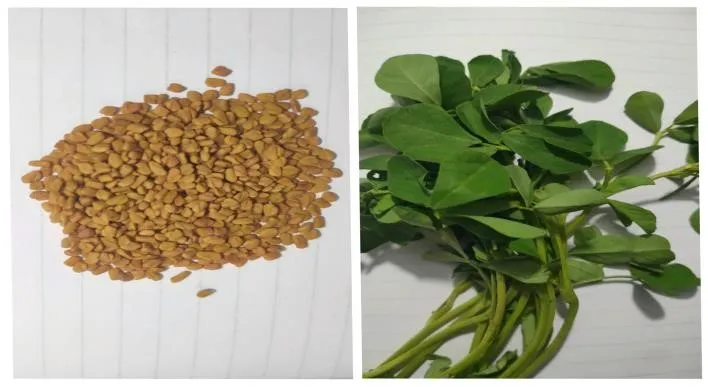
Figure 1. Fenugreek’s Seeds and Leaves
1. Vernacular Names and Synonyms
2. History / Origin
According to its historical accounts, fenugreek was cultivated in as early as 4000 BCE in Egypt, where it was employed as a uterine stimulant and for embalming. Methi is described in the Charaka Samhita as a galactagogue and the treatment for Madhumeha (diabetes) in Ayurvedic medicine. Foenum-graecum, which translates to “Greek hay,” refers to its dual use as a herbal tonic and fodder.[13]
3. Biological Source and Family
Table 1 Biological Source and Family of Fenugreek
|
Family |
Leguminosae, or Fabaceae |
|
Biological Source
|
The medication is made from the dried, mature seeds of the Trigonella foenum-graecum Linn. Alkaloids, saponins, and polysaccharides are found in the seeds, which are the most pharmacologically active component.[14] |
4. Geographical Source
Although fenugreek is native to a Western Asia and the Mediterranean, it is widely grown in China, India, Pakistan, and Egypt. Rajasthan accounts for more than 80% of India’s total production, making it the world’s largest producer. [15]
5. Macroscopic and Organoleptic Characters
6. Microscopy (Diagnostics Features)
Under a microscope, the seed displays the outer testa of palisade cells with thick walls. Endosperm with the polygonal cells that hold mucilage and a fixed oil. Two cotyledons that are rich in a oil globules make up the embryo. Crystals of calcium oxalate are the dispersed throughout the parenchyma. The identity of fenugreek is confirmed by powder microscopy, which shows yellowish granules and oil droplets. [17]
7. Chemical Nature / Class of Constituents
Among the main bioactive classes are Alkaloids have the choline and trigonelline. Yamogenin and Diosgenin are steroidal saponins. 4-hydroxyisoleucine is an amino acid derivative that is insulinotropic and the Orientin and isovitexin are flavonoids. Galactomannans are the polysaccharides. These substances are primarily in charge of their wound-healing, antioxidant, and antidiabetic qualities. [18]
8. Extraction Technique
• Soxhlet Extraction
Soxhlet extraction is a continuous solvent extraction technique that selectively extracts target the chemicals from solid substances using solvents at a boiling temperature and ambient pressure (Wang & Weller, 2006). Another popular technique for extracting bioactive substances like lipids, sterols, and fatty acids is soxhlet extraction. When compared to traditional method solvent extraction, the novel Soxhlet extraction process uses a less hazardous solvent and takes less time, indicating that Soxhlet extraction is a great substitute. [19]
• Aqueous Extraction
Because it eliminates the need for organic solvents and requires the less energy and expenditure, aqueous extraction processing becomes a viable substitute. Furthermore, Aqueous Extraction does not require equipment for a solvent recovery and drying, or monitoring and controlling emissions of volatile organic compounds. Additionally, this mechanism makes it possible to recover the additional substances like proteins, carbs, and fibers at the same time. [20]
9. Identification Test
• RP-HPLC (Reverse-phase High Performance Liquid Chromatography)
Identification of trigonelline is carried out by comparing the retention time, peak characteristics, and UV absorption pattern of the sample extract with those of a trigonelline standard, according to a completely validated RP-HPLC method for trigonelline analysis developed by WHO. Their technique uses a C18 reverse-phase column to accomplish separation, and detection is done at a suitable UV wavelength (usually between 260 and 270 nm) where trigonelline exhibits maximal absorbance. When the retention time of the genuine standard run under the same chromatographic circumstances coincides with the trigonelline peak in the fenugreek extract, it is verified. Qualitative identity is guaranteed by this retention-time match.
• Molisch’s Test
Detection of carbohydrates, when the filtrates were treated with two drops of alcoholic α-naphthol solution in a test tube. Formation of the violet ring at the junction indicates the presence of Carbohydrates.
• Dragendroff’s Test
Detection of alkaloids, when the filtrates were treated with Dragendroff’s reagent and then formation of red precipitate indicates the presence of alkaloids. [21]
10. Pharmacological Actions
Numerous biological effects are demonstrated by fenugreek: Antidiabetic: Promotes insulin secretion, inhibits the absorption of a glucose, and increases the production of glycogen. Hypolipidemic: Reduces cholesterol by binding bile acids. Wound healing: Encourages tissue regeneration and collagen crosslinking. [22] Antioxidant: Polyphenols reduce oxidative stress in diabetic wounds by the scavenging reactive oxygen species (ROS). Fenugreek extract has been shown in experimental trials to a significantly lower fasting hyperglycemia and enhance wound contraction rates in diabetic rats. [9]
11. Evaluation Parameters
WHO guidelines and the Indian Pharmacopoeia (2022) state: ≤2% is the foreign stuff.
12. Tests for Adulteration Detection
Medicago sativa (alfalfa) and the Trigonella corniculata seeds are potential adulterants. Detection techniques:
Microscopy: The lack of sclereids verifies the authenticity. Chemical: Steroidal saponins are causes by the Liebermann-Burchard test to generate a blue-green color. [24]
13. Storage
To stop the breakdown of volatile components and saponins, seeds or extracts should be stored below the 25°C in airtight, light-resistant containers that are shielded from a moisture. [25]
14. Marketed Preparations
Herbal products containing fenugreek include Fenfuro® (Avestia Pharma), a standardized extract for the glycemic management. Himalaya Wellness Methi Capsules. Fenugreek and amla extracts are found in a polyherbal pill Diabecon®.[26]
15. Toxicity and Precautions
At modest dosages, fenugreek is Generally Recognized as Safe (GRAS). When paired with the insulin and high consumption may result in hypoglycemia or minor gastrointestinal distress. In rodents, toxicity test shows no negative effects up to 5 g/kg. [27]
16. Therapeutic Role in Diabetes Mellitus and Wound Healing
Fenugreek is a perfect phytotherapeutic agent for transdermal administration due to its dual activity as a antidiabetic and the wound healing. Flavonoids and polyphenols increase collagen synthesis and fibroblast proliferation, while saponins and amino acid derivatives stimulate insulin secretion.[9,23] Fenugreek and Amla work in concert to improve glycemic control, boost antioxidant defense, and speed up tissue repair in a diabetic patients.[28]
Pharmacognostic And Phytochemical Profile Of Amla (Emblica Officinalis Gaern.)
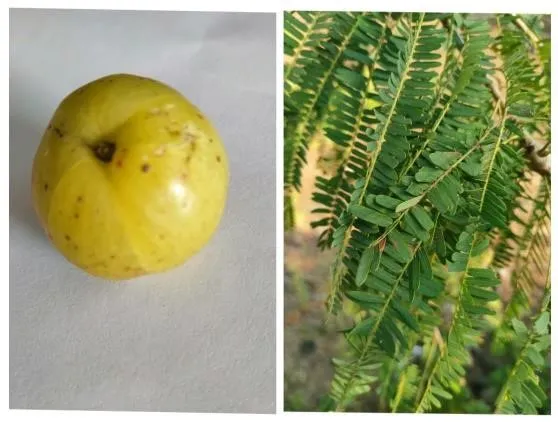
Figure 2 Amla Fruits and foliage
1. Vernacular Names and Synonyms
The ancient Ayurvedic plant amla, also known as a “Rasayana,” is the powerful antioxidant and rejuvenator that is utilized extensively in the both conventional and contemporary herbal therapy. [11]
2. History / Origin
Amla has been used for more than 3,000 years, it is mentioned as an elixir for the immunity, longevity, and blood cleansing in the Charaka Samhita and Sushruta Samhita. It is the primary component of Triphala, an Ayurvedic remedy for wound healing, diabetes control, and digestive health. Additionally, it was indicated in the Tibetan and traditional Chinese medicine for the treatment of oxidative diseases and hyperglycemia. [13]
3. Family and Biological Source
Table 2 Family and Biological Source of Amla
|
• |
Family |
Phyllanthaceae |
|
• |
Biological Source |
Dried or fresh pericarp of the fruits of Emblica officinalis Gaertn primary medicinal component is the fruit pulp, which is rich in tannins, polyphenols, and the vitamin C and has regenerative and antioxidant properties.[24] |
4. Geographical Source
Native to India, amla grows organically in the tropical and subtropical climates. Tamil Nadu, Madhya Pradesh, and Uttar Pradesh are important agricultural regions. It is also found in the China, Myanmar, and Sri Lanka, and it is being grown more and more all over the world for pharmaceutical and the nutraceutical purposes. [23]
5. Macroscopy and Organoleptic Characters
Fruits are globular, with the six vertical furrows and a diameter of two to three centimeters. After drying, the color changes from yellow-green to light brown.
6. Microscopy (Diagnostic Features)
Under a microscope, the amla pericarp reveals: Polygonal cells make up the single-layered epidermis. Mesocarp: Tannin and the calcium oxalate crystal-rich parenchymatous cells. The hard sclerenchymatous covering that surrounds seeds is called as the endocarp. Authnticity can be confirmed by powder microscopy, which shows the brown tannin masses, lignified sclereids, and no starch granules. [17]
7. Chemical Nature
Amla has a high chemical content: Phenolic substances include the gallic acid, ellagic acid, and the emblicanin A and B. Fresh fruit contains up to 600 mg of the ascorbic acid per 100 g. Kaempferol and quercetin are flavonoids. Tannins include chebulinic and chebulagic acids. Minerals, polyphenols, pectin, and amino acids are the examples of others. Together, they have a antioxidant, antidiabetic, and collagen promoting properties that are crucial for the healing of diabetic wounds. [9]
8. Extraction Technique
• Maceration
Particularly for the small-scale extraction, such that done in a laboratory, maceration is a practical, easy, affordable, and advantageous method. Its foundation is the induction of mass transfer through shaking until solid/liquid equilibrium is attained. However, this method typically necessitates a second step for the extract's concentration. Another well-known method for making the tonics is maceration. The process comprises grinding the plant material, immersing it in a solvent, extracting the solvent, and pressing the sample to get crude extract. It is done in a closed vessels with sporadic mixing. [29]
• Aqueous Extraction
Since aqueous extraction processing eliminates the need for the organic solvents and requires less energy and expenditure, it becomes a viable option. Furthermore, equipment for drying, solvent recovery, and the monitoring and control of volatile organic compound emissions is not necessary for Aqueous Extraction. Additionally, this method makes it possible to recover the additional substances like proteins, carbs, and fibers at the same time. [19]
9. Identification Test
• HPLC (High Performance Liquid Chromatography)
Compounds in amla leaf and fruit extracts were identified by comparing their retention times and on-line UV spectra with reliable standards. HPLC was used to identify quercetin, and the separation was carried out on a C18 column using a water-organic solvent (such as acetonitrile or methanol) mobile phase. When the chromatographic peak displayed the same retention period and UV spectrum (λmax ~ 350–370 nm) as the standard, it was determined that quercetin was present in the amla extract. Same instrument use in fenugreek but the chemicals in identification are different.
• Ferric Chloride Test
Test for identification of Tannins and Phenolic compounds, Blue-black or blue-green colouration or precipitation was taken as an indication of the presence of tannins.
• Salkowski Test
Test for identification of Terpenoid, reddish brown colouration of the interface formed showed positive results for the presence of terpenoids. [30]
10. Pharmacological Actions
11. Evaluation Parameters
Indian Pharmacopoeia (2022) and WHO recommendations state: ≤2% is foreign stuff.
12. Adulteration Detection Tests
Terminalia chebula and the Phyllanthus niruri are the common adulterants. Genuine amla is identified under the microscope by the presence of rosette-shaped calcium oxalate crystals. Chemical test: Tannins cause a bluish-black coloring in a ferric chloride solution. [17]
13. Storage
Amla fruit or extract should be kept out of direct sunlight and a moisture in airtight, amber-colored containers. In damp environments, vitamin C and tannins are deteriorate quickly; freezing prolongs the shelf life. [16]
14. Marketed Preparations
Triphala tablets, an antioxidant and detoxifier, are a common formulation (Himalaya Wellness). Ayurvedic rejuvenator Amalaki Rasayana (AYUSH Ministry). Antioxidant supplement Amla Capsules (Organic India).
Diabecon® is a polyherbal diabetes control product that contains the amla and fenugreek. [9]
15. Toxicity / Precautions
Amla is categorized as GRAS and safe at the therapeutic dosages. Mild stomach hyperacidity may result from the high consumption of it. Up to 2g/kg in rats, toxicity tests show no teratogenic or mutagenic effects. [31] Because of the hypoglycemic medications may lower glucose levels in a synergistic way, the caution is advised when taking them together. [27]
16. Therapeutic Role in Wound Healing and Diabetes Mellitus
Amla is perfect for managing diabetic wounds because of its antioxidant, antidiabetic, and collagenpromoting qualities. Its polyphenol and the vitamin C concentration promotes fibroblast proliferation, speeds up epithelialization, and restores the normal redox balance. [24,27] It offers a potential phytopharmaceutical system for the treatment of a chronic diabetes when paired with fenugreek in a transdermal patch, providing synergistic effects such as the improved wound healing, anti-inflammatory protection, and sustained glucose control. [27,31]
Herbal Transdermal Formulation Clinical Significance
A significant advancement in phyto-pharmaceutical technology is the clinical use of the herbal transdermal formulation. The Fenugreek-Amla transdermal formulation offers the advantages: sustained glycemic control with the modifying glucose absorption and insulin secretion, improve wound healing through collagen stimulating, anti-inflammatory, and antioxidant processes.[10,22,27,31] The transdermal method guarantees regulated absorption, reducing variations in the plasma levels and enhancing therapeutic adherence, in contrast to oral formulations that experience extensive hepatic metabolism and a quick elimination.[5,6] Emblica officinalis and Trigonella foenum graecum together provide a multifunctional pharmacological profile that simultaneously occurs the oxidative consequences of diabetes and the metabolic dysregulation.[11,22]
Experimental Insights and Clinical Evidence
The majority of the evidence comes from a preclinical research, although the results clearly indicate translational potential: Efficacy against the diabetes: Comparable to metformin, animal models showed a significant decrease in a fasting glucose and HbA1c levels after transdermal delivery of the mixed extracts. [9,22] Efficiency of a wound healing: Topical treatment improved to healing tissues’ tensile strength, collagen formation, and re-epithelialization. Histopathological confirmation: Compared to a control wounds, treated wounds displayed neovascularization, thick collagen fibers, and well-formed granulation tissue. These findings imply that the Fenugreek-Amla combination could be used in addition to or instead of oral herbal supplements, especially for individuals who don’t take their medications as prescribed or have poor gastrointestinal absorption. [27,31]
Pharmacokinetics and Pharmacodynamics Advantages
The transdermal formulation’s controlled-release design lowers the frequency of doses by maintaining steady therapeutic levels over long periods of time. Avoiding first-pass metabolism and boosting bioavailability are two important pharmacokinetic benefits. Decreased dose variability and the increased therapeutic effect predictability. Improved patient convenience for the chronic long-term illnesses, pharmacodynamically speaking, the formulation prolonged administration promotes the consistent insulinotropic action and ongoing antioxidant defense, both of which are essential for the managing diabetic wounds. [5–7,11]
Difficulties in Developing Herbal Formulation
a. Variability in the phytochemical content: Depending on a seasonal and regional variable, natural extract shows compositional variability.
b. Limitations on permeability: Large phytoconstituents, such as tannins and saponins, frequently have poor skin permeability.
c. Stability and standardization: It is difficult to maintain steady extract potency and the stability during formulation.
d. Insufficient clinical validation: There are few controlled human trials, and the majority of data are still in the experimental stage.
e. Regulatory classification: Market approval is complicated by the lack of consistent international regulatory frameworks for the herbal transdermal systems. [17,23,24]
These drawbacks are emphasize the necessity of the sophisticated formulation techniques and strong standardization procedures to guarantee patient safety and there reproducibility.
Strategies to Overcome Challenges
Obstacles Liposomal technologies and Nano encapsulation can be improve skin penetration and the shield phytoconstituents from deterioration to guarantee clinical translation and the regulatory acceptability. Flux across the stratum corneum can be increased by using bioenhancers, such as terpenes, fatty acids, or natural surfactants. Batch homogeneity is ensured by phytochemical standardization utilizing marker chemicals (e.g., diosgenin for fenugreek, emblicanin A/B for amla). Yield and purity are improved by adopting green extraction techniques (supercritical CO2, microwave-assisted extraction).[9,21,22,] Efficacy may be the further increased by integration with cutting-edge delivery technologies such biodegradable polymeric films or micro needle arrays.[5,6]
FUTURE PROSPECTS FOR THE RESEARCH POSSIBILITIES
CONCLUSION
Two powerful herbal medicines with complementary pharmacological characteristics are combined when extracts are combined into a single medication. For the treatment of diabetic related wound-healing issues, this system provides a long-term, patient-compliant, non-invasive therapeutic approach. The amla and fenugreek shows demonstrated insulinotropic and antioxidant activities, complies with pharmacopoeial requirements, and has potential for clinical use. To prove its therapeutic equivalency with traditional modalities and obtain regulatory approval, more standardization, pharmacokinetic analysis, and human trials would be essential.
REFERENCES





Sarthak Janorkar, Ashwini Bhande, Prashil Dhumale*, Rupeshri Netkar, Vaishnavi Gole, A Review on Herbal Extract of Fenugreek and Amla For Wound Healing in Diabetic Patient, Int. J. Med. Pharm. Sci., 2026, 2 (7), 55-64. https://doi.org/10.5281/zenodo.21107634
 10.5281/zenodo.21107634