
We use cookies to ensure our website works properly and to personalise your experience. Cookies policy
1Faculty of Medical Science & Research, Sai Nath University, Ranchi, Jharkhand-835219, India.
2Shubham University, Dept. of Pharmacy, Bhopal, Madhya Pradesh, 462010, India.
3Sahyog College of Medical Sciences, Khunti, Jharkhand – 835210, India.
4Faculty of Medical Science & Research, Sai Nath University, Ranchi, Jharkhand-835219, India.
The convergence of artificial intelligence (AI) with nanotheranostics represents a transformative paradigm in oncology, offering unprecedented opportunities for precision diagnosis, targeted therapy, and real-time treatment monitoring within integrated nanoscale platforms. This review examines the synergistic integration of AI and nanotechnology in cancer theranostics, focusing on how computational advances including machine learning, deep learning, and generative models are revolutionizing nanoparticle design, tumor targeting, and personalized therapeutic optimization. We analyze the translational potential of AI-driven nanotheranostics across diverse cancer types, with particular attention to how transnational research collaborations are bridging the gap between laboratory innovation and clinical implementation. Critical challenges including data standardization, algorithm interpretability, regulatory frameworks, ethical considerations, and equitable access are systematically addressed. By synthesizing recent advances and identifying strategic priorities, this review provides a comprehensive framework for understanding how AI-nanotheranostic convergence can accelerate the realization of personalized cancer medicine.
Cancer remains a leading global health burden, with approximately 19.3 million new cases and 10 million cancer-related deaths reported worldwide in 2020. The biological complexity of cancer—characterized by tumor heterogeneity, dynamic microenvironmental interactions, and interpatient variability—poses fundamental challenges to conventional therapeutic approaches. Chemotherapy, while widely used, lacks selectivity and causes substantial systemic toxicity, whereas radiotherapy and surgery are limited by tumor accessibility and metastatic spread. These limitations underscore the urgent need for more precise, adaptable, and multidisciplinary strategies that can address the molecular individuality of each patient's disease [1, 2].
Nanotheranostics has emerged as a promising solution by integrating diagnostic and therapeutic functions within a single nanoscale platform. These systems enable simultaneous tumor imaging, targeted drug delivery, and real-time monitoring of therapeutic response, thereby supporting more rational treatment planning and dynamic disease management. The unique physicochemical properties of nanomaterials including tunable size, surface functionality, and stimuli-responsive behaviour which facilitate tumor-specific accumulation and controlled drug release, reducing off-target effects while enhancing therapeutic efficacy [3, 4].
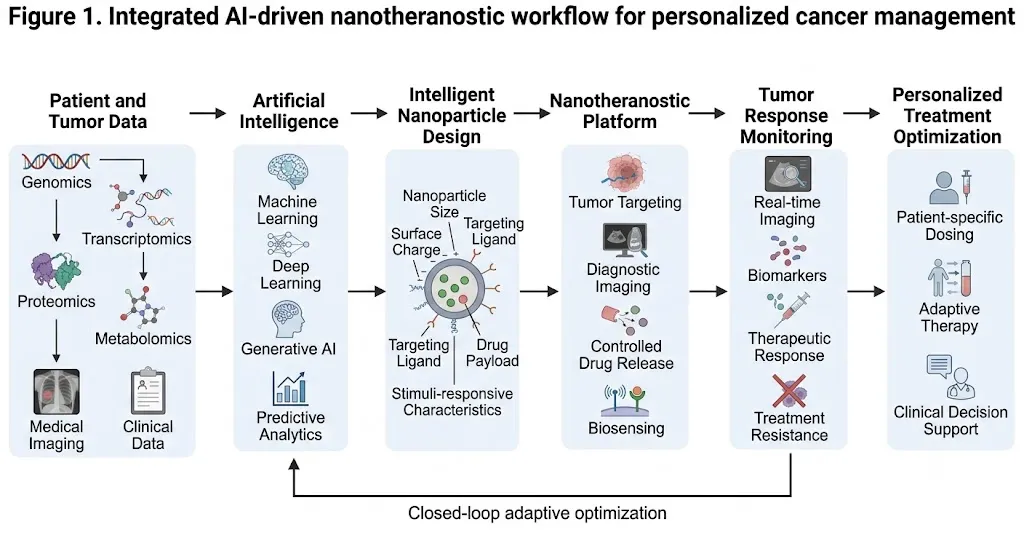
The integration of artificial intelligence (AI) with nanotheranostics introduces a new dimension of intelligence and adaptability to these platforms. AI encompasses computational methods including machine learning (ML) and deep learning (DL) that can analyze large-scale multi-omics and clinical datasets to support early cancer detection, accurate diagnosis, prognosis assessment, and refinement of personalized treatment strategies. Machine learning algorithms learn design rules for nanocarriers, while deep learning networks enable intricate pattern recognition for tumor segmentation and adaptive drug release. This convergence of AI and nanotechnology is reshaping cancer diagnosis and treatment, enabling the development of intelligent nanoplatforms that combine tumor sensing, targeted delivery, controlled release, and adaptive response within a single system [5, 6].
Transnational research collaborations are increasingly essential for advancing AI-driven nanotheranostics toward clinical translation. Projects such as OMNIA, a European-led globally connected programme, are redefining how nanotherapeutics are designed and translated for hard-to-treat cancers by integrating spatial multi-omics, advanced tumor models, and interpretable AI. These collaborative frameworks bridge expertise across materials science, oncology, and AI from Europe, North America, and Asia, creating harmonized nanoparticle platforms, standardized SOPs, and FAIR-compliant data pipelines that transform fragmented nanomedicine studies into a reproducible, data-driven field [7].
This review synthesizes recent advances at the intersection of AI and nanotheranostics, with particular emphasis on how these technologies are being translated into personalized patient care through transnational research efforts. We examine the core technologies driving this convergence, analyze their applications across cancer types, and critically evaluate the translational barriers that must be overcome to realize the full clinical potential of AI-driven nanotheranostics.
2. AI in Nanotheranostics: Core Technologies and Computational Approaches
The computational foundation of AI-driven nanotheranostics rests on several complementary machine learning paradigms, each addressing distinct challenges in nanoparticle design, characterization, and clinical application. Machine learning algorithms, including supervised, unsupervised, and reinforcement learning approaches, enable the extraction of actionable design rules from complex datasets that would be intractable through conventional statistical methods. In the context of nanomedicine, ML models are trained on diverse data types—including nanoparticle physicochemical properties, biological interaction profiles, and patient-derived omics data—to predict critical outcomes such as tumor accumulation, cellular uptake, and therapeutic response [8-10].
Deep learning architectures, particularly convolutional neural networks and recurrent neural networks, have demonstrated exceptional performance in medical image analysis, tumor segmentation, and treatment response prediction. When applied to nano-enabled imaging, DL networks enhance tumor detection and segmentation by leveraging high-resolution data generated by nanoparticle-based contrast agents. This synergy between nano-imaging and AI analysis creates a positive feedback loop: nanoparticles provide high-quality multimodal imaging data that improves model performance, while AI-optimized imaging protocols enhance the diagnostic utility of nanoparticle platforms [11-14].
Generative models, including Generative Adversarial Networks (GANs) and Variational Autoencoders (VAEs), are revolutionizing nanoparticle design through inverse design approaches-. Rather than relying on empirical trial-and-error experimentation, these models enable the computational generation of nanoparticle formulations with desired properties. Conditional variational autoencoders have been successfully applied to the inverse design of core-shell nanoparticles, generating multiple valid solutions that satisfy specified input conditions-. Similarly, generative models have been employed to augment limited experimental datasets, enabling the optimization of exosome-mimetic lipid nanoparticle formulations for tumor-specific targeting [15, 16].
The application of these computational approaches to nanotheranostics extends beyond nanoparticle design to encompass the entire therapeutic pipeline. Machine learning algorithms accurately predict complex pH-dependent drug release kinetics, as demonstrated by imatinib-loaded nanomicelles where XGBoost regression achieved an R² of 0.998 for release prediction. This predictive capability enables rational formulation design that accounts for tumor microenvironmental conditions, such as the acidic pH characteristic of many solid tumors. Furthermore, AI-driven models support personalized therapeutic planning by integrating patient-specific data—including genetic profiles, tumor imaging, and biomarker expression—to predict optimal nanocarrier selection and dosing regimens [17, 18].
A particularly promising direction involves the development of closed-loop theranostic systems wherein real-time imaging and biosensor feedback dynamically regulate drug delivery and therapeutic activation. In these systems, AI algorithms process continuous streams of biological data—including reactive oxygen species levels, autophagy markers, and tumor metabolic activity—to adjust treatment parameters in real time. Such adaptive platforms represent a fundamental shift from static treatment protocols to dynamically responsive therapeutic systems capable of accommodating tumor evolution and treatment resistance [19].
3. AI-Driven Nanoparticle Design and Optimization
The design of effective nanotheranostic platforms requires precise control over multiple interdependent parameters, including particle size, surface charge, ligand density, drug loading efficiency, and release kinetics. Traditional approaches to optimizing these parameters rely on extensive experimental screening, which is time-consuming, resource-intensive, and often fails to capture the complex nonlinear relationships governing nanoparticle behavior in biological systems. AI-driven design pipelines are transforming this landscape by enabling computational prediction of nanoparticle properties and their biological interactions, thereby accelerating the development cycle and reducing reliance on empirical optimization [21].
The integration of AI with multi-omics data provides a powerful foundation for rational nanocarrier design. Genomic, transcriptomic, proteomic, and metabolomic profiles from patient tumors can be integrated with nanoparticle characterization data to identify optimal formulation parameters for specific cancer subtypes-. This data-driven approach enables the identification of design rules that generalize across patient populations while accommodating individual variability. For instance, proteomics and metabolomics data can inform the selection of targeting ligands that match tumor-specific receptor expression patterns, while genomic data can guide the choice of therapeutic payloads that address specific driver mutations [22-24].
Transnational research consortia are playing a pivotal role in advancing AI-driven nanoparticle design by establishing standardized platforms and data-sharing frameworks. The OMNIA project exemplifies this approach by developing a harmonized nanoparticle platform with standardized SOPs and FAIR-compliant data pipelines that transform fragmented nanomedicine studies into a reproducible, data-driven field. By uncovering how nanoparticles interact with the tumor microenvironment through spatial multi-omics and interpretable AI, OMNIA generates actionable design rules for safer, more effective treatments. This collaborative model bridges expertise in materials science, oncology, and AI from Europe, North America, and Asia, creating a foundation for global standardization in nanomedicine development [25, 26].
The application of AI to nanotheranostic design is particularly impactful in challenging cancer types. For brain tumors, where the blood-brain barrier presents a formidable obstacle to drug delivery, AI-enhanced engineering strategies are being employed to develop intelligent nanocarriers capable of traversing this barrier. Transferrin-functionalized nanoparticles and dual-stimuli-responsive drug delivery systems represent advanced approaches that leverage AI-optimized design principles to achieve therapeutic concentrations in the central nervous system. Machine learning algorithms learn design rules for nanocarriers, while deep learning networks enable intricate pattern recognition for tumor segmentation and adaptive release, optimizing targeted medication release while minimizing off-target effects [27, 28].
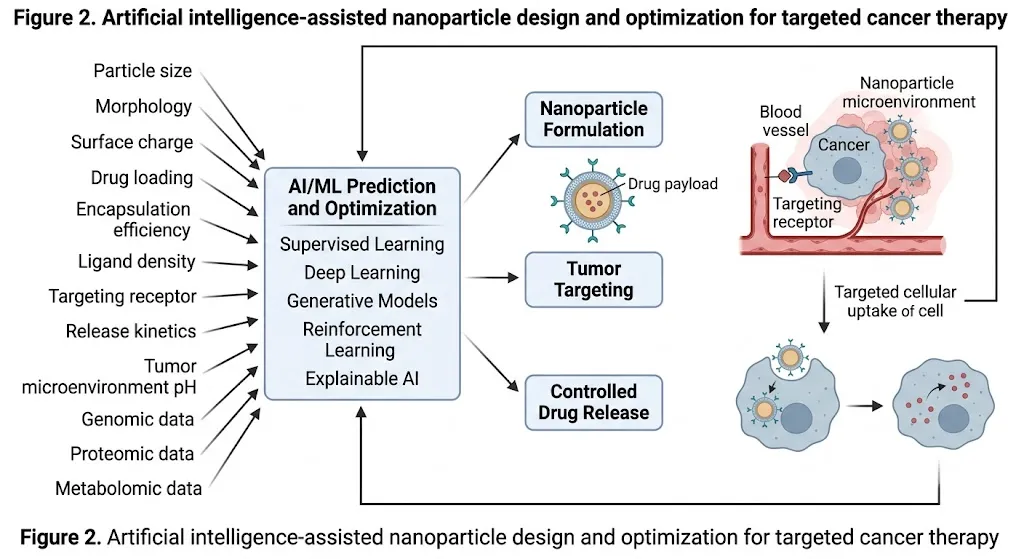
Table 1 summarizes key AI techniques and their applications in nanotheranostic design and optimization.
Table 1: AI Techniques in Nanotheranostic Design and Optimization
| AI Technique | Application Domain | Key Capabilities | Representative Outcomes |
|---|---|---|---|
| Supervised ML (XGBoost, Random Forest) | Drug release prediction | Prediction of pH-dependent release kinetics | R² = 0.998 for imatinib release prediction. |
| Deep Learning (CNN, RNN) | Tumor imaging and segmentation | Enhanced tumor detection, pattern recognition | Improved diagnostic accuracy in brain tumors. |
| Generative Models (GANs, VAEs) | Nanoparticle inverse design | Generation of formulations with desired properties | Core-shell nanoparticle design- |
| Reinforcement Learning | Adaptive treatment optimization | Real-time adjustment of therapeutic parameters | Closed-loop theranostic systems |
| Federated Learning | Multi-institutional data integration | Privacy-preserving model training | 30% improvement in immunotherapy response prediction- |
| SHAP/LIME (Explainable AI) | Model interpretability | Feature importance analysis, decision transparency | Enhanced regulatory trust- |
4. Personalized Cancer Therapy: From Omics to Nanotheranostics
The integration of AI-driven nanotheranostics with personalized medicine represents a paradigm shift from population-based treatment protocols to individualized therapeutic strategies tailored to each patient's unique molecular profile. Personalized oncology leverages genomic, transcriptomic, proteomic, and imaging data to characterize the molecular drivers of an individual's cancer and select targeted interventions accordingly. AI enhances this process by integrating and analyzing large-scale multi-omics and clinical datasets to support early cancer detection, accurate diagnosis, prognosis assessment, and refinement of personalized treatment strategies [29].
The concept of N-of-1 therapy—wherein treatment is designed specifically for a single patient—has gained significant traction through the convergence of AI-driven molecular design, intelligent nanomaterial engineering, and clinical AI systems. Recent advances in generative platforms such as AlphaProteo and RFdiffusion now support the rapid design of de novo protein binders with high predicted structural accuracy and low-nanomolar affinities. Acting upstream, tools such as AlphaGenome interpret genome-wide regulatory variation to predict how single-base changes in noncoding DNA alter gene control mechanisms, facilitating the prioritization of patient-specific pathways and therapeutic targets. Together, these capabilities are transforming computational design from a speculative approach to a reliable molecular engineering workflow, enabling the development of patient-matched nanomedicines with unprecedented precision [30, 31].
The application of AI-driven nanotheranostics to prostate cancer illustrates the translational potential of this approach. Molecular targeted therapies, omics-based profiling, and AI-based theranostics are converging to improve diagnostic precision and personalized care-. AI-enhanced systems that integrate radiomics, digital pathology, and multi-omics information improve biomarker detection, risk stratification, and personalized therapeutic choices-. Digital twin models complement individualized treatment by simulating tumor behavior on a personalized level, enabling clinicians to predict treatment response before initiating therapy-. These developments demonstrate how AI is transforming the diagnostic and therapeutic landscape in prostate cancer management [32, 33].
In breast cancer, the integration of AI with nanotechnology has led to the development of intelligent nanocarriers capable of real-time monitoring of adaptive therapy and theranostics-. AI-based deep learning models in diagnostics improve diagnostic accuracy, while nanotechnology enables targeted drug delivery, minimizes systemic toxicity, and provides theranostic capabilities for real-time monitoring-. The convergence of these technologies offers a comprehensive approach to breast cancer management that addresses limitations of conventional treatments, including drug resistance and off-target toxicity [34, 35].
The clinical implementation of AI-driven personalized nanotheranostics requires robust infrastructure for data collection, integration, and analysis. The Precise Pilot Trial (NCT04522284) exemplifies the translation of AI-based treatment optimization into clinical practice, using the platform to personalize chemotherapy dosing based on individual patient response data-. Such trials establish the feasibility of AI-guided adaptive treatment strategies and provide templates for integrating nanotheranostic platforms into clinical workflows [36, 37].
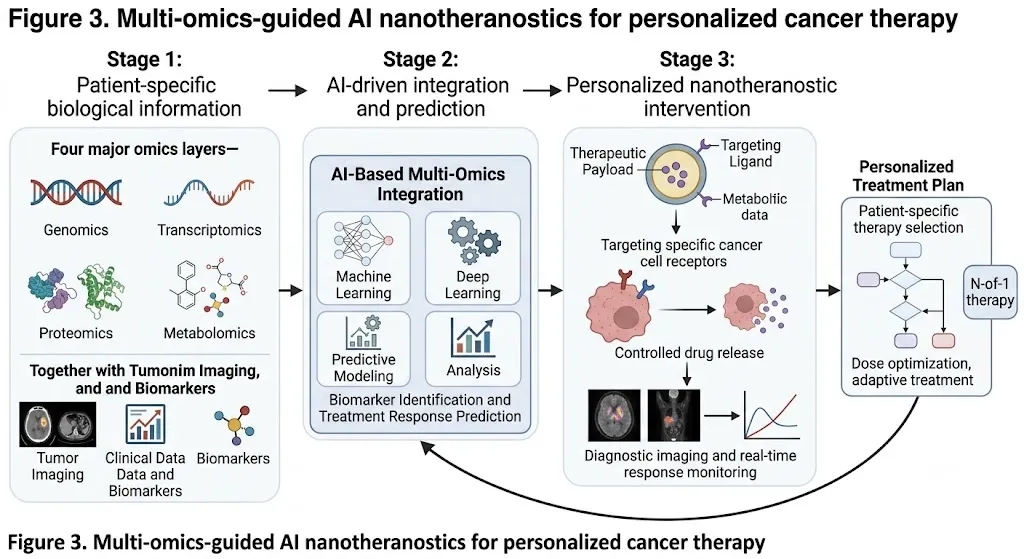
Table 2 presents a comparative analysis of AI-driven nanotheranostic applications across cancer types.
Table 2: AI-Driven Nanotheranostics Across Cancer Types
| Cancer Type | AI Application | Nanotheranostic Platform | Clinical Significance |
|---|---|---|---|
| Brain tumors (Glioblastoma) | Deep learning for tumor segmentation; ML for nanocarrier design | Transferrin-functionalized nanoparticles; stimuli-responsive systems | Enhanced BBB traversal; improved drug delivery |
| Breast cancer | XGBoost for release prediction; DL for diagnostics | pH-responsive nanomicelles; quantum dots | Targeted therapy with reduced systemic toxicity |
| Prostate cancer | AI-based biomarker prediction; digital twin modeling | PSMA-targeted radioligand therapy | Improved patient selection; personalized treatment planning- |
| Lung cancer | Federated learning for multi-institutional data | Electrospun nanoparticles | Enhanced immunotherapy response prediction- |
| Colorectal cancer | AI-optimized PDT/PTT systems | Light-responsive nanomaterials | Real-time microenvironment monitoring- |
5. Transnational Research Collaborations and Data Sharing
The complexity of AI-driven nanotheranostics demands collaborative approaches that transcend institutional, disciplinary, and national boundaries. Transnational research programmes are emerging as essential vehicles for advancing this field, bringing together expertise in materials science, oncology, artificial intelligence, and clinical translation from across the globe. The OMNIA project, funded through the European Union's Marie Skłodowska-Curie Actions, exemplifies this collaborative model by establishing a globally connected research and training programme that redefines how nanotherapeutics are designed and translated for hard-to-treat cancers [38, 39].
A critical component of transnational collaboration is the development of shared data infrastructures that enable privacy-preserving data sharing across institutions. Federated learning frameworks are revolutionizing multi-institutional collaboration by enabling model training on distributed datasets without requiring the exchange of sensitive patient information-. The Oncology Federated Network (OFN) has demonstrated a 30% improvement in predicting immunotherapy response across 17 cancer centers while maintaining data sovereignty, using blockchain-secured patient data vaults for granular consent management-. This approach addresses a fundamental barrier to AI-driven nanotheranostics: the need for large, diverse datasets to train robust models while respecting patient privacy and institutional data governance requirements [40-43].
The integration of blockchain technology with federated learning further enhances data security and trust in transnational research collaborations. Blockchain-enabled federated learning systems ensure that individual patient data remains protected while enabling the development of personalized cancer treatment plans through analysis of data from multiple oncology centers-. Privacy-preserving incentives such as homomorphic encryption protect the integrity of model updates without violating data privacy-. These technological solutions create the foundation for sustainable, ethically sound international data sharing that respects both patient rights and research imperatives [44-46].
Beyond data infrastructure, transnational collaborations are essential for developing standardized protocols and regulatory frameworks that enable the clinical translation of AI-driven nanotheranostics. The development of harmonized nanoparticle platforms, standardized SOPs, and FAIR-compliant data pipelines transforms fragmented nanomedicine studies into a reproducible, data-driven field. These standardization efforts are prerequisites for regulatory approval and clinical adoption, as they enable cross-laboratory comparison and ensure reproducibility of results across different research settings [47, 48].
The training dimension of transnational collaborations is equally important. Programmes such as OMNIA incorporate structured cross-sector secondments and "capsule curricula" that combine hands-on experimentation, AI analysis, and translational science, cultivating a new generation of scientists fluent in materials-biology-AI integration. This investment in human capital is essential for sustaining the momentum of AI-driven nanotheranostics and ensuring that advances in computational methods and materials science are effectively translated into clinical benefit [49- 50].
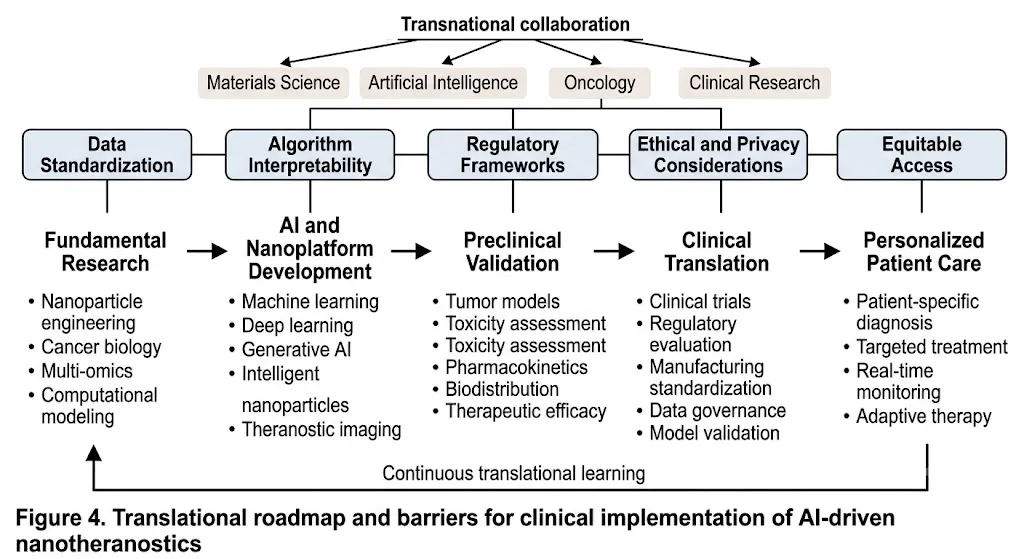
6. Clinical Translation: Challenges and Regulatory Pathways
Despite promising advances, the clinical translation of AI-driven nanotheranostics faces substantial challenges that span scientific, technical, regulatory, and ethical domains. A critical barrier is the lack of standardization and reproducibility in nanotoxicology and nanomedicine research. Systematic analysis has identified that differences in experimental conditions—such as exposure time and cell type—and inherent material properties—such as size and number of layers—are key factors leading to conclusions that cannot be repeated across laboratories. The fundamental constraint of non-standardized data on the generalization ability of machine learning models highlights the need for data governance frameworks that enable robust model development and validation [51, 52].
The regulatory landscape for AI-driven nanotheranostics remains uncertain because existing frameworks from agencies such as the FDA and EMA are not fully equipped to assess adaptive or self-learning algorithms. Key challenges include defining validation standards, managing software updates, and documenting AI-driven design decisions related to nanoparticle composition, size, or release kinetics. These regulatory gaps delay clinical translation and increase development risk, creating disincentives for investment in AI-nanotheranostic development. Regulatory agencies are increasingly recognizing the need for AI-specific evaluation pathways, including guidance on model traceability, version control, and validation of adaptive algorithms, supported by standardized reporting tools such as model cards [53].
The explainability and interpretability of AI models present additional translational challenges. Deep learning models, while highly accurate, often operate as "black boxes" that provide limited mechanistic insight into why specific decisions are made. In clinical oncology, this lack of explainability undermines trust among clinicians, regulators, and patients. The adoption of explainable AI tools, such as SHAP, LIME, and attention-based models, can enhance transparency by linking predictive outputs to nanoparticle features, molecular signatures, and biological mechanisms. Incorporating prior biological knowledge from systems biology and pharmacokinetics can further constrain predictions within physiologically plausible boundaries, enhancing both interpretability and reliability [54, 55].
Clinical trial design for AI-driven nanotheranostics requires innovation to accommodate the adaptive and personalized nature of these interventions. Traditional randomized controlled trial designs may not be suitable for therapies that evolve based on real-time patient data. Adaptive trial designs, master protocols, and N-of-1 methodologies are being explored as alternatives that can accommodate the dynamic nature of AI-guided treatments while maintaining scientific rigor-. Machine learning models have been developed to predict nanoparticle toxicity, offering a framework for AI-driven preclinical screening of nanocarrier safety that can accelerate the identification of promising candidates while reducing reliance on animal testing [56, 57].
The integration of AI into clinical trial design extends beyond toxicity prediction to encompass patient selection, dose optimization, and response monitoring. AI-driven radiomics and dosomics are increasingly explored for advanced response and dose-effect assessment in prostate cancer and other malignancies-. These approaches enable more precise characterization of treatment response and facilitate early identification of patients who may benefit from treatment modification or escalation [58-60].
7. Ethical Considerations and Health Equity
The deployment of AI-driven nanotheranostics raises significant ethical considerations that must be addressed to ensure equitable and responsible innovation. Data bias represents a fundamental challenge, as training datasets frequently over-represent specific protein families or patient demographics, leading to inequitable model outputs and biased therapeutic designs-. The disproportionate representation of patients with Western, educated, industrialized, rich, and democratic (WEIRD) profiles in AI training data can compromise therapeutic effectiveness for underrepresented populations, reinforcing inequities in healthcare access and clinical outcomes [61].
Algorithmic transparency and accountability are essential for maintaining trust in AI-driven clinical decision-making. When AI-guided recommendations result in adverse outcomes, the distribution of liability among clinicians, developers, and institutions remains unclear. Updated informed consent procedures are required to ensure transparency regarding the role, limitations, and level of human oversight associated with AI-supported therapies. Maintaining clinical accountability requires human-in-the-loop decision frameworks and transparent communication with patients regarding AI involvement in their care [62, 63].
Equity of access to AI-driven nanotheranostics is a critical concern, as unequal access to advanced digital infrastructure and high development costs can exacerbate existing healthcare disparities, restricting these technologies to well-resourced settings. Ensuring equitable access must therefore be a core principle in the deployment of AI-enabled precision oncology. Investments in open-source platforms, global data-sharing initiatives, and infrastructure support for low-resource settings will be crucial to prevent inequitable deployment and ensure that the benefits of AI-driven nanotheranostics are distributed fairly across populations [64, 65].
Addressing these ethical challenges requires a proactive, multidisciplinary framework integrating explainable AI, ethical data practices, adaptive regulation, and equitable access. Diverse, high-quality datasets and robust data governance protocols are essential to mitigate bias and privacy risks. Approaches such as federated learning can improve generalizability while preserving patient privacy, complemented by standardized consent and data lifecycle policies. By embedding interpretability, fairness, and accountability into AI-nanomedicine systems, the field can advance toward ethical, inclusive, and clinically sustainable precision cancer therapy [66, 67].
8. Future Directions and Strategic Priorities
The future of AI-driven nanotheranostics lies in the continued convergence of computational modeling, intelligent materials, and advanced imaging modalities toward patient-specific, scalable clinical solutions. Several strategic priorities emerge from this review as essential for accelerating translation and realizing clinical impact.
First, the development of closed-loop theranostic platforms represents a promising direction wherein real-time imaging and biosensor feedback on biological markers dynamically regulate nanocarrier activation and therapeutic delivery. Validation of these adaptive systems in tumor-on-chip models and patient-derived organoids provides a realistic pathway toward clinical translation, enabling iterative optimization of treatment parameters in physiologically relevant systems. Quantum machine learning for molecular-scale optimization and federated learning for data privacy represent frontier technologies that could further enhance the capabilities of AI-driven nanotheranostics [68].
Second, the establishment of standardized data formats and reporting guidelines is critical for enabling cross-laboratory comparison and model generalization. The evolution from identifying root causes of variation to quantifying data quality and finally achieving structural standardization provides a roadmap for community-led efforts. A three-stage approach—beginning with community adoption of minimum information standards, followed by technology integration, and culminating in structural specification—has been proposed to improve the readiness of AI nanoplatforms for clinical translation [69].
Third, the development of AI-specific regulatory pathways that address the unique challenges of adaptive algorithms and nanomaterial-based therapeutics is essential. Regulatory agencies should establish clear guidance on model traceability, version control, and validation of adaptive algorithms, supported by standardized reporting tools. Concurrently, clinical trial designs must evolve to accommodate the personalized and adaptive nature of AI-driven nanotheranostic interventions [70].
Fourth, sustained investment in transnational research collaborations and training programmes is essential for maintaining momentum and ensuring that advances are translated into clinical benefit. The OMNIA model of integrating research, training, and standardization within a globally connected consortium provides a template for future initiatives. By cultivating a new generation of scientists fluent in materials-biology-AI integration, these programmes build the human capital necessary for sustained innovation [71].
CONCLUSION
The convergence of artificial intelligence and nanotheranostics represents a transformative frontier in cancer therapy, offering unprecedented capabilities for precision diagnosis, targeted treatment, and real-time therapeutic monitoring. This review has synthesized recent advances across the AI-nanotheranostic spectrum, demonstrating how machine learning, deep learning, and generative models are revolutionizing nanoparticle design, enabling personalized therapeutic strategies, and supporting clinical translation through transnational research collaborations. The integration of AI with nanotheranostics addresses fundamental limitations of conventional cancer therapies by enabling tumor-specific targeting, controlled drug release, and adaptive treatment optimization tailored to individual patient profiles.
However, realizing the full clinical potential of AI-driven nanotheranostics requires addressing significant challenges related to data standardization, algorithm interpretability, regulatory frameworks, ethical considerations, and equitable access. The path forward demands sustained investment in transnational research collaborations, standardized data infrastructures, explainable AI methods, and regulatory innovation. By embedding interpretability, fairness, and accountability into AI-nanomedicine systems, the field can advance toward ethical, inclusive, and clinically sustainable precision cancer therapy that benefits patients across diverse populations and healthcare settings.
The synthesis of computational intelligence with nanoscale engineering capabilities holds the promise of transforming cancer from a disease treated with generic protocols to one managed through individualized, dynamically adaptive therapeutic strategies. Realizing this vision will require continued collaboration across disciplines and borders, unwavering commitment to ethical innovation, and sustained investment in the foundational science and translational infrastructure necessary to bring these transformative technologies to patients.
REFERENCES

Naba Kishor Gorai, Ramesh Kumar, Shyam Narayan, Sunty Kumar, Abhinav Kumar, Balram Mahto, Vivek Prajapati, Shiv Kumar Paul, Keshav Kumar, Md. Sharafat Ansari, Md. Sahil, Kumod Kumar Sharma, Pankaj Kumar, Suraj Kumar Ray, Chandan Kumar Mehra, Anshul Kumar Mahto, Arnab Roy, AI-Driven Nanotheranostics in Targeted Cancer Therapy: Bridging Transnational Research and Personalized Patient Care, Int. J. Med. Pharm. Sci., 2026, 2 (11), 165-177. https://doi.org/10.5281/zenodo.24445058
 10.5281/zenodo.24445058