View Article

Abstract

The efficacy of antimicrobial treatments is compromised by antibiotic resistance (AMR), a rapid growing worldwide health concern. The demand for novel treatment approaches has increased due to the rise in multidrug-resistant diseases and the fall in antibiotic development. The mechanisms and causes of antibiotic resistance, related clinical and financial difficulties, and new antimicrobial tactics like bacteriophage therapy, CRISPR-Cas systems, novel antibiotics, antimicrobial peptides, and nanotechnology-based methods are all covered in this review. Updated insights are provided by incorporating recent developments 2023–2025 from Scopus-indexed literature. Fighting AMR requires a comprehensive, multidisciplinary strategy. The slow rate of new antibiotic discovery, financial and regulatory obstacles, and the absence of international surveillance and stewardship initiatives are some of the main issues related to antibiotic resistance that are highlighted in this review. This study also examines cutting-edge strategies including immunotherapeutic interventions and microbiome modification, which are viable substitutes for conventional antimicrobial therapies. To counter this increasing threat, strengthening antibiotic stewardship, enhancing infection control procedures, and encouraging international cooperation are crucial. In summary, combating antibiotic resistance necessitates a multipronged strategy that incorporates prudent antibiotic use, legislative reform, and scientific advancement. Sustainable and efficient antimicrobial treatments for future generations depend on ongoing research and development as well as concerted worldwide initiatives.

Keywords

antibiotic resistance (AMR), Antimicrobial Strategies

Introduction

× Popup Image

Although antibiotics transformed medicine, their abuse and overuse have resulted in the development of antibiotic resistance (AMR), which is currently seen as a serious danger to world health. According to recent worldwide surveillance statistics, treatment outcomes are being compromised and fatality rates are rising due to increased resistance patterns across numerous infections (World Health Organization). AMR has a major impact on the provision of safe and efficient healthcare systems globally, according to a 2025 clinical assessment (BMJ). AMR is predicted to result in millions of deaths each year in the absence of effective therapies, underscoring the critical need for novel antimicrobial approaches.
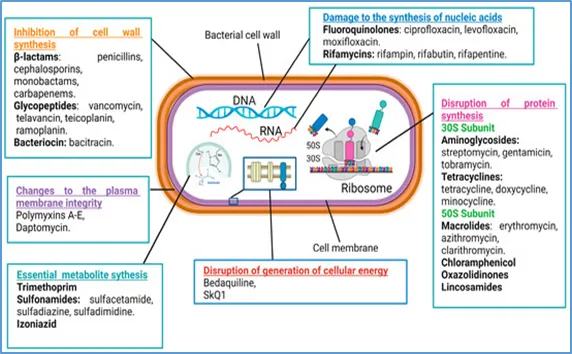
Fig 1. Elaboration of Cell compositions

  1. MECHANISMS

Microorganisms develop resistance through several adaptive mechanisms:

  • Enzymatic Degradation as a Mechanism of Antibiotic Resistance-

Enzymatic degradation is one of the most important and widespread mechanisms by which bacteria develop resistance to antibiotics. In this mechanism, bacteria produce specific enzymes that chemically inactivate or destroy the antibiotic molecule, rendering it ineffective before it reaches its target site. Principle of Enzymatic Degradation-Bacterial cells synthesize enzymes that break down the structural components of antibiotics. This prevents the drug from interacting with its biological target (e.g. cell wall, ribosome). Mechanism-Enzymes that degrade the structural elements of antibiotics are produced by bacterial cells. This stops the medication from interacting with its biological target, such as the ribosome or cell wall. Because the resistance genes that code for these enzymes are frequently carried on plasmids, bacteria can spread quickly.

  1. Enzymes

β-lactamases -The most prevalent and important enzymes in medicine Aim for β-lactam antibiotics
Mechanism -The β-lactam ring, which is necessary for antibacterial activity, must be hydrolysed.

  1. Enzymes that Modify Aminoglycosides (AMEs)-Gentamicin and amikacin are examples of aminoglycoside antibiotics that can be rendered inactive. The drug molecule can be altered by acetylation, phosphorylation, or adenylation. This alteration stops the bacterial ribosome bounding.
  2. Acetyltransferase of Chloramphenicol-Chloramphenicol is rendered inactive. Acts as chloramphenicol an acetyl group prevents attachment to the 50S ribosome subunit.
  • Target site modifications-

Target site modifications: Target site modification is a mechanism of antibiotic resistance in which bacteria alter the structure of drug binding site and antibiotic no longer binds with it. This occurs due to the genetic mutations or enzymatic changes in target molecules such as Ribosome (protein synthesis inhibitors), Penicillin binding protein (cell wall synthesis), DNA gyrase (fluroquinolones)As a result, the antibiotic loses its ability to inhibit bacterial function, leading to resistance. Example: Methicillin-resistant Staphylococcus aureus (MRSA) produces altered penicillin-binding proteins (PBP2a), reducing β-lactam antibiotic binding. Alterations in ribosomal proteins or penicillin-binding proteins reduce antibiotic binding, leading to resistance [3].

  • Efflux Pumps-

Efflux systems actively remove antibiotics from bacterial cells, contributing significantly to multidrug resistance.

  • Reduced Permeability-

Changes in membrane permeability limit drug entry, particularly in Gram-negative bacteria [5].

  • Horizontal Gene Transfer-

The rapid spread of resistance genes via plasmids and transposons is a key factor in AMR evolution [6].

  1. Drivers of Antibiotic Resistance:

Misuse and Overuse-Inappropriate antibiotic prescribing and self-medication accelerate resistance development [7]. Agricultural Use-Antibiotic use in livestock contributes significantly to resistance transmission [8]. Poor Infection Control-Healthcare-associated infections and poor sanitation facilitate the spread of resistant pathogens [9]. Limited Drug Development-Recent analyses indicate that despite increasing resistance, antibiotic innovation remains insufficient due to economic constraints.

  1. Challenges of Antibiotic Resistance:

Clinical Challenges-Treatment failures, Increased mortality, Limited therapeutic options. Economic Burden-AMR leads to higher healthcare costs due to prolonged hospital stays and expensive treatments [11]. Public Health Impact-AMR threatens routine medical procedures and infection control globally. Rapid Evolution of Resistance-Recent studies emphasize that bacteria rapidly adapt to new antibiotics, reducing their long-term effectiveness.

  1. Immerging Antimicrobial Strategies:

Innovative antibiotics- New antibiotic classes that target hitherto unidentified bacterial processes are highlighted in recent studies. Combination Treatment-Combination strategies that use adjuvants and antibiotics increase effectiveness and slow the emergence of resistance [14]. AMPs, or antimicrobial peptides- Because of their mode of action, AMPs damage microbial membranes and are less likely to develop resistance [15]. Treatment using Bacteriophages-As a focused and successful treatment for MDR infections, phage therapy is attracting fresh attention [16]. Systems of CRISPR-Cas-Targeted eradication of dangerous microorganisms and resistance genes is made possible by CRISPR-based antimicrobials [17]. Methods Based on Nanotechnology-Nanoparticles exhibit inherent antibacterial activity and enhance medication delivery [18].  Anti-virulence Treatment-Pathogenicity is decreased by focusing on virulence variables without applying significant selective pressure [19]. Treatments Based on Microbiomes-Infection risk is decreased by restoring the microbiota with probiotics or faecal transplantation [20]. AI in Drug Discovery-Ai based methods are being utilized more frequently to find new antibacterial drugs and forecast trends of resistance [22].

  1. Integrated Stratedy To Comact AMR:

Increased use of AI in drug discovery, Personalized antimicrobial therapy, Genomics-based diagnostics, Global collaborative frameworks. These advancements provide promising directions for combating AMR effectively.

FUTURE PERSPECTIVES:

  • Increased use of AI in drug discovery
  • Personalized antimicrobial therapy
  • Genomics based diagnosis
  • Global collaborative frameworks

CONCLUSION:

The global problem of antibiotic resistance is complicated and constantly changing. Emerging approaches including phage therapy, CRISPR systems, and nanotechnology provide promising alternatives to standard antibiotics, which are becoming less effective. Coordinated initiatives incorporating prudent antibiotic use, policy implementation, and scientific innovation are needed to address.

REFERENCES

  1. O'Neill J. Tackling drug-resistant infections globally: final report and recommendations.
  2. Bush K, Bradford PA. β-Lactams and β-lactamase inhibitors: an overview. Cold Spring Harb Perspect Med. 2016 [Internet]. 2016
  3. Munita JM, Arias CA. Mechanisms of antibiotic resistance. Virulence mechanisms of bacterial pathogens. 2016 Jun 22:481-511.
  4. Li XZ, Plésiat P, Nikaido H. The challenge of efflux-mediated antibiotic resistance in Gram-negative bacteria. Clinical microbiology reviews. 2015 Apr;28(2):337-418.
  5. Nikaido H. Multidrug resistance in bacteria. Annual review of biochemistry. 2009 Jul 7;78(1):119-46.
  6. Von Wintersdorff CJ, Penders J, Van Niekerk JM, Mills ND, Majumder S, Van Alphen LB, Savelkoul PH, Wolffs PF. Dissemination of antimicrobial resistance in microbial ecosystems through horizontal gene transfer. Frontiers in microbiology. 2016 Feb 19; 7:173.
  7. Ventola CL. The antibiotic resistance crisis: part 1: causes and threats. Pharmacy and therapeutics. 2015 Apr;40(4):277.
  8. Marshall BM, Levy SB. Food animals and antimicrobials: Impacts on human health. Clin Microbiol Rev. 2011;24(4):718–733
  9. Allegranzi B, Nejad SB, Combescure C, Graafmans W, Attar H, Donaldson L, Pittet D. Burden of endemic health-care-associated infection in developing countries: systematic review and meta-analysis. The Lancet. 2011 Jan 15;377(9761):228-41.
  10. Payne DJ, Gwynn MN, Holmes DJ, Pompliano DL. Drugs for bad bugs: Confronting the challenges of antibacterial discovery. Nat Rev Drug Discov. 2007;6(1):29–40
  11. Dadgostar P. Antimicrobial resistance: Implications and costs. Infect Drug Resist. 2019; 12:3903–3910.
  12. Mendelson M, Matsoso MP. The World Health Organization global action plan for antimicrobial resistance. SAMJ: South African Medical Journal. 2015 May;105(5):325-.
  13. Ling LL, Schneider T, Peoples AJ, Spoering AL, Engels I, Conlon BP, et al. A new antibiotic kills pathogens without detectable resistance. Nature. 2015;517(7535):455–459.
  14. Worthington RJ, Melander C. Overcoming resistance to β-lactam antibiotics. J Org Chem. 2013;78(9):4207–4213.
  15. Mookherjee N, Anderson MA, Haagsman HP, Davidson DJ. Antimicrobial host defence peptides: Functions and clinical potential. Nat Rev Drug Discov. 2020;19(5):311–332
  16. Lin DM, Koskella B, Lin HC. Phage therapy: An alternative to antibiotics in the age of multi-drug resistance. Nat Rev Microbiol. 2017;15(2):77–85.
  17. Bikard D, Barrangou R. Using CRISPR-Cas systems as antimicrobials. Nat Rev Microbiol. 2017;15(7):432–444.
  18. Baptista PV, McCusker MP, Carvalho A, Ferreira DA, Mohan NM, Martins M, et al. Nano-strategies to fight multidrug-resistant bacteria“A battle of the titans.” Front Microbiol. 2018; 9:1441.
  19. latworthy AE, Pierson E, Hung DT. Targeting virulence: A new paradigm for antimicrobial therapy. Nat Chem Biol. 2007;3(9):541–548.
  20. Buffie CG, Pamer EG. Microbiota-mediated colonization resistance against intestinal pathogens. Nat Rev Immunol. 2013;13(11):790–801.
  21. Stokes JM, Yang K, Swanson K, Jin W, Cubillos-Ruiz A, Donghia NM, et al. A deep learning approach to antibiotic discovery. Cell. 2020;180(4):688–702.e13. doi: 10.1016/j.cell.2020.01.021.
  22. Chen L, Kumar S, Wu H. A review of current antibiotic resistance and promising antibiotics with novel modes of action to combat antibiotic resistance. Arch Microbiol. 2023;205(11):356.
  23. Jezek A, Del Rio C. Antibacterial resistance, research, and funding in 2024. Clin Infect Dis. 2023;77(Suppl 4): S277–S278.
  24. Reza N, Dubey V, Sharland M, Hope W. Antimicrobial use and resistance. bmj. 2025 Dec 12;391.
  25. Yi M, Luo Y, Deng Y, editors. Update on diagnostic and prognostic biomarkers for women’s cancers. Frontiers Media SA; 2023 Aug 1.
  26. World Health Organization. Global Antibiotic Resistance Surveillance Report 2025: WHO Global Antimicrobial Resistance and Use Surveillance System (GLASS). World Health Organization; 2025 Oct 11.

Reference

  1. O'Neill J. Tackling drug-resistant infections globally: final report and recommendations.
  2. Bush K, Bradford PA. β-Lactams and β-lactamase inhibitors: an overview. Cold Spring Harb Perspect Med. 2016 [Internet]. 2016
  3. Munita JM, Arias CA. Mechanisms of antibiotic resistance. Virulence mechanisms of bacterial pathogens. 2016 Jun 22:481-511.
  4. Li XZ, Plésiat P, Nikaido H. The challenge of efflux-mediated antibiotic resistance in Gram-negative bacteria. Clinical microbiology reviews. 2015 Apr;28(2):337-418.
  5. Nikaido H. Multidrug resistance in bacteria. Annual review of biochemistry. 2009 Jul 7;78(1):119-46.
  6. Von Wintersdorff CJ, Penders J, Van Niekerk JM, Mills ND, Majumder S, Van Alphen LB, Savelkoul PH, Wolffs PF. Dissemination of antimicrobial resistance in microbial ecosystems through horizontal gene transfer. Frontiers in microbiology. 2016 Feb 19; 7:173.
  7. Ventola CL. The antibiotic resistance crisis: part 1: causes and threats. Pharmacy and therapeutics. 2015 Apr;40(4):277.
  8. Marshall BM, Levy SB. Food animals and antimicrobials: Impacts on human health. Clin Microbiol Rev. 2011;24(4):718–733
  9. Allegranzi B, Nejad SB, Combescure C, Graafmans W, Attar H, Donaldson L, Pittet D. Burden of endemic health-care-associated infection in developing countries: systematic review and meta-analysis. The Lancet. 2011 Jan 15;377(9761):228-41.
  10. Payne DJ, Gwynn MN, Holmes DJ, Pompliano DL. Drugs for bad bugs: Confronting the challenges of antibacterial discovery. Nat Rev Drug Discov. 2007;6(1):29–40
  11. Dadgostar P. Antimicrobial resistance: Implications and costs. Infect Drug Resist. 2019; 12:3903–3910.
  12. Mendelson M, Matsoso MP. The World Health Organization global action plan for antimicrobial resistance. SAMJ: South African Medical Journal. 2015 May;105(5):325-.
  13. Ling LL, Schneider T, Peoples AJ, Spoering AL, Engels I, Conlon BP, et al. A new antibiotic kills pathogens without detectable resistance. Nature. 2015;517(7535):455–459.
  14. Worthington RJ, Melander C. Overcoming resistance to β-lactam antibiotics. J Org Chem. 2013;78(9):4207–4213.
  15. Mookherjee N, Anderson MA, Haagsman HP, Davidson DJ. Antimicrobial host defence peptides: Functions and clinical potential. Nat Rev Drug Discov. 2020;19(5):311–332
  16. Lin DM, Koskella B, Lin HC. Phage therapy: An alternative to antibiotics in the age of multi-drug resistance. Nat Rev Microbiol. 2017;15(2):77–85.
  17. Bikard D, Barrangou R. Using CRISPR-Cas systems as antimicrobials. Nat Rev Microbiol. 2017;15(7):432–444.
  18. Baptista PV, McCusker MP, Carvalho A, Ferreira DA, Mohan NM, Martins M, et al. Nano-strategies to fight multidrug-resistant bacteria“A battle of the titans.” Front Microbiol. 2018; 9:1441.
  19. latworthy AE, Pierson E, Hung DT. Targeting virulence: A new paradigm for antimicrobial therapy. Nat Chem Biol. 2007;3(9):541–548.
  20. Buffie CG, Pamer EG. Microbiota-mediated colonization resistance against intestinal pathogens. Nat Rev Immunol. 2013;13(11):790–801.
  21. Stokes JM, Yang K, Swanson K, Jin W, Cubillos-Ruiz A, Donghia NM, et al. A deep learning approach to antibiotic discovery. Cell. 2020;180(4):688–702.e13. doi: 10.1016/j.cell.2020.01.021.
  22. Chen L, Kumar S, Wu H. A review of current antibiotic resistance and promising antibiotics with novel modes of action to combat antibiotic resistance. Arch Microbiol. 2023;205(11):356.
  23. Jezek A, Del Rio C. Antibacterial resistance, research, and funding in 2024. Clin Infect Dis. 2023;77(Suppl 4): S277–S278.
  24. Reza N, Dubey V, Sharland M, Hope W. Antimicrobial use and resistance. bmj. 2025 Dec 12;391.
  25. Yi M, Luo Y, Deng Y, editors. Update on diagnostic and prognostic biomarkers for women’s cancers. Frontiers Media SA; 2023 Aug 1.
  26. World Health Organization. Global Antibiotic Resistance Surveillance Report 2025: WHO Global Antimicrobial Resistance and Use Surveillance System (GLASS). World Health Organization; 2025 Oct 11.

Photo
Yogesh Wankhede
Corresponding author

MET’s Institute of D. Pharmacy, Bhujbal Knowledge City, Adgaon, Nashik 422003, Maharashtra, India

Photo
Rutuja Ahire
Co-author

MET’s Institute of D. Pharmacy, Bhujbal Knowledge City, Adgaon, Nashik 422003, Maharashtra, India

Photo
Sarthak Suryawanshi
Co-author

MET’s Institute of D. Pharmacy, Bhujbal Knowledge City, Adgaon, Nashik 422003, Maharashtra, India

Photo
Vaishnavi Gochide
Co-author

MET’s Institute of D. Pharmacy, Bhujbal Knowledge City, Adgaon, Nashik 422003, Maharashtra, India

Photo
Rani Hembade
Co-author

MET’s Institute of D. Pharmacy, Bhujbal Knowledge City, Adgaon, Nashik 422003, Maharashtra, India

Photo
Ruchika Gajare
Co-author

MET’s Institute of D. Pharmacy, Bhujbal Knowledge City, Adgaon, Nashik 422003, Maharashtra, India

Rutuja Ahire, Sarthak Suryawanshi, Vaishnavi Gochide, Rani Hembade, Ruchika Gajare, Yogesh Wankhede*, Antibiotic Resistance in the Modern Era: Emerging Challenges and Innovative Antimicrobial Strategies, Int. J. Med. Pharm. Sci., 2026, 2 (8), 707-711. https://doi.org/10.5281/zenodo.22053038

More related articles
Nanoparticles for Improving Antibiotic Delivery Ag...
Kowsalya K., Swarnalatha S., Ranjitha P., Karthi J....
Irrational Use of Antibiotics: A Global Threat to ...
Sudarsanam Nagarjuna, Palaparthi Cherishma, Minraj Pokhrel, Lella...
Role of Synthetic and Natural FtsZ Inhibitors as A...
B. Sreelatha, Sandeep CH. Reddy, Arundhuti Mallik...
Comparative In-Vitro Evaluation of Antimicrobial Activity of Hydroalcoholic Extr...
Rushikesh Markad, R. R. Bendgude, N. G. Shinde, Mayur kekan, Chaitanya Hegadkar...
AI–Brain Interfaces: Emerging Frontiers in Cognitive Enhancement and Neurobeha...
Shikha Rathi, Mukesh Sharma, Girendra Kumar Gautam, Akansha Nirwal...
Related Articles
Knowledge, Attitudes, and Practices (KAP) of Antibiotic Use and Resistance Among...
Karan A. S., Mukesh V., Mohanapandiyan S., M. Senthilkumar, Loganantham, Harshad M. K., Fathimathul ...
Antibiotic Resistance: A Global Public Health Challenge – A Review...
Sanjana Ostwal, Shital Boraste, Padma Pawar, Minakshi Londhe, Ashwini Shewale...
Nanoparticles for Improving Antibiotic Delivery Against Resistant Bacteria...
Kowsalya K., Swarnalatha S., Ranjitha P., Karthi J....
More related articles
Nanoparticles for Improving Antibiotic Delivery Against Resistant Bacteria...
Kowsalya K., Swarnalatha S., Ranjitha P., Karthi J....
Irrational Use of Antibiotics: A Global Threat to Public Health...
Sudarsanam Nagarjuna, Palaparthi Cherishma, Minraj Pokhrel, Lella Janaki , Galaba Yamini Padmasri, D...
Role of Synthetic and Natural FtsZ Inhibitors as Antibacterial Agents...
B. Sreelatha, Sandeep CH. Reddy, Arundhuti Mallik...
Nanoparticles for Improving Antibiotic Delivery Against Resistant Bacteria...
Kowsalya K., Swarnalatha S., Ranjitha P., Karthi J....
Irrational Use of Antibiotics: A Global Threat to Public Health...
Sudarsanam Nagarjuna, Palaparthi Cherishma, Minraj Pokhrel, Lella Janaki , Galaba Yamini Padmasri, D...
Role of Synthetic and Natural FtsZ Inhibitors as Antibacterial Agents...
B. Sreelatha, Sandeep CH. Reddy, Arundhuti Mallik...