

We use cookies to ensure our website works properly and to personalise your experience. Cookies policy
1Principal, Vidya Niketan College of Pharmacy, Lakhewadi, Pune, Maharashtra, India 413103.
2Associate Professor, Vidya Niketan College of Pharmacy, Lakhewadi, Pune, Maharashtra, India 413103.
3Vidya Niketan College of Pharmacy, Lakhewadi, Pune, Maharashtra, India 413103
The assay of Dapagliflozin & Bisoprolol was performed with tablets and the % assay was found to be 100.10 & 100.08% which shows that the method is useful for routine analysis. The linearity of Dapagliflozin & Bisoprolol was found to be linear with a correlation coefficient of 0.999 and 0.999, which shows that the method is capable of producing good sensitivity. The acceptance criteria of precision is RSD should be not more than 2.0% and the method show Intraday and Inter-day precision 0.13 and 0.30 % for Dapagliflozin and Intraday and Inter-day precision 0.13 and 0.30 % for Bisoprolol. which shows that the method is precise. Which shows that the method is repeatable when performed in different days also. The total recovery was found to be for Dapagliflozin is 99.45-100.58 % and for Bisoprolol is 99.66-100 %. The validation of developed method shows that the accuracy is well within the limit, which shows that the method is capable of showing good accuracy and reproducibility.
Diabetes and high blood pressure are becoming more common. Diabetics are more likely to have hypertension than comparable non-diabetics [1]. Patients with both diseases are far more likely to experience early microvascular and macrovascular issues. The likelihood of microvascular and macrovascular issues is significantly reduced by actively controlling blood pressure (BP). Hypertension increases mortality in individuals with diabetes by 7.2 and 37 times, respectively [2]. Strict blood pressure control and early blood pressure treatment significantly reduced microvascular complications (retinopathy, nephropathy, and neuropathy) and macrovascular complications (coronary artery disease (CAD), stroke, and peripheral vascular disease), according to the Hypertension Optimum Trial (HOT) and the U.K. Prospective Diabetes Study (UKPDS) epidemiological study [3]. For those with diabetes and related heart issues, a combination of dapagliflozin and bisoprolol is used to regulate blood sugar levels while lowering cardiac strain. Bisoprolol is a selective β1-adrenergic receptor blocker that reduces cardiac workload and improves hemodynamic stability. Dapagliflozin, a highly selective inhibitor of the Sodium-Glucose Co-Transporter 2 (SGLT2), reduces renal glucose reabsorption and promotes glycosuria, thereby improving glycemic control in individuals with Type 2 Diabetes Mellitus. Its unique insulin-independent mechanism also offers additional cardiovascular and renal benefits. Dapagliflozin acts through an insulin-independent mechanism by promoting the excretion of glucose via the kidneys, thereby distinguishing its mode of action from that of traditional antidiabetic agents. [4] It selectively inhibits Sodium-Glucose Co-Transporter 2 (SGLT2) over SGLT1, leading to reduced renal glucose reabsorption and improved glycemic control. Chemically, dapagliflozin is described as (2S,3R,4R,5S,6R)-2-{4-chloro-3-[(4-ethoxyphenyl) methyl] phenyl}-6-(hydroxymethyl) oxane-3,4,5-triol, with a molecular formula of C21H25ClO6 and a molecular weight of 408.873 g/mol. It appears as a white to off-white crystalline powder and is soluble in solvents such as ethanol, methanol, dimethyl sulfoxide (DMSO), and dimethylformamide (DMF). [5] Bisoprolol fumarate (BISO), on the other hand, is a highly selective β1-adrenergic receptor blocker that reduces cardiac output and heart rate by inhibiting sympathetic stimulation of the heart. [6] This pharmacological activity contributes to decreased cardiovascular risk in patients with hypertension and heart failure. Its chemical name is 1-[(propan-2-yl) amino]-3-(4-{[2-(propan-2-yloxy) ethoxy] methyl} phenoxy) propan-2-ol, with a molecular formula of C18H31NO4 and a molecular weight of 325.443 g/mol. It is off-white to white crystalline powder, readily soluble in water and methanol, and moderately soluble in alcohol, glacial acetic acid, and chloroform, but only slightly soluble in acetone and ethyl acetate. [7]
MATERIAL AND METHODS
1.2.1 Instrumentation Chemicals and reagents:
The HPLC system consisted of Agilent connected with PDA detector. Dapagliflozin & Bisoprolol standard gift samples were provided by Aadhaar Life Science Pvt. Ltd. Solapur. Methanol, acetonitrile and water (HPLC grade) were purchased from Merck Chemical Company. Sodium hexane Sulphonic acid, glacial acetic acid (Analytical grade) and 0.22 μm pump Nylon filter were purchased from S.D. Fine Chemicals Ltd., Mumbai. The Whatman filter paper No. 41 was obtained from Modern Science Lab. All other reagents used were analytical grade. All the glassware used were borosilicate glass. Tablet formulations (DapaBiso 10/5) were obtained from the local market.
1.2.2 Chromatographic Conditions:
1.3 Standard Preparation:
a. Dapagliflozin Standard Stock solution-I (SSS-I):
i. Prepare a Standard Stock Solution (SSS-I) of by adding 10 mg of Dapagliflozin in 100 ml volumetric flask & add 50 ml diluent, sonicate for 5 minutes and make the volume to 100 ml with diluent. (Conc. of Salbutamol in SSS-I = 100 µg/ml).
b. Bisoprolol Standard Stock solution-II (SSS-II)
ii. Prepare a Standard Stock Solution (SSS-II) of by adding 5 mg of Bisoprolol in 100 ml volumetric flask & add 50 ml diluent, sonicate for 5 minutes and make the volume to 100 ml with diluent. (Conc. of Bisoprolol in SSS-II = 50 µg/ml).
c. Then add 1.0 ml of SSS-I and 1.0 ml of SSS-II in 10 ml volumetric flask and add 5 ml diluent and vortex and make up the volume with diluent. (Conc. of Dapagliflozin = 10 µg/ml and Conc. of Bisoprolol = 5 µg/ml)
1.4 Preparation of Drug Product sample solution:
Tablet were crushed in mortar and pestle, tablet powder equivalent to 1mg Dapagliflozin and 0.5 mg of Bisoprolol was weighed in 10 ml volumetric flask and diluent was added up to the mark and sonicated for 5 minutes. Further the solution was filtered and 1 ml of filtrate was diluted to 10ml.
1.5 Selection of Wavelength:
The sample was scanned from 190-400 nm with DAD detector. The Wavelength selected for analysis chosen was 225 nm on the basis of appropriate intensity of both peaks.
1.6 Method Validation:
a. Specificity & Assay:
Individual sample of Blank, Dapagliflozin working standard (10 µg/ml), Bisoprolol working standard (5µg/ml), Mixture working standard and Drug product of was prepared and peaks were for identified from Retention Time.
% Assay was calculated as follows:
b. Repeatability & System Suitability:
A single working standard was prepared as described in section 2 and 6 injections were made from same solution and checked for system suitability. System suitability parameters are as below:
c. Linearity & Range:
5 samples of varying concentrations ranging from 80-120% were prepared. The concentrations are given below
Table: 1 Concentration of linearity Study for HPLC
|
% Level |
Dapagliflozin Conc. (µg/ml) |
Bisoprolol Conc. (µg/ml) |
|
80 |
8 |
4 |
|
90 |
9 |
4.5 |
|
100 |
10 |
5 |
|
110 |
11 |
5.5 |
|
120 |
12 |
6 |
The sample preparations are given as below;
X ml of Dapagliflozin and Y ml of Bisoprolol standard solution was added to 10 ml diluent to make up the concentrations given above:
Table: 2 Standard solution diluent to make up the concentration
|
X ml of SSS-I |
X ml of SSS-II |
Diluted to |
|
0.8 |
0.8 |
10 ml |
|
0.9 |
0.9 |
10 ml |
|
1.0 |
1.0 |
10 ml |
|
1.1 |
1.1 |
10 ml |
|
1.2 |
1.2 |
10 ml |
c. Accuracy:
Accuracy was determined by means of recovery experiments, by the determination of % mean recovery of both the drugs in the formulation at three different levels (80-120%).
d. LOD/ LOQ:
LOD is the lowest amount of analyte in a sample that can be detected but not necessarily quantify under the stated experimental conditions. LOQ is the lowest concentration of analyte in a sample that can be determined with the acceptable precision and accuracy under stated experimental conditions. Was calculated by using ANOVA technique.
e. Robustness:
To determine the robustness of the developed method, experimental conditions were deliberately altered, and the system suitability parameter retention time and peak area were evaluated.
Table: 3 Robustness Study for HPLC
|
Condition |
Increased |
Normal |
Decreased |
|
Column Oven Temperature |
32˚C |
30˚C |
28˚C |
|
Wavelength |
227 nm |
225 nm |
223 nm |
f) Intra & Inter-day Precision:
RESULT AND DISCUSSION:
i) Selection of analytical wavelength:
The sample was scanned from 200-400 nm with PDA detector. The Wavelength selected for analysis chosen was 225 nm on basis of appropriate intensity of Dapagliflozin.
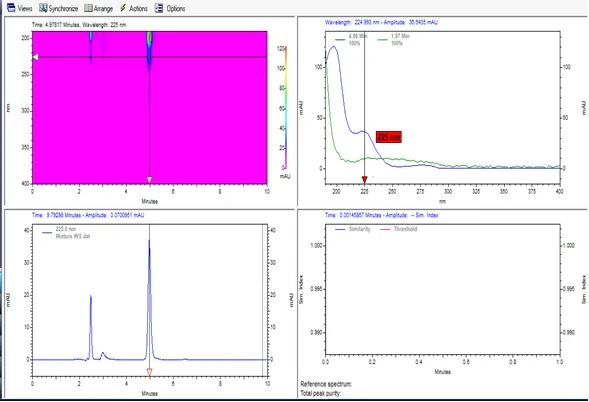
Figure 1: Spectrum of Dapagliflozin & Bisoprolol between 200-400 nm in mobile phase.
Dapagliflozin RT 4.96 min and Bisoprolol RT 2.49 min show the maximum absorbance at 225 nm. Hence, HPLC analysis was carried out at 225 nm.
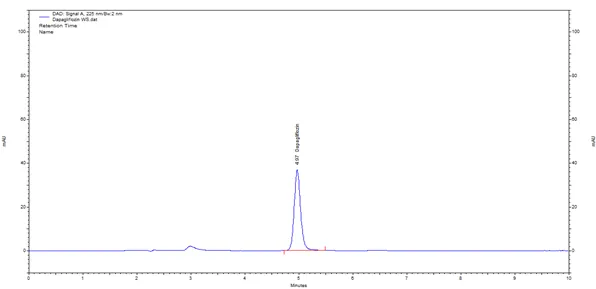
Figure 2: Chromatogram of Standard Dapagliflozin.
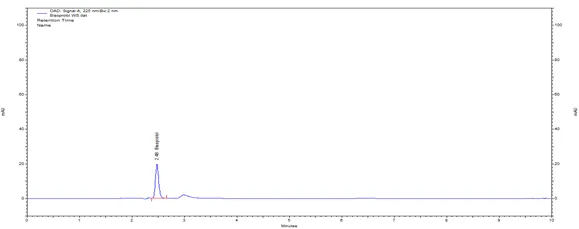
Figure 3: Chromatogram of Standard Bisoprolol.
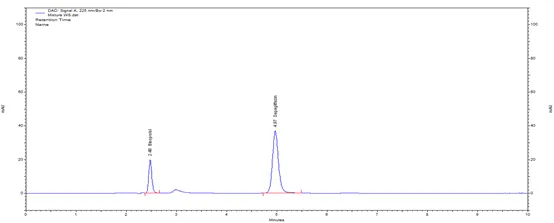
Figure 4: Chromatogram of Standard Mixture of Dapagliflozin & Bisoprolol in optimized chromatographic conditions.
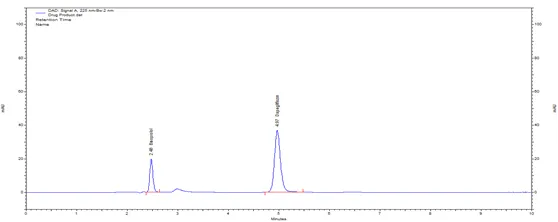
Figure 5: Chromatogram of Sample of Dapagliflozin & Bisoprolol in optimized chromatographic conditions.
iii) Analysis of tablet formulation: -
Table no. 4 Analysis of Marketed formulation.
|
Sample ID |
Bisoprolol |
Dapagliflozin |
||||
|
RT |
Area |
% Assay |
RT |
Area |
% Assay |
|
|
BSP WS |
2.48 |
175113 |
- |
- |
- |
- |
|
DPG WS |
- |
- |
- |
4.97 |
643083 |
- |
|
MIX WS |
2.48 |
175212 |
- |
4.97 |
643165 |
- |
|
Drug Product |
2.48 |
175345 |
100.08 |
4.97 |
643784 |
100.10 |
Amount of drug present in the marketed formulation was calculated using RP-HPLC. Amount of Dapagliflozin & Bisoprolol was found to be 100.10 & 100.08 % respectively. This method can be employed for routine analysis of Dapagliflozin & Bisoprolol.
1.8 Validation of RP-HPLC Method: [8-13]
I. Linearity:
Different concentration of solution prepared for Linearity of both Dapagliflozin & Bisoprolol are shown in respectively.
Table No. 5 Linearity dilutions for Dapagliflozin.
|
Dapagliflozin |
||
|
% Level |
Conc. (µg/ml) |
Area |
|
80 |
8 |
518051 |
|
90 |
9 |
577866 |
|
100 |
10 |
643083 |
|
110 |
11 |
698784 |
|
120 |
12 |
768073 |
Table No. 6 Linearity dilutions for Bisoprolol.
|
Bisoprolol |
||
|
% Level |
Conc. (µg/ml) |
Area |
|
80 |
4 |
140273 |
|
90 |
4.5 |
157698 |
|
100 |
5 |
175113 |
|
110 |
5.5 |
192888 |
|
120 |
6 |
209716 |
According to ICH guideline linearity of an analytical procedure is its ability (within a given range) to obtain test results which are directly proportional to the concentration of an analyte Linearity was studied by plotting a graph of area v/s concentration. A series standard solution of Dapagliflozin & Bisoprolol were prepared in the concentration range of 8 μg/ml to 12 μg/mL and 4 μg/mL to 6 μg/mL respectively with linearity range 80-120% for both the drug. The regression coefficient (r2) of Dapagliflozin was found to be 0.999 & for Bisoprolol regression coefficient (r2) was found to be 0.999. The equation of regression line for Dapagliflozin was found to be y=62096x+20209 for Bisoprolol was found to be y=34815x+1061.6 Linearity graph of Dapagliflozin & Bisoprolol shown in figure 6 & 7 respectively.
II. Precision:
The Precision study of Dapagliflozin & Bisoprolol are shown in Table 5 respectively.
Table No. 7 Precision of Dapagliflozin & Bisoprolol.
|
Dapagliflozin |
||||
|
Condition |
Sample ID |
RT |
Area |
% Assay |
|
Morning |
WS |
4.97 |
643165 |
- |
|
DP |
4.97 |
643784 |
100.10 |
|
|
Evening |
WS |
4.97 |
643762 |
- |
|
DP |
4.97 |
642755 |
99.84 |
|
|
% RSD |
0.18 |
|||
|
Day 2 |
WS |
4.97 |
642689 |
- |
|
DP |
4.97 |
641674 |
99.84 |
|
|
% RSD |
0.15 |
|||
|
Bisoprolol |
||||
|
Condition |
Sample ID |
RT |
Area |
% Assay |
|
Morning |
WS |
2.48 |
175212 |
- |
|
DP |
2.48 |
175345 |
100.08 |
|
|
Evening |
WS |
2.48 |
175423 |
- |
|
DP |
2.48 |
175235 |
99.89 |
|
|
% RSD |
0.13 |
|||
|
Day 2 |
WS |
2.48 |
174234 |
- |
|
DP |
2.48 |
173346 |
99.49 |
|
|
% RSD |
0.30 |
|||
The accuracy of an analytical process used to determine intra-day and inter-day variation. The percentage relative standard deviation (RSD) for Intraday and Inter-day precision was 0.13 and 0.30 % for Dapagliflozin and Intraday and Inter-day precision 0.13 and 0.30 % for Bisoprolol. The obtained findings are less than 2% suggests a high level of precision.
III. Accuracy:
The accuracy study of Dapagliflozin & Bisoprolol are shown in Table 6 and 7 respectively.
Table 8 Accuracy Study of Dapagliflozin.
|
Sample ID |
Reps |
Spiked Conc. (µg/ml) |
Area |
Amount Recovered (µg/ml) |
% Recovery |
AVG |
STDEV |
% RSD |
|
80% |
Rep 1 |
7.99 |
518051 |
8.04 |
100.58 |
100.58 |
0.000918 |
0.00 |
|
Rep 2 |
7.99 |
518053 |
8.04 |
100.58 |
||||
|
Rep 3 |
7.99 |
518044 |
8.04 |
100.58 |
||||
|
100% |
Rep 1 |
9.99 |
643083 |
9.98 |
99.88 |
99.89 |
0.014988 |
0.02 |
|
Rep 2 |
9.99 |
643075 |
9.98 |
99.88 |
||||
|
Rep 3 |
9.99 |
643246 |
9.98 |
99.91 |
||||
|
120% |
Rep 1 |
11.99 |
768073 |
11.92 |
99.41 |
99.45 |
0.030657 |
0.03 |
|
Rep 2 |
11.99 |
768513 |
11.92 |
99.47 |
||||
|
Rep 3 |
11.99 |
768445 |
11.92 |
99.46 |
Table 9. Accuracy Study of Bisoprolol.
|
Sample ID |
Reps |
Spiked Conc. (µg/ml) |
Area |
Amount Recovered (µg/ml) |
% Recovery |
AVG |
STDEV |
% RSD |
|
80% |
Rep 1 |
4.00 |
140273 |
3.99 |
99.97 |
100.00 |
0.084208 |
0.08 |
|
Rep 2 |
4.00 |
140456 |
4.00 |
100.10 |
||||
|
Rep 3 |
4.00 |
140235 |
3.99 |
99.94 |
||||
|
100% |
Rep 1 |
5.00 |
175113 |
4.99 |
99.84 |
99.88 |
0.042085 |
0.04 |
|
Rep 2 |
5.00 |
175235 |
4.99 |
99.90 |
||||
|
Rep 3 |
5.00 |
175246 |
4.99 |
99.91 |
||||
|
120% |
Rep 1 |
5.99 |
209716 |
5.97 |
99.64 |
99.66 |
0.032154 |
0.03 |
|
Rep 2 |
5.99 |
209745 |
5.97 |
99.65 |
||||
|
Rep 3 |
5.99 |
209845 |
5.98 |
99.70 |
The method's accuracy defines how close the method's results are to the true value. The results of the accuracy testing revealed that the technique is accurate within acceptable ranges. When the % RSD for Dapagliflozin & Bisoprolol is calculated, all of the results are within acceptable bounds. A maximum RSD of 2.0% indicated acceptable accuracy within the range. According to the Accuracy research, the percent recovery of Dapagliflozin is 99.45-100.58 % and Bisoprolol is 99.66-100 %, both of which are within the ICH standards.
iv. Limit of Detection (LOD) and Limit of Quantification (LOQ):
The LOD and LOQ of Dapagliflozin & Bisoprolol are shown in Table 8.
Table 9. The LOD and LOQ of Dapagliflozin & Bisoprolol.
|
Sr. No |
Name of drug |
LOD (μg/mL) |
LOQ (μg/mL) |
|
1. |
Dapagliflozin |
0.57 |
1.72 |
|
2. |
Bisoprolol |
0.07 |
0.22 |
Sensitivity of the method was determined with respect to limit of detection (LOD) and the quantification limit of an individual analytical procedure is the lowest amount of an analyte in a sample which can be quantitatively determined with the suitable precision and accuracy. LOD and LOQ value for Dapagliflozin was found to be 0.57 μg/mL and 1.72 μg/mL, LOD and LOQ value for Bisoprolol was found to be 0.07 μg/mL and 0.22 μg/mL respectively.
iv. System suitability:
System suitability data of Dapagliflozin & Bisoprolol given in below Table 9 and 10.
Table 10 System suitability or Repeatability parameter of Dapagliflozin.
|
Dapagliflozin |
|||||
|
Sample ID |
Area |
RT |
TP |
Asymmetry |
Resolution |
|
100% Rep 1 |
643083 |
4.97 |
8839 |
1.13 |
15.46 |
|
100% Rep 2 |
643214 |
4.97 |
8845 |
1.14 |
14.60 |
|
100% Rep 3 |
643225 |
4.97 |
8871 |
1.16 |
14.58 |
|
100% Rep 4 |
643289 |
4.97 |
8823 |
1.12 |
15.01 |
|
100% Rep 5 |
643397 |
4.97 |
8894 |
1.08 |
15.56 |
|
100% Rep 6 |
643143 |
4.97 |
8812 |
1.11 |
14.32 |
|
AVG |
643841 |
4.97 |
|
||
|
STDEV |
110.1715 |
0 |
|||
|
% RSD |
0.02 |
0.00 |
|||
Table11 System suitability parameter of Nortriptyline hydrochloride.
|
Bisoprolol |
|||||
|
Sample ID |
Area |
RT |
TP |
Asymmetry |
Resolution |
|
100% Rep 1 |
175113 |
2.48 |
7983 |
1.11 |
0.00 |
|
100% Rep 2 |
175442 |
2.48 |
7975 |
1.19 |
0.00 |
|
100% Rep 3 |
175441 |
2.48 |
7963 |
1.00 |
0.00 |
|
100% Rep 4 |
175682 |
2.48 |
7855 |
1.10 |
0.00 |
|
100% Rep 5 |
175438 |
2.48 |
7943 |
1.12 |
0.00 |
|
100% Rep 6 |
175296 |
2.48 |
7974 |
1.12 |
0.00 |
|
AVG |
175402 |
2.48 |
|
||
|
STDEV |
188.4537 |
0 |
|||
|
% RSD |
0.11 |
0.00 |
|||
The system, method, and column performance were validated by testing system suitability features. Six times, a standard solution of Dapagliflozin & Bisoprolol was injected into the system, and the system's suitable features were evaluated. Method is having repeatability because % RSD is within limit i.e. below 2.
V. Robustness: Robustness data of Dapagliflozin & Bisoprolol given in below
Table 12 Robustness parameter of Dapagliflozin.
|
Variation in Column temperature (Dapagliflozin) |
|||||||
|
Condition |
Sample ID |
RT |
Area |
% Assay |
Average |
STDEV |
% RSD |
|
28˚C |
WS |
4.97 |
643115 |
- |
100.03 |
0.054476 |
0.05 |
|
DP |
4.97 |
643152 |
100.01 |
||||
|
30˚C |
WS |
4.97 |
643165 |
- |
|||
|
DP |
4.97 |
643784 |
100.10 |
||||
|
32˚C |
WS |
4.97 |
643724 |
- |
|||
|
DP |
4.97 |
643714 |
100.00 |
||||
|
|
|
|
|
|
|
|
|
|
Variation in Column temperature (Dapagliflozin) |
|||||||
|
Condition |
Sample ID |
RT |
Area |
% Assay |
Average |
STDEV |
% RSD |
|
223 nm |
WS |
4.97 |
643197 |
- |
100.03 |
0.057235 |
0.06 |
|
DP |
4.97 |
643154 |
99.99 |
||||
|
225 nm |
WS |
4.97 |
643165 |
- |
|||
|
DP |
4.97 |
643784 |
100.10 |
||||
|
227 nm |
WS |
4.97 |
643765 |
- |
|||
|
DP |
4.97 |
643774 |
100.00 |
||||
Table 13 Robustness parameter of Bisoprolol.
|
Variation in Column temperature (Bisoprolol) |
|||||||
|
Condition |
Sample ID |
RT |
Area |
% Assay |
Average |
STDEV |
% RSD |
|
28˚C |
WS |
2.48 |
175423 |
- |
100.03 |
0.043991 |
0.04 |
|
DP |
2.48 |
175422 |
100.00 |
||||
|
30˚C |
WS |
2.48 |
175212 |
- |
|||
|
DP |
2.48 |
175345 |
100.08 |
||||
|
32˚C |
WS |
2.48 |
175321 |
- |
|||
|
DP |
2.48 |
175321 |
100.00 |
||||
|
|
|
|
|
|
|
|
|
|
Variation in wavelength (Bisoprolol) |
|||||||
|
Condition |
Sample ID |
RT |
Area |
% Assay |
Average |
STDEV |
% RSD |
|
223 nm |
WS |
2.48 |
175135 |
- |
100.02 |
0.045603 |
0.05 |
|
DP |
2.48 |
175124 |
99.99 |
||||
|
225 nm |
WS |
2.48 |
175212 |
- |
|||
|
DP |
2.48 |
175345 |
100.08 |
||||
|
227 nm |
WS |
2.48 |
175321 |
- |
|||
|
DP |
2.48 |
175322 |
100.00 |
||||
Robustness was investigated using various deliberate alterations in chromatographic settings, such as changes in column Condition like 28˚C, 30˚C and 32˚C. RSD was shown to be less than 2% in the Dapagliflozin & Bisoprolol robustness studies. As a result, it is strong and adheres to ICH criteria.
CONCLUSION:
The method achieved the best separation of Dapagliflozin & Bisoprolol simultaneously in gradient mode, both the drugs are well separated in shorter time, which reduce overall analysis time and solvent consumption. According to ICH criteria, all validation parameters were determined to be within the permitted ranges. Regardless of the excipients used, it was discovered that the proposed technique was easy, precise, accurate, robust, and specific to the drugs of interest. This method demonstrated its capability for detecting and quantifying pharmaceuticals at lower concentrations by providing adequate figures of merit, such as excellent linearity, precision, and accuracy, and low LOD and LOQ. These results highlight the effectiveness of the method for routine analysis in pharmaceutical settings. Furthermore, the simplicity of the isocratic approach allows for easier implementation in laboratories, making it a valuable tool for researchers and quality control analysts alike.
REFERENCES


Samrat Khedkar, Mahesh Pingale, Shrimant Bidarkote*, Development and Validation of RP-HPLC Method for Simultaneous Estimation of Dapagliflozin and Bisoprolol in Bulk and Pharmaceutical Dosage Form, Int. J. Med. Pharm. Sci., 2026, 2 (7), 761-771. https://doi.org/10.5281/zenodo.21396903
 10.5281/zenodo.21396903