

We use cookies to ensure our website works properly and to personalise your experience. Cookies policy
School of Health & Allied Sciences, Career Point University, Kota, Rajasthan, 325003, India
Rabeprazole belongs to a group of drugs called proton pump inhibitors (PPIs) which are commonly used to treat stomach ulcers and other stomach acid conditions. However, there is a problem with low aqueous solubility and rapid degradation at acidic pH that hinders its therapeutic performance. The objective of the present study was to prepare β-cyclodextrin crosslinked nanosponges for better drug encapsulation for a controlled oral drug delivery. Preformulation studies such as Fourier transform infrared spectroscopy (FTIR), differential scanning calorimetry (DSC), solubility analysis, partition coefficient determination, UV spectrophotometric calibration and drug–excipient compatibility studies were performed to extract Rabeprazole from the enteric coated pellets. Six nanosponge formulations (F1–F6) were obtained from the use of β-cyclodextrin and diphenyl carbonate with different ratios of polymer tocrosslinker. The formulations were assessed in terms of particle size, poly dispersity index, zeta potential, surface morphology, drug loading, entrapment efficiency, production yield, in vitro drug release, release kinetics and stability. F5 had the best performance among the developed formulations with particle size of 228.7 nm ± 4.6 nm, polydispersity index of 0.241 ± 0.007 and the entrapment efficiency of 88.91 ± 1.11%. The FTIR and DSC analyses revealed that there were no noticeable significant physicochemical interactions between rabeprazole and theselected formulation components. The optimized formulation showed controlled drug release with suitable stability during the investigated storage conditions. The present findings demonstrate that the crosslinked nanosponges of β-cyclodextrin are an effective carrier system for rabeprazole and can be used as an effective method to enhance the encapsulation efficiency, formulation stability and controlled oral drug delivery.
Peptic ulcer disease (PUD) is a very common gastrointestinal disorder affecting millions of people around the world. It is caused by the attack of gastric mucosa by aggressive factors like gastric acid and pepsin, Helicobacter pylori infection, prolonged use of non-steroidal anti-inflammatory drugs (NSAIDs), alcohol, smoking or stress. Though there have been great improvement in medical management, peptic ulcer disease is still a significant health problem due to its high prevalence, relapse and complications1. Rabeprazole belongs to a class of drugs known as proton pump inhibitors that are commonly used to treat gastric ulcers, gastroesophageal reflux disease and other disorders caused by acidity. It inhibits the gastric H⁺/K⁺-ATPase enzyme, which is irreversible, in the parietal cells to reduce gastric acid secretion2. Rabeprazole possesses a therapeutic action but the pharmaceutical properties of the drug are impaired because of its low aqueous solubility and rapid degradation in acidic medium. These constraints decrease the stability of the drugs and could influence their oral bioavailability, thus necessitating the development of an improved drug delivery system3. For the improvement of therapeutic performance of poorly soluble drugs, nanotechnology-based drug delivery systems have gained a great deal of interest. The nanosponges (based on cyclodextrin) are among the systems that have promising prospects as the carrier due to their porous three-dimensional structure, high surface area and excellent drug-loading capacity. Drug molecules could been capsulated in the internal cavity of the nanosponges and protected from the environment while releasing the drug in a controlled manner. They are especially useful for acid sensitive drugs like rabeprazole4. One of the most popular polymers used for the preparation of nanosponge is β-Cyclodextrin which is biocompatible, non-toxic and is capable of forming inclusion complexes with hydrophobic drugs. The β-cyclodextrin can be chemically linked with diphenyl carbonate toform a stable porous network that can improve the drug encapsulation and release profile5. The degree of crosslinking is critical to particle size, encapsulation efficiency and release. Hence, the optimization of the ratio of polymer to crosslinker is important to form an effective nanosponge formulation6. Cyclodextrin nanosponges have been studied for various poorly soluble drugs but there is little information available about the use of these nanoparticles for rabeprazole. Studies on the effect of crosslinking density on the encapsulation efficiency and controlled drug release, for example, are still very limited. Hence, more studies are needed to formulate an optimized formulation to enhance the physicochemical performance of rabeprazole7. In the present study, an attempt was made to develop β-cyclodextrin crosslinked nanosponges for controlled delivery of rabeprazole. Various formulations were made by changing the ratio of β-cyclodextrin to diphenyl carbonate, and the physicochemical properties, drug encapsulation efficiency, particle characteristics and in vitro drug release behaviour were evaluated. The optimized formulation was anticipated to show the better drug loading, better stability and sustained drug release abilities that would show the potential of the cyclodextrin based nanosponges as an effective oral delivery system for rabeprazole.
MATERIALS AND METHODS
MATERIALS
The polymer used was β-Cyclodextrin (β-CD) and the crosslinker used for the preparation of nanosponge was diphenyl carbonate (DPC) which were obtained as a research sample from D.R. John’s Lab Pvt. Ltd. Haridwar, India. All the analytical grade dimethyl formamide (DMF), methanol, ethanol, dimethyl sulfoxide (DMSO), hydrochloric acid, acetonitrile and other reagents were used in the study. Chemicals were used as supplied and were analytical grade or HPLC grade8.
Extraction of Rabeprazole
Before formulating, Rabeprazole was isolated from enteric-coated pellets. The pellets were finely powdered and then dispersed in methanol with the help of continuous magnetic stirring for 3 hours at room temperature. The suspension formed was then filtered to eliminate the excipients and coating material present in the suspension that are insoluble. The solvent was evaporated under controlled temperature to get the filtrate concentrated. The recovered drug was dried, weighed and kept in airtight glass containers and protected from light for further use9.
Preformulation Studies
The isolated rabeprazole was characterized to validate its formulation development suitability. The FTIR spectroscopy (Shimadzu IRAffinity-1S, Japan) was carried out in the scanning range 4000 – 400cm⁻¹ to detect characteristic functional groups. Differential scanning calorimetry (DSC 60 Plus, Shimadzu, Japan) was carried out under a nitrogen atmosphere at a heating rate of 10°C/min to determine thermal behavior. The melting point was determined by the capillary tube method. The solubility was determined in distilled water, 0.1 N HCl (pH 1.2), phosphate buffer (pH 6.8), ethanol and methanol. The n-octanol/water system was used to determine the partition coefficient. The absorbent maximum of rabeprazole was used to build up the calibration curve, and a spectrophotometric method in the presence of UV was developed in phosphate buffer (pH 6.8)10.
Drug–Excipient Compatibility
The FTIR and DSC were used to study the compatibility of rabeprazole with diphenyl carbonate and β-cyclodextrin. The pure drug and physical mixtures were compared in terms of their spectral characteristics and thermo behavior to detect any significant physicochemical interaction11.
Preparation of β-Cyclodextrin Crosslinked Nanosponges
The nanosponges loaded with rabepharazole were prepared by the solvent crosslinking method, in which β-Cyclodextrin was dissolved in the dimethyl formamide with stirring, then diphenyl carbonate was slowly added. The reaction mixture was kept at 90°C for 5h for crosslinking. Blank nanosponges were dispersed in a methanolic solution of rabeprazole and stirred continuously for 24 h, filtered, washed with distilled water several times to remove unreacted drug and dried at 40 °C for drug loading12.
Formulation Design
Six formulations (F1–F6) were prepared by keeping the concentration of β-cyclodextrin constant and changing the concentration of diphenyl carbonate in order to get the various crosslinking densities. The optimized formulation was chosen by considering the particle size, entrapment efficiency, and the in vitro drug release behavior13.
Characterization of Nanosponges
The particle size, polydispersity index (PDI), zeta potential, surface morphology, production yield, drug loading and entrapment efficiency were measured for the prepared nanosponges. The Zetasizer Nano ZS (Malvern Panalytical, UK) was used to measure the particle size, PDI and zeta potential. The surface morphology was studied by scanning electron microscopy (SEM, JEOLJSM-6510LV, Japan). The UV-Visible spectrophotometry was used to determine the drug content and entrapment efficiency14.
In Vitro Drug Release Study
The USP Type II dissolution apparatus (Electro lab TDT-08L, India) was used to evaluate drug release. The dissolution media was phosphate buffer (pH 6.8) and was held at a temperature of 37 ± 0.5°C with stirring at 50 rpm using a paddle. Samples were taken at regular time points and the same amount of fresh medium was added. Spectrophotometric analysis was used to calculate the drug concentration, and cumulative drug release was calculated15.
Drug Release Kinetics
The release data were modeled by the following kinetic models; zero-order, first-order, Higuchi and Korsmeyer–Peppas. The model which showed the highest R² value was chosen as the best model to describe the drug release mechanism16.
Stability Study
The optimized formulation was then stability tested per ICH Q1A (R2) guidelines. Samples were stored under long-term (25 ± 2°C/60 ± 5% RH) and accelerated (40 ± 2°C/75 ± 5% RH) conditions. The formulation was analyzed for physical appearance, drug content, entrapment efficiency and in vitro drug release at predetermined periods17.
Statistical Analysis
Each experiment was repeated three times and mean ± SD is given. One-way analysis of variance (ANOVA) was used for statistical analysis followed by Tukey's multiple comparison test. P values < 0.05 were deemed statistically significant18.
RESULTS
Extraction Yield of Rabeprazole
Methanol proved to be a good extractant for the enteric-coated pellets for the extraction of Rabeprazole. From a set of 25 g of pellets of drug content 7.25% w/w, a total of 1.63 g of the drug was recovered, which represents 90.05% recovery(Table 1).The recovered drug was white crystalline in nature, and there was no evidence of degradation. From the high recovery, it was concluded that the extraction method was efficient and yielded adequate amount of drug for further formulation and characterization studies.
Table 1: Extraction Yield of Rabeprazole from Enteric-Coated Pellets
|
Parameter |
Value |
|
Weight of pellets received |
25 g |
|
Drug content in pellets |
7.25%w/w |
|
Theoretical drug content |
1.81 g |
|
Drug recovered |
1.63 g |
|
Percentage recovery |
90.05% |
Fourier Transform Infrared (FTIR)Analysis
The extracted rabeprazole spectrum was similar to the FTIR spectrum of the drug with all characteristic absorption bands observed (Table 2; Fig 1). The major peaks were observed at 3421 cm⁻¹ (N–H stretching), 3054 cm⁻¹ (aromatic C–H stretching), 2928 cm⁻¹ (aliphatic C–H stretching), 1604 cm⁻¹ (C=N stretching), 1492 cm⁻¹ (aromatic C=C stretching), 1246 cm⁻¹ (C–O stretching), and 1058 cm⁻¹ (S=O stretching). The characteristic functional groups of rabeprazole were preserved during extraction as no additional peaks and significant shifts were seen in the spectrum.
Table 2: Characteristic FTIR Peaks of Extracted Rabeprazole
|
Functional Group |
Reported Peak(cm⁻¹) |
Observed Peak(cm⁻¹) |
|
N–H Stretching |
3400–3450 |
3421 |
|
Aromatic C–H Stretching |
3000–3100 |
3054 |
|
Aliphatic C–H Stretching |
2850–2950 |
2928 |
|
C=N Stretching |
1580–1620 |
1604 |
|
Aromatic C=C Stretching |
1450–1550 |
1492 |
|
C–O Stretching |
1200–1300 |
1246 |
|
S=O Stretching |
1030–1080 |
1058 |
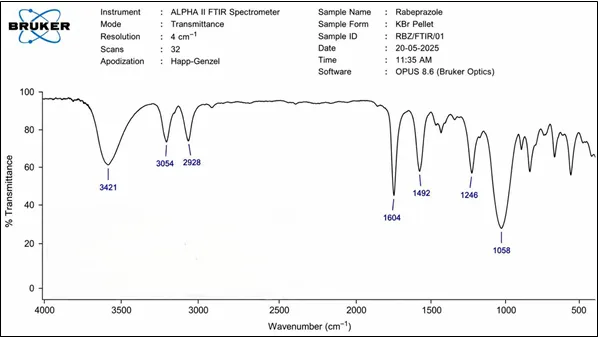
Figure 1: FTIR spectrum of extracted rabeprazole
Differential Scanning Calorimetry (DSC)Analysis
The extracted rabeprazole was subjected to DSC thermogram, and the thermal properties are tabulated in Table 3, and are presented in Figure 2. A sharp endothermic peak was seen at 141.8°C, the onset temperature was 138.4°C and the end set was 145.3°C. The thermogram revealed only a single sharp endothermic peak, validating the extracted rabeprazole to be a crystalline form. During the analysis there were no further thermal events noted.
Table 3: Thermal Characteristics of Extracted Rabeprazole
|
Parameter |
Value |
|
Onset temperature (°C) |
138.4 |
|
Peak temperature (°C) |
141.8 |
|
End set temperature (°C) |
145.3 |
|
Nature of peak |
Endothermic |
|
Physical state |
Crystalline |
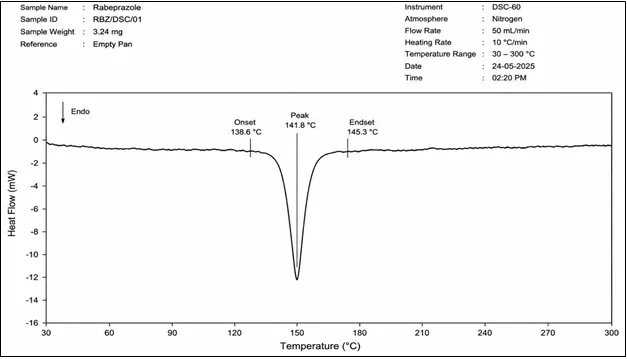
Figure 2: DSC thermogram of extracted rabeprazole
Melting Point Determination
The extracted rabeprazole was subjected to determination of its melting point which is given in Table 4. The melting point of the drug was 140.8 ± 0.6°C, which was in accordance with the reported melting range of 140 – 142°C. The range of melting obtained was very small and reproducible, reflecting the purity of the extracted drug.
Table 4: Melting Point of Extracted Rabeprazole
|
Parameter |
Value |
|
Observed melting point (°C) |
140.8 ± 0.6 |
|
Reported melting point(°C) |
140–142 |
Solubility Study
Extracted rabeprazole was tested in various solvents and media for its solubility and the results are given in Table 5 and Figure 3. The drug showed the lowest solubility in 0.1 N HCl (0.18 ± 0.02 mg/mL), followed by distilled water (0.42 ± 0.03 mg/mL). Higher solubility was observed in phosphate buffer (pH 6.8) (1.86 ± 0.08mg/mL), ethanol (8.74 ± 0.21mg/mL), and methanol (12.35 ± 0.27 mg/mL).
Table 5: Solubility of Extracted Rabeprazole in Different Media
|
Solvent/Medium |
Solubility(mg/mL) |
|
Distilled Water |
0.42 ± 0.03 |
|
0.1N HCl (pH1.2) |
0.18 ± 0.02 |
|
Phosphate Buffer(pH6.8) |
1.86 ± 0.08 |
|
Ethanol |
8.74 ± 0.21 |
|
Methanol |
12.35 ± 0.27 |
Values are expressed as Mean ± SD (n=3).
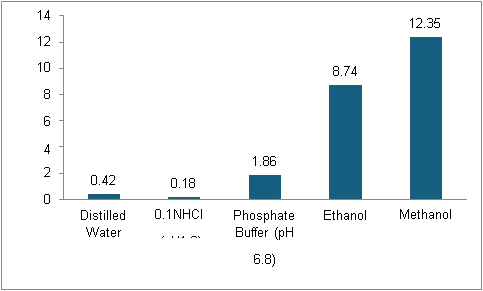
Figure 3: Solubility profile of extracted rabeprazole in different media
Partition Coefficient
The partition coefficient of the extracted rabeprazole was obtained from the n-octanol/water system and the result is given in Table 6 and in Fig 4. The concentration of rabeprazole in the n-octanol phase was 72.4 µg/mL and in the aqueous phase, it was 21.8 µg/mL. The partition coefficient (P) calculated was 3.32 and the Log P was 0.52.
Table 6: Partition Coefficient of Extracted Rabeprazole
|
Parameter |
Value |
|
Concentration in n-octanol phase (Co) |
72.4 µg/mL |
|
Concentration in aqueous phase (Cw) |
21.8 µg/mL |
|
Partition coefficient (P) |
3.32 |
|
Log P |
0.52 |
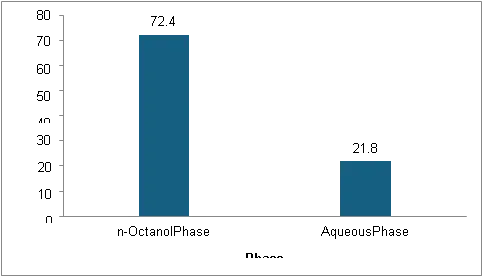
Figure 4: Distribution of rabeprazole between n-octanol and aqueous phases
Determination of λmax and Calibration Curve
The maximum absorbance (λmax) of rabeprazole in phosphate buffer (pH 6.8) was observed at 283 nm in its UV absorption spectrum (Figure 5). A calibration curve was obtained using the concentration range of 2 – 12 µg/mL, and the absorbance was found to be proportional to the concentration of the drug (Table 7; Figure 6). The regression equation was y= 0.0576x + 0.0025 with a correlation coefficient (R² = 0.9999).
Table 7: Calibration Data of Rabeprazole at 283nm
|
Concentration (µg/mL) |
Absorbance |
|
2 |
0.118 |
|
4 |
0.231 |
|
6 |
0.347 |
|
8 |
0.462 |
|
10 |
0.579 |
|
12 |
0.694 |
Figure 5: UV absorption spectrum of rabeprazole showing λmax at 283 nm
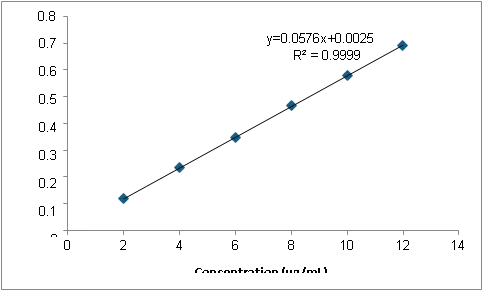
Figure 6: Calibration curve of rabeprazole at 283nm
Drug-Excipient Compatibility Study
FTIR and DSC analyses were used to check the compatibility of rabeprazole with β-cyclodextrin and diphenyl carbonate. The characteristic FTIR absorption bands and the DSC endothermic peak of the rabeprazole remained similar with the physical mixture with only small changes in the peaks position and the melting temperature (Table 8; Figures 7 and 8). During the analysis no other peaks or thermal events were observed.
Table 8: Drug–Excipient Compatibility of Rabeprazole
|
Parameter |
Observation |
|
FTIR analysis |
Characteristic peaks retained with no significant shift |
|
DSC analysis |
Endothermic peak preserved with minor variation |
|
Drug–excipient interaction |
Not observed |
|
Compatibility |
Compatible |
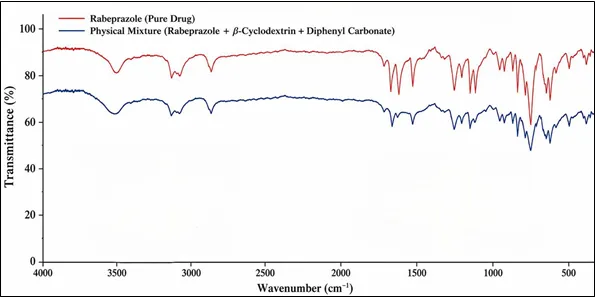
Figure 7: FTIR spectrum of rabeprazole-excipient physical mixture
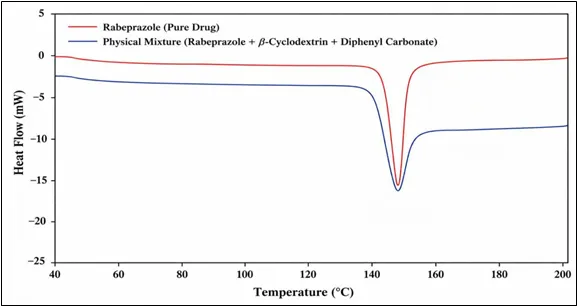
Figure 8: DSC thermogram of rabeprazole-excipient physical mixture
Formulation Development of Rabeprazole-Loaded β-Cyclodextrin Nanosponges
Successfully, solvent crosslinking method was used to prepare the Rabeprazole loaded β-cyclodextrin nanosponges. The β-cyclodextrin–diphenyl carbonate ratio was varied from formulation F1 to F6 with the quantity of drug and polymer being the same (Table 9). The formulations were all obtained as off white, free-flowing powder, with no visible aggregation. The prepared formulations were further assessed for their particle size, poly dispersity index, zeta potential, surface morphology, drug loading & entrapment efficiency, production yield, in-vitro drug release, drug release kinetics, and stability.
Table 9: Composition of Rabeprazole-Loaded β-Cyclodextrin Nanosponge Formulations
|
Batch |
Rabeprazole (mg) |
β-CD (mg) |
DPC (mg) |
β-CD: DPC Ratio |
|
F1 |
100 |
500 |
1000 |
1:2 |
|
F2 |
100 |
500 |
1250 |
1:2.5 |
|
F3 |
100 |
500 |
1500 |
1:3 |
|
F4 |
100 |
500 |
1750 |
1:3.5 |
|
F5 |
100 |
500 |
2000 |
1:4 |
|
F6 |
100 |
500 |
2250 |
1:4.5 |
Particle Size and Poly dispersity Index (PDI)
The particle size and poly dispersity index (PDI) of the prepared rabeprazole loadedβ-cyclodextrin Nanosponges are given in Table 10, Fig. 9 and 10. The particle size ranged from 228.7 ± 4.6 nm to 412.6 ± 8.4 nm, while the PDI values ranged from 0.241 ± 0.007 to 0.421 ± 0.012. The particle size of F5 was the smallest among all formulations (228.7 ± 4.6 nm) and the PDI value was the lowest (0.241 ± 0.007).
Table 10: Particle Size and Poly dispersity Index of Rabeprazole-Loaded β-Cyclodextrin Nanosponges
|
Batch |
Particle Size (nm) |
PDI |
|
F1 |
412.6 ± 8.4 |
0.421 ± 0.012 |
|
F2 |
365.8 ± 7.9 |
0.387 ± 0.011* |
|
F3 |
318.4 ± 6.7 |
0.341 ± 0.009** |
|
F4 |
274.9 ± 5.8 |
0.296 ± 0.008*** |
|
F5 |
228.7 ± 4.6 |
0.241 ± 0.007*** |
|
F6 |
246.3 ± 5.2 |
0.268 ± 0.009*** |
Values are expressed as Mean ± SD (n=3). Data were analyzed using one-way ANOVA followed by Tukey's multiple comparison test. *p < 0.05, **p < 0.01, ***p < 0.001 compared with formulation F1.
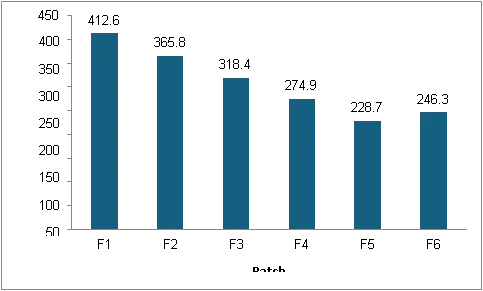
Figure 9: Particle size of rabeprazole-loaded β-cyclodextrin nanosponge formulations
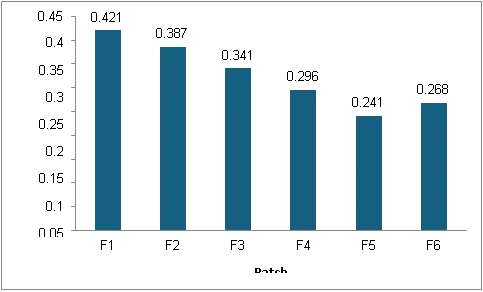
Figure 10: Poly dispersity index (PDI) of rabeprazole-loaded β-cyclodextrin nanosponge formulations
Zeta Potential Analysis
The zeta potential values for the prepared rabeprazole loaded β-cyclodextrin nanosponges are shown in the Table 11; Fig.11. The zeta potential ranged from−18.42 ± 0.86mV to −27.84 ± 1.24 mV. The most negative value was obtained for F5 formulation (–27.84 ± 1.24 mV) while the lowest value was for F1 (–18.42 ± 0.86 mV) among all formulations.
Table 11: Zeta Potential of Rabeprazole-Loaded β-Cyclodextrin Nanosponges
|
Batch |
Zeta Potential (mV) |
|
F1 |
−18.42± 0.86 |
|
F2 |
−21.15± 0.94 |
|
F3 |
−23.76± 1.08 |
|
F4 |
−26.31± 1.17 |
|
F5 |
−27.84± 1.24 |
|
F6 |
−26.18± 1.09 |
Values are expressed as Mean ± SD (n=3).
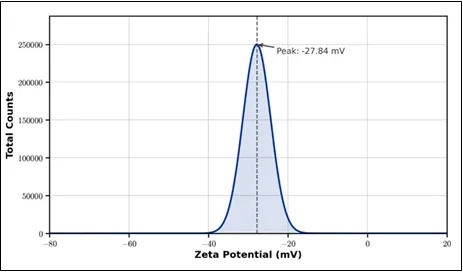
Figure 11: Zeta potential of rabeprazole-loaded β-cyclodextrin nanosponge formulations
Surface Morphology
A surface morphological analysis of the optimized rabeprazole loaded β-cyclodextrin nanosponge formulation (F5) was done using scanning electron microscopy (SEM). The SEM micrographs revealed that the shape of the nanosponges was almost spherical and the surface of the nanosponges was porous and rough. There was no aggregation of particles observed (Figure 12).
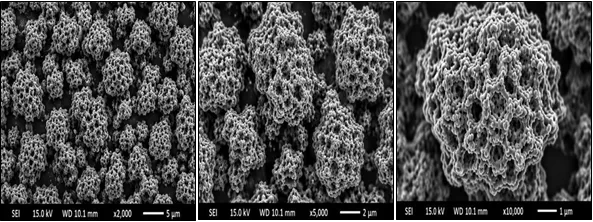
Figure 12: SEM micrographs of the optimized rabeprazole-loaded β-cyclodextrin nanosponge formulation (F5)
Entrapment Efficiency
The entrapment efficiency of the prepared rabeprazole loaded with β-cyclodextrin nanospongesis given in Table 12; Fig. 13. The entrapment efficiency ranged from 68.42 ± 1.84% to 88.91 ± 1.11%. The highest and lowest entrapment efficiencies were found in formulation F5 (88.91 ± 1.11%) and F1 (68.42 ± 1.84%) respectively among all formulations.
Table 12: Entrapment Efficiency of Rabeprazole-Loaded β-Cyclodextrin Nanosponges
|
Batch |
Entrapment Efficiency (%) |
|
F1 |
68.42 ± 1.84 |
|
F2 |
73.65 ± 1.51* |
|
F3 |
79.18 ± 1.32** |
|
F4 |
84.76 ± 1.27*** |
|
F5 |
88.91± 1.11*** |
|
F6 |
85.12 ± 1.36*** |
Values are expressed as Mean ± SD (n=3).
Data were analyzed using one-way analysis of variance (ANOVA) followed by Tukey's multiple comparison test. p < 0.05, p < 0.01, p < 0.001 compared with formulation F1.
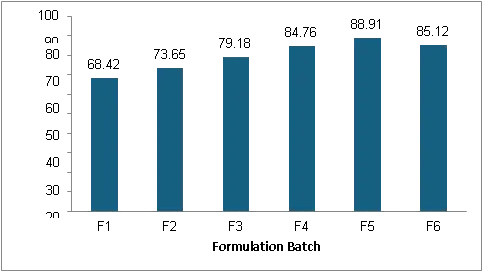
Figure 13: Entrapment efficiency of rabeprazole-loaded β-cyclodextrin nanosponge formulations
Drug Loading Capacity
The drug loading of the prepared rabeprazole loaded β-cyclodextrin nanosponges is given in Table 13; Fig. 14. Drug loading values ranged from 10.84 ± 0.42% to 19.76 ± 0.28%. The highest drug loading was observed for F5 (19.76 ± 0.28%), while the lowest value was recorded for F1 (10.84 ± 0.42%).
Table 13: Drug Loading Capacity of Rabeprazole-Loaded β-Cyclodextrin Nanosponges
|
Batch |
Drug Loading (%) |
|
F1 |
10.84 ± 0.42 |
|
F2 |
12.67 ± 0.38* |
|
F3 |
14.95 ± 0.35** |
|
F4 |
17.28 ± 0.31*** |
|
F5 |
19.76 ± 0.28*** |
|
F6 |
18.21 ± 0.33*** |
Values are expressed as Mean ± SD (n=3).
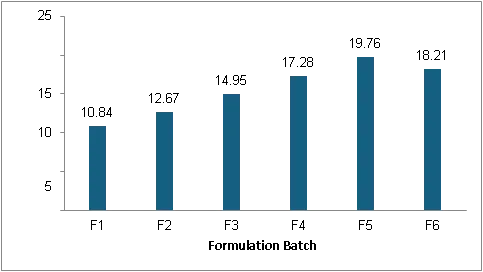
Figure 14: Drug loading capacity of rabeprazole-loaded β-cyclodextrin nanosponge formulations
Production Yield
Production yield of the prepared rabeprazole loaded β-cyclodextrin nanosponges is shown in Table 14; Fig. 15. The production yield ranged from 82.19 ± 1.21% to 88.38 ± 0.89%. The highest production yield was obtained for F5 (88.38 ± 0.89%), whereas the lowest value was observed for F1 (82.19 ± 1.21%).
Table 14: Production Yield of Rabeprazole-Loaded β-Cyclodextrin Nanosponges
|
Batch |
Production Yield (%) |
|
F1 |
82.19 ± 1.21 |
|
F2 |
83.68 ± 1.08* |
|
F3 |
85.48 ± 0.96** |
|
F4 |
87.40 ± 1.14*** |
|
F5 |
88.38 ± 0.89*** |
|
F6 |
87.19 ± 1.17*** |
Values are expressed as Mean ± SD (n=3).
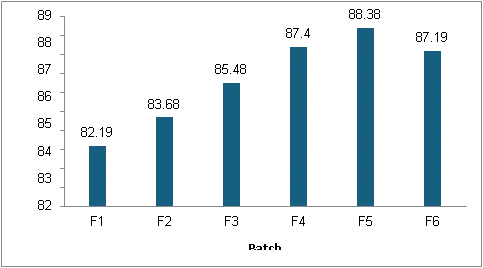
Figure 15: Production yield of rabeprazole-loaded β-cyclodextrin nanosponge formulations
In Vitro Drug Release Study
Cumulative in vitro drug release profiles of the prepared rabeprazole loaded β-cyclodextrin nanosponges are given in Table 15 and Figure 16. The cumulative drug release ranged from 78.45 ± 2.16% to 94.62 ± 1.48%. F5 formulation demonstrated the highest drug release (94.62 ± 1.48%) while F1 formulation had the lowest drug release (78.45 ± 2.16%) among all the formulations.
Table 15: In Vitro Drug Release of Rabeprazole-Loaded β-Cyclodextrin Nanosponges
|
Batch |
Cumulative Drug Release (%) |
|
F1 |
78.45 ± 2.16 |
|
F2 |
83.27 ± 1.94 |
|
F3 |
87.96 ± 1.73 |
|
F4 |
91.18 ± 1.56 |
|
F5 |
94.62 ± 1.48 |
|
F6 |
91.37 ± 1.62 |
Values are expressed as Mean ± SD (n=3).
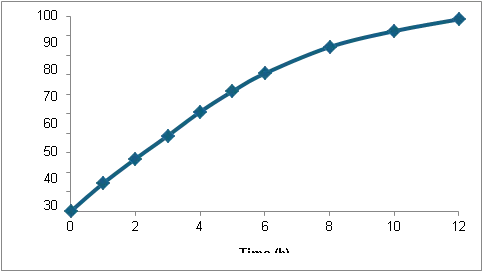
Figure 16: Comparative in vitro drug release profiles of rabeprazole-loaded β-cyclodextrin nanosponge formulations (F1–F6)
Drug Release Kinetics
The release Kinetics of the optimized rabeprazole loaded β-cyclodextrin nanosponge formulation (F5) were assessed by zero order, first order, Higuchi and Korsmeyer-Peppas models. The values of R² and the release exponent (n) are given in Table 16. The Higuchi model had the highest value of the correlation coefficient (R²=0.995), among the kinetic models. The release exponent (n) was 0.67and correlated well with the Korsmeyer–Peppas model.
Table 16: Drug Release Kinetics of Optimized Formulation (F5)
|
Kinetic Model |
R²Value |
|
Zero-order |
0.964 |
|
First-order |
0.981 |
|
Higuchi |
0.995 |
|
Korsmeyer–Peppas |
0.989 |
|
Parameter |
Value |
|
Release exponent(n) |
0.67 |
|
Release mechanism |
Non-Fickian diffusion |
Stability Study
Table 17 show the stability results of the optimized formulation F5 of rabeprazole loaded β-cyclodextrin nanosponge. There were no apparent changes in the physical appearance following the stability study. The drug content, entrapment efficiency and cumulative drug release exhibited slight variations during the entire period of study.
Table 17: Stability Evaluation of the Optimized Formulation (F5)
|
Parameter |
Initial |
After Stability Study |
|
Physical appearance |
Off-white powder |
No change |
|
Drug content (%) |
99.21 ± 0.68 |
98.54 ± 0.74 |
|
Entrapment efficiency (%) |
88.91± 1.11 |
87.96 ± 1.24 |
|
Drug release (%) |
94.62 ± 1.48 |
93.84 ± 1.56 |
Values are expressed as Mean ± SD (n=3). No significant difference was observed (p>0.05).
DISCUSSION
In the present study, β-cyclodextrin crosslinked nanosponges have been successfully developed as an attractive carrier for the controlled delivery of rabeprazole. FTIR, DSC and melting point analysis confirmed the extraction method used resulted in a high recovery with the same physicochemical characteristics of the drug. The results of the molecular structure, retention of characteristic functional group and thermal behavior revealed that the extraction procedure had no effect on the molecular structure of rabeprazole. In the literature, it has been reported that methanol extraction process is efficient to extract rabeprazole without any effect on its chemical stability. The results indicated that the seized drug was suitable for the formulation of nanosponge. One of the challenges of oral administration of rabeprazole was its poor aqueous solubility and limited solubility under acid conditions. The partition coefficient also showed the drug to have moderate lipophilicity. No significant interaction was observed in the compatibility studies of FTIR and DSC between rabeprazole, β-cyclodextrin and diphenyl carbonate, which suggests that the selected excipients were compatible with the drug. The same type of compatibility has been reported for cyclodextrin-based delivery systems, in which the integrity of the drug was maintained during the formulation process. The ratio of polymer to crosslinker had a significant effect on the physicochemical properties of the nanosponges prepared. The particle size showed a gradual decrease with the increasing crosslink density up to formulation F5 while the polydispersity index decreased and the zeta potential increased in the negative direction. These were also found to be nearly spherical particles with a porous surface morphology using SEM analysis. The structural properties are desirable for nanosponge based drug delivery as they can provide a large surface area and drug incorporation. The same effect is seen for β-cyclodextrin nanosponges made with diphenyl carbonate, with a more optimized level of crosslinking leading to smaller and more evenly distributed nanoparticles. The entrapment efficiency, the amount of drugs loaded and the yield of productional so increased with increasing crosslinking density and were maximum in formulation F5. The enhancement of these parameters could be attributed to the formation of an optimized porous polymeric network which can be loaded with more quantity of drug. A slight decrease in these parameters was observed in formulation F6, however, which indicates that if the crosslinking is too much, there will be fewer internal cavities for incorporation of the drug. Similar results were reported in previous studies on cyclodextrin nanosponges in which the best performance of the formulation was achieved by optimizing the ratio of the polymer to the crosslinker. The optimized formulation exhibited the highest cumulative drug release along with sustained release pattern. The Higuchi model best correlated with the drug release kinetic analysis and the Korsmeyer–Peppas release exponent suggested a non-Fickian diffusion mechanism. The results indicate that drug release was due to both diffusion and polymer relaxation. The release behavior is also similar for cyclodextrin based nano sponge formulation for poorly soluble drugs, which has shown the control of drug release in longer duration through porous polymeric network. The optimized formulation was found to be stable under the tested storage conditions as evident from the stability evaluation where no significant changes in the physical appearance, drug content, entrapment efficiency, and dissolution were observed during the study. The results show that the formulation made using β-cyclodextrin crosslinked nanosponges is a stable formulation platform for rabeprazole and that it may enhance its pharmaceutical properties during storage. In conclusion, the results of the present study have proved that the ratio of β-cyclodextrin:diphenyl carbonate is crucial for the physicochemical properties and drug delivery performance of the nanosponges of rabeprazole. The best characteristics were obtained with prepared formulation F5, which could be a promising oral controlled release delivery system of rabeprazole. The therapeutic potential of this compound and its clinical translation should be further explored through additional pharmacokinetic and in vivo studies.
CONCLUSION
In the present study, the β-cyclodextrin crosslinked nanosponges were successfully developed as a carrier system to deliver the rabeprazole with controlled release. The physicochemical properties of the extracted drug were found to be preserved and also the good compatibility with the selected formulation components. F5 had the most desirable formulation with optimum particle size, narrow particle size distribution, high entrapment efficiency, satisfactory drug loading and excellent production yield among the prepared formulations. The optimized formulation also showed a reproducible drug release and stability under the given storage conditions. The drug release kinetics showed that the release behavior was diffusion-controlled, demonstrating the effectiveness of the nanosponge matrix in controlled drug release. The overall results indicate that the ability of the closed β-cyclodextrin crosslinked nanosponges to enhance the formulation qualities of rabeprazole makes them a potential platform to develop oral controlled drug delivery system. Future in vivo pharmacokinetic, pharmacodynamic and clinical studies are recommended to further confirm the therapeutic benefits and translate this nanosponge-based delivery system into pharmaceutical applications.
ACKNOWLEDGEMENT: Nil
CONFLICTOFINTEREST: Nil.
REFERENCES


Awinish Kumar Shrivastaw*, Manju Makhija, Development of β-Cyclodextrin Crosslinked Nanosponges For Enhanced Encapsulation and Controlled Delivery of Rabeprazole, Int. J. Med. Pharm. Sci., 2026, 2 (7), 1071-1087. https://doi.org/10.5281/zenodo.21703422
 10.5281/zenodo.21703422