

We use cookies to ensure our website works properly and to personalise your experience. Cookies policy
MDS, Department of Periodontology and Oral Implantology, Dental College Ghaziabad ,201206
Background: The loss of an anterior tooth due to advanced periodontal disease presents significant esthetic, functional, and psychological challenges. Although dental implants are considered the gold standard for replacing a single missing tooth, they may not be feasible because of financial limitations, systemic factors, inadequate bone support, or patient preference. An immediate natural tooth pontic (NTP) offers a conservative, cost-effective, and esthetically pleasing interim or definitive treatment option by utilizing the patient's own extracted tooth. Case Presentation: A 58-year-old male smoker presented with severe mobility of the mandibular left lateral incisor, causing discomfort during mastication and concern regarding esthetics. Clinical and radiographic examination revealed a periodontally hopeless tooth with Grade III mobility. Following comprehensive patient counseling, extraction of the affected tooth was planned. As the patient declined implant-supported rehabilitation, the extracted natural tooth was modified and immediately used as a pontic. The pontic was reinforced using a Ribbond® fiber-reinforced composite splint and bonded to the adjacent teeth, providing immediate esthetic and functional rehabilitation. Results: The patient was reviewed periodically, with a final follow-up at 6 months. The restoration remained stable with satisfactory esthetics, acceptable oral hygiene, and functional comfort. No debonding, fracture, or soft tissue complications were observed. The patient reported high satisfaction with the appearance, speech, and masticatory function. Conclusion: Immediate rehabilitation using an extracted natural tooth reinforced with a Ribbond® fiber splint is a conservative, minimally invasive, and economical treatment option for selected patients who are unwilling or unsuitable for implant therapy. The technique preserves natural esthetics, provides psychological benefits, and offers satisfactory short-term clinical outcomes.
The premature loss of an anterior tooth due to advanced periodontal destruction remains a significant clinical challenge because of its adverse effects on esthetics, phonetics, mastication, and the patient's psychological well-being. (1) Immediate replacement of a missing anterior tooth is often desired to restore appearance and maintain social confidence. Conventional treatment options include removable partial dentures, resin-bonded fixed partial dentures, conventional fixed dental prostheses, and implant-supported restorations. (2) Although implant therapy demonstrates excellent long-term success, it may not always be the treatment of choice because of financial constraints, smoking habits, insufficient bone volume, systemic conditions, or patient reluctance to undergo surgical procedures. The use of the patient's own extracted tooth as a natural tooth pontic has emerged as a conservative and highly esthetic alternative for immediate tooth replacement. (3) Since the pontic is fabricated from the patient's natural crown, it offers ideal morphology, shade, surface texture, and translucency that are difficult to reproduce using artificial restorative materials. (4) Furthermore, this technique requires minimal tooth preparation of the adjacent teeth, preserves tooth structure, and can usually be completed in a single clinical visit. Advances in adhesive dentistry and fiber-reinforced composite materials have significantly improved the longevity and predictability of natural tooth pontics. (5) Ultra-high molecular weight polyethylene fibers, such as Ribbond®, exhibit excellent fracture resistance, favorable stress distribution, and reliable adhesion when incorporated into composite resin restorations. (6) These properties enhance the strength and durability of splinted restorations while maintaining excellent esthetics. Patients with advanced periodontal disease frequently require extraction of hopeless anterior teeth. However, many are unwilling to undergo implant therapy immediately because of financial considerations, surgical anxiety, or personal preference. In such situations, a fiber-reinforced natural tooth pontic represents a practical and minimally invasive treatment option that restores esthetics and function immediately while preserving patient comfort and confidence. This case report describes the immediate rehabilitation of a periodontally hopeless mandibular left lateral incisor using the patient's own extracted tooth as a natural tooth pontic reinforced with a Ribbond® fiber-reinforced composite splint. The report highlights the clinical procedure, short-term outcome, and patient satisfaction following a three-month follow-up.
Case Presentation
A 58-year-old male smoker presented to the Department of Periodontology and Oral Implantology with the chief complaint of a severely mobile lower front tooth associated with difficulty in mastication and compromised esthetics. Clinical examination revealed Grade III mobility of tooth with advanced periodontal attachment loss. Radiographic evaluation demonstrated severe alveolar bone loss, indicating a hopeless periodontal prognosis. Extraction was advised. After discussing the available treatment options, including implant therapy, the patient declined implant placement because of financial and personal reasons. Therefore, immediate rehabilitation using the extracted natural tooth as a pontic was planned, and written informed consent was obtained.
Clinical Procedure
Following local anesthesia, tooth was atraumatically extracted. The extracted tooth was cleaned, the root was sectioned at the cemento-enamel junction, and the pulp chamber was debrided and sealed with composite resin. The cervical portion of the crown was contoured into a modified ridge lap pontic and polished. The lingual surfaces of the mandibular anterior teeth were etched and bonded. A Ribbond® fiber-reinforced composite splint was adapted and bonded from canine to canine, incorporating the prepared natural tooth pontic in the position of lateral incisor. Composite resin was used to secure the fiber and pontic, followed by finishing, polishing, and occlusal adjustment. Oral hygiene instructions and smoking cessation advice were provided.
Follow-up
The patient was reviewed periodically for 6 months. Healing was uneventful, and the restoration remained stable without debonding or fracture. The patient reported excellent esthetic and functional satisfaction, with improved confidence and comfortable mastication throughout the follow-up period.
DISCUSSION
The rehabilitation of a periodontally hopeless anterior tooth presents both functional and esthetic challenges. (7) Although implant-supported restorations are considered the gold standard for single-tooth replacement, they may not be appropriate for every patient because of financial limitations, systemic or local factors, smoking habits, or patient preference. In such situations, the use of an extracted natural tooth as a pontic offers a conservative, economical, and highly esthetic treatment alternative. The natural tooth pontic technique utilizes the patient's own crown, thereby preserving the original morphology, color, translucency, and proximal contacts. (8) This eliminates the need for laboratory fabrication and allows immediate replacement of the extracted tooth in a single clinical visit. Immediate rehabilitation also minimizes the psychological impact associated with the loss of an anterior tooth and helps maintain speech, mastication, and patient confidence. Advances in adhesive dentistry have significantly improved the predictability of natural tooth pontics. Fiber-reinforced composite systems, particularly Ribbond®, provide excellent tensile strength, fracture resistance, and stress distribution while requiring minimal or no preparation of the adjacent teeth. (9-10) Splinting from canine to canine in the present case provided adequate stabilization of the pontic and distributed occlusal forces over multiple abutment teeth, thereby reducing the risk of debonding and improving functional stability. The present patient was a chronic smoker with a periodontally hopeless mandibular lateral incisor exhibiting Grade III mobility. Smoking is a well-established risk factor for periodontal disease progression and impaired wound healing. Therefore, thorough oral hygiene instructions, smoking cessation counseling, and regular periodontal maintenance were emphasized throughout the treatment period to enhance clinical outcomes. At the six- month follow-up, the restoration remained clinically stable without fracture, debonding, or soft tissue complications. The patient reported excellent esthetic satisfaction, improved masticatory function, and enhanced self-confidence. These findings are consistent with previous reports demonstrating that fiber-reinforced natural tooth pontics can provide predictable short-term esthetic and functional outcomes when proper case selection and adhesive protocols are followed. The clinical outcome observed in the present case is comparable with the findings of Azhar et al. (2023), (11) who reported the successful use of the patient's extracted natural tooth as a pontic reinforced with Ribbond® fiber for immediate esthetic rehabilitation. The authors highlighted that this minimally invasive chairside technique preserved the natural tooth morphology, required minimal preparation of adjacent teeth, and provided satisfactory esthetic and functional outcomes. Similar results were achieved in the present case, where the canine-to-canine Ribbond® splint remained stable throughout the three-month follow-up without any debonding or fracture.
Similarly, Haq et al. (2024) described immediate replacement of an extracted mandibular anterior tooth using a fiber-reinforced natural tooth pontic. They concluded that the technique is a conservative and cost-effective alternative for patients who decline implant therapy and offers excellent esthetic rehabilitation with favorable patient acceptance. Consistent with their findings, our patient reported excellent esthetic satisfaction, improved masticatory function, and high overall acceptance of the restoration after three months of follow-up. (12) Compared with removable partial dentures, a natural tooth pontic offers superior esthetics, better patient acceptance, improved comfort, and immediate rehabilitation without the need for laboratory procedures. Unlike conventional fixed partial dentures, this technique preserves the adjacent teeth by avoiding extensive tooth preparation. Although implant-supported restorations remain the preferred long-term treatment option for many patients, a natural tooth pontic serves as an effective interim or definitive restoration in carefully selected cases. The primary limitation of this report is the short follow-up period of 6 months, which does not permit assessment of long-term survival or durability of the restoration. Furthermore, this represents a single clinical case; therefore, the findings cannot be generalized. Future prospective studies with larger sample sizes and longer follow-up periods are required to evaluate the long-term success, patient-reported outcomes, and survival of fiber-reinforced natural tooth pontics in periodontally compromised patients. Overall, this case demonstrates that an extracted natural tooth reinforced with a Ribbond® fiber splint can provide a simple, minimally invasive, cost-effective, and highly esthetic solution for the immediate replacement of a periodontally hopeless anterior tooth when implant therapy is declined.
REFERENCES
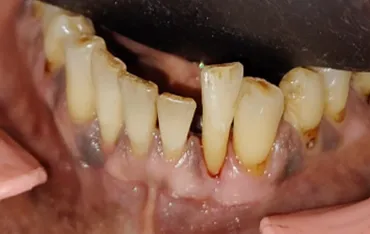
Fig 1: Preoperative clinical view showing Grade III mobility of tooth
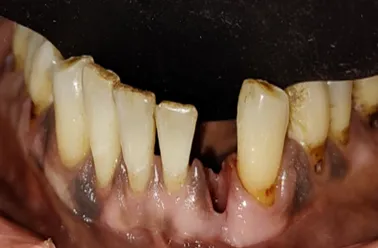
Fig 2: Extracted mandibular left lateral incisor following atraumatic extraction
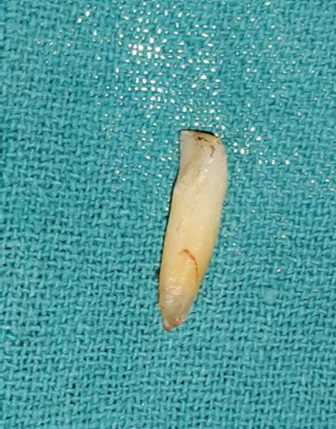
Fig 3: Picture showing extracted tooth
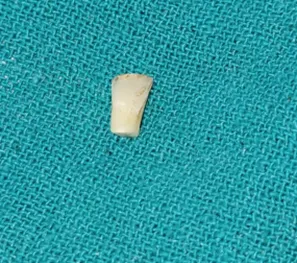
Fig 4: Prepared natural tooth pontic ready for fiber-reinforced splinting
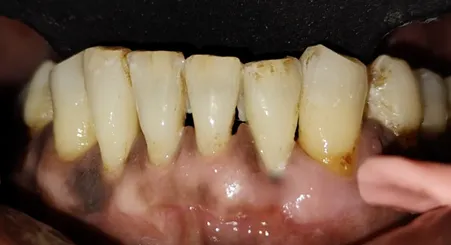
Fig 5: Adaptation of the natural tooth pontic with Ribbond® fiber-reinforced composite splint
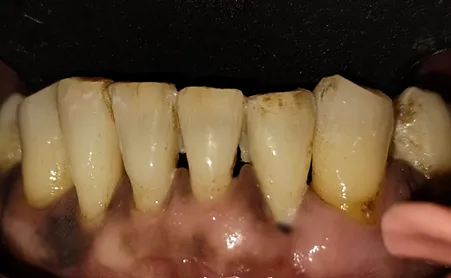
Fig 6. Six -month follow-up demonstrating stable restoration and satisfactory esthetic outcome


Sumit Malhotra*, Ankita Priya, Immediate Esthetic Rehabilitation of a Periodontally Hopeless Mandibular Lateral Incisor Using an Extracted Natural Tooth as a Fiber-Reinforced Pontic: A Case Report, Int. J. Med. Pharm. Sci., 2026, 2 (8), 459-464. https://doi.org/10.5281/zenodo.21916815
 10.5281/zenodo.21916815