Hydrotherapy is a fundamental modality in naturopathy, widely utilised for disease prevention, rehabilitation, and health promotion. The therapeutic effects of hydrotherapy are mediated through physiological responses to thermal and mechanical stimuli, making objective assessment essential for evaluating treatment efficacy and ensuring patient safety. Hydrotherapy equipment, integrated with physiological monitoring tools, enables clinicians to quantify both immediate and long-term responses to various hydrotherapeutic interventions. Commonly assessed physiological variables include heart rate, blood pressure, respiratory rate, body temperature, oxygen saturation, electrocardiographic activity, heart rate variability, peripheral circulation, and autonomic nervous system responses. Appropriate selection and application of hydrotherapy equipment, alongside standardised assessment protocols, facilitate individualised treatment planning and evidence-based clinical decision-making. This review highlights the applications of major hydrotherapy equipment in relation to physiological assessment, discusses the mechanisms underlying these responses, and summarises their relevance across diverse clinical conditions. Integrating physiological monitoring with hydrotherapy practice strengthens clinical documentation, improves therapeutic precision, and supports the advancement of evidence-based naturopathy.
Hydrotherapy relies on the unique physical and thermal properties of water to induce specific therapeutic and physiological changes in the human body [1]. When applied in clinical and sports science settings, hydrotherapy equipment—ranging from contrast baths and underwater treadmills to specialised whirlpools—serves as a controlled environment for assessing dynamic physiological variables [2]. Because water exerts hydrostatic pressure, provides buoyancy, and alters thermal regulation, immersing a subject systematically impacts core cardiovascular, metabolic, and neuromuscular functions [3] Accurately measuring these physiological shifts requires a strict understanding of how aquatic physics interacts with human biology [4]. For instance, hydrostatic pressure forces a fluid shift from the extremities toward the thoracic cavity, altering stroke volume and heart rate [5]. Simultaneously, water buoyancy reduces gravitational loading on joints, modifying muscle activation patterns and metabolic cost during exercise [6]. Evaluating variables such as heart rate variability (HRV), oxygen consumption (VO2), core temperature, and blood lactate under these conditions allows clinicians and researchers to quantify an individual’s aerobic capacity, autonomic nervous system response, and recovery rate [7].Consequently, the precise deployment of hydrotherapy equipment extends beyond passive recovery. It functions as a highly specific diagnostic tool [8]. This investigative framework examines the exact methodologies used to monitor and evaluate these physiological variables, ensuring that aquatic assessments yield valid, reproducible, and clinically actionable data [9].
Principles of Hydrotherapy
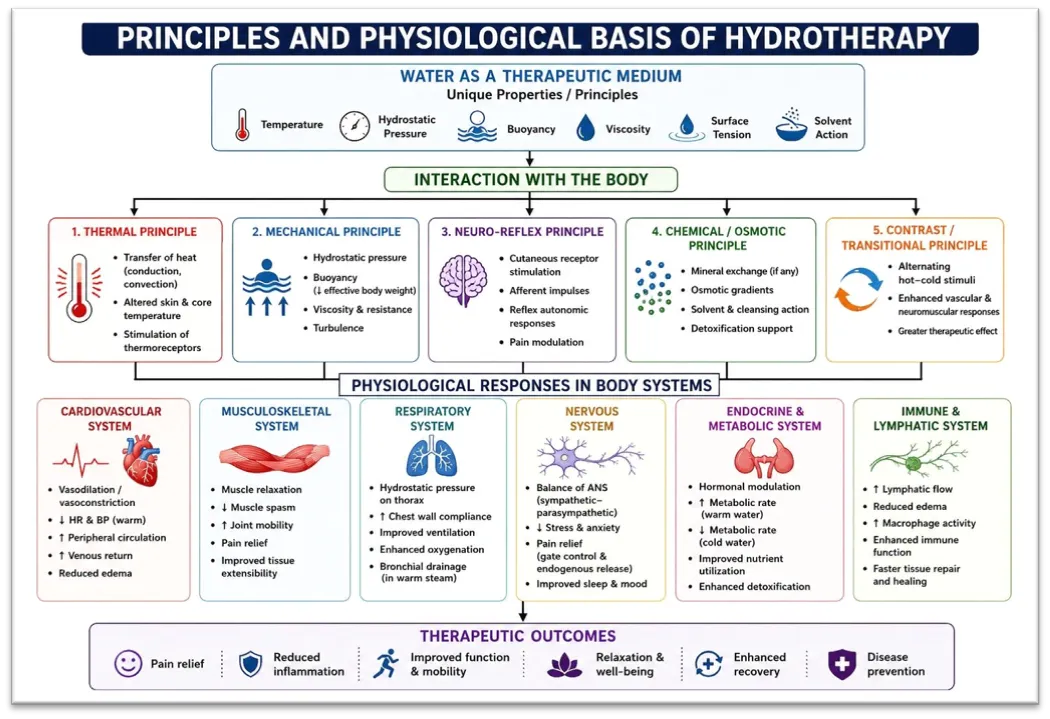
The therapeutic benefits of hydrotherapy depend on the physical laws of hydrodynamics and the biological reactions to temperature. When the human body is immersed in water, several mechanical and thermal forces work together to support rehabilitation, relieve pain, and enhance cardiovascular function.
Mechanical Principles (Hydrodynamics)
Buoyancy (Archimedes’ Principle): When a body is immersed in water, it experiences an upward force equal to the weight of the water displaced. This provides significant weight relief, reducing stress on weight-bearing joints. Standing immersed up to the mid-chest (xiphoid process) reduces effective body weight by roughly 60% to 70%, while neck-level immersion reduces it by up to 90% [10]. This allows individuals with arthritis or severe musculoskeletal pain to move safely without painful joint compression.
Hydrostatic Pressure (Pascal’s Law): Fluid pressure is exerted equally on all surfaces of an immersed body, and this pressure increases with depth. This uniform compression shifts fluids from the lower extremities toward the thoracic region, which increases venous return to the heart and helps reduce peripheral oedema (swelling) [10].
Viscosity and Fluid Resistance: Water possesses an internal friction that resists movement. This fluid resistance acts as a natural, multi-directional weight system; the faster or wider a patient moves, the more resistance they encounter [10]. This allows for safe, self-regulated muscle strengthening without the high impact of terrestrial weights.
Thermal Principles (Thermodynamics)
Water transfers heat roughly 25 times faster than air, making it an excellent medium for thermal therapy [11].
Warm Water Immersion (Typically 33.5°C to 35.5°C): Heat causes blood vessels to expand (vasodilation), improving local circulation. It also lowers muscle tension, raises the threshold for pain, and relaxes spasms, making it easier for patients to stretch and move [11].
Cold Water Immersion (Typically 10°C to 15°C): Shorter exposures to cold water cause immediate narrowing of blood vessels (vasoconstriction), which aids in reducing acute inflammation, minimising localised swelling, and numbing pain receptors post-injury [11].
Fig 1: Principles and physiological basis of Hydrotherapy
Classification of Hydrotherapy Equipment
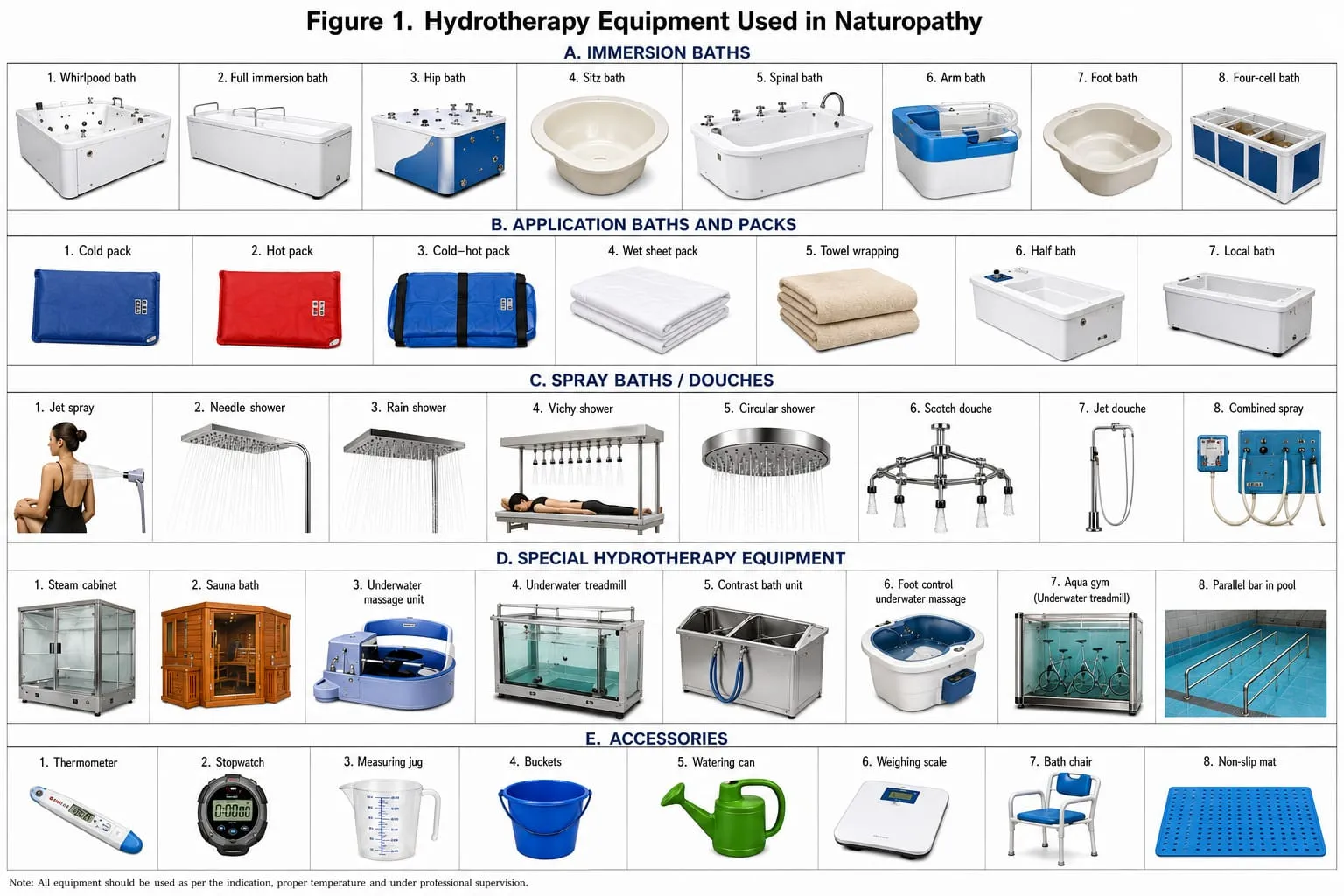
A. Immersion Bath: These tubs submerge either the entire body or specific segments to elicit targeted reflex and circulatory responses.
Whirlpool Bath: Combines water immersion with mechanical agitation [12].
Full Immersion Bath: Submerges the whole body up to the neck for generalised thermal effects [12].
Hip Bath & Sitz Bath: Designed to focus on the pelvic and lower abdominal regions, these baths activate local reflex pathways and promote functional responses in the pelvic organs [12].
Spinal Bath: Immerses only the length of the spine to balance the nervous system [12].
Arm Bath & Foot Bath: These localised extremity baths immerse the hands or feet to encourage peripheral circulation and help divert vascular congestion from central organs. [12].
B. Packs and Compresses
These utilise conductive heat transfer through wraps, packs, and localised compresses.
Packs include specialised cold packs, Hot packs, Cold-hot packs, and full Wet sheet packs alongside Towel wrapping to induce sweating or localised tissue cooling [9]
Compresses are classified by temperature (cold, hot, heating, or alternating) to trigger targeted vascular and deep organ reflex actions [11].
Fig 2. Hydrotherapy Equipment Used in Naturopathy
C. Spray baths and Douches
These combine precise thermal temperatures with varying degrees of mechanical percussion (pressure) to stimulate skin receptors [13].
Localised Streams: Jet spray, Scotch douche (alternating hot and cold under pressure), and Jet douche [14].
Overhead & Surround Sprays: Needle shower, Rain shower, Circular shower, Combined spray, and the horizontal Vichy shower used over a treatment table [14].
D. Specialised hydrotherapy equipment
Vapour & Radiant Heat: Steam cabinet (head-out design) and Sauna bath cabins for heavy detoxification [15].
Underwater Massage & Contrast: Dedicated Underwater massage units, foot-controlled underwater massage, and a dual-chambered Contrast bath unit [15].
Aquatic Rehabilitation: Enclosed Underwater treadmills, Aqua gym setups, and pool-installed Parallel bars for low-impact movement [15].
E. Accessories
The essential measurement and safety tools are required to execute precise prescription parameters.
Monitoring Tools: Thermometers for exact water temperature and Stopwatches for strict timing protocols.
Physiological Variables Used in Hydrotherapy Assessment
Hydrotherapy equipment uses the physical properties of water to trigger specific physiological responses in the body. Therapists modify hydrotherapy settings, including water depth, temperature, and current speed, to regulate physiological variables such as joint loading, cardiovascular responses, and tissue perfusion [16]. Assessment of physiological variables is an integral part of hydrotherapy, ensuring safe, individualized, and effective treatment. Monitoring these variables before, during, and after hydrotherapy helps evaluate baseline status, observe physiological responses, and determine the therapeutic effectiveness of the intervention.
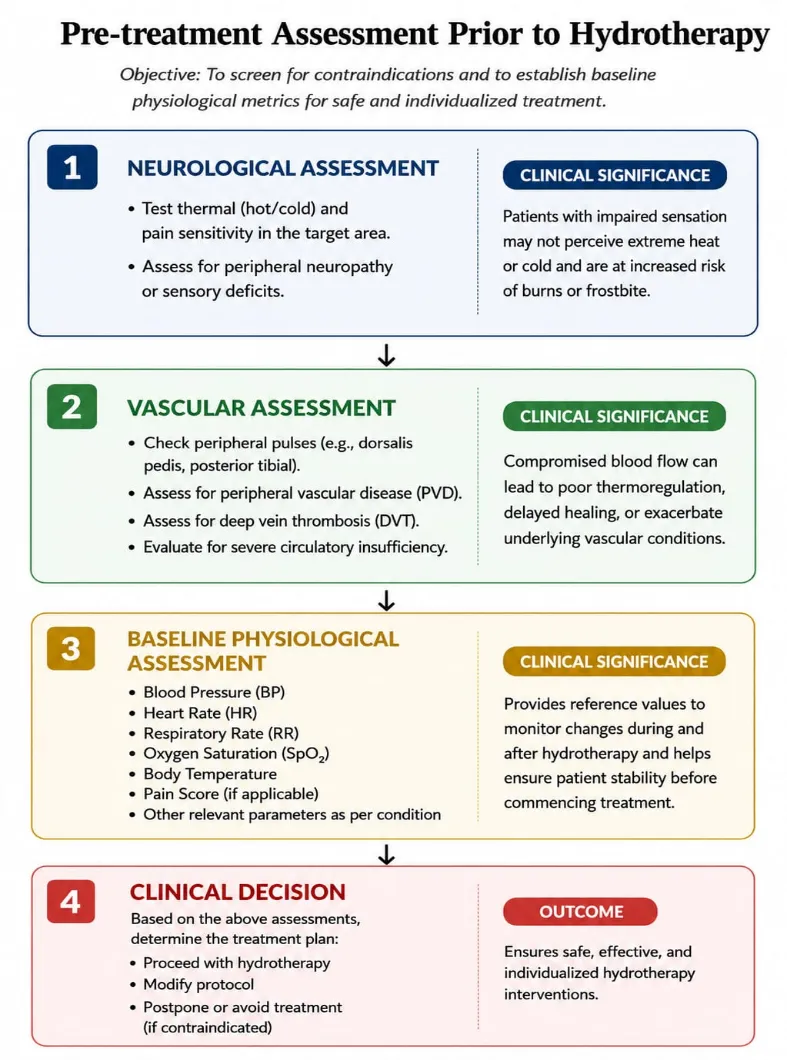
Pre-Treatment Assessment:
Fig 3. Pre-Treatment Assessment before Hydrotherapy
During Treatment Monitoring: During hydrotherapy, continuous monitoring of heart rate, blood pressure, respiratory rate, oxygen saturation (SpO₂), and patient symptoms is recommended to ensure safety. Any signs of dizziness, hypotension, chest pain, or respiratory distress should prompt immediate modification or discontinuation of treatment [17].
Post–Treatment Assessment: Following hydrotherapy, heart rate, blood pressure, respiratory rate, SpO₂, pain level, and functional status should be reassessed to evaluate treatment effectiveness and recovery. Patients should also be observed for delayed adverse effects before discharge [17].
Physiological Responses Produced by Hydrotherapy
Hydrotherapy produces several physiological and biomechanical responses through the combined effects of buoyancy, hydrostatic pressure, viscosity, and water temperature [18]. The major responses include:
1. Joint Offloading & Ground Reaction Force (Buoyancy): Buoyancy opposes gravity, reducing the apparent body weight of the patient. Hydrotherapy equipment like variable-depth pools and underwater treadmills uses the water level to precisely control how much weight a patient's joints must bear [17].
Waist-deep water: Offloads approximately 50% of body weight [17].
Chest-deep water: Offloads approximately 75% of body weight, drastically reducing impact on injured joints or the spine while allowing gait training [17].
2. Hemodynamic & Respiratory Changes (Hydrostatic Pressure): Water exerts fluid pressure against the submerged body, which increases linearly with depth [19]. This pressure pushes fluid from the extremities toward the thoracic (chest) cavity, causing:
Increased Stroke Volume: The heart pumps more blood per beat because central blood volume increases by roughly 700 ml [20].
Altered Target Heart Rates: Because stroke volume is higher, the heart doesn't have to beat as fast to maintain cardiac output. Heart rate is typically 10 to 15 beats per minute lower in water than on land during identical workloads [21].
Increased Work of Breathing: The pressure against the chest wall forces the respiratory muscles (like the diaphragm) to work roughly 60% harder, providing an inherent cardiovascular workout [22].
3. Core Temperature & Tissue Metabolic Rate (Thermodynamics): Hydrotherapy tanks and contrast baths manipulate water temperature to trigger predictable neural and vascular responses [23]:
Thermal/Warm Water: Causes vasodilation (widening of blood vessels), increasing localised blood flow, oxygen delivery, and muscle elasticity while reducing muscle spasms [24].
Cryo/Cold Water: Causes vasoconstriction (narrowing of blood vessels) to reduce inflammation, metabolic activity, and nerve conduction velocity (which numbs acute pain) [25].
4. Muscle Activation & Met (Resistance & Viscosity): Water is roughly 800 times denser than air. Hydrotherapy equipment utilises fluid resistance to alter metabolic energy expenditure (METs) and muscle recruitment without using heavy weights [26].
Velocity-Dependent Resistance: The resistance increases exponentially the faster a patient moves [27].
Equipment Controls: Jet streams, resistance currents, and paddle attachments alter the turbulence, forcing stabilising muscles to fire continuously to maintain balance [28].
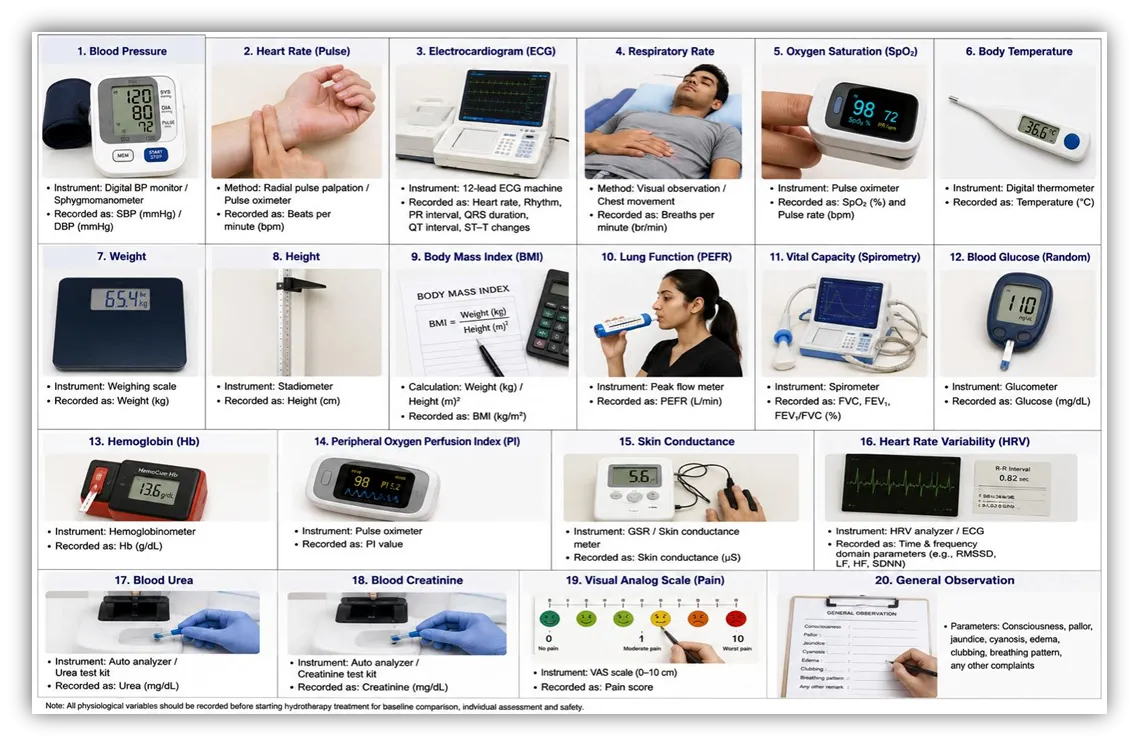
Fig 4: Assessment of Physiological Variables Before Hydrotherapy Treatments
Equipment – Physiological Variable Correlation
In hydrotherapy, treatments rely on the standardised protocols governed by the physiological laws of thermal transfer and circulatory reflex [29]. Rather than calculating a variable, a naturopath builds a prescription by combining three distinct parameters: Temperature, Duration, and Mechanical Friction.
Table 1: Hydrotherapy Protocol Variables
Treatment Parameter
Range /Application
Physiological Impact
Systemic Effect
Temperature [30-32]
Cold: 45 °F -60° F (7°C – 15° C)
Neutral: 92 °F – 96 °F (33°C - 35°C)
Hot: 100 °F – 105 °F (37 ° C – 40°C)
Cold: Vasoconstriction, driving blood inward.
Neutral: Calm nervous system (no thermal reaction).
Short cold application stimulates a secondary warming reaction. Long cold application depresses metabolic activity.
Duration determines the magnitude and persistence of physiological responses.
Friction / Percussion [30-32]
Towel rubbing, jet sprays, or pours
Mechanical forces blood flow to speed up the secondary warming reaction.
Enhances the circulation, neuromuscular activation and tissue recovery.
Hydrotherapy and aquatic rehabilitation utilise integrated clinical equipment and specialised monitoring protocols to track real-time changes across a wide spectrum of physiological variables.
1. Cardiovascular & Autonomic Monitoring:
Heart Rate & ECG: Waterproof telemetry straps and submerged electrocardiogram (ECG) housing units trace cardiac autonomic modulation, capturing changes such as an increased heart rate during warm-water immersion or improved heart rate variability (HRV) profiles [33].
Blood Pressure: Automated underwater or post-immersion sphygmomanometers capture shifts in systolic and diastolic blood pressure driven by hydrostatic pressure forces that alter peripheral vascular resistance [34].
Skin Conductance: Wearable, water-resistant electrodermal sensors track skin conductance variations to directly evaluate sympathetic nervous system activation and stress recovery patterns during aquatic immersion.
2. Respiratory & Metabolic Regulation:
Oxygen Saturation (SpO2) & Lung Function: Submersible pulse oximeters continuously check peripheral oxygen saturation levels, while poolside spirometers measure lung function and vital capacity adjustments occurring in response to hydrostatically induced thoracic compression [35].
Blood Glucose Levels: Continuous glucose monitors (CGMs) protected by waterproof adhesive overlays track immediate fluctuations in blood glucose levels, evaluating the effectiveness of aquatic exercise protocols for glycemic management [36].
Body Temperature: Inundated or tympanic thermometers capture core and skin body temperature variations to monitor thermal strain and prevent hypothermia or hyperthermia during therapeutic heating or cooling sessions [35].
Height, Weight, & BMI: Integrated poolside hoist scales and hoist-mounted weighing systems determine dry body weight, height, and overall body mass index (BMI) to calibrate individual aquatic exercise prescriptions and account for buoyancy dynamics [37].
Visual Analogue Scale (VAS): Laminated, waterproof rating charts allow patients to point to a visual or analogue scale to gauge immediate changes in pain intensity or perceived exertion (RPE) directly from the hydrotherapy pool.
Applications in Different Clinical Conditions
Hydrotherapy equipment is applied in the management of various clinical conditions to support rehabilitation and recovery. Appropriate equipment is selected based on the patient’s condition while monitoring relevant physiological variables for safety. Common applications include musculoskeletal, neurological, cardiovascular, metabolic, sports, and geriatric rehabilitation. Hydrotherapy is widely used in osteoarthritis, chronic low back pain, rheumatoid arthritis, and other musculoskeletal disorders. Warm water decreases pain, reduces muscle spasm, improves joint mobility, and enhances physical function [38]. Aquatic therapy improves balance, gait, functional mobility, and motor recovery in neurological disorders such as stroke, Parkinson's disease, and multiple sclerosis by utilising buoyancy and hydrostatic pressure [39]. Aquatic exercise improves aerobic capacity, reduces resting heart rate and blood pressure, and increases exercise tolerance, making it useful in supervised cardiovascular rehabilitation [40]. Aquatic training significantly improves HbA1c, blood pressure, functional capacity, and cardiorespiratory fitness in individuals with type 2 diabetes and metabolic syndrome [41]. Cold-water immersion and aquatic exercise reduce post-exercise muscle soreness, improve recovery, decrease pain, and enhance physical function in athletes and individuals with chronic musculoskeletal conditions [38]. Hydrotherapy enhances balance, gait, mobility, muscle strength, and quality of life in older adults while reducing joint loading and fall risk [42].
LIMITATIONS AND CHALLENGES
Despite its clinical benefits, hydrotherapy has several limitations that affect its widespread implementation. Accurate monitoring of physiological variables in water is technically challenging because conventional devices such as ECG electrodes, pulse oximeters, and blood pressure cuffs may lose accuracy or require waterproof adaptations. Patient-related factors, including open wounds, severe cardiac instability, uncontrolled epilepsy, active infections, and fear of water, may contraindicate treatment. In addition, hydrotherapy facilities require specialised infrastructure, trained personnel, regular maintenance, and strict infection-control measures, increasing operational costs. Standardised treatment protocols and high-quality clinical evidence for many hydrotherapy modalities are still limited, making comparison across studies difficult. Wearable monitoring devices also face challenges in underwater accuracy, standardisation, and long-term clinical validation [43,44].
Future Directions and Emerging Technologies
The future of hydrotherapy is moving toward precision rehabilitation through the integration of wearable sensors, artificial intelligence (AI), Internet of Things (IoT), and tele-rehabilitation. Waterproof wearable devices capable of continuously monitoring heart rate, ECG, oxygen saturation, body temperature, hydration status, and movement patterns are expected to improve treatment safety and personalisation. AI-based algorithms can analyse real-time physiological data to optimise exercise intensity and detect adverse events early. Smart therapeutic pools with integrated sensor systems, underwater motion analysis, robotic-assisted aquatic therapy, and digital health platforms are emerging as promising innovations. Future research should focus on validating these technologies through multicentre randomised controlled trials and developing standardised protocols for physiological monitoring during hydrotherapy [43,44]
CONCLUSION
Hydrotherapy has evolved from a traditional therapeutic modality into an evidence-based intervention that combines the unique physiological effects of water with modern clinical monitoring. These innovations have the potential to transform conventional water-based therapy into a data-driven, personalised, and continuously monitored intervention capable of improving clinical outcomes while expanding access to rehabilitation services. This integration establishes hydrotherapy as a scientifically robust, technologically progressive, and indispensable component of modern rehabilitative medicine, with the potential to redefine future clinical practice.
FUNDING: None
CONFLICT OF INTEREST: None
ETHICAL CONCERN: None.
REFERENCES
An, J., Lee, I., & Yi, Y. (2019). The Thermal Effects of Water Immersion on Health Outcomes: An Integrative Review. International journal of environmental research and public health, 16(7), 1280. https://doi.org/10.3390/ijerph16071280
Chaughule, Shivangi. (2023). Hydrotherapy and the Science of Water-Based Rehabilitation. Journal of Physical Medicine Rehabilitation Studies & Reports. 1-4. 10.47363/JPMRS/2023(5)E111.
Wilcock, Ian & Cronin, John & Hing, Wayne. (2006). Physiological Response to Water Immersion. Sports medicine (Auckland, N.Z.). 36. 747-65. 10.2165/00007256-200636090-00003.
Pendergast, David & Moon, Richard & Krasney, John & Held, Heather & Zamparo, Paola. (2015). Human Physiology in an Aquatic Environment. Comprehensive Physiology. 5. 1705-1750. 10.1002/cphy.c140018.
Alzaabi, A. A., Alzaabi, F. M., Siddiqui, R. W., Siddiqui, T. W., & Sami, M. M. (2025). Review of microgravity’s impact on cardiovascular and nervous systems in space exploration. NPJ microgravity, 11(1), 77. https://doi.org/10.1038/s41526-025-00534-4
Davies, C., Swafford, A. P., Girouard, T., Kins, K., & Mercer, J. A. (2025). Lower Extremity Muscle Activity During Walking with Blood Flow Restriction and Body Weight Support. Biomechanics, 5(4), 72. https://doi.org/10.3390/biomechanics5040072
Siepmann, M., Weidner, K., Petrowski, K., & Siepmann, T. (2022). Heart Rate Variability: A Measure of Cardiovascular Health and Possible Therapeutic Target in Dysautonomic Mental and Neurological Disorders. Applied psychophysiology and biofeedback, 47(4), 273–287. https://doi.org/10.1007/s10484-022-09572-0
Amin, A. B., Asabre, E., Razaghi, S., & Noh, Y. (2025). Quantitative musculoskeletal monitoring and analysis in aquatic rehabilitation. Frontiers in electronics, 6, 1566899. https://doi.org/10.3389/felec.2025.1566899
Bruce E. Becker, Aquatic Therapy: Scientific Foundations and Clinical Rehabilitation Applications, PM&R, Volume 1, Issue 9,2009, Pages 859-872, ISSN 1934-1482, https://doi.org/10.1016/j.pmrj.2009.05.017
Timothy, A. (2020). Hydrotherapy, aquatic physiotherapy and the application of the Bad Ragaz ring method. Journal of Advanced Health Care, 2(II). https://doi.org/10.36017/jahc20202267
Mooventhan, A., & Nivethitha, L. (2014). Scientific evidence-based effects of hydrotherapy on various systems of the body. North American Journal of Medical Sciences, 6(1), 199. https://doi.org/10.4103/1947-2714.132935
Rastogi, R. (2024). Standardisation of naturopathy treatment equipment: A Review of the hip bathtub. Journal of Indian Medical Heritage, 2(1), 34–41. https://doi.org/10.4103/jimh.jimh_3_23
Baruch, S. (1899). The principles and practice of hydrotherapy: A guide to the application of water in disease for students and practitioners of medicine. William Wood & Company. Wellcome Collection.
Kellogg, J. H. (1902). Rational hydrotherapy: A manual of the physiological and therapeutic effects of hydriatic procedures and the technique of their application in the treatment of disease. F. A. Davis Company.
Calthrop, L. C. E. (1931). Hydrotherapy and physiotherapy for bath attendants, nurses and biophysical assistants. Elsevier.
Elsevier. (n.d.). Aquatic exercise. ScienceDirect Topics. Retrieved July 13, 2026, from ScienceDirect Topics – Aquatic Exercise
Becker BE. Aquatic Therapy: Scientific Foundations and Clinical Rehabilitation Applications. PM&R. 2009;1(9):859–872. https://doi.org/10.1016/j.pmrj.2009.05.017
Nakazawa, Kimitaka & Yano, H., & Miyashita, M. (2015). Ground Reaction Forces during Walking in Water. Medicine and Science in Aquatic Sports. 39. 28-34. 10.1159/000423702.
Weenink, R. P., & Wingelaar, T. T. (2021). The Circulatory Effects of Increased Hydrostatic Pressure Due to Immersion and Submersion. Frontiers in Physiology, 12, 699493. https://doi.org/10.3389/fphys.2021.699493
Shah, P., Pellicori, P., Kallvikbacka-Bennett, A., Zhang, J., Pan, D., & Clark, A. L. (2019). Warm water immersion in patients with chronic heart failure: a pilot study: Shah immerse: HF. Clinical research in cardiology: official journal of the German Cardiac Society, 108(5), 468–476. https://doi.org/10.1007/s00392-018-1376-2
Joyner, M. J., & Casey, D. P. (2015). Regulation of increased blood flow (hyperemia) to muscles during exercise: a hierarchy of competing physiological needs. Physiological Reviews, 95(2), 549–601. https://doi.org/10.1152/physrev.00035.2013
Guenette, J. A., & Sheel, A. W. (2007). Physiological consequences of a high work of breathing during heavy exercise in humans. Journal of science and medicine in sport, 10(6), 341–350. https://doi.org/10.1016/j.jsams.2007.02.003
Thorpe, Robin. (2019). Cold water immersion settings for reducing muscle tissue temperature: A linear dose-response relationship. The Journal of sports medicine and physical fitness. 59. 10.23736/S0022-4707.19.09398-8.
Jackman, J. S., Bell, P. G., Van Someren, K., Gondek, M. B., Hills, F. A., Wilson, L. J., & Cockburn, E. (2023). Effect of hot water immersion on acute physiological responses following resistance exercise. Frontiers in Physiology, 14, 1213733. https://doi.org/10.3389/fphys.2023.1213733
White, G. E., & Wells, G. D. (2013). Cold-water immersion and other forms of cryotherapy: physiological changes potentially affecting recovery from high-intensity exercise. Extreme physiology & medicine, 2(1), 26. https://doi.org/10.1186/2046-7648-2-26
Vitger, A. D., Bruhn-Rasmussen, T., Pedersen, E. O., Fuglsang-Damgaard, L. H., & Harrison, A. P. (2021). The impact of water depth and speed on muscle fibre activation of healthy dogs walking in a water treadmill. Acta veterinaria Scandinavica, 63(1), 46. https://doi.org/10.1186/s13028-021-00612-z
Rabita, G., Dupont, L., Thevenon, A., Lensel-Corbeil, G., Pérot, C., & Vanvelcenaher, J. (2005). Quantitative assessment of the velocity-dependent increase in resistance to passive stretch in spastic plantarflexors. Clinical biomechanics (Bristol, Avon), 20(7), 745–753. https://doi.org/10.1016/j.clinbiomech.2005.04.002
Ahmed, F., & Chamorro, L. P. (2026). On Bio-Inspired Strategies for Flow Control, Fluid–Structure Interaction, and Thermal Transport. Biomimetics, 11(2), 143. https://doi.org/10.3390/biomimetics11020143
Bleakley, Chris & Costello, Joseph. (2013). Do Thermal Agents Affect Range of Movement and Mechanical Properties in Soft Tissues? A Systematic Review. Archives of physical medicine and rehabilitation. 94. 149-163. 10.1016/j.apmr.2012.07.023.
Mooventhan, A., & Nivethitha, L. (2014). Scientific evidence-based effects of hydrotherapy on various systems of the body. North American Journal of Medical Sciences, 6(5), 199–209. https://doi.org/10.4103/1947-2714.132935
Yan J, Kim Y, Lee I. The thermal effects of water immersion on health outcomes: An integrative review. Int J Environ Res Public Health. 2019;16(7):1280. https://doi.org/10.3390/ijerph16071280
Sinclair S. Modern Hydrotherapy for the Massage Therapist. Lippincott Williams & Wilkins; 2008.
Dias, R. A., de Faria Cardoso, C., Ghimouz, R., Nono, D. A., Silva, J. A., Acuna, J., Baltatu, O. C., & Campos, L. A. (2023). Quantitative cardiac autonomic outcomes of hydrotherapy in women during the first stage of labour. Frontiers in Medicine, 9. https://pmc.ncbi.nlm.nih.gov/articles/PMC9844258/
Roxburgh, B. H. (n.d.). Hot-water immersion: a (not so) new therapy for the primary and secondary prevention of hypertension? Fisiología del ejercicio. https://www.fisiologiadelejercicio.com/wp-content/uploads/2026/01/Hot%E2%80%90water-immersion.pdf
Costa e Silva, G., Rodrigues da Conceição, R., Herdy, C. V., Silveira, A., & Di Masi, F. (2019). Acute Effects of Cold-Water Immersion on Cardiovascular and Autonomic Responses. Revista de Investigación en Actividades Acuáticas, 3(5), 8–13. https://dialnet.unirioja.es/descarga/articulo/6820586.pdf
Pereira, J. N. (n.d.). Effects of Aquatic Exercise on Type 2 Diabetes Management in Adulthood: A Systematic Review and Meta-Analysis, Including Evidence on the Use of Wearable Devices. MDPI. https://www.mdpi.com/2227-9032/14/8/998
Qi, Z., Pang, Y., Lin, L., Zhang, B., Shao, J., Liu, X., & Zhang, X. (2018). Acupuncture Combined with Hydrotherapy in Diabetes Patients with Mild Lower-Extremity Arterial Disease: A Prospective, Randomised, Nonblinded Clinical Study. Medical Science Monitor, 24, 2887–2900. https://doi.org/10.12659/msm.909733
Wang X, et al. Efficacy of aquatic exercise in chronic musculoskeletal disorders: A systematic review and meta-analysis of randomised controlled trials. Journal of Orthopaedic Surgery and Research. 2023.
Effects of hydrotherapy on gait control in older adults with neurological conditions: A systematic review. Journal of Bodywork and Movement Therapies. 2026.
Zhu H, Jin J, Zhao G. Effect of aquatic exercise on cardiovascular fitness in people with type 2 diabetes mellitus: A systematic review and meta-analysis. Kardiologiia. 2021.
Leonel LDS, et al. Aquatic training improves HbA1c, blood pressure and functional outcomes of patients with type 2 diabetes: A systematic review with meta-analysis. Diabetes Research and Clinical Practice. 2023.
Effects of Aquatic Exercise in Older People with Osteoarthritis: Systematic Review of Randomised Controlled Trials. Geriatrics. 2025.
Pöyhönen T, et al. Wearable Technologies for Monitoring Aquatic Exercises: A Systematic Review. Sensors. 2023. https://pmc.ncbi.nlm.nih.gov/articles/PMC10126456
Belabbaci NA, Anaadumba R, Alam MAU. Recent Advancements in Wearable Hydration-Monitoring Technologies: Scoping Review of Sensors, Trends, and Future Directions. JMIR mHealth and uHealth. 2025. https://pmc.ncbi.nlm.nih.gov/articles/PMC12205265.
Reference
An, J., Lee, I., & Yi, Y. (2019). The Thermal Effects of Water Immersion on Health Outcomes: An Integrative Review. International journal of environmental research and public health, 16(7), 1280. https://doi.org/10.3390/ijerph16071280
Chaughule, Shivangi. (2023). Hydrotherapy and the Science of Water-Based Rehabilitation. Journal of Physical Medicine Rehabilitation Studies & Reports. 1-4. 10.47363/JPMRS/2023(5)E111.
Wilcock, Ian & Cronin, John & Hing, Wayne. (2006). Physiological Response to Water Immersion. Sports medicine (Auckland, N.Z.). 36. 747-65. 10.2165/00007256-200636090-00003.
Pendergast, David & Moon, Richard & Krasney, John & Held, Heather & Zamparo, Paola. (2015). Human Physiology in an Aquatic Environment. Comprehensive Physiology. 5. 1705-1750. 10.1002/cphy.c140018.
Alzaabi, A. A., Alzaabi, F. M., Siddiqui, R. W., Siddiqui, T. W., & Sami, M. M. (2025). Review of microgravity’s impact on cardiovascular and nervous systems in space exploration. NPJ microgravity, 11(1), 77. https://doi.org/10.1038/s41526-025-00534-4
Davies, C., Swafford, A. P., Girouard, T., Kins, K., & Mercer, J. A. (2025). Lower Extremity Muscle Activity During Walking with Blood Flow Restriction and Body Weight Support. Biomechanics, 5(4), 72. https://doi.org/10.3390/biomechanics5040072
Siepmann, M., Weidner, K., Petrowski, K., & Siepmann, T. (2022). Heart Rate Variability: A Measure of Cardiovascular Health and Possible Therapeutic Target in Dysautonomic Mental and Neurological Disorders. Applied psychophysiology and biofeedback, 47(4), 273–287. https://doi.org/10.1007/s10484-022-09572-0
Amin, A. B., Asabre, E., Razaghi, S., & Noh, Y. (2025). Quantitative musculoskeletal monitoring and analysis in aquatic rehabilitation. Frontiers in electronics, 6, 1566899. https://doi.org/10.3389/felec.2025.1566899
Bruce E. Becker, Aquatic Therapy: Scientific Foundations and Clinical Rehabilitation Applications, PM&R, Volume 1, Issue 9,2009, Pages 859-872, ISSN 1934-1482, https://doi.org/10.1016/j.pmrj.2009.05.017
Timothy, A. (2020). Hydrotherapy, aquatic physiotherapy and the application of the Bad Ragaz ring method. Journal of Advanced Health Care, 2(II). https://doi.org/10.36017/jahc20202267
Mooventhan, A., & Nivethitha, L. (2014). Scientific evidence-based effects of hydrotherapy on various systems of the body. North American Journal of Medical Sciences, 6(1), 199. https://doi.org/10.4103/1947-2714.132935
Rastogi, R. (2024). Standardisation of naturopathy treatment equipment: A Review of the hip bathtub. Journal of Indian Medical Heritage, 2(1), 34–41. https://doi.org/10.4103/jimh.jimh_3_23
Baruch, S. (1899). The principles and practice of hydrotherapy: A guide to the application of water in disease for students and practitioners of medicine. William Wood & Company. Wellcome Collection.
Kellogg, J. H. (1902). Rational hydrotherapy: A manual of the physiological and therapeutic effects of hydriatic procedures and the technique of their application in the treatment of disease. F. A. Davis Company.
Calthrop, L. C. E. (1931). Hydrotherapy and physiotherapy for bath attendants, nurses and biophysical assistants. Elsevier.
Elsevier. (n.d.). Aquatic exercise. ScienceDirect Topics. Retrieved July 13, 2026, from ScienceDirect Topics – Aquatic Exercise
Becker BE. Aquatic Therapy: Scientific Foundations and Clinical Rehabilitation Applications. PM&R. 2009;1(9):859–872. https://doi.org/10.1016/j.pmrj.2009.05.017
Nakazawa, Kimitaka & Yano, H., & Miyashita, M. (2015). Ground Reaction Forces during Walking in Water. Medicine and Science in Aquatic Sports. 39. 28-34. 10.1159/000423702.
Weenink, R. P., & Wingelaar, T. T. (2021). The Circulatory Effects of Increased Hydrostatic Pressure Due to Immersion and Submersion. Frontiers in Physiology, 12, 699493. https://doi.org/10.3389/fphys.2021.699493
Shah, P., Pellicori, P., Kallvikbacka-Bennett, A., Zhang, J., Pan, D., & Clark, A. L. (2019). Warm water immersion in patients with chronic heart failure: a pilot study: Shah immerse: HF. Clinical research in cardiology: official journal of the German Cardiac Society, 108(5), 468–476. https://doi.org/10.1007/s00392-018-1376-2
Joyner, M. J., & Casey, D. P. (2015). Regulation of increased blood flow (hyperemia) to muscles during exercise: a hierarchy of competing physiological needs. Physiological Reviews, 95(2), 549–601. https://doi.org/10.1152/physrev.00035.2013
Guenette, J. A., & Sheel, A. W. (2007). Physiological consequences of a high work of breathing during heavy exercise in humans. Journal of science and medicine in sport, 10(6), 341–350. https://doi.org/10.1016/j.jsams.2007.02.003
Thorpe, Robin. (2019). Cold water immersion settings for reducing muscle tissue temperature: A linear dose-response relationship. The Journal of sports medicine and physical fitness. 59. 10.23736/S0022-4707.19.09398-8.
Jackman, J. S., Bell, P. G., Van Someren, K., Gondek, M. B., Hills, F. A., Wilson, L. J., & Cockburn, E. (2023). Effect of hot water immersion on acute physiological responses following resistance exercise. Frontiers in Physiology, 14, 1213733. https://doi.org/10.3389/fphys.2023.1213733
White, G. E., & Wells, G. D. (2013). Cold-water immersion and other forms of cryotherapy: physiological changes potentially affecting recovery from high-intensity exercise. Extreme physiology & medicine, 2(1), 26. https://doi.org/10.1186/2046-7648-2-26
Vitger, A. D., Bruhn-Rasmussen, T., Pedersen, E. O., Fuglsang-Damgaard, L. H., & Harrison, A. P. (2021). The impact of water depth and speed on muscle fibre activation of healthy dogs walking in a water treadmill. Acta veterinaria Scandinavica, 63(1), 46. https://doi.org/10.1186/s13028-021-00612-z
Rabita, G., Dupont, L., Thevenon, A., Lensel-Corbeil, G., Pérot, C., & Vanvelcenaher, J. (2005). Quantitative assessment of the velocity-dependent increase in resistance to passive stretch in spastic plantarflexors. Clinical biomechanics (Bristol, Avon), 20(7), 745–753. https://doi.org/10.1016/j.clinbiomech.2005.04.002
Ahmed, F., & Chamorro, L. P. (2026). On Bio-Inspired Strategies for Flow Control, Fluid–Structure Interaction, and Thermal Transport. Biomimetics, 11(2), 143. https://doi.org/10.3390/biomimetics11020143
Bleakley, Chris & Costello, Joseph. (2013). Do Thermal Agents Affect Range of Movement and Mechanical Properties in Soft Tissues? A Systematic Review. Archives of physical medicine and rehabilitation. 94. 149-163. 10.1016/j.apmr.2012.07.023.
Mooventhan, A., & Nivethitha, L. (2014). Scientific evidence-based effects of hydrotherapy on various systems of the body. North American Journal of Medical Sciences, 6(5), 199–209. https://doi.org/10.4103/1947-2714.132935
Yan J, Kim Y, Lee I. The thermal effects of water immersion on health outcomes: An integrative review. Int J Environ Res Public Health. 2019;16(7):1280. https://doi.org/10.3390/ijerph16071280
Sinclair S. Modern Hydrotherapy for the Massage Therapist. Lippincott Williams & Wilkins; 2008.
Dias, R. A., de Faria Cardoso, C., Ghimouz, R., Nono, D. A., Silva, J. A., Acuna, J., Baltatu, O. C., & Campos, L. A. (2023). Quantitative cardiac autonomic outcomes of hydrotherapy in women during the first stage of labour. Frontiers in Medicine, 9. https://pmc.ncbi.nlm.nih.gov/articles/PMC9844258/
Roxburgh, B. H. (n.d.). Hot-water immersion: a (not so) new therapy for the primary and secondary prevention of hypertension? Fisiología del ejercicio. https://www.fisiologiadelejercicio.com/wp-content/uploads/2026/01/Hot%E2%80%90water-immersion.pdf
Costa e Silva, G., Rodrigues da Conceição, R., Herdy, C. V., Silveira, A., & Di Masi, F. (2019). Acute Effects of Cold-Water Immersion on Cardiovascular and Autonomic Responses. Revista de Investigación en Actividades Acuáticas, 3(5), 8–13. https://dialnet.unirioja.es/descarga/articulo/6820586.pdf
Pereira, J. N. (n.d.). Effects of Aquatic Exercise on Type 2 Diabetes Management in Adulthood: A Systematic Review and Meta-Analysis, Including Evidence on the Use of Wearable Devices. MDPI. https://www.mdpi.com/2227-9032/14/8/998
Qi, Z., Pang, Y., Lin, L., Zhang, B., Shao, J., Liu, X., & Zhang, X. (2018). Acupuncture Combined with Hydrotherapy in Diabetes Patients with Mild Lower-Extremity Arterial Disease: A Prospective, Randomised, Nonblinded Clinical Study. Medical Science Monitor, 24, 2887–2900. https://doi.org/10.12659/msm.909733
Wang X, et al. Efficacy of aquatic exercise in chronic musculoskeletal disorders: A systematic review and meta-analysis of randomised controlled trials. Journal of Orthopaedic Surgery and Research. 2023.
Effects of hydrotherapy on gait control in older adults with neurological conditions: A systematic review. Journal of Bodywork and Movement Therapies. 2026.
Zhu H, Jin J, Zhao G. Effect of aquatic exercise on cardiovascular fitness in people with type 2 diabetes mellitus: A systematic review and meta-analysis. Kardiologiia. 2021.
Leonel LDS, et al. Aquatic training improves HbA1c, blood pressure and functional outcomes of patients with type 2 diabetes: A systematic review with meta-analysis. Diabetes Research and Clinical Practice. 2023.
Effects of Aquatic Exercise in Older People with Osteoarthritis: Systematic Review of Randomised Controlled Trials. Geriatrics. 2025.
Pöyhönen T, et al. Wearable Technologies for Monitoring Aquatic Exercises: A Systematic Review. Sensors. 2023. https://pmc.ncbi.nlm.nih.gov/articles/PMC10126456
Belabbaci NA, Anaadumba R, Alam MAU. Recent Advancements in Wearable Hydration-Monitoring Technologies: Scoping Review of Sensors, Trends, and Future Directions. JMIR mHealth and uHealth. 2025. https://pmc.ncbi.nlm.nih.gov/articles/PMC12205265.
Bhoomika B. V.
Corresponding author
Government Nature Cure and Yoga Medical College and Hospital, Mysore, Karnataka, India
Siddappa Naragatti
Co-author
Central Research Institute of Yoga and Naturopathy, Nagamangala, Karnataka, India
Bhoomika B. V.*, Siddappa Naragatti, Applications of Hydrotherapy Equipment for Assessment of Physiological Variables, Int. J. Med. Pharm. Sci., 2026, 2 (7), 1002-1012. https://doi.org/10.5281/zenodo.21510414




 10.5281/zenodo.21510414