
We use cookies to ensure our website works properly and to personalise your experience. Cookies policy
1Research Scholar, Department of Pharmaceutics, Government College of Pharmacy, Karad.
2Assistant Professor, Government College of Pharmacy, Karad
Inflammatory bowel disease (IBD), encompassing ulcerative colitis and Crohn’s disease, is a chronic relapsing inflammatory disorder of the gastrointestinal tract characterized by immune dysregulation, oxidative stress, epithelial barrier disruption, and gut microbiota imbalance. Conventional therapeutic approaches including corticosteroids, immunosuppressants, aminosalicylates, and biologics often exhibit limited therapeutic efficacy due to poor site specificity, systemic adverse effects, rapid drug degradation, and frequent dosing requirements. In recent years, colon-targeted nanotechnology-based delivery systems have emerged as promising therapeutic platforms capable of overcoming these limitations through localized, controlled, and stimuli-responsive drug delivery to inflamed colonic tissues. Next-generation nanoplatforms including polymeric nanoparticles, liposomes, niosomes, solid lipid nanoparticles, nanostructured lipid carriers, dendrimers, nanomicelles, hydrogels, biomimetic nanoparticles, and exosome-inspired systems have demonstrated significant potential in improving drug stability, mucosal penetration, intestinal retention, cellular uptake, and therapeutic efficacy in IBD management. Furthermore, advanced targeting approaches such as pH-responsive, enzyme-triggered, redox-responsive, microbiota-mediated, and ligand-based delivery systems provide enhanced colon specificity and minimized systemic toxicity. Multifunctional nanoplatforms capable of co-delivering anti-inflammatory drugs, biologics, genes, probiotics, phytoconstituents, and immune modulators are currently being explored for precision therapy of IBD. This comprehensive review highlights the pathophysiology of IBD, limitations associated with conventional treatment approaches, physiological barriers in colon-specific drug delivery, and recent developments in next-generation colon-targeted nanoplatforms. Special emphasis is placed on smart and stimuli-responsive nanocarriers, immune-targeted strategies, microbiota-modulating systems, translational challenges, and clinical applicability of nanomedicine-based therapies. The integration of advanced nanotechnology with precision medicine is expected to provide safer, more effective, and patient-compliant therapeutic interventions for the long-term management of inflammatory bowel disease.
Inflammatory bowel disease (IBD), primarily including ulcerative colitis (UC) and Crohn’s disease (CD), is a chronic relapsing inflammatory disorder of the gastrointestinal tract characterized by immune dysregulation, intestinal barrier dysfunction, oxidative stress, and gut microbiota imbalance [1,2]. The global burden of IBD has increased remarkably in recent years, particularly in newly industrialized countries, due to rapid urbanization, dietary alterations, environmental changes, and lifestyle-associated risk factors [3]. Persistent intestinal inflammation significantly affects patient quality of life and is associated with recurrent hospitalization, increased healthcare costs, and long-term complications. The pathophysiology of IBD is highly complex and involves interactions among genetic susceptibility, abnormal immune activation, epithelial barrier disruption, excessive production of pro-inflammatory cytokines, and dysbiosis of intestinal microbiota [4]. Elevated levels of inflammatory mediators such as tumor necrosis factor-alpha (TNF-α), interleukin (IL)-6, IL-1β, reactive oxygen species (ROS), and infiltrating immune cells contribute to chronic mucosal injury and disease progression [5]. Moreover, oxidative stress and impaired mucosal healing further aggravate intestinal inflammation and tissue destruction. Currently available therapeutic approaches for IBD include aminosalicylates, corticosteroids, immunosuppressants, antibiotics, and biologics. Although these therapies provide symptomatic relief and disease control, their clinical efficacy remains limited because of poor site specificity, systemic adverse effects, short biological half-life, frequent administration, and inadequate drug accumulation at inflamed intestinal tissues [6]. Furthermore, many therapeutic agents undergo premature degradation or absorption in the upper gastrointestinal tract, resulting in reduced colonic bioavailability and diminished therapeutic outcomes [7]. Therefore, the development of advanced colon-targeted drug delivery systems capable of localized and controlled therapeutic release has become an important research focus in modern IBD therapy. Nanotechnology-based drug delivery systems have emerged as promising therapeutic platforms for overcoming the limitations associated with conventional formulations [8]. Nanoplatforms possess unique physicochemical properties including nanoscale size, large surface area, enhanced permeability, improved mucosal adhesion, and controlled drug release behavior, which collectively improve therapeutic efficacy in IBD management [9]. In addition, nanocarriers can effectively protect sensitive therapeutic molecules such as peptides, nucleic acids, probiotics, and biologics from enzymatic degradation within the gastrointestinal environment [10]. Recent advances in nanomedicine have enabled the development of next-generation smart nanoplatforms including polymeric nanoparticles, liposomes, niosomes, solid lipid nanoparticles, nanostructured lipid carriers, nanomicelles, hydrogels, biomimetic nanoparticles, and exosome-inspired delivery systems for colon-targeted therapy [11]. Furthermore, stimuli-responsive nanocarriers capable of responding to pH variation, intestinal enzymes, reactive oxygen species, and microbiota-associated triggers have demonstrated remarkable potential for selective drug release at inflamed colonic sites [12]. Multifunctional nanoplatforms integrating immune modulation, microbiota regulation, and precision drug delivery are currently being explored as innovative therapeutic approaches for long-term IBD management. This comprehensive review discusses the pathophysiology of IBD, barriers associated with colon-specific drug delivery, and recent progress in next-generation colon-targeted nanoplatforms. Particular emphasis is placed on smart targeting strategies, stimuli-responsive nanocarriers, microbiota-mediated systems, translational challenges, and the clinical potential of advanced nanomedicine-based therapies for effective IBD treatment.
2. Need for Next-Generation Colon-Targeted Nanoplatforms in IBD Therapy
Conventional therapeutic approaches used in inflammatory bowel disease (IBD) management often fail to provide satisfactory long-term clinical outcomes due to poor site specificity, systemic toxicity, inadequate mucosal penetration, rapid drug degradation, and frequent dosing requirements [13]. Most orally administered drugs undergo premature absorption or degradation in the upper gastrointestinal tract before reaching the inflamed colonic tissues, resulting in reduced therapeutic efficacy and increased systemic adverse effects [14]. Consequently, the development of advanced colon-targeted nanoplatforms has become an important strategy for improving localized drug delivery and enhancing therapeutic outcomes in IBD therapy. The gastrointestinal tract presents several physiological and biochemical barriers that limit effective drug delivery to the colon. Variations in gastrointestinal pH, enzymatic degradation, mucus turnover, intestinal motility, epithelial tight junctions, and immune-mediated clearance significantly reduce drug accumulation at inflamed intestinal sites [15]. Furthermore, severe mucosal inflammation and excessive production of reactive oxygen species (ROS) further complicate drug retention and absorption within diseased tissues. Therefore, next-generation nanoplatforms are being designed to overcome these barriers through controlled, targeted, and stimuli-responsive drug delivery mechanisms. Nanotechnology-based delivery systems possess several unique advantages over conventional formulations because of their nanoscale size, large surface area, tunable surface properties, and enhanced permeability characteristics [16]. These systems improve drug solubility, stability, bioavailability, intestinal retention time, and mucosal adhesion while simultaneously reducing systemic exposure and toxicity. In addition, nanocarriers can efficiently encapsulate both hydrophilic and lipophilic therapeutic agents including corticosteroids, immunosuppressants, biologics, peptides, nucleic acids, probiotics, and phytoconstituents [17]. One of the major advantages of colon-targeted nanoplatforms is their ability to selectively accumulate at inflamed colonic tissues through passive and active targeting mechanisms. Inflamed intestinal regions exhibit enhanced epithelial permeability and disrupted mucosal barriers, which facilitate nanoparticle penetration and retention at disease sites [18]. Surface-engineered nanocarriers further improve targeting efficiency through ligand-mediated interactions with inflamed epithelial cells, macrophages, and immune receptors. Recent advances in nanomedicine have enabled the development of smart and multifunctional nanoplatforms capable of responding to pathological stimuli present within inflamed colonic environments. pH-responsive systems exploit gastrointestinal pH variations to trigger site-specific drug release in the colon [19]. Enzyme-responsive nanocarriers utilize bacterial enzymes produced by colonic microbiota for selective activation and therapeutic release. Similarly, ROS-responsive and redox-sensitive systems are specifically designed to release encapsulated drugs in response to elevated oxidative stress levels associated with intestinal inflammation [20]. Microbiota-mediated nanoplatforms have also emerged as promising approaches for IBD management. These systems aim to restore intestinal microbial balance through targeted delivery of probiotics, prebiotics, postbiotics, and microbiota-regulating agents [21]. In addition, biomimetic nanoparticles and exosome-inspired systems have demonstrated enhanced biocompatibility, immune evasion, prolonged circulation, and improved mucosal penetration compared with conventional nanocarriers. Another important advancement involves multifunctional nanoplatforms capable of combination therapy. These systems can simultaneously deliver anti-inflammatory drugs, antioxidants, genes, biologics, and immune modulators to achieve synergistic therapeutic effects [22]. Such approaches have shown significant potential in reducing inflammatory cytokine production, promoting mucosal healing, regulating immune responses, and minimizing disease recurrence. Despite significant progress, several challenges remain associated with the clinical translation of colon-targeted nanoplatforms including large-scale manufacturing complexity, reproducibility, long-term toxicity, regulatory concerns, and formulation stability [23]. Nevertheless, continuous advancements in nanotechnology, biomaterials, and precision medicine are expected to accelerate the development of safer, more effective, and patient-compliant nanotherapeutic systems for long-term IBD management.
3. Classification of Next-Generation Colon-Targeted Nanoplatforms for IBD Therapy
Recent advancements in nanotechnology have led to the development of various next-generation nanoplatforms for targeted delivery of therapeutic agents to inflamed colonic tissues in inflammatory bowel disease (IBD). These nanoplatforms are specifically engineered to improve drug stability, enhance mucosal penetration, prolong intestinal residence time, reduce systemic toxicity, and achieve controlled or stimuli-responsive drug release [24]. Depending on their composition, structural organization, and targeting mechanism, colon-targeted nanoplatforms can be broadly classified into polymeric nanoparticles, lipid-based nanocarriers, vesicular systems, micellar systems, biomimetic nanocarriers, and hydrogel-based nanosystems.
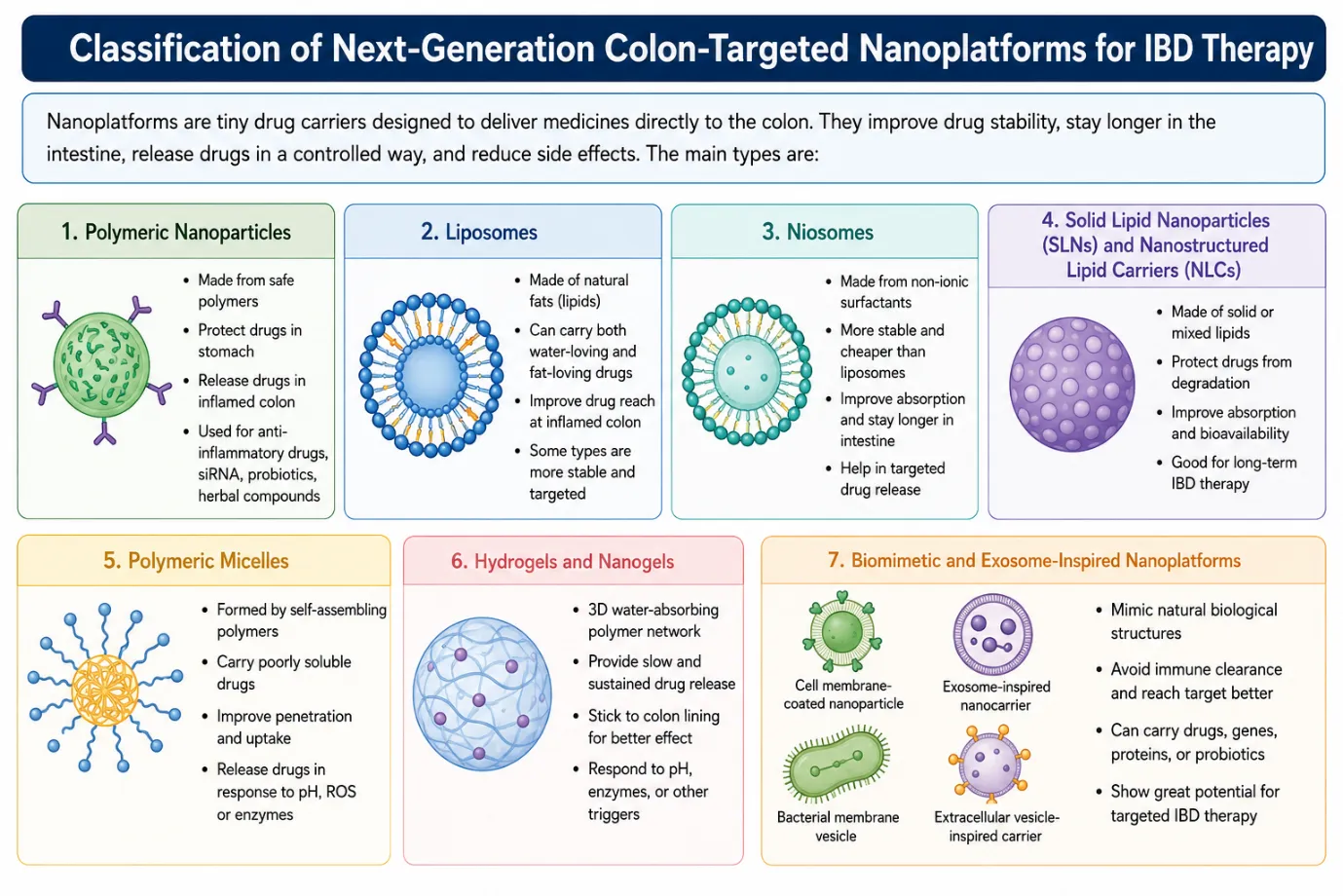
Fig.No.1: Classification of Next-Generation Colon-Targeted Nanoplatforms for IBD Therapy
3.1 Polymeric Nanoparticles
Polymeric nanoparticles are among the most extensively investigated nanocarriers for colon-targeted IBD therapy due to their excellent biocompatibility, controlled release behavior, and structural stability [25]. These systems are commonly prepared using biodegradable polymers such as poly(lactic-co-glycolic acid) (PLGA), chitosan, alginate, hyaluronic acid, and Eudragit polymers. Polymeric nanoparticles protect encapsulated drugs from premature degradation within the gastrointestinal tract and facilitate sustained drug release at inflamed colonic regions. Surface modification of polymeric nanoparticles with targeting ligands, antibodies, or polysaccharides further enhances selective accumulation within inflamed tissues [26]. In addition, pH-sensitive polymeric systems have demonstrated improved colon-specific drug release and reduced systemic exposure. Polymeric nanoparticles have been successfully investigated for the delivery of corticosteroids, anti-inflammatory drugs, siRNA, probiotics, and phytoconstituents in experimental IBD models.
3.2 Liposomes
Liposomes are phospholipid-based vesicular nanocarriers consisting of one or multiple lipid bilayers surrounding an aqueous core [27]. Owing to their biocompatibility and ability to encapsulate both hydrophilic and lipophilic therapeutic agents, liposomes are widely explored for colon-targeted drug delivery. Liposomal systems improve drug solubility, reduce toxicity, and enhance localized accumulation at inflamed intestinal tissues. Advanced liposomal formulations including PEGylated liposomes, ligand-conjugated liposomes, and stimuli-responsive liposomes have shown enhanced stability and targeting efficiency in IBD therapy [28]. However, conventional liposomes may exhibit limitations such as poor storage stability, drug leakage, and rapid clearance from biological environments.
3.3 Niosomes
Niosomes are non-ionic surfactant-based vesicular systems considered promising alternatives to liposomes because of their improved chemical stability, low cost, and ease of formulation [29]. These systems are composed of non-ionic surfactants and cholesterol, forming bilayer vesicles capable of encapsulating a wide range of therapeutic molecules.
Niosomal formulations enhance drug bioavailability, prolong gastrointestinal residence time, and improve mucosal penetration within inflamed colonic tissues. Surface-functionalized niosomes and pH-sensitive niosomal systems have recently demonstrated improved colon-targeting efficiency and controlled therapeutic release in experimental IBD models [30].
3.4 Solid Lipid Nanoparticles and Nanostructured Lipid Carriers
Solid lipid nanoparticles (SLNs) and nanostructured lipid carriers (NLCs) are lipid-based nanoplatforms developed to overcome limitations associated with traditional polymeric systems and emulsions [31]. SLNs consist of solid lipids stabilized by surfactants, whereas NLCs contain a mixture of solid and liquid lipids that improve drug loading capacity and formulation stability. These lipid-based carriers exhibit excellent biocompatibility, controlled drug release behavior, and enhanced intestinal permeability. Moreover, SLNs and NLCs provide protection of encapsulated drugs against chemical and enzymatic degradation within the gastrointestinal tract [32]. Their ability to improve oral bioavailability and site-specific drug accumulation makes them highly promising for long-term IBD therapy.
3.5 Polymeric Micelles
Polymeric micelles are self-assembled nanosized colloidal systems formed by amphiphilic copolymers in aqueous environments [33]. These systems possess a hydrophobic core and hydrophilic outer shell, enabling efficient solubilization and delivery of poorly water-soluble drugs. Polymeric micelles exhibit prolonged circulation time, improved mucosal penetration, and enhanced cellular uptake. Stimuli-responsive micellar systems capable of responding to pH, ROS, and enzymatic triggers have gained considerable attention for selective drug release in inflamed intestinal tissues [34]. Multifunctional micelles co-loaded with anti-inflammatory drugs and antioxidants have also demonstrated synergistic therapeutic effects in experimental colitis models.
3.6 Hydrogels and Nanogels
Hydrogels and nanogels are three-dimensional hydrophilic polymeric networks capable of absorbing large amounts of water while maintaining structural integrity [35]. These systems provide localized and sustained drug release, improved mucosal adhesion, and enhanced protection of therapeutic agents against gastrointestinal degradation. Stimuli-responsive hydrogels sensitive to pH, temperature, enzymes, and ROS are particularly attractive for colon-targeted drug delivery. Nanogel-based systems have demonstrated improved therapeutic efficacy in delivering biologics, peptides, probiotics, and anti-inflammatory agents for IBD management [36].
3.7 Biomimetic and Exosome-Inspired Nanoplatforms
Biomimetic nanoplatforms represent an emerging class of advanced drug delivery systems designed to mimic natural biological structures and functions [37]. These systems include cell membrane-coated nanoparticles, extracellular vesicle-inspired carriers, bacterial membrane vesicles, and exosome-like nanocarriers. Biomimetic systems exhibit superior biocompatibility, immune evasion, prolonged circulation, and enhanced targeting capabilities. Exosome-inspired nanocarriers have demonstrated significant therapeutic potential because of their ability to cross biological barriers and facilitate intercellular communication [38]. In IBD therapy, biomimetic nanoplatforms are being explored for targeted delivery of anti-inflammatory agents, genes, proteins, and microbiota-modulating therapeutics.
4. Smart Colon-Targeting Strategies in Next-Generation Nanoplatforms
The effectiveness of nanotechnology-based therapy in inflammatory bowel disease (IBD) largely depends on the ability of nanoplatforms to selectively deliver therapeutic agents to inflamed colonic tissues while minimizing premature drug release and systemic toxicity [39]. To achieve efficient colon-specific delivery, several smart targeting strategies have been developed based on the unique physiological and pathological characteristics of the gastrointestinal tract and inflamed intestinal microenvironment. These approaches include pH-responsive systems, enzyme-triggered delivery, reactive oxygen species (ROS)-responsive nanocarriers, microbiota-mediated targeting, ligand-mediated systems, and biomimetic targeting approaches.
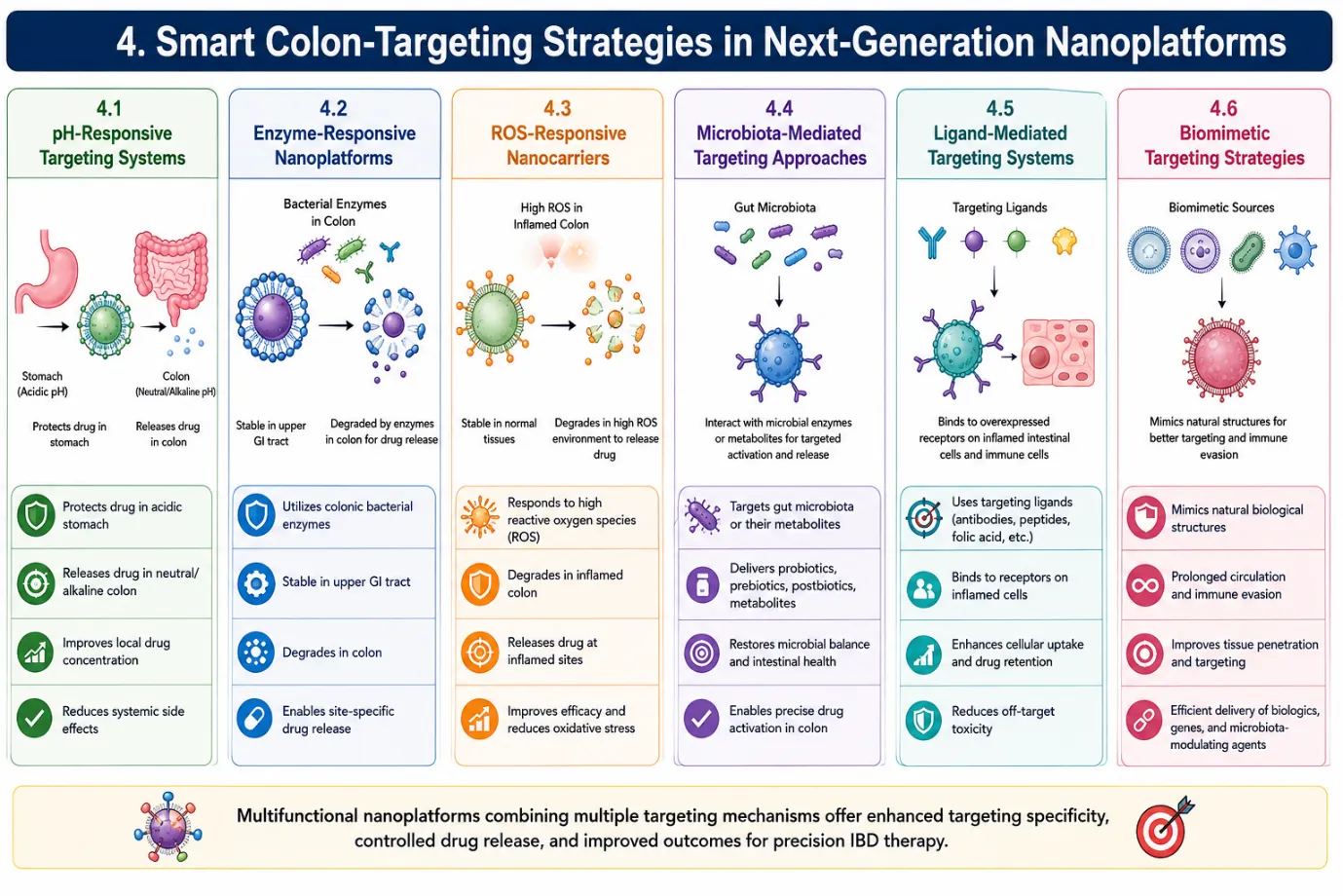
Fig.No.2: Smart Colon-Targeting Strategies in Next-Generation Nanoplatforms
4.1 pH-Responsive Targeting Systems
pH-responsive nanoplatforms are among the most extensively investigated strategies for colon-targeted drug delivery. The gastrointestinal tract exhibits significant pH variation, ranging from acidic pH in the stomach to near-neutral or slightly alkaline conditions in the distal intestine and colon [40]. pH-sensitive polymers such as Eudragit®, hydroxypropyl methylcellulose phthalate, and alginate are commonly employed to protect therapeutic agents from premature release in the upper gastrointestinal tract and facilitate selective drug release in colonic regions. These systems improve local drug concentration at inflamed intestinal tissues and reduce systemic adverse effects associated with conventional formulations [41]. pH-responsive polymeric nanoparticles, liposomes, hydrogels, and nanogels have demonstrated enhanced therapeutic efficacy and improved mucosal healing in experimental IBD models.
4.2 Enzyme-Responsive Nanoplatforms
Enzyme-responsive nanocarriers utilize bacterial enzymes present in the colon for selective activation and drug release. Colonic microbiota produce various enzymes including azoreductases, glucuronidases, glycosidases, and dextranases that can degrade specific polysaccharides and polymeric materials [42]. Nanoplatforms fabricated using chitosan, dextran, pectin, guar gum, and alginate are particularly suitable for enzyme-triggered drug delivery applications. These systems remain relatively stable in the upper gastrointestinal tract but undergo degradation upon exposure to colonic bacterial enzymes, resulting in site-specific release of encapsulated therapeutics [43]. Enzyme-responsive delivery systems are especially advantageous for oral administration because they provide improved colon selectivity and enhanced protection of sensitive biomolecules.
4.3 Reactive Oxygen Species (ROS)-Responsive Nanocarriers
Inflamed intestinal tissues in IBD are characterized by excessive production of reactive oxygen species (ROS), making ROS-responsive nanocarriers highly attractive for targeted drug delivery [44]. These systems are engineered using oxidation-sensitive materials that undergo structural degradation or physicochemical changes in response to elevated ROS levels, thereby enabling selective therapeutic release at inflamed sites. ROS-responsive nanoparticles have demonstrated significant potential in improving anti-inflammatory efficacy, reducing oxidative stress, and minimizing systemic toxicity [45]. Furthermore, these systems provide enhanced specificity compared with conventional pH-dependent formulations because oxidative stress is strongly associated with active intestinal inflammation.
4.4 Microbiota-Mediated Targeting Approaches
The intestinal microbiota plays a crucial role in maintaining gastrointestinal homeostasis and regulating immune responses. Alterations in microbial composition and function are strongly associated with IBD progression [46]. Consequently, microbiota-mediated nanoplatforms have emerged as innovative therapeutic systems for restoring microbial balance and improving intestinal health. These approaches involve targeted delivery of probiotics, prebiotics, postbiotics, microbial metabolites, and microbiota-regulating therapeutics using nanoscale carriers [47]. Certain nanoplatforms are specifically engineered to interact with microbial enzymes or bacterial metabolites within the colon, enabling highly selective drug activation and release. Microbiota-responsive systems are currently gaining significant attention as promising strategies for precision IBD therapy.
4.5 Ligand-Mediated Targeting Systems
Ligand-mediated targeting represents an advanced strategy for enhancing nanoparticle accumulation within inflamed intestinal tissues through receptor-specific interactions [48]. Surface-functionalized nanoplatforms are conjugated with targeting ligands such as antibodies, peptides, folic acid, transferrin, mannose, hyaluronic acid, and CD44-targeting molecules. Inflamed intestinal epithelial cells and activated immune cells overexpress various receptors and adhesion molecules that can be selectively targeted using ligand-modified nanoparticles [49]. This strategy improves cellular uptake, therapeutic retention, and localized drug concentration while reducing off-target toxicity.
4.6 Biomimetic Targeting Strategies
Biomimetic nanoplatforms are designed to mimic natural biological structures such as cell membranes, extracellular vesicles, bacteria, and immune cells [50]. These systems exhibit enhanced biocompatibility, prolonged circulation, immune evasion, and improved tissue penetration compared with conventional synthetic nanoparticles. Cell membrane-coated nanoparticles and exosome-inspired carriers have recently shown remarkable potential for targeted IBD therapy because of their ability to selectively interact with inflamed intestinal tissues and immune cells [51]. Biomimetic approaches also facilitate efficient delivery of biologics, nucleic acids, and microbiota-modulating agents while minimizing immunogenicity and systemic clearance. The integration of multiple targeting mechanisms within a single multifunctional nanoplatform is currently considered one of the most promising approaches for precision medicine-based IBD therapy. Such smart nanocarriers provide enhanced targeting specificity, controlled therapeutic release, and improved clinical outcomes compared with conventional drug delivery systems [52].
5. Therapeutic Applications of Next-Generation Nanoplatforms in IBD Therapy
Next-generation colon-targeted nanoplatforms have demonstrated remarkable therapeutic potential in inflammatory bowel disease (IBD) management through improved drug localization, enhanced mucosal penetration, prolonged intestinal retention, and reduced systemic toxicity [53]. These advanced nanosystems are capable of delivering a wide range of therapeutic agents including anti-inflammatory drugs, corticosteroids, biologics, nucleic acids, antioxidants, probiotics, and phytoconstituents directly to inflamed intestinal tissues. The integration of smart targeting mechanisms with multifunctional therapeutic payloads has further accelerated the development of precision nanomedicine approaches for effective IBD treatment.
5.1 Delivery of Anti-Inflammatory Drugs
Amino salicylates and corticosteroids remain among the most commonly used therapeutic agents for IBD treatment; however, their long-term administration is frequently associated with systemic adverse effects and limited site specificity [54]. Nanotechnology-based colon-targeted delivery systems significantly improve therapeutic localization and minimize off-target drug exposure. Polymeric nanoparticles, liposomes, niosomes, and lipid-based nanocarriers loaded with mesalamine, budesonide, dexamethasone, and prednisolone have demonstrated improved anti-inflammatory efficacy and reduced mucosal damage in experimental colitis models [55]. pH-responsive and ROS-sensitive nanocarriers further enhance selective drug release at inflamed colonic sites, thereby improving therapeutic outcomes and reducing systemic corticosteroid toxicity.
5.2 Biologics and Protein Delivery
Biological therapeutics such as monoclonal antibodies and cytokine inhibitors have revolutionized IBD management; however, their clinical application is limited by enzymatic degradation, poor oral bioavailability, high treatment cost, and frequent parenteral administration [56]. Nanoplatform-based delivery systems provide enhanced protection of biologics against gastrointestinal degradation and improve targeted accumulation at inflamed intestinal tissues. Nanoparticles loaded with anti-TNF-α antibodies, interleukin inhibitors, and therapeutic proteins have shown promising therapeutic efficacy in preclinical studies [57]. Biomimetic nanocarriers and hydrogel-based systems further improve biologic stability, sustained release, and mucosal penetration while minimizing systemic immune reactions.
5.3 Gene Therapy and Nucleic Acid Delivery
Gene therapy has emerged as a promising approach for modulating inflammatory signaling pathways involved in IBD pathogenesis. However, naked nucleic acids such as siRNA, miRNA, mRNA, and plasmid DNA are highly susceptible to enzymatic degradation and exhibit poor cellular uptake [58]. Nanocarriers provide effective protection and targeted intracellular delivery of genetic therapeutics. Polymeric nanoparticles, lipid nanoparticles, and exosome-inspired systems have been extensively investigated for delivery of siRNA targeting TNF-α, NF-κB, IL-6, and other pro-inflammatory mediators [59]. Gene-loaded nanoplatforms have demonstrated significant potential in suppressing inflammatory cytokine expression, regulating immune responses, and promoting intestinal mucosal healing.
5.4 Probiotic and Microbiota-Modulating Therapy
Intestinal dysbiosis plays a critical role in IBD progression, leading to increased interest in microbiota-targeted therapeutic strategies [60]. Nanoplatform-based probiotic delivery systems protect beneficial microorganisms from harsh gastrointestinal conditions and improve bacterial viability, colonization, and therapeutic efficacy within the colon. Several studies have demonstrated successful encapsulation of Lactobacillus, Bifidobacterium, and other probiotic strains within polymeric nanoparticles, hydrogels, and lipid-based carriers for restoration of microbial homeostasis and suppression of intestinal inflammation [61]. In addition, microbiota-responsive systems capable of releasing therapeutics in response to bacterial metabolites or enzymatic activity have shown promising potential for precision IBD therapy.
5.5 Phytoconstituent and Natural Product Delivery
Natural bioactive compounds such as curcumin, resveratrol, quercetin, berberine, and epigallocatechin gallate possess potent anti-inflammatory and antioxidant properties but often suffer from poor aqueous solubility, limited stability, and low oral bioavailability [62]. Nanotechnology-based delivery systems significantly improve the pharmacokinetic profile and therapeutic efficacy of these phytoconstituents. Curcumin-loaded nanoparticles, nanomicelles, and lipid-based carriers have demonstrated enhanced colonic accumulation, reduced oxidative stress, and improved mucosal healing in experimental IBD models [63]. Combination nanotherapy involving phytoconstituents and conventional anti-inflammatory drugs has also shown synergistic therapeutic effects.
5.6 Combination and Multifunctional Nanotherapy
Multifunctional nanoplatforms capable of co-delivering multiple therapeutic agents are increasingly being explored to address the multifactorial nature of IBD [64]. These systems simultaneously target inflammation, oxidative stress, immune dysregulation, and microbial imbalance to achieve synergistic therapeutic outcomes. Combination nanotherapy involving corticosteroids, antioxidants, probiotics, biologics, and gene therapeutics has demonstrated superior efficacy compared with monotherapy approaches [65]. Furthermore, theranostic nanoplatforms integrating diagnostic imaging and targeted therapy are emerging as promising tools for real-time disease monitoring and personalized treatment. Overall, next-generation nanoplatforms provide significant advantages for IBD therapy through enhanced colon targeting, improved therapeutic efficacy, reduced systemic toxicity, and multifunctional treatment capabilities. Continued advancements in biomaterials, nanotechnology, and precision medicine are expected to accelerate the clinical translation of these innovative therapeutic systems [66].
6. Translational Challenges and Clinical Potential of Colon-Targeted Nanoplatforms
Despite substantial progress in the development of colon-targeted nanoplatforms for inflammatory bowel disease (IBD) therapy, successful clinical translation remains a major challenge [67]. Although numerous nanosystems have demonstrated promising therapeutic efficacy in preclinical studies, only a limited number have progressed toward clinical evaluation and commercialization. Several biological, technological, regulatory, and economic factors continue to restrict the large-scale clinical application of next-generation nanomedicine-based therapies. One of the major translational barriers is the complex physiological environment of the gastrointestinal tract, which significantly influences nanoparticle stability, mucus penetration, intestinal retention, and drug release behavior [68]. Variability in gastrointestinal pH, intestinal motility, mucus composition, enzymatic activity, and microbiota diversity among patients may alter the performance and reproducibility of colon-targeted nanoplatforms. Moreover, severe inflammation associated with active IBD can further affect nanoparticle uptake and therapeutic distribution within diseased tissues. Another critical challenge involves formulation stability and large-scale manufacturing. Many nanocarriers exhibit physicochemical instability during storage, including aggregation, drug leakage, particle size variation, and degradation of sensitive therapeutic agents [69]. Reproducible manufacturing of nanoplatforms with uniform particle size, surface charge, encapsulation efficiency, and targeting capability remains difficult at industrial scale. Advanced formulation techniques and standardized quality control strategies are therefore essential for ensuring batch-to-batch consistency and clinical reliability. Long-term safety and toxicity evaluation also represent important concerns in nanomedicine-based IBD therapy. Although many biodegradable polymers and lipid-based materials are considered biocompatible, chronic exposure to nanoparticles may induce immunogenicity, oxidative stress, tissue accumulation, or unexpected biological interactions [70]. Surface modifications and synthetic components used in multifunctional nanoplatforms may further influence toxicity profiles and biodistribution characteristics. Therefore, comprehensive in vivo safety studies and long-term toxicological investigations are necessary before clinical approval. Regulatory complexity is another major obstacle associated with nanotechnology-based therapeutics. Regulatory agencies require detailed characterization of nanoplatform composition, particle size distribution, surface morphology, drug loading, release kinetics, pharmacokinetics, biodistribution, and toxicity profiles [71]. However, the absence of globally standardized regulatory guidelines for nanomedicine products complicates the approval process and delays clinical translation. In addition, the multifunctional and hybrid nature of next-generation nanoplatforms often creates challenges in classification and regulatory evaluation. Despite these limitations, colon-targeted nanoplatforms continue to demonstrate significant clinical potential because of their ability to improve therapeutic efficacy while reducing systemic toxicity and dosing frequency [72]. Smart stimuli-responsive systems capable of selective drug release within inflamed intestinal tissues offer substantial advantages over conventional formulations. Biomimetic nanoparticles, exosome-inspired carriers, and microbiota-responsive systems are particularly promising because of their enhanced biocompatibility, immune evasion, and targeting efficiency. Recent advances in precision medicine and personalized therapeutics are further accelerating the development of individualized nanomedicine approaches for IBD management [73]. Multifunctional nanoplatforms integrating targeted therapy, immune modulation, microbiota regulation, and diagnostic imaging are expected to play a crucial role in future IBD treatment strategies. Artificial intelligence-assisted nanocarrier design and machine learning-based optimization approaches are also emerging as innovative tools for improving formulation development and therapeutic prediction. Several nanotechnology-based therapeutic systems have already entered preclinical and early clinical evaluation for gastrointestinal disorders [74]. Continued collaboration among pharmaceutical scientists, clinicians, material engineers, and regulatory agencies will be essential for overcoming translational barriers and facilitating commercialization of advanced colon-targeted nanotherapeutics. Overall, the integration of nanotechnology with smart targeting strategies, biomaterials engineering, and precision medicine holds tremendous potential for transforming the future management of inflammatory bowel disease. With ongoing advancements in formulation science, safety evaluation, and regulatory standardization, next-generation colon-targeted nanoplatforms are expected to provide safer, more effective, and patient-compliant therapeutic options for long-term IBD therapy.
CONCLUSION
Inflammatory bowel disease (IBD) continues to represent a major therapeutic challenge due to its chronic relapsing nature, multifactorial pathogenesis, and limitations associated with conventional treatment strategies. Traditional therapeutic approaches often exhibit poor site specificity, inadequate mucosal penetration, systemic adverse effects, and reduced long-term therapeutic efficacy, highlighting the urgent need for advanced and targeted drug delivery systems. Next-generation colon-targeted nanoplatforms have emerged as highly promising therapeutic systems capable of improving localized drug delivery, enhancing therapeutic efficacy, and minimizing systemic toxicity. Various nanoplatforms including polymeric nanoparticles, liposomes, niosomes, solid lipid nanoparticles, nanostructured lipid carriers, micelles, hydrogels, biomimetic systems, and exosome-inspired carriers have demonstrated significant potential for efficient delivery of anti-inflammatory agents, biologics, nucleic acids, probiotics, and phytoconstituents directly to inflamed colonic tissues. Furthermore, smart targeting approaches such as pH-responsive, enzyme-triggered, ROS-responsive, microbiota-mediated, and ligand-based delivery systems have considerably improved colon specificity and controlled therapeutic release. Multifunctional nanoplatforms integrating immune modulation, microbiota regulation, and combination therapy strategies are also opening new possibilities for precision medicine-based IBD management. Despite substantial progress, several challenges related to formulation stability, large-scale manufacturing, regulatory approval, and long-term safety evaluation continue to limit successful clinical translation. Therefore, future research should focus on the development of safer, reproducible, and clinically translatable nanotherapeutic systems with improved targeting efficiency and patient compliance. Overall, the integration of advanced nanotechnology with smart colon-targeting strategies holds tremendous potential to transform the therapeutic landscape of inflammatory bowel disease. Continued interdisciplinary research and translational development are expected to facilitate the emergence of more effective, personalized, and clinically applicable nanomedicine-based therapies for long-term IBD management.
REFERENCES

Ruturaj Sapate*, Indrajeet Gonjari, Next-Generation Colon-Targeted Nanoplatforms for Inflammatory Bowel Disease Therapy, Int. J. Med. Pharm. Sci., 2026, 2 (6), 45-57. https://doi.org/10.5281/zenodo.20605800
 10.5281/zenodo.20605800