

We use cookies to ensure our website works properly and to personalise your experience. Cookies policy
Y.D. Mane in Institute of Pharmacy, Kagal, Kolhapur, Maharashtra
Inflammation is the body's natural response to injury, infection, or tissue damage ,characterized by redness, swelling, heat, pain, and altered physiological function. It involves a complex interplay of immune cells, blood vessels, and molecular mediators. While conventional anti-inflammatory drugs are effective, they often come with adverse side effects, prompting interest in safer, natural alternatives. Herbal formulations, particularly classical Ayurvedic decoctions like Sareevadi Kwatham, Rasnadi Kwatham, and Rasna Erandadi Kwath, offer promising anti-inflammatory potential. These Kwaths are water-based decoctions prepared by simmering medicinal herbs to extract bioactive compounds. Ingredients such as Rasna, Guduchi , Devadaru are traditionally used in Ayurveda for theiranti-inflammatory and healing properties. The present study specifically evaluates the anti-inflammatory efficacy of Rasna Erandadi Kwath in three different forms 1:4(Mrudu), 1:8(Madhyam), and 1:16 (Kathin) through In vitro methods: Bovine Serum Albumin (BSA) Protein Denaturation Assay and Human Red Blood Cell (HRBC) Membrane Stabilization Test. Results reveal significant antiinflammatory activity across all concentrations, with the 1:16(Kathin) dilution showing the most pronounced effect. These findings highlight the therapeutic promise of Rasna Erandadi Kwath as aholistic , natural alternative to synthetic anti-inflammatory drugs, reinforcing its value in managing inflammation-related disorders through traditional medicine.
Inflammation is a typical protective reaction to damage in tissues, which encompasses a complicated series of enzyme activations, release of mediators, fluid leakage, cell movement, and processes of tissue degradation and healing.[1] It is a complicated processthat is often linked to pain and includes things like increased vascular permeability, increased denaturation of proteins, and changes in membranes.[2] Damaged cells, irritants, or pathogens are examples of harmful stimuli that cause inflammation in vascular tissue. The body uses inflammation as a defense mechanism to flush out harmful stimuli and start the tissue's healing process. [3] However, disorders including vasomotor rhinorrhea, rheumatoid arthritis, and atherosclerosis develop if inflammation is not managed.[4] The cells become activated and release inflammatory mediators at the start of an inflammatory response. Histamine, prostaglandins, serotonin, the complement and other plasma enzyme systems, slow-reacting substances of anaphylaxis (SRS-A), fibrinolytic, coagulation, and kinin systems, are examples of these mediators. [5] Inflammation can be categorized into acute and chronic types. [6] Acute inflammation represents the body's primary reaction to harmful stimuli and involves an enhanced flow of white blood cells and plasma from the circulation into the injured tissues. This procedure begins with cells that are already located in the affected tissues. It is marked by significant changes in blood vessels, such as dilation and heightened capillary permeability, which are triggered by various inflammatory mediators. Conversely, Concurrent tissue injury and inflammatory process repair are hallmarks of chronic inflammation and is a persistent inflammatory reaction that gradually changes the types of cells present at the inflammation site. [7] Inflammation has been found to be caused by protein denaturation. There are indications that inflammation occurs when living tissues are damaged. In addition to loss of function in the affected area, this is characterized by redness, discomfort, heat, and swelling. The protein structure's disulfide, hydrophobic, hydrogen, and electrostatic linkages are all broken. Furthermore, the protein loses its molecular structure and functions or becomes denatured as a result of a complicated series of events that include enzyme activation, mediator release, cell migration, tissue disintegration, and repair. [8,9,10,11] Therefore, it may be concluded that substances that can stop these alterations and stop heat-induced or thermally-induced protein denaturation may be useful as anti-inflammatory drugs. [10] Often, non-steroidal anti-inflammatory drugs or NSAIDs, are used to treat infectious infections and inflammatory diseases like rheumatoid arthritis. According to reports, they attach to plasma albumin and stop or slow down albumin's thermal denaturation. However, long-term use of these drugs frequently results in toxic or secondary side effects that harm the liver, gastrointestinal system, cardiovascular system, and kidneys. [12,13,14] Therefore, it is necessary to investigate alternate plant-based sources of anti-inflammatory medications. This search is valuable because of the perceived efficiency, the low frequency of severe adverse consequences, or the relative security when compared to artificial alternatives, and cost of medications produced from plants. Furthermore, the wide spread ethnopharmacological use of numerous medicinal plants, either as pure chemicals or as crude extracts, have attracted a lot of attention in relation to the management of several diseases, including chronic inflammatory diseases. The development of safer and more effective compounds may be aided by screening these plants for possible anti-inflammatory substances, as more than 80% of people on the planet today get their primary medical care from drugs derived from plants. [15,16,17] Ayurveda is an age-old medical science that treats patients holistically and with few negative pharmacological side effects. The Samhita describes Bhishak, Aushadhdravya, Rugna, and Paricharak as Chikitsa Chatushpada, with Aushadh Dravya being a crucial component of treatment. Depending on the Atura and Vyadhi states, there are various ways to administer aushadh. Swarasa, Kalka, Kwatha, Hima, and Phanta are the fundamental Ayurvedic drugstore formulas known as Panchvidh Kashaya Kalpana. In Ayurvedic pharmaceutics, Kwatha Kalpana is the most important and frequently utilized type of dosing. [18] Ayurvedic textbooks like the Sarngadhara Samhita stress the need of combining many herbs in a particular ratio to lessen toxicity and improve therapeutic efficacy. According to S. Samhita's Kwatha Vidhi, kwath, also known as kashayam, is the filtered concoction that is produced when a mixture of herbs is simmered with sixteen times water over low heat for a long period of time until the volume is reduced to one eighth.[19]The term "Ka" indicates kaya-shareera (body); "Sha" indicates functions; "Ya" indicates proper management; and "Kashaya" often refers to Kashaya Rasa (astringent flavor). Kashaya refers to the one that aids in maintaining balance or regulating bodily processes. [20, 21] According to the classical treatise on Sanskrit medical words, Vaidyaka Shabdasindhu [22], kashaya is kwatha, or decoction. Kashaya has been defined by the ancient Sanskrit dictionary Vachaspatyam. [23] The purpose of kashhinsayamdhatu + aaypratyayakashati kantham is to eliminate doshas from the top region of the throat, or kantha. According to Ayurveda Shabdakosh, a glossary of Ayurvedic words, it is a boiled dosage form known as shrut-kwathitam or utkwathitam, which facilitates metabolism through krupsamrthaye dhatu. [24] Kwatha is a kind of medical preparation in which one or more natural, coarsely ground raw ingredients are cooked with a liquid medium, typically water, for a certain amount of time until the volume is reduced to the appropriate level. After that, a fresh cloth is used to filter the entire product. A decoction is the term for the liquid that is leftover after filtering. [25] It can be consumed directly from the bottle or as a basis for making different dosage forms. In traditional Indian medicine, blended extracts and plant mixes are recommended over isolated ones. Among its most powerful medicinal components are plants, which are mentioned in texts such as the Samhitas and the Vedas. Ayurvedic herbal remedies are typically made in a variety of dose forms, most of which are combinations of several different herbs. [26, 27] Kwasha, or decoction, is a popular Ayurvedic remedy for a number of ailments and diseases. A typical dosage consists of adding 16 parts (volume) of water to one part(weight) of the dry plant or medicine that has been roughly crushed. The water volume is then reduced to four parts. Kwatha, which is used in internal medicine, is to be divided into eight sections. [28] The term "kwath kalpana decoction" describes a concentrated liquid made by boiling medicinal herbs. The five basic dose kinds are Swarasa (Fresh juice), Hima (Infusion of cold water), Phant (Infusion of hot water), and Kwatha (Herbal decoction). Bhaishajya Kalpana (Ayurvedic Herbal Pharmaceutics) supports these forms. [29] The ancient experts were looking for a way to extract as much water-soluble herb compounds as possible. Thus, they used water to boil plants. The greatest volume of extract was produced using this technique. Kwath or Kashayam is the name given to such a dose form. [30]
Salient features: -
• Herbal decoction is a powerful and effective dosing method since the heating process eliminates the herbs' water-soluble properties to produce a new product.
• Decoction is a water-based liquid dose form that the gastrointestinal tract absorbs more quickly and effectively.
• It is regarded as laghu, meaning it is lighter or easier to absorb and digest.
• It is frequently recommended for a variety of medical ailments. It serves as a foundation for a number of additional dosage forms, including Sandhankalpana (fermented preparations), Snehapaka (medicated oil and ghee), and Avaleha (linctus). [31]
Advantages-
• Decoction is used to cure both external and internal ailments,
• Its large surface area allows for quick absorption through the digestive system.
• In many aspects, it is therapeutically beneficial.
• Medicated enemas (basta), nose drops (nasya), hot fermentations (nadisweda & dharasweda), washing (dhavana), cleansing (prakshalana), and eye drops(ashchotana) are some of the ways it might be administered.
• It is the basis for making other formulations, like Oil in the form of taila, wine in the form of arishta, and ghrita-medicated ghee.
• Trituration (bhavana dravya), detoxification (shodhana dravya), and anupana (vehicle with other dose form) are among the pharmacological processes in which it is employed.
Disadvantage-
• The product has a short shelf life; if it is stored for an extended period of time, microbiological contamination will occur.
• High stored in order to produce the desired therapeutic impact.
• Its flavor , particularly if it's unpleasant, causes poor patient compliance.
• Decoction is a liquid and needs to be handled, packed, and transported very carefully.
• Adding preservatives to commercial formulas may have negative effects, such as irritating mucosal membranes.
• It doesn't work on chemicals that are susceptible to heat. Heating may cause the loss of volatile components.
• Inappropriate alteration of a large-scale preparation process can occasionally result in adverse effects and decreased efficacy. [32]
Molecular docking serves as an essential technique in structural molecular biology and the field of computer-assisted drug development. It involves the arrangement of computer-generated 3D models of small ligands into various positions, orientations, and conformations within a receptor structure. [33] Forecasting the experimental the docking methodology, widely recognized as a standard computational approach in drug development for optimizing lead compounds and performing virtual screening to find new biologically active substances, aims to determine small molecule binding affinities and modes at specific receptor targets. To create and evaluate ligand poses, the docking technique needs an energy scoring function and a search algorithm. The three main interrelated goals of molecular docking are pose prediction, virtual screening, and binding affinity estimation. A proper docking technique is necessary in order to precisely anticipate the native ligand posture at the receptor binding site (that is, the experimental ligand geometry within a given tolerance limit) and the associated physical–chemical molecular interactions. During the analysis of huge chemical libraries, the approach must also effectively differentiate between molecules that bind and those that don't, and place these ligands in the database's top compounds. The fundamental components of a docking system for creating and evaluating the ligand conformations are a search algorithm and an energy scoring function. The capacity to precisely define energetics of receptor-ligand interactions and efficiently control a system's intrinsic molecular flexibility is essential for developing predictive docking tools that will be useful in future drug design research. [34]
Plan of work: -
Review of literature: -
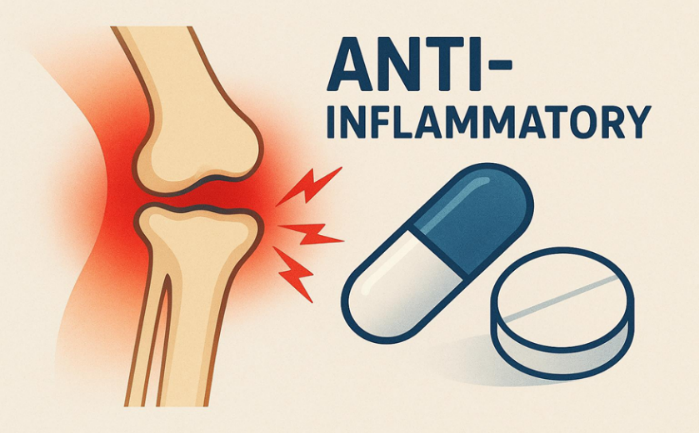
Anti-Inflammatory Activity: Body’s typical physiological response to tissue injury is called Inflammation. Mechanical or physical harm, trauma, immunological response, microbial infection and burns can all results in injury. The metabolism of arachidonic acid plays a significant part in no. of events that starts the mechanism of Inflammation. [35] Depsite having harmful side effects, currently available Anti-Inflammatory medicines limit enzyme activity while also providing symptom alleviation. So, it’s crucial to use Anti-Inflammatory medications with minimal adverse effects. [36] The cellular reaction within a controlled environment can be examined using In-Vitro studies under consistent experimental conditions. These In-Vitro investigations aid in understanding mechanism underlying the Anti-Inflammatory effects of herbal components. [37] Effects of herbal extracts on inflammation, with a focus on various assays that are widely used to check Anti-inflammatory In-Vitro properties of herbal ingredients. Anti-Inflammatory In-Vitro effects are routinely assessed using membrane stabilization and bovine fraction assays. Diclofenac, Aspirin are two medications that are most frequently used as reference standards. [38] Many In-Vitro models are employed to examine the Anti-Inflammatory qualities of medicinal plants.
1. In-Vitro Models:
2.HRBC Stabilization Method [39]:
The blood of a healthy human volunteer who had not taken any NSAIDS for two weeks prior to the experiment was mixed with an equivalent volume of Alsever solution (2% dextrose, 0.8% sodium citrate, 0.5% citric acid, and 0.42% NaCl). Following that, the mixture was centrifuged at 3,000 rpm. To create a 10% solution, isosaline was used to wash the packed cells. Extracts at different strengths (200 and 400 µg/ml) were prepared using distilled water. One milliliter of phosphate buffer, two milliliters of hyposaline, and half a milliliter of HRBC solution were added for each concentration. Spectrophotometry was used to determine the supernatant solution's haemoglobin content at 560 nm after 20 minutes of centrifugation at 3,000 rpm and 30 minutes of incubation at 370C. A control was made by leaving out the extracts 7, and as a reference standard, 100 and 200 µg/ml of diclofenac were utilized
Advancement in Kwath:
Ghana
Ghana is a concentrated dose form that is a variation of Kwatha Kalpana, often referred to as Rasakriya. Boiling it until it becomes semisolid and then drying it until it solidifies is how Kwath is manufactured. [40]
Syrup
Manufacturing a decoction of the medication is the first stage in manufacturing syrup. It is then made by heating it with eight times as much water as previously, till the last volume is a quarter of the first one. After being allowed to cool and sieved, the infusion was present. The final herbal syrup was made by sifting the filtrate, adding 66.7% sugar, and boiling the liquid until it reached the consistency of 1-2 threads. [41] Pravahi kwatha/aristha It is made through fermentation and resembles the secondary formulation of a decoction that has been fermented and sweetened. Natural Remedies Although Sara Samgraha mentions a "Pravahi Kwatha" there are no clear allusions, and Aristhas (fermented preparation) obtains its own alcohol on its own, which is acquired by common methods and serves as a natural preservative. [42]
Granules
The older decoctions are no longer advised due to the time-consuming preparation method. As a result, a number of industrial products in readily usable forms have been produced. Since the various liquid therapies either contain sugar or preservatives or are fermented to enhance their shelf life, their levels of effectiveness vary. These liquids and the fresh decoction demonstrate that the dosage is usually off. Furthermore, incorrect dosage may reduce the effectiveness. Most of the time, the doses of these drinks and the fresh decoction appear to differ. Not taking the dose as prescribed could potentially compromise its effectiveness. The risk of spills, breakage, and leaks also contributes to transportation-related issues. An effort is being made to address these issues. Modern technology has helped to convert the liquid form into readily soluble granules [43]
Ghutika/ Vatika
This kwatha upkalpana is highly popular, flavorful, and crucial in practice. Like kwatha, the semisolid paste is formed from guggulu, jiggery, and other ingredients. Gutika or vatika, like Eladi gutika, is manufactured by hand or by machines after the combination has been ground into granules. [44] One of the most widely used medications among Ayurvedic doctors in India and Sri Lanka is the Rasnadi decoction. Madhyama Rasnadiya (Rasna 13), Rasna 20, Rasna Panchaka, Rasna 09, Rasna Dwadasha (Rasna 12), Rasna Saptaka, Rasna Maharasnadiya, Rasna Dviguna Bhagadiya, and Trairasnadiya are among the decoctions in this group.For the treatment of cardiovascular, pulmonary, gastrointestinal, integumentary, hemopoietic, genito-urinary, neurological, locomotor, and endocrine diseases, Rasna is a significant medicinal plant that is widely utilized in indigenous medicine systems. Rasna Erendi Kwath (REK) is aqueous base decoction which contains 14 ingredients including the rhizomes of Rasna, Ghana, Shati and Shunti; roots of Eranda, Shatavari, Sahachara, Dushparsha, Bala, Iksura, Vasa and Ativisha; stem of Amruta; the wood of Devdara. This kwath was prepared according to the further shloka. Rasnerandadi kashayam (????????? ??????) [45]
CONCLUSION: -
Inflammation is a complex biological response aimed at protecting the body from injury or infection, but its chronic presence can lead to several health disorders. Although conventional anti-inflammatory drugs are widely used, they often pose risks of adverse effects, emphasizing the need for safer alternatives. In this context, Ayurvedic formulations have gained considerable interest due to their holistic healing properties and minimal side effects. Rasna Erandadi Kwath, a traditional polyherbal decoction, was evaluated in this study for its anti-inflammatory activity. These outcomes highlight the potential of Rasna Erandadi Kwath as an effective natural remedy for inflammation-related conditions, supporting its continued use in traditional medicine.
REFERENCES




Sanika Todkar*, Sariya Shaikh, Pranoti Patil, Roman Faras, Pharmacological Investigation of the Anti-inflammatory Potential of Rasna Erandadi Kwath: An In-Vitro Experimental Approach, Int. J. Med. Pharm. Sci., 2025, 1 (11), 184-191. https://doi.org/10.5281/zenodo.17750118
 10.5281/zenodo.17750118