

We use cookies to ensure our website works properly and to personalise your experience. Cookies policy
Maharaja Bir Bikram College, Agartala, Tripura-799004, India
Crataeva nurvala Buch Ham is an evergreen indigenous tree belonging to the Capparidaceae family. This tree is commonly known as Varuna. Various parts of this plant are very useful in the treatment of many diseases. Conventionally, this plant has been used for the ailment of breathing problems, metabolic disorders, joint lubrication, skin moisture, and wound healing. In folk medicine, the bark-juice is given to women as post-pregnancy treatment. The bark-juice of this plant exhibited cytotoxicity and very useful in the treatment of urinary disorders, kidney problem, bladder stones, fever, vomiting, and gastric irritation. Leaves of this plant are used as rubefacient (external application) and as febrifuge in fever, anti-rheumatic and tonic. Phytochemicals present in the plant include lupeol, lupeol-acetate, catechin, spinasterol acetate, taraxasterol, 3-epilupeol, cadabacine, cadabacine acetate, epicatechin-5-glucoside, epifzelechin and glucocapparin, pentadecane, octanamide, 12-tricosanone and friedelin. Due to the presence of these phytochemicals, C. nurvala possesses a wide array of biological activities that include antidiabetic, antibacterial, anthelmintic, anti-nociceptive, contraceptive, antiurolithiatic, anti-fertility, anti-inflammatory, antidiarrhoeal, wound-healing, analgesic, cardioprotective, and antimalarial properties. This review will explore the chemical structures and pharmacological properties and the potential health benefits of phytochemicals present in C. nurvala.
From the ancient times, medicinal plants have been widely used for the treatment of various diseases. The phytochemicals of plants play an important role in the development of potent therapeutic agents. Research has shown that natural products derived from medicinal plants represent a vast and underutilized reservoir of biologically active molecules with potent antiviral and antibacterial properties [1-3]. In traditional medicinal system over 1.5 million practitioners have been using medicinal plants in preventive, promotional and curative applications [4]. This is because of natural product-based healthcare is often associated with lesser side effects compared to synthetic chemical drugs. According to a survey conducted by the World Health Organization (WHO), approximately 80% of people worldwide rely on rely on traditional medicines mainly plant based herbal products to sustain primary health care for remedies to various diseases [5]. Notably, recent studies have revealed that over 25% of all approved drugs are derived from natural sources. Many bioproducts have been identified for the treatment of infections caused by pathogens such as Dengue virus, influenza, HIV, herpes, hepatitis, and, more recently, SARS-CoV-2 [6,7]. Two main traditional system of medicine in India are Ayurveda, and Unani and Siddha. Ayurveda is considered as one of the oldest healing system of India, based on lifestyle diet and herbs [8,9]. In Ayurvedic medicine, the general health and well-being of an individual is governed by a balance of the five major elements of nature, space, air, fire, water and earth [10]. Any imbalance in these elements present in the body leads to different types of diseases. There are numerous of Ayurvedic preparations from plants which are widely used to treat various ailments. According to Ayurveda, all body processes are regulated by equilibrium among the three doshas (Vata, Pitta and Kapha). C. nurvalais considered valuable in treating Vata (blood flow, waste elimination and breathing), Pitta (fever and metabolic disorder), Kapha (joint lubrication, skin moisture, wound healing, strength and vigour, memory loss, heart and lung weakness and weak immune systems) [10]. This review will discuss the chemical composition and pharmacological properties of the phytochemicals present in C. nurvala and their potential health benefits.
2. Botanical Description of C. nurvala
C. nurvala belongs to the Capparidaceae family is commonly known as Barna. It is an evergreen tree indigenous to India [11-13]. It widely found in all parts of Bangladesh, Pakistan, India, Philippine, South America, China, and Africa [13]. It is moderate-sized deciduous tree mainly grows in hot dry climate and shady places [14] with a much-branched head, growing up to 15 meters tall. It features trifoliate leaves, white-to-yellowish flowers, and woody berries containing reniform seeds. The petiole of leaf is 3.8 - 7.6 cm long. Leaflets are ovate-lanceolate, acuminate, entire, and glabrous. They measure 5 - 15 cm in length and 3.8 - 6.3 cm in width. Floweres of this tree is fragrant whitish to milky white coloured, polygamous flowers, 5-8 cm in diameter. Inflorescences appear as dense terminal corymbs; bracts minute. Fruit is berry, globes with woody rind, embedding seeds in yellow pulp. The outer surface of bark is wrinkled and grey white in colour, covered with large number of lenticels. The flowering and fruiting season of this tree is December-May and June-August [15]. It grows at river banks of Southern India and other tropical and sub-tropical countries of the world, wild or cultivated [16,17].
3. Traditional Uses of C. nurvalais
Traditionally, the bark of C. nurvalais has been widely used in the treatment of urinary disorders, kidney, bladder stones, fever, vomiting and gastric irritation. It also acts as contraceptive and oxytocic. The juice extracted from bark is beneficial for women at the time of post-pregnancy [13,18]. Moreover, root and bark are laxative, lithontriptic, increase appetite and biliary secretion [19]. C. nurvalais leaves are very rubefacient. Paste of leaves is applied externally as anti-rheumatic and internally used as febrifuge and tonic [20,21]. Traditionally different parts of this tree are used for the treatment of many health conditions such as fever and metabolic disorders, joint lubrication, skin moisture, wound healing, memory loss, heart, lung weakness, breathing problems and to boast immunity [11]. In Unani system of medicine, the bark is used as appetite stimulant and to decrease the secretion of bile and phlegm [10]. In folk medicine, C. nurvala is potentially oxytocic, diuretic, laxative, anti-periodic, and bitter tonic [22]. It is reported that the bark of C. nurvala is very beneficial against urinary disorders including kidney and bladder stones, antiemetic and as antidote in snake bite [23]. Tribes of Assamese, Khashi, and Garo have applied leaf paste of C. nurvala in treatment of joint disorders. Roots and barks are used as laxative and increase appetite and biliary secretions [24]. The people of Tamil Nadu, India, use leaves and bark of C. nurvala to cure jaundice, eczema, rabies, fever and to control birth [25,26]. In Philippines, leaves are prescribed during irregular menstruation and the bark is used to cure convulsions and tympanites [27]. The tribes of Kango and Yurubas of Africa use leaf paste as counter irritant [28]. Varanadi is an Ayurvedic proprietary medication that commonly used for the treatment of Prostate problems (BPH), fatty liver disease, abdominal lumps, and rheumatoid arthritis. Varunal is another traditional Ayurvedic poly-herbal formulation containing C. nurvala is used against hepatitis, edema, ascites, and arthiritis [10].
4. Phytochemicals of C. nurvala
Many medicinally important phytochemicals have been isolated from C. nurvala that include friedelin, diosgenin, sitosterol, betulinic acid and betulinaldehyde [18,19,29,30]. In the isolated chemical constituents, the major bioactive triterpenoid is lupeol (1) [31]. Other constituents isolated from C. nurvala include lupeol acetate (2), spinasterol acetate, taraxasterol, 3-epilupeol, cadabacine, cadabacine acetate, catechin (3), epicatechin-5-glucoside, epifzelechin (4) and glucocapparin (5). The investigation of methanolic extract of fruits reveals the presence of four known compounds namely pentadecane (6), octanamide (7), 12-tricosanone (8) and friedelin (9) [32]. Similarly, the chemical investigation of leaves result in the isolation of four compounds namely dodecanoic anhydride (10), methyl pentacosanoate (11), kaempferol-3-O-α-D-glucoside and quercetin-3-O-α-D-glucoside [10]. The chloroform fraction yield four compounds namely betulinic acid (12), β-sitosterol (13) and stigmasterol (14). Pravin et al reported that the stem bark of C. nurvala has a rich source of tri-terpenoids and steroids [33].
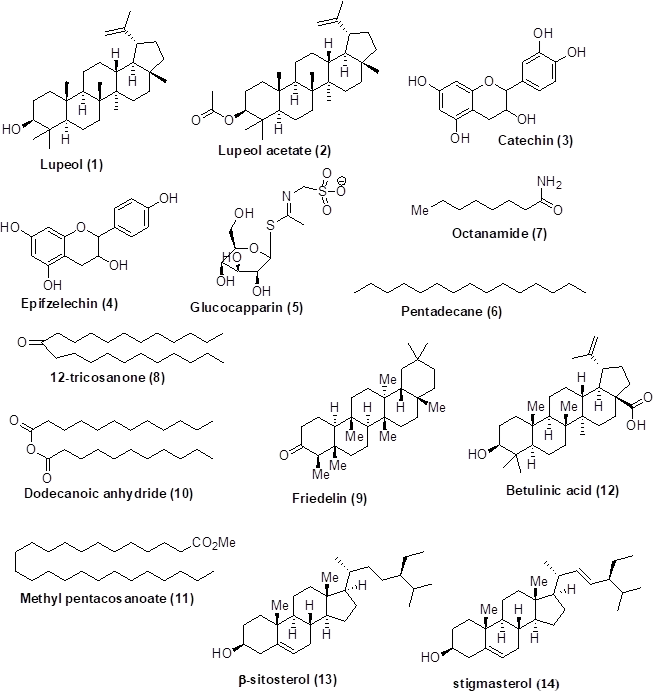
Figure 1. Structures of major chemical constituents present in C. nurvala
5. Pharmacological Activities
Phytochemicals present in various parts of the plant varuna exhibited a number of pharmacological activities such as anti-diabetic, antibacterial, anthelmintic, anti-nociceptive, contraceptive, anti-urolithiatic, anti-fertility, anti-inflammatory, anti-diarrhoeal, wound-healing, analgesic, cardioprotective and antimalarial activity. Various biological activities exhibited by C. nurvala are discussed below:
5.1. Antibacterial activity
Parvin et al tested the antibacterial activity against two Gram positive and four Gram negative human pathogenic bacteria using disc diffusion method. The range of zone of inhibition of the extract is found to be 8.3 to 22.1 mm [34]. Malini et al. observed that the antibacterial efficacy of ethanol extract of root bark and chloroform extract of the stem bark of C. nurvala is evaluated using agar well diffusion method [19]. The extract inhibits the test bacteria. However, the extract has less potency than the standard antibiotic in inhibition of the test bacteria.
5.2. Antidiabetic activity
In 2010, Sikarwar and Patil have prepared four extracts such as- aqueous extract, ethanolic extract, chloroform extract and petroleum ether extract [15]. They observed that different solvent extracts of C. nurvala show anti- diabetic activity. Compared with diabetic control, all the four extracts decrease the elevated blood glucose levels in sub-acute treatment. The ethanolic and petroleum ether extract shows more potent effect as compared to other ones [15].
5.3. Antidiarrhoeal activity
Inayathulla et al. reported that ethanolic extract of C. nurvala stem bark shows statistically significant reduction in the severity and frequency of diarrhoea and intestinal transit produced by castor oil. The ethanolic extract significantly inhibits castor oil induced intestinal fluid accumulation and the volume of intestinal content is more than atropine [35]. Khatun et al. investigated the antidiarrhoeal activity of ethanolic extract of the leaves using intestinal motility test in mice. In the motility test, the crude extract at oral doses of 200 and 400 mg/kg b. wt (body weight) shows 31.16% and 35.31% inhibition of intestinal propulsion of charcoal marker whereas positive control group exhibited 36.25% inhibition of charcoal propulsion through the intestine [36].
5.4. Antiurolithiatic activity
Aggrawal et al. observed that Calcium oxalate urolithiasis induced by 3% glycolic acid in rats is treated using C. nurvala bark decoction. The decoction shows significant activity in preventing the deposition of calcium and oxalate in the kidney, the formation of vesicle calculi and also reduces the size of the preformed stones [37]. The plant C. nurvala is having diuretic action which is responsible for the anti-urolithiatic activity of decoction prepared from bark of the plant [38]. The diuretic action of Varuna attributes the metabolic correction of the serum and the urinary electrolyte levels in experimentally induced urolithiasis in albino rats [37].
5.5. Anthelmintic activity
The ethanol extract of root bark of C. nurvala is investigated for its anthelmintic activity against earthworms (Pheretima posthuma), tapeworms and roundworms. Three concentrations (25, 50 and 100 mg/ml) of the extract are taken for activity which involves determination of time of paralysis and time of death of the worms. The ethanol extract shows anthelmintic activity in dose-dependent manner giving shortest time of paralysis (P) and death (D) with 50 mg/ml concentration, for all three types of worms. However, prominent activity is exhibited at lower concentration (10 mg/ml) against all three types of worms [39].
5.6. Antimalarial activity
The ethanolic extract of C. nurvala exhibited antimalarial activity. From this observation, Khalid et al. prepared semi-synthetic derivatives after isolating the constituent having antimalarial activity from the plant to develop a new antimalarial agent for better activity [40].
5.7. Antioxidant Activity
The plant extract (250 and 500 mg/kg) is very effective in significantly altering the indices of cisplatin induced dysfunction of renal proximal tubule cells under oxidative stress by decreasing the concentration of blood urea nitrogen, creatinine and lipid peroxidation. The increase in glutathione and catalase activity is indicative of the antioxidant properties of C. nurvala stem bark extract [30].
5.8. Anti-inflammatory activity
Lupeol which is found in the stem bark of C. nurvala showed anti-inflammatory activitiy. In adjuvant arthritis, Lupeol linoleate and indomethacin are two excellent compounds that show a reduction in paw swelling by 39, 58 and 35%, respectively [8,9,12,41,42]. Lupeol and its linoleate ester derivative are also used in ameliorating the lipidemic–oxidative abnormalities in the early stage of hypercholesterolemic atherosclerosis [22].
5.9. Anti-fertility activity
The bark extracts of C. nurvala are tested for anti-implantation and estrogenic properties. Ethanolic extract exhibits partial whereas aqueous extract exhibits complete resorption of implants at 300 and 600 mg/kg b. wt dose levels. In estrogenic activity study, both the extracts increased uterine weight and caused opening and cornification of vagina in immature rats [43].
5.10. Antinociceptive activity
Ethanolic extract of C. nurvala exhibits moderate analgesic activity in acetic acid induced writhes. The ethanolic extract of whole plant produces 26.88% and 43.55% writhing inhibition at oral dose of 250 mg/kg and 500 mg/kg b. wt. of mice [12]. Similarly, marked reduction in acetic acid-induced writhes in the animals is seen with diclofenac sodium (100 mg/kg IP). These observations suggest that crude ethanolic extract may possess centrally and peripherally-mediated analgesic activity [44].
5.11. Analgesic activity
The ethanolic extract of leaves of C. nurvala and the peripherally acting analgesic potential is tested using acetic acid induced writhing in mice. The crude extract shows significant analgesic activity at oral doses of 200 and 400 mg/kg b. wt. with an inhibition of writhing 68.4% and 76.3% compared to 67% for the positive control [36]. The stem bark extract of C. nurvala is effective against cyclophosphamide induced cardio-toxicity [45]. Dinesh et al. observed that ethanolic extract of root bark of C. nurvala exhibit wound healing property [46].
CONCLUSION
In summary, Crataeva nurvala has been ethno-medicinally used as a therapeutic agent for a variety of diseases. Various research findings have proven its uses beyond the ethno-medicinal ones in experimental animals. The various parts of the plant have been explored for antidiabetic, antibacterial, anthelmintic, anti-nociceptive, contraceptive, antiurolithiatic, anti-fertility, and anti-inflammatory. The plant shows to have a broad spectrum of activity on several ailments. It is reported to contain lupeol, lupeol acetate, spinasterol acetate, taraxasterol, 3 epilupeol, cadabacine, cadabacine acetate, catechin, epicatechin-5-glucoside, epifzelechin and glucocapparin, pentadecane, octanamide, 12-tricosanone, friedelin, succinic acid, mannitol, lactic acid, betulinic acid, -sitosterol, β stigmasteroland triterpenoids, which may be responsible for the different biological activities. For the better understanding and with regard to the development of quality herbal medicine, the standardization of extracts, isolation and characterization of active phytochemicals, elucidation of mode of action and mechanism of the active compounds and clinical trial of the compounds are highly required. We hope this article will help researchers to screen the compound responsible for different biological activities, and to elucidate the molecular mechanism of action.
Conflicts of interest
The author declares no conflict of interest.
Acknowledgement
The author is thankful to M. B. B. College, Agartala, Tripura to provide infrastructural facilities to conduct this research work.
REFERENCES

Pradip Debnath*, Phytochemistry, Pharmacological Properties and Application of Varuna (Crataeva Nurvala Buch. Ham.), Int. J. Med. Pharm. Sci., 2026, 2 (8), 678-684. https://doi.org/10.5281/zenodo.22016387
 10.5281/zenodo.22016387