

We use cookies to ensure our website works properly and to personalise your experience. Cookies policy
1Abdur Razzaq Ansari Memorial Institute, Irba, Ranchi, Jharkhand-835217, India
2Faculty of Medical Science & Research, Sai Nath University, Ranchi, Jharkhand-835219, India.
3University of North Bengal, Raja Rammohunpur, Bagdogra, Bairatisal, West Bengal-734013, India
4Ranchi College of Pharmacy, Kalyanpur, Singh More, Hesag, Hatia, Ranchi-834003, India
Metabolic disorders, such as type 2 diabetes mellitus (T2DM), obesity, dyslipidaemia, metabolic syndrome (MetS) and non-alcoholic fatty liver disease (NAFLD) are a huge burden on global health, affecting over two billion people around the world. Therapeutic formulations containing two or more medicinal plants, which are used to achieve synergistic effect of the plants and to reduce the toxic effect of the single plants are called as Polyherbal formulations (PHFs) and play a key role in traditional medicine systems like Ayurveda, Traditional Chinese Medicine (TCM), Unani and African ethnomedicine. Mechanistic understanding, standardization, and regulatory validation of such preparations have many limitations, however, and their widespread use in evidence-based medicine has been held back by the lack of empirical evidence that accumulated over centuries of use. This review critically examines the current scientific status of the application of PHF in metabolic disorders focusing on the mechanisms of antioxidant activity, anti-inflammatory signalling, insulin sensitisation, lipid regulatory pathways and emerging modulation of the gut microbiota, which underlie the therapeutic actions. At the same time, we discuss the development of the modernisation of pharmaceuticals: the use of HPLC-MS in phytochemical profiling and metabolomics, the evolution of quality control concepts to comply with ICH and WHO guidelines and the latest developments in delivery system technologies such as phytosomes, nanostructured lipid carriers, self-emulsifying drug delivery systems (SEDDS) and polymeric nanoparticles that greatly improves the oral bioavailability of substances. Persistent challenges are critically examined such as inter batch variability related to agricultural and post harvest conditions, the interactions between herb and drug, hepatotoxicity signals, regulatory fragmentation between jurisdictions, etc. The review highlights some important gaps in research, particularly the lack of well-powered randomized controlled trials, the need for specific pharmacovigilance guidelines for PHFs and the lack of PHF-specific pharmacogenomics studies and outlines potential ways to bring traditional knowledge into the realm of regulatory grade therapeutics and the regulatory process.
1.1 Concept of Polyherbal Formulation
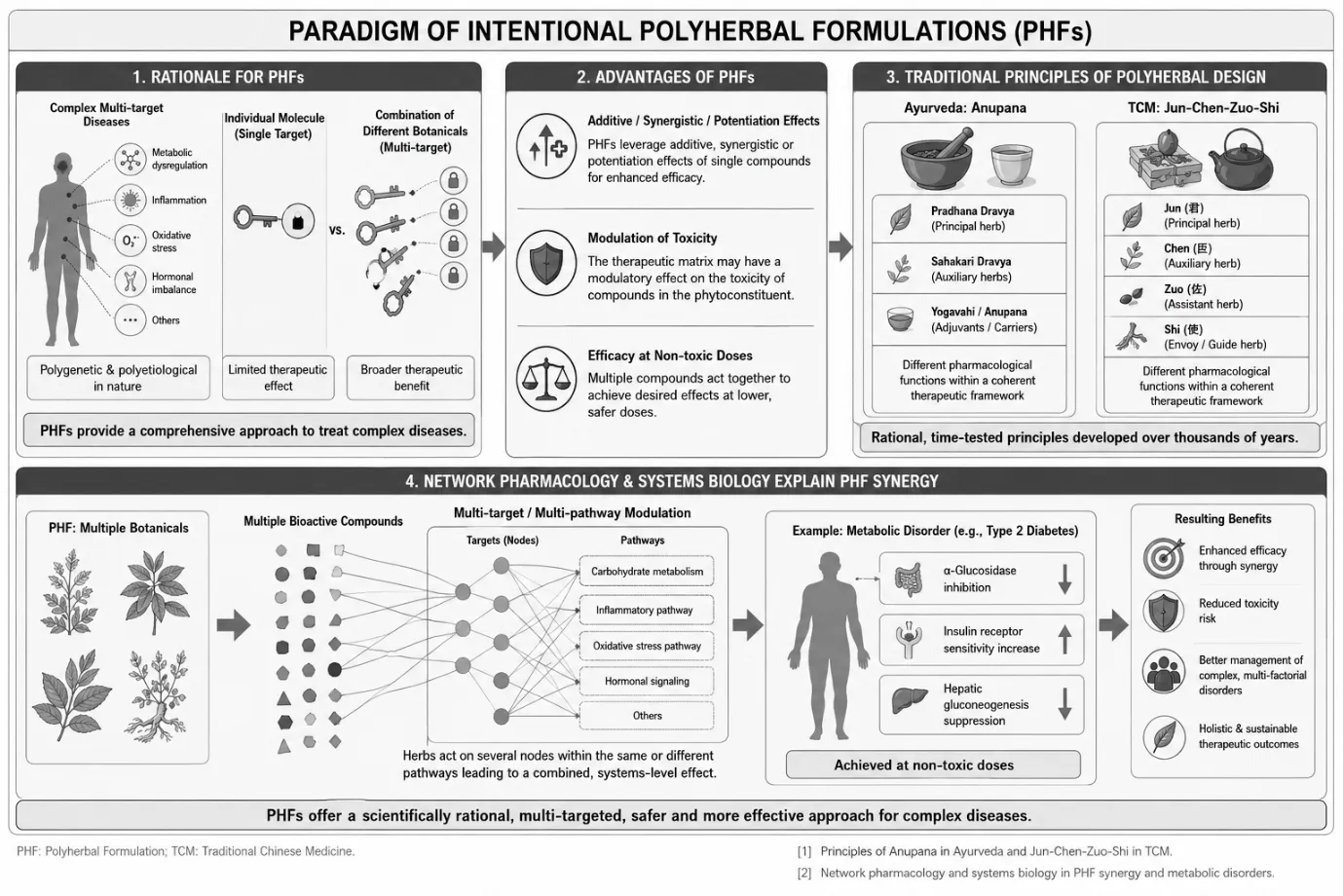
The idea of complex multi target diseases can be better treated by combination of different botanicals than by individual molecules could be regarded as a basis for the existence of the paradigm of intentional polyherbal formulations (PHFs). The therapeutic matrix may also have a modulatory effect on the toxicity of compounds in the phytoconstituent, and PHFs are known to take advantage of additive, synergistic or potentiation effects of the single compounds. The principles of 'Anupana' in Ayurveda and 'Jun-Chen-Zuo-Shi' in TCM illustrate rational principles of polyherbal design that have been developed over thousands of years, in which the principal herbs 'Pradhana Dravya', auxiliary herbs, adjuvants, and carriers serve different pharmacological functions within a coherent therapeutic framework [1]. Network pharmacology and systems biology are playing an increasingly important role in elucidating the biochemical basis of PHF synergy, which is critical. In a formulation, the effect of herbs on several nodes within the same pathway of dysregulated metabolism can combine for a different effect than any individual herb, such as α-glucosidase inhibition, insulin receptor sensitivity increase, and hepatic gluconeogenesis suppression at non-toxic doses. This multimodal targeting has an extra benefit in metabolic disorders, which can be considered a polygenetic and polyetiological condition [2].
1.2 Traditional Medicine Relevance
The World Health Organization estimates that around 80% of the world's population depend on traditional plant based medicines as first line treatment for their healthcare with a significant proportion of this being towards the management of chronic metabolic condition [3]. Traditional systems-Ayurveda, TCM, Unani, Siddha and African Traditional Medicine have large pharmacopoeias of anti-diabetic, hypolipidaemic and hepatoprotective PHFs that have been validated over the years by empirical use. In India, many formulations like BGR-34, Ayush-82 and Livogen have been moved from traditional use to regulated drug product, representing an approach of ‘reverse pharmacology' in which data on traditional use inform targeted clinical investigations, as opposed to conventional drug discovery pipelines [4]. The opportunity and the imperative for scientific rigor in studying traditional medicine formulations is particularly pronounced in areas of the world where high levels are used, such as the global epicentre of the metabolic syndrome pandemic in regions of high traditional medicine use, including South Asia, Sub-Saharan Africa and East Asia. In addition, the economic viability of plant-based therapies adds another layer of significance in low and middle-income countries, where cost of pharmaceuticals is a serious hurdle to metabolic disease management [5].
1.3 The Imperative for Modernization
The shift from empirical to evidence-based acceptance is the pivotal hurdle for PHF science in the twenty first century. Some of the key challenges to this transition are as follows: (i) lack of standardisation resulting in different phytochemical compositions and therapeutic effects within batches; (ii) missing mechanistic understanding at the molecular level; (iii) limited and inconsistent clinical trials reporting according to CONSORT standards; (iv) regulatory issues that are not well designed and harmonised across jurisdictions; and (v) poorly characterised herb drug interaction profiles that limit clinical safety [6]. Pharmaceutical modernization of PHFs, therefore, involves a range of scientific and regulatory interventions including use of sophisticated analytical chemistry for phytochemical profiling, formulation optimization using activity-based approaches through metabolomic and genomic tools, and harmonization with regulatory agency guidelines, such as those of the European Medicines Agency (EMA), USFDA and WHO. The current review aims to combine the information regarding this across these domains to offer a critical analytical framework for researchers and clinicians working in the field of PHF science [7].
2. Role of Polyherbal Formulations in Metabolic Disorders
2.1 Type 2 Diabetes Mellitus
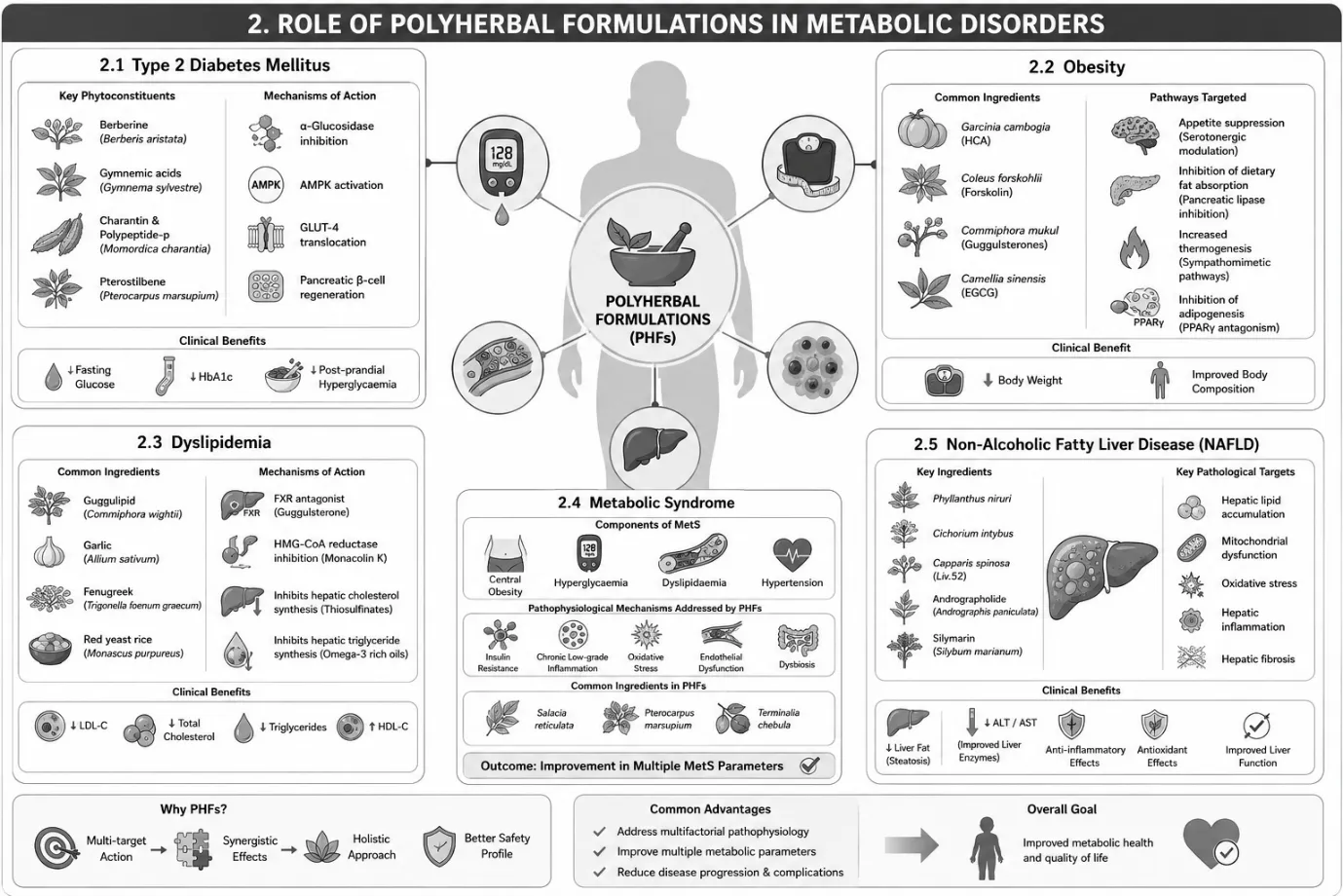
The most well-studied metabolic indicator of PHFs is type 2 diabetes mellitus (T2DM), ranging from ancient pharmacopoeias to today's randomized controlled trials. Some interesting Indian PHFs like BGR-34, Ayush-82 and Diabecon have been studied clinically with glucose reduction in the fasting state, reduction in HbA1c and dampening of post prandial hyperglycaemia. A multi-centre, double-blinded, randomized controlled trial (RCT) of BGR-34 in T2DM patients showed significant decrease in HbA1c (mean difference ~0.9%) after 12 weeks, with no adverse safety effects [8]. But the methodological variety of the included studies (due to different follow-up periods, different primary endpoints, and poor blinding) makes it difficult to interpret the results. The key phytoconstituents that are responsible for the anti-diabetic effect are berberine (Berberis aristata), gymnemic acids (Gymnema sylvestre), charantin and polypeptide-p (Momordica charantia), and pterostilbene (Pterocarpus marsupium). That these compounds are so diverse in their mechanisms of action—alpha-glucosidase inhibition, AMPK activation, GLUT-4 translocation and pancreatic beta cell regeneration—is exactly why a polyherbal approach is warranted in the treatment of T2DM, which has a multifactorial pathophysiology involving impaired insulin secretion, insulin resistance, hepatic glucose overproduction and incretin deficiency [9,10]. When compared with modern methods of treatment, such as metformin monotherapy, contemporary PHFs appear to be equally effective for mild to moderate T2DM, although evidence for the additional benefit of PHFs over existing pharmacotherapies is lacking and should be carefully studied using methods that are scientifically strict. Most importantly, there is a lack of long-term cardiac outcomes data the standard for assessing the efficacy of T2DM therapeutics [11].
2.2 Obesity
Obesity is a therapeutically challenging target for PHFs as it is a pathological state of adipose tissue accumulation that is the result of chronic excess energy intake and neuroendocrine dysfunction. The anti-obesity PHFs mainly act on four pathophysiological pathways: appetite suppression by central serotonergic modulation; inhibition of dietary fat absorption by pancreatic lipase inhibition; increased thermogenesis by sympathomimetic pathways; and inhibition of adipogenesis by PPARgamma antagonism [12]. Common ingredients of anti-obesity PHFs are Garcinia cambogia (hydroxycitric acid), Coleus forskohlii (forskolin), Commiphora mukul (guggulsterones), and Camellia sinensis (EGCG). A systematic review of 14 randomized trials showed that formulations with Garcinia had small but statistically significant reductions in body weight (mean approximately 1.5 kg after 12 weeks) but there is controversy over the clinical significance and long-term effects of these results [13]. Due to methodological issues such as publication bias, limited study length, and composite PHF compositions, definitive conclusions cannot be drawn. PHF effects on obesity might be partly mediated by modulation of gut microbiota in view of emerging evidence in this field, a research area that is in need of specific mechanistic study [14].
2.3 Dyslipidemia
The hypolipidaemic activity of plant products has sparked significant research interest, especially in light of the negative side-effects of statins as well as their poor compliance rates due to statin associated myopathy. Clinical trials of moderate quality have shown clinically significant decreases in LDL cholesterol, total cholesterol, and triglycerides along with an increase in HDL cholesterol with the use of PHFs containing guggulipid (Commiphora wightii), garlic (Allium sativum), fenugreek (Trigonella foenum graecum), and red yeast rice (Monascus purpureus) [15]. The lipid lowering mechanisms of constituents of the PHF are varied: guggulsterone is a bile acid receptor (FXR) antagonist; monacolin K is a natural HMG-CoA reductase inhibitor; thiosulfinates in garlic are natural inhibitors of hepatic cholesterol synthesis; and seed oils rich in omega-3 fatty acids inhibit hepatic triglyceride synthesis. This convergence between the processes of lipid biosynthesis and clearance implies genuine polypharmacological effects, but the risk of variations in monacolin K content in red yeast rice due to different liabilities of the yeast and the process means there is a need for standardization [16]. A meta analysis of 28 trials in 2022, revealed that polyherbal formulations containing guggulipid and garlic resulted in significant reduction in LDL-C (mean difference: 18.6 mg/dL, I² = 74%) [17].
2.4 Metabolic Syndrome
The International Diabetes Federation classifies metabolic syndrome (MetS) as a combination of central obesity, hyperglycaemia, dyslipidaemia and hypertension, which is a unique condition to present for PHFs as it is a multifactorial condition. Single target pharmacotherapy is inevitably limited because the MetS pathophysiology consists of insulin resistance, chronic low grade inflammatory state, oxidative stress, endothelial dysfunction and dysbiosis that are all addressed by the multi herbs formulations [18]. Salacia reticulata, Pterocarpus marsupium and Terminalia chebula are used in combination in formulations that have been shown to lower a number of MetS parameters in phase II trials, providing evidence of multimodal efficacy. One of the most important barriers to assessing the efficacy of PHF for MetS is the composite nature of the syndrome, in that clinical trials must use composite endpoints which monitor changes in each individual MetS criterion, and this increases both the sample size requirements and trial complexity [19].
2.5 Non-Alcoholic Fatty Liver Disease (NAFLD)
With no currently approved drug treatments and the high disease burden of progression from NAFLD to non-alcoholic steatohepatitis (NASH) and cirrhosis, NAFLD has become a critical target in PHF research, and the hepatic component of MetS [20]. PHFs containing hepatoprotective ingredients such as Phyllanthus niruri, Cichorium intybus, Capparis spinosa (as in Liv.52) and andrographolide (Andrographis paniculata) and silymarin (Silybum marianum) are effective to address key pathological mechanisms as hepatic lipid accumulation, mitochondrial dysfunction, oxidative stress, and hepatic fibrosis [21]. Liv.52 (Himalaya) is the most widely studied polyherbal hepatoprotective formulation and has been the subject of more than 300 clinical studies and featured in a Cochrane systematic review. The data on hepatoprotection in alcohol and drug liver disease are reasonably strong, but the data on hepatoprotection in NAFLD/NASH is less robust. A randomized study of a curcumin silymarin PHF in biopsy-proven NAFLD showed that the combination significantly decreased NAFLD steatosis grade and ALT levels after 8 weeks [22]. The multi-faceted anti-inflammatory, antioxidant and lipid-lowering effects of PHFs seem to present a strong basis for the treatment of NAFLD, although the presence of regression of fibrosis, the superior NASH trial end point, remains elusive in most preparations [23].
Table 1. Representative Polyherbal Formulations Investigated for Metabolic Disorders
|
Formulation / System |
Constituent Herbs |
Target Disorder |
Proposed Mechanism |
Evidence Level |
|
Ayush 82 (CCRAS) |
Momordica charantia, Pterocarpus marsupium, Eugenia jambolana, Tinospora cordifolia |
Type 2 Diabetes |
Insulin sensitisation, alpha glucosidase inhibition |
Phase III RCT |
|
BGR 34 (NBRI/RRL) |
Berberis aristata, Tinospora cordifolia, Daruharidra, Fenugreek |
Type 2 Diabetes |
PPARgamma activation, GLUT 4 upregulation |
Multi centre RCT |
|
Diabecon (Himalaya) |
Gymnema sylvestre, Commiphora wightii, Bitter melon, Shilajit |
Diabetes / Dyslipidemia |
Beta cell regeneration, lipid modulation |
Observational studies |
|
Livogen Z / Liv.52 |
Capparis spinosa, Cichorium intybus, Solanum nigrum, Terminalia arjuna |
NAFLD / Hepatic steatosis |
Hepatoprotection, anti-inflammatory, antioxidant |
RCT (Cochrane review) |
|
Obesitrol (PHF) |
Garcinia cambogia, Coleus forskohlii, Commiphora mukul |
Obesity |
Lipase inhibition, thermogenesis, appetite suppression |
Pilot RCT |
|
Abana (Himalaya) |
Terminalia arjuna, Commiphora wightii, Nardostachys jatamansi |
Dyslipidemia / CVD risk |
LDL C reduction, anti-atherogenic |
Open label RCT |
|
Metabolic Syndrome Capsule (AYUSH) |
Salacia reticulata, Pterocarpus marsupium, Terminalia chebula |
Metabolic Syndrome |
Multimodal: glycemia, lipids, blood pressure |
Phase II |
Abbreviations: RCT, randomized controlled trial; PPARgamma, peroxisome proliferator activated receptor gamma; GLUT 4, glucose transporter type 4; NAFLD, non-alcoholic fatty liver disease.
3. MECHANISMS OF ACTION
3.1 Antioxidant Mechanisms
Oxidative stress refers to an imbalance in the production of Reactive Oxygen Species (ROS) and antioxidant defence mechanisms and is a common pathophysiological mechanism underlying all of the metabolic disorders. PHF constituents act as antioxidants via several mechanisms: antioxidant activity as free radicals by polyphenols, flavonoids and carotenoids; antioxidant activity via Nrf2/ARE pathway activation (upregulate endogenous enzymes such as heme oxygenase-1 (HO-1), superoxide dismutase (SOD), catalase (CAT), and glutathione peroxidase (GPx)); and mitochondrial redox homeostasis (via CoQ10 mimetic terpenoids) [24]. The most widely validated antioxidant phytochemicals in the context of PHF are curcumin (Curcuma longa), quercetin (Allium cepa, Fagopyrum esculentum), resveratrol (Vitis vinifera) and rosmarinic acid (Rosmarinus officinalis). Importantly, the antioxidant activity detected in complex PHFs is often greater than the sum of their parts indicating synergy or potentiation of Nrf2 pathway activities. In vitro antioxidant assays (DPPH and ABTS) have a major drawback because only a small proportion of these antioxidants are excreted in the human body as the polyphenols undergo significant metabolic changes in the GIT and the condition used for the antioxidant assays differs from the in vivo conditions [25].
3.2 Anti-inflammatory Mechanisms
It is a common underlying mechanism of all T2DM, obesity, MetS and NAFLD that involves chronic low grade inflammation, overproduction of pro-inflammatory cytokines (TNF-alpha, IL-6, IL-1beta, IL-17) and activation of the NLRP3 inflammasome, which is mediated by NF-kB overactivity. PHF constituents inhibit nuclear translocation of NF-kB, COX-2 enzyme, 5-LOX enzyme, macrophage M1/2 polarization and suppress the NLRP3 inflammasome [26]. The anti-inflammatory constituents of metabolic targeted PHFs that are best characterized are the boswellic acids from Boswellia serrata and the curcumin from Curcuma longa. The anti-inflammatory activity of boswellic acids is comparable to NSAIDs, at the 5-LOX level, but without the ability to inhibit COX, this is especially important in the case of hepatic inflammation in NAFLD. Combinations of PHFs that take advantage of complementary anti-inflammatory targets (e.g., suppression of NLRP3 and NF-kB) could provide a more complete resolution of inflammation than single compound approaches, but this remains to be demonstrated in well-designed combinatorial studies [27].
3.3 Insulin Sensitization
Insulin resistance is the hallmark of T2DM and MetS and is the condition of impaired glucose uptake in the cell despite normal or supranormal levels of insulin. PHF act through multiple mechanisms, all of which are non-redundant, to sensitize insulin signalling: by activating AMPK (berberine, resveratrol) to mimic exercise induced metabolic reprogramming; by potentiating insulin receptor substrate-1 (IRS-1) and PI3K/Akt pathway to enhance downstream GLUT-4 vesicle translocation to plasma membrane; by activating a partial agonist of PPARgamma (honokiol, berberine), which stimulates adipogenic differentiation to metabolically favourable small adipocytes; and by suppressing JNK-mediated serine phosphorylation of IRS-1, a key pathway in insulin resistance caused by inflammation [28,29]. Berberine is a mechanistic example to highlight activating AMPK and inhibiting mitochondrial Complex I, it is mechanistically similar to metformin but is also mechanistically different due to its phytochemical makeup in PHFs and poly target activity. A network meta analysis of 46 trials was conducted in 2023, which demonstrated that PHFs with berberine were superior to placebo and non-inferior in reducing the HbA1c levels compared to metformin [30].
3.4 Lipid Regulatory Mechanisms
PHF lipid regulation works by multifaceted regulation of hepatic lipid synthesis, clearance of lipoproteins, metabolism of bile acids and peripheral lipid oxidation. The main molecular targets encompass HMG CoA reductase (similar to statin like activity of monacolin K, ajoene from garlic); PCSK9 modulation; LXR activation (promoting reverse cholesterol transport); PPAR alpha agonism (increasing the β-oxidation of fatty acids); and lipoprotein lipase (LPL) activation (enhancing the clearance of VLDL triglycerides) [31]. The guggulsterone FXR axis is worthy of reconsideration: initial mechanistic studies suggested that guggulipid's hypolipidaemic effect was mediated by antagonism at FXR which would cause a decrease in bile acid synthesis and consequently upregulate LDL receptors. However, their follow-up clinical trials produced mixed findings and mechanistic studies led to the discovery of other targets such as activation of the thyroid receptor beta and the upregulation of the transporter ABCG5/ABCG8. This complexity is a typical example of the interpretive difficulty involved in the pharmacology of PHF: the molecular target that is involved in the clinical effect may be completely different from the initially proposed mechanism [32].
3.5 Gut Microbiota Modulation
Gut microbiome, a virtual metabolic organ with a far-reaching effect on host metabolic homeostasis, is a key, yet largely overlooked mediator of the effect of PHFs. The gut microbial consortia produce metabolites of the phytochemical constituents of PHFs such as polyphenols, prebiotics, alkaloids and saponins that have enhanced bioavailability and different pharmacological activities from the parent compounds [33]. On the other hand, constituents of PHFs affect the composition of gut microbiota: the berberine selectively enriches the gut microbiota with bacteria that produce butyrate, a fatty acid which helps regulate gut barrier integrity and insulin sensitivity; polyphenol-rich PHF herbs promote the proliferation of Akkermansia muciniphila, a bacterium associated with improved gut barrier integrity and insulin sensitivity; and inulin-type fructans contained in several PHF herbs act as prebiotics, which stimulate the growth of bifidobacteria [34,35]. The FXR TMA/TMAO signalling axis between gut microbial metabolism of dietary phosphatidylcholine and liver lipid regulation and cardiovascular risk is a mechanistic nexus where interactions between the PHF and microbiome could have clinically relevant metabolic consequences. The field is, however, still mostly pre-clinical, but human studies with microbiome co primary endpoints are much needed [36].
Table 2. Mechanisms of Action of Key Phytochemical Constituents in Metabolic PHFs
|
Mechanism |
Key Phytochemicals |
Molecular Targets |
Validated In |
Reference Trend |
|
Antioxidant |
Curcumin, quercetin, resveratrol, rosmarinic acid |
Nrf2/HO 1 pathway, SOD, CAT, GPx |
In vitro, animal, human RCTs |
Extensive (>500 studies) |
|
Anti inflammatory |
Berberine, boswellic acids, gingerols, eugenol |
NF kB, COX 2, TNF alpha, IL 6, IL 1beta |
Animal models, clinical |
High (2019 2024) |
|
Insulin sensitisation |
Berberine, gymnemic acids, bitter melon peptides |
AMPK, IRS 1, PI3K/Akt, GLUT 4 |
T2DM models, RCTs |
Growing clinical evidence |
|
Lipid regulation |
Guggulsterones, garlic thiosulfinates, allicin |
PCSK9, LXR, PPAR alpha, LPL activity |
Dyslipidemia trials |
Meta analyses 2020 2024 |
|
Gut microbiota modulation |
Polyphenols, inulin type prebiotics, saponins |
FXR, TMA/TMAO pathway, short chain FAs |
Animal, early human data |
Emerging (2021 2026) |
|
Hepatoprotection / NAFLD |
Silymarin, curcumin, andrographolide |
SIRT1, mTOR, fibrosis markers (TGF beta) |
NASH animal models, pilot RCTs |
Active (2022 2025) |
Abbreviations: Nrf2, nuclear factor erythroid 2 related factor 2; NF kB, nuclear factor kappa light chain enhancer of activated B cells; AMPK, AMP activated protein kinase; IRS 1, insulin receptor substrate 1; FXR, farnesoid X receptor; TMAO, trimethylamine N oxide; SIRT1, sirtuin 1; TGF beta, transforming growth factor beta.
4. Pharmaceutical Modernization Approaches
4.1 Standardization and Quality Control
Standardization- the step of maintaining quality, composition and therapeutic activity uniformity between the various batches is the basic prerequisite for pharmaceutical acceptance of PHF. Three types of current standardization strategies exist: raw material standardization (botanical authentication and detection of adulterants, heavy metal and pesticide residue testing), in process controls (optimization of extraction parameters, selection of solvents and monitoring of concentrations) and finished product specification (quantification of marker compounds, microbial limits, stability testing) [37]. WHO guidelines on good agricultural and collection practices (GACP) and good manufacturing practice (GMP) for herbal medicines give the regulatory framework for the standardization, however there is no uniformity in its implementation all around the world. The choice of phytochemical markers as a critical step in standardization is philosophically debated, as there might be a lack of correlation between compound content and pharmacological activity (especially with synergistic PHFs) and the 'biomarker' approach could be used for standardization based on the outcome of a pharmacological assay instead of compound quantification only [38].
4.2 Phytochemical Profiling
The use of hyphenated analytical techniques, HPLC DAD, HPLC MS/MS, UHPLC QTOF and NMR metabolomics has completely changed the way PHF is characterized from empirical description to comprehensive chemical fingerprinting. Liquid chromatography high resolution mass spectrometry (LC HRMS) allows identification and quantification of hundreds of constituents of phytochemicals in complex PHF matrix simultaneously and allows chemometric analysis (principal component analysis, hierarchical cluster analysis) to compare batches [39]. A computational model to predict PHF pharmacological targets, active constituents and rationalize synergistic combinations before experiments, based on network pharmacology using a combination of phytochemical databases (TCMSP, HERB, PubChem), protein interaction networks (STRING, BioGRID), and disease gene databases (OMIM, DisGeNET). An in vitro prioritisation of the 87 putative targets identified in a network pharmacology study of a traditional anti diabetic PHF was performed for key metabolic pathways [40]. A particularly powerful tool for identifying the constituents in complex PHFs that contribute to observed clinical efficacy is metabolomics-based activity guided fractionation which can begin the rational simplification and optimization of formulations [41].
4.3 Nanotechnology Based Delivery Systems
Students will gain an understanding of the role of nanotechnology in delivering medicines and diagnostics. Low aqueous solubility, high first pass metabolism, efflux pump mediated intestinal exclusion and chemical instability are important therapeutic limitations of many of the phytochemical constituents of PHFs. A technological approach that has been found to overcome these obstacles is the use of nano delivery systems for drug delivery (nano DDS), which provides better solubility, targeted delivery, sustained release and protection from metabolism [42]. The most clinically advanced nano DDS for phytochemicals are phytosomes (phospholipid complexes) which have exhibited a 3-5 fold increase in oral bioavailability in human pharmacokinetic studies; marketed products are available in several jurisdictions, such as curcumin phosphatidylcholine complexes and silymarin phosphatidylcholine (Siliphos) [43]. Berberine and quercetin loaded in polymeric nanoparticles (PLGA, chitosan) have been shown to have sustained release effects and enhanced cell uptake in metabolic disease models. Nanostructured lipid carriers (NLC) and solid lipid nanoparticles (SLN) have been found to be suitable option for lipophilic phytochemicals, which have stability advantage over conventional nanoemulsions [44]. Liquid or semi solid formulation which will spontaneously emulsify after aqueous dilution are especially suitable for multi herb PHFs containing both hydrophile and lipophile. A SEDDS formulation of a three-herb anti-diabetic PHF showed 4.2-fold and 3.8-fold increase in peak plasma concentration (Cmax) and AUC0 24 respectively compared to conventional extract in a rat model thereby improving the anti-diabetic efficacy [45]. Some of the critical challenges in the development of nano DDS in PHFs are the simultaneous delivery of multiple phytochemicals with different physicochemical properties, ambiguity in the regulatory classification of nano formulated natural products and scale up economics [46].
4.4 Bioavailability Enhancement Strategies
In addition to nanotechnology, other complementary strategies are used to improve bioavailability of PHF such as co administration of bioavailability enhancers like Piper nigrum, a glucuronidation inhibitor that has been shown to increase curcumin bioavailability by up to 20 fold; cyclodextrin complexation to increase the water solubility; amorphous solid dispersion by spray drying or hot melt extrusion to prevent the crystallization of poorly soluble phytochemicals; and liposomal encapsulation to improve water solubility. The interaction potential of piperine is an important consideration for the formulation scientists of PHFs, since the increased plasma concentrations of co-administered pharmaceutical drugs with narrow therapeutic index may be the result of piperine's inhibition of CYP3A4 and P gp, which is beneficial for the absorption of phytochemicals [48].
Table 3. Pharmaceutical Modernization Technologies Applied to Polyherbal Formulations
|
Technology |
Application in PHFs |
Key Advantage |
Challenge Addressed |
Maturity |
|
HPLC MS Fingerprinting |
Authentication, marker compound quantification |
Batch consistency, adulterant detection |
Variability, authenticity |
Established |
|
Nanoparticle systems (NPs) |
Curcumin NPs, berberine NPs, quercetin NPs |
Enhanced oral bioavailability (up to 20x) |
Poor solubility, first pass metabolism |
Clinical translation |
|
Nanostructured Lipid Carriers (NLC) |
Lipid soluble PHF constituents |
Sustained release, mucosal permeation |
Lipophilic phytochemical delivery |
Pre-clinical / Phase I |
|
Phospholipid complexation (Phytosomes) |
Silymarin PC, curcumin PC |
3 5x oral absorption improvement |
Poor aqueous solubility |
Marketed products |
|
Self-emulsifying DDS (SEDDS) |
Multi herb lipid-based systems |
Rapid dispersibility, GI absorption |
Variable bioavailability |
Phase II/III |
|
Spray drying / co grinding |
Amorphous solid dispersions of PHFs |
Stability enhancement, scale up |
Crystallinity loss, hygroscopicity |
Industrial scale |
|
Genomics / Metabolomics |
Activity guided fractionation, target ID |
Rational formulation design |
Complex interaction profiling |
Research stage |
Abbreviations: HPLC MS, high performance liquid chromatography mass spectrometry; NLC, nanostructured lipid carriers; SEDDS, self-emulsifying drug delivery systems; DDS, drug delivery system.
5. CHALLENGES AND LIMITATIONS
5.1 Batch Variability and Standardization Limitations
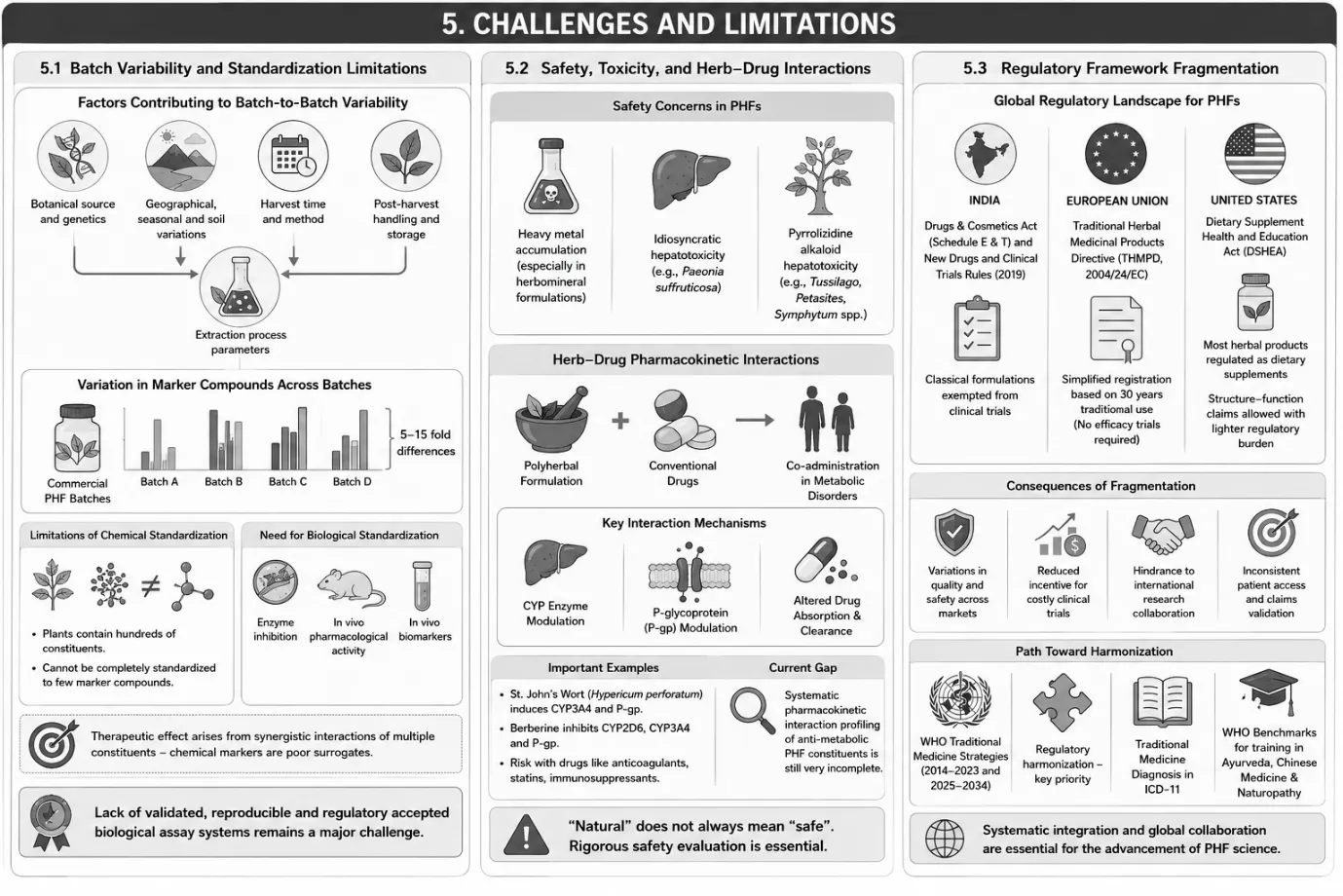
A variety of interdependent factors, such as botanical source genetics, chemotype variation, geographical and seasonal differences in growing conditions and related secondary metabolite biosynthesis, harvest time and/or harvest method, and post harvest handling and storage conditions and the parameters in the extraction process, contribute to batch to batch variation in the phytochemical composition of PHF [49]. There are 5-15fold differences in the concentrations of important marker compounds among different commercial batches of popular PHFs, a basic issue of achieving a consistent therapeutic effect. Despite strict adherence to GMP, plant raw materials are inherently composed of many different compounds and cannot be completely chemically standardized to a few marker compounds, resulting in a natural compositional variability [50]. In PHFs where efficacy is derived from a synergistic interaction between a number of constituents, the use of chemical markers as surrogates to therapeutic activity is conceptually a problem. There is also an alternative method of biological standardization, which can be done using pharmacological assays (enzymes inhibition, in vivo activity), or in vivo biomarkers as quality endpoints, but this is more scientifically ideal but practically hard to achieve, especially for most PHF indications where validated, reproducible and regulatory accepted biological assay systems are lacking [51].
5.2 Safety, Toxicity, and Herb Drug Interactions
The idea that herbal remedies are always safe and non-toxic because of their natural origin is a major public health myth that needs to be addressed by PHF science. Safety concerns reported for anti-metabolic PHFs involve accumulation of heavy metals (especially in Ayurvedic formulations that use herbomineral preparations), idiosyncratic hepatotoxic effects (e.g. Paeonia suffruticosa) and pyrrolizidine alkaloid hepatotoxicity (e.g. Tussilago, Petasites, Symphytum species, often used as adulterant herbs). [52]. As PHFs are co-administered with pharmaceutical drugs by a large number of patients with metabolic disorders, herb drug pharmacokinetic interactions are becoming an emerging area of concern for safety. St. John's Wort (Hypericum perforatum) induction of CYP3A4 and P glycoprotein is the most clinically relevant PHF interaction; however, there are multiple metabolic PHF constituents that are CYP modulators. Berberine is a CYP2D6, CYP3A4 and P gp inhibitor and caution is recommended when it is administered concurrently with drugs that are substrates of these enzyme families such as anticoagulants, statins, and immunosuppressants. Systematic pharmacokinetic interaction profiling of anti-metabolic constituent phytochemicals of anti-metabolic PHFs is still very incomplete [53,54].
5.3 Regulatory Framework Fragmentation
Regulatory frameworks for PHFs differ widely and can pose significant challenges for worldwide market access and standardization of clinical trials. Drugs and Cosmetics Act (Schedule E and Schedule T) and the New Drugs and Clinical Trials Rules (2019) have laid down the regulatory framework for Ayurvedic PHFs including the exemption of classical formulations from clinical trials. The Traditional Herbal Medicinal Products Directive (THMPD, 2004/24/EC) of the European Union (EU) allows for a simplified registration procedure, which does not require efficacy trials provided 30 year traditional use is provided. Most herbal products are considered by the USFDA to be dietary supplements (according to the framework of the Dietary Supplement Health and Education Act), which means that there may be no regulatory burden for efficacy claims but there is a much lighter burden for structure function claims [55]. Thus, it results in quality and safety variations among markets, in incentives for costly clinical trials for PHF indications and in international research collaboration. The implementation of the WHO 2014 2023 Traditional Medicine Strategy and the upcoming 2025 2034 Traditional Medicine Strategy is unevenly progressing, with regard to regulatory harmonization being a key priority [56]. The adoption of traditional medicine diagnosis in ICD 11 and WHO Benchmarks for training in Ayurveda, Chinese medicine and Naturopathy are small measures to move towards systematic integration, which need to be picked up and accelerated.
6. FUTURE PERSPECTIVES
A number of interwoven scientific and translational needs guide the future course of PHF science for metabolic disorders. First, the multi omic approaches to genomics, transcriptomics, proteomics and metabolomics in PHF mechanistic research will provide a systems level understanding of the dynamics of a drug's action on the disease, identification of patient subsets that are most likely to respond to the drug (pharmacogenomic stratification), and the design of clinical trials based on biomarkers [57]. Complementing artificial intelligence-based target predictions, network pharmacology is likely to speed up rational PHF design, by predicting synergistic combinations from large number of phytochemicals within a computational library against a given metabolic disease network. Second, the gut microbiome is shown to play a pivotal role in the pharmacokinetics of PHFs (microbiological biotransformation of phytochemicals), and it is also identified as a key therapeutic target for the treatment of metabolic disorders. Further development of PHF needs to bring microbiome composition/functional analysis as the primary endpoints in clinical trials, allowing to characterize individual microbiome dependent variability of PHF response and identify microbial markers predictive of therapeutic efficacy [58]. A new area of interest is the concept of ‘pharmabiotics' – PHFs specifically designed to target the microbiota towards metabolically beneficial configurations. Third, the delivery systems to nanotechnology are moving towards clinical translation with several PHF formulations based on phytosomes and nanoparticles being in Phase I/II clinical evaluation. Major regulatory agencies are urgently needed to provide regulatory guidance specific to nano formulated botanicals that concerns unique safety issues related to biodistribution, immunogenicity and environmental toxicity of nanoparticles. The formulation development of PHF nano formulations would be greatly accelerated if an in vitro in vivo correlation (IVIVC) model could be developed [59]. Fourth, the convergence of traditional diagnostic systems (e.g., Ayurveda diagnostic systems-based on Prakriti or TCM constitution typing) with genetic, biochemical and microbiome-based diagnostic systems that could offer a more precise prediction of the individual's PHF response is a convergence of traditional wisdom and precision medicine paradigms. It is hypothesized that Prakriti typing may be linked to particular genetic polymorphisms of enzymes involved in drug biotransformation and genes of metabolic diseases, and there is some preliminary evidence to back that up, which supports a theoretical basis for the use of personalized PHF prescriptions [60]. Adequately powered, methodologically sound and preferably multi centre, placebo controlled clinical trials with extended follow up and prespecified primary endpoints continue to be the single most important priority in the legitimacy of PHF applications in evidence based metabolic disease management [61].
CONCLUSION
Polyherbal formulations are a scientifically interesting and clinically relevant therapeutic strategy for metabolic disorders with empirical background of centuries' use and gradually becoming recognized by the modern molecular and clinical pharmacology. The multimodal and multitarget pharmacological activities of PHFs that are simultaneously antioxidant, anti-inflammatory, insulin sensitising, lipid regulatory and microbiome modulatory make perfect sense with the polygenetic, polyetiologic nature of metabolic syndrome, T2DM, dyslipidaemia, obesity, and NAFLD. Nevertheless, there are still gaps in standardization, the quality of clinical evidence, mechanistic understanding, and regulatory harmonization that constrain the potential of PHF into clinical practice. To advance this translational gap, pharmaceutical modernization with regard to rigorous phytochemical profiling, manufacturing processes adapted to ICH and WHO quality standards, application of bioavailability enhancing nanotechnological platforms, and incorporation of network pharmacology and omics approaches will provide the scientific and technological background. The new understanding of gut microbiome as a pharmacokinetic determinant and as a pharmacodynamic target for PHF constituents unlocks new mechanistic frontiers and provides new therapeutic opportunities. What is needed now is convergence of investment from the scientific community, regulatory authorities and the healthcare system: priority funding for randomized controlled trials (RCTs) with sufficient sample size and methodological rigor that use standardized PHF preparations; development of specific regulatory pathways for PHF that will encourage clinical research that does not undermine safety standards; and collaboration between traditional knowledge custodians and pharmaceutical scientists in the formulation development process. Achievement of this vision will revolutionize the way PHFs are perceived from the margins of empirical therapy to become validated, precision designed therapeutic components of the global metabolic disease therapeutic armamentarium.
REFERENCES


Juveriya Javed, Alok Kumar*, Asif Ali, Md. Rocky Shaikh, Mausmi Khatoon, Bulbul Saniya, Radhashyam Shit, Arif Munsi, Sima Jana, Polyherbal Formulations for Metabolic Disorders: Traditional Medicine Modernization, Int. J. Med. Pharm. Sci., 2026, 2 (8), 768-782. https://doi.org/10.5281/zenodo.22168931
 10.5281/zenodo.22168931