
We use cookies to ensure our website works properly and to personalise your experience. Cookies policy
Wani College of Pharmacy, Ganegaon, Maharashtra. Affiliated to Dr. Babasaheb Aambedkar Technological University, Lonere, Raigad
Diabetes mellitus is a chronic metabolic disorder characterized by persistent hyperglycaemia resulting from impaired insulin secretion, impaired insulin action, or a combination of both. Type 2 diabetes mellitus is the predominant form and is associated with insulin resistance, progressive pancreatic β-cell dysfunction, abnormal hepatic glucose production, dyslipidaemia, oxidative stress and chronic low-grade inflammation. Although conventional antidiabetic medicines are effective, long-term treatment may be complicated by adverse effects, cost, adherence problems and the need for combination therapy. Medicinal plants have therefore received considerable attention as sources of bioactive compounds with glucose-lowering, antioxidant, anti-inflammatory and lipid-modulating properties. Polyherbal formulations combine two or more medicinal plants with the objective of providing complementary pharmacological actions. Commonly investigated antidiabetic plants include Trigonella foenum-graecum, Gymnema sylvestre, Momordica charantia, Syzygium cumini, Tinospora cordifolia, Azadirachta indica, Allium sativum and Curcuma longa. Their reported phytoconstituents include saponins, alkaloids, flavonoids, phenolic compounds, terpenoids, glycosides, sulfur-containing compounds and curcuminoids. This review discusses diabetes mellitus, the pathophysiology of type 2 diabetes, the concept of polyherbal therapy, selected medicinal plants and their major phytoconstituents, extraction and evaluation methods, safety considerations and future research requirements. Particular emphasis is placed on pharmacognostic, physicochemical, phytochemical, in-vitro, in-vivo and formulation evaluation. Standardization, authenticated raw materials, marker-based quality control, validated analytical methods, toxicological assessment and well-designed clinical studies are essential for translating polyherbal antidiabetic preparations into reproducible and evidence-based products.
Diabetes mellitus is one of the major chronic metabolic disorders worldwide. It is characterized by elevated blood glucose caused by defects in insulin secretion, insulin action, or both. Persistent hyperglycaemia can progressively damage the cardiovascular system, kidneys, eyes, nerves and other organs. Type 2 diabetes mellitus represents the largest proportion of diabetes cases and is closely associated with insulin resistance, obesity, sedentary lifestyle, genetic susceptibility, ageing and metabolic abnormalities. The increasing prevalence of diabetes has created a continuing need for effective, safe, affordable and sustainable therapeutic approaches. Management of diabetes generally involves lifestyle modification, dietary control, physical activity, patient education and pharmacological therapy. Conventional medicines may include metformin, sulfonylureas, thiazolidinediones, sodium-glucose cotransporter-2 inhibitors, glucagon-like peptide-1 receptor agonists, dipeptidyl peptidase-4 inhibitors, insulin and other glucose-lowering agents. Selection of therapy depends on glycaemic status, comorbidities, cardiovascular and renal risk, body-weight considerations, adverse effects, treatment burden and patient-specific factors. Medicinal plants are widely used in traditional systems of medicine and have provided several pharmacologically active molecules. However, traditional use alone does not establish clinical efficacy or safety.
Polyherbal formulations contain two or more medicinal plants or their extracts in a defined combination. The underlying concept is that different plants may act on different components of a complex disease pathway, such as intestinal carbohydrate digestion, glucose absorption, insulin secretion, insulin sensitivity, oxidative stress, inflammation and lipid metabolism. A proposed synergistic or complementary effect should, however, be demonstrated experimentally rather than assumed. Differences in species, plant part, geographical origin, extraction solvent, phytochemical content and dosage can substantially affect the activity and reproducibility of a polyherbal preparation.
Diabetes Mellitus
Diabetes mellitus includes a group of metabolic disorders characterized by chronic hyperglycaemia. Major categories include type 1 diabetes mellitus, type 2 diabetes mellitus, gestational diabetes mellitus and other specific forms caused by genetic, pancreatic, endocrine, drug-related or other conditions.
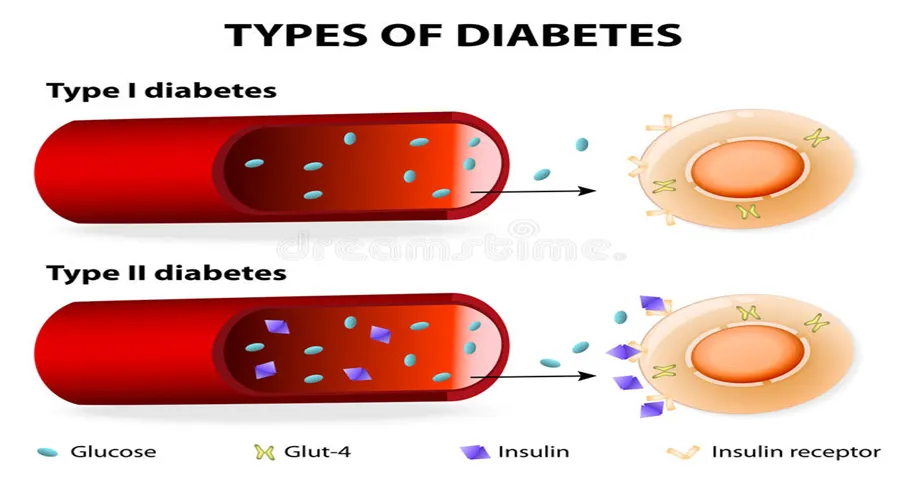
Fig no 1: Type of Diabetes
Type 1 diabetes mellitus results primarily from autoimmune destruction of pancreatic β-cells and usually leads to an absolute requirement for insulin replacement. Type 2 diabetes mellitus develops through a combination of insulin resistance and progressive impairment of β-cell function. Gestational diabetes is diabetes first recognized during pregnancy and is associated with increased maternal and offspring metabolic risk. Other specific forms may result from monogenic defects, pancreatic disease, endocrinopathies or medications. Chronic hyperglycaemia is associated with microvascular and macrovascular complications. Important microvascular complications include diabetic retinopathy, nephropathy and neuropathy, whereas macrovascular disease includes atherosclerotic cardiovascular disease and cerebrovascular disease. Diabetes management therefore requires more than lowering blood glucose; it also involves addressing blood pressure, lipid abnormalities, body weight, kidney health, cardiovascular risk, lifestyle and prevention of complications.
Pathophysiology of Type 2 Diabetes Mellitus
Type 2 diabetes mellitus is a multifactorial metabolic disorder. A central abnormality is insulin resistance in skeletal muscle, adipose tissue and the liver. In skeletal muscle, reduced insulin-mediated glucose uptake contributes to postprandial hyperglycaemia. In the liver, impaired insulin suppression of gluconeogenesis and glycogenolysis contributes to excessive hepatic glucose production, particularly during fasting. Adipose tissue insulin resistance increases lipolysis and circulating free fatty acids, which can further impair insulin sensitivity. Progressive pancreatic β-cell dysfunction is another major component. Initially, pancreatic β-cells may compensate for insulin resistance by increasing insulin secretion. Over time, chronic metabolic stress can reduce β-cell function and insulin secretory capacity. Dysregulated glucagon secretion can also contribute to inappropriate hepatic glucose production. In addition, chronic low-grade inflammation, oxidative stress, mitochondrial dysfunction and abnormal lipid metabolism may interact with insulin resistance and β-cell dysfunction. These interconnected abnormalities provide a rationale for investigating medicinal plants that may influence more than one pathway. Reported mechanisms for antidiabetic plants include inhibition of carbohydrate-digesting enzymes, stimulation of insulin secretion, improvement of peripheral glucose uptake, modulation of hepatic glucose metabolism, reduction of oxidative stress, attenuation of inflammatory signalling and improvement of lipid metabolism. The clinical relevance of any individual mechanism depends on the strength and quality of experimental and human evidence.
Concept of Polyherbal Formulation
A polyherbal formulation is a preparation containing two or more medicinal plants, plant parts or standardized plant extracts. The formulation may be designed as a tablet, capsule, powder, granule, decoction, tea, syrup, suspension, extract or other suitable dosage form. In diabetes management, polyherbal combinations are commonly designed to provide complementary effects on glucose metabolism and associated metabolic disturbances. Potential advantages include multi-target pharmacological activity, use of lower amounts of individual extracts, incorporation of antioxidant or anti-inflammatory actions and the possibility of addressing more than one metabolic abnormality. Potential limitations include chemical complexity, variability in raw materials, uncertain dose-response relationships, herb-herb interactions, herb-drug interactions and difficulties in quality control. Therefore, reproducible manufacturing requires botanical authentication, standardization of raw materials and extracts, control of contaminants, validated analytical methods and stability assessment.
Medicinal Plant Profiles
Family: Fabaceae
Common Name: Fenugreek, Methi
Part Used: Seeds
Trigonella foenum-graecum is an annual herbaceous plant with trifoliate leaves, small yellowish flowers and elongated pods containing yellowish-brown seeds. The seeds contain galactomannans, steroidal saponins, trigonelline, flavonoids and phenolic compounds. Fenugreek has been investigated for its effects on glucose metabolism, insulin sensitivity and lipid metabolism. It is commonly considered a supportive component in polyherbal antidiabetic formulations.
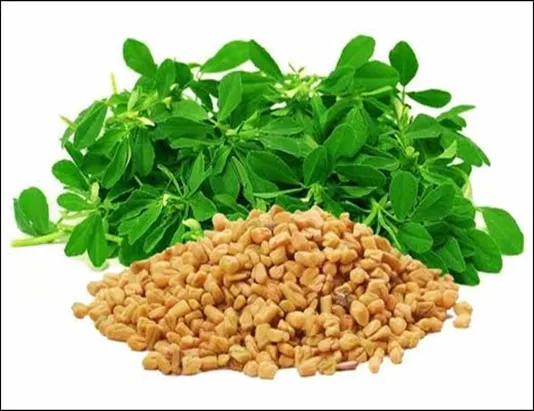
Fig no 2: Trigonella foenum-graecum L.
Family: Apocynaceae
Common Name: Gurmar
Part Used: Leaves
Gymnema sylvestre is a perennial woody climber with opposite leaves and small yellowish flowers. Its leaves contain gymnemic acids, triterpenoid saponins, flavonoids and other bioactive compounds. It has been traditionally used for diabetes and investigated for glucose-regulating and insulin-related effects. It is an important plant for polyherbal antidiabetic preparations.
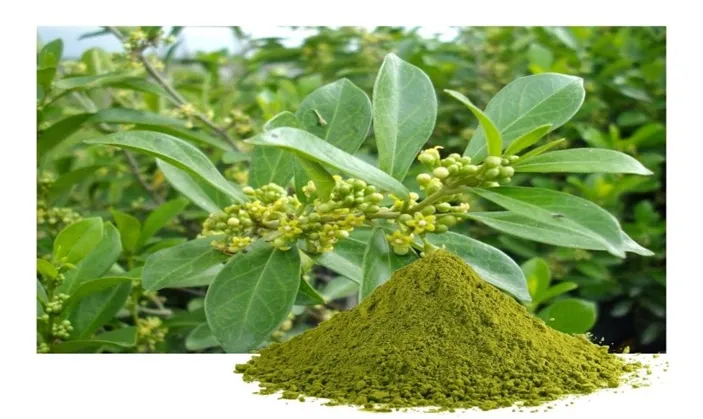
Fig no 3: Gymnema sylvestre
Family: Cucurbitaceae
Common Name: Bitter gourd, Karela
Part Used: Fruit
Momordica charantia is a climbing herb with deeply lobed leaves, yellow flowers and characteristic warty green fruits. It contains cucurbitane triterpenoids, steroidal compounds, flavonoids, phenolics and saponins. The plant has been extensively studied for antihyperglycaemic activity and possible effects on glucose uptake and carbohydrate metabolism.
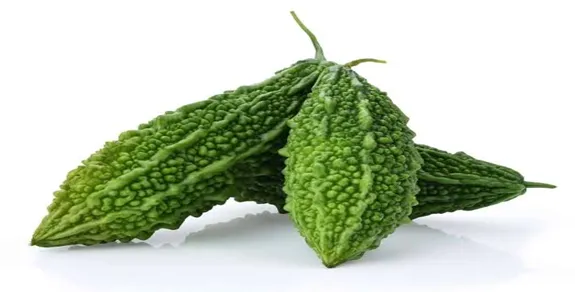
Fig no 4: Momordica charantia L
Family: Myrtaceae
Common Name: Jamun, Java plum
Part Used: Seeds and fruits
Syzygium cumini is an evergreen tree with leathery opposite leaves, small flowers and dark purple to black fruits. It contains anthocyanins, flavonoids, tannins, gallic acid, ellagic acid and other polyphenols. Its seeds and fruits have traditionally been used for diabetes and are investigated for antioxidant and glucose-regulating properties.
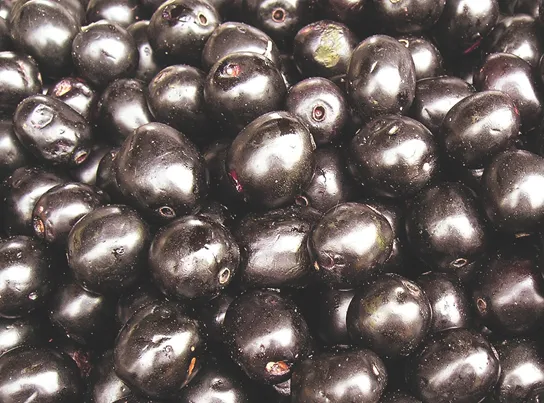
Fig no 5: Syzygium cumini (L.) Skeels (Jamun)
Family: Menispermaceae
Common Name: Guduchi, Giloy
Part Used: Stem
Tinospora cordifolia is a perennial climbing plant with succulent stems and heart-shaped leaves. It contains alkaloids, diterpenoids, glycosides, steroids and phenolic compounds. It has been investigated for antioxidant, anti-inflammatory and metabolic activities and may provide supportive activity in polyherbal antidiabetic formulations.
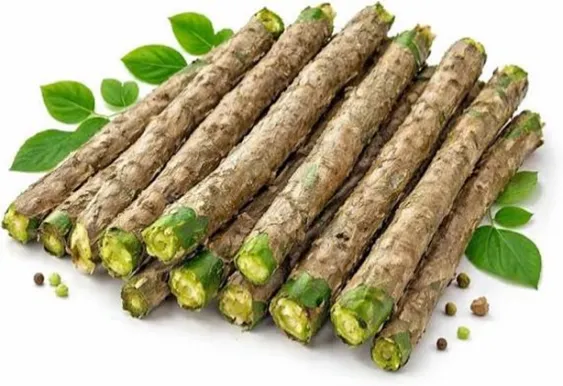
Fig no 6: Tinospora cordifolia (Guduchi)
Family: Meliaceae
Common Name: Neem
Part Used: Leaves
Azadirachta indica is a medium to large evergreen tree with pinnate leaves and small white flowers. Neem leaves contain limonoids, flavonoids, terpenoids, tannins and phenolic compounds. Experimental studies have investigated its effects on glucose metabolism, oxidative stress and insulin-related pathways. Neem may serve as a supportive component of polyherbal formulations.
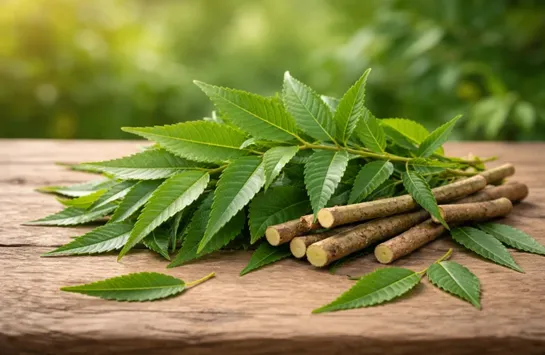
Fig no 6: Azadirachta indica (Neem)
Family: Amaryllidaceae
Common Name: Garlic, Lasun
Part Used: Bulb
Allium sativum is a bulbous herb consisting of several cloves enclosed within papery scales. Garlic contains alliin, allicin, ajoenes, sulfur-containing compounds and flavonoids. It has been investigated for glucose-lowering, antioxidant and lipid-modulating activities and may provide complementary cardiometabolic benefits in polyherbal formulations.
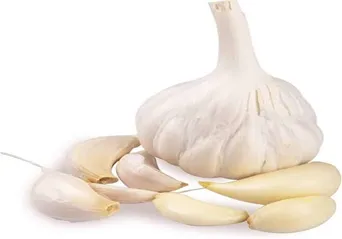
Fig no 8: Garlic
Family: Zingiberaceae
Common Name: Turmeric, Haldi
Part Used: Rhizome
Curcuma longa is a perennial herb with large leaves and yellow-orange aromatic rhizomes. The rhizome contains curcuminoids, curcumin, demethoxycurcumin, bisdemethoxycurcumin and volatile oils. Curcuma longa is mainly investigated for antioxidant and anti-inflammatory effects and may provide supportive metabolic activity in polyherbal antidiabetic formulations.
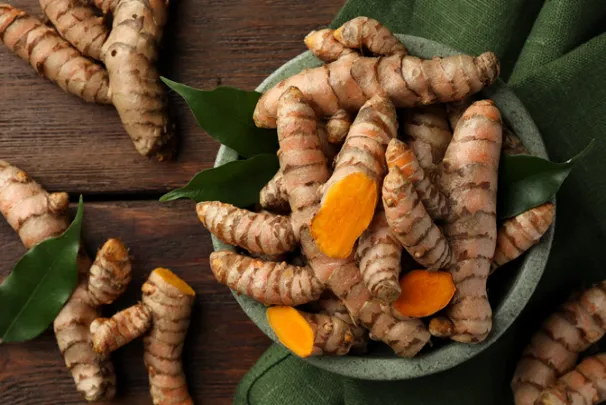
Fig no 9: Curcuma longa L. (Turmeric)
MATERIAL AND METHODOLOGY
The materials considered for the present review included selected medicinal plants traditionally and scientifically investigated for the management of diabetes mellitus. The major plants included Trigonella foenum-graecum (fenugreek), Gymnema sylvestre (gurmar), Momordica charantia (bitter gourd), Syzygium cumini (jamun), Tinospora cordifolia (guduchi), Azadirachta indica (neem), Allium sativum (garlic) and Curcuma longa (turmeric). Different parts of these plants, such as seeds, leaves, fruits, stems, bulbs and rhizomes, were considered according to their traditional use and reported pharmacological activity. Plant materials and their extracts reported in the literature included aqueous, ethanolic, methanolic and hydroalcoholic preparations. The major phytochemical groups considered in the review included alkaloids, flavonoids, phenolic compounds, tannins, saponins, glycosides, terpenoids, steroids, polysaccharides and sulfur-containing compounds. These constituents were evaluated in relation to their reported antidiabetic, antioxidant and metabolic activities. For evaluation of antidiabetic activity, commonly reported materials included α-amylase, α-glucosidase, suitable substrates, phosphate buffer, acarbose as a reference standard and appropriate analytical reagents. Antioxidant evaluation commonly involved DPPH, ABTS or FRAP assay systems with suitable reference standards. For polyherbal formulation development, commonly used pharmaceutical excipients may include diluents, binders, disintegrants, lubricants, glidants, preservatives and suitable vehicles depending on the selected dosage form.
METHODOLOGY
For development of an experimental polyherbal formulation, all plant materials should be properly authenticated by a qualified botanist or pharmacognosist. The scientific name, family, plant part, collection site and date of collection should be documented. The collected plant materials should be cleaned to remove dirt and foreign matter and dried under suitable conditions. Excessive temperature should be avoided to minimize degradation of thermolabile phytoconstituents. The dried materials may be powdered using an appropriate grinder and stored in well-closed, moisture-protected containers until further use. Quality control should include evaluation of foreign matter, moisture content, ash values and extractive values. Where possible, voucher specimens should be preserved for future reference.
Extraction is an important step because the type and concentration of phytoconstituents depend considerably on the extraction procedure. The selected plant materials may be extracted using aqueous, ethanolic or hydroalcoholic solvents depending on the nature of the targeted constituents.
A general extraction procedure involves:
The obtained extracts may be subjected to preliminary phytochemical screening to identify the major classes of secondary metabolites.
The screening may include:
|
Phytochemical |
General significance |
|
Alkaloids |
Pharmacological activity |
|
Flavonoids |
Antioxidant and metabolic activity |
|
Phenolics |
Antioxidant activity |
|
Tannins |
Antioxidant and astringent activity |
|
Saponins |
Metabolic and biological activity |
|
Glycosides |
Various pharmacological effects |
|
Terpenoids |
Metabolic and anti-inflammatory activity |
|
Steroids |
Diverse biological activity |
Quantitative estimation may be performed to determine important groups of phytoconstituents.
Total phenolic content may be determined by a suitable validated spectrophotometric method, commonly based on the Folin–Ciocalteu reaction. Results may be expressed as gallic acid equivalents.
Total flavonoid content may be estimated by an appropriate aluminium chloride-based spectrophotometric method and expressed as a suitable standard equivalent, such as quercetin equivalent.
Where suitable marker compounds are available, chromatographic techniques such as HPLC or HPTLC may be used for quantitative standardization. Marker-based standardization is useful for maintaining batch-to-batch consistency of herbal extracts.
The α-amylase inhibition assay is commonly used as an in-vitro screening method to investigate the ability of an extract or formulation to inhibit starch-digesting enzyme activity. Different concentrations of the plant extract or polyherbal formulation are incubated with α-amylase under controlled conditions. A suitable starch-containing substrate is subsequently added. The enzymatic reaction is terminated or developed using the selected analytical reagent, and absorbance is measured using a suitable spectrophotometric method. Acarbose may be used as the reference standard.
The percentage inhibition may be calculated as:
% Inhibition = [(Absorbance of control − Absorbance of sample) / Absorbance of control] × 100
Where sufficient concentration-response data are available, IC₅₀ may be calculated.
The α-glucosidase inhibition assay evaluates the ability of extracts to inhibit α-glucosidase-mediated carbohydrate breakdown. Different concentrations of the test extract are incubated with α-glucosidase and an appropriate substrate under controlled conditions. The enzymatic reaction is measured spectrophotometrically. Acarbose may be used as a positive control. The percentage inhibition is calculated by comparing the absorbance of the test sample with that of the control. Lower IC₅₀ values indicate greater inhibitory activity under the conditions of the assay.
A glucose uptake assay may be performed using an appropriate cell-based model to investigate whether the plant extract or polyherbal preparation influences cellular glucose utilization. The test preparation is incubated with the selected cell model under controlled experimental conditions. Glucose uptake is subsequently measured using a suitable analytical method and compared with control and reference groups. This assay may provide additional information regarding possible effects on peripheral glucose utilization.
Oxidative stress is associated with metabolic abnormalities in diabetes. Therefore, antioxidant activity may be evaluated as a complementary parameter.
DPPH Assay: DPPH radical-scavenging activity may be used to determine the free-radical-scavenging capacity of plant extracts.
ABTS Assay: ABTS radical-scavenging activity may be used to evaluate antioxidant capacity over a different radical system.
FRAP Assay: FRAP evaluates the reducing capacity of the test sample under specified experimental conditions.
Where animal experimentation is scientifically justified, the antidiabetic activity of the selected extract or polyherbal formulation may be investigated using an appropriate validated animal model.
The following parameters may be evaluated:
Based on the literature evidence, selected plant extracts may be combined in predetermined proportions to prepare a polyherbal formulation.
The formulation may be developed as a:
The evaluation parameters should be selected according to the dosage form.
For Tablets
For Capsules
For Liquid Formulation
Stability testing should be conducted to determine the physical, chemical and microbiological stability of the developed polyherbal formulation.
The parameters may include:
Safety assessment is essential because polyherbal formulations contain multiple biologically active constituents.
The evaluation may include:
Future development of polyherbal antidiabetic formulations should focus on scientific standardization rather than relying solely on traditional combinations. DNA-based authentication, chromatographic fingerprinting, marker-compound quantification, metabolomic profiling and chemometric analysis may improve identity and batch consistency. Quality-by-design approaches can be applied to optimize extract ratios, processing parameters and formulation variables. Mechanistic research should investigate multi-target effects involving insulin resistance, β-cell function, glucose transport, carbohydrate digestion, oxidative stress, inflammation and lipid metabolism. Pharmacokinetic and bioavailability studies are required to understand absorption and exposure of important phytoconstituents. Synergy should be tested using suitable experimental designs rather than inferred from the presence of multiple plants. Well-designed randomized controlled trials with standardized preparations, defined doses, adequate sample sizes, clinically meaningful endpoints and appropriate follow-up are needed. Future studies should also examine herb-drug interactions, long-term toxicity, patient adherence and product stability. Integration of traditional knowledge with modern pharmacognosy, analytical chemistry, pharmacology and clinical research may support the development of reproducible polyherbal products.
CONCLUSION
Polyherbal formulations represent a scientifically interesting approach for investigating multi-target management of diabetes mellitus. Medicinal plants such as Trigonella foenum-graecum, Gymnema sylvestre, Momordica charantia, Syzygium cumini, Tinospora cordifolia, Azadirachta indica, Allium sativum and Curcuma longa contain diverse phytoconstituents with reported glucose-modulating, antioxidant, anti-inflammatory and metabolic activities. However, the complexity and variability of herbal preparations require rigorous botanical authentication, phytochemical standardization, validated evaluation methods, safety assessment and appropriate clinical investigation. Evidence from laboratory and animal studies should be distinguished from human clinical evidence. Standardized, well-characterized polyherbal formulations supported by reproducible analytical and clinical data may have potential as complementary approaches to diabetes management, but they should not be assumed to replace established evidence-based diabetes care.
REFERENCES

Megha Jaware*, Payal Ubale, Polyherbal Formulations Used in the Management of Diabetes Mellitus, Int. J. Med. Pharm. Sci., 2026, 2 (9), 723-732. https://doi.org/10.5281/zenodo.23058959
 10.5281/zenodo.23058959