

We use cookies to ensure our website works properly and to personalise your experience. Cookies policy
Department of Pharmaceutical Chemistry Shantha College of Pharmacy
Antimicrobial resistance continues to erode the clinical utility of existing antibiotics, and macrolides remain among the most important classes threatened by this trend. Modular polyketide synthases (PKSs), the multienzyme assembly lines that biosynthesize macrolide scaffolds in actinomycetes, have long been viewed as a natural platform for combinatorial drug discovery, yet efforts to re-engineer them have historically produced inconsistent results. A 2026 study from the Keatinge-Clay laboratory (University of Texas at Austin) reconstituted a refactored version of the pikromycin synthase, the assembly line responsible for narbomycin, pikromycin, YC-17 and methymycin in Streptomyces venezuelae, inside Escherichia coli using a newly designed two-plasmid, BioBricks-style cloning system built around an updated definition of the PKS "module." This review summarizes that work: the design principles behind the two-plasmid platform, the titre-optimization strategies (docking-domain matching, expression of the editing thioesterase PikAV, and CRISPR–Cas9 knockout of competing E. coli sugar pathways), the combinatorial module-swapping experiments that produced new macrolide derivatives, and the antibacterial evaluation of the resulting compounds. Particular attention is given to "ketosynthase gatekeeping," the phenomenon that limited most attempted module substitutions and that the authors identify as the principal barrier to freely combinatorial PKS engineering. Original schematic figures, summary tables and a strain-by-strain accounting of titre improvements are provided throughout to make the engineering logic of the platform easier to follow. The review closes with an assessment of the platform's significance for future antibiotic discovery efforts and the technical hurdles that remain before such systems can support preparative-scale drug lead generation.
The declining rate at which new antibiotics reach the clinic, set against a steadily rising burden of antimicrobial resistance, has renewed interest in biosynthetic strategies capable of generating large numbers of structurally related antibiotic candidates quickly. Modular chemical synthesis has already demonstrated this principle for macrolides outside of biology: a combinatorial synthetic platform reported in 2016 generated a library exceeding 300 macrolide derivatives, two of which outperformed clinically used comparators. Modular polyketide synthases represent nature's own combinatorial platform for the same class of molecules, and in principle offer a biosynthetic route to similar libraries without the step-by-step complexity of total synthesis. Macrolides such as erythromycin, pikromycin and tylosin are produced by type I modular PKS assembly lines native to actinomycete bacteria. Each module within such an assembly line incorporates one ketide unit into a growing polyketide chain and minimally contains an acyltransferase, an acyl carrier protein and a ketosynthase, often supplemented by processing domains such as ketoreductases, dehydratases and enoylreductases. For decades, PKS engineering efforts defined the module boundary immediately upstream of the ketosynthase domain, based on analogy to the iterative mammalian fatty acid synthase. This definition, however, largely failed to yield reliably functional hybrid synthases. A 2017 re-analysis of naturally occurring giant modular PKSs producing aminopolyol metabolites indicated that ketosynthase domains evolutionarily co-migrate with the processing domains positioned upstream of them, placing the true module boundary immediately downstream of the ketosynthase rather than upstream. Synthases engineered according to this revised boundary have since consistently outperformed those built on the traditional definition.
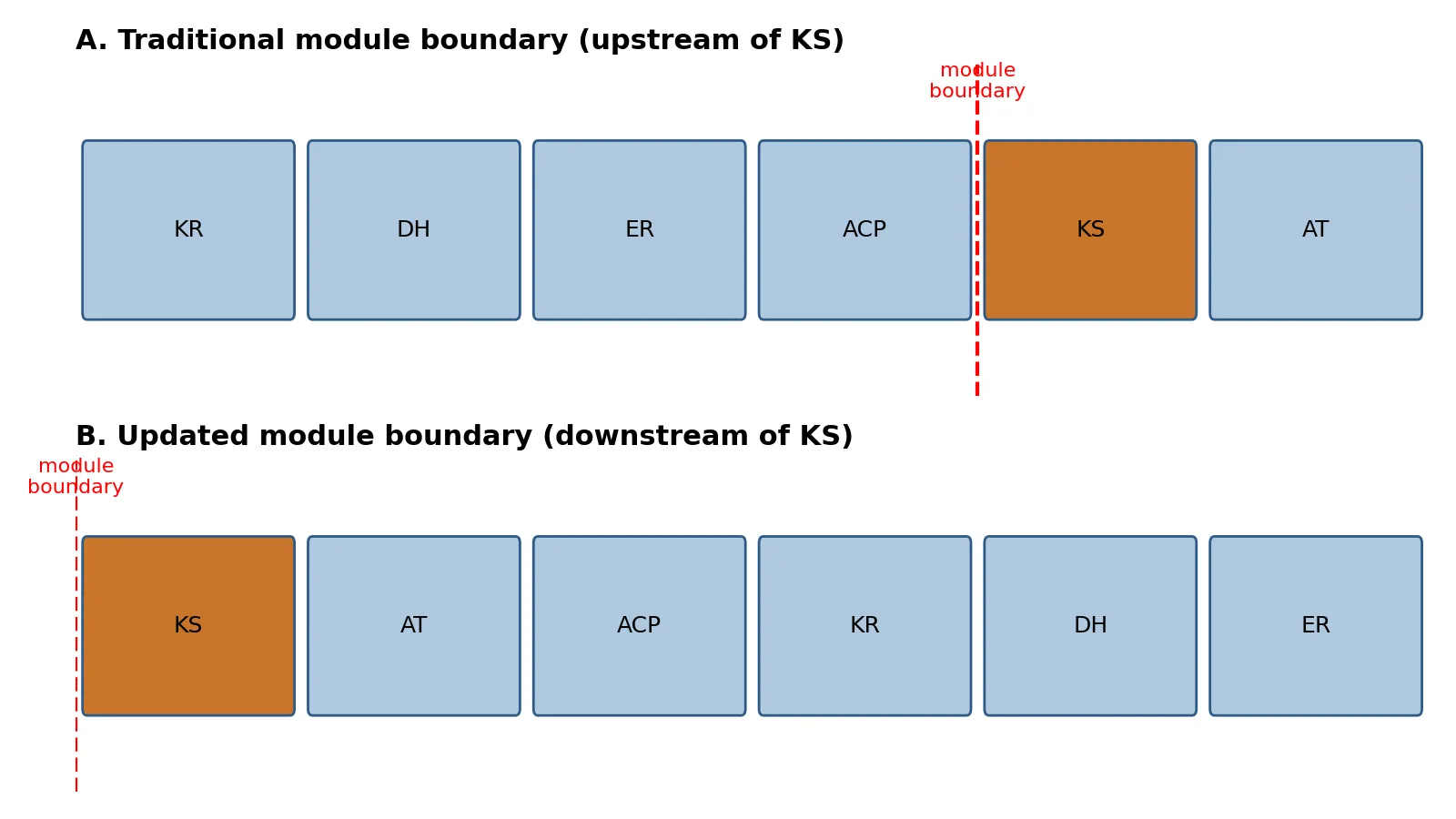
Figure 1. Traditional versus updated definitions of the polyketide synthase module boundary. (A) The traditional boundary, drawn upstream of the ketosynthase (KS) domain, groups KS with the downstream acyltransferase (AT) of the next module. (B) The updated boundary, drawn downstream of KS, groups KS with the upstream processing domains it evolutionarily co-migrates with. Original schematic prepared for this review; not a reproduction of any published figure.
Building on this updated module boundary, the Keatinge-Clay laboratory previously developed a single-plasmid, BioBricks-like cloning platform and used it to combinatorially assemble more than 150 triketide-to-pentaketide synthases from modules of the pikromycin PKS. That earlier work stopped short of assembling complete, antibiotic-producing synthases. The study reviewed here extends the approach to a two-plasmid system capable of housing the larger genetic payload required for a full, seven-module pikromycin synthase, and couples it to the downstream tailoring enzymes needed to convert the resulting macrolactones into bioactive, glycosylated macrolide antibiotics. This review is organized to follow the logical progression of the underlying study: Section 2 describes the two-plasmid cloning architecture itself; Section 3 covers the sequence of titre-optimization interventions; Section 4 addresses the combinatorial module-swapping experiments and the ketosynthase gatekeeping phenomenon that constrained them; Section 5 discusses chain-length modification; Section 6 covers downstream tailoring (glycosylation and hydroxylation) and the resulting antibacterial activity data; and Sections 7 through 9 offer a broader discussion, a comparative assessment against the historically dominant erythromycin heterologous-expression platform, and concluding remarks.
2. The Two-Plasmid Refactoring Platform
2.1 Design Rationale
Because a complete pikromycin synthase substantially exceeds the practical size limit for a single E. coli plasmid (roughly 30 kilobases), the authors split the assembly line across two compatible plasmids. One plasmid carries the first pikromycin module together with the N-terminal portion of the fourth module; the second carries the C-terminal portion of the fourth module together with the seventh, terminal module. The two halves of the fourth module are re-joined non-covalently in the assembled protein complex through a heterologous docking-domain pair borrowed from the erythromycin synthase (also known as 6-deoxyerythronolide B synthase, or DEBS). Splitting the assembly line in this way is not merely a size accommodation; it also means that new combinatorial synthases can be built by independently varying the module content of either plasmid, effectively doubling the combinatorial reach of the system relative to a single, monolithic construct.
2.2 Module Cassette Construction and Insertion Logic
Restriction sites flanking each module-encoding cassette allow additional modules to be ligated in sequentially, so that a working synthase such as module-1–module-A–module-B–module-4–module-C–module-D–module-7 can be built up piece by piece, with each junction encoding two additional serine residues in an already-permissive loop region unlikely to disturb folding. A HindIII-N12-SpeI insertion site is preserved after each successful ligation, meaning that the cloning process is iterative: a researcher can insert one module, verify the resulting construct, and then use the same site to insert the next, rather than needing to assemble the entire multi-module cassette in a single step.
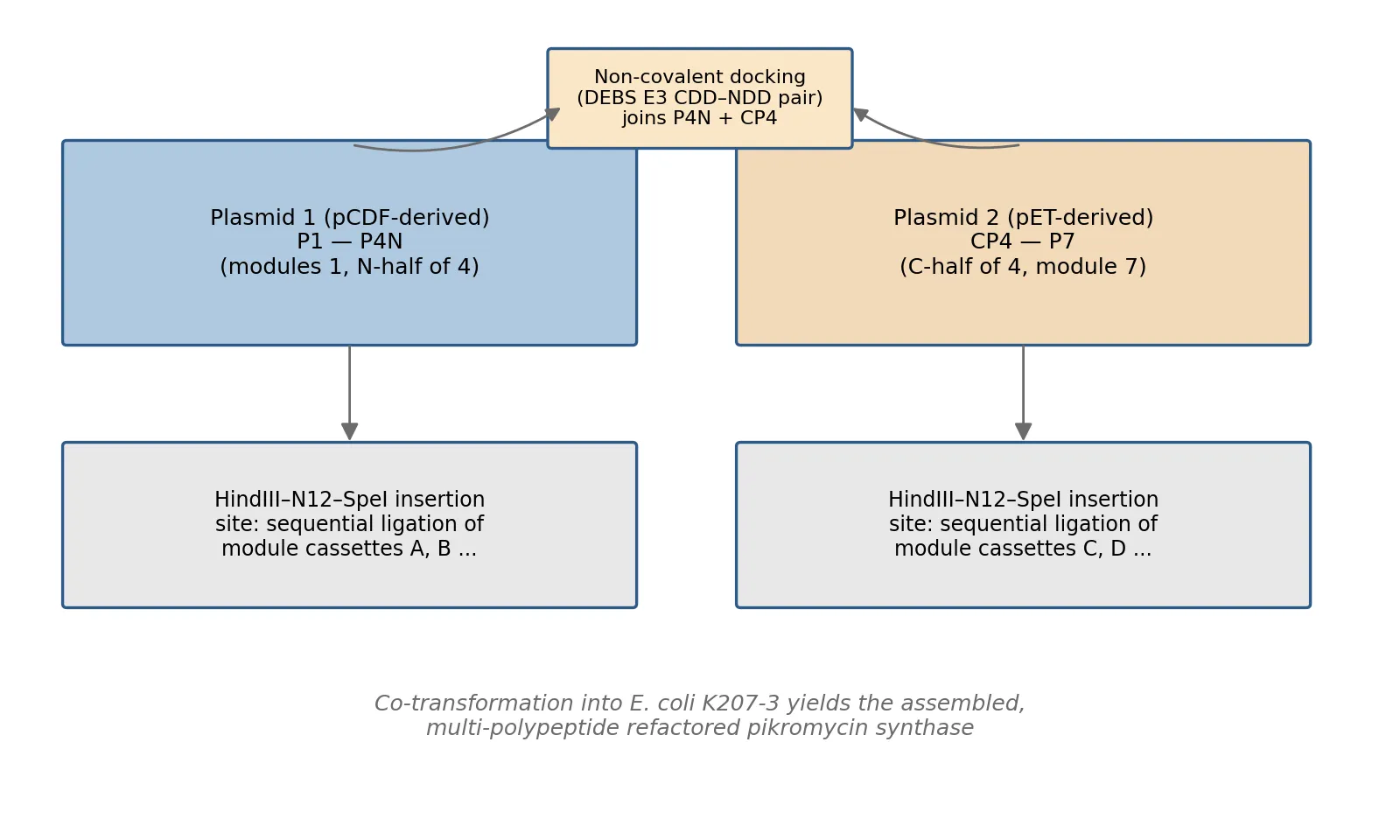
Figure 2. Architecture of the two-plasmid refactored pikromycin synthase expression system. Plasmid 1 encodes module 1 and the N-terminal half of module 4; Plasmid 2 encodes the C-terminal half of module 4 and module 7. Additional modules are ligated sequentially into the preserved insertion sites on each plasmid, and the two half-synthases are reunited non-covalently through a heterologous docking-domain pair. Original schematic prepared for this review.
Reconstituting the seven-module pikromycin assembly line this way required six heterologous docking-domain pairs distributed across the synthase and produced a functional enzyme complex composed of six separate polypeptides, in contrast to the four polypeptides of the native S. venezuelae pathway. Expression in the engineered E. coli strain K207-3 — which supplies a phosphopantetheinyl transferase to activate carrier-protein domains and a propionyl-CoA carboxylase to generate the methylmalonyl-CoA extender unit — yielded narbonolide, the core heptaketide macrolactone of the pikromycin pathway, confirming that the refactored synthase functioned end to end. Intermediate constructs producing shorter-chain triketide and pentaketide products were also verified by mass spectrometry, establishing that each stage of the assembly — rather than only the final seven-module product — behaved as expected.
3. Optimizing Titre: Docking Domains, Editing Thioesterase, and Metabolic Engineering
Initial narbonolide titres from the refactored synthase were modest and accompanied by numerous shunt products — truncated or mis-assembled polyketides consistent with acyl carrier proteins escaping their intended downstream docking partner. Replacing the heterologous docking-domain pairs at three module junctions with the native pikromycin pairs improved narbonolide production by roughly 30%, suggesting some degree of co-evolution between docking domains and the modules that naturally carry them, even though the domains function adequately across pathway boundaries. A second, larger gain came from co-expressing PikAV, the pikromycin pathway's editing type II thioesterase, which is thought to remove acetyl or propionyl groups mistakenly loaded onto acyl carrier proteins. A single extra copy of this enzyme increased narbonolide titre by 1.6-fold, bringing the docking-domain-optimized system to 49 mg per litre of culture in shake-flask fermentation — substantially above the roughly 1 mg per litre reported for heterologous erythromycin A production in E. coli.
Table 1. Summary of narbonolide titre optimization steps. Values as reported in the primary source; mean ± standard deviation from biological replicates.
|
Engineering step |
Narbonolide titre (mg/L) |
Fold increase vs. baseline |
|
Baseline fermentation optimization |
23 ± 2 |
1.0 (reference) |
|
+ Native docking domains (P3, P5, P6) |
30 ± 2 |
1.3× |
|
+ PikAV editing thioesterase (docking-optimized background) |
49 ± 4 |
2.1× |
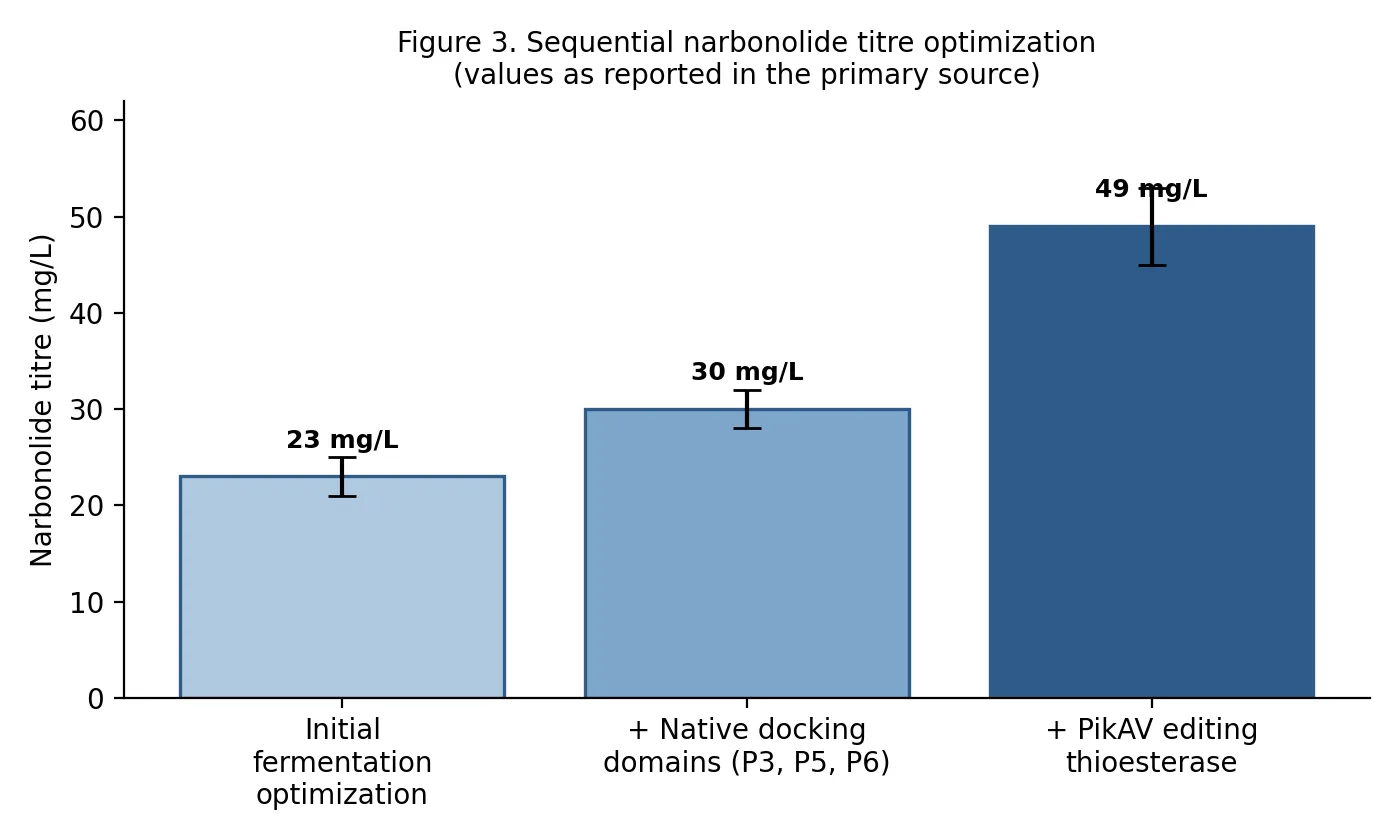
Figure 3. Sequential narbonolide titre optimization across three engineering interventions, plotted from the values in Table 1. Original chart prepared for this review.
The largest titre improvements, however, came from host-strain engineering rather than synthase engineering itself. Because the sugar precursor required for the pikromycin-associated deoxysugar desosamine is shared with E. coli's own lipopolysaccharide and cell-surface glycolipid biosynthetic pathways, competing consumption of this precursor limited desosamine attachment to the macrolactone. Using CRISPR–Cas9, the authors sequentially inactivated the competing rmlC, wecD/wecE and vioA/vioB loci in a strain already carrying a genomically integrated copy of the desosamine biosynthesis and transfer operon. The resulting engineered strain, in combination with a plasmid-supplied second copy of the same operon, achieved a 58-fold increase in narbomycin titre relative to the unmodified starting strain, reaching 37 mg per litre. This progression across engineered strains is summarized in Figure 5 in Section 6, alongside the tailoring-enzyme data it depends on.
4. Combinatorial Module Swapping and Ketosynthase Gatekeeping
With a working, optimizable synthase established, the authors turned to the combinatorial question that motivated the study: could modules be freely exchanged to generate new macrolide scaffolds? Systematic single-module swaps were performed at four positions within the pikromycin synthase, each position tested against every other extension module available from the same pathway — sixteen swapped synthases in total. Only one of these, in which the third module was replaced by the fifth, produced its anticipated macrolactone product, alongside an equal quantity of an alternative six-membered lactone side product resulting from incomplete macrocyclization. This low success rate illustrates what the authors term ketosynthase gatekeeping. Although the updated module boundary guarantees that a ketosynthase domain and the acyl chain it must accept are compatible at the positions immediately adjacent to the point of attachment, ketosynthases evidently remain selective toward more distal structural features of their substrate, including bulkier or differently oriented substituents further along the chain. This selectivity was substantial enough that even the fifth pikromycin module — independently identified as the pathway's most substrate-tolerant ketosynthase in earlier combinatorial studies — still showed strong preference for its natural upstream substrate when tested downstream of a full-length pentaketide intermediate in an octaketide-generating synthase, where the bulk of flux bypassed the newly inserted module altogether. When gatekeeping could not be overcome using modules native to the pikromycin pathway itself, the authors turned to naturally promiscuous ketosynthases from unrelated pathways. Modules from the erythromycin synthase performed unevenly — one substitution retained 81% of wild-type narbonolide titre, while a second essentially abolished product formation — while modules borrowed from the rapamycin synthase, previously identified as unusually substrate-tolerant, successfully generated two new macrolactone scaffolds, one of which was structurally confirmed by X-ray crystallography.
Table 2. Selected outcomes from single-module swapping experiments. "Approx. titre vs. parent heptaketide" reflects overall product titre (macrolactone plus any δ-lactone side product) relative to narbonolide production by the unmodified refactored synthase.
|
Swap |
Donor pathway |
Product(s) |
Approx. titre vs. parent heptaketide |
|
P3 → P5 |
Pikromycin (self) |
Macrolactone 10 + δ-lactone 11 |
20% |
|
13 of 16 attempted |
Pikromycin (self) |
No detectable expected product |
— |
|
P2 → E2 |
Erythromycin |
Narbonolide (1) |
0.5% |
|
P6 → E6 |
Erythromycin |
Narbonolide (1) |
81% |
|
P2 → R6 |
Rapamycin |
Macrolactone 12 |
20% |
|
P3 → R5 |
Rapamycin |
Macrolactone 13 + δ-lactone 14 |
41% |
5. Extending Ring Size: Hexaketide and Octaketide Derivatives
Beyond substituting individual modules, the platform was used to alter the overall chain length of the assembled polyketide. A single point mutation inactivating the sixth module's ketosynthase reactive cysteine redirected the synthase toward selective production of the six-membered-ring precursor of methymycin, 10-deoxymethynolide, at a titre exceeding that of the unmodified, heptaketide-producing synthase. Complete deletion of the third module produced a different six-membered lactone product through an analogous chain-truncation strategy. An attempt to extend the pathway to an eight-ketide, sixteen-membered macrolactone — of the type found in tylosin and mycinamycin — by duplicating the fifth module was only partially successful: the engineered synthase produced primarily the original seven-membered narbonolide, alongside a smaller quantity of an unanticipated eight-ketide side-chain lactone, rather than the intended sixteen-membered ring, indicating that the native pikromycin thioesterase domain is not well suited to macrocyclizing rings of that size.
Table 3. Chain-length-modified synthase products and their relative titres.
|
Synthase modification |
Product |
Titre relative to narbonolide |
|
P6 ketosynthase inactivated (Cys→Ala) |
10-deoxymethynolide (10-dml, 4) |
1.2× |
|
P3 deleted |
δ-Lactone (18) |
1.4× |
|
P5 duplicated (attempted octaketide) |
δ-Lactone (20) + narbonolide (1, major product) |
Narbonolide 3.7× more abundant than δ-lactone 20 |
6. Glycosylation, Hydroxylation, and Antibacterial Activity
Macrolactones alone are not antibiotics; biological activity in this class depends on attachment of the amino-sugar desosamine and, for some family members, subsequent hydroxylation by the cytochrome P450 enzyme PikC. Co-expression of the desosamine biosynthetic and transfer genes converted narbonolide quantitatively into narbomycin, and addition of PikC converted a fraction of the narbomycin pool into pikromycin, with conversion efficiency limited by comparatively weak PikC activity in the E. coli host — a longstanding challenge for heterologous expression of cytochrome P450 tailoring enzymes.
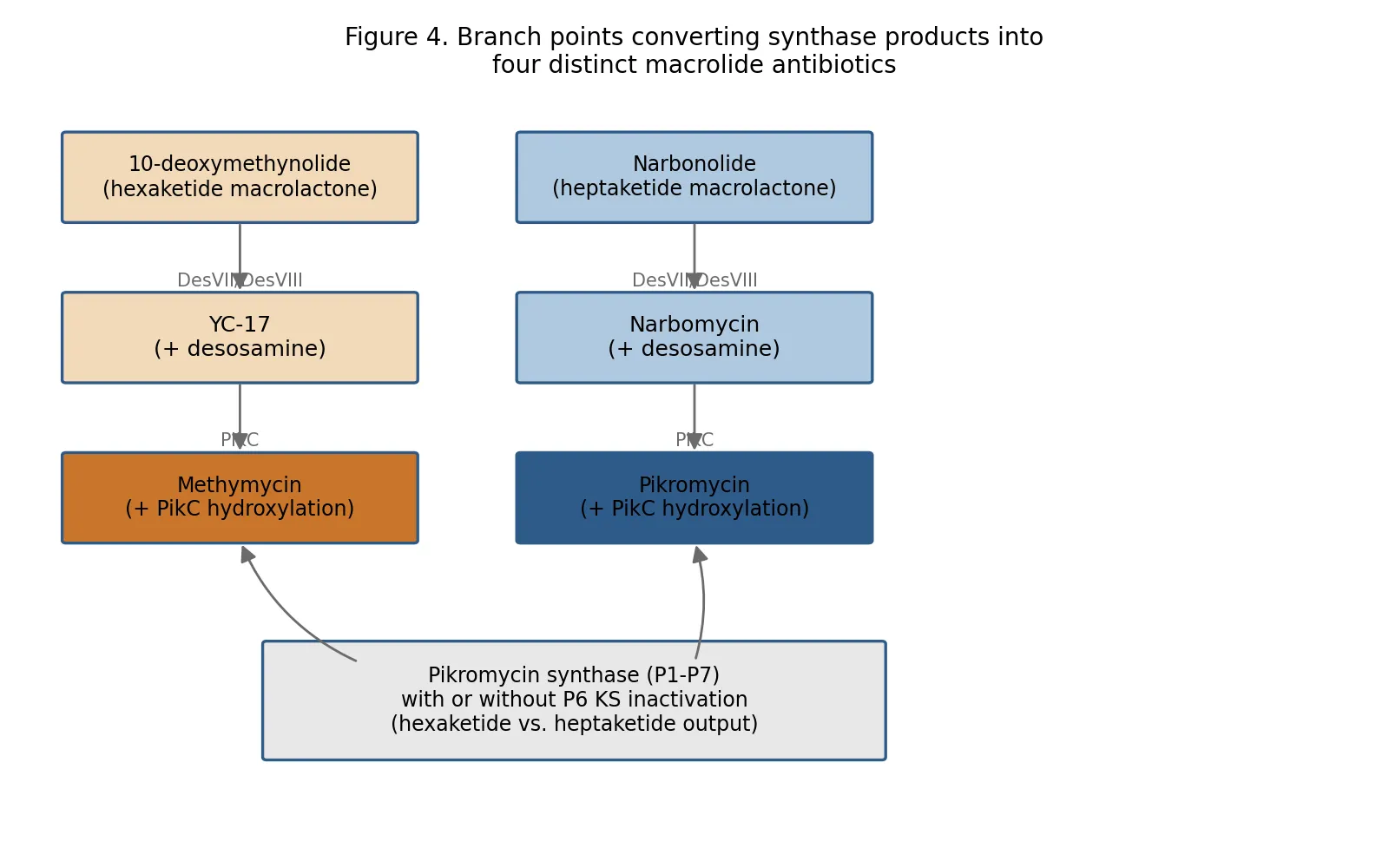
Figure 4. Branch points converting pikromycin synthase products into four distinct macrolide antibiotics. Narbonolide (heptaketide) and 10-deoxymethynolide (hexaketide) are each glycosylated by DesVII/DesVIII to give narbomycin and YC-17, respectively; subsequent hydroxylation by PikC yields pikromycin and methymycin. Original schematic prepared for this review.
The same glycosylation machinery was applied to several of the module-swapped macrolactones, generating a small set of new, desosaminylated narbomycin analogues; three were purified and structurally confirmed by nuclear magnetic resonance spectroscopy.
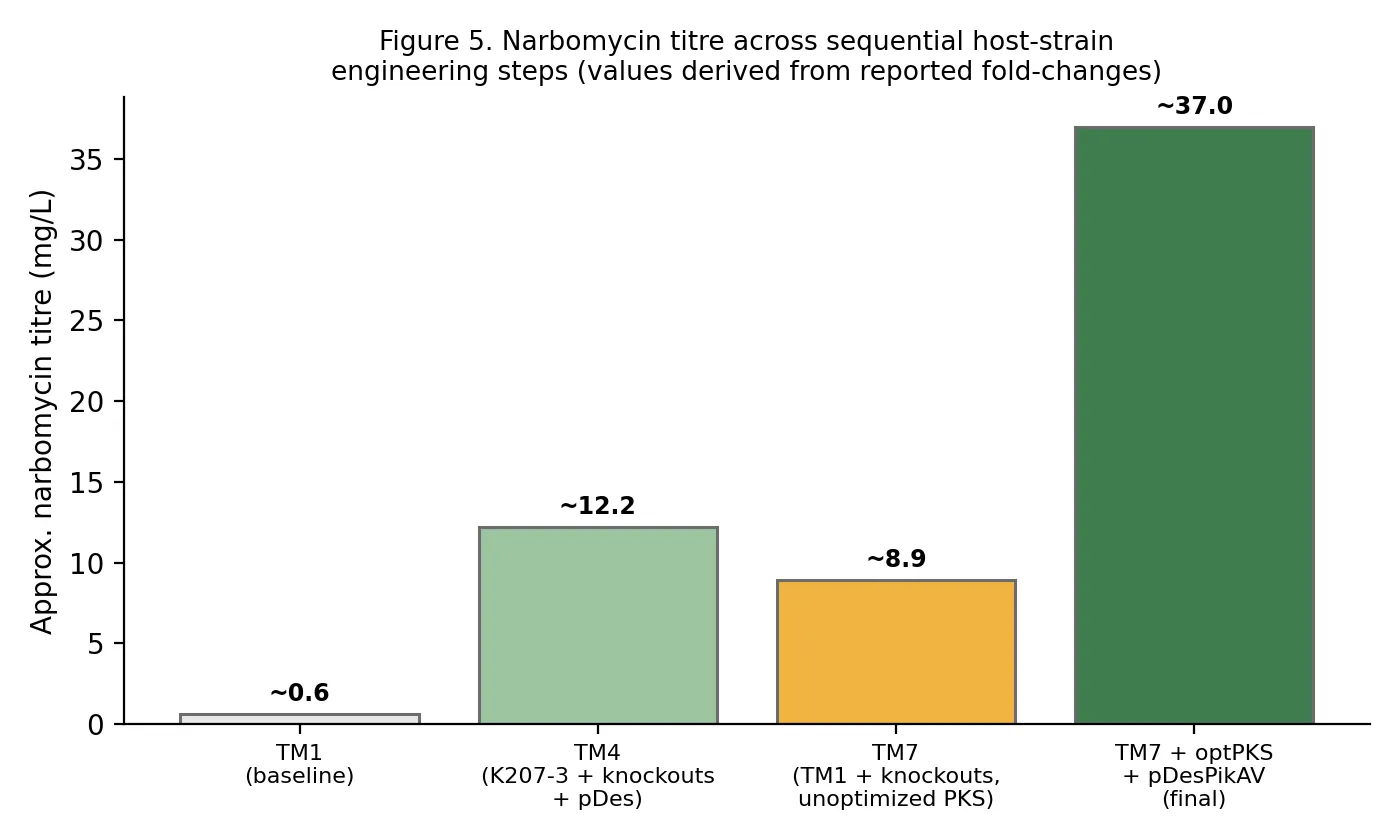
Figure 5. Narbomycin titre across sequential host-strain engineering steps. TM1 through TM7 refer to CRISPR–Cas9-engineered E. coli strains in which pathways competing with desosamine biosynthesis for a shared sugar precursor were progressively inactivated. Values are approximate, derived from the fold-changes reported relative to the final 37 mg/L titre. Original chart prepared for this review from reported data.
Antibacterial testing against Gram-positive organisms (Bacillus subtilis, Staphylococcus epidermidis, Micrococcus luteus) and Gram-negative organisms (E. coli, Pseudomonas putida) showed that narbomycin and one new analogue retained potency comparable to a commercial pikromycin standard against Gram-positive strains, while a second new analogue showed only weak activity and a third was inactive. Only the parent compound, pikromycin, showed any activity against the Gram-negative panel.
Table 4. Antibacterial activity (minimum inhibitory concentrations) of purified compounds against Gram-positive (B. subtilis, S. epidermidis, M. luteus) and Gram-negative (E. coli, P. putida) test panels.
|
Compound |
Gram-positive panel MIC (μM) |
Gram-negative panel MIC (μM) |
|
Pikromycin (3) — positive control |
3.12–6.25 |
200 |
|
Narbomycin (2) |
3.12–6.25 |
Inactive |
|
YC-17 (5) |
100–200 |
Inactive |
|
Compound 21 |
200 (B. subtilis only) |
Inactive |
|
Compound 22 |
3.12–6.25 |
Inactive |
|
Compound 23 |
200 (all three strains) |
Inactive |
The authors relate the loss of activity in some analogues to the absence or altered geometry of the enone moiety that normally engages the bacterial ribosome, drawing on prior structural work describing the interaction between pikromycin and the 70S ribosome.
DISCUSSION
7.1 Significance of the Platform
Taken as a whole, this study represents a meaningful step toward realizing modular PKSs as genuinely combinatorial platforms for macrolide antibiotic discovery, and it does so in a genetically tractable, fast-growing host rather than in the native, slower-growing actinomycete producers. Several features distinguish the pikromycin platform favorably from the more extensively studied erythromycin system: fewer tailoring enzymes are required, at least two bioactive family members can be reached without relying on cytochrome P450 chemistry, and achievable titres are an order of magnitude higher than historical benchmarks for heterologous erythromycin A production.
7.2 Ketosynthase Gatekeeping as the Central Bottleneck
At the same time, the module-swapping results make clear that ketosynthase gatekeeping, not vector capacity or expression, is now the principal obstacle to unrestricted combinatorial synthase design. Only one of sixteen attempted intra-pathway module substitutions succeeded, and even the most substrate-tolerant native ketosynthase showed clear discrimination against non-native substrates several carbons removed from the site of attachment. The authors' strategy of borrowing promiscuous ketosynthases from unrelated pathways, exemplified by the rapamycin-derived substitutions, is a pragmatic workaround, but a more systematic solution — for instance, rational or evolved relaxation of ketosynthase substrate specificity — would likely be needed before combinatorial libraries could be generated at a scale comparable to the modular chemical synthesis platforms referenced at the start of this review.
7.3 Titre and Scale-Up Considerations
Titres, while a substantial improvement over earlier heterologous macrolide systems, remain far below what would be needed for preparative-scale medicinal chemistry follow-up without further optimization, such as fed-batch bioreactor cultivation (previously shown to increase related polyketide titres several-fold over shake-flask conditions) or additional host-strain metabolic engineering. The mechanistic basis for several observations — including incomplete macrocyclization in favor of competing lactone side products, and the unexplained interaction between genomic and plasmid-based desosamine pathway expression — also remains to be resolved, and the authors note that their platform itself provides a convenient experimental system for investigating these open questions in PKS enzymology.
7.4 Implications for Antibiotic Discovery Pipelines
For antibiotic discovery specifically, the demonstration that structurally modified narbomycin analogues can be produced, purified and directly screened for antibacterial activity within a single heterologous host establishes a practical, if still limited, discovery pipeline. Expanding the accessible chemical space will likely depend on the combined application of ketosynthase engineering, expanded docking-domain libraries, and improved cytochrome P450 tailoring activity in E. coli, each of which represents a clear and tractable direction for follow-up work.
8. Comparative Assessment Relative to the Erythromycin Platform
Because the erythromycin synthase remains the most extensively engineered heterologous PKS system in E. coli, it provides the most informative point of comparison for judging how much practical ground the pikromycin platform covers. Table 5 summarizes the principal differences discussed throughout this review.
Table 5. Comparative summary of pikromycin versus erythromycin heterologous E. coli platforms, based on figures and statements reported in the primary source and cited historical literature
|
Feature |
Pikromycin platform (this study) |
Erythromycin platform (historical benchmark) |
|
Plasmids/tailoring genes required |
2 PKS plasmids + 1 tailoring plasmid |
Historically up to ~6 plasmids, not always stably maintained |
|
Cytochrome P450 dependency for a bioactive product |
Not required for narbomycin or YC-17 |
Required (EryF) for the first tailoring step toward erythromycin A |
|
Reported titre of a bioactive macrolide |
37 mg/L (narbomycin) |
~1 mg/L (erythromycin A) |
|
Ring-size versatility |
Natively generates both a hexaketide and a heptaketide scaffold |
Generates a single heptaketide scaffold family |
|
Demonstrated combinatorial derivatives |
Several new narbomycin/narbonolide analogues via module swapping |
More limited combinatorial diversification reported to date |
Reading the pikromycin gene cluster's individual components alongside these comparisons helps clarify why the platform behaves as it does. Table 6 lists the principal genes referenced throughout this review and the function each contributes to the overall pathway, from chain assembly through tailoring.
Table 6. Principal genes referenced in this review and their functional roles in macrolactone assembly, tailoring, and host-strain engineering.
|
Gene |
Encoded function |
Role in this review |
|
pikAI–pikAIV |
Modules 1–7 of the pikromycin synthase |
Core chain-assembly modules refactored across the two-plasmid system |
|
pikAV |
Type II editing thioesterase |
Removes mis-primed acyl groups from carrier proteins; boosted narbonolide titre 1.6-fold |
|
desI–desVIII |
Desosamine biosynthesis and transfer operon |
Converts macrolactones to their glycosylated, bioactive forms (e.g., narbonolide → narbomycin) |
|
pikC |
Cytochrome P450 hydroxylase |
Converts narbomycin → pikromycin and YC-17 → methymycin; limited by weak activity in E. coli |
|
rmlC / wecD-wecE / vioA-vioB |
Competing E. coli sugar-pathway genes |
Targeted for CRISPR–Cas9 knockout to free up shared sugar precursor for desosamine biosynthesis |
This comparison should not be read as suggesting the erythromycin platform is now obsolete — it remains far better characterized structurally and mechanistically, and decades of prior engineering work on it directly informed the design choices made in the pikromycin study reviewed here. Rather, the comparison illustrates that the pikromycin pathway offers a complementary, and in several practical respects more tractable, starting point for future heterologous macrolide engineering efforts.
CONCLUSION
The refactored, two-plasmid pikromycin synthase platform described in this body of work demonstrates that a complete, antibiotic-producing modular polyketide synthase can be reconstituted, optimized and combinatorially diversified within E. coli. Titre improvements of nearly two orders of magnitude were achieved through docking-domain matching, editing thioesterase co-expression and targeted host metabolic engineering, while module-swapping experiments yielded several new, bioactive narbomycin derivatives despite the substantial constraint imposed by ketosynthase substrate selectivity. The platform offers both a practical route toward new macrolide antibiotic candidates and an experimental tool for dissecting the enzymology that continues to limit modular PKS engineering more broadly. Future work addressing ketosynthase gatekeeping directly, together with continued host-strain and bioprocess optimization, will likely determine how far this class of platform can be pushed toward preparative-scale antibiotic discovery.
9.1 Priority Directions for Follow-Up Work
Based on the gaps identified throughout this review, three directions seem especially likely to yield near-term progress. First, systematic ketosynthase engineering — whether through rational mutagenesis guided by emerging structural data or through directed evolution screens built on the same two-plasmid reporter system — could directly address gatekeeping rather than working around it with donor modules from unrelated pathways. Second, expanding the docking-domain toolkit beyond the single heterologous pair currently in use could reduce the shunt-product losses observed at plasmid-plasmid and module-module junctions, and might also allow additional plasmids to be introduced for even larger synthases. Third, improving cytochrome P450 tailoring activity in E. coli, whether through PikC engineering, redox-partner co-expression, or host chaperone supplementation, would raise the currently limited yields of the fully hydroxylated, most potent family members such as pikromycin itself. None of these directions is unique to the pikromycin system, and progress on any of them would likely transfer to other heterologously expressed modular PKS pathways as well — a point the original authors themselves make in framing their platform as a general experimental tool for PKS enzymology rather than a narrowly pikromycin-specific result.
REFERENCES




Shilpa, Gagana Shree D. S., Sunil Kumar Busi*, Irene Nethala, Gopinath E., Refactoring the Pikromycin Synthase: A Modular Platform for Combinatorial Macrolide Antibiotic Biosynthesis in Escherichia coli — A Review, Int. J. Med. Pharm. Sci., 2026, 2 (8), 260-269. https://doi.org/10.5281/zenodo.21808205
 10.5281/zenodo.21808205