1Undergraduate Student, Shri RLT Institute of Pharmaceutical Science and Technology, (AKTU-Lucknow), NH-02, Ekdil, Etawah, Uttar Pradesh, 206126. 2Assistant Professor, Shri RLT Institute of Pharmaceutical Science and Technology, (AKTU-Lucknow), NH-02, Ekdil, Etawah, Uttar Pradesh, 20612
With major benefits over traditional tablets and liquids, mouth dissolving films (MDFs) have become a cutting-edge drug delivery method, especially for patients who experience severe nausea and vomiting. A strong antiemetic, triflupromazine hydrochloride is a phenothiazine derivative that works by inhibiting dopamine D2 receptors in the chemoreceptor trigger zone (CTZ). However, high first-pass metabolism and swallowing difficulties during episodes of emesis frequently impede its oral administration. The creation of triflupromazine MDFs as a way to improve bioavailability and offer a quick start of action by avoiding hepatic metabolism through the oral mucosa is examined in this review. To provide mechanical flexibility, the formulation usually uses the solvent casting method with hydrophilic polymers like Pullulan or HPMC (E3, E5, or E15) and plasticizers like Polyethylene Glycol (PEG) 400 or glycerol. Film thickness, folding durability, surface pH, and in vitro disintegration time—ideally within 30 seconds—are among the important evaluation metrics that were covered. The review also emphasizes the significance of saliva-stimulating and taste-masking drugs in enhancing patient compliance in both adolescent and geriatric groups. This report highlights the promise of triflupromazine MDFs as a better, patient-centered option for the efficient treatment of emesis by compiling recent studies.
Oral fast dispersion dosage forms are solid dosage forms that dissolve or disintegrate rapidly in the oral cavity, producing a solution or suspension without the requirement for water administration. [1] When placed on the tongue in the oral cavity, fast dissolving oral films (FDOF), a solid single-unit dosage form composed of a water-dispersing polymer, enable the dosage form to quickly hydrate, adhere, and dissolve to deliver drugs locally or systemically. [2] Mouth dissolving films, a new drug delivery system for the oral delivery of the drugs, was developed based on the technology of the transdermal patch. [3] Various film formers like Polyvinyl alcohol, Polyvinyl pyrrolidone (PVP), Maltodextrin, Hydroxy Propyl Methyl Cellulose (HPMC), Hydroxypropyl Cellulose (HPMC), Methyl Cellulose (MC), Sodium Carboxy Methyl Cellulose (Na CMC), Chitosan and some natural gums have been used in the production of films. [4] Oral medication administration method Mouth dissolving films provide a sophisticated method of delivering drugs throughout the body. Bypassing the first pass effect and improving permeability as a result of adequate vascular and lymphatic drainage lead to increased systemic bioavailability. Additionally, the oral mucosa is a very desirable and selective target for systemic drug delivery due to its huge surface areas of absorption, ease of ingesting and swallowing, and pain avoidance. Recent technological advancements have made oral dose alternatives feasible for a wide range of patient groups. Recently, buccal medication delivery has emerged as a significant drug delivery method. Patients with abrupt episodes of allergy attacks, diarrhea, coughing, pediatric patients, elderly patients, and people with busy lifestyles can all benefit from ODFs. Additionally, it works well as a topical anesthetic for teething, oral ulcers, old sores, and toothaches. Although oral thin-film technology is still in its infancy, it has a promising future because it meets patient needs. [5] Usually, the size of a postage stamp, these thin, flexible, beautiful films come in a variety of shapes and sizes and are intended to be applied on the patient's tongue. When they come into touch with saliva, they quickly dissolve or scatter and release the medication. Because of its simplicity, non-invasiveness, adaptability, patient compliance, and acceptance, the oral route of medication administration is the most popular. For patients who are nauseated, elderly, juvenile, or noncompliant, numerous alternatives to the oral route of drug delivery have been consistently offered through the use of new, innovative technology. [6] Using hydrophilic polymers, a novel drug delivery technique known as "fast dissolving oral film" produces an incredibly thin film that dissolves rapidly on the floor or top of the tongue or the buccal cavity. It was made utilizing transdermal patch technology and is a postage stamp-sized, ultrathin strip (50–150 microns thick) with an active substance and other excipients. [7] The quick dissolving medicine administration system was first created in the late 1970s to assist young and old patients who had difficulty swallowing pills and capsules. [8]
Advantages: - [9]
Accessibility of larger surface area that leads to quickly disintegrate and dissolution in the oral cavity within seconds.
Fast Dissolving Film is flexible so they are not as fragile and need not any kind of special package for protection during transportation and storage as compared to FDT.
No fear of chocking as compared to FDT.
The large surface area available in the film dosage form allows rapid wet by saliva then quickly disintegrates and dissolve and absorbed directly and can enter the systemic circulation without undergoing first-pass hepatic metabolism and on increase the bioavailability
The dosage form can be consumed at any place and any time as per convenience of the individual
MDFs dissolve within seconds on the tongue, allowing the drug to enter the bloodstream quickly.
Helpful during nausea and vomiting, where fast relief is needed.
Can be taken anytime, anywhere.
Useful for patients who cannot swallow water due to nausea.
Good for patients with swallowing difficulty
Especially helpful for children, elderly, and unconscious or semi-conscious patients.
Each film contains a precise drug dose.
Disadvantage: - [9,10]
Only small doses of the drug can be incorporated.
Not suitable for medications requiring higher strengths.
Easily damaged by humidity.
Requires special packaging (costly and less convenient).
Films may tear, fold, or break during handling or transportation.
Heat and moisture can degrade the drug or film polymers.
Reduces shelf life in tropical climates.
Only drugs with suitable solubility, low dose, and good stability can be used.
Not suitable for all anti-emetic drugs.
Some polymers or additives may cause:
Oral irritation
Mouth dryness
Ulceration in sensitive patients
More expensive than tablets or capsules.
The main disadvantage of this distribution method is that large doses cannot be added to films or strips. Although each Gas-x thin strip from Novartis Consumer Health contains 62.5 mg of simethicone, there are still anumber of restrictions associated with using film strips.
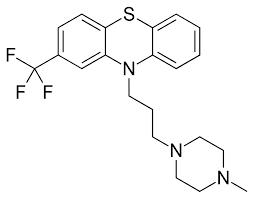
Triflupromazine: -A dopamine antagonist with antipsychotic and antiemetic properties, trifluoperazine (10-[3-(4-methyl-1-piperazinyl) propyl]-2- (trifluoromethyl)-10H-phenothiazine) is mostly used to treat schizophrenia. [11]One of the most effective antipsychotic phenothiazine-type medications, TFP prevents effects like delusions and hallucinations brought on by an excess of dopamine by inhibiting central dopamine receptors. Additionally, this substance acts as a calmodulin inhibitor, which raises cytosolic calcium levels. Additionally, trifluoperazine was found to be more effective than a placebo in treating generalized anxiety disorder. [12]and as a suppression of the proliferation of cancer stem cells [13] There has been a need for a new technique to detect TFP in biological fluids and medications because it is highly processed by the liver and excreted with urine. Given the trifluoperazine's structure (Scheme 1), the phenothiazine core and the designated piperazine ligand should clearly define its electrochemical nature. [14] In order to improve patient compliance, a mouth dissolving film (MDF) of triflupromazine was developed. This is particularly useful for situations like chemotherapy-induced nausea, surgical emesis, or motion sickness that require a quick onset of antiemetic action. Oral fast-dissolving films dissolve rapidly in the oral cavity without the need for water, allowing for quicker drug absorption and partially avoiding first-pass metabolism, which improves bioavailability and therapeutic efficacy. [15]A first-generation phenothiazine derivative, triflupromazine is well known for its sedative, antipsychotic, and antiemetic properties. In addition to moderate antihistaminic and anticholinergic actions, its antiemetic impact is mainly mediated by antagonism of dopamine (D₂) receptors in the chemoreceptor trigger zone (CTZ), which jointly contribute to the suppression of nausea and vomiting. Triflupromazine has long been used to treat drug-induced emesis, surgical nausea, and motion sickness due to this multimodal mechanism. [16]
Fig.1-Triflopromazine [17].
Physical properties; - [17]
Triflupromazine is often sold as a crystalline powder that ranges in color from white to pale yellow.
It is odorless or has a subtle scent that is typical of derivatives of phenothiazine.
Has a distinct phenothiazine ring structure and is found in crystalline solid form. It dissolves sparingly in water.
It dissolves readily in organic solvents such acetone, methanol, ethanol, and chloroform.
The production of salt promotes solubility in acidic liquids.
Like pure crystalline substances, it has a sharp melting point.
(The precise amount varies depending on the salt form; pharmacopeial references typically supply this information.)
Stable in typical storage circumstances.
Phenothiazines may deteriorate or discolor when exposed to light, heat, and moisture.
Although not very hygroscopic, quality may be impacted by extended contact to moisture.
Depending on the salt form (usually hydrochloride), it can generate an acidic to neutral pH solution.
Chemical properties: -
Triflupromazine is a phenothiazine derivative with a tricyclic structure made up of two benzene rings connected by a thiazine ring that contains nitrogen and sulfur. Its molecular name, 10-[3-(dimethylamino) propyl]-2-(trifluoromethyl)phenothiazine, reflects the presence of a trifluoromethyl (–CF₃) group at the second position of the phenothiazine nucleus, which enhances its lipophilicity and pharmacological activity.Its molecular weight is roughly 352.42 g/mol, and its chemical formula is C₄₃H₁¹F₃N₂S.Triflupromazine hydrochloride typically has a melting point between 160 and 165°C (approximate, depending on purity and salt form).[18]
Mechanism action; -
The phenothiazine antipsychotic triflupromazine mainly acts as an antiemetic by antagonistically binding to dopamine (D₂) receptors in the chemoreceptor trigger zone (CTZ) of the medulla oblongata. In order to identify emetogenic chemicals in the blood and CSF fluid and subsequently trigger the vomiting center, the CTZ is essential. Triflupromazine prevents nausea and vomiting by inhibiting the transmission of emetic signals by blocking D₂ receptors in this area. Triflupromazine shows antagonistic activity at histamine (H₁), muscarinic (M₁), and alpha-adrenergic receptors in addition to blocking dopamine receptors. Its general antiemetic, sedative, and anti-motion sickness benefits are attributed to these extra receptor-blocking qualities. When it comes to managing vestibular abnormalities linked to motion-induced nausea, the antihistaminic and anticholinergic effects are very important. [19]
Side Effects; -
Sedation and drowsiness
Dizziness
Impaired coordination
Confusion, especially in elderly
Rare: Neuroleptic malignant syndrome (NMS)
Acute dystonia (muscle spasms)
Parkinsonism-like symptoms (rigidity, tremor)
Akathisia (restlessness)
Long-term use: Tardive dyskinesia
Dry mouth
Blurred vision
Constipation
Urinary retention
Uses: - [20]
Excellent for treating severe nausea and vomiting.
Works by preventing the CTZ's dopamine receptors from functioning.
Often used in conjunction with other antiemetics, it helps control nausea and vomiting brought on by cytotoxic cancer drugs.
used in patients receiving radiation therapy, particularly those receiving radiation to the abdomen or pelvis.
Used when chronic vomiting is caused by gastroenteritis, gastritis, or GI irritation. • CNS depressant action causes mild drowsiness.
Used to soothe agitated patients or provide pre-anesthetic medicine in hospital settings.
Occasionally used in conjunction with analgesics to lessen nausea and anxiety during uncomfortable medical or diagnostic procedures.
Method of Preparation of Mouth Dissolving Film
Solvent Casting Method: Nowadays, the most widely used production technique for oral thin films is solvent casting. This method entails dissolving the water-soluble polymer and plasticizer in distilled water. The solution is stirred with a magnetic stirrer for two hours and then set aside to liberate all trapped air bubbles. In the meanwhile, the API and excipients are dissolved, and both solutions are thoroughly mixed for half an hour before being mixed. Finally, a level surface that can be utilized to create a film is covered with the solution. The film is gently removed once it has dried. The development of a deterrent to abuse and the same solvent casting technique was used to create a buprenorphine hydrochloride microemulsion-based sublingual film for innovative pain management. [21]
Hot melt extrusion: The hot melt extrusion method starts with a solid mixture of medication and carrier. An extruder equipped with heaters is then used to melt the mixture. Ultimately, the dies shape the melt into films. [22]
Semi-solid casting: An acid-insoluble polymer solution (such as cellulose acetate butyrate and phthalate) is mixed with a water-soluble film-forming polymer solution to produce a homogenous viscous solution. After sonication, it is applied on untreated casting film. After drying, the film should have a thickness of 0.015 to 0.05 inches. It is advised to use the acid-insoluble polymer in a 1:4 ratio with the film-forming polymer. [23]
Rolling method: Using this method, a drug-containing suspension or solution is rolled on a carrier. Alcohol and water combinations are the main solvents. The film is cut into the proper shapes and sizes after drying on the rollers. [24]
Solid dispersion extrusion: A drug is first used to extrude immiscible components into a solid dispersion, which is subsequently shaped into films using dies. [25]
Evaluation Test
Morphology study: The morphology of the films is examined at a particular magnification using scanning electron microscopy (SEM). [26]
Organoleptic evaluation: Taste sensors and well-made equipment are used in vitro to achieve this. For high-throughput oral pharmaceutical formulation taste assessment, several in vitro taste evaluation tools are appropriate. [27]
Thickness: A micrometer screw gauge can be used to measure it at several locations. Since it directly affects the dose accuracy of the strip, determining the uniformity of the film's thickness is crucial.
Folding endurance: He prepared films' folding durability was carefully assessed. A film strip was cut and folded several times until it broke. [28] The value of folding endurance was determined by counting the number of times the film could be folded in the same location without breaking. [29]
Weight Variation: Different batches of the formulations were separated into 4 cm2 films, and an electronic balance was used to record the weights. Three videos were chosen at random for each formulation. [30] For the weight variation test, ten films from each batch were weighed individually on a digital electronic balance, and the average weight was determined. [31]
Tensile strength: The highest stress exerted at the strip specimen's fracture point is known as tensile strength. It can be computed by dividing the applied load at rupture by the strip's cross-sectional area. [32]
Percentage moisture loss: A moisture loss test was carried out to verify the film's physical stability and integrity. [33]A film measuring two by two centimeters was cut and weighed. After that, the film was stored in a desiccator with fused anhydrous calcium chloride for three days. After three days, the film patch was removed and weighed once more. The percentage of moisture loss in the film was calculated using the following formula. [34]
Percentage Moisture Loss = (Initial Weight - final weight)/Initial Weight × 100
Drug content: Determine the formulation's percentage drug content from the calibration curve using a UV spectrophotometer. [35]
Viscosity: Find the viscosity of the optimal formulation using a Brookfield viscometer. [36]
Disintegration test: The CDER guidance's 30-second or shorter disintegration time requirement for oral disintegrating tablets can be met by using fast-dissolving oral strips. Jain and Mundada (2015) state that there is no particular recommendation for oral rapid dissolving films or strips. [37] recommend utilizing this as a qualitative guideline for development or quality control testing. The film was laid on top of a petri dish that had been filled with ten milliliters of pH 6.8 phosphate buffer. Shake the Petri dish every ten seconds. [38] The duration of the film's breakdown was recorded. [39]
Table 1: Fast dissolving oral films of an antiemetic drug
Sr. No.
Name of drug
Excipients used
Method of preparation
Reference
Meclizine Hydrochloride
Xanthan gum, Gelatin, Gum acacia and Methyl Paraben
Very thin films that dissolve instantly on the tongue
Few seconds
Rapid drug release
Pain relief, anti-allergy drugs
55
Mucoadhesive Films
Adhere to oral mucosa for absorption
Seconds–minutes
Sticks to mouth lining
Buccal drug delivery
56
Sustained Release Films
Release drug slowly over time
Minutes–hours
Controlled drug release
Chronic disease management
57
Delayed Release Films
Resist immediate dissolution; release drug later
Variable
Protection from saliva
Targeted drug delivery
58
Taste-Masked Films
Designed to mask unpleasant drug taste
Few seconds
Improved palatability
Pediatric/geriatric patients
59
CONCLUSION: -
The study concludes that Mouth-Dissolving Films (MDFs) represent a highly effective and patient-centric drug delivery system for managing acute episodes of nausea and vomiting. The formulation of Triflupromazine into an oral thin film provides multiple advantages, including rapid onset of action, ease of use without water, improved bioavailability, and enhanced patient compliance—particularly in pediatrics, geriatrics, and patients unable to swallow conventional tablets. The expected physicochemical and performance characteristics—such as uniform thickness, high folding endurance, neutral surface pH, rapid disintegration, and high drug release—indicate that MDFs can serve as a reliable and superior alternative to traditional antiemetic formulations. Furthermore, taste masking and portability make the dosage form more acceptable and convenient for real-world use. In conclusion, the development of a Triflupromazine mouth-dissolving film has strong potential to improve therapeutic outcomes in nausea and vomiting. This dosage form aligns with modern pharmaceutical advancements, addressing unmet clinical needs and offering an efficient, stable, and patient-friendly method of drug delivery. Future work may involve in-vivo studies, optimization of polymer combinations, and large-scale manufacturing to move toward clinical and commercial application.
REFERENCES
Swamy N and Shiva Kumar S, Formulation and Evaluation of Fast Dissolving Oral Films of Palonosetron Hydrochloride Using Hpmc-E5, Research Article International Journal of Pharmaceutical and Chemical Sciences, Jan-Mar 2014; 3(1): 145.
Jyothi R L, Abbulu K, Formulation and Evaluation of Fast Dissolving Delivery System of Saxagliptin, Research Article International Journal of Chemistry and Pharmaceutical Sciences, 2014; 2(5): 862-869.
Saini S, Nanda A, Dhari J, Formulation, Development & Evaluation of Oral Fast Dissolving Anti-Allergic Film of Levocetrizine Dihydrochloride, J. Pharm. Sci. & Res., 2011; 3(7): 1322-1325.
Buchi N, Nalluri B, Sravani V, Saisri A, Sribramhini R, Maheswari K M, Development and Evaluation of Mouth Dissolving Films of Sumatriptan Succinate for Better Therapeutic Efficacy, Department of Pharmaceutics, KVSR Siddhartha College of Pharmaceutical Sciences, Vijayawada-520010, AP, India, Journal of Applied Pharmaceutical Science, August, 2013; 3(08): 161-166.
Kaur T., Gill B., Kumar S., Gupta G.D. Mouth Dissolving Films: Innovations in Drug Delivery. Journal of Drug Delivery and Therapeutics.
Thorat KV, Khade P, Kakade S, Bhosale A. Formulation, and evaluation of fast dissolving mouth film of domperdone. Methods. 2021 Aug 16;10(12):2104-21.
Wankhede SC, Pimpalshende PM, Kosalge SB. Fast dissolving oral film: a boon for patients suffering with nausea and vomiting.
Kshirsagar T, Jaiswal N, Chavan G, Zambre K, Ramkrushna S, Dinesh D. Formulation & evaluation of fast dissolving oral film. World Journal of Pharmaceutical Research. 2021 May 27;10(9):503-61.
More P, Patil S, Patil S.” formulation and evaluation of oral mouth dissolving film of antiemetics drugs”.
Siddiqui MN, Garg G, Sharma PK. A short review on“A novel approach in oral fast dissolving drug delivery system and their patents”.AdvBiol Res. 2011 Nov;5(6):291-303.
Hassan, A. K.; Ameen, S. T.; Saad, B.; Al-Aragi, S. M. Potentiometric Sensors for the Determination of Trifluoperazine Hydrochloride in Pharmaceutical Preparations. Anal. Sci. 2009, 25, 1295– 1299.
Gao, K.; Muzina, D.; Gajwani, P.; Calabrese, J. R. Efficacy of typical and atypical antipsychotics for primary and comorbid anxiety symptoms or disorders: a review. The Journal of clinical psychiatry 2006, 67, 1327–1340.
Yeh, C.-T.; Wu, A. T. H.; Chang, P. M.-H.; Chen, K.-Y.; Yang, C.- N.; Yang, S.-C.; Ho, C.-C.; Chen, C.-C.; Kuo, Y.-L.; Lee, P.-Y.; et al. Trifluoperazine, an antipsychotic agent, inhibits cancer stem cell growth and overcomes drug resistance of lung cancer. American journal of respiratory and critical care medicine 2012, 186, 1180– 1188.
Srinivasan, S.; Chizmadzhev, Y. A.; Bockris, J. O.’M.; Conway, B. E.; Yeager, E. Comprehensive Treatise of Electrochemistry; Springer US: Boston, MA, 1985.
Phenothiazines general statement monograph. Drugs.com. Antiemetic mechanism via dopamine receptor blockade in CTZ.
Sweetman SC, editor. Martindale: The Complete Drug Reference. 36th ed. London: Pharmaceutical Press; 2009.
Tripathi KD. Essentials of Medical Pharmacology, 8th Edition — Phenothiazines & Antiemetic Drugs.
O’Neil MJ, editor. The Merck Index: An Encyclopedia of Chemicals, Drugs, and Biologicals. 15th ed. Cambridge: Royal Society of Chemistry; 2013.
Brunton LL, Hilal-Dandan R, Knollmann BC, editors. Goodman & Gilman’s The Pharmacological Basis of Therapeutics. 13th ed. New York: McGraw-Hill; 2018.
British National Formulary (BNF) — Clinical use of triflupromazine in antiemetic therapy.
Mundhey D, Sapkal N and Daud A, Fabrication of an abuse deterrent and microemulsion-based sublingual film of buprenorphine hydrochloride for breakthrough pain management, International Journal of Applied Pharmaceutics, 2020; 12 (6): 127-135.
Coppens.KA, Hall. M J,Mitchell.S A and Read. M D., “Hypromellose, Ethyl cellulose and Polyethylene oxideused in hot melt extrusion”, Pharmaceutical Technology, September 2005, 1-6.
P. P. Ghodake, K. M. Karande, R. A. Osmani, R. R. Bhosale, B. R. Harkare, and B. B. Kale, “Mouth Dissolving Films: Innovative Vehicle for Oral Drug Delivery,” Int. J. Pharma Res. Rev., vol. 2, no. 10, pp. 41–47, 2013
Bilal Q, Unhale SS. A review on mouth dissolving films. 2020; (March).
Frey. Film Strips and Pharmaceuticals, PharmaMfg&Packag Sourcer.2006, 92– 93.
Mashru. R.C, Sutariya. BC and Parikh.PP., “Development and evaluation of fast dissolving films of salbutamol sulphate”, Drug DevInd Pharm. 2005, 31, 25-34.
Anand. V, Kataria. M, Kukkar. V,Saharan.V and Choudhury. P.K.,“The latest trends in the taste assessment of pharmaceuticals”, Drug Discovery Today 2007, 12, 257 ‐ 265.
Shel, “Formulation and evaluation of rapidly disintegrating film of amlodipine,”vol. 2(2), pp. 72–75, 2012.
S. Mazumder, N. Pavurala, P. Manda, X. Xu, C. N. Cruz, and Y. S. R. Krishnaiah, “Quality by Design approach for studying the impact of formulation and process variables on product quality of oral disintegrating films,” Int. J. Pharm., vol. 527, no. 1–2, pp. 151– 160, 2017, doi: 10.1016/j.ijpharm.2017.05.048.
A.D. Chonkar et al., “Development of fast dissolving oral films containing lercanidipineHCl nanoparticles in semicrystalline polymeric matrix for enhanced dissolution and ex vivo permeation,” Eur. J. Pharm. Biopharm., vol. 103, pp. 179–191, 2016, doi: 10.1016/j.ejpb.2016.04.001.
R. Kanekar, P. M. Dandagi, and A. P. Gadad, “Formulation and evaluation of fast dissolving oral films of prochlorperazine maleate,” Indian Drugs, vol. 52, no. 12, pp. 23– 33, 2015, doi: 10.53879/id.52.12.10351.
G. M. Zayed, S. A. El Rasoul, M. A. Ibrahim, M. S. Saddik, and D. H. Alshora, “In vitro and in vivo characterization of domperidone-loaded fast dissolving buccal films,” Saudi Pharm. J., vol. 28, no. 3, pp. 266–273, 2020, doi: 10.1016/j.jsps.2020.01.005.
H. Chaudhary, S. Gauri, P. Rathee, and V. Kumar, “Development and optimization of fast dissolving oro-dispersible films of granisetronHCl using Box–Behnken statistical design,” Bull. Fac. Pharmacy, Cairo Univ., vol. 51, no. 2, pp. 193–201, 2013, doi: 10.1016/j.bfopcu.2013.05.002.
R. Bala and S. Sharma, “Formulation optimization and evaluation of fast dissolving film of aprepitant by using design of experiment,” Bull. Fac. Pharmacy, Cairo Univ., vol. 56, no. 2, pp. 159 168, 2018, doi: 10.1016/j.bfopcu.2018.04.002
H. Doddayya, S. S. Patil, G. RamyaSree, H. Waseem, and R. Udupi, “Design and in Vitro Evaluation of Fast Dissolving Films Containing Hp ß Cd Inclusion Complexes of Lamotrigine,” J. Drug Deliv. Ther., vol. 4, no. 6, pp. 99–106, 2014, doi: 10.22270/jddt.v4i6.1004.
H. M. Patel, B. N. Suhagia, S. A. Shah, I. S. Rathod, and V. K. Parmar, ―Preparation and characterization of etoricoxib- 𝛽cyclodextrin complexes prepared by the kneading method, ActaPharmaceutica, 2007; 57(3): 351–359.
R. Jain and A. Mundada, “International Journal of Drug Development Formulation, Development and Optimization of Fast Dissolving Oral Film of Montelukast Sodium,” Int J Drug Dev Res, vol. 7, no. 4, pp. 40–46, 2015.
V. K. Sri, P. Rohini, and G. K. Reddy, “Montelukast sodium oral thin films: formulation and invitro Academic Sciences Asian Journal of Pharmaceutical and Clinical Research,” no. November, 2018.
E. Z. Dahmash, A. Iyire, and H. S. Alyami, “Development of orally dissolving films for pediatric centric administration of anti-epileptic drug topiramate – A design of experiments (DoE) study,” Saudi Pharm. J., vol. 29, no. 7, pp. 635–647, 2021, doi: 10.1016/j.jsps.2021.04.025.
Kelodiya J, Shah SK, Tyagi CK, Budholiya P. Formulation, development of fast dissolving sublingual wafers of an antiemetic drug using film former.Journal of Pharmaceutical Education and Research. 2021;10(4):71-8.
Tizkam HH, FadhilOQ, GhazyE.Formulation and Evaluation of Metoclopramide Fast Dissolving Film (FDF). Syst. Rev. Pharm. 2020 Dec 1; 11:1641-6.
Rao YS, Reddy KA. Design and In vivo Evaluation of PalonosetronHCl Mouth Dissolving Films in the Management of Chemotherapy-Induced Vomiting.International Journal of Pharmaceutical Sciences and Nanotechnology (IJPSN).2017 Nov 30;10(6):3929-36.
Maghsoodi M, Rahmani M, Ghavimi H, Montazam SH, Soltani S, Alami M, Salatin S, Jelvehgari M. Fast dissolving sublingual films containing sumatriptan alone and combined with methoclopramide: evaluation in vitro drug release and mucosal permeation. Pharmaceutical Sciences September 2016, 22, 153-163
Raju S, Reddy PS, Kumar VA, Deepthi A, Reddy KS, Reddy PM. Flash release oral films of metoclopramide hydrochloride for pediatric use: Formulation and in-vitro evaluation. J. Chem. Pharm. Res. 2011;3(4):636-46.
Nair SS, Padamanabhan R, SreenaK.Development and Evaluation of fast dissolving oral thin film containing prochlorperazinemaleate.Eur. J. Pharm. Medical Res. 2016;3(1):379-84.
Joshi P, Patel H, Patel V, Panchal R. Formulation development and evaluation of mouth dissolving film of domperidone. Journal of pharmacy &bioallied sciences. 2012 Mar;4(Suppl 1): S108.
Bala R, Sharma S. Formulation optimization and evaluation of fast dissolving film of aprepitant by using design of experiment. Bulletin of Faculty of Pharmacy, Cairo University.2018 Dec 1;56(2):159-68.
Bala R, Sharma S. Formulation optimization and evaluation of fast dissolving film of aprepitant by using design of experiment.Bulletin of Faculty of Pharmacy, Cairo University.2018 Dec 1;56(2):159-68.
Roy A, Arees RE, Blr MA. Formulation development of oral fast-dissolving films of rupatadinefumarate. Asian Journal of Pharmaceutical and Clinical Research.2020 Nov 7:67-72.
Ali MS, Vijendar C, Kumar SD, Krishnaveni J. Formulation and evaluation of fast dissolving oral films of diazepam. Journal of pharmacovigilance.2016 May 28;4(3):1-5.
Li MY, Wang B, Zhang JQ, Yang LL, He JT, Chen F.Quality by Design Approach for Development and Characterization of Granisetron Hydrochloride-Loaded Orodispersible Films. Pharmaceutical Fronts.2023 Dec 1;5(04):e297-309.
Udichi K, Chandraprakash J. Formulation and characterization of Prochlorperazine films for buccaldelivery. International Journal of Drug Development and Research. 2014 Jul;6(3):39-59.
Jadhav YG, Galgatte UC, Chaudhari PD. Overcoming poor solubility of dimenhydrinate: Development, optimization and evaluation of fast dissolving oral film.Advanced Pharmaceutical Bulletin. 2018 Nov;8(4):721.
Kanth NP, Prasad G, Kumar B V. Oral dissolving films of chlorpheniramine maleate. International Journal of Pharmaceutical Sciences and Research.2014 May 1;5(5):1859.
Bala R, Pawar P, Khanna S, Arora S. Orally disintegrating films: A modern overview of formulation technologies and clinical aspects. J Control Release. 2013 Dec 10;172(1):61–74.
Dixit RP, Puthli SP. Oral strip technology: Overview and future potential. J Control Release. 2009 Oct 15;139(2):94–107.
Arya A, Chandra A, Sharma V, Pathak K. Fast dissolving oral films: An innovative drug delivery system and dosage form. Int J ChemTech Res. 2010;2(1):576–83.
Kathpalia H, Gupte A. An introduction to fast dissolving oral thin film drug delivery systems: A review. Curr Drug Deliv. 2013 Nov;10(6):667–84.
Özakar RS, Özakar E. Current overview of oral thin films. Turkish journal of pharmaceutical sciences. 2021 Feb 25;18(1):111 –21.
Reference
Swamy N and Shiva Kumar S, Formulation and Evaluation of Fast Dissolving Oral Films of Palonosetron Hydrochloride Using Hpmc-E5, Research Article International Journal of Pharmaceutical and Chemical Sciences, Jan-Mar 2014; 3(1): 145.
Jyothi R L, Abbulu K, Formulation and Evaluation of Fast Dissolving Delivery System of Saxagliptin, Research Article International Journal of Chemistry and Pharmaceutical Sciences, 2014; 2(5): 862-869.
Saini S, Nanda A, Dhari J, Formulation, Development & Evaluation of Oral Fast Dissolving Anti-Allergic Film of Levocetrizine Dihydrochloride, J. Pharm. Sci. & Res., 2011; 3(7): 1322-1325.
Buchi N, Nalluri B, Sravani V, Saisri A, Sribramhini R, Maheswari K M, Development and Evaluation of Mouth Dissolving Films of Sumatriptan Succinate for Better Therapeutic Efficacy, Department of Pharmaceutics, KVSR Siddhartha College of Pharmaceutical Sciences, Vijayawada-520010, AP, India, Journal of Applied Pharmaceutical Science, August, 2013; 3(08): 161-166.
Kaur T., Gill B., Kumar S., Gupta G.D. Mouth Dissolving Films: Innovations in Drug Delivery. Journal of Drug Delivery and Therapeutics.
Thorat KV, Khade P, Kakade S, Bhosale A. Formulation, and evaluation of fast dissolving mouth film of domperdone. Methods. 2021 Aug 16;10(12):2104-21.
Wankhede SC, Pimpalshende PM, Kosalge SB. Fast dissolving oral film: a boon for patients suffering with nausea and vomiting.
Kshirsagar T, Jaiswal N, Chavan G, Zambre K, Ramkrushna S, Dinesh D. Formulation & evaluation of fast dissolving oral film. World Journal of Pharmaceutical Research. 2021 May 27;10(9):503-61.
More P, Patil S, Patil S.” formulation and evaluation of oral mouth dissolving film of antiemetics drugs”.
Siddiqui MN, Garg G, Sharma PK. A short review on“A novel approach in oral fast dissolving drug delivery system and their patents”.AdvBiol Res. 2011 Nov;5(6):291-303.
Hassan, A. K.; Ameen, S. T.; Saad, B.; Al-Aragi, S. M. Potentiometric Sensors for the Determination of Trifluoperazine Hydrochloride in Pharmaceutical Preparations. Anal. Sci. 2009, 25, 1295– 1299.
Gao, K.; Muzina, D.; Gajwani, P.; Calabrese, J. R. Efficacy of typical and atypical antipsychotics for primary and comorbid anxiety symptoms or disorders: a review. The Journal of clinical psychiatry 2006, 67, 1327–1340.
Yeh, C.-T.; Wu, A. T. H.; Chang, P. M.-H.; Chen, K.-Y.; Yang, C.- N.; Yang, S.-C.; Ho, C.-C.; Chen, C.-C.; Kuo, Y.-L.; Lee, P.-Y.; et al. Trifluoperazine, an antipsychotic agent, inhibits cancer stem cell growth and overcomes drug resistance of lung cancer. American journal of respiratory and critical care medicine 2012, 186, 1180– 1188.
Srinivasan, S.; Chizmadzhev, Y. A.; Bockris, J. O.’M.; Conway, B. E.; Yeager, E. Comprehensive Treatise of Electrochemistry; Springer US: Boston, MA, 1985.
Phenothiazines general statement monograph. Drugs.com. Antiemetic mechanism via dopamine receptor blockade in CTZ.
Sweetman SC, editor. Martindale: The Complete Drug Reference. 36th ed. London: Pharmaceutical Press; 2009.
Tripathi KD. Essentials of Medical Pharmacology, 8th Edition — Phenothiazines & Antiemetic Drugs.
O’Neil MJ, editor. The Merck Index: An Encyclopedia of Chemicals, Drugs, and Biologicals. 15th ed. Cambridge: Royal Society of Chemistry; 2013.
Brunton LL, Hilal-Dandan R, Knollmann BC, editors. Goodman & Gilman’s The Pharmacological Basis of Therapeutics. 13th ed. New York: McGraw-Hill; 2018.
British National Formulary (BNF) — Clinical use of triflupromazine in antiemetic therapy.
Mundhey D, Sapkal N and Daud A, Fabrication of an abuse deterrent and microemulsion-based sublingual film of buprenorphine hydrochloride for breakthrough pain management, International Journal of Applied Pharmaceutics, 2020; 12 (6): 127-135.
Coppens.KA, Hall. M J,Mitchell.S A and Read. M D., “Hypromellose, Ethyl cellulose and Polyethylene oxideused in hot melt extrusion”, Pharmaceutical Technology, September 2005, 1-6.
P. P. Ghodake, K. M. Karande, R. A. Osmani, R. R. Bhosale, B. R. Harkare, and B. B. Kale, “Mouth Dissolving Films: Innovative Vehicle for Oral Drug Delivery,” Int. J. Pharma Res. Rev., vol. 2, no. 10, pp. 41–47, 2013
Bilal Q, Unhale SS. A review on mouth dissolving films. 2020; (March).
Frey. Film Strips and Pharmaceuticals, PharmaMfg&Packag Sourcer.2006, 92– 93.
Mashru. R.C, Sutariya. BC and Parikh.PP., “Development and evaluation of fast dissolving films of salbutamol sulphate”, Drug DevInd Pharm. 2005, 31, 25-34.
Anand. V, Kataria. M, Kukkar. V,Saharan.V and Choudhury. P.K.,“The latest trends in the taste assessment of pharmaceuticals”, Drug Discovery Today 2007, 12, 257 ‐ 265.
Shel, “Formulation and evaluation of rapidly disintegrating film of amlodipine,”vol. 2(2), pp. 72–75, 2012.
S. Mazumder, N. Pavurala, P. Manda, X. Xu, C. N. Cruz, and Y. S. R. Krishnaiah, “Quality by Design approach for studying the impact of formulation and process variables on product quality of oral disintegrating films,” Int. J. Pharm., vol. 527, no. 1–2, pp. 151– 160, 2017, doi: 10.1016/j.ijpharm.2017.05.048.
A.D. Chonkar et al., “Development of fast dissolving oral films containing lercanidipineHCl nanoparticles in semicrystalline polymeric matrix for enhanced dissolution and ex vivo permeation,” Eur. J. Pharm. Biopharm., vol. 103, pp. 179–191, 2016, doi: 10.1016/j.ejpb.2016.04.001.
R. Kanekar, P. M. Dandagi, and A. P. Gadad, “Formulation and evaluation of fast dissolving oral films of prochlorperazine maleate,” Indian Drugs, vol. 52, no. 12, pp. 23– 33, 2015, doi: 10.53879/id.52.12.10351.
G. M. Zayed, S. A. El Rasoul, M. A. Ibrahim, M. S. Saddik, and D. H. Alshora, “In vitro and in vivo characterization of domperidone-loaded fast dissolving buccal films,” Saudi Pharm. J., vol. 28, no. 3, pp. 266–273, 2020, doi: 10.1016/j.jsps.2020.01.005.
H. Chaudhary, S. Gauri, P. Rathee, and V. Kumar, “Development and optimization of fast dissolving oro-dispersible films of granisetronHCl using Box–Behnken statistical design,” Bull. Fac. Pharmacy, Cairo Univ., vol. 51, no. 2, pp. 193–201, 2013, doi: 10.1016/j.bfopcu.2013.05.002.
R. Bala and S. Sharma, “Formulation optimization and evaluation of fast dissolving film of aprepitant by using design of experiment,” Bull. Fac. Pharmacy, Cairo Univ., vol. 56, no. 2, pp. 159 168, 2018, doi: 10.1016/j.bfopcu.2018.04.002
H. Doddayya, S. S. Patil, G. RamyaSree, H. Waseem, and R. Udupi, “Design and in Vitro Evaluation of Fast Dissolving Films Containing Hp ß Cd Inclusion Complexes of Lamotrigine,” J. Drug Deliv. Ther., vol. 4, no. 6, pp. 99–106, 2014, doi: 10.22270/jddt.v4i6.1004.
H. M. Patel, B. N. Suhagia, S. A. Shah, I. S. Rathod, and V. K. Parmar, ―Preparation and characterization of etoricoxib- ????cyclodextrin complexes prepared by the kneading method, ActaPharmaceutica, 2007; 57(3): 351–359.
R. Jain and A. Mundada, “International Journal of Drug Development Formulation, Development and Optimization of Fast Dissolving Oral Film of Montelukast Sodium,” Int J Drug Dev Res, vol. 7, no. 4, pp. 40–46, 2015.
V. K. Sri, P. Rohini, and G. K. Reddy, “Montelukast sodium oral thin films: formulation and invitro Academic Sciences Asian Journal of Pharmaceutical and Clinical Research,” no. November, 2018.
E. Z. Dahmash, A. Iyire, and H. S. Alyami, “Development of orally dissolving films for pediatric centric administration of anti-epileptic drug topiramate – A design of experiments (DoE) study,” Saudi Pharm. J., vol. 29, no. 7, pp. 635–647, 2021, doi: 10.1016/j.jsps.2021.04.025.
Kelodiya J, Shah SK, Tyagi CK, Budholiya P. Formulation, development of fast dissolving sublingual wafers of an antiemetic drug using film former.Journal of Pharmaceutical Education and Research. 2021;10(4):71-8.
Tizkam HH, FadhilOQ, GhazyE.Formulation and Evaluation of Metoclopramide Fast Dissolving Film (FDF). Syst. Rev. Pharm. 2020 Dec 1; 11:1641-6.
Rao YS, Reddy KA. Design and In vivo Evaluation of PalonosetronHCl Mouth Dissolving Films in the Management of Chemotherapy-Induced Vomiting.International Journal of Pharmaceutical Sciences and Nanotechnology (IJPSN).2017 Nov 30;10(6):3929-36.
Maghsoodi M, Rahmani M, Ghavimi H, Montazam SH, Soltani S, Alami M, Salatin S, Jelvehgari M. Fast dissolving sublingual films containing sumatriptan alone and combined with methoclopramide: evaluation in vitro drug release and mucosal permeation. Pharmaceutical Sciences September 2016, 22, 153-163
Raju S, Reddy PS, Kumar VA, Deepthi A, Reddy KS, Reddy PM. Flash release oral films of metoclopramide hydrochloride for pediatric use: Formulation and in-vitro evaluation. J. Chem. Pharm. Res. 2011;3(4):636-46.
Nair SS, Padamanabhan R, SreenaK.Development and Evaluation of fast dissolving oral thin film containing prochlorperazinemaleate.Eur. J. Pharm. Medical Res. 2016;3(1):379-84.
Joshi P, Patel H, Patel V, Panchal R. Formulation development and evaluation of mouth dissolving film of domperidone. Journal of pharmacy &bioallied sciences. 2012 Mar;4(Suppl 1): S108.
Bala R, Sharma S. Formulation optimization and evaluation of fast dissolving film of aprepitant by using design of experiment. Bulletin of Faculty of Pharmacy, Cairo University.2018 Dec 1;56(2):159-68.
Bala R, Sharma S. Formulation optimization and evaluation of fast dissolving film of aprepitant by using design of experiment.Bulletin of Faculty of Pharmacy, Cairo University.2018 Dec 1;56(2):159-68.
Roy A, Arees RE, Blr MA. Formulation development of oral fast-dissolving films of rupatadinefumarate. Asian Journal of Pharmaceutical and Clinical Research.2020 Nov 7:67-72.
Ali MS, Vijendar C, Kumar SD, Krishnaveni J. Formulation and evaluation of fast dissolving oral films of diazepam. Journal of pharmacovigilance.2016 May 28;4(3):1-5.
Li MY, Wang B, Zhang JQ, Yang LL, He JT, Chen F.Quality by Design Approach for Development and Characterization of Granisetron Hydrochloride-Loaded Orodispersible Films. Pharmaceutical Fronts.2023 Dec 1;5(04):e297-309.
Udichi K, Chandraprakash J. Formulation and characterization of Prochlorperazine films for buccaldelivery. International Journal of Drug Development and Research. 2014 Jul;6(3):39-59.
Jadhav YG, Galgatte UC, Chaudhari PD. Overcoming poor solubility of dimenhydrinate: Development, optimization and evaluation of fast dissolving oral film.Advanced Pharmaceutical Bulletin. 2018 Nov;8(4):721.
Kanth NP, Prasad G, Kumar B V. Oral dissolving films of chlorpheniramine maleate. International Journal of Pharmaceutical Sciences and Research.2014 May 1;5(5):1859.
Bala R, Pawar P, Khanna S, Arora S. Orally disintegrating films: A modern overview of formulation technologies and clinical aspects. J Control Release. 2013 Dec 10;172(1):61–74.
Dixit RP, Puthli SP. Oral strip technology: Overview and future potential. J Control Release. 2009 Oct 15;139(2):94–107.
Arya A, Chandra A, Sharma V, Pathak K. Fast dissolving oral films: An innovative drug delivery system and dosage form. Int J ChemTech Res. 2010;2(1):576–83.
Kathpalia H, Gupte A. An introduction to fast dissolving oral thin film drug delivery systems: A review. Curr Drug Deliv. 2013 Nov;10(6):667–84.
Özakar RS, Özakar E. Current overview of oral thin films. Turkish journal of pharmaceutical sciences. 2021 Feb 25;18(1):111 –21.
Nirbhay Tyagi
Corresponding author
Undergraduate Student, Shri RLT Institute of Pharmaceutical Science and Technology, (AKTU-Lucknow), NH-02, Ekdil, Etawah, Uttar Pradesh, 206126.
Surendra Ahirwar
Co-author
Assistant Professor, Shri RLT Institute of Pharmaceutical Science and Technology, (AKTU-Lucknow), NH-02, Ekdil, Etawah, Uttar Pradesh, 20612
Shruti Yadav
Co-author
Undergraduate Student, Shri RLT Institute of Pharmaceutical Science and Technology, (AKTU-Lucknow), NH-02, Ekdil, Etawah, Uttar Pradesh, 206126.
Nirbhay Tyagi*, Surendra Ahirwar, Shruti Yadav, Triflupromazine Hydrochloride Mouth Dissolving Films: A Comprehensive Review on Formulation, Evaluation, and Antiemetic Potential, Int. J. Med. Pharm. Sci., 2026, 2 (8), 555-564. https://doi.org/10.5281/zenodo.21976785





 10.5281/zenodo.21976785