

We use cookies to ensure our website works properly and to personalise your experience. Cookies policy
1Professor, Department of Pharmaceutical Analysis, MAM College of pharmacy, Acharya Nagarjuna University, Andhra Pradesh, India
2Department of Pharmaceutical Quality Assurance, MAM College of pharmacy, Acharya Nagarjuna University, Andhra Pradesh, India
A simple, rapid, accurate, and validated reverse-phase high-performance liquid chromatographic (RP-HPLC) method was developed for the simultaneous estimation of ciprofloxacin and dexamethasone in ophthalmic dosage forms.Chromatographic separation was achieved using an Agilent C18 column (4.6 × 250 mm) with an isocratic mobile phase consisting of 10mM phosphate buffer (pH 3.0) and acetonitrile in the ratio of 20:80 (v/v). The mobile phase was delivered at a flow rate of 1.0 mL/min, and detection was carried out at 235 nm with a run time of 8 min. Ciprofloxacin and dexamethasone were eluted at retention times of 2.3 min and 5.8 min. The developed method was validated according to ICH guidelines.The method exhibited excellent linearity with correlation coefficients of 0.9973 for ciprofloxacin and 0.9981 for dexamethasone. Precision studies demonstrated %RSD values below 2%, indicating good repeatability and intermediate precision. Accuracy studies showed recoveries within acceptable limits, confirming the reliability of the method. The LOD and LOQ were found to be 0.35µg/mL and 1.07µg/mL for ciprofloxacin and 3.7µg/mL and 11.23µg/mL for dexamethasone, respectively. Assay results of the marketed ophthalmic formulation showed drug contents of 99.70% for ciprofloxacin and 98.01% for dexamethasone. The validated RP-HPLC method was found to be precise, accurate, sensitive, robust, and suitable for routine quality control analysis of combined ciprofloxacin and dexamethasone ophthalmic formulations.
Ciprofloxacin and dexamethasone are widely used in combination ophthalmic formulations for the treatment of bacterial eye infections accompanied by inflammation. Ciprofloxacin, a broad-spectrum fluoroquinolone antibiotic, inhibits bacterial DNA replication, while dexamethasone, a potent corticosteroid, suppresses ocular inflammation. The combination offers improved therapeutic efficacy by simultaneously controlling infection and inflammatory responses. Reliable analytical methods are essential for ensuring the quality, safety, and efficacy of pharmaceutical formulations. Reverse-phase high-performance liquid chromatography (RP-HPLC) is one of the most widely used analytical techniques because of its high sensitivity, selectivity, precision, and reproducibility. The development of a validated RP-HPLC method for the simultaneous estimation of ciprofloxacin and dexamethasone is therefore important for routine quality control of ophthalmic dosage forms.
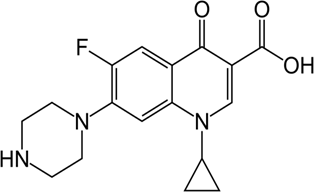
Fig 1 Ciprofloxacin
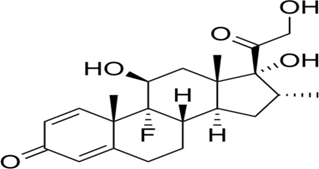
Fig 2 Dexamethasone
MATERIALS AND METHODS
Chemicals: Ciprofloxacin, Dexamethasone Ortho phosphoric Acid (OPA), Acetonitrile, Triethyl amine, Potassium dihydrogen phosphate.
Instrumentation: Chromatographic analysis was performed using an Agilent 1200 Infinity HPLC system equipped with a UV–Visible detector and EZChrom Elite software for data acquisition and processing. Additional laboratory equipment included a Shimadzu analytical balance (0.1 mg sensitivity).
Chromatographic Conditions:
Chromatographic separation was achieved on an Agilent C18 column (4.6 × 250 mm) under isocratic conditions. The mobile phase consisted of 10 mM phosphate buffer (pH 3.0) and acetonitrile in the ratio of 20:80 (v/v). The flow rate was maintained at 1.0 mL/min, the detection wavelength was set at 235 nm, the injection volume was 20 µL, and the total run time was 8 min. All analyses were performed at ambient column temperature. Before use, the mobile phase was filtered through a membrane filter and sonicated to remove dissolved gases.
Preparation of Mobile Phase
A 10 mM phosphate buffer was prepared by dissolving 6.056 g of potassium dihydrogen phosphate in purified water, followed by the addition of 0.1 M phosphoric acid. The pH was adjusted to 3.0 using triethylamine. The mobile phase was prepared by mixing phosphate buffer and acetonitrile in the ratio of 20:80 (v/v), filtered, and sonicated before chromatographic analysis.
Preparation of Standard Solutions
Standard stock solutions of ciprofloxacin and dexamethasone were prepared separately by accurately weighing 5 mg of ciprofloxacin and 50 mg of dexamethasone into individual 10 mL volumetric flasks. The drugs were dissolved in diluent and diluted to volume. Working standard solutions were prepared by transferring appropriate aliquots of each stock solution into volumetric flasks and diluting with the mobile phase to obtain the required analytical concentrations.
Sample Preparation
An accurately measured quantity of the ophthalmic formulation equivalent to 3 mg of ciprofloxacin and 1 mg of dexamethasone was transferred into a 10 mL volumetric flask and diluted with methanol. The solution was mixed thoroughly and further diluted with the mobile phase to obtain concentrations within the linearity range of both analytes. The prepared sample solution was filtered prior to HPLC injection.
Method Validation
The developed RP-HPLC method was validated in accordance with ICH guidelines. Validation parameters included system suitability, specificity, linearity, precision (repeatability and intermediate precision), accuracy, robustness, ruggedness, limit of detection (LOD), limit of quantification (LOQ), and assay of the marketed formulation.
Method Development:
The RP-HPLC method was systematically optimized to achieve efficient separation of ciprofloxacin and dexamethasone with acceptable peak symmetry, resolution, and analysis time. The chromatographic conditions were finalized using an Agilent C18 (4.6 × 250 mm) column with an isocratic mobile phase consisting of 10 mM phosphate buffer (pH 3.0) and acetonitrile (20:80, v/v). The mobile phase was delivered at a flow rate of 1.0 mL/min, and UV detection was carried out at 235 nm with a total run time of 8 min. Under these optimized conditions, ciprofloxacin and dexamethasone were eluted at retention times of approximately 2.3 min and 5.8 min, respectively. The chromatograms exhibited well-resolved, symmetrical peaks without interference, indicating satisfactory chromatographic performance. System suitability parameters, including theoretical plate count and tailing factor, were within the acceptable limits, confirming the suitability of the optimized method for routine quantitative analysis of both drugs in ophthalmic formulations.
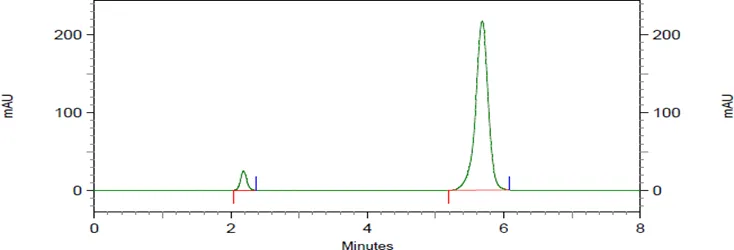
Fig 3 Optimum chromatogram for Ciprofloxacin and Dexamethasone
METHOD VALIDATION
System Suitability: System-suitability tests are an integral part of method development and are used to ensure adequate performance of the chromatographic system. Retention Time (RT), number of theoretical plates (N) and tailing factor (T) were evaluated for six replicate injections of the drugs at a concentration of 60μg/ml.
Linearity:
A series of standard solutions (not less than 5 is recommended) were prepared in the range of 5- 25μg/ml containing Ciprofloxacin and Dexamethasone standards and injected. A plot of average peak area versus the concentration in μg/ml or mg/ml is made and from this the correlation coefficient, y-intercept (const. of regression) and slope (coefficient of regression) of the regression line were calculated.
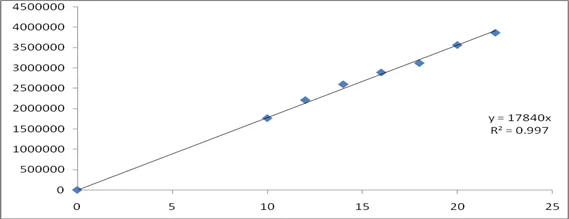
Fig 4 Linearity Plot of Ciprofloxacin
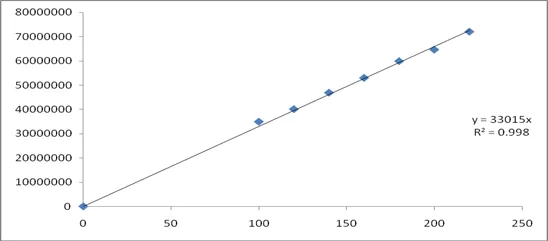
Fig 5 Linearity Plot of Dexamethasone
Table 1 Linearity table for Ciprofloxacin and Dexamethasone
|
Standard concentration (µg/ml) |
Area of Ciprofloxacin |
Standard concentration (µg/ml) |
Area of Dexamethasone |
|
10 |
1768401 |
100 |
34894734 |
|
12 |
2211961 |
120 |
40069796 |
|
14 |
2601088 |
140 |
46861014 |
|
16 |
2892584 |
160 |
52952685 |
|
18 |
3123861 |
180 |
59847683 |
|
20 |
3567984 |
200 |
64595025 |
|
22 |
3871361 |
220 |
71995174 |
|
Regression R2=0.9973 |
Regression R2= 0.9981 |
||
Precision: The precision of the test procedure was evaluated by injecting the six standard solutions. The Relative Standard Deviation of six injections was calculated.
Specificity: Specificity is the ability of a method to discriminate between the analyte(s) of interest and other components that are present in the sample. A study of placebo interference from excipients was conducted. Equivalent weight of placebo taken as per the test method and placebo interference was conducted in duplicate.
Accuracy: To validate whether the test method can accurately quantify Ciprofloxacin and Dexamethasone prepare samples in three times for higher and lower levels, in triplicate for other levels by spiking Ciprofloxacin and Dexamethasone active material with equivalent amount of placebo and perform CU as per test procedure. Samples were prepared at levels 50%, 100% and 150% of the target assay concentration i.e. 50% of the lowest strength initial concentration to 150% of the highest strength initial concentration level.
Robustness: Robustness of the method is performed by altering the chromatographic conditions such as pH of the buffer, Wavelength, Mobile phase composition and observed the variation of the results which should be within the acceptance criteria.
Ruggedness: (Intermediate precision): The United States pharmacopoeia (USP) define ruggedness as the degree of reproducibility of test results obtained by the analysis of the same samples under a variety of normal test conditions such as different labs, different analysis, different lots of reagents etc. Ruggedness is a measure of reproducibility of test results under normal expected operational conditions from laboratory to laboratory and from analyst to analyst.
Limit of Detection (LOD): The detection limit of an individual analytical procedure is the lowest amount of analyte in a sample which can be detected but not necessarily quantitated as an exact value.
Limit of Quantitation (LOQ): The Quantitation limit of an individual analytical procedure is the lowest amount of analyte in a sample which can be quantitatively determined with suitable precision and accuracy.
LOD and LOQ of Ciprofloxacin and Dexamethasone are performed by spiking of known concentrations of the sample into the placebo of formulation and inject the sample.
Assay of Marketed Formulation:
Six replicates of the samples solutions were injected for quantitative analysis. The amounts of Ciprofloxacin and Dexamethasone estimated were found to 99.7% and 98.01%respectively. A good separation and resolution of both drugs indicate that there was no interference from the excipients commonly present in pharmaceutical formulations. This showed that the estimation of dosage form was accurate within given acceptable level of 95% to 105%.
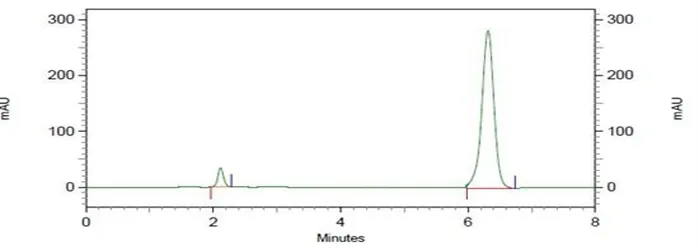
Fig 6 chromatogram for formulated Ciprofloxacin Dexamethasone
Assay calculation
Table 2 results for Assay calculation
|
S. No |
Drugs |
Label claim |
Concentration in(µg/ml) |
Amount found |
% of Assay |
%of RSD |
|
1 |
Ciprofloxacin |
5mg |
10µg/ml |
99.85 |
99.7 |
1.00 |
|
2 |
Dexamethasone |
50mg |
100µg/ml |
99.00 |
98.01 |
1.01 |
RESULTS OF VALIDATION PARAMETERS:
Precision
Table 3 Report of Intraday precision
|
S. No |
Drug |
% of RSD |
|
1 |
Ciprofloxacin |
0.66 |
|
2 |
Dexamethasone |
0.77 |
Table 4 Report of Interday precision
|
S. No |
Drug |
% of RSD |
|
1 |
Ciprofloxacin |
1.22 |
|
2 |
Dexamethasone |
0.86 |
Accuracy
Table 5 Accuracy for Ciprofloxacin and Dexamethasone
|
% Recovery |
Target conc. (µg/ml) |
Spiked conc. (µg/ml) |
Final conc. (µg/ml) |
Conc. Obtained in Ciprofloxacin |
% of Assay Ciprofloxacin |
Conc. Obtained in Dexamethasone |
% of assay in Dexamethasone |
|
90 |
10 |
9 |
19 |
9.14 |
101.57 |
90.16 |
100.18 |
|
10 |
9 |
19 |
9.19 |
102.08 |
90.76 |
100.85 |
|
|
10 |
9 |
19 |
9.14 |
101.55 |
90.40 |
100.44 |
|
|
100 |
10 |
10 |
20 |
10.07 |
100.76 |
100.64 |
100.64 |
|
10 |
10 |
20 |
10.08 |
100.80 |
100.61 |
100.61 |
|
|
10 |
10 |
20 |
10.13 |
101.33 |
101.07 |
101.07 |
|
|
110 |
10 |
11 |
21 |
11.04 |
100.42 |
109.42 |
99.48 |
|
10 |
11 |
21 |
11.14 |
101.34 |
108.48 |
98.62 |
|
|
10 |
11 |
21 |
11.03 |
100.34 |
109.81 |
99.83 |
Robustness
Table 6 of Robustness –Ciprofloxacin and Dexamethasone
|
S. No. |
Parameter |
Condition |
System suitability results |
||
|
%RSD |
USP tailing |
USP Plate Count |
|||
|
1 |
Flow rate by ± 10% |
1.2 ml |
0.61 |
1.37 |
2878 |
|
1.0 ml |
1.12 |
1.16 |
2897 |
||
|
1.4 ml |
0.69 |
1.12 |
2908 |
||
|
2 |
Column Oven temperature by ± 5°C |
20°C |
1.04 |
1.46 |
2891 |
|
25°C |
0.60 |
1.12 |
2799 |
||
|
30°C |
0.71 |
1.09 |
2882 |
||
|
3 |
Wavelength of analysis±5nm |
240nm |
1.68 |
1.02 |
2795 |
|
235nm |
0.53 |
1.01 |
2794 |
||
|
245nm |
0.67 |
1.18 |
2955 |
||
|
4 |
Organic composition of mobile phase by ± 5% |
82:18 |
0.53 |
1.07 |
2899 |
|
80:20 |
0.51 |
1.03 |
2971 |
||
|
78:22 |
1.62 |
1.57 |
2899 |
||
|
|
Parameter |
Condition |
System suitability results |
||
|
%RSD |
USP tailing |
USP Plate Count |
|||
|
1 |
Flow rate by ± 10% |
0.8 ml |
0.63 |
1.27 |
6873 |
|
1.0 ml |
0.39 |
1.10 |
6954 |
||
|
1.2 ml |
0.66 |
1.16 |
6812 |
||
|
2 |
pH of Buffer solution by ± 0.2 units |
3.2 |
1.42 |
1.56 |
6951 |
|
3.0 |
0.16 |
1.10 |
6856 |
||
|
2.8 |
0.39 |
1.32 |
6923 |
||
|
3 |
Wavelength of analysis ±5nm |
225nm |
1.46 |
1.70 |
6765 |
|
230nm |
0.39 |
1.02 |
6851 |
||
|
235nm |
0.60 |
1.68 |
6779 |
||
|
4 |
Organic composition of mobile phase by ± 5% |
78:22 |
0.43 |
1.07 |
6688 |
|
80:20 |
0.60 |
1.07 |
6952 |
||
|
82:18 |
1.46 |
1.65 |
6682 |
||
Ruggedness
Table 7 for Ruggedness
|
S.No |
Concentration (µg/ml) of Ciprofloxacin |
Peak area of Ciprofloxacin |
Concentration (µg/ml) of Dexamethasone |
Peak area of Dexamethasone |
|
1 |
60 |
2894916 |
60 |
501795 |
|
2 |
60 |
2959341 |
60 |
501771 |
|
3 |
60 |
2869342 |
60 |
513383 |
|
4 |
60 |
2894363 |
60 |
521435 |
|
5 |
60 |
2859398 |
60 |
513325 |
|
6 |
60 |
2903737 |
60 |
514507 |
|
|
|
SD:34990.92 |
|
SD:649060.7 |
|
Mean:2896850 |
Mean:48717078 |
|||
|
%RSD:1.20 |
%RSD:1.52 |
LOD and LOQ
Table 8 of LOD and LOQ
|
S. No |
Drugs |
LOD |
LOQ |
|
1 |
Ciprofloxacin |
0.35 µg/ml |
1.07 µg/ml |
|
2 |
Dexamethasone |
3.7 µg/ml |
11.23 µg/ml |
CONCLUSION
A simple, rapid, precise, accurate, and robust RP-HPLC method was successfully developed and validated for the simultaneous estimation of ciprofloxacin and dexamethasone in ophthalmic dosage forms. The optimized chromatographic conditions provided excellent separation of both analytes with retention times of approximately 2.3 min for ciprofloxacin and 5.8 min for dexamethasone, demonstrating satisfactory peak symmetry, resolution, and system suitability. The developed method was validated in accordance with ICH guidelines and exhibited acceptable specificity, linearity, precision, accuracy, robustness, ruggedness, sensitivity, and assay performance. The correlation coefficients for ciprofloxacin and dexamethasone were found to be 0.9973 and 0.9981, respectively, while precision studies showed %RSD values below 2%, confirming the reproducibility of the method. Recovery studies demonstrated satisfactory accuracy, and the assay of the marketed ophthalmic formulation yielded 99.70% for ciprofloxacin and 98.01% for dexamethasone, indicating good agreement with the labeled claim. The low LOD and LOQ values further demonstrated the sensitivity of the proposed method. Overall, the validated RP-HPLC method is reliable, economical, and suitable for routine quality control analysis and simultaneous quantification of ciprofloxacin and dexamethasone in combined ophthalmic pharmaceutical formulations.
REFERENCES


M. Sreelakshmi*, Patti. Venkata Tirumalanath, Development and Validation of a Stability-Indicating RP-HPLC Method for Simultaneous Quantification of Ciprofloxacin and Dexamethasone in Ophthalmic Formulation, Int. J. Med. Pharm. Sci., 2026, 2 (9), 199-206. https://doi.org/10.5281/zenodo.22647598
 10.5281/zenodo.22647598