
We use cookies to ensure our website works properly and to personalise your experience. Cookies policy
Alzheimer's disease (AD) is a common neurodegenerative disorder that leads to memory loss and cognitive decline, predominantly affecting the elderly. Its pathophysiology includes mechanisms like amyloid-beta accumulation, tau protein aggregation, oxidative stress, and mitochondrial dysfunction. Current treatments, such as acetylcholinesterase inhibitors and NMDA receptor antagonists, offer symptomatic relief but do not halt disease progression. The rising global prevalence of AD calls for enhanced research into effective treatments. Notably, the plant Alpinia galanga exhibits significant potential against AD, with its rhizome extracts exhibiting antibacterial and antioxidant properties. The bioactive compounds in Alpinia galanga may provide neuroprotective effects by addressing oxidative stress, inhibiting A? aggregation, and restoring cholinergic function, indicating its therapeutic promise in AD management.
Alzheimer’s disease (AD) is the most prevalent neurodegenerative disease that causes memory loss and progressive neurocognitive deterioration in the elderly. It is characterized by neocortical atrophy developing over decades, showing the increasing loss of synapses and neurons first described by Alois Alzheimer in 1907. However, the causes of AD are far from being unknown. Clinically, AD is characterized by a slowly progressive loss of memory and cognitive impairments. The decline in patients is mostly due to the aberrant accumulation of toxic protein fragments in the nervous system, namely amyloid-beta (Aβ) deposition within senile plaques, outside of neurons, and intracellular accumulation of microtube-associated Tau protein. Aβ is pointed to contribute to cell death by interfering with neuron-neuron communication at synapses, while neurofibrillary tangles of Tau restrict the passage of essential nutrients and other compounds inside neurons. Currently, 30 million people worldwide suffer from Alzheimer's dementia and the World Health organization projects that this number will triple over the next 20 years.1 The cumulative incidence of Alzheimer dementia has been estimated to rise from about 5% by age 70 to 50% by age 90, making it a very common disease.2 With the global population aging, the incidence of AD is rising, posing a growing threat to public health and necessitating preventive strategies and effective treatment.
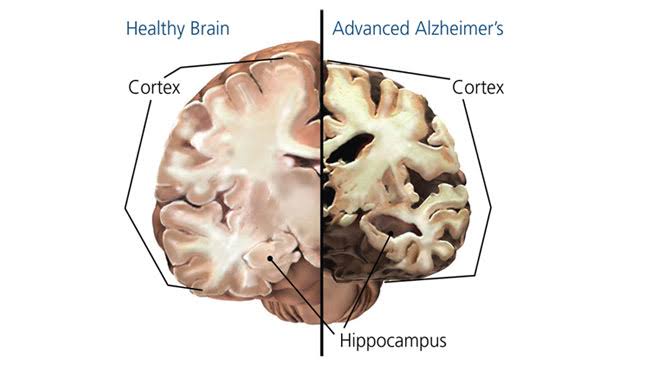
Fig 1 Normal brain and Alzheimer’s brain
PATHOPHYSIOLOGY OF AD
Amyloid beta (Aβ) is the prime suspect for driving pathology in Alzheimer’s disease (AD) and, as such, have become the focus of therapeutic development. The amyloid precursor protein (APP) is a type I transmembrane glycoprotein containing 695–770 amino acids. It is regarded that abnormal proteolytic processing of APP leads to the generation of Aβ. In the non-amyloidogenic pathways, APP is cleaved by α- and γ-secretases. This α-secretase can cleave APP at residue L688, located in the middle of the Aβ domain. α-secretase causes APP cleavage leading to the formation of soluble APP alpha (sAPPα) and a cell-membrane-bound C-terminal fragment 83 (CTF83). The generated CTF83 is cleaved by γ-secretase to produce AICD and a small p3 fragment. The second pathway is the amyloidogenic pathological pathway in which APP is cleaved to CTF -β99 by β-secretase and then different lengths of Aβ peptide, including Aβ42 by ϒ-secretase. The Aβ1-40 isoform is the most prevalent, followed by Aβ1-42 which is hydrophobic in nature and aggregates at a faster rate than Aβ1-40 which leads to aggregation and plaque formation will disrupt synapses and initiate cascade of toxic events, which ultimately leading to neuronal loss and death.4
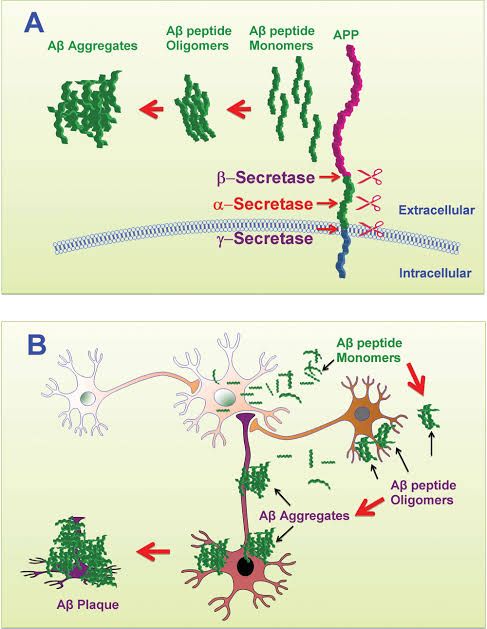
Fig 2 Amyloid Hypothesis
The second typical morphologic symptom of AD is neurofibrillary tangles (NFT), which are formed in neuronal cytoplasm (especially in axoplasm) and are insoluble filaments, consisting mainly of hyperphosphorylated tau protein (which is related to the microtubule-associated protein group). Impairments of tau protein functions result in destabilization and depolymerization of microtubules; the degradation of microtubules causes a disconnection of intracellular transport in the cytoplasm, loss of synapses, and, ultimately, nerve cell death. Tau is predominantly found in brain and peripheral nerves, tau protein expression has been detected in locations including salivary glands, breast tissue, cardiac myocytes.5
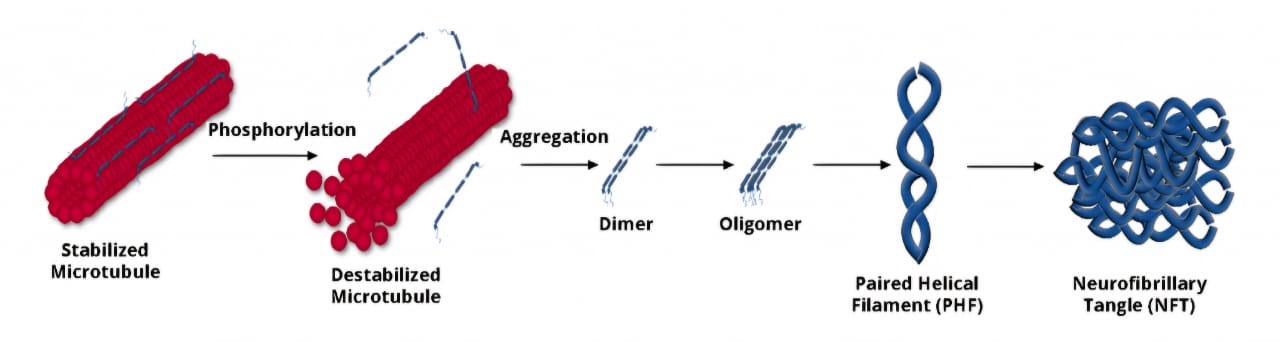
Fig 3 Tau Hypothesis
3) Cholinergic Hypothesis:
The cholinergic hypothesis has been proposed to describe the pathogenesis of AD earlier and is one of the currently and widely accepted hypotheses. Acetylcholine (ACh) is an important neurotransmitter used by cholinergic neurons for many critical physiological processes such as cognition and memory. Cholinergic neurons in the normal basal forebrain can synthesize a large amount of Ach. However, in the brains of patients with AD, a large number of cholinergic neurons are lost, and the activity of choline acetyltransferase is reduced, resulting in a significant reduction in the synthesis, storage, and release of ACh. Cholinergic neuronal damage is considered a critical pathological change that is correlated with cognitive impairment observed in AD. Aβ accumulation, hyperphosphorylation of tau protein, oxidative stress, inflammation, and metal imbalance cause cholinergic neuronal damage. The first drug approved for the treatment of AD was tacrine, a cholinesterase inhibitor. However, the drug was withdrawn from the market in 2012, as it resulted in severe side effects. Thus far, acetylcholinesterase (AChE) inhibitors are the most widely used drugs in the clinical treatment of AD.6
5) New Pathway of AD- The Infectious Theory:
The bacterial infection hypothesis of AD was proposed in the 1990s, and it appears to be a plausible explanation for the induction and exacerbation of AD. Inhibition of E. coli is considered a potential neuroprotective strategy in Alzheimer's disease (AD) because bacterial components are associated with neuropathology and neuroinflammation. Currently, it is generally believed that AD is a disease caused by multiple factors that can work. The above hypotheses indicate different aspects of the pathogenesis of AD however; the exact mechanism is synergistically and form a feedback loop mechanism.8
Alpinia Galanga
Introduction:
Alpinia galanga is a perennial plant commonly known as “Greater galangal”. It is known by several synonyms such as Amomum galangal, Maranta galangal. It is known by several common names such as Kulanjan in Hindi, Dhumarasmi in Kannada, Arattha in Malayalam. It is a ginger like shrub belonging to Zingiberaceae family. It is an aromatic; rhizomatous herb is widely distributed in India. In India it is traditionally used as nervine tonic and stimulant effect. It is also used as carminative, stomachic, disinfectant, and for inflammation. It is a ginger substitute for flavouring food.10
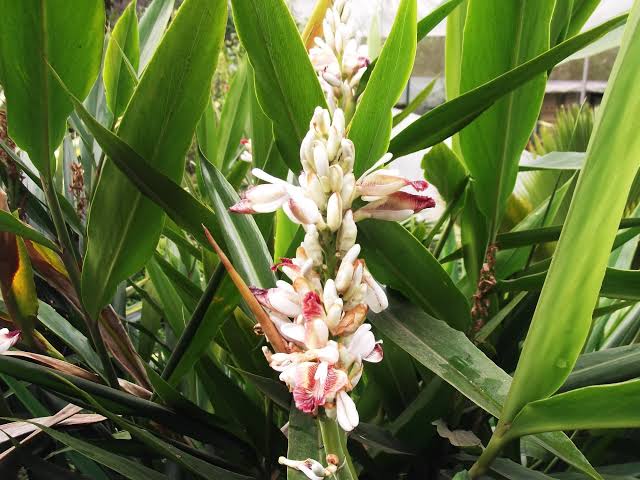
Fig 5: Alpinia Galanga
Cultivation for Alpinia galanga:
Alpinia galanga is Galangal is best suited for planting in shaded open areas in warmer climates as it’s a tropical plant. This plant will rot easily when left exposed to cold, wet conditions. With adequate irrigation provisions, it can be grown up to an altitude of 1000 m. The soil should be rich in organic matter such as sandy loam. This type of soil provides the thick roots with space to grow while allowing water to properly drain It is commonly propagated by rhizome splits. The Rhizomes should be planted in southern India April to May. It is best to harvest the remaining Alpinia galanga roots during the early winter to prevent rotting, one can leave a few hands, in the ground over the winter if one can heavily much the entire area to keep them warm and dry. Alpinia galanga can be stored in the vegetable drawer of a refrigerator for two to three weeks. The Alpinia galanga should be plastic wrapped preferably, wrap the root first in a damp cloth, then in a plastic bag. Galangal can be frozen without losing any of its flavour.
Botanical description:
The plant is a perennial herb. It grows up to a height about 5 feet. Leaves are oblong-lanceolate, tuberous root, slightly aromatic. The rhizome is from 3.5-7.5 cm in length, and seldom more than 2 cm thick. The leaves are long, oblong-lanceolate, acute, glabrous, ligules are short and rounded.
Geographical distribution:
Alpinia galanga grows in many Asian countries such as India, Arabia, China, Sri Lanka, and Indonesia. It favours hot places exposed to extensive sunlight, but it can also grow in shrubs, forests, and open spaces. In India the plant is distributed in Himalaya and Southern region of Western Ghats and states of Kerala and Karnataka it is also present in Tamil Nadu and Andhra Pradesh.11
Rhizome:
Alpinia galanga is an herb that can grow up to 3.5 cm, with underground rhizomes and minor adventitious roots. The rhizomes have a red-brown colour on the surface, while the inside of the rhizome is brown, orange. They are 2.5–10 cm long with a pseudo-stem that is erect and covered with leaves. Size and shape of the leaves are 3.8–11.5 cm, oblong-lanceolate, glabrous, and acute.

Fig 6 Galangal Rhizome
Traditional use:
The galangal rhizome is effectively used as a therapeutic treatment for various diseases, because it contains antibacterial, anti-fungal, anti-inflammatory, anti-hepatotoxic, antioxidant, immune modulator, anti-ulcerative, anti-tumour, and anti-allergic activities. It can be used to treat stomach pain, back pain, rheumatism, asthma, diabetes, heart disease, disorders of the liver, kidney disease, and to increase the appetite. Galangal rhizome can also be used as a substitute for antibiotics, disinfectants, and food seasonings.12
Anti-Oxidant Properties of Alpinia Galanga In Alzheimers Disease:
Several diseases in humans are linked to the build-up of free radicals. Antioxidants can scavenge free radicals and reduce their impact. As a result, the research for naturally occurring antioxidants of plant origin is critical. Antioxidants can convert free radicals into waste by-products that are excreted by the body. The H2O2 assay evaluates the ability of the plant extract to scavenge hydrogen peroxide, which is a harmful reactive oxygen species. Hydrogen peroxide can cause oxidative damage to cells and tissues. The assay measures the reduction in hydrogen peroxide concentration after exposure to the plant extract, indicating its antioxidant potential. The scavenging activity of natural antioxidants found in plant extracts against hydrogen peroxide (H2O2) has been widely tested by detecting the decrement of H2O2 in an incubation system containing H2O2 and the scavenger using the classical UV method at 230 nm.13
Anti-Bacterial Activity of Alpinia Galanga In Alzheimers Disease:
Alpinia galanga's potential antibacterial activity in Alzheimer's disease (AD) might stem from its ability to inhibit acetylcholinesterase (AChE), reduce oxidative stress, and modulate signaling pathways, ultimately contributing to neuroprotection. Galangal or greater galangal belongs to Zingiberaceae family that contain chemical compounds like alkaloids, glycosides, terpenoids, flavonoids, phenols and essential oil. E. coli bacteria are bacterial pathogens belong to Enterobacteriaceae family. The result of galangal rhizome extract, (Alpinia galanga L.) shows that the average result of growth inhibition Escherichia coli is 0,7028 cm. That the average inhibition diameter of essential oils in red galangal rhizome to E. coli are at its peak, with 50% concentration, and 18,8 mm.14
Phytoconstituents Of Alpinia Galanga:
1) Flavanoids:
Eg: Galangin, Quercetin, Myricetin, Kaempferol, Galangin 3-methyl ether, Quercetin 3-methyl ether.
Flavonoids have emerged as a promising leading molecule either alone or in association with other compounds for showing the effective plan and improvement as anti-AD drugs. Some constituents like Quercetin and Quercetin 3 – methyl ether has beneficial properties against general mechanisms of AD. The anti-Alzheimer’s disease properties of quercetin include the inhibition of Aβ aggregation and tau phosphorylation. Galangin provide a certain degree of protection against oxidative stress-related neurological disorders. Flavonoids combat oxidative stress through direct antioxidant effects, such as scavenging free radicals and reactive oxygen species ROS. They also indirectly boost the bodies antioxidant defence by activating pathways that regulate the production of antioxidant enzymes, supress inflammation cell against cell damage. Flavonoids have antibacterial properties that work by disrupting bacterial cells, inhibiting their growth, and interfering with key processes. They can damage cell walls and membranes, suppress nucleic acid and energy metabolism, reduce biofilm formation, and block virulence factors. This makes them promising candidates for developing new antibacterial treatments, especially in the fight against antibiotic-resistant bacteria.15
2) Phenols:
Eg: Gallic acid, Catechin, Quercetin, Catechol.
Phenols considered beneficial to the development of AD through several biological mechanisms. Phenols exhibit antibacterial activity against E. coli by damaging its cell membrane, disrupting its ability to regulate internal ions, and interfering with its genetic material. Specific compounds like protocatechuic acid (PCA) and certain phenolic acids show strong inhibitory effects, while others like procyanidins can reduce biofilm formation by interfering with the bacteria's ability to adhere to surfaces.16
Antibacterial Mechanisms of Phenols Against E. Coli Are:
Antioxidant mechanism of phenols are:
3) Terpenes:
Eg: Galangal diterpenes, Disabolene, Cineole, Fencyl Acetate.
Terpenes have a strong anti-Alzheimer’s activity and provide a very high neuroprotective potential by inhibiting acetylcholinesterase (AChE) and butyryl cholinesterase (BChE) activities, regulating neurotransmitter synthesis, release, and transmission, as well as suppressing β-amyloid peptide (Aβ), reducing the levels of reactive oxygen species (ROS)
Antibacterial activity against E. coli
Antioxidant effect of terpenes:
4) Essential Oils:
Eg: 1,8 Cineole, pinene, Terpineol, Methyl cinnamate.
Essential oils from certain plants possess several important biological activities. Among those activities, the antimicrobial activity of plant essential oils is one of the most interesting issues to be focused on because they might be useful as the natural antimicrobial alternatives to be used instead of the harmful chemical antimicrobial agents. Essential oils kill E. coli primarily by disrupting its cell membrane, leading to leakage of cellular contents and metabolic damage. Key mechanisms include increasing membrane permeability, altering membrane integrity, and causing cell deformation, which ultimately leads to cell death.
Antioxidant activity of essential oils:
Antibacterial activity of essential oils:
5) Alkaloids:
Eg: Galantamine, Huperzine A, Berberine, Caffeine
Alkaloids are a class of naturally occurring organic nitrogen- containing compounds that are found primarily in plants, especially in certain families of owering plants.
Antibacterial activity:
Antioxidant properties
6) Stilbenes:
Eg: Pterostilbene, Pinosylvin, Piceatannol
Stilbenes exhibit many neuroprotective mechanisms, including antioxidant characteristics, antibacterial activities, anti-inflammatory effects, modulation of signaling pathways, and the capacity to hinder the production of amyloid proteins. They collect and remove free radicals and reactive oxygen species (ROS)
Antibacterial activity of stilbenes:
Antioxidant activity of stilbenes:
7) Resveratrol:
Resveratrol is a polyphenolic compound found in a number of plants has been reported to possess antioxidant properties
Antibacterial activity of resveratrol:
Antioxidant activity of resveratrol:
CONCLUSION
We ultimately concluded that Alzheimer's disease (AD) poses a serious problem because of its progressing nature and the ineffectiveness of the available treatments. The need for safer and more efficient treatments is highlighted by the pathophysiology of AD. Alpinia galanga's antibacterial and antioxidant qualities may hold promise for treating AD. In order to create innovative treatment approaches and enhance the quality of life for those afflicted by this debilitating illness, more clinical research on Alpinia galanga is essential.
REFERENCES






Gayathri S. N.*, Fahisa Hibha V. K., Mohamed Sabir A., Mohammed Shamjas V. P., Nisarga J., Sonu C. M., Exploring Alpinia Galanga As A Neuroprotective Agent: Role in Mitigating Alzheimer?s Via Antioxidant and Anti-Microbial Activity, Int. J. Med. Pharm. Sci., 2025, 1 (12), 17-26. https://doi.org/10.5281/zenodo.17825232
 10.5281/zenodo.17825232