
We use cookies to ensure our website works properly and to personalise your experience. Cookies policy
1Professor and Principal, Department of Pharmaceutical Chemistry, Apollo College of Pharmacy, Durg 491001, Chhattisgarh, India
2B. Pharmacy (Pursuing), Department of Pharmacy, Apollo College of Pharmacy, Durg 491001, Chhattisgarh, India
3Assistant Professor, Department of Pharmacology, Apollo College of Pharmacy, Durg 491001, Chhattisgarh, India
The application of nanoparticles in textiles has gained significant attention due to their ability to provide multifunctional properties such as antibacterial activity, UV protection, and enhanced durability. In this study, Azadirachta indica (neem) leaf nanoparticles were prepared using a simple ball-milling technique and characterized by XRD, FTIR, UV–Vis, DLS, SEM, XRF, and antimicrobial analyses. The nanoparticles were incorporated into chitosan nanocomposites and applied to cotton fabrics using the pad–dry–cure method. The treated fabrics exhibited improved antibacterial activity against Staphylococcus aureus and Escherichia coli, enhanced UV protection, and good washing durability. Additionally, the nanocomposite treatment maintained desirable physical and mechanical properties of the fabrics. The findings demonstrate the potential of neem-based nanoparticles as sustainable and eco-friendly materials for the development of multifunctional protective textiles.
Alzheimer's disease (AD) is a progressive neurodegenerative disorder of the central nervous system, clinically manifested by cognitive decline, memory impairment, behavioral disturbances, and social dysfunction. The global prevalence of AD continues to increase, driven by population growth and aging demographics, posing significant societal and economic burdens [1]. Various hypotheses regarding the pathogenesis of AD underscore its multifactorial nature and the complexity of its etiology [2], [3]. The abnormal aggregation and accumulation of amyloid beta (Aβ) protein in the brain represent major pathological hallmarks of AD. This aggregation disrupts cellular proteostasis, promotes oxidative stress and neuroinflammation, and ultimately contributes to synaptic dysfunction, neuronal damage, and neuronal death [4]. Therefore, maintaining Aβ protein homeostasis and preventing its aberrant aggregation are considered promising therapeutic strategies for AD. Currently approved anti-AD medications, including acetylcholinesterase inhibitors such as donepezil, galantamine, and rivastigmine, as well as the NMDA receptor antagonist memantine, primarily provide symptomatic benefits and do not completely halt the underlying neurodegenerative process. Moreover, their therapeutic effects may be limited, and long-term use can be associated with adverse effects [5]. These limitations highlight the need to explore novel therapeutic strategies capable of simultaneously targeting multiple pathological processes involved in AD. In recent years, medicinal plants and bioactive compounds derived from traditional systems of medicine have attracted considerable attention as potential sources of multi-target therapeutic agents because of their diverse pharmacological activities and potential neuroprotective effects [6]. Azadirachta indica (A. indica), commonly known as neem, plays a significant role in traditional medicine systems such as Ayurveda and Unani because of its extensive therapeutic potential. It exhibits a broad spectrum of pharmacological activities, including anti-inflammatory, antipyretic, hypoglycemic, anti-ulcer, anticancer, antidiabetic, neuroprotective, antifungal, antibacterial, and antitumor effects [7–10]. Increasing experimental evidence indicates that A. indica may possess therapeutic potential against AD. Studies suggest that neem-derived compounds may influence several pathological events associated with AD, including Aβ plaque formation, tau protein aggregation, oxidative stress, neuroinflammation, mitochondrial dysfunction, and synaptic impairment [11,12]. Furthermore, bioactive constituents of neem oil nanoemulsion, including gedunin and nimbolide, have been reported to attenuate Aβ-induced mitochondrial dysfunction and neuronal injury in preclinical models [13]. These findings suggest that A. indica may exert neuroprotective effects through a combination of complementary molecular mechanisms rather than through a single therapeutic target. Despite these promising findings, the molecular basis underlying the anti-AD effects of A. indica remains insufficiently characterized. In particular, the relationships among its bioactive constituents, potential protein targets, signaling pathways, and AD-associated molecular processes have not been comprehensively elucidated. This knowledge gap limits the identification of the most relevant therapeutic targets and the mechanistic interpretation of the pharmacological effects of A. indica. Therefore, systematic approaches capable of integrating multiple compounds, targets, and biological pathways are required to provide a more comprehensive understanding of its potential anti-AD activity. Conventional “disease-target-drug” approaches often fail to adequately capture the complex interactions among multiple bioactive compounds, molecular targets, and disease-associated pathways. Network pharmacology, an interdisciplinary approach integrating systems biology, pharmacology, and bioinformatics, provides a powerful framework for investigating the multi-component and multi-target characteristics of medicinal plants [14]. It enables the systematic identification of potential therapeutic targets and signaling pathways and facilitates the exploration of complex drug–target–disease interactions [15,16]. Molecular docking further complements network pharmacology by predicting the binding interactions and affinities between candidate bioactive compounds and their putative protein targets, thereby providing structural-level evidence for the predicted pharmacological relationships [17]. In the present study, network pharmacology and molecular docking were integrated to systematically investigate the potential anti-AD effects and underlying molecular mechanisms of A. indica. The study aimed to identify the major bioactive constituents, potential therapeutic targets, protein–protein interaction networks, and key signaling pathways associated with the anti-AD activity of A. indica, followed by molecular docking analysis to evaluate the interactions between selected compounds and key target proteins. This integrated strategy provides a systems-level perspective on the pharmacological mechanisms of A. indica and may help identify promising molecular targets and bioactive compounds for further experimental validation and the development of novel therapeutic approaches for AD [18,19].
Pathophysiology of Peptic-ulcer
Peptic ulcers develop when aggressive factors, particularly gastric acid and pepsin, overwhelm mucosal defensive mechanisms such as mucus and bicarbonate secretion, adequate mucosal blood flow, epithelial restitution, and cellular repair. Major etiological factors include Helicobacter pylori infection, non-steroidal anti-inflammatory drug (NSAID) use, physiological stress, and hypersecretory disorders such as Zollinger–Ellison syndrome. Excessive acid secretion and impaired mucosal defense can promote epithelial injury and ulcer formation. In addition, oxidative stress, lipid peroxidation, and apoptosis may contribute to disruption of gastric mucosal integrity and progression of ulcerative lesions [20-21].
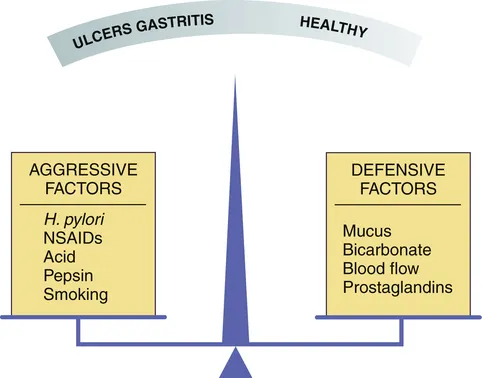
Figure: Pathophysiology of Peptic-ulcer
Mechanisms of Azadirachta indica in Ulcer Prevention
1. Inhibition of Gastric Acid Secretion
Azadirachta indica (neem) leaf extract has demonstrated antisecretory and antiulcer activity in experimental models. Aqueous neem leaf extract reduced gastric lesions produced by stress, indomethacin, and ethanol and also inhibited gastric acid secretion in pylorus-ligated animals. Experimental evidence suggests that this antisecretory effect is associated, at least in part, with inhibition of the gastric H⁺/K⁺-ATPase proton pump, thereby reducing acid secretion and limiting acid-mediated mucosal injury [22-24]. Evidence from studies of other neem preparations also supports this mechanism. Neem bark extract inhibited H⁺/K⁺-ATPase activity and reduced gastric acid secretion in experimental models. A clinical study of aqueous neem bark extract additionally reported reductions in gastric acid secretion and pepsin activity in patients with acid-related disorders, although these findings should not be generalized to all neem preparations or considered equivalent to evidence for modern standard ulcer therapies [25-27]
2. Cytoprotective and Mucosal-Protective Effects
Neem appears to enhance gastric mucosal resistance in addition to reducing acid secretion. Experimental studies have shown that aqueous leaf extracts reduce gastric damage caused by ethanol and stress. Earlier research reported increased adherent gastric mucus following neem leaf administration, suggesting that reinforcement of the mucus barrier may contribute to its gastroprotective action [28-29] The cytoprotective activity may also involve preservation of endogenous protective factors within the gastric mucosa. Studies of neem bark extract reported protection against depletion of gastric mucus and glutathione, supporting a role for neem in maintaining mucosal defense and reducing susceptibility to ulceration [30-31].
3. Antioxidant and Anti-Apoptotic Actions
Oxidative stress is an important contributor to gastric mucosal injury. In experimental models, neem leaf extract reduced hydroxyl-radical-mediated lipid peroxidation and protected gastric mucosal DNA from oxidative damage. The extract also inhibited stress-induced apoptotic DNA fragmentation, indicating that its gastroprotective effects may involve preservation of cellular integrity in addition to suppression of acid secretion [32-34].
Current Pharmacological Treatment of Peptic ulcer
Peptic ulcer disease (PUD) is commonly managed with proton pump inhibitors (PPIs), histamine-2 receptor antagonists (H2 blockers), antacids, and, in selected cases, prostaglandin analogues to reduce gastric acid secretion and promote mucosal healing. When PUD is associated with Helicobacter pylori infection, eradication therapy involving appropriate combinations of antibiotics and acid-suppressive agents is used. Although these conventional treatments are generally effective, they may be associated with adverse effects, including gastrointestinal disturbances, alterations in the gut microbiota, and an increased risk of certain infections. These limitations have encouraged interest in complementary and traditional medicinal approaches [35-38].
Role of Azadirachta indica (Neem)
Azadirachta indica, commonly known as neem, is a medicinal plant widely used in traditional Indian medicine. Neem preparations have traditionally been employed for the management of gastric and duodenal ulcers. Experimental studies have reported anti-ulcer, antioxidant, anti-inflammatory, antimicrobial, and cytoprotective properties, suggesting that neem may have potential as a complementary therapeutic agent in PUD [39-41].
Role of Herbal medicines in Peptic ulcer Management
Herbs Commonly Discussed for Peptic Ulcers
Several herbs and plant-based substances have been investigated for their potential to support gastrointestinal health and relieve symptoms associated with peptic ulcers. However, they should not replace standard treatment, particularly when an ulcer is caused by H. pylori infection or NSAID use [42-43].
Licorice Root (Glycyrrhiza glabra)
Deglycyrrhizinated licorice (DGL) is commonly used for digestive discomfort. It may help support the stomach’s protective mucus barrier and soothe irritation. DGL is different from regular licorice because much of the glycyrrhizin has been removed. Evidence for ulcer healing in humans remains limited [44-45].
Slippery Elm (Ulmus rubra)
Slippery elm contains mucilage, a substance that becomes gel-like when mixed with water. It may provide a soothing coating for irritated gastrointestinal tissues, although clinical evidence specifically for peptic-ulcer healing is limited [46].
Marshmallow Root (Althaea officinalis)
Marshmallow root is also rich in mucilage and has traditionally been used to soothe irritated mucous membranes. It may help with digestive discomfort, but strong clinical evidence for treating peptic ulcers is lacking.
Turmeric (Curcuma longa)
Curcumin, a major component of turmeric, has anti-inflammatory and antioxidant properties. Laboratory and preliminary studies suggest possible protective effects on the stomach lining, but turmeric should not be considered a proven treatment for peptic ulcers or H. pylori infection.
Chamomile (Matricaria chamomilla)
Chamomile has traditionally been used for digestive discomfort and may have anti-inflammatory and calming effects. It may help relieve some symptoms, but there is insufficient evidence to establish chamomile as a treatment for ulcer healing.
Aloe Vera
Aloe preparations have demonstrated anti-inflammatory and gastroprotective effects in some experimental studies. However, evidence from human studies is limited. Aloe latex should not be used for ulcers, as it can cause diarrhea and abdominal cramping.
Other Herbs Under Investigation
Garlic, ginger, fenugreek, green tea, papaya, neem, holy basil, and mango have been investigated for antioxidant, anti-inflammatory, or antimicrobial properties. Most evidence comes from laboratory or animal studies, so their effectiveness for treating peptic ulcers in humans remains uncertain.
Importance of Medicinal Plant
Medicinal plants have played an important role in human healthcare since ancient times and continue to serve as valuable sources of therapeutic compounds. Azadirachta indica A. Juss., commonly known as neem, is one of the most important medicinal plants traditionally used in Ayurvedic medicine for thousands of years. Its therapeutic importance is mainly attributed to the presence of diverse bioactive phytoconstituents, including nimbin, salannin, meliacin, azadirachtin, gallic acid, quercetin, gedunin, and catechin. These compounds possess various pharmacological properties and have been investigated for their potential in managing bacterial infections, malaria, cancer, intestinal worms, asthma, skin disorders, diabetes, allergies, and other health conditions. Recent research has also explored the potential of neem-derived compounds against viral infections, including COVID-19, although further clinical studies are required to confirm their effectiveness and safety [47-49]. The importance of A. indica extends beyond its medicinal applications. The plant has considerable agricultural, environmental, and economic value. It is widely utilized in agroforestry, reforestation, pest management, post-harvest food protection and packaging, environmental conservation, and biodiesel production. Neem-based products are also valued for their natural insecticidal and antimicrobial properties, making the plant useful in sustainable agricultural practices. Its ability to grow under a wide range of environmental conditions further increases its importance for ecological restoration and resource conservation [50-51].
Pharmacological Activities of Azadirachta Indica
Azadirachta indica demonstrates a broad range of pharmacological properties, including anti-inflammatory, antimicrobial, antidiabetic, anticancer, hepatoprotective, and immunomodulatory effects.
Key Medicinal Uses
1. Antimicrobial & Antiviral Activity
2. Anti‑inflammatory & Immunomodulatory Effects
3. Dermatological Uses
4. Antidiabetic Activity
5. Hepatoprotective & Gastroprotective Effects
Protects liver tissue and supports digestive health.
6. Anticancer Potential
Exhibits chemopreventive and anticancer properties in experimental studies.
7. Anthelmintic (Anti‑parasitic) Action
Traditionally used to eliminate intestinal worms.
Reduces plaque, gingivitis, and harmful oral bacteria. Used in toothpaste and mouthwash formulations [52-54].
Mechanism of Anti-Ulcer Activity of Azadirachta Indica
Azadirachta indica (Neem) exhibits anti-ulcer activity through a multifactorial gastroprotective mechanism involving reduction of gastric acid secretion, enhancement of mucosal defense, antioxidant activity, inhibition of inflammation, and prevention of cellular damage and apoptosis [55].
1. Inhibition of Gastric Acid Secretion
Neem extracts have been reported to reduce gastric acid secretion and gastric acidity. This effect may involve suppression of the H⁺/K⁺-ATPase proton pump in gastric parietal cells and reduction of histamine-mediated stimulation of acid secretion. By decreasing gastric acid and free acidity, Neem reduces acid-mediated damage to the gastric mucosa [56].
2. Enhancement of Gastric Mucosal Defense
Neem promotes cytoprotection of the gastric mucosa by strengthening the mucosal barrier against gastric acid and other damaging factors. Its phytoconstituents may support mucus secretion and maintain the integrity of gastric epithelial cells, thereby limiting penetration of acid and pepsin into the mucosa [57].
3. Antioxidant and Free-Radical Scavenging Activity
Oxidative stress plays an important role in gastric mucosal injury, particularly in ethanol-, NSAID-, and stress-induced ulcer models. Neem contains flavonoids and other antioxidant constituents that can scavenge reactive oxygen species and reduce lipid peroxidation and oxidative cellular damage. This helps preserve the structural and functional integrity of gastric epithelial cells [58].
4. Anti-Inflammatory Activity
Neem may attenuate the inflammatory response associated with gastric mucosal injury by modulating inflammatory mediators, including TNF-α and interleukins. Reduction of inflammatory signaling decreases tissue injury and supports the repair and healing of ulcerated gastric mucosa [59].
5. Anti-Apoptotic and Cytoprotective Effects
Neem has demonstrated protective effects against stress-associated cellular injury, including reduction of DNA fragmentation and apoptosis in gastric mucosal cells. By maintaining cellular viability and preventing excessive epithelial cell death, Neem contributes to preservation of mucosal integrity and ulcer healing [60].
6. Stabilization of Mast Cells
Neem may contribute to gastroprotection through mast-cell stabilization, thereby limiting the release of histamine and other mediators involved in gastric acid secretion and inflammatory responses. This mechanism can complement its direct inhibitory effect on gastric acid secretion [61].
7. Contribution of Phytoconstituents
The anti-ulcer effects of Neem are likely produced by the combined action of several phytochemical groups, particularly flavonoids, tannins, saponins, and limonoids. Compounds such as nimbolide, azadirachtins, quercetin derivatives, and kaempferol glycosides may contribute to antioxidant, anti-inflammatory, and cytoprotective effects [62].
Overall Mechanism
Thus, the anti-ulcer activity of Azadirachta indica can be summarized as:
Neem phytoconstituents → ↓ gastric acid secretion + ↓ oxidative stress + ↓ inflammatory mediators + ↓ apoptosis + ↑ mucosal defense/cytoprotection → reduced gastric mucosal injury → enhanced ulcer prevention and healing.
Experimental Evidence
In experimental models such as pyloric-ligation, ethanol-induced, NSAID/aspirin-induced, and stress-induced ulcers, Neem extracts have demonstrated gastroprotective effects, including reductions in gastric acidity and ulcer lesion formation. These findings support the involvement of both acid-dependent and acid-independent mechanisms in Neem-mediated gastroprotection [63-65].
Formulation development
Seven cream formulations (F1–F7) were prepared using varying concentrations of Azadirachta indica (neem) extract along with suitable pharmaceutical excipients. The formulation method was modified to improve the uniformity, stability, and incorporation of the herbal extract into the cream base. The oil phase was prepared separately by mixing beeswax, liquid paraffin, and lecithin, followed by heating to approximately 65–75°C until a uniform phase was obtained. In a separate vessel, the aqueous phase containing borax, methyl paraben, and rose water was prepared and heated to a similar temperature [66-68]. The neem extract was first dispersed in a small quantity of a suitable portion of the aqueous or compatible phase to ensure better distribution and to reduce the possibility of aggregation. The heated aqueous phase was then gradually added to the oil phase with continuous stirring. High-shear mixing was applied to promote proper emulsification and produce a smooth, homogeneous cream. After formation of the primary emulsion, the mixture was continuously stirred while being allowed to cool gradually. To minimize possible degradation of heat-sensitive phytoconstituents of Azadirachta indica, the neem extract was incorporated or supplemented during the cooling stage, preferably below approximately 40–45°C, depending on extract stability [69-70]. The procedure also included careful control of the addition rate of the aqueous phase and maintenance of constant mixing to prevent phase separation. The pH and consistency of the formulations were adjusted to obtain a cream suitable for topical application. Each formulation was visually inspected for colour, odour, texture, homogeneity, grittiness, and evidence of phase separation. The prepared creams were transferred into clean, dry, airtight containers and stored under appropriate conditions until further evaluation [71-73]. Intended to enhance the therapeutic potential of Azadirachta indica cream by ensuring better dispersion of neem phytoconstituents while maintaining the physical characteristics of the formulation. The seven formulations could subsequently be compared for physicochemical properties, spreadability, extrudability, viscosity, pH, stability, and other relevant parameters to identify the optimized herbal cream formulation [74-75].
Experimental Evaluation of Anti-ulcer Activity
The anti-ulcer potential of Azadirachta indica (neem) leaves was experimentally evaluated using different established models of gastric ulceration, including pyloric ligation, aspirin-induced ulceration, and cold-restraint stress. An aqueous extract (AE) prepared from the leaves was administered orally at doses of 150, 300, and 600 mg/kg body weight. The anti-ulcer effect was assessed by determining the ulcer index (UI), percentage inhibition (PI), gastric-content volume, free acidity, total acidity, and gastric pH [76-78]. The findings demonstrated that the aqueous leaf extract produced a significant and dose-dependent reduction in ulcer index, accompanied by an increase in percentage inhibition when compared with the control group. A progressive reduction in gastric-content volume, free acidity, and total acidity was also observed with increasing doses of the extract. These findings suggest that A. indica may protect the gastric mucosa through multiple mechanisms, including reduction of gastric acid secretion and enhancement of mucosal defensive processes [79-81]. Although the incidence of peptic ulcer disease has declined, it continues to impose considerable economic and health burdens. Conventional therapies, such as proton pump inhibitors, H2-receptor antagonists, and prostaglandin analogues, are effective but may produce adverse effects. Phytochemical investigations using HPTLC have identified bioactive constituents such as azadirachtins, 6-deacetylnimbin, azadiradione, nimonol, epoxyazadiradione, and cyclic sulfides, which may contribute to the observed gastroprotective activity of neem [82-84].
Safety and Toxicological Considerations of Azadirachta indica
Azadirachta indica, commonly known as neem, is a medicinal plant widely recognized for its anticancer, antibacterial, antiviral, anti-inflammatory, insecticidal, herbicidal, and antifeedant activities. Although neem has traditionally been regarded as a “village pharmacy” and was recognized by the United Nations as “The Tree of the 21st Century,” its biological activity also raises important toxicological concerns. The toxicity of neem depends on the plant part, preparation, dose, route of administration, duration of exposure, and the species tested [85]. Neem oil and extracts are among the most commonly used preparations. Acute toxicity studies indicate considerable variation in LD₅₀ values between animal species and different neem preparations. High or prolonged exposure may produce neurological, gastrointestinal, hepatic, reproductive, or developmental effects. Azadirachtin, a major bioactive limonoid, is relatively important in assessing the pesticidal safety of neem-based products because its toxicity can differ according to concentration and exposure conditions [86]. Particular caution is warranted in children, pregnant women, and individuals with prolonged or high-dose exposure, as evidence regarding reproductive and developmental safety remains limited. Toxicological evaluation should therefore include acute, subacute, chronic, reproductive, developmental, genotoxicity, and organ-specific studies. Standardization of neem preparations and accurate determination of active constituents are also essential. Overall, neem should not be considered completely risk-free merely because it is a natural product; appropriate dosage, formulation, and toxicological assessment are necessary for safe therapeutic and pesticidal applications. onsideration [87].
Safety
The safety of Azadirachta indica (neem) depends on the plant part, preparation, route of exposure, and dosage. Although neem has a long history of traditional use, its use as a pesticide or therapeutic agent requires appropriate safety assessment. Experimental studies indicate that neem extracts and their bioactive compounds, particularly at high concentrations, may produce toxic effects in mammals and aquatic organisms. Therefore, the statement that neem is “generally safe at recommended doses” should be interpreted cautiously, as safety can vary considerably among different neem preparations. Neem oil has also been associated with adverse effects following exposure. Studies have reported skin irritation in experimental animals, while ingestion of neem oil, particularly in concentrated amounts, has been associated with toxicity. Neem oil poisoning has been reported in humans, especially in children, and may cause neurological and gastrointestinal symptoms. Consequently, concentrated neem oil should not be assumed to be harmless simply because neem is a natural product. For pesticide applications, neem-based products should be used according to the approved formulation, label instructions, and recommended concentration. For therapeutic use, further toxicological and clinical studies are needed to establish safe doses, possible drug interactions, long-term effects, and contraindications. Particular caution is advisable in children, pregnant or breastfeeding individuals, and people with underlying medical conditions [88-89].
Evidence from Experimental studies
Fall armyworm, Spodoptera frugiperda (J. E. Smith), is one of the most significant threats to global maize production due to its high feeding potential and increasing resistance to synthetic insecticides. The present study aimed to evaluate the larvicidal efficacy of neem (Azadirachta indica A. Juss.) leaf extract against S. frugiperda and to investigate its possible mode of action through experimental bioassays and computational approaches. Fresh, mature neem leaves were collected from the Navrachana University campus, Vadodara, Gujarat, India, shade-dried, powdered, and extracted with methanol using a Soxhlet apparatus. Larvicidal activity was evaluated under laboratory conditions using the leaf-dip method against third-instar larvae of S. frugiperda. Larval mortality was recorded at 24, 48, 72, and 96 h after treatment, and lethal concentration values were determined using probit analysis. The results demonstrated a dose- and time-dependent increase in larval mortality, reaching 86.67% at 72 h and 96.67% at 96 h. The LC₅₀ values progressively decreased with exposure time, reaching 2.01% at 72 h and 1.22% at 96 h, indicating enhanced larvicidal efficacy with prolonged exposure. LC–MS analysis of the methanolic neem leaf extract identified genistein 8-C-glucoside as a major bioactive constituent. SwissADME analysis indicated favorable aqueous solubility, high polarity, and acceptable metabolic and pharmacokinetic properties. Molecular docking analysis revealed a strong binding affinity of genistein 8-C-glucoside toward juvenile hormone esterase (JHE), with several hydrogen-bonding and other stabilizing interactions at the active site. Furthermore, 100 ns molecular dynamics simulations demonstrated the stability of the genistein 8-C-glucoside–JHE complex. The computational findings, together with the observed larvicidal activity in experimental bioassays, suggest that genistein 8-C-glucoside may contribute to the insecticidal activity of neem leaf extract through interference with juvenile hormone regulation in S. frugiperda. These findings highlight the potential of neem-derived phytochemicals as promising candidates for the development of environmentally compatible botanical insecticides for fall armyworm management [90-93].
CONCLUSION:
Neem (Azadirachta indica) is a rich source of bioactive compounds with significant therapeutic and industrial potential. Its antioxidant, anti-inflammatory, immunomodulatory, antidiabetic, and anticancer properties are largely attributed to constituents such as limonoids and neem leaf glycoproteins. These compounds may help reduce oxidative stress, regulate inflammatory pathways, and support immune function. However, the clinical application of neem is limited by the lack of standardized extraction methods, dosage guidelines, and comprehensive safety evaluations. Future research should focus on GMP-compliant production, pharmacokinetic studies, toxicity assessment, and well-designed clinical trials. With advances in biotechnology and pharmaceutical sciences, neem holds promise for the development of safe, standardized, and evidence-based medicinal and industrial products.
Author Contributions
Madhuri Baghel: Conceptualization, supervision, methodology, project administration, review and editing of the manuscript.
Naveen Kumar: Investigation, data collection, experimental work, and manuscript preparation.
Dipesh Kumar: Methodology, characterization studies, data analysis, and validation.
Indumati Thakre: Experimental investigations, antimicrobial studies, and data interpretation.
Renuka Sahu: Fabric treatment studies, UV-protection analysis, and results compilation.
Hari Prasad Sonwani: Literature review, data analysis, visualization, manuscript writing, editing, and corresponding author responsibilities. All authors have read and approved the final version of the manuscript and agree to be accountable for all aspects of the work. You can modify the contributions further if specific roles (e.g., funding acquisition, statistical analysis, or supervision) need to be assigned differently.
ACKNOWLEDGEMENT:
The authors express their sincere gratitude to the management and faculty of Apollo College of Pharmacy, Anjora, Durg, Chhattisgarh, for providing the necessary facilities, support, and encouragement to carry out this work entitled “Formulation and Evaluation of an Herbal Anti-Ulcer Preparation Containing Azadirachta indica Extract.” The authors also acknowledge all laboratory staff and colleagues who contributed directly or indirectly to the successful completion of this study. Their valuable assistance and cooperation are greatly appreciated.
Conflict of interest: None.
REFERENCES






Madhuri Baghel, Naveen Kumar, Dipesh Kumar, Indumati Thakre, Renuka Sahu, Hari Prasad Sonwani*, Formulation and Evaluation of an Herbal Anti-Ulcer Preparation Containing Azadirachta Indica Extract, Int. J. Med. Pharm. Sci., 2026, 2 (9), 402-415. https://doi.org/10.5281/zenodo.22893884
 10.5281/zenodo.22893884